Mapping Middle-Earth

Want to see something amazing? Check out this project to create a detailed map of Tolkien’s Middle-Earth using modern geographical software.

The level of detail is incredible. There are both 2D and 3D versions of the map that you can zoom in on and fly around like a modern digital map. Here’s a view of Rivendell and the nearby Misty Mountains from the 3D version.

The Middle-Earth Map is a project Micah Vander Lugt, a geographic information sciences analyst. It’s great to see people put their professional skills to work on hobbies that they’re passionate about!

Tell, Don’t Show

“Show, don’t tell” is one of the old chestnuts of writing advice. Like most such nuggets of wisdom, it has value, but there are also good cases for ignoring it, even sometimes doing the exact opposite.

Telling, as a writer, means giving the reader a direct and straightforward description of a character’s thoughts, emotions, or personality. Showing means providing the reader with tangible evidence of the same things without stating them outright. “She was nervous” is telling. “She fidgeted and took hesitant, aimless steps while her eyes darted about, refusing to focus on anything in the room” is showing.

Showing is valuable in writing because it engages the reader’s imagination. It makes the characters’ experiences more relatable, but also requires the reader to pay attention and figure things out for themselves. When we read about a character fidgeting and taking hesitant steps, we discover her nervousness for ourselves rather than have it served to us. Making little discoveries like this is part of the joy of reading, and that joy is diminished if we have nothing to figure out.

While it’s useful to show your readers things, there is also a good case for telling things sometimes. You don’t want your readers to have to figure out everything for themselves. For one thing, that’s exhausting. For another, it divides your readers’ attention and keeps them from focusing on the elements of the story that you want them to pay attention to. It’s perfectly fine to write “She was nervous,” if the character’s nervousness isn’t the point of the scene.

Jane Austen uses telling rather than showing to excellent effect in her novel Emma. The very first line of the novel tells us exactly who Emma is:

Emma Woodhouse, handsome, clever, and rich, with a comfortable home and a happy disposition, seemed to unite some of the best blessings of existence; and had lived nearly twenty-one years in the world with very little to distress or vex her.

As the novel goes on, we get plenty of chances to observe these qualities in Emma for ourselves, but Austen starts by telling us straight out who her heroine is. By giving us this portrait of Emma up front, Austen frees us from having to figure her out for ourselves and allows us to focus our attention on the world around her, discovering the characters who make up her life bit by bit through their own interactions with handsome, clever, rich Emma.

At the same time, the straightforward way Austen introduces Emma may trip us up. As the novel unfolds, Emma discovers that she has misunderstood who her friends and neighbors in Highbury really are. By telling us about Emma instead of showing her to us, Austen lulls us as readers into expecting similarly straightforward introductions to the other characters, and so we get to go along with Emma’s own discoveries rather than getting ahead of her.

Showing is a skill you need as a fiction writer, but knowing when to tell is a valuable skill, too.

Review of the First Pern Book: Dragonflight by Anne McCaffrey

I’ve long been aware of Anne McCaffrey’s Pern books, if only on a superficial level—fantasy, dragons, getting a bit old but supposed to be good; that sort of an idea. While on the lookout for more cozy fiction in our local library, I randomly ran into Dragonflight, the first Pern novel, and decided to finally give it a go.

And before I get into my review: Spoiler warnings in effect! Also, a heads-up on one f-bomb.

Current Reading Dragonflight

It was interesting. No, truly—not the “interesting” interesting, the faux compliment or empty-nothings-version of polite interesting. Really, truly interesting. And it does feel somewhat old. (Published in 1968, so not as old as The Lord of the Rings, to put it into my own SFFnal context).

Humans settled the third planet in the Rukbat solar system and called it Pern. Contact with Earth was broken, however: after two generations, Rukbat’s stray planet (which follows a wildly erratic orbit) came close enough that deadly spores crossed over to Pern and dropped from the sky with devastating losses, not just among the settlers but native Pernese life as well—only solid rock and metal proved impervious.

To burn these devastating silvery threads from the air before they had a chance to land, men and women with high empathy and rudimentary telepathic ability were trained to work with “dragons” bred from indigenous life forms that resembled their mythical Terran namesakes. The process took generations, and a complex, stratified society with tithing responsibility was created to feed and equip the dragonriders while they focused on defence and training in their unfertile mountaintop abodes known as Weyrs.

Each time the stray planet—also known as the Red Star—passes close enough, the Threads fall for a period of 50 years. Then the wanderer swings far enough away and at least another 200 years (sometimes 400 due to the erratic orbit) go by in peace, which is long enough for the rest of the populace to forget and start resenting the tithes and scorning the dragonmen until the next 50-year Pass comes along.

The two main characters are Lessa of Ruatha Hold and dragonrider F’lar of Benden Weyr. We first encounter Lessa as a ragged kitchen girl who survived by serving those who betrayed her family and took over their lands. F’lar offers her a chance to impress a golden dragon, a future queen dragon, with whom she will share a telepathic bond, and to become a Weyrwoman, a co-leader of a Weyr, possibly with F’lar himself.

Over the couple of years it takes for her queen Ramoth to mature, Lessa learns more about the civilization on Pern, the ballads, the teachings, and what it means to be Weyrwoman. The major problem Benden Weyr faces is that another Pass is impending, but there are not enough dragons to protect all of Pern, for currently only one Weyr out of six remains populated; why dragonriders in the others disappeared hundreds of years ago is not known.

The setting falls into fantasy despite the science-fictional premise, but some details deviate from “pure” medieval-European-based fantasy. For instance, the dragons are able to breathe fire after chewing (fueling up on) a native rock called firestone; dragonriders use this ability to destroy as many Threads as possible while they are still falling. Dragons can also travel instantly from one place to another, or one time to another. Furthermore, all dragons are able to converse telepathically and willing to pass on messages from human to human. Finally, crafters (which I wish were talked about more) end up re-inventing flamethrowers to destroy spores that made it to ground.

The structure differs quite a bit from the typical structure of current fantasy novels. The book is divided into four sections that at times felt like they would’ve worked better as individual short stories. Apparently Dragonflight is actually two novellas squished together to make a novel, so that probably explains this tangle.

There were also confusing things. For example, some events span many Turns (the Pernese year) in a very short span of pages and this isn’t very clearly remarked upon. Somewhat annoying was the s’elling of d’agonrider n’mes w’th an a’ostrophe. There is a story-internal reason, but it’s only vaguely referred to.

Moreover, it was frustrating to me that Lessa kept leaping to conclusions and acting without thought; I would’ve liked to see more character development. The description of the society also remains rather narrow, since the POV characters are almost solely Lessa and F’lar. This feels to me like a deliberate choice by the author, not a flaw due to lack of skill, but your mileage may vary.

Some of the more disgusting details include F’lar’s tendency to call Lessa merely “the girl” and to grab and shake her, and yet he cannot fathom why she at times resents him. Hello, dude, could there possibly be a reason…?!? This might be a character development choice, but it never paid off, IMO. Also, during Ramoth’s first mating flight (with Flair’s dragon Mnementh), Lessa was pressured to stay in telepathic contact with her dragon to take advantage of the surge of sexual desire and to essentially manipulate a pairing of Lessa and F’lar, like their dragons.

Browsing reviews, it’s pretty clear that Dragonflight (and likely the rest of the Pern series) has a particular audience that cares deeply for McCaffrey’s approach and worldbuilding; the rest don’t. I can see why many people liked it, and I can also see why many people disliked it.

I saw one reviewer complain that the main problem was solved “easy peasy because of time travel”. I’d say that’s missing the point; to me the focus isn’t how the lack of dragonriders was solved. Instead, the author concentrates on the attempts to get there. How to find the right people and put them in places where they can be most effective. Convincing others, the necessary political maneuverings, discussing possible strategies, etc., to try and wrangle out a solution to a deadly dilemma given these particular constraints. A kind of council of Elrond, if you like, but as a novel.

I found Dragonflight engaging enough that I started reading the sequel, Dragonquest. However, I soon found I didn’t have the motivation to continue the same kind of people-wrangling, when a lot of the interpersonal relations were antagonistic (I do like my stories with a heaping of Learning to Work Together), and especially because F’lar still fucking cannot stop shaking Lessa. I’ll be better off spending my reading time elsewhere, now that the novelty has worn off.

Image by Eppu Jensen

Quotes: A Life Was Built on the Back of Firsts

For fiction to work, it has to balance a certain amount of realism with the fictional. A shared experience between the writer and reader is needed to make sense of the invented. Too much of the latter, and the text becomes gibberish; too much of the mundane, and the spark goes out.

Most published writers manage it well, but now and then you find a detail that practically smacks you in the face with suspension of disbelief, but not necessarily through any fault of the author.

Take this section of a sci-fi novel, for instance:

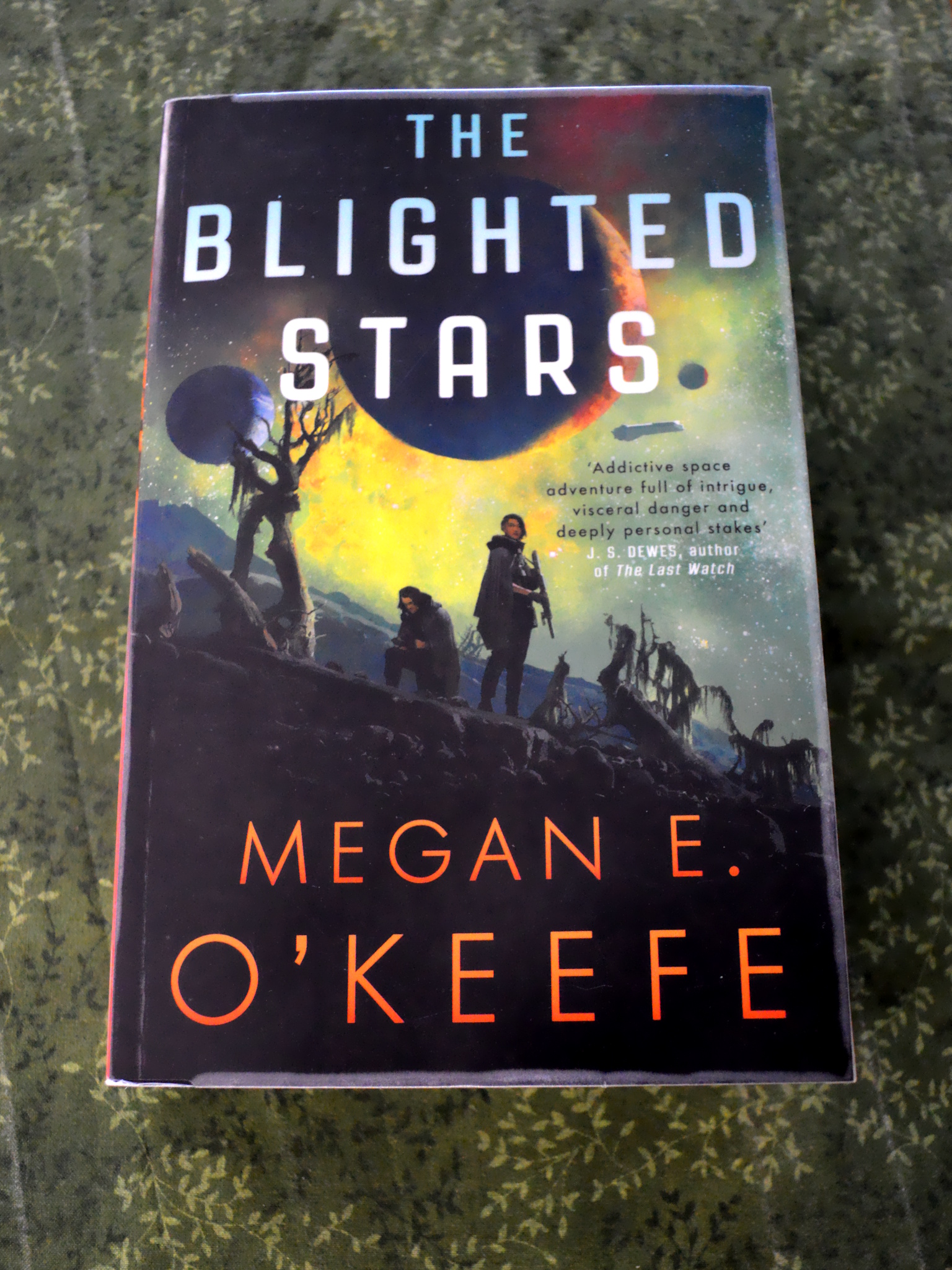
“Everyone remembered firsts. Your first love, first kiss, the birth of your first child, or the sight of your first snowfall. A life was built on the back of firsts. Shining moments, pins in the timeline, holding who you were together.”

–Acaelus Mercator in The Blighted Stars by Megan E. O’Keefe

Current Reading The Blighted Stars

I have to confess that the first snowfall had me laughing out loud, and long and heartily, too! Not because it’s an unreasonable first to remember per se. (I gather there are a lot of people for whom it was indeed a remarkable moment to witness!) I laughed because this is a case of inadvertent but nevertheless a complete and a total case of nooope.

My first snow would be extremely unlikely for me to remember, having grown up two hours south of the Arctic Circle. As unusual as remembering your first rain for the Irish, maybe, or your first mountain for someone who grew up in the Rockies.

Sometimes, despite your best efforts, your audience just completely bounces off your writing. And that’s fine, because at best it’s how we discover the remarkable in our everyday.

O’Keefe, Megan E. The Blighted Stars. London: Orbit, 2023, p. 180.

Image by Eppu Jensen

Quotes: We Are None of Us One Thing Alone and Unchanging

Every now and then you read snippets where an overused truism is poked and prodded in a way that nudges something loose.

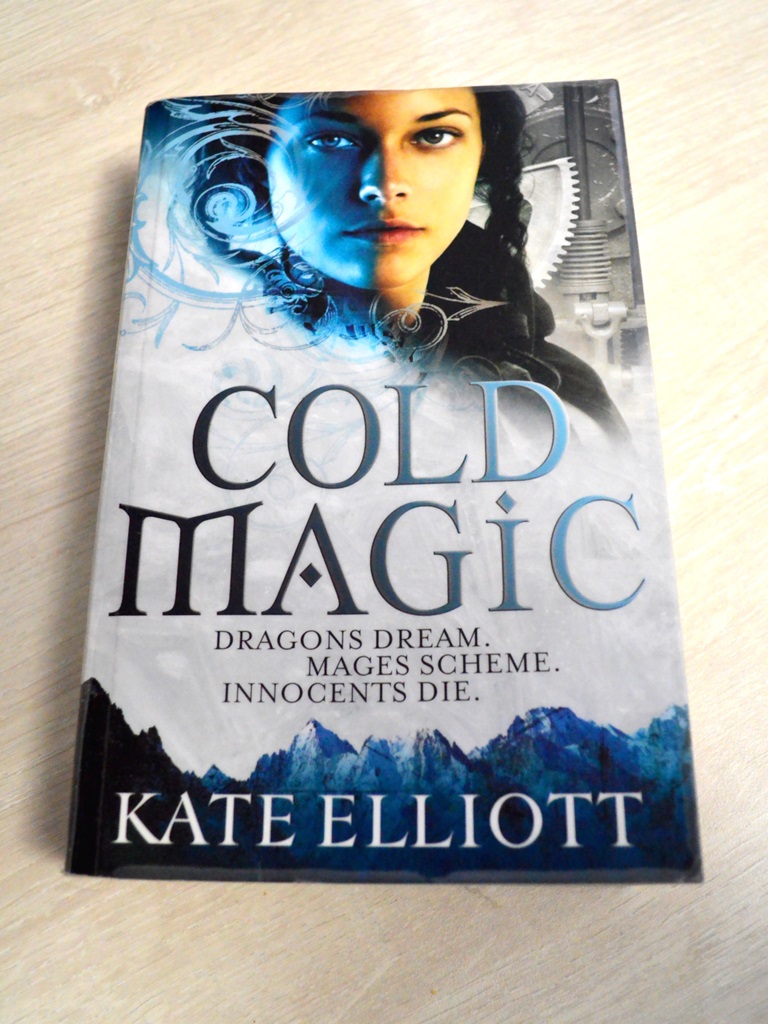
Current Reading Cold Magic Sm

“His features, his gestures, his long black braid: All these had become as familiar to me as if I had known them my entire life long, yet I had first encountered him only a few days ago. I did not understand it. Was this what kinship meant? A sense, deep in your bones, that the person next to you is part of you? Inextricable from what you are? That you could not be who you are without their existence as part of the architecture of your very self?

“We are none of us one thing alone and unchanging. We are not static, or at rest. Just as a city or a prince’s court or a lineage is many people in one, so is a person many people within one, always unfinished and always like a river’s current flowing onward ever changing toward the ocean that is greater than all things combined. You cannot step into the same river twice.”

– Catherine in Cold Magic by Kate Elliott

I remember being kinda stunned one time, years ago now, when talking to a coworker and she said she never re-reads books. I find that unfathomable, to be honest. It’s a bit like never eating the same food twice.

Strictly speaking, of course, the two examples are different, since repeatedly cooking the same dishes makes the kind of pragmatic sense that re-reading does not and cannot offer. But if you eat your favorite foods more than once, why wouldn’t you read your favorite books more than once? It’s so exhilarating to gain a deeper or a wider understanding of a work or phenomenon you think you thoroughly know already, because you have changed.

Elliott, Kate. Cold Magic. London: Orbit, 2010, p. 384-385.

Image by Eppu Jensen

Quotes: You Cannot Always Be Torn in Two

Do not be too sad, Sam. You cannot always be torn in two. You will have to be one and whole, for many years. You have so much to enjoy and to be, and to do.

– Frodo, in The Return of the King

I recently reread The Lord of the Rings for the first time in over a decade. It is also the first time I’ve read the book since we moved from the US to Finland. This line, from Frodo to Sam before his departure from the Grey Havens at the end of the novel, was always a beautiful line, but it hit me harder now.

Eppu and I have always lived a life torn in two. Coming from two different countries on different continents, we always knew that to be together, one of us would have to be far away from the people, places, and things we have grown up with and loved. For many years, she was the one who was far from home, as we lived in the US for my studies and work. Since we moved to Finland a few years ago, now I am the one whose familiar places and people are far away.

You might think that the romance between the human Aragorn and the Elf Arwen would speak to me the most, but their love story plays out on the scope of high mythology, beautiful but too remote to relate to. The simple words of a Hobbit, wishing healing and hope to a beloved friend, struck my heart.

We cannot always be torn in two. Love makes us one and whole.

Tolkien, J. R. R. The Lord of the Rings. Harper Collins edition, 1994, p. 1006.

Christie and Tolkien: When the World Ends but You Keep Going

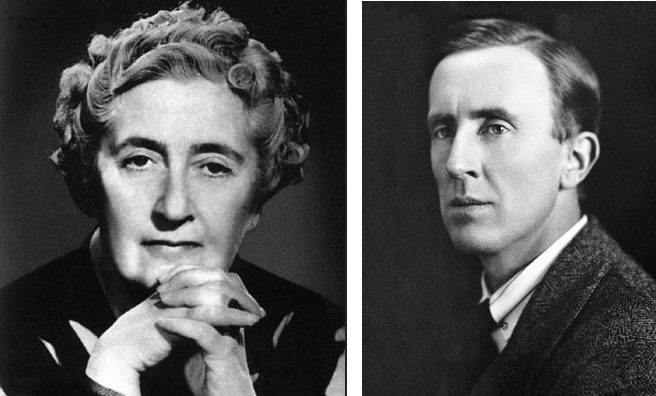
The literary works of Agatha Christie and J. R. R. Tolkien may not seem to have much in common. One wrote murder mysteries set in genteel English country houses, the other high fantasy in a mythic secondary world. When you look at the themes and ideas of their work, though, interesting parallels appear.

The two authors were close contemporaries; Christie was born in 1890, Tolkien in 1892. They belonged to the generation whose young adulthood was shattered by the First World War. Their experiences were different—Tolkien saw battle firsthand as an officer, Christie its terrible aftereffects as a nurse—but they both reflect the shock of the war in their writing.

One theme that occupies both writers is death. Death was, naturally, a crucial element of Christie’s murder mystery stories. In Tolkien’s legendarium, death and the things people will do out of the fear of it is a running theme. But neither writer’s work is focused on death as a fact; rather, the underlying drive in their work is a search for some way in which death makes sense.

In Christie’s case, this theme is more obvious: she writes about detectives solving crimes. By the time we reach the drawing room summation at the end of the book, we can see clearly how and why the victim or victims died. Order is restored to the world, and reason triumphs over the illogic of death, whether that reason is embodied in a fussy Belgian’s love for methodical neatness or a wise spinster’s deep observation of human nature.

In Tolkien’s work, the drive to make sense of death is subtler. Death often appears pointless in Tolkien. Boromir dies defending Merry and Pippin from Orcs, but after he falls the young Hobbits are captured nonetheless. Denethor dies in despair instead of living to see his city saved. But the larger point of Tolkien’s work is that hopelessness is an illusion. We never know the end of our own story or how profoundly the choices we make will affect the world. In the legendarium as a whole, death is the greatest mystery, but also the greatest hope. The world of Middle Earth had a beginning and will someday end, yet the spirits of mortal beings will not end with the world but transcend it through death.

It is not just the death of individuals that occupied Christie and Tolkien, but also how ways of life come to an end. They both witnessed the end of the world, in a sense. The innocence and hope of the time they grew up in perished on the battlefields of the Great War, but they did not. They kept going and witnessed as the world around them changed.

Tolkien’s The Lord of the Rings is about the ending of an age, the Third Age of Middle Earth to be precise. The story takes place during the last days before the Elves either depart into the magical west or dwindle into creatures of fairy tale and folklore, taking their beauty and wisdom with them. Yet the story also carries hope for what is to come after in the ages of Men—hope without guarantees, as Gandalf puts it. The Elf Legolas and Dwarf Gimli reflect on the promise and weaknesses of humans in the streets of Minas Tirith:

“If Gondor has such men still in these days of fading, great must have been its glory in the days of its rising.”

“And doubtless the good stone-work is the older and was wrought in the first building,” said Gimli. “It is ever so with the things that Men begin: there is a frost in Spring or a blight in Summer, and they fail of their promise.”

“Yet seldom do they fail of their seed,” said Legolas. “And that will lie in the dust and rot to spring up again in times and places unlooked-for. The deeds of Men will outlast us, Gimli.”

The Lord of the Rings. Book 5, Chapter 9, “The Last Debate”

Christie reflects the changing world in different ways, but also with hope for what the future will bring. Her early works are set in the interwar world of country estates and garden parties that we typically think of when we think of a Christie mystery, but that world was ending. She kept writing through the fifties and sixties as the life and culture of Britain changed around her.

The traces of this change are all over Christie’s writing. One of the ongoing themes in her mysteries is that it is difficult to know who people really are. Many of her plots hinge on people passing themselves off as or being mistaken for someone else. Such impersonations were possible only because the world of country villages and garden parties where everyone knew one another was ending. Miss Marple speaks of this shift in A Murder is Announced:

Fifteen years ago one knew who everybody was. The Bantrys in the big house—and the Hartnells and the Price Ridleys and the Weatherbys … They were people whose fathers and mothers and grandfathers and grandmothers, or whose aunts and uncles, had lived there before them. If somebody new came to live there, they brought letters of introduction, or they’d been in the same regiment or served in the same ship as someone there already.

But it’s not like that any more. Every village and small country place is full of people who’ve just come and settled there without any ties to bring them. The big houses have been sold, and the cottages have been converted and changed. And people just come—and all you know about them is what they say of themselves.

A Murder is Announced. Chapter 10, “Pip and Emma”

At the same time, Christie also saw that the fundamentals of human nature that underlay her stories were not changed by the passing of time. People might live differently, but they still had the same jealousies and aspirations, desires and fears as they ever had. Miss Marple, again, reflects on this fact in The Mirror Crack’d from Side to Side as she explores the new housing development at the edge of her beloved village:

She turned out of Aubrey Close and was presently in Darlington Close. She went slowly and as she went she listened avidly to the snippets of conversation between mothers wheeling prams, to the girls addressing young men, to the sinister-looking Teds (she supposed they were Teds) exchanging dark remarks with each other. Mothers came out on doorsteps calling to their children who, as usual, were busy doing all the things they had been told not to do. Children, Miss Marple reflected gratefully, never changed. And presently she began to smile, and noted down in her mind her usual series of recognitions.

That woman is just like Carry Edwards—and the dark one is just like that Hooper girl—she’ll make a mess of her marriage just like Mary Hooper did. Those boys—the dark one is just like Edward Leeke, a lot of wild talk but no harm in him—a nice boy really—the fair one is Mrs Bedwell’s Josh all over again. Nice boys, both of them. The one like Gregory Bins won’t do very well, I’m afraid. I expect he’s got the same sort of mother…

She turned a corner into Walsingham Close and her spirits rose every moment.

The new world was the same as the old. The houses were different, the streets were called Closes, the clothes were different, the voices were different, but the human beings were the same as they had always been.

The Mirror Crack’d from Side to Side. Chapter 1

Some days now it feels like we are living through the end of the world we knew, and none of us knows what will come next. In these times, there is comfort in going back to writers who lived through the end of one world and saw that there was hope in the next.

Tolkien, J. R. R. The Lord of the Rings. London: HarperCollins, 1994, p. 855.

Christie, Agatha. A Murder is Announced. London: HarperCollins, 2023, pp. 132-133.

Christie, Agatha. The Mirror Crack’d from Side to Side. London: HarperCollins, 2023, pp. 13-14.

Image: Photo collage of Agatha Christie and J. R. R. Tolkien by Erik Jensen. Photograph of Christie via Wikimedia; photograph of Tolkien via Wikimedia

Post edited to correct formatting errors

Quotes: You Were Never Going to Be Anybody Else

Food for thought for a new year:

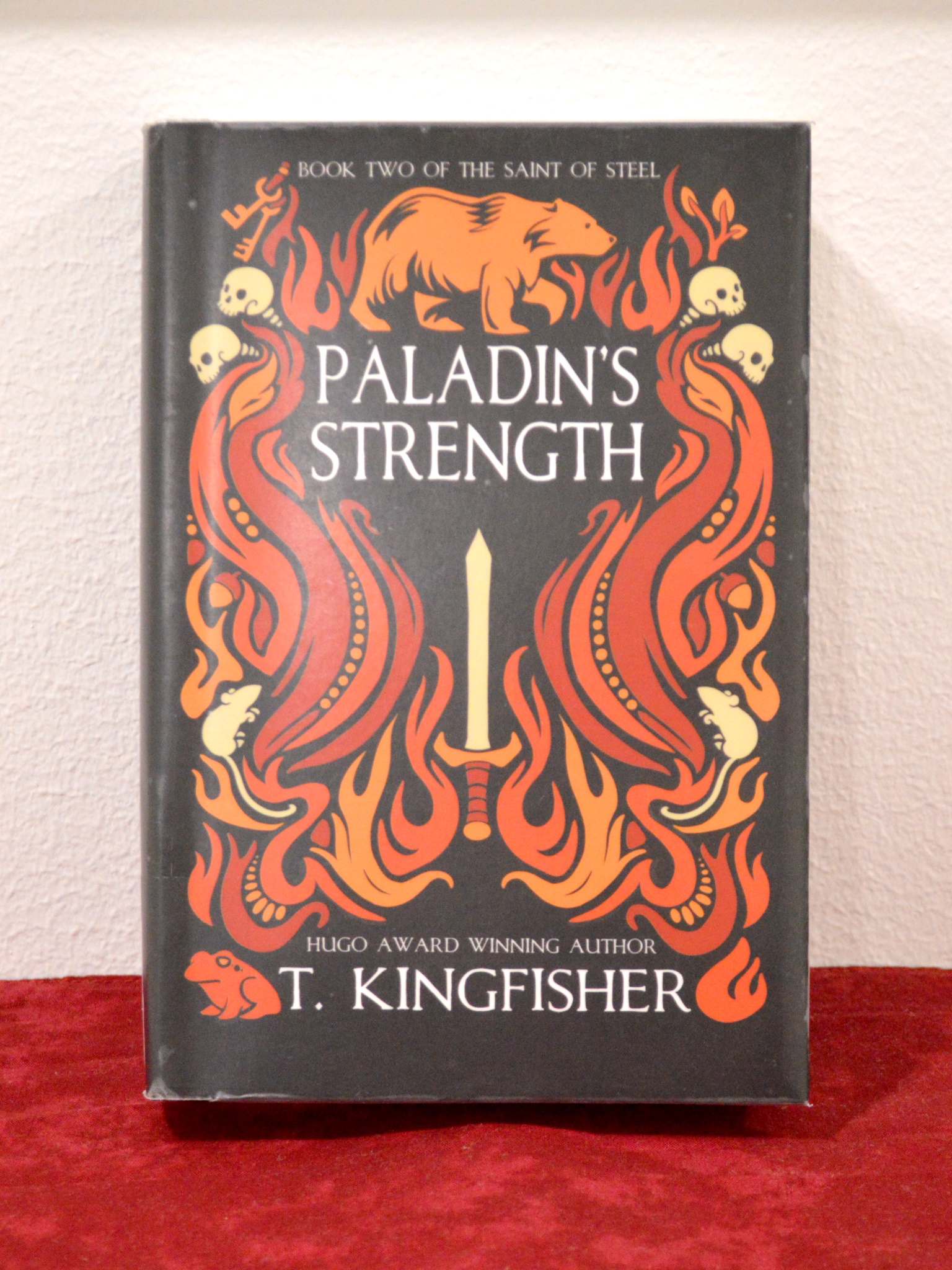
“You learned better and you got on with things. You learned that you were what you were, and tried to be the best version of that person, because you were never going to be anybody else. And you stopped envying other people because everyone had problems you didn’t know about.”

–Sister Clara in Paladin’s Strength by T. Kingfisher

Current Reading Paladins Strength

I can’t think when I’ve last felt envious of another person. I’m sure it has happened, and relatively recently, too; I just can’t remember it. Which means—I hope, at least!—it can’t have been a very strong emotion or moment, which is a good thing.

In any case, more of the best version of myself for the coming year would also be great, not just for me but for the people around.

Kingfisher, T. Paladin’s Strength. Dallas: Argyll Productions, 2021, p. 200.

Image by Eppu Jensen

Stories in which Being Good is Smart

I’ve been thinking a bit lately about how to describe the kind of stories I want to experience, whether on the page or the screen. I’ve long known that I enjoy stories about characters solving problems. But that’s not the only thing I look for in fiction.

I enjoy reading about people who are good to one another, kind, compassionate, and generous. I don’t enjoy stories in which kindness is portrayed as weakness, or in which the most manipulative, cruel, or ruthless characters prosper at the expense of others. I want to see how being kind and treating others well is the best way to go about solving problems. I like stories in which being a good person isn’t just the right thing to do, it’s the smart thing to do.

I don’t mean stories with a moralistic bent, in which some outside force (be it divinity, fate, or just the author’s guiding hand) intervenes to reward virtue and punish vice. I don’t want to see good people win just because they are good. I want to see them win because complicated problems can’t be solved by one person acting alone, no matter how devious or ruthless they may be. Big problems only get solved by people working together, and the best way to get people working together is to treat them decently.

Here are a few my favorite stories on page and screen that fit what I’m looking for.

J. R. R. Tolkien’s The Lord of the Rings is a tale of cosmic good and evil, but one that plays out on the individual level. The forces of good ultimately triumph because many individual people, some of them quite small and unimportant, choose the good of others over their own safety or comfort. Katherine Addison’s The Goblin Emperor follows Maia, a neglected half-goblin prince, as he is thrust by circumstance onto the throne of an Elvish empire. Maia is surrounded by devious plotters and dangerous revolutionaries, but he keeps his throne and his head by listening to others, finding trustworthy allies, and being compassionate to the weak and vulnerable. In Martha Wells’s Murderbot Diaries series, the sarcastically self-named Murderbot is a human/machine construct designed by a ruthless ultra-capitalist corporation to fight and kill, but who would rather just be left alone to watch media. Over the course of the stories, it discovers humans who are not ruthless ultra-capitalists, whom it ends up learning to trust and value.

Star Trek is all about characters being good. Deep Space Nine pushes its characters to the limits of the universe’s hopeful utopianism through trauma and war, but ultimately finds them trusting one another, working together, and finding compassion even for their most implacable enemies. In Doctor Who, the wandering Time Lord stumbles into one disaster after another, but approaches them all with a spirit of hope and understanding, asking questions always and shooting never. Downton Abbey follows the inhabitants of the titular manor, both the family upstairs and the staff downstairs, through the tumultuous social changes of the early twentieth century. All the characters have their flaws, and some can be quite vicious, but the series follows how the characters come to rely on one another, and how even the most mercenary of them learn that kindness and compassion are vital for surviving in a changing world.

These are the kinds of stories I want more of: people being good or learning to be good, not just because it’s the right thing to do, but because it works.

Images by Erik Jensen

Some Cozy Fiction Favorites

Recently I’ve been very drawn to cozy fiction. I focus on SFF and mystery for the most part, but not exclusively; my consumption also tends to (but doesn’t exclusively) fall under fantasy. (I do also continue to read and watch other kinds of stories like competence porn). But regardless of genre, the works I enjoy the most share a certain element of comfort in them.

Thematically I need:

  • lower stakes—the problems must be smaller. (They can be large-ish for the characters, however.) No cataclysms or world-enders (i.e., quests that only the protagonist can complete before the looming threat will irrevocably ruin life in the whole universe), and absolutely nothing gloomily post-apocalyptic. Legends and Lattes by Travis Baldree amply fills this criterion. (Although if L&L had had any more faffing about with coffee than it already did I might have screamed.) His Bookshops and Bonedust was good, too.
  • protagonists who either already have or within the story make at least one reliable, supporting connection. The Earthsea world by Ursula K. Le Guin has quite a few characters like this. (Nostalgia does also help.) A found family counts for me, too, of which the Wayfarers series by Becky Chambers is a delightful example. (The Monk & Robot duology, however, I emphatically bounced off of.)
  • antagonists who form reasonable obstables, but aren’t too far-out or vile. I might mention The Goblin Emperor by Katherine Addison.
  • things to eventually settle into a comfortable state. If not an outright happy ending like in The Princess Bride movie, then at least a kind of a happy ending. As Erik put it, as happy an ending as possible under the circumstances. Thornhedge by T. Kingfisher comes to mind.
  • and last but not least, protagonists who know themselves and are comfortable with themselves and their place in the world, like Ellis Peters’s Brother Cadfael stories. (Sadly, you can’t binge read the series without quickly noticing what a boring copy-paste job Peters does with the featured young women—they tend to be perky and pretty and often strong-willed. That’s all fine and good, in itself, but there are already enough Smurfettes, thank you.)


As always, learning to work together is a huge bonus for me. Plus, the focus characters need to come across as rounded personalities, not paper dolls being carted around delivering plot-advancing lines. The Murderbot Diaries by Martha Wells handsomely fit these two criteria (even if some of the problems are larger), as does T. Kingfisher’s The Saint of Steel paladin series (even if there’s a little more romance than I’d generally care for).

There are also a number of works that fill some of the wishlist points but not others. Katherine Addison has added to the fascinating world of The Goblin Emperor in the excellent duology The Witness for the Dead and The Grief of Stones, which I’d count cozy otherwise (or cozy enough, like Christie’s mysteries), but the protagonist Thara remains troubled throughout, with just the tiniest glimpse of contentment at the end of TGoS.

The Keeper’s Six by Kate Elliott also follows a protagonist with a number of established allies, but the problem was too grand and some of the characters too snide to fit it into my comfort reads category. And the otherwise excellent Thorn by Intisar Khanani has a very nice but ultimately helpless human who remains far too helpless for far too long.

In the visual media, if possible I would like to pull everything concerning the village of Ta Lo in Shang-Chi and the Legend of the Ten Rings into its own story; there isn’t too much of it in the Marvel Cinematic Universe version, but what there is is lovely. Peter Jackson’s The Lord of the Rings and The Hobbit show snippets of the ultimate cozy setting, the Shire, but, alas, they don’t amount to a long sequence either.

Character-wise, the Disney+ Obi-Wan Kenobi series features a delightful growing friendship between young Leia and Obi-Wan, but I couldn’t call the series cozy otherwise. To venture into the historical, most Jane Austen adaptations and the Miss Marple series with Joan Hickson always deliver. In fact, we just finished a most satisfying Miss Marple rewatch. 🙂

Unsplash Mariah Krafft Hygge Essentials Sm


There is, however, something elusive about my sense of cozy fiction which I haven’t yet been able to quite put my finger on. Oddly, as much as like tea, taking a mystery and slapping in ample servings of tea doesn’t necessarily cut it. For instance, Malka Older’s The Mimicking of Known Successes and The Imposition of Unnecessary Obstacles were complete misfires for me.

Some commentaries on the rising popularity of cozy fiction talk about foregrounding sensory details. That might have something to do with the appeal, although I think an overload is an overload regardless of what you’re overloading. (Hello there, Legends and Lattes, faffing about coffee.) I suspect, though, that the crucial factor for me is the protagonist’s sense of comfort with their situation; a comfortable amount of self-knowledge or self-awareness. I’ll have to think about it some more.

Apart from this mystery ingredient, it seems the works I enjoy most right now are basically about recognition of the ordinary. They have ordinary people persevering, or, in case of people with extraordinary skills, characters who nevertheless know how ordinary they are in other respects. Quite ordinary motives behind even the most elaborate murder plots. Or perhaps simply the enjoyment of commonplace situations and routines—but in a SFFnal setting, because I do still want a little bit of a twist in my fiction. 🙂

With the past three years having been very trying, I don’t wonder at taking comfort in a slower pace, lower-stakes challenges, more familiar burdens, and happy endings. With tea and yummy noms, if possible.

I may, in fact, be turning into an old cat, LOL! 🙂

Unsplash Sebastian Latorre Cat Sleeping Sm

Anything you could recommend along these lines? Do chime in! Also, if you have any cozy gaming experiences, I’d love to hear about them.

Images via Unsplash: Hygge essentials by Mariah Krafft. Cat sleeping by Sebastian Latorre.