Western Asian Science Fictional Art

Omar Gilani is an illustrator, designer, and concept artist currently based in Pakistan. Not all of his art has sci-fi elements, but the pieces that do are amazing. Take a look:

Omar Gilani 2
Omar Gilani
Omar Gilani 5
Omar Gilani

The engineer-turned-artist takes inspiration from everyday life and combines traditional drawing with digitally created elements.

Omar Gilani sits4
Omar Gilani
Omar Gilani maybe3
Omar Gilani

I am very sorry I found out about his work only a day(!) after the Hugo nomination period closed. Well, hopefully he’ll continue producing genre art so I can nominate him next year.

Found via Islam and Science Fiction.

This post has been edited.

Out There is an occasional feature highlighting intriguing art, spaces, places, phenomena, flora, and fauna.

Online Finds: Trappist-1 Illustrations

A NASA Tumblr post about the newly found exoplanets in the Trappist-1 system included fantastic artist’s renderings of what the system and the planets might look like.

NASA Tumblr Trappist-1 Illustration System

“The planets also are very close to each other. How close? Well, if a person was standing on one of the planet’s surface, they could gaze up and potentially see geological features or clouds of neighboring worlds, which would sometimes appear larger than the moon in Earth’s sky.”

NASA Tumblr Trappist-1 Illustration Planet

One is even a retro-style travel poster! (See other NASA retro travel posters here.)

NASA Tumblr Trappist-1 Illustration Poster

Love ’em! Find more at NASA on Tumblr!

Note: I wasn’t paid or perked to mention this; just passing along a good thing.

Images by NASA, via the NASA Tumblr blog.

This post has been edited.

Out There is an occasional feature highlighting intriguing art, spaces, places, phenomena, flora, and fauna.

Stained Glass Dalek

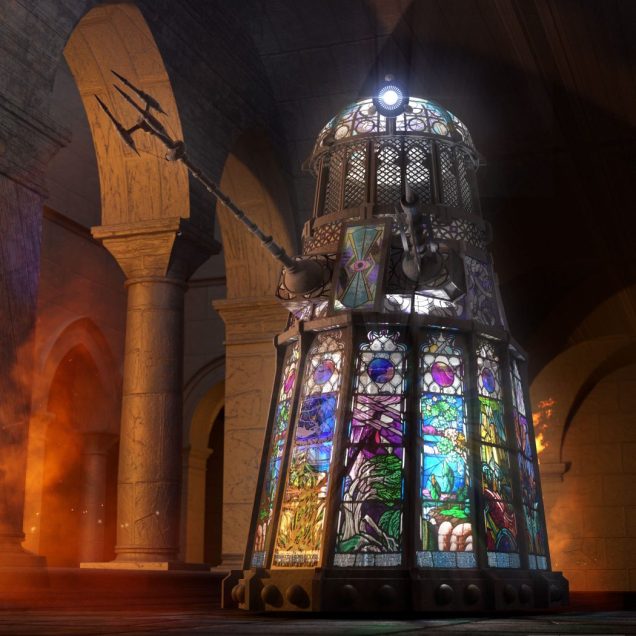
Did you see this amazing stained glass Dalek already?

Jamie Anderson Chris Thompson Stained Glass Dalek Stainley-1050x1050

Producer / director / writer Jamie Anderson worked with designer Chris Thompson to help make the lead and stained glass Dalek a reality. It’s based on a Doctor Who audio drama script by Mike Tucker called Order of the Daleks.

Thompson describes the making-of process:

“My main thought process was to create a “Gothic” Dalek and replace all the flat surfaces with glass designs. My initial sketches had palisades, crowns, spikes and other gothic elements, but we decided to dial a lot of these back for story reasons. In the episode itself these Dalek casings are made by very primitive monks so the focus needed to be on the stained glass and not the metal elements.”

The detailing is absolutely exquisite. There is, of course, more to the design than that—visit Jamie Anderson’s site for the full story and the meaning of some of the elements.

Found via Tor.com.

Image via Jamie Anderson

Out There is an occasional feature highlighting intriguing art, spaces, places, phenomena, flora, and fauna.

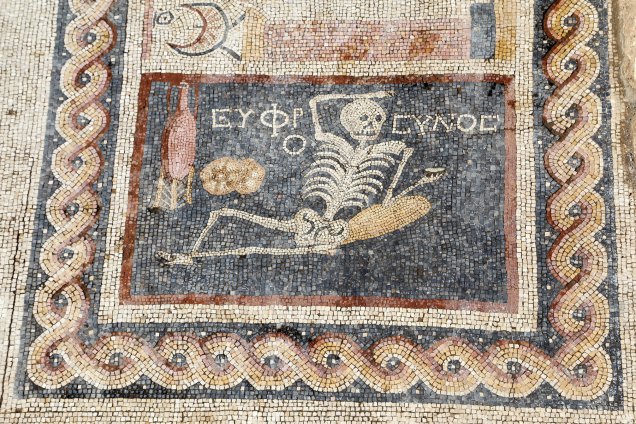
Ancient Skeleton Wishes You Happy Halloween

This skeleton lounging with a drinking vessel in its hand, sitting next to bread and an amphora of wine is definitely very apropos:

The History Blog Anadolu Agency Antakya Turkey Skeleton Mosaic

Known as the skeleton mosaic, the panel is part of a triptych discovered in the dining room of a house in Antakya, Turkey (ancient Antioch). The accompanying words (‘euphro’ + ‘synos’) have been translated as “be cheerful, live your life,” presumably to remind diners of the briefness of life.

Found via Colossal.

Happy Halloween to those celebrating!

Image: Anadolu Agency via The History Blog (Antakya [Antioch], İplik Pazarı district, Hatay, Turkey; probably 3rd c. CE; mosaic)

Out There is an occasional feature highlighting intriguing art, spaces, places, phenomena, flora, and fauna.

Hidden Youth Illustrations Roundup

The anthology Hidden Youth, with Erik’s story “How I Saved Athens from the Stone Monsters”, is expeced in November. We don’t know exactly when yet, but we know that the file has been sent to the printer. It’s very exciting—almost there!

I rounded up some of the artwork commissioned for the collection, but first here’s my headcanon picture for “Stone Monsters.”

In the beginning of “Stone Monsters,” there’s a scene where Mnestra, one of the protagonists who works as a flute girl, uses her veil to try and attract customers. I don’t think it was Erik’s intention, but the scene immediately brought to my mind this amazing, dynamic Greek statue we’d seen years ago at The Met:

The Met Bronze Veiled Masked Dancer

Bronze statuette of a veiled and masked female dancer, c. 3rd-2nd century BCE.

When thinking about “Stone Monsters,” this is the image that I connect with the story. Unfortunately the dancer’s veil is drawn so close that we can’t see her face. That’s where the Hidden Youth artists come to the rescue. I just happened to see this sneak peek by Paula Arwen Owen of her papercut illustration for “Stone Monsters” on Twitter:
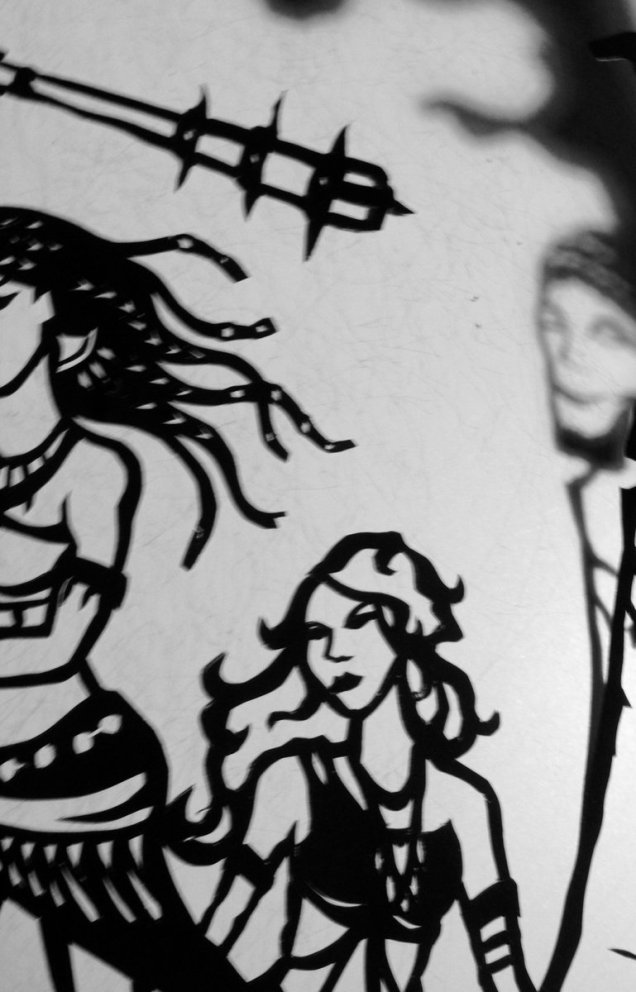
Twitter Arwen Designs Stone Monsters Papercutting Sneak Peek

That’s eggplant and egg, all right, with a herma in the background. 🙂 Love it!

Then I was curious and went looking for Hidden Youth art. Others have also posted glimpses of their work in progress. For example, Ellen Million:
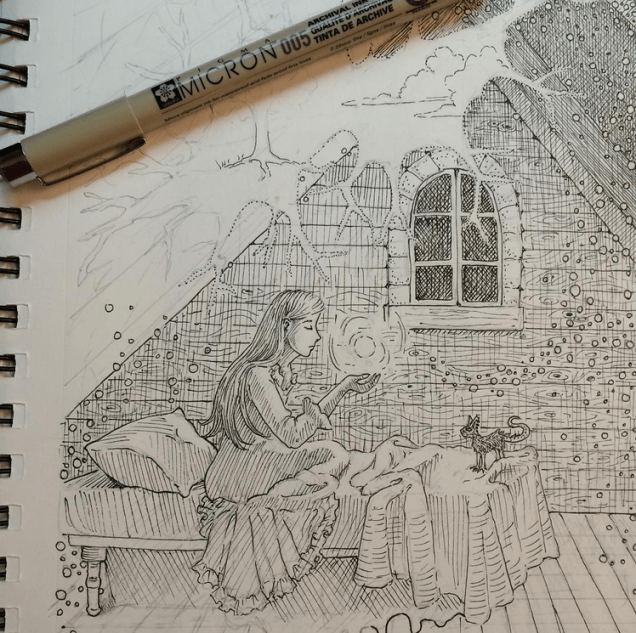
Instagram Ellen Million Hidden Youth

(She’s shared a slightly bigger photo as well.)

Two girls by Veleries / Thio Wina Oktavia:
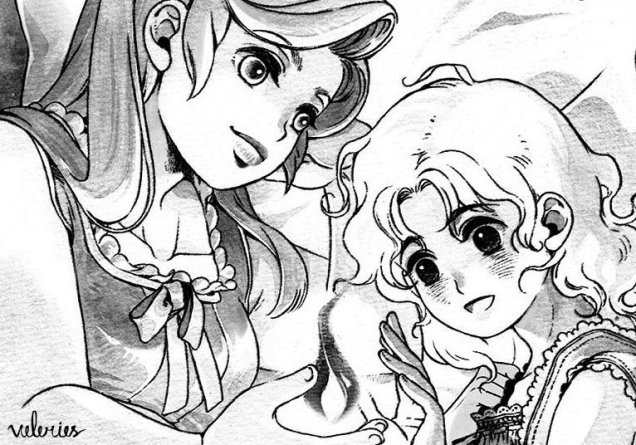
Twitter Veleries Hidden Youth

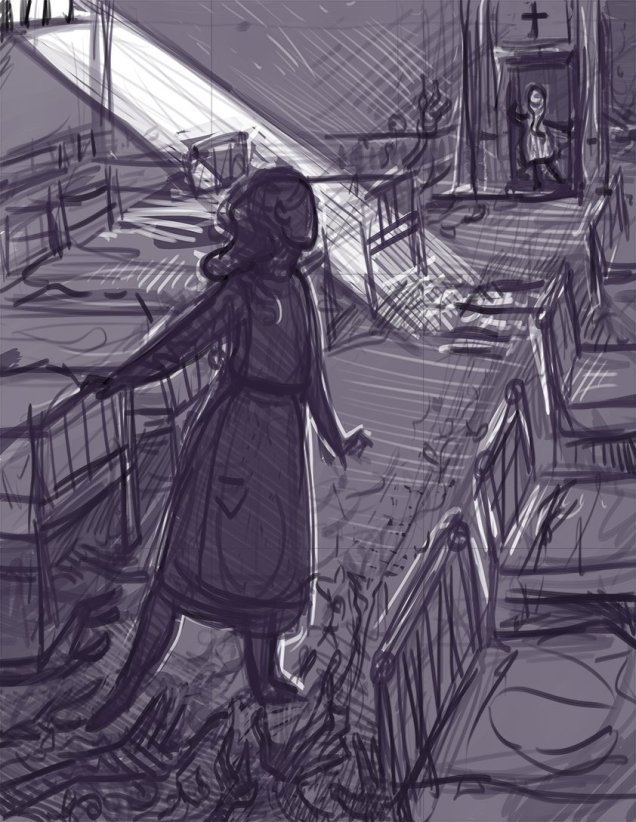
Kat Weaver’s dormitory(?) sketch:

Twitter Kat Weaver Hidden Youth

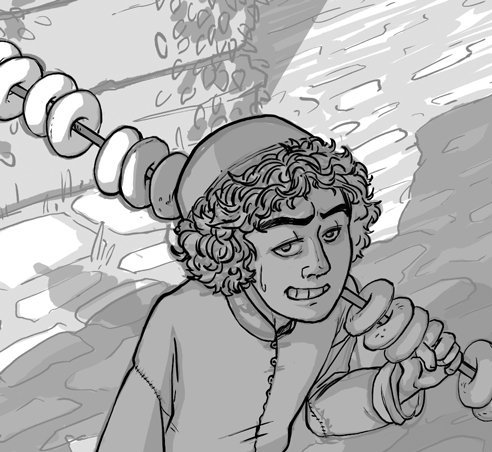
A sneak peek by A. D’Amico:

Twitter A DAmico Hidden Youth

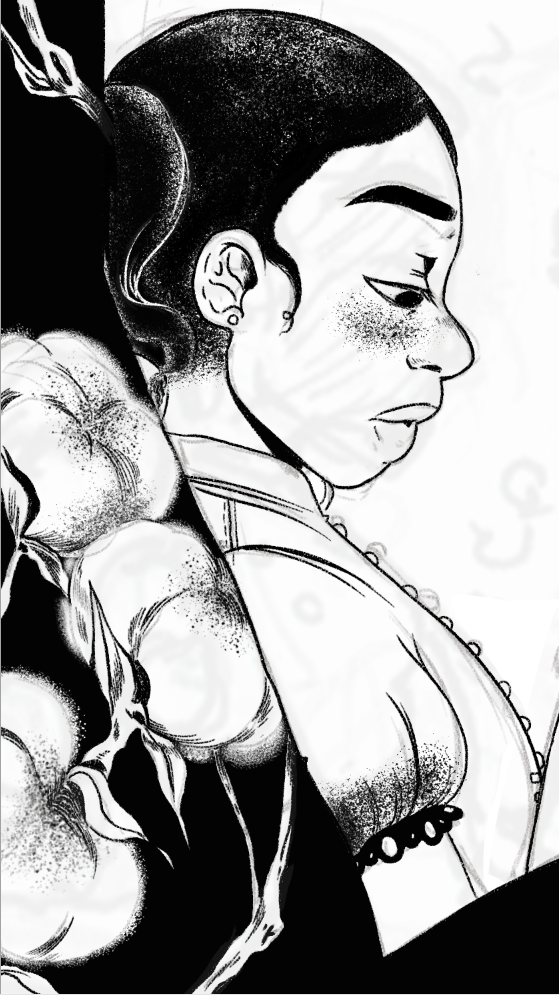
A glimpse of Jay Bendt’s piece:

Tumblr Jay Bendt Hidden Youth

And, finally, Charis Loke’s almost finished illustration:
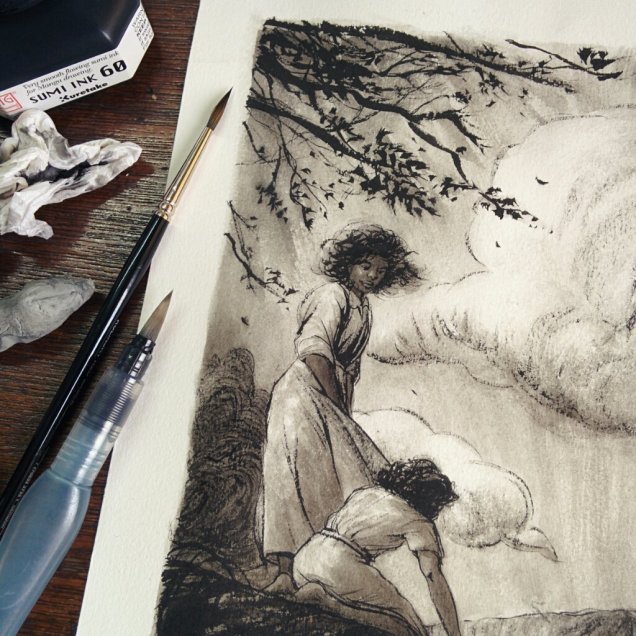
Twitter Charis Loke Hidden Youth

They all look so great—can’t wait to have the book in my hands!

Images: Bronze statuette by Eppu Jensen (Greece; c. 3rd-2nd century BCE; bronze). Papercutting by Paula Arwen Owens via Twitter. Attic room by Ellen Million via Instagram. Two girls by Thio Wina Oktavia via Twitter. Dormitory by Kat Weaver via Twitter. Street seller by A. D’Amico via Twitter. Leaning girl by Jay Bendt via Tumblr. Under clouds by Charis Loke via Twitter.

In Making Stuff occasional feature, we share fun arts and crafts done by us and our fellow geeks and nerds.


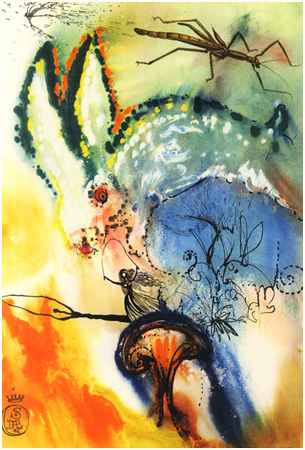
New Edition of Alice in Wonderland with Salvador Dalí

In 2015, commemorating the 150th anniversary of Alice’s Adventures in Wonderland, Princeton University Press reprinted a color edition with illustrations by Salvador Dalí.

William Bennet Modern Down the Rabbit Hole DALI1003

Surreal, almost psychedelic, and rarely seen before the reprint, the original gouaches were first published in 1969.

William Bennet Modern The Mock Turtle's Story DALI1011

The color use is amazing, and the surrealist style fits elements of the story. However, I can’t escape the feeling that had I seen these illustrations as a kid, they would’ve given me nightmares.

Found via Colossus and Brain Pickings.

Images: Down the Rabbit Hole and The Mock Turtle’s Story via William Bennett Gallery (1969; heliogravures of original gouaches; by Salvador Dalí)

Out There is an occasional feature highlighting intriguing art, spaces, places, phenomena, flora, and fauna.

Text as Art

Language can be beautiful. We all know this as readers and writers. But language can also be beautiful as a visual, even physical work of art. In pre-modern societies where literacy rates were low, most people who looked at written text experienced it as a work of art, not as a work of language.

Here, for example, is the beginning of the Gospel of John in the Book of Kells.

Book of Kells, folio 292r via Wikimedia (Ireland; c. 800; ink on vellum)

It may be hard at first to tell that there is even a text in the midst of this work of art, but if you know where to look you can find the Latin text: IN PRINCIPIO ERAT VERBUM (In the beginning was the word).

Book of Kells via Wikimedia, text highlighted by Erik Jensen

Continue reading

New Ancient Mediterranean Database: Public Monuments in Roman Greece

A new project called Monuments of Roman Greece is under development at the University of Oxford. It covers about four centuries, c. 200 BCE – 200 CE, from when Rome began to expand into the Greek area of influence to the height of the Roman Empire, and will result in a series of articles plus a database.

The Met Bronze Veiled Masked Dancer

From the project website:

“Under the Roman Empire the marketplaces, streets, gymnasia and theatres of the cities of Greece were full of monuments such as tombs, inscribed stelai and – most numerous of all – statues. There were statues of bronze and of marble, portraying gods, heroes, emperors, kings and local dignitaries. Some of these monuments had already stood for centuries; others were fairly recent. Arguably no urban culture in history, with the possible exception of Rome itself, has set up such vast numbers of monuments in its public spaces. The nearest modern analogy for the amount of cultural material on display in the Roman period polis would be the museum. Yet the analogy falls short – the settings where these monuments stood were not places designed primarily for the passive viewing of works of art, they were vibrant public spaces, alive with the tumult and commotion of the city. If we are to understand the society and culture of these cities it is vital that we understand the impact of public monuments on the people who moved about them in their daily lives.“

The work is carried out by Dr. C. P. Dickenson at the Faculty of Classics, with Prof. R. R. R. Smith as scientific adviser. Both the website and the database are still in progress. Also, it sounds like the final home of the database is not finalized at the time of this writing; however, a browsable version is currently up on the University of Oxford website.

Visit the Public Monuments in Roman Greece website for scope and instructions on searching plus more info, or read Dr. Dickenson’s blog for behind-the-scenes tidbits on the development work, among other things.

Image: Bronze statuette of a veiled and masked dancer, from the collections of The Metropolitan Museum of Art, bequest of Walter C. Baker in 1971, accession number 1972.118.95, by Eppu Jensen (Greek; 3rd-2nd century BCE)

Native American Style Mainstream Genre Icons

Jeffrey Veregge, an artist and member of the Port Gamble S’Klallam Tribe in Washington state, makes positively fantastic versions of mainstream genre icons like superheroes, movie characters, Transformers, aliens, and the like.

Jeffrey Veregge Early-Bird
Early Bird by Jeffrey Veregge

Veregge himself says of his work:

“This site, the work that is seen on it is a reflection of a lifetime love affair with comic books, toys, TV and film. Taking my passions and blending them with my Native perspective, artistic background and the desire to simply be me. Basically I am just trying to have fun and get back to that kid that went to art school to begin with, wanting to create artwork that I want to see and make just for the hell of it.”

Jeffrey Veregge Shield-Logo
Shield by Jeffrey Veregge

Several of his designs would make fantastic fabric prints, like this Flash-inspired one, for example:

Jeffrey Veregge scarlet-blurr
Scarlet Blurr by Jeffrey Veregge (2012)

If there was a fabric Flash version, I’d use it for pencil cases, zipper travel pouches, or a table cloth. Or maybe tall, tall shades with a wide border on the bottom; that would look really striking.

Visit Veregge’s home page for more!

Hey, look! We found a thing on the internet! We thought it was cool, and wanted to share it with you.