Ryan Coogler Is Developing a Wakanda Series for TV

Fantastic news for Wakanda fans! Tor.com reports that “[a]ccording to Deadline, Black Panther director Ryan Coogler has made a 5-year television deal with Disney. His first scheduled project will be a drama set in Wakanda that will be featured on Disney+.”

Flickering Myth Coogler Black Panther Set w Boseman

Apparently developing this series is a part of a broader deal between Coogler’s production company Proximity Media and Disney.

Although we don’t have any other details yet, not even a tentative name, I’m pretty excited. I absolutely loved Black Panther, and as long as he keeps—or is allowed to keep—to that ethos, I have high hopes for the series!

Image via Flickering Myth.

Living Vicariously Through Social Media: Swans in a Winter Wonderland

Reportedly, the Swan Spring wetland park in Ili, Xinjiang, China, has some amazing winter settings. This scene definitely qualifies:

Tumblr F Yeah Chinese Garden Swan Spring Screenshot

I don’t like cold very much, but I do like the look of clean, white snow, and I love blue. This shot is astoundingly beautiful. I’m so sorry I don’t know who filmed the clip this is from.

Here in Massachusetts we have way too much snow for pandemic comfort at the moment. Some of it is pretty, yes, but instead of the graceful swans we have chunky wild turkeys, LOL! Ohwell; at least we’ll get plenty of physical activity by shoveling.

Found via Fuck Yeah Chinese Garden on Tumblr. (Follow the link for a short video.)

Out There is an occasional feature highlighting intriguing art, spaces, places, phenomena, flora, and fauna.

A Farewell to Cards

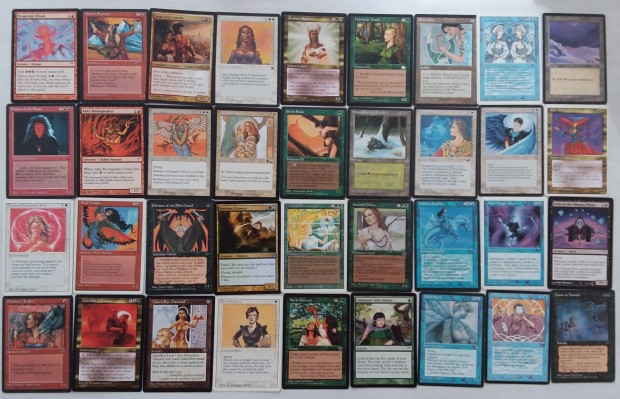
Back in the 1990s, in my high school and college days, I used to be into Magic: The Gathering, the granddaddy of trading card games. I’ve dabbled a little since then, but it’s twenty years since I played the game with any seriousness. I really enjoyed the game, especially the challenge of coming up with interesting decks (I was what they used to call a “Johnny” player), but it isn’t part of my life any more, so I’ve decided its time to get rid of my collection.

After doing a little research on ways of selling Magic cards (and thinking about which ones are viable in the midst of a pandemic), I decided to list my cards on Cardsphere, a website created by and for Magic fans.

So far, I’ve only sold a handful of cards, but I keep my eye on the offers and little by little I’m working the collection down. I was never much into the collecting aspect of the game, so I don’t have many of the high-value cards (although I do have a couple of old dual lands that I’m hoping to sell for a few hundred dollars apiece). Most of what I’ve sold so far has gone for pocket change, and I know I’m losing money on postage on some transactions. Still, it is a pleasure to know that these cards I no longer have any use for are going to make someone else happy.

The process of sorting, organizing, listing, and sending off my cards has meant I’ve spent more time looking at my collection in the past few months than I did in the previous couple of decades, and in a way that has been good for me. It’s nice to be reminded of happy days long ago and to say a proper goodbye to the old dears.

My card inventory is visible here, if anyone wants to check out what I have to offer.

Image by Erik Jensen

Of Dice and Dragons is an occasional feature about games and gaming.

Rating: Deep Space Nine, Season 5

It’s a bit of a lackluster fifth season for Deep Space Nine, but that doesn’t mean there aren’t bright spots. Here’s our take:

  1. “Apocalypse Rising” – 4
  2. “The Ship” – 5.5
  3. “Looking for Par’Mach in All the Wrong Places” – 7
  4. “Nor the Battle to the Strong” – 5
  5. “The Assignment” – 2.5
  6. “Trials and Tribble-ations” – 9
  7. “Let He Who Is Without Sin” – 1
  8. “Things Past” – 1.5
  9. “The Ascent” – 7.5
  10. “Rapture” – 5.5
  11. “The Darkness and the Light” – 1
  12. “The Begotten” – 4
  13. “For the Uniform” – 3.5
  14. “In Purgatory’s Shadow” – 4.5
  15. “By Inferno’s Light” – 5.5
  16. “Doctor Bashir, I Presume” – 6
  17. “A Simple Investigation” – 2
  18. “Business as Usual” – 1.5
  19. “Ties of Blood and Water” – 2
  20. “Ferengi Love Songs” – 5
  21. “Soldiers of the Empire” – 6
  22. “Children of Time” – 4.5
  23. “Blaze of Glory” – 3.5
  24. “Empok Nor” – 1
  25. “In the Cards” – 8
  26. “Call to Arms” – 8.5

The average rating for the season is 4.4, not terrible but a bit weak. There are some good episodes this season, even some great ones, but there’s also a lot of crud at the other end of the scale dragging the average down.

The worst episode of the season is a rare three-way tie between “Let He Who Is Without Sin,” a character study of a grumpy Klingon; “The Darkness and the Light,” an overblown bit of noir that kills off some of Kira’s more entertaining old resistance buddies; and “Empok Nor,” another bit of noir which forces the usually sparkling Andrew Robinson to play a duller, flatter version of Garak. All of these rate a 1 for having tedious plots (if any at all) and wringing the joy and life out of the performances. In fact, a pall of noir hangs over a lot of the lowest-rating episodes this season, suffused with angst, tension, and cynicism. “The Assignment” (2.5), “Things Past” (1.5), “A Simple Investigation” (2), and “Business as Usual” (1.5) all feel like the writers’ room was full of frustrated 40s detective pulp scribes.

On the other hand, there are some brilliant episodes this season, too. The best of the lot is “Trials and Tribble-ations,” coming in at 9 with a joyful celebration of both the spirit and the silliness of classic Star Trek. The loving recreation of the classic sets, costumes, and props, plus the ingenious ways our DS9 crew get to have their own adventure in the background of one of the great comedy episodes of the original, make this episode a delight to rewatch. The same spirit of fun animates “In the Cards” (8) and “Looking for Par’Mach in All the Wrong Places” (7), two episodes that part the gloom of war and politics for a moment to let the relationships between the characters flourish. And the season ender, “Call to Arms” (8.5) is a gripping action piece that throws all of our characters into unexpected situations for the start of the next season.

There may be a lot to skip this season, but there are definitely some episodes that are well worth going back to.

Image: Sisko and Dax blending in on the original Enterprise, from “Trials and Tribble-ations” via IMDb

In the Seen on Screen occasional feature, we discuss movies and television shows of interest.

Protagonists with Radical Acceptance Decide to Let Adversity Wash over Them

Fantasy and science fiction author Vida Cruz tackles an aspect in SFF that was new to me: that BIPOC protagonists are often seen by (white, Western) editors and readers as inactive, and why that’s false.

(I’ve written elsewhere a little about teaching myself to read novels in English after I started learning the language in 7th grade, how it’s so effortless to me now because I took the time and trouble then, and how reading mostly Anglo-American literature has shaped my thinking and expectations of stories.)

Cruz’s thread starts here. I’ve unraveled it below:

***

I want to talk about how western editors and readers often mistake protags written by BIPOC as “inactive protagonists.” It’s too common an issue that’s happened to every BIPOC author I know.

Often, our protags are just trying to survive overwhelming odds. Survival is an active choice, you know. Survival is a story. Choosing to be strong in the face of the world ending, even if you can’t blast a wall down to do it, is a choice.

It’s how we live these days.

Western editors, readers, and writers are too married to the three-act structure, to the type of storytelling that is driven by conflict, to that go-getter individualism. Please read more widely out of your comfort zone. A lot of great non-western stories do not hinge on these.

Sometimes I wonder if you’re all so hopped up on the conflict-driven story because that’s exactly how your colonizer ancestors dealt with people different from them. Oops, I said it, sorry not sorry. Yes, even this mindset has roots in colonialism, deal with it.

If you want examples of non-conflict-driven storytelling google the following: kishoutenketsu, johakyu, daisy chain storytelling/wheel spoke storytelling. There was another one whose name I forgot but I will tweet it when I recall it.

Anyway, I think there is a space in literature and beyond for stories about radical acceptance or that have a radical acceptance aesthetic. Accepting the things you cannot change but dealing with them in your own way. No pyrotechnics but plenty of potential for drama.

What you want in a story is drama. Conflict does not necessarily equate to drama. Conflict is driven by two or more forces colliding. If a protagonist decides to let the force wash over them instead, that does not mean the protagonist is inactive.

Once again, I repeat: SURVIVING IS A DECISION. BIPOC based in Western countries do it all the time. Us third worlders do it all the time. But of course if you grew up white in a Western country, being mired in hopeless systems will be hard for you to grasp.

And if you’re a BIPOC author, listen: you may be already as good, if not better, than most of the competition out there. You keep getting rejected not because your story sucks but because white editors do not know how to read your work. Keep trying.

Last but not least, we don’t just need diverse demographics for everything, WE NEED DIVERSE STORIES. Get your colonizer heads out of your asses and seek out other traditions. End rant.

I found the other storytelling structure! It’s called Robleto and is of Nicaraguan origin.

Thank you for coming to my TED Talk.

One last! Another type of story that everyone loves (or pretends not to love) but no one will publish in the west is FLUFF. YES THAT’S RIGHT, FANFICTION FLUFF. SUCK ON THAT.

It has been pointed out several times so I will amend the thread to say: all my points apply for disabled, neurodivergent, and chronically ill protagonists, too. Our way of showing agency is DEFINITELY different from yours so please be mindful of that.

***

For me, the main point Cruz makes is:

“What you want in a story is drama. Conflict does not necessarily equate to drama. Conflict is driven by two or more forces colliding. If a protagonist decides to let the force wash over them instead, that does not mean the protagonist is inactive.”

– Vida Cruz on Twitter

This reminds me of my frustration with the Halle Berry -led SF series Extant (which I referred to in an earlier post). I’ve asked myself whether they really wrote her merely feeling and flailing around or whether it is my misreading. Granted, it was some years ago now, but I don’t think I misinterpreted it; Extant lacked self-awareness or self-examination. (Or perhaps the writers’ room was forced to put out such claptrap by people higher up in the production.)

Possible examples of stories with radical acceptance / survival protagonists that do come to mind include the novels The Sound of Stars by Alechia Dow (Black protag) and Among Others by Jo Walton (disabled protag).

Anything you can think of? Please share! The concept is something I’m still mulling over, so more examples would help.

Also, any suggestions on a concise name for protagonists like this? I’m drawing a blank for the moment.

Story Time is an occasional feature all about stories and story-telling. Whether it’s on the page or on the screen, this is about how stories work and what makes us love the ones we love.

A Busy Paeonian Woman

The Greek historian Herodotus tells a story about how the Persians were induced to conquer the Paeonians, a people of the southern Balkans. Like many of Herodotus’ stories, this one is probably more folklore than fact, but it’s a story with a point.

The story takes place while the Persian king Darius was campaigning in the Aegean from his base in the Lydian city of Sardis. A couple of ambitious Paeonian aristocrats figured that if they could convince Darius to conquer Paeonia, they could set themselves up as his local representatives and rule the Paeonians in his name. Here’s how they went about piquing Darius’ interest:

After Darius had crossed over to Asia, two Paeonians by the names of Pigres and Mantyes came to Sardis along with their tall and beautiful sister. They wanted to make themselves tyrants over the Paeonians, and when they had observed Darius sitting outside the town of the Lydians to hold his court, they went about it like this: they dressed their sister up in her best and sent her to fetch water carrying a pitcher on her head while leading a horse by her shoulder and spinning flax. Went she went by, the sight of her caught Darius’ interest, since no Persian or Lydian woman did what she did, indeed no woman of Asia at all did. He was so intrigued that he sent some of his guards to keep an eye on the woman and see what she did with the horse. They reported what they had seen: when she reached the river, she watered the horse, filled the pitcher up to the top with water, and went back again by the same route, carrying the water on her head, leading the horse by her shoulder, and turning her spindle.

– Herodotus, Histories 5.12

(My own translation)

Darius falls for the trick and is convinced that such amazingly hardworking people should be added to his empire.

There are some things to notice about this story. One is some rather complicated gender politics. On one hand, you could hardly find a more literal example of men exploiting the hard work of women for their own gain. On the other hand, it’s interesting that the Paeonian brothers thought that the best way to impress the Persian king was not with the bravery or endurance of Paeonian men but with the diligence and skill of Paeonian women. The fact that it worked implies that Darius both appreciated how difficult a task it was to do three things at once—fetch water, manage a horse, and spin flax—and saw such skill as a good addition to his empire. Herodotus’ story is likely fictional, but it may suggest some Greek awareness of how highly women’s labor was valued in Persia.

To look at it from a different point of view, however, we have to remember that the whole thing was a con, and Darius was the dupe who fell for it. Ordinary Paeonian women weren’t going around carrying jugs, watering horses, and spinning all at the same time while looking their best, and Darius was a fool for thinking they did. That’s something for all of us to remember in these days of social media and the fetishization of busy-ness. We are all like Darius, seated outside the city walls watching carefully curated false images of people doing impossible amounts of work and looking fabulous doing it. And, just like Darius, we’ll all be better off it we recognize it for the lie that it is.

History for Writers looks at how history can be a fiction writer’s most useful tool. From worldbuilding to dialogue, history helps you write.

Well-Dressed Immortals

Very few works of art survived from ancient times with color intact, which can make it hard to imagine just how richly colorful the world may have been in the past. So we’re fortunate to have this frieze of Persian soldiers in glazed brick survive with so much visible color, especially the richly patterned details of their robes. These soldiers, depicted on the Persian kings’ palace at Susa, probably represent the professional core of the Persian army, popularly known as the Immortals.

The brightly patterned robes these soldiers wear may be a ceremonial dress more suited to putting on a display at court than to campaigning on the wild frontiers of the empire, but it is interesting to note that the Greek historian Herodotus makes special mention of the clothing of Persian soldiers when praising the bravery of the Athenian and Plataean soldiers who faced them at Marathon:

These were the first Greeks we know of to charge into battle, and also the first to look on men in Persian clothing unshaken, for up to this time even hearing the name of the Persians had struck the Greeks with terror.

– Herodotus, Histories 6.112

(My own translation)

The Persians were well aware of the use of spectacle for political purposes. It may well be that Persian soldiers dressed to impress when on campaign as well in order to intimidate their opponents, for much the same reasons that the British army of the eighteenth and nineteenth centuries loved to put their bright red coats on display in formation.

Image: Immortals relief from the palace at Susa, photograph by mshamma via Wikimedia (currently Pergamon Museum, Berlin; 5th c. BCE; glazed brick)

History for Writers looks at how history can be a fiction writer’s most useful tool. From worldbuilding to dialogue, history helps you write.

Living Vicariously Through Social Media: An Undersea Roundabout in the Faroe Islands

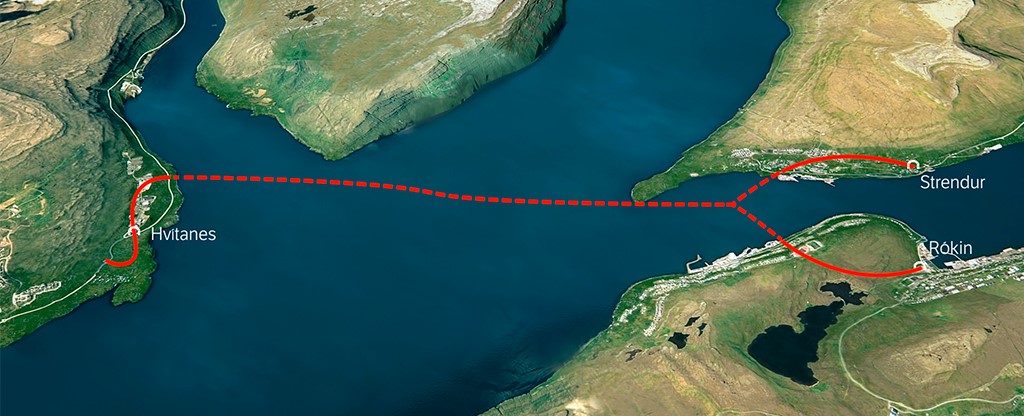
The Faroe Islands—an autonomous region of Denmark—has built bridges and tunnels before to connect the numerous islands or islets and its 50,000-some residents. Never before, however, have they dug an undersea tunnel as deep or as long as the brand-new Eysturoyartunnilin, nor built an undersea roundabout.

Eysturoyartunnil Interior Green

The roundabout is part of a tunnel measuring about 11 km (6.8 miles), the third sub-sea tunnel in the islands. It connects the islands of Streymoy and Eysturoy, and reaches at its deepest 187 meters (roughly 200 yards) below sea level. At this writing the tunnel’s been in use for about a month.

Eysturoyartunnil Map

The roundabout comes with art—sculptures and light effects—designed by the Faroese artist Tróndur Patursson. You can read more about the tunnel at BBC or the P/F Eysturoyar- og Sandoyartunnil project website.

Eysturoyartunnil Interior Blue

Oh, my goodness. It’s obviously not a solution that suits every location, and I assume the cost plus know-how involved can also be a deterrent, but what a feat of engineering and vision it is. This is yet another reason why it’s (pandemic aside) exciting to be living now!

Found via Kristina Háfoss on Twitter.

Images: Map by P/F Eysturoyar- og Sandoyartunnil. Interior images by Estunlar.fo via BBC.

Out There is an occasional feature highlighting intriguing art, spaces, places, phenomena, flora, and fauna.

A Roman Boat Trip to Nowhere

Most of us aren’t doing a lot of traveling these days, what with the pandemic restrictions. Some people are missing the travel experience so much they’re paying for flights to nowhere, but it’s good to be reminded that travel can also be a real pain—uncomfortable accommodations, bad food, rude fellow passengers, awkward schedules, and the like.

Travel could be just as difficult in the past, too. Here’s the Roman poet Horace’s description of an unintentional canal boat trip to nowhere to remind you of what you’re (not) missing.

[…] An hour went by in taking fares
and hitching up the mule. The vile marsh midges and frogs
kept sleep at bay; all the while a boatman, sloshed on cheap wine,
competed with a passenger in crooning to absent
girlfriends. At last, worn out, the passenger went to sleep
and the lazy boatman hitched the mule to a rock
to graze, then flopped down and snored.
When morning dawned we realized the old tub
wasn’t moving, not until some hothead jumped up and gave
the mule and boatman both a good thrashing about the head and hindquarters
with a willow switch. […]

– Horace, Satires 1.5.13-23

(My own translation)

Enjoy the pleasures of just staying home!

Serving exactly what it sounds like, the Quotes feature excerpts other people’s thoughts.

Cephalopodic Human Figures Drawn by Bored Children in 13th-Century Novgorod

Erik Kwakkel, Professor of Book History & Director, School of Information, UBC, Vancouver, Canada, shares all sorts of interesting tidbits online. Among the older ones—posted over seven years ago now and dating from the Middle Ages—are some wonderful children’s drawings made on birch bark.

This piece of bark is from among a large find made near the city of Novgorod, Russia, from the 13th century.

Tumblr Erik Kwakkel C13th Novgorod Birch Bark Drawing

Isn’t it interesting? Look at the eyebrows and the noses! And the torsos! Incredibly cephalopodic, in a charming way. And the hands look like rakes. The figures are clearly identifiable as humans, but the customary ways of drawing some of the details seems to have changed over the centuries quite a bit.

Check out Kwakkel’s Tumblr or Twitter for more book history particulars.

Image via Erik Kwakkel on Tumblr

Out There is an occasional feature highlighting intriguing art, spaces, places, phenomena, flora, and fauna.