Two Fan-Made Black Widow Videos

These two fan-made Black Widow videos are professional grade! First, there’s a fantastic, stylized, graphic title sequence for an imagined Black Widow movie:

Black Widow title sequence by Christopher Haley

Then there’s this trailer for an imagined Black Widow origins movie created from existing movie snippets:

Black Widow: The Origin trailer by unknown; uploaded by Elinor X

I heartily second the sentiment in the origin trailer’s end “credits” – rather than an Ant Man story or another Spider Man re-launch, I’d sooooo much prefer a movie focused on Black Widow. Given the traction that action movies are currently enjoying, it’s a better time than ever before to bring women-lead superhero stories on screen.

But here’s the secret – and I’m going to say this with the emphasis it needs – THE STORIES NEED TO BE GREAT. With solid storytelling (including visuals and pacing), well-rounded characters throughout, and excellent casting. Half-hearted attempts will not cut it.

Hey, look! We found a thing on the internet! We thought it was cool, and wanted to share it with you.

On Viking Warrior Women

Kathleen O’Neal Gear and Michael Gear have an excellent post on Tor.com today discussing the evidence for warrior women in the Viking world.* It’s a really great summary of the evidence as we know it and I encourage you to read it.

As a historian, I wanted to note that this is an excellent illustration of an important but tricky historiographical principle: many weak but different arguments can sometimes add up to a strong argument. As Gear and Gear note, every individual piece of evidence for Viking warrior women is problematic:

  • Sagas are works of fiction, or at least fictionalized history. Many of the warrior women who appear in saga literature are clearly mythical.
  • Ethnographic commentary by outsiders, especially by outsiders with an explicit cultural agenda, is highly suspect.
  • Artistic representations of women bearing arms might represent the fictional Valkyries rather than actual warrior women.
  • Bioarchaeological evidence may not be able to distinguish the bones of a woman who routinely wielded a sword from those of a woman who routinely chopped firewood or cut grain.
  • Weapon burials do not necessarily indicate warriors, because weapons were status markers that might be put in the graves of people who had never used them in life.

The important thing is that all of these pieces of evidence are from different sources that were unlikely to have influenced each other. While each one on its own is equivocal, put together they add up to a convincing argument that at least some individual women in the Viking world armed and fought as warriors.

The tricky thing with this kind of argument is to make sure that the individual pieces are actually separate. If, for example, we could show that artwork, burial customs, and outsiders’ perceptions were all influenced by fictional saga stories of warrior women, then the argument would be much weaker. The wide separation of the various pieces of evidence in time and space, however, makes them more convincing. When 10th-century Swedish burials, 11-century German ethnography, and 14th-century Icelandic sagas all point in the same direction, we can be fairly confident that they’re showing us something meaningful.

* Note: There is an ongoing debate as to whether the word “Viking” should be capitalized or not. I have no dog in that fight. I have capitalized it here because it makes sense to me to do so, but I have no interest in arguing the point.

Hey, look! We found a thing on the internet! We thought it was cool, and wanted to share it with you.

Living on the Land

A lone river winding through the desert. A pair of wide plains. A fragmented land of islands and mountain valleys. When you’re building a world, the land matters. The land we live in shapes the way our societies work. To see what this means, let’s look at a few examples: ancient Egypt, ancient China, and classical Greece. We’ll be zooming way out and looking at these cultures on a very large scale.

150608Egypt Continue reading

History for Writers: Introduction

640px-Herodotus_plate_in_Volissos_entranceWriters of fiction and writers of history have long had a kinship with each other.

It is a telling fact that Herodotus, founding father of western historiography, saw himself as carrying on the work of Homer, the great epic poet. Herodotus himself has often been accused of being better at spinning a yarn than at getting his facts right, and Homer tells us quite a lot about the real warlords and merchants of his day through his stories of epic battles and heroic wanderings. Fiction and history have always sat at the same table. As a professional historian and an amateur writer, I’ve spent plenty of time thinking about how the two go together.

Writing fiction means imagining people and worlds that do not exist. That, in its essence, is also what the study of history is about. Now, historians must keep our imaginations grounded in testable evidence and rational argument, but all those facts add up to nothing without imagination. We will never shadow the emperor’s agents as they crept the back streets of Rome sniffing out agitators, or break bread with a gang of workers in the shadow of a half-built pyramid and listen in to their work-camp gossip, or watch over Confucius’ shoulder as one petty, corrupt, minor official after another slowly drove him to consider whether there could be a better way to live. Those people and the times they lived in are gone, and if we are to make any sense of the evidence they left behind we must try to imagine the worlds in which they lived.

Continue reading

Forest Photos Made Otherworldly

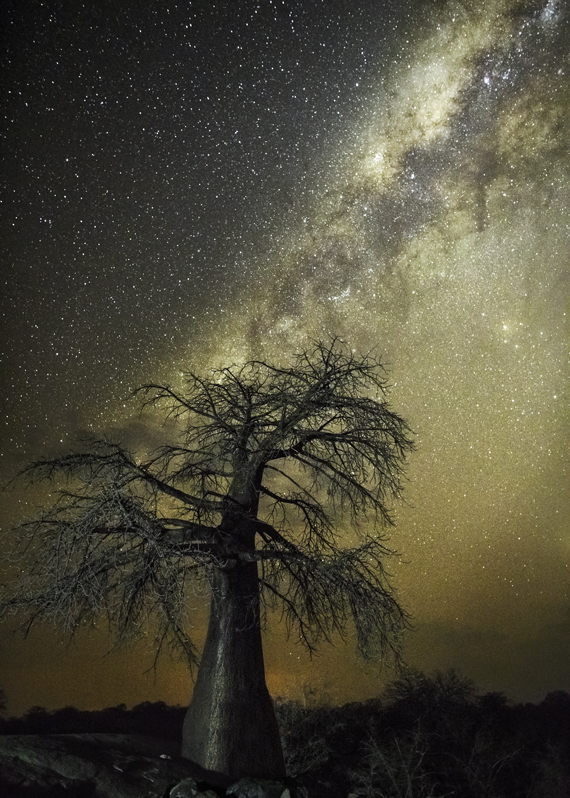
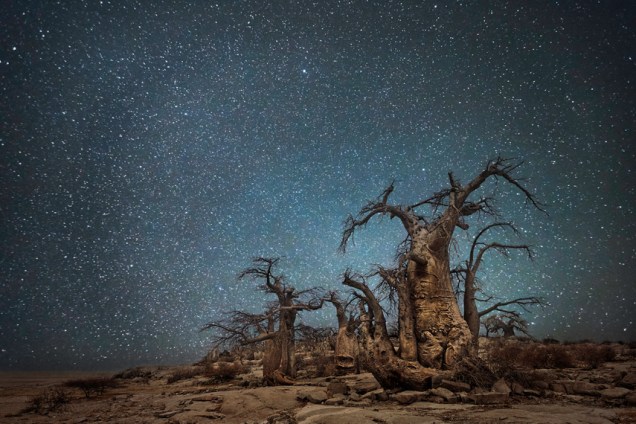
I just ran into a collection of photos of woods and other natural areas by photographer Ellie Davies. I thought many of the forest photos in particular looked magical or fairylike. Take a look:

Ellie Davies Stars-5
Ellie Davies: Stars, 2014-2015. Images: Ellie Davies and STScI/Hubble & NASA.
Ellie Davies Stars-2
Ellie Davies: Stars, 2014-2015. Images: Ellie Davies and STScI/Hubble & NASA.
Ellie Davies Stars-9-2014
Ellie Davies: Stars, 2014-2015. Images: Ellie Davies and STScI/Hubble & NASA.

The photos above come from her series Stars from 2014-2015. I couldn’t figure out how Davies made them. Turns out that they are composites of forest photos and Hubble images of the Milky Way, Omega Centauri, the Norma Galaxy, and embryonic stars in the Nebula NGC 346, provided by Space Telescope Science Institute (STScI) and NASA. Very neat!

Some of Davies’s past projects incorporate photoshopped elements, small-scale construction, or objects into the landscapes she photographs.

Ellie-DaviesSmoke-and-Mirrors-9
Ellie Davies: Smoke and Mirrors, 2010.
Between-the-Trees-11-Bayeux-Crop
Ellie Davies: Between the Trees, 2014.

Despite the man-made additions, the photos stay in an apparitional realm, playing with the otherwordly. And it’s intentional. In her artist’s statement, Davies writes:

“UK forests have been shaped by human processes over thousands of years and include ancient woodlands, timber forestry, wildlife reserves and protected Areas of Outstanding Natural [Beauty]. As such, the forest represents the confluence of nature, culture, and human activity. Forests are potent symbols in folklore, fairy tale and myth, places of enchantment and magic as well as of danger and mystery. In more recent history they have come to be associated with psychological states relating to the unconscious.

“Against this backdrop [my work] explores the ways in which identity is formed by the landscapes we live and grow up in. Making a variety of temporary and non-invasive interventions in the forest, my work places the viewer in the gap between reality and fantasy, creating spaces which encourage the viewer to re-evaluate the way in which their own relationship with the landscape is formed, the extent to which it is a product of cultural heritage or personal experience, and how this has been instrumental in their own identity.”

Found via Colossal.

Out There is an occasional feature highlighting intriguing art, spaces, places, phenomena, flora, and fauna.

Why Co-Geeking?

We’re Eppu and Erik Jensen, your hosts at Co-Geeking. Welcome.

It all started with a t-shirt.

Many years ago, in a small Irish pub, the two of us struck up a conversation over a t-shirt decorated with Viking-age art. For some reason, the topic of role-playing games came up and we found out that we’re both gamers. We knew then that we had so much more to talk about and we discovered a lot of shared interests: history, language, fantasy and sci-fi, games, and more. We’ve been together, and geeking together, ever since.

There’s nothing like living with someone who will hum along when you start singing “Far over the Misty Mountains Cold” or who knows exactly what you mean when you say: “Ugh, Neelix is the Jar-Jar Binks of Star Trek.” Being a geek is so much more fun when you have someone to geek with you: a co-geek, if you will.

This blog is a joint project all about those things that we share a passion for. We’re here to talk about things like history, design, art, stories, characters, language, and why they all matter to us.