New Beowulf Adaptation: Return to the Shieldlands

ITV Studios is producing a new Beowulf adaptation. Named Beowulf: Return to the Shieldlands, the mini-series puts a modern spin on one of the oldest poems in Old English. According to Esquire Network:

“Based on the complex protagonist of a classic poem written between the eighth and tenth century, Beowulf takes place in a mythological place, The Shieldlands, and challenges the notions of good and evil, heroes and villains, and the rule of law against one’s moral code. The drama stars Kieran Bew (DA VINCI’S DEMONS), in the lead role Beowulf; multi-award- winning actor William Hurt (DAMAGES); acclaimed actress Joanne Whalley (WOLF HALL); Ed Speleers (DOWNTON ABBEY) and David Ajala (BLACK BOX).”

IMDB Beowulf Return to the Shieldlands
Beowulf: Return to the Shieldlands, ITV via IMDB

Beowulf: RttS started airing in U.K early January 2016, and Esquire Network is bringing it to U.S. January 23. Location work for the production was shot in the north east of England, in county Durham and Northumberland; 13 episodes have been produced so far. The show has a very perfunctory Instagram account and a more active Facebook page. There’s also a behind the scenes piece with live action clips:

Beowulf Behind The Scenes The World Revealed with Kieran Bew and Ed Speleers via Esquire Network

Beowulf: RttS definitely holds some promise. Apart from being inspired by Actual History(TM) and Anglo-Saxons / Old English to boot, it sounds like there’s some gender-bending (International Business Times reports a “new female thane”); in addition, photos include not just white men among the cast (see MedievalPOC and Farawaysite.com).

IMDB Beowulf Return to the Shieldlands2
Beowulf: Return to the Shieldlands, ITV via IMDB

While I’m excited about the recent resurgence of genre films and tv productions in general, I’m discouraged by the apparent lack of quality control that comes with trying to ride the trend to make a quick buck. (Vikings, The Mortal Instruments: City of Bones, or 2015 Fantastic Four, anyone?)

Sadly, it sounds like Beowulf: RttS might be one of them: according to U.K news site Metro, viewers criticize the series for its “unconvincing CGI, stilted dialogue and unrealistic action sequences” and as “a blatant rip-off ” of Game of Thrones. I can add to the list some decidedly silly costuming and a peculiar combination of plausible and fanciful in the sets and props. I’m torn whether to give it a shot or not – on one hand, it’s based on Beowulf, for crying out loud; on the other, WTF is going on with the design!?

In the Seen on Screen occasional feature, we discuss movies and television shows of interest.

Dining in Middle Earth

“As for the Hobbits of the Shire, with whom these tales are concerned, in the days of their peace and prosperity they were a merry folk… with mouths apt to laughter, and to eating and drinking. And laugh they did, and eat, and drink, often and heartily, being fond of simple jests at all times, and of six meals a day (when they could get them).”

So Tolkien introduces us to his Hobbits, lovers of good food and good company. There is plenty of eating and drinking in The Lord of the Rings, from humble Hobbit fare to Elven delicacies, from the foraged meals of rangers in the wild to the feasts of great kings.

In 2016, we’re taking up a project to eat our way through The Lord of the Rings. Every month, we’ll prepare and present a dinner inspired by foods from the novel, working our way through the story from Bilbo’s 111th birthday party to Frodo’s return to the Shire. Along the way, there are some meals that Tolkien describes in such detail that we can read the menu straight from the page. In other places, he offers only tantalizing hints that require us to engage in gastronomical-literary archaeology to fill a table.

Napkin Knife Spoon

We’re doing our best to stay true to the novel in the project, so where Tolkien gives us a clear idea of what the characters eat, we stick to it. When we have to figure something out on our own, we use clues from The Lord of the Rings and The Hobbit and ideas from historical cookery to guide us.

We’ll share the results of our work with you around the middle of the month. A post introducing the month’s meal and showing the results of our labors will come out on a Wednesday. The following day, we’ll offer a behind-the-scenes view of how we researched the food, decided on a menu, prepared the dishes, and designed the setting, complete with recipes you can try for yourselves. We’ll collect links to all the entries on this post, so you can always come back here to get caught up, or check the dining in Middle Earth tag to find them all.

A note on the behind-the-scenes posts: we’ll be referencing passages from the book and since there are many different editions of the text with different paginations, we’re using the book and chapter divisions given in Tolkien’s table of contents. For example, the first half of The Fellowship of the Ring is identified as Book 1. In that book, chapter 4 is “A Short Cut to Mushrooms,” so we reference that chapter as (1.4); we reference Hobbit chapters with (H).

January: A Long-Expected Party / Making A Long-Expected Party

February: A Farewell Feast in Bag End / Making A Farewell Feast in Bag End

March: Supper at the Prancing Pony / Making Supper at the Prancing Pony

April: Food in the Wild / Making Food in the Wild

May: In the House of Elrond / Making In the House of Elrond

June: Dinner with Durin’s Folk / Making Dinner with Durin’s Folk

July: Of Herbs and Stewed Rabbit / Making Herbs and Stewed Rabbit

August: Rangers’ Rations / Making Rangers’ Rations

September: The Courtesy of the Golden Hall / Making The Courtesy of the Golden Hall

October: Flotsam and Jetsam / Making Flotsam and Jetsam

November: The Return of the King / Making the Return of the King

December: A Proper 1420 / Making a Proper 1420

Image by Eppu Jensen

Geeks eat, too! Second Breakfast is an occasional feature in which we talk about food with geeky connections and maybe make some of our own. Yum!

NYPL Releases Thousands of High-Res Public Domain Images

The New York Public Library released a treasure trove of 180,000 high-resolution scans of public domain images. They include photographs, etchings, watercolors, sheet music, maps, illuminated manuscript images and other pages from books, stereoscopic views, and more. The oldest materials date back as far as the 11th century. With their visual search you can browse by century, genre, collection, and even color.

NYPL Public Domain Img Collection
Visual browse tool’s color view via NYPL Manuscripts and Archives Division

According to the NYPL:

“Did you know that more than 180,000 of the items in our Digital Collections are in the public domain?

“That means everyone has the freedom to enjoy and reuse these materials in almost limitless ways. The Library now makes it possible to download such items in the highest resolution available directly from the Digital Collections website.

“No permission required. No restrictions on use.

“Below you’ll find tools, projects, and explorations designed to inspire your own creations—go forth and reuse!”

I know I’m going to be using the collection a lot!

Out There is an occasional feature highlighting intriguing art, spaces, places, phenomena, flora, and fauna.

Gift Exchange

160111elephantGift exchange is part of festive celebrations for many people in the modern world, including many traditions whose gift-giving season has just passed. In the pre-modern world, though, gift exchange was often a vital part of social, political, and economic life.

The essential principle of gift exchange is reciprocity. Giving someone a gift obliges them to return a gift of equal value. In the modern market economy in which every item can be assigned a monetary value, this is cause for anxiety (and comedy) over gift-giving, but in earlier societies value was measured in other ways. The value of a gift often depended on the prestige of the person giving it. Since gifts were reciprocal, they created a relationship, of which the gift acted as tangible proof. The modern taboo against asking the price of a gift (“Don’t look a gift horse in the mouth”) attempts to reinforce this kind of value in a monetized world.

Continue reading →

Things I Can Do Without

We all have our storytelling pet peeves: the things that make us yell in frustration at the screen or put down a book in disgust. Some things have been done to death already and we want to see something new. Some things play on outdated assumptions and problematic tropes. Some are just lazy writing.

Misery loves company, so let’s share. Here’s a few of mine.

1. Fathers and sons who have a bad relationship.

A father who was never emotionally available to his son and is now disappointed in his son’s failure to live up to his expectations? A son who resents the pressure put on him to be like his father and craves the love and approval his father never gave him?

It’s been done. Really, it has. Everyone from Homer to Shakespeare to George Lucas has done it. That dead horse has been pounded into subatomic particles by now. There is nothing new to be said on the subject. Time to move on.


160107Kirk2. Heroes who have no plan

Or if they do have a plan, it depends on factors that the hero can’t control or predict.

This doesn’t mean that plans have to be perfect or go off without a hitch. You can’t control for everything. Plans have to change in response to unforeseen events. There can be plenty of good drama in the uncertainties of chance, and I’ll even take the occasional deus ex machina if it’s clever enough. But a hero who’s counting on the deus ex machina for victory? That’s right out.


160107Moriarty3. Villains who have no goal

A good villain has a goal they are trying to accomplish and a plan for achieving that goal. No matter how fiendishly complicated the plan, if the goal is just to indulge a vaguely sexual obsession with the hero, something has gone wrong in the writing.

“Annoy the hero and force them to play with me” isn’t a goal, it’s a toddler tantrum.
160107CSI4. Weirdos who can’t tell fantasy from reality

A terrible murder has happened at an SFF convention. When the police show up to question witnesses, the bystanders refuse to speak English and answer all their questions in Klingon. It turns out a vampire cosplayer killed a werewolf LARPer. Why? Because vampires hate werewolves! No other motive required!

This one isn’t just lazy writing, it’s insulting. The usual targets are fandom or kink communities, but anyone who isn’t in the mainstream can be a victim. I’m a history professor. According to popular media, that means I must show up in class wearing a toga and insist that my students address me as “emperor.”

Writers of the world: the inability to distinguish reality and fantasy is a sign of a serious mental illness. It is not how those of us who belong to non-mainstream interest groups go through life.


160107Se7en5. “Gimmick” serial killers

This one is really just the intersection of 3 and 4, but it shows up often enough to merit special mention. These are the characters who kill people as part of some elaborate symbolic game. “My God, the killer is targeting people whose names are anagrams of Alice in Wonderland characters and staging their bodies to look like scenes from Rogers and Hammerstein musicals, and they’re doing them in reverse alphabetical order when translated into Albanian!”

That sound you hear is my suspension of disbelief repeatedly slamming its head into a wall in hopes of inducing a coma.


I could go on, but that’s enough from me for now. Your turn. Got something on your mind that you could do without ever reading or watching again? Share in the comments!

Images: Community via ScreenCrush. Kirk via Memory Beta. Moriarty via Baker Street. CSI Blood Moon via dkompare. Se7en via Crash/Burn

Story Time is an occasional feature all about stories and story-telling. Whether it’s on the page or on the screen, this is about how stories work and what makes us love the ones we love.

The Abominable Sherlock

We saw The Abominable Bride on the big screen yesterday, a few days after Europe. (It aired in UK on January 01, 2016.) Unfortunately, I got barely any sleep last night, so these preliminary thoughts are probably very ramble-y and incoherent, but here we go.

And note: SPOILER ALERT. I will also assume that you’ve seen all the preceding seasons and TAB itself.

Continue reading →

One Last Best of 2015 List with a Finn

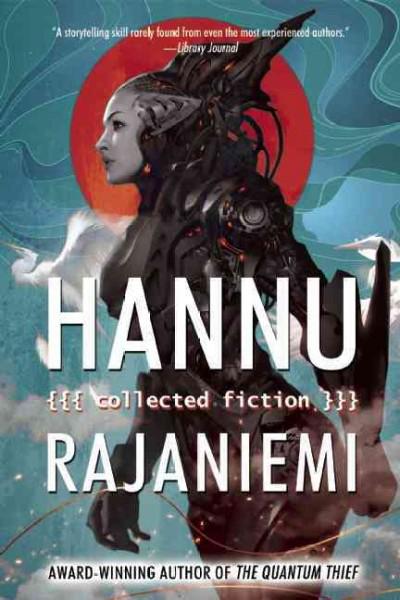
Hello, hello; Happy New Year! Over the holidays I had the chance to catch up on my blog reading and found yet another piece of delightful news for Finnish SFF: Hannu Rajaniemi’s Collected Fiction made it onto NPR’s Guide to 2015’s Great Reads.

hannu-rajaniemi-collected-fiction

The guide contains some 260 titles contributed by NPR staff and critics. Other science fictional books on the guide include Shadowshaper by Daniel José Older, The Traitor Baru Cormorant by Seth J. Dickinson, and Sorcerer to the Crown by Zen Cho, for example.

Found via Amal El-Mohtar.

Image via Tachyon Publications

Top Five Co-Geeking Posts for 2015

Our first half-year of blogging exclusively on our geeky interests is done. We’ve even geeked over our blog stats already. 🙂 The five posts to get most eyeballs are as follows:

  1. Hugo Voting, “Good” Stories, and Politics Erik’s thoughts on the volatile Hugo Awards discussion and voting
  2. 2016 Tolkien calendar Illustrated by Tove Jansson Eppu relays news that the late Tove Jansson’s Tolkien illustrations will be published in the Official Tolkien Calendar for 2016
  3. Sean Bean on the LotR Joke in The Martian Eppu shares a short transcript from an interview with Sean Bean by Yle, the Finnish national broadcast company
  4. Two Finnish Authors on the A.V. Club’s Best of 2015 Eppu shares yet another Finland-related piece of news: Pasi Ilmari Jääskeläinen and Leena Krohn made it onto a U.S. Best of fiction list
  5. a tie with two of Erik’s History for Writers posts: Recommended Reading: Herodotus, “The Tale of the Clever Thief” and 35 Isn’t Old and Everyone’s a Royal

It was nice to note that the top posts were divided up evenly between me and Erik, and that they were posts where we used our expertise. As if we had, like, a plan or something. 😉

Messing with numbers is messy.

Quotes: That Is a Strange Country

“I would say that [the Russians] are located somewhere near the Baltic Sea. There are old trade routes there, and in our own time it is a territory closed to us. Their installation may be close to the Finnish border. They could disguise their modern station under half a dozen covers; that is a strange country.”

– Andre Norton: The Time Traders

Did Andre Norton just insult Russia? (And yay, Finland was mentioned!)

Norton, Andre. The Time Traders / Galactic Derelicts [omnibus edition]. Riverdale, NY: Baen Books, 2000 [originally published 1958 / 1959].

(This quote comes from my 21 new-to-me SFF authors reading project. Note: A free e-version is available via Baen Books.)

This post has been edited for clarity.

Serving exactly what it sounds like, the Quotes feature excerpts other people’s thoughts.