Five Captain America: Civil War Clips

Marvel UK’s YouTube selection includes these five Captain America: Civil War clips that I hadn’t seen before. The first includes snippets from interviews with the movie’s main actresses (Scarlett Johansson, Emily VanCamp, and Elizabeth Olsen).

Captain America: Civil War – In Good Company by Marvel UK

Yay, Sharon Carter / Agent 13!

The second has interview snippets with Chris Evans, Robert Downey, Jr., and the Russo Brothers.

Captain America: Civil War – Brothers In Arms | HD by Marvel UK

Captain America: Civil War – Right To Choose | HD by Marvel UK

Captain America: Civil War – New Recruit | HD by Marvel UK

Captain America: Civil War – The Team Vs Bucky clip | HD UK by Marvel UK

We’ve been in blackout mode, avoiding anything spoilery like the plague. Alasdair Stuart’s Civil War review for Tor.com doesn’t include spoilers, so I did read that one. After tonight, I don’t have to hold back anymore. 🙂

Hey, look! We found a thing on the internet! We thought it was cool, and wanted to share it with you.

NASA Goes off to Outer Space for Star Wars Day

This May the Fourth, NASA rules. Check out what they posted on the NASA Tumblr account:

NASA Tumblr Saturns Moon Mimas

“Worlds That Will Make You Believe Star Wars is Real

“The fantastical planets in Star Wars preceded our discovery of real planets outside our solar system… but fiction isn’t too far from the facts. When we send our spacecraft into the solar system and point our telescopes beyond, we often see things that seem taken right out of the Star Wars universe.

“Is there a more perfect time than May the 4th to compare real worlds to the ones depicted in Star Wars?

“Probably not… so here are a few:

What follows is pictures (mostly artists’ renderings) and short descriptions of eight planetary bodies that could serve as models for various locations in the Star Wars universe. And don’t let the photo of Saturn’s moon Mimas above fool you; it’s the most scruffy-looking of the bunch.

NASA’s post isn’t earth-shattering or deep or anything. But it does show a sense of humor, and combines pop culture geekery with science geekery in a very satisfying way. (YMMV, of course.)

I’m gonna go take you to Jabba now follow NASA on Tumblr right now.

Image: Saturn’s moon Mimas (the so-called Death Star moon) via NASA on Tumblr.

Out There is an occasional feature highlighting intriguing art, spaces, places, phenomena, flora, and fauna.

Unreal Elwynn Forest

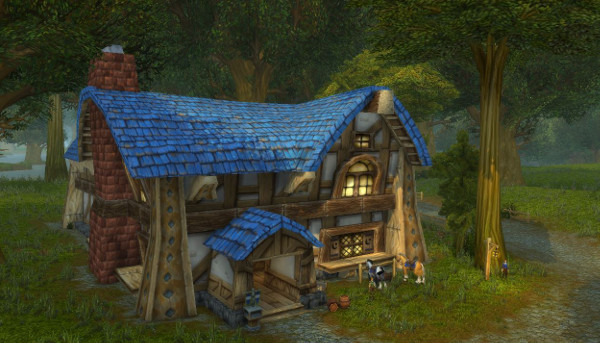
Elwynn Forest is the starting zone for humans in World of Warcraft, a sun-dappled wood with little villages and outposts. Like a lot of other players, I have fond memories of leveling up some of my first characters through Elwynn. Here are a couple of screenshots from in game of what the area looks like.

160502inn160502farmNow, feast your eyes on Daniel L’s gorgeous and detailed reconstruction of the zone using the Unreal Engine 4:

Elwynn Forest in Unreal 4: Update 2 by Daniel L

Post edited for formatting

Hey, look! We found a thing on the internet! We thought it was cool, and wanted to share it with you.

New Ancient Mediterranean Database: Public Monuments in Roman Greece

A new project called Monuments of Roman Greece is under development at the University of Oxford. It covers about four centuries, c. 200 BCE – 200 CE, from when Rome began to expand into the Greek area of influence to the height of the Roman Empire, and will result in a series of articles plus a database.

The Met Bronze Veiled Masked Dancer

From the project website:

“Under the Roman Empire the marketplaces, streets, gymnasia and theatres of the cities of Greece were full of monuments such as tombs, inscribed stelai and – most numerous of all – statues. There were statues of bronze and of marble, portraying gods, heroes, emperors, kings and local dignitaries. Some of these monuments had already stood for centuries; others were fairly recent. Arguably no urban culture in history, with the possible exception of Rome itself, has set up such vast numbers of monuments in its public spaces. The nearest modern analogy for the amount of cultural material on display in the Roman period polis would be the museum. Yet the analogy falls short – the settings where these monuments stood were not places designed primarily for the passive viewing of works of art, they were vibrant public spaces, alive with the tumult and commotion of the city. If we are to understand the society and culture of these cities it is vital that we understand the impact of public monuments on the people who moved about them in their daily lives.“

The work is carried out by Dr. C. P. Dickenson at the Faculty of Classics, with Prof. R. R. R. Smith as scientific adviser. Both the website and the database are still in progress. Also, it sounds like the final home of the database is not finalized at the time of this writing; however, a browsable version is currently up on the University of Oxford website.

Visit the Public Monuments in Roman Greece website for scope and instructions on searching plus more info, or read Dr. Dickenson’s blog for behind-the-scenes tidbits on the development work, among other things.

Image: Bronze statuette of a veiled and masked dancer, from the collections of The Metropolitan Museum of Art, bequest of Walter C. Baker in 1971, accession number 1972.118.95, by Eppu Jensen (Greek; 3rd-2nd century BCE)

Quotes: Archers String Their Bows Only When They Need Them

This was how Amasis managed the affairs of the Egyptians: from dawn until midday he handled all the matters that were brought before him; the rest of the day he gave over to drinking and joking with his companions.

His advisers, being vexed by his behavior, admonished him: “Majesty, it is not right that you should behave so foolishly. You should be seated on your august throne throughout the day conducting affairs of state. Thus the Egyptians would be certain that they are ruled by a great man and you would have a better reputation. What you do now is not at all kingly.”

But he replied: “Archers string their bows only when they need them. If they were kept strung all the time, bows would snap and be of no use when needed. It is the same with people: if you try to be serious all the time and not allow yourself a share of relaxation, you will surely either go insane or fall dead of a stroke. Knowing this, I take both business and leisure in turn.”

– Herodotus, The Histories 2.173


The Egyptian king Amasis, as reported by Herodotus, giving some good advice about making time for yourself.

A DIY Star Wars Day T-Shirt Project

May the Fourth is a week away! Just time enough to figure out a small something to celebrate Star Wars with, if you’re so inclined. The Makeup Dummy shared a tutorial for a painted t-shirt with a Yoda-inspired quote:

How-To-DIY-Galaxy-Quote-Print-Shirt-Tutorial-by-The-Makeup-Dummy
The Makeup Dummy

Nice use of negative space on a starry sky. Also, using stickers to create the lettering is clever; it removes the need for messing with stencils (which can be a pain in the hindquarters to make if you don’t happen to have an electronic cutting machine or somesuch).

Bonus project: This wall art piece made with neon rods from a room designed by cityhomeCOLLECTIVE is decidedly lightsaber-like, if you ask me:

Desire to Inspire cityhomecollectivesmith-family-design-3
Interior design by cityhomeCOLLECTIVE, via Desire to Inspire

Do you have any Star Wars projects on the way? Do share!

In Making Stuff occasional feature, we share fun arts and crafts done by us and our fellow geeks and nerds.

The Trouble With Primary Sources

160425hoplitePrimary sources are great. They are essential. Without them, we would know vastly less about history than we do.

Because primary sources are so essential to our knowledge of history, it is easy to make the mistake of taking them too much at their word. Primary sources are like every other piece of writing: limited by the author’s perspective and subject to scrutiny and challenge. The trouble isn’t even just that primary sources can be wrong (although they can), but that the really interesting questions rarely have just one right answer. The answer we get from one primary source may be incomplete, even if it’s not wrong.

For example, suppose you’re writing a story about an ancient Greek who ran away from a battle. What would his fellow Greeks think of him? What would he think of himself? With a little research you might come across this fragment of a poem by Tyrtaeus:

Continue reading

Quotes: Things Were Never Just What People Said with Words

“I was here alone and Evan wasn’t going to protect me. He never had. He wanted things from me, like everyone else. But those things were never just what people said with words. Everything about it, instead, was meant to manipulate you to feel something you wouldn’t otherwise feel, and screw up your steady, rational thoughts.”

– Karin Lowachee: Warchild

Protagonist Jos struggles with the pervasiveness of childhood traumas years after the events.

Lowachee, Karin. Warchild. New York, NY: Warner Books, 2002, p. 329.

(This quote comes from my 21 new-to-me SFF authors reading project.)

Serving exactly what it sounds like, the Quotes feature excerpts other people’s thoughts.

Why Wouldn’t Playing Games Get You a Job?

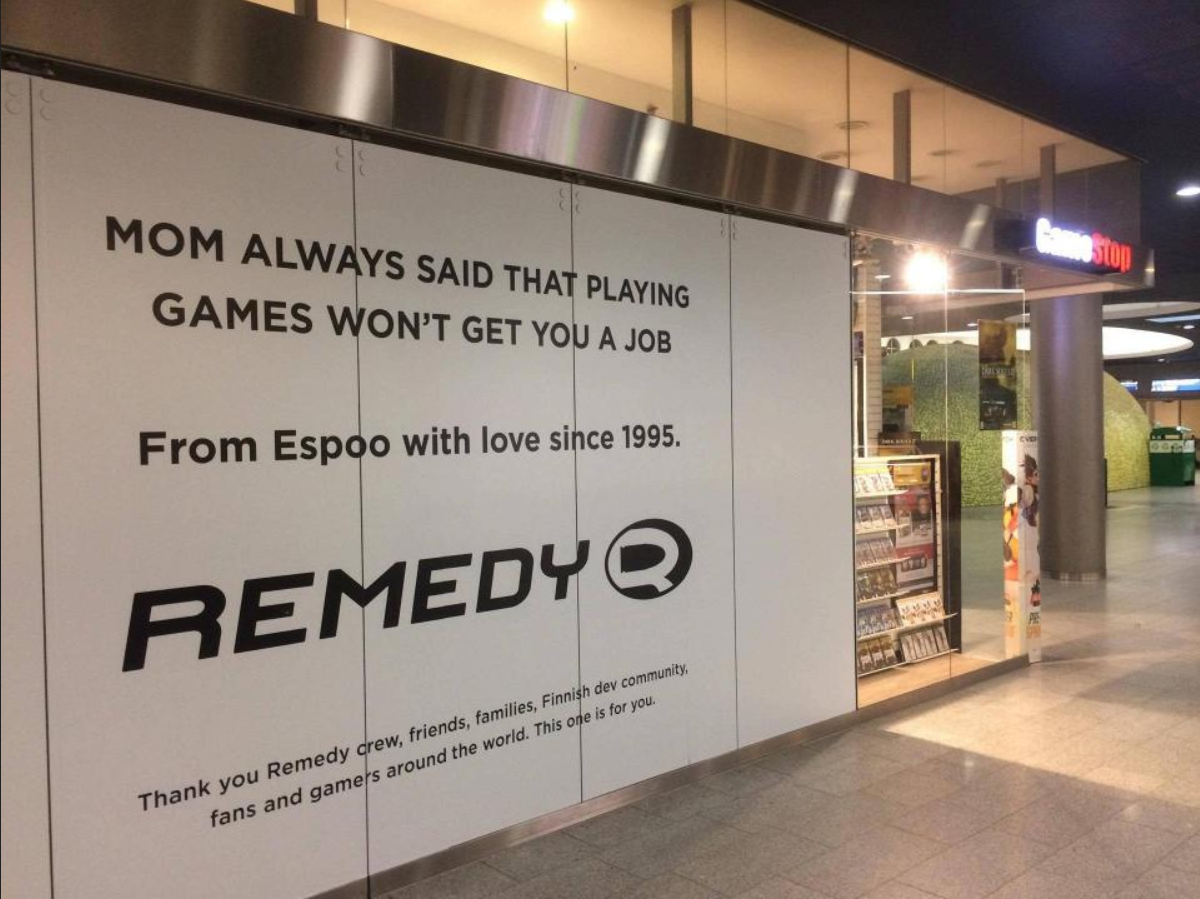
This wall ad by the Finnish game house Remedy deserves wider circulation:

NYT Jussi Pullinen Remedy Wall Ad

“Mom always said that playing games won’t get you a job. From Espoo with love since 1995. Thank you Remedy crew, friends, families, Finnish dev community, fans and gamers around the world. This one is for you.”

Remedy (of the Max Payne and Alan Wake fame) designed this ad to celebrate their April 05, 2016, launch of a new game, Quantum Break, reportedly the most expensive entertainment production ever made in Finland.

The ad’s irony at one’s own expense sounds very Finnish to me. In Finland, it’s a little embarrassing to be successful or rich, and Finns don’t tend to draw attention to their achievements. At the same time, as a Finn, it’s very satisfying to see Finnish game companies grow up into mature businesses with large, world-wide audiences.

It’s also high time for people to recognize that storytelling is an integral part of human nature and that games are just as viable a medium for telling stories as are myths, songs, novels, image-based art, and the like.

Image by Jussi Pullinen via Nyt.

Disclosure: A friend of mine works at Remedy, but this post is in no way compensated or even requested by them.

Of Dice and Dragons is an occasional feature about games and gaming.

How We Got Here, or A Field Guide to World History

The term world history may send your mind spinning back to high school, but world history is an important genre of historical study. It means history that is not bounded by the past of one nation or people. It is the story of how we got here as a whole, enmeshed world, not just as discrete national or ethnic groups. If you’re researching historical topics that connect different peoples together, you’re looking for world history. (World history is related to but not the same as universal history, which is a history of the entire world; world history may be selective about what parts of the world it covers, as long as it isn’t limited by national/cultural boundaries. Yes, it’s confusing.)

There are many different approaches to world history, however, and which one you want to look for depends on what you need. Here’s a brief spotter’s guide to some of the main varieties of world history you’ll find in the scholarship, how to recognize them, and what you might want to go to them for as a writer. These are not the only varieties of world history out there, but knowing these types will help you sort through the sources you will come across in your research.

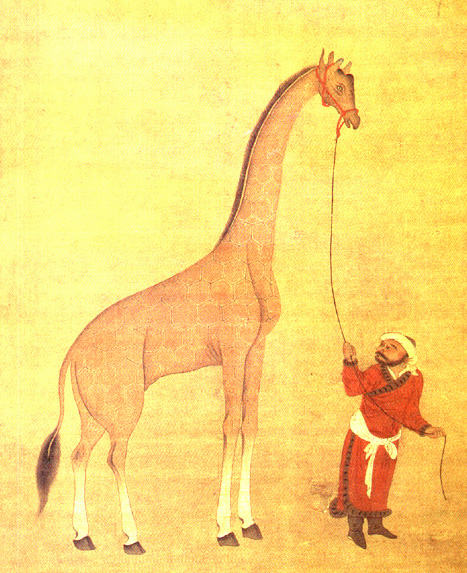
160418giraffe

1. Interconnected History

Or: “Whoa, This Stuff Is All Connected And Stuff, Man”

Historical events don’t happen in a vacuum. Cultures communicate and trade with each other. People travel, taking goods and ideas with them. Interconnected History is about tracing these lines of communication and commerce and discovering how events in one part of the world affected other parts.

Continue reading