Fantasy Religions: Religious Experts

If you’re inventing a fantasy religion for a story or game, you’ll probably want more than just buildings and rituals. Who uses those buildings? Who performs those rituals? Not just the everyday believers but the people whose job it is to carry out the functions of the faith. For many of the stories we tell that involve imagined religions, knowing something about the people who have expertise in that religion is important.

There are many different kinds of religious experts, even within most religious traditions, and their roles and lives can vary enormously, from the highest priest of a central temple to the attendant who sweeps the dirt off a rural roadside shrine. Some cultures have complex hierarchies of religious people or divide them into many different roles, while in others all people who follow a religious life are the same. Some religious traditions have no special personnel at all.

To try to list all the possible variations of religious people would be overwhelming and unhelpful. Instead, I’d like to offer a way of thinking about different kinds of religious experts that is flexible and practical, especially for worldbuilding. To that end, consider this question: what is it about a person with a special religious role that makes them special? Here are a few possible answers, and bear in mind that more than one of these can apply to the same person.

Special powers

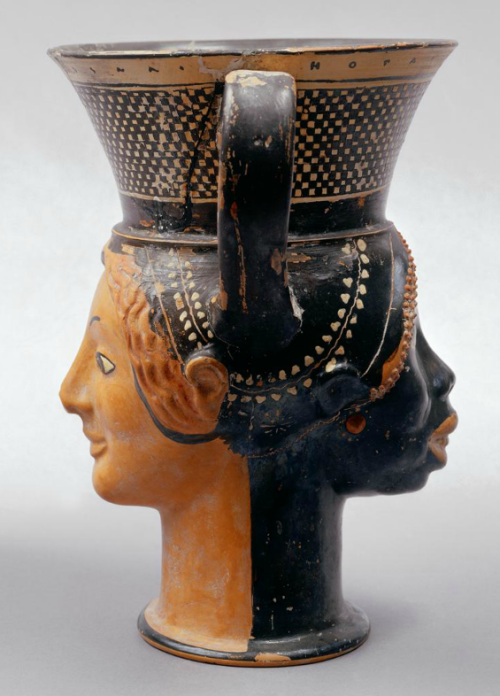
160620priestSome religious experts are believed by the adherents of their faith to be endowed with a special ability to invoke divine aid, at least under certain conditions. Historically, it is common to refer to religious experts with such special powers as priests, but different traditions have their own terms.

A familiar example in the modern west is the priests of Catholic Christianity who have the power to, among other things, invoke the miracle of transubstantiation. Many other religions practiced today also have priests who perform important rites, such as Hinduism, Zoroastrianism, Shinto, and Ifa. The priests of most historical religions with an organized structure also fall into this category, including those of ancient Greece, Rome, Egypt, Persia, the Aztecs and the Maya. Many traditions require specific circumstances, locations, and rituals in order for the invocation of divine aid to be effective, but others hold that every act of a holy individual is imbued with divine force.

Continue reading

Hidden Youth Kickstarter

Life is tough as a flute girl working the streets of Athens—and that’s before the monsters attacked. When the city’s guardian statues suddenly come to life and start rampaging through the city, Mnestra, an Egyptian girl, and her Thracian friend Lampedo get separated in the chaos. Can Mnestra find the courage to rescue her friend and confront not only the monsters tearing up the city but also the most powerful man in Athens?

My short story “How I Saved Athens from the Stone Monsters” will be published this fall in the anthology Hidden Youth, a collection of 22 short fantasy and science fiction stories about young people from marginalized groups throughout history. This anthology follows the previous collection Long Hidden which told the stories of people who are often left out of speculative fiction.

I am honored to have my work chosen for Hidden Youth, but this anthology needs our help to make it out into the world. Check out the Kickstarter for Hidden Youth and consider supporting this work.

Announcements from your hosts.

Making Dinner with Durin’s Folk

Here’s a look at how we made yesterday’s Dinner with Durin’s Folk.

The menu

  • Sourdough rye bread
  • Rosemary crackers
  • Lentil soup
  • Grilled sausages
  • Honey-nut cakes
  • Beer
  • Whiskey cider punch


erikchef1The idea for this month’s dinner is a meal that doesn’t actually happen in Tolkien’s text. We were trying to imagine what sort of a dinner the Fellowship might have enjoyed if they had arrived at Moria and found a thriving Dwarven colony there instead of a fallen kingdom. Not only is there no particular meal in the text for us to use for reference, in fact it is a bit of a puzzle to work out what proper Dwarven food would actually be like. Gimli doesn’t have much of an opportunity in The Lord of the Rings to serve up food of his own. There’s plenty of Dwarves and plenty of food in The Hobbit, but it’s mostly the Dwarves eating food prepared by other people—Hobbits, Elves, Beorn, etc.—or making do with what they can find in the wild. We don’t get much of a sense of what Dwarves cook for a nice dinner at home or offer to guests.

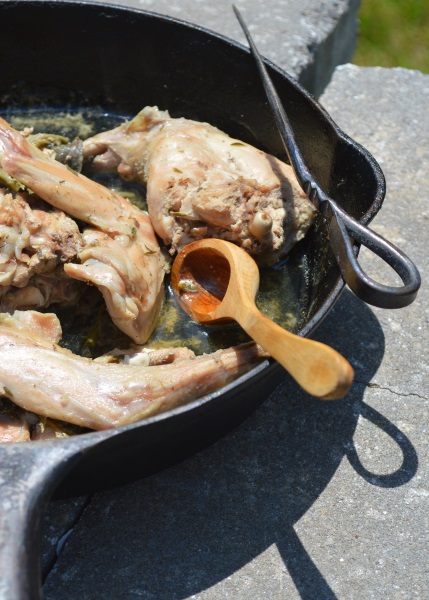
LotR Dinner6 Utensils etc

So, a little speculation is called for. We can start with the fact that Moria is underground. Thorin recounts to Bilbo that the Dwarves of the Lonely Mountain traded with the Men of Dale for food rather than growing their own. (H1) We know that the Dwarves of Moria traded with the Elves of Hollin long ago, so Balin and company would probably have traded for food from the world outside as well. (2.4) Since the lands west of the Misty Mountains were quite desolate, most of the Dwarves’ trade would have been with people to the east, especially with the Beornings whose baking Gimli praises. (2.8) In those days of wolves and war, keeping the trade routes open for fresh food would have been difficult. The Dwarves of Moria would have mostly had to make do with food that would keep for a long time.

These are the ideas that inform our menu: ingredients that keep (salted and smoked meats, roasted nuts, dried lentils) and things they could have gotten in trade from the Beornings or other peoples east of the mountains (honey, bread, and flour).

Continue reading

Dining in Middle Earth: Dinner with Durin’s Folk

 “’I thought it was only a kind of cram, such as the Dale-man make for journeys in the wild,’ said the Dwarf.

‘So it is,’ they answered. ‘But we call it lembas or waybread, and it is more strengthening than any food made by Men, and it is more pleasant than cram, by all accounts.’

‘Indeed it is,’ said Gimli. ‘Why, it is better than the honey-cakes of the Beornings, and that is great praise, for the Beornings are the best bakers that I know of.’”

LotR Dinner6

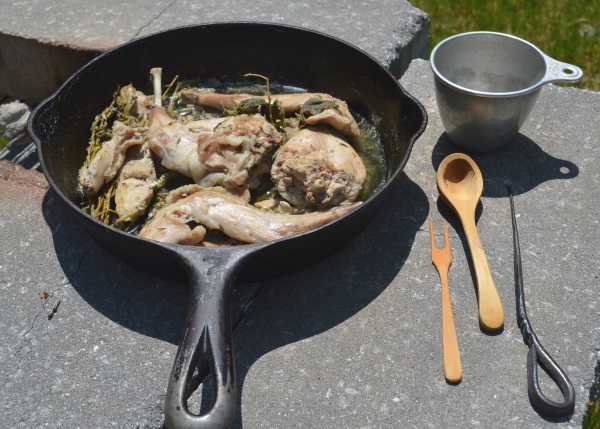
We never get to see proper Dwarven food in The Lord of the Rings, but what if we had? What would a proper Dwarven feast look like? For this month’s dinner, we try to imagine what sort of a welcome Frodo and the company might have received in Moria if they had come in better days, when Balin and his followers were bringing the ancient kingdom of the Dwarves back to life. Lentil soup, rye bread, rosemary crackers, a great pile of sausages, and honey-nut cakes make a hearty meal for weary travelers, with beer and whiskey cider punch on the side.

LotR Dinner6 Fire

Instead of place settings, a pile of heavy plates stands near the food for an informal help-yourself serving. There’s also a utensils crock with a mishmash of forks, knives, and spoons. Two simple candle holders of black metal hold white tapers. They are accompanied by a tall white marbled pillar candle and a silver napkin ring for a little more flair.

LotR Dinner6 Utensils etc

A table runner with hexagonal woven decorations softens the polished stone table, and a striped scarf stands in for banners or wall hangings.

LotR Dinner6 Soup

Chunky stoneware mugs for the frothy beer and simple pottery bowls for the soup are perfect for the setting.

Dinner6 Soup

Check out what’s it about in the introduction, or read the how-to!

Images by Eppu Jensen

Geeks eat, too! Second Breakfast is an occasional feature in which we talk about food with geeky connections and maybe make some of our own. Yum!

Medieval Texts Hidden inside Newer Books?

After the invention of the printing press, old handwritten books and documents were commonly recycled as reinforcements in new bookbindings made in the 15th through 18th centuries. Now, thanks to an x-ray technique developed in the Netherlands, these hidden manuscript fragments are readable without destroying the book they’re a part of.

It’s all possible with macro x-ray fluorescence spectrometry (MA-XRF), which allows even pages glued to each other to be read. Dr. Erik Kwakkel at Leiden University, one of the academics behind the Hidden Library project attempting to uncover more of these fragments, has both been interviewed and written about the process.

Kwakkel leiden_ub_583_x_x

Dr. Kwakkel describes the importance of this discovery for The Observer like this:

“Every library has thousands of these bindings, especially the larger collections. If you go to the British Library or the Bodleian [in Oxford], they will have thousands of these bindings. So you can see how that adds up to a huge potential.”

He blogs about his projects and findings at Tumblr and at medievalbooks; see the latter e.g. for the exclusive behind-the-scenes post on the Hidden Library project.

Now I’m hoping we will eventually find a wealth of medieval texts in bookbindings. It’s really fascinating what we can discover with modern technology!

Image: A printed book with medieval manuscript fragments inside the spine, photograph by Erik Kwakkel (Leiden, University Library, nr. 583; 16th c. with 12th c. fragments)

Land Tenure

160613MarchLand tenure. The very words sound boring. Perhaps they conjure images of gray-haired men in tweed jackets with elbow patches picnicking beside a barley field. But stick with me for a minute here, because land tenure is an important thing to know about in understanding historical cultures and for building your own fictional worlds.

Land tenure is one of several terms historians use to describe the legal structures surrounding the control of land. (Technically, the term land tenure is only used in British common law. Other legal systems use different terms, but this is one you’ll see a lot of in English-language history texts.) The question of who controls a piece of land is always important, but it is especially vital in agrarian societies in which land, specifically farmland, is the basis of wealth. Land tenure is about figuring out who gets to use a piece of land and under what conditions.

In some cultures this isn’t an issue. Some legal systems allow only an either-or choice, you either own a piece of land or you don’t. Under other traditions, no one owns land at all. But in certain kinds of societies, the question of who controls a plot of land and under what conditions they hold it is at the heart of many conflicts.

It’s the same basic principle that applies today when you rent an apartment. As a tenant, you have certain rights in the use and enjoyment of the apartment, but the landlord also has rights they can enforce such as demanding rent and keeping the apartment in a usable condition. Landlords have good reason to want to keep as much control over their property as they can. They don’t want tenants messing things up and making it harder to rent the apartment profitably in the future, plus they want to be able to easily get rid of tenants who make trouble or don’t pay their rent. At the same time, renters also have good reason to want as much control as possible over their apartments. They want the security of knowing they won’t suddenly be thrown out and have to look for a new place and they want to know that no one’s going to be coming in and messing with their stuff. There is a tug-of-war between different interests and the balance of legal rights between landlords and tenants reflects the balance of power in larger society.

Continue reading

Computer Issues (SATW Style)

I’ve been having computer issues on and off for a couple of months now, so my part of the posting here will continue to be lighter than normal until they’re resolved.

It’s not all bad, though: whenever my computer has been acting up really bad, I pretty reliably end up returning to one particularly brilliant Scandinavia and the World comic.

SATW Computer Technician Snippet

The character in the snippet above is Brother Finland. As a fellow Finn, I feel his pain (especially when Brother Sweden – of all people! – walks in and fixes the computer with a touch). And usually I then end up reading more SATW, which is a great stress relief.

Image: Computer Technician, detail of a Scandinavia and the World comic by Humon

Hey, look! We found a thing on the internet! We thought it was cool, and wanted to share it with you.

Quotes: Soon I’ll Have to Switch to Finnish

“German is my last recourse for emotional outbursts and my grammar goes all to hell–heck!–when I’m mad. Soon I’ll have to switch to Finnish or learn a new language to stay ahead.”

– Kat Richardson: Poltergeist

A first-time father ponders on the nigh impossibility of keeping his language in check in front of his toddler son.

We do have some great swear words in Finnish, but, then again, I’m biased. 🙂

Richardson, Kat. Poltergeist. New York, NY: Roc, 2009, p. 88.

Serving exactly what it sounds like, the Quotes feature excerpts other people’s thoughts.

Some Random Thoughts on X-Men: Apocalypse

Random thoughts in no particular order. Spoilers ahead.

  1. The ancient Egypt crowd scene looked appropriately brown. In a story that pings on some of the racialist elements of dynastic race theory and ancient aliens it’s good to see (ancient) Egyptians acting with initiative. It would be nice if we saw some modern Egyptians who weren’t bit-part cultists.160607Apocalypse
  2. Speaking of characters with initiative, it’s also good to see a lot of female characters taking charge and being the ones people look to in a crisis. Not to mention Charles Xavier being the damsel in distress, for variety.
  3. On the other hand, two fridged women for the price of one to get Magneto back in the game. *Sigh*
  4. Apparently Apocalypse’s superpower is… fashion design?
  5. This movie was worth the price of admission just to watch Quicksilver rescuing everyone from the exploding mansion. I could just watch that scene on a loop for a good long while.
  6. You know, maybe they should try making an X-Men movie without Wolverine some time, just for giggles.
  7. I still don’t get the point of launching the whole world’s nuclear weapons into space. How was that relevant to Apocalypse’s plan? It’s not like they were a threat to him and since his plan is basically “blow up the world” anyway, why waste the nukes?
  8. On the whole, this movie reminded me a lot of Age of Ultron. The same grand ambitions, the same dizzyingly large cast, the same lack of narrative chewing after too big a bite of individual character arcs.
  9. Did I really just use the phrase “narrative chewing?” Yes. Yes, I did.

Responses to Erik’s thoughts and additional randomness by Eppu

  1. Looked appropriately brown to me, too, but maybe not black enough…? Not my era, area, nor expertise; would be nice to hear from someone more knowledgeable. But: Definitely too few women in that initial Apocalypse-worship scene. We existed in ancient times, too, and would’ve been interested in a spectacle.
  2. Agreed. One notable exception being Jean Grey / Phoenix. There’s a lot to her arc, but we only saw the barest of bare minimums.
  3. Not enough facepalm in the world for that. *frustration!*
  4. Apocalypse needs to hand in his supervillain club card. Can you say milquetoast? What I reaaaaally enjoyed, though, was the slow buildup. It’s not that usual in an action-genre film. Unfortunately, the end flopped.
  5. That was an epic scene! But I have to say I liked Aaron Taylor-Johnson’s Quicksilver better in Avengers: Age of Ultron. It’s a shame that the movie rights are so entangled that we’re likely not to see MCU superheroes and mutants in the same flicks.
  6. Agreed. They did go to Canada, though; I always enjoy seeing northerly locations get screen time.
  7. And speaking of plot oddities, how is it a workable plan for Charles Xavier to exhort Jean Grey to just let go? On the other hand, I suppose it’s a change to see a deus ex machina of a woman asked to release her pent-up feelings and whatnot.
  8. Agreed. Going in with low expectations helped. As I said to someone else, it was less bad than I thought. Of course, that doesn’t make it good, per se. Overall it feels like no-one really knows exactly what to do with the mutant movies so they end up all over the place, whereas there’s at least some oversight or long-term planning for the MCU properties.

Other thoughts:

  • There were several introductory scenes (e.g. of Angel & Nightcrawler) that worked quite well. Too bad that stringing them together doesn’t make a movie.
  • I didn’t like Angel’s metal wings, but eh; not the end of the world.
  • I do like James McAvoy as Professor Xavier. If only someone would do more of Patrick Stewart’s and McAvoy’s Xavier in the same story.
  • I can’t say I remember Psylocke from my X-Men reading days, but I liked Olivia Munn. I might have to check out what else she’s been in.
  • Storm suffers from the same lack of attention as Jean Grey. There would’ve been a lot to delve into.
  • The screen version of Mystique’s skin is horrible. (Scales and/or raised nodules? Really? Mostly naked? REALLY?!?) Fortunately we saw less of it in this movie.
  • What a way to hand-wave Havok off the story. He never was a special character to me, but doesn’t he deserve better? Disappointing with a capital d.
  • Others have said this, too, but I’ll repeat: Oscar Isaac’s skills were wasted under all that makeup.

Image: Detail of still from X-Men: Apocalypse via IMDb

In the Seen on Screen occasional feature, we discuss movies and television shows of interest.