Cold

Keira Knightley performing “how not to dress in the snow,” from King Arthur via IMDb
Keira Knightley as “how not to dress in the snow,” from King Arthur via IMDb

It’s cold outside, at least hereabouts where we are, which always sends my thoughts to the depiction of cold weather and the people who have to cope with it in the media I enjoy. The experience of serious cold weather is one that’s hard to convey to someone who hasn’t lived with it, so perhaps it’s no surprise that while some books, movies, and tv shows get it right, others really don’t.

If you want to get it right in your stories, here are a few things to know about the effects of cold and how to deal with them in pre-modern settings:

Exposed skin is bad. Very bad. Especially skin with lots of blood vessels close to the surface like heads, necks, ears, noses, cheeks, hands, and feet. That’s how you lose heat, and if you lose too much heat, you can start losing body parts, too. If you find yourself out in the cold unexpectedly, the first thing you should do is cover up as much skin as you can.

John Snow realizing he knows nothing about dressing for the cold, from Game of Thrones via IMDb

Layers are good. Layering clothing creates air pockets, which is what keeps heat in. Metal provides poor insulation. Leather and cloth are better. Any cloth will do, but wool is particularly good. Fur is excellent, but if you’re wearing fur for warmth (rather than as a fashion statement), you want the fur on the inside where it can trap air more effectively, not the outside catching snow. For body parts that you can’t cover with clothing, such as your face, a layer of hair or grease will help, but not nearly as much as proper clothing.

Frostbite is VERY bad. Frostbite is not “Ah, it’s a little chilly, I think I’ll stick my hands in my pockets to warm them up.” Frostbite is when ice crystals form inside your body and kill your cells. It is treatable if caught in time, but it’s serious. This is how people lose fingers, toes, even limbs to the cold. Less serious than frostbite is frostnip, when the body pulls blood away from exposed skin. Frostnip is treatable just by warming up, but do not rub! Rubbing frostnipped or frostbitten skin can cause damage to tissues made fragile by the cold.

Dangerous cold doesn’t always feel cold. The experience of frostbite and frostnip doesn’t necessarily feel cold. The affected area may actually feel hot or just numb. This is the result of nerve cells shutting down or dying. In extreme cases, some people suffering hypothermia will start taking off their clothes because they feel overheated, even though they are literally dying of cold. Alcohol increases blood flow to the skin and extremities which makes you feel warmer (and can be useful when you’ve come in out of the cold into warmer surroundings), but can be dangerous when you’re still exposed to cold temperatures.

People are mammals. That means, in addition to some other fun features, we make our own heat. That heat comes from the same place the rest of our energy comes from: food. Cold makes you hungry. Eating keeps you warm.

Cold makes you go. Your body responds to cold by pulling blood away from the extremities into the core. Your kidneys respond to all that blood rushing around by going into overdrive trying to purge excess fluid from your system, leading to a full bladder.

These are all things to remember as you write about characters braving the harsh winter weather. I’ll leave the last word, though, to Magnar of Finn:

Post edited for clarity.

History for Writers is a weekly feature which looks at how history can be a fiction writer’s most useful tool. From worldbuilding to dialogue, history helps you write. Check out the introduction to History for Writers here.

Johanna Sinisalo on the BSFA Awards 2016 Longlist

Finnish author Johanna Sinisalo’s novel The Core of the Sun (Auringon ydin, translated by Lola Rogers) was voted onto the BSFA Awards 2016 longlist for best novel.

Amazon Sinisalo The Core of the Sun

The BSFA Awards are awarded each year to the best Novel, Short Fiction, Artwork and work of Non-Fiction as voted for by the members of the British Science Fiction Association. BSFA members can vote on the longlist to draw up a shortlist between January 01 and January 31. The shortlists for these four awards will normally comprise the five works in each category that receive the most individual nominations by the deadline.

Congratulations! I’m looking forward to hearing whether Sinisalo makes it onto the shortlist.

Incidentally, Sinisalo is one of the guests of honor at Worldcon 75 in Helsinki this coming August.

Found via File 770.

Image via Amazon.

Fake News in Ancient Athens

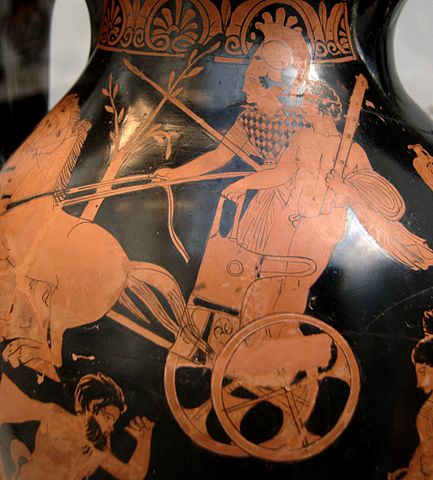
170109athenaThere’s been a lot of talk lately about fake news and its effect on politics, but the phenomenon is not a new one. Consider this story about how the tyrant Peisistratus seized power in Athens in 556 BCE.

There had been long-simmering unrest between three broad groups in Attica: the wealthy farmers of the plains, the fishing and trading people of the coast, and the poor villagers of the hills. Peisistratus organized the hill people as his base of support, promising to represent their interests if they helped him take power. After a first attempt that fell apart when the plains and coast factions organized against him, Peisistratos made a second bid for power a few years later when the coastal faction switched sides and backed him. Here’s how Herodotus tells the story of how Peisistratus managed to take power the second time:

In Paeania [a hilly region of Attica] there was a woman named Phye who was very tall and beautiful. They dressed her in full armor and put her in a chariot, decking her out to make her the most impressive spectacle, and drove her to the city. Heralds ran on ahead and when they reached the city they proclaimed: “Athenians! Welcome Peisistratus, whom Athena has honored above all! She herself is driving him to the acropolis!” They went all around saying these things and the rumor spread at once throughout Attica that Athena was returning Peististratus to the acropolis. The people of the city believed the woman to be the goddess herself, so they worshiped her and received Peisistratus as their tyrant.

– Herodotus, Histories 1.60

My own translation

Were the people of ancient Athens really that gullible? We shouldn’t doubt that most of them believed that the goddess Athena existed and could intervene in human affairs, but it’s still a bit of a leap from there to believe that she would show up in person to deliver a controversial politician back into power. The idea of dressing up a woman like Athena and having her ride into town in a chariot was nothing strange, either. The Panathenaic Festival, one of the major holidays in the Athenian year, featured exactly that. In fact, many historians believe that Peisistratus was actually using the festival as the occasion for his comeback. In that case, everyone knew that Phye was not really Athena, just playing a role in the procession. It may actually be Herodotus who is the gullible one and the “fake news” is the story that anyone was fooled by Phye at all, as opposed to participating in a well-orchestrated bit of political theatre.

We know from modern research that people tend to change their beliefs to suit their politics, not their politics to suit their belief. If anyone in Athens really did believe that Athena was bringing Peisistratus to town, it’s more likely that they were already a backer of his faction and so were willing to accept the story than that believing the story made them back Peisistratus. Similarly, Herodotus was a firm anti-monarchist, so he was disposed to believe that the Athenians must have been tricked into welcoming Peisistratus rather than willingly choosing him to be tyrant.

Either way you cut it, there’s nothing new about people believing false reports that happen to suit their political outlook.

Image: Athena carrying Heracles in her chariot, photograph by Bibi Saint-Pol via Wikimedia (Staatliche Antikensammlungen, Berlin; 420-400 BCE; red-figure pottery; by the Cadmus Painter)

Edited for consistency in spelling

History for Writers is a weekly feature which looks at how history can be a fiction writer’s most useful tool. From worldbuilding to dialogue, history helps you write. Check out the introduction to History for Writers here.
Spider-Man: Homecoming Trailer

It’s six months till (yet another) Spider-Man reboot drops. The first trailer for Spider-Man: Homecoming has been out for a few weeks, and it’s looking cool:

FIRST OFFICIAL Trailer for Spider-Man: Homecoming via Jimmy Kimmel Live

Very MCU! There’s one thing that I very much hope: that Tony Stark will only be making a cameo. I’m so, so thoroughly done with that character already. Instead, I’d love to see other faces get more attention now, kthxbye.

So, I’m still not entirely sure whether I want to see it, because Spidey’s never been that interesting to me and there’s the possibility of Stark overload. I guess it’ll depend on how movie-deprived I’m feeling come July.

Hey, look! We found a thing on the internet! We thought it was cool, and wanted to share it with you.

Captain America: Civil War and Red Herring Overload

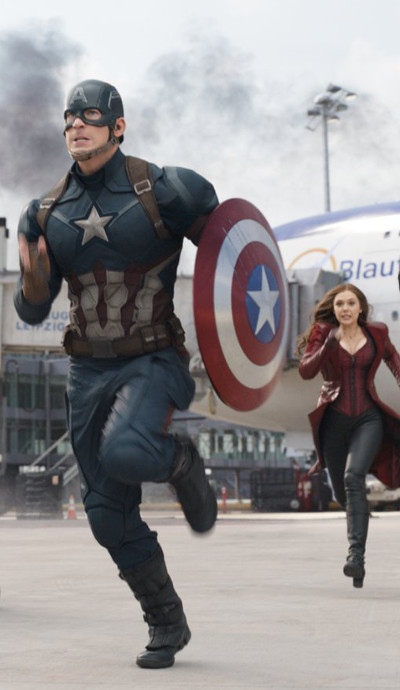
170105civilwarWhen I saw Captain America: Civil War in the theatre, something bothered me about the story. It’s not that I didn’t like it. I find Civil War one of the best, most polished films in the Marvel Cinematic Universe. In my headcanon, Civil War is the actual Avengers 2 while Age of Ultron is Iron Man 4 at best. But still, something about the story just bugs me and the first couple times I saw the movie I couldn’t put my finger on it. (To be fair, that movie gave us plenty to talk about.) Now that it’s out on DVD and I’ve gotten to see it a few more times, I think I can name the problem: red herring overload.

Here’s what I mean. Going into the movie, having seen the trailers, you think it’s going to be about Steve Rogers / Captain America and Tony Stark / Iron Man having a falling out. But it isn’t.

Then the movie starts and you think it’s going to be about Bucky Barnes / the Winter Soldier. But it isn’t.

Then you think it’s going to be about the blue goo in Howard Stark’s trunk. But it isn’t.

Then you think it’s going to be about a stolen vial of disease. But it isn’t.

Then you think it’s going to be about the Sokovia Accords. But it isn’t.

Then you think it’s going to be about Steve’s relationship with Bucky. But it isn’t.

Then you think it’s going to be about T’Challa’s quest for revenge and his rise as a hero. But it isn’t.

Then you think it’s going to be about Zemo and his all-new all-different gang of Winter Soldiers. But it isn’t.

Then you think it’s going to be about the Avengers splitting up over different ideas of what it means to be a hero. But it isn’t.

Finally, finally, at the end of the movie, we discover what it’s actually been about all along: Tony Stark’s unresolved emotional issues.

I still think that Civil War is an excellent movie and one of the highlights of Marvel’s cinematic work, but this is a serious weakness in its writing. Not only did we not really need another movie about Tony’s unresolved issues (we’ve got four already), but it deflates the narrative power of the story to have so much of the plot either fizzle out or just be left hanging at the end. By the end of the movie, the mantelpiece is littered with unfired guns and instead we get to watch two exhausted, angry men slug each other.

Maybe, if this had been a different movie, that would have been a satisfying ending. But it wasn’t.

Image: Captain America: Civil War still via IMDb

In the Seen on Screen occasional feature, we discuss movies and television shows of interest.

Quotes: It Hurts All Three of My Feelings

Actor Carrie Fisher lays it out in a Twitter comment on criticism of her appearance in The Force Awakens and proves she was so much more than a pretty face.

Serving exactly what it sounds like, the Quotes feature excerpts other people’s thoughts.

Happy New Year 2017!

Happy New Year, everyone!

New Year 2017

May 2017 both delight and challenge you.

Ours definitely holds promise: Apart from some significant personal events, 2017 is also the 100th anniversary of Finnish independence. Hooray! I’m so thrilled to be alive when a big anniversary like this rolls around. And, coincidentally, Worldcon 75 will be in Helsinki August 9-13, 2017. Not yet sure what kind of a trip we could manage, but it sure would be fantastic to go. Might we see you there?

Image by Eppu Jensen

Top Five Posts for 2016

Go-Geeking is a year and a half old! Like last year, we looked at the posts that got the most eyeballs. For 2016 they are as follows:

  1. Race and Culture in Hannibal’s Army Erik responds with an ancient historian’s perspective to a Tor.com post about Hannibal’s army from the point of view of historical wargaming
  2. Hogwarts Dueling Club Tablecloth Transformed into Wall Hanging Eppu shares an eye-catching Harry Potter craft project found online
  3. Putting Trigger Warnings on my Syllabi Erik lays out An Opinion
  4. Arrival Recap Eppu’s first thoughts on the movie Arrival
  5. Fantasy Religions: Sacrilege, Blasphemy, and Heresy In a History for Writers piece, Erik discusses religion from the point of view of early history and what to consider while worldbuilding

Overall—taking the whole year-and-a-half block—we get a slightly different list:

  1. Do-It-Yourself Fantasy Place Name Generator Erik’s basic system for creating fictitious place names wins the top slot by a wide margin
  2. Race and Culture in Hannibal’s Army Erik responds with an ancient historian’s perspective to a Tor.com post about Hannibal’s army from the point of view of historical wargaming
  3. Sean Bean on the LotR Joke in The Martian Eppu shares a short transcript from an interview with Sean Bean by Yle, the Finnish national broadcast company
  4. Hogwarts Dueling Club Tablecloth Transformed into Wall Hanging Eppu shares an eye-catching Harry Potter craft project found online
  5. Putting Trigger Warnings on my Syllabi Erik lays out An Opinion

It’s fascinating to compare our favorite posts with what other people find interesting. Cool cool cool. 🙂

Messing with numbers is messy.

R.I.P. Carrie Fisher

Carrie Fisher, actor, author, advocate, script doctor, and Resistance General extraordinaire, has passed at the age of 60.

Carrie Fisher Homepage

Rest in peace, dear Ms. Fisher. Your honesty, fearlessness, and spirit will be missed.

In the words of Tough Love Leia on Twitter:


Image via carriefisher.com

Post edited for formatting.