Dún Aonghasa

Aerial view of Dún Aonghasa. Photograph by Ronan Mac Giollopharaic
Aerial view of Dún Aonghasa, photograph by Ronan Mac Giollopharaic via Wikimedia

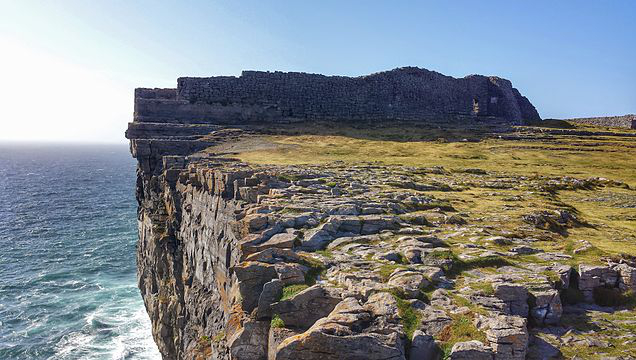
While doing some research on northern European hillforts recently, I found myself looking at some pictures of Dún Aonghasa (also known as Dun Aengus). It’s an impressive site. The fort is a series of concentric half-rings backing up onto 100-meter cliffs on the island on Inishmore off the western coast of Ireland. The earliest construction on the site has been dated to around 1100 BCE. Later additions were made around 500 BCE. It is one of the largest well-preserved examples of a type of structure that was built throughout northern and western Europe, from Spain to Sweden, in the prehistoric era.

The "cheveaux de frise," a barrier of jagged stones set up to slow down attackers. Photograph by Herbert Ortner
The “cheveaux de frise,” a barrier of jagged stones set up to slow down attackers, photograph by Herbert Ortner via Wikimedia

There has been disagreement in the scholarship about the function of Dún Aonghasa and similar forts. While often identified as fortified settlements, some have suggested that they were actually sites of religious ritual. It has to be said that if Dún Aonghasa and sites like it were religious sanctuaries, they were amazingly well-defended ones. I think it is more likely that sites that were originally built for defense were centuries later repurposed as ceremonial sites, much like how medieval castles built for defense have centuries later become museums and tourist attractions.

The walls of Dún Aonghasa and the cliffs of Inishmore. Photograph by Jal74
The walls of Dún Aonghasa and the cliffs of Inishmore, photograph by Jal74 via Wikimedia

It may be hard to believe that such an enormous fortification was built in so remote a place, but forts like Dún Aonghasa were once fairly common across western and northern Europe. Most, however, have been lost to decay, erosion, and the reuse of stones. It is only in remote places like Inishmore that they still survive.

Thoughts for writers

Just a simple thought today: the world is full of interesting possibilities. Fortresses don’t have to look like medieval castles. Religious sites don’t have to look like cathedrals or Greek temples. History is huge and there are amazing things out there to inspire your imagination.

History for Writers is a weekly feature which looks at how history can be a fiction writer’s most useful tool. From worldbuilding to dialogue, history helps you write. Check out the introduction to History for Writers here.

The Case of the Missing Roman Railroads

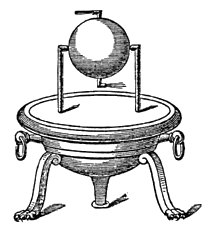
150824AeliopileThe Roman empire had a problem. It was just too big. When a crisis developed on one frontier, it could take weeks for the emperor to hear about it, then months or even years to move troops and supplies into position to deal with it. The large frontier army consumed supplies which had to be delivered at great expense from the agricultural heartlands. The roads built by the Roman army helped make all this travel faster and easier, but if the Romans had built railroads they could have made it much easier still. A Roman empire with railroads might not have fallen apart in the fifth century CE. So why didn’t the Romans build them?

The obvious answer is that they didn’t have the technology of steam power, nor the resources of coal and iron needed to build a functioning railroad. It’s a good answer, but like many such obvious answers it’s missing something.

Continue reading

The Billion-Dollar Pyramid

150817PyramidWe all know that the pyramids of Egypt were tombs for the pharaohs. (Yes, yes, and landing pads for Goa’uld spaceships; you can put your hands down now.) Thinking about what it took to build them, though, gives us an idea of what else they were.

The construction of the pyramids is a perpetual favorite subject of cranks and crackpots (Lost technologies of Atlantis! Sound waves!). Even among the more reality-bound, there is no end of theories ranging from the mundane (ramps and sledges) to the reasonably plausible (pulleys and levers) to the unlikely but not impossible (poured concrete). No matter what technique we imagine, however, one thing was definitely required: massive amounts of labor.

What most armchair pyramidologists miss about the problem of megalithic construction is that the physics of moving large stones are very simple. Apply enough force to a mass and it will move. Some things can make the application of force easier: ramps, pulleys, rollers, whatever you’ve got, but in the end it’s just a matter of force versus inertia. No matter how you go about building a pyramid, what you need in the end is the same: muscle power and time. With enough muscle power and time you can build pretty much anything, but labor is expensive. The real problem that would-be pyramid builders have to solve isn’t technological, it’s economic. The real question isn’t “How did they build the pyramids?” but “How did they afford the pyramids?”

Continue reading

Labor

150810oxcartThe majority of the stuff that needs to get done in an agrarian society is basic manual labor: primarily farm work, but also things like construction, building and road maintenance, mining, carrying, housework, etc. Any functioning pre-industrial society needs lots of workers to do all that work, but there are many different kinds of workers, some of which are not so familiar to us today. Some of these kinds of workers had it much better than others.

Here’s a list of possibilities, by no means exhaustive, arranged roughly in order from worst to best conditions.

Continue reading

35 Isn’t Old and Everyone’s a Royal

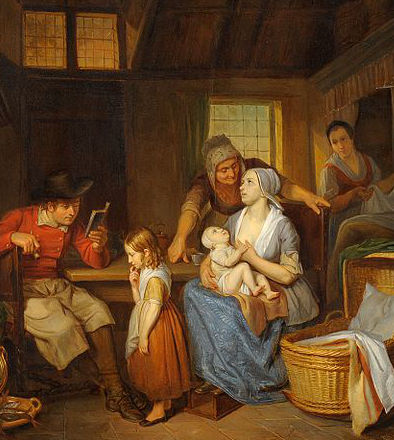
150703FamilyI suppose that title’s a little more interesting than “Pre-modern Demography.”

You’ve probably heard the statistic that the average lifespan in the European middle ages was 35. I remember learning that when I was young. Most of my students have heard it, too, and just like I used to, they imagine that it means that when medieval people got to thirty-two or thirty-three it was time to start looking around for a cemetery plot and a good gravedigger, and that anyone who made it to forty must have been a revered elder, if not a terrifying freak on nature. The truth is much more interesting.

Data about births and deaths is hard to come by for periods before the rise of modern bureaucracies. In a few localities there are church records going back into the late middle ages. Legal documents like wills, deeds, and contracts occasionally offer information about peoples’ births, ages, and deaths, but such documents come from only a very restricted class of people and they may be unreliable because people misrepresented the truth when it suited their political and economic purposes. Archaeological studies of burials can be very useful, although determining age from skeletal remains is imprecise, and we are at the mercy of biases in burial customs and survival of remains. All of these sources of information are partial and biased, but pulling them together gives us a rough sense of how people lived and died in earlier ages.

There are broad patterns that can be discerned from the evidence, but as with most such broad patterns we should always be alert to local variations. Another caution: I’m working from the evidence that I happen to be familiar with, which is mostly European and Mediterranean. Many of the same forces that were at work in that region of the world are relevant to others as well, but we must be alert to regional differences.

Continue reading

Recommended Reading: Herodotus, “The Tale of the Clever Thief”

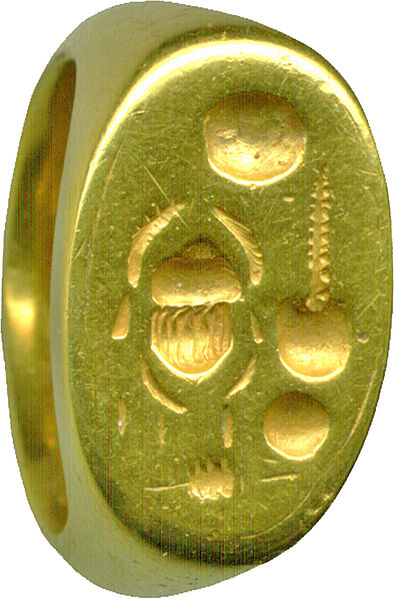
150727ringWe learn to write by reading, and so I’d like to share with you some of the works of classical literature that have inspired me as a writer. There’s no better place to start than with the Greek historian Herodotus. Herodotus’ Histories is my favorite book of all time. I re-read Herodotus like some people re-read Tolkien. “The Tale of the Clever Thief” (that’s my own name for it; Herodotus didn’t give that particular story a name of its own) is one of the most delightful parts of the work.

Herodotus is popularly known as the Father of History. He is also known as the Father of Lies. Both titles are appropriate. Herodotus was the first (surviving) author in the western tradition to write about the past in terms of human actions and motivations, not the deeds of gods and heroes. He was also a storyteller who enjoyed spinning a good tale, even if he didn’t think it was true (and some of the things he did think were true are pretty outrageous).

Continue reading

Solid Centers and Fuzzy Edges

150730SapphoThis is not the post I had intended for today. When I started working on this one, it was about some of the different ways of organizing basic labor that have existed in history, from slave gangs to independent peasant farmers. As I kept working on it, I found that I had more to say about slavery, especially in light of the public dialogue that has been happening in the United States lately surrounding symbols of the Confederacy. So I started working on a post specifically about slavery in historical context, but as I tried to write that post, it became clear to me that there is an even more fundamental issue in historical interpretation I needed to talk about, something that applies not just to slavery but to almost every historical phenomenon. It is so universal that we don’t really have a standard vocabulary for talking about it. You could call it variability, or you could call it norms and exceptions, but I prefer to think of it as solid centers and fuzzy edges.

Continue reading

Some Notes on Gender and Power (Part 2)

Picking up from where we left off last week, here are some more notes on gender and power. First, a refresher on where we started:

1. There is a lot of bad theorizing out there about gender and power relations

Primordial matriarchies, evo-psych patriarchies — all bunk.

2. Patriarchy is not inherent in human societies.

Patriarchy is a historical development, not a biological imperative.

Carrying on now:

3. There are many different kinds of patriarchy

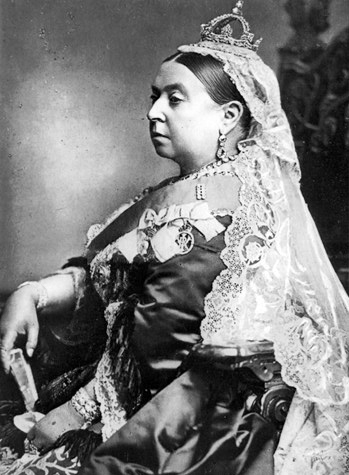
150713VictoriaAs I explained last week, patriarchy is not a universal of human societies but rather a product of specific historical circumstances. As a result, there are as many different varieties of patriarchy as there are cultures that practice it. There is no “the patriarchy” any more than there is “the democracy” or “the music.” Some democracies have parliaments, some have electoral colleges, and some just have town meetings. Some music has violins, some has taiko drums, and some has beatboxing. Patriarchies are just as variable.

Consider, if you will, Victorian Britain and the Roman empire. Both were unquestionably patriarchal, but that doesn’t mean they worked the same way.

Continue reading

Some Notes on Gender and Power (Part 1)

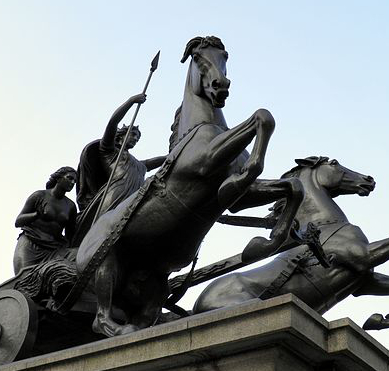
150629BoudiccaGender and power are two very big and complicated topics. Put them together and you get something even bigger and complicateder. (Yes, I said “complicateder.” Deal with it.) They are also two topics that have become very important in a lot of contemporary speculative fiction. I’m not going to try to take on the whole subject here, but I would like to offer a few points that can be useful for thinking about gender, power, and how they fit both into the world we live in and into the worlds we write about.

Continue reading

The Pre-Gunpowder Rock-Paper-Scissors

150629BayeuxGunpowder changed the world. It took a while — the earliest gunpowder arms were too unwieldy and unpredictable to have much of an effect on the ways people fought, but in time the weapons got better and armies adapted their tactics and organization in response. Before firearms, though, the battlefield operated on a basic rock-paper-scissors relationship among three different types of troops: infantry, cavalry, and missile troops.

Before getting into the types of troops, we need to lay out a few things about pre-modern warfare.

Continue reading