Dún Aonghasa

Aerial view of Dún Aonghasa. Photograph by Ronan Mac Giollopharaic
Aerial view of Dún Aonghasa, photograph by Ronan Mac Giollopharaic via Wikimedia

While doing some research on northern European hillforts recently, I found myself looking at some pictures of Dún Aonghasa (also known as Dun Aengus). It’s an impressive site. The fort is a series of concentric half-rings backing up onto 100-meter cliffs on the island on Inishmore off the western coast of Ireland. The earliest construction on the site has been dated to around 1100 BCE. Later additions were made around 500 BCE. It is one of the largest well-preserved examples of a type of structure that was built throughout northern and western Europe, from Spain to Sweden, in the prehistoric era.

The "cheveaux de frise," a barrier of jagged stones set up to slow down attackers. Photograph by Herbert Ortner
The “cheveaux de frise,” a barrier of jagged stones set up to slow down attackers, photograph by Herbert Ortner via Wikimedia

There has been disagreement in the scholarship about the function of Dún Aonghasa and similar forts. While often identified as fortified settlements, some have suggested that they were actually sites of religious ritual. It has to be said that if Dún Aonghasa and sites like it were religious sanctuaries, they were amazingly well-defended ones. I think it is more likely that sites that were originally built for defense were centuries later repurposed as ceremonial sites, much like how medieval castles built for defense have centuries later become museums and tourist attractions.

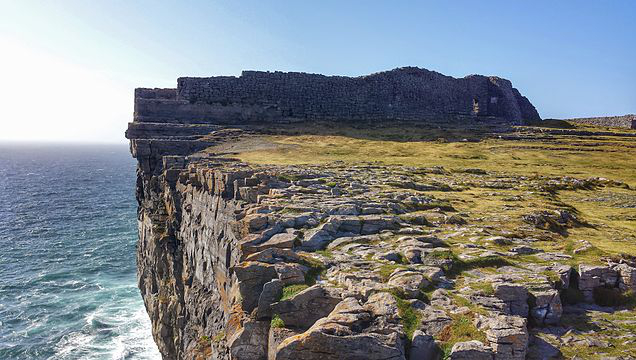
The walls of Dún Aonghasa and the cliffs of Inishmore. Photograph by Jal74
The walls of Dún Aonghasa and the cliffs of Inishmore, photograph by Jal74 via Wikimedia

It may be hard to believe that such an enormous fortification was built in so remote a place, but forts like Dún Aonghasa were once fairly common across western and northern Europe. Most, however, have been lost to decay, erosion, and the reuse of stones. It is only in remote places like Inishmore that they still survive.

Thoughts for writers

Just a simple thought today: the world is full of interesting possibilities. Fortresses don’t have to look like medieval castles. Religious sites don’t have to look like cathedrals or Greek temples. History is huge and there are amazing things out there to inspire your imagination.

History for Writers is a weekly feature which looks at how history can be a fiction writer’s most useful tool. From worldbuilding to dialogue, history helps you write. Check out the introduction to History for Writers here.

Men, Women, and Games

Lots of women play video games, and lots of gamers are women. This is not news, yet for some reason we have to keep saying it.

The august Pew Research Center was the most recent group to say it. Here’s their Teens, Technology, and Friendships report from earlier this month about how teens use games, among other online services, to connect with one another. Among many other findings, 84% of teenage boys reported playing video games, as did 59% of teenage girls. All teens reported playing a wide variety of different types of games (which is to say: no, all those teenage girl gamers are not just poking at Barbie Sparkle Kardashian Krush on their phones; they’re doing everything from hacking up orcs in World of Warcraft to building imperial star destroyers in Minecraft).

So, if there are so many women playing games, why don’t male gamers see them? The results of another recent study, Insights into Sexism: Male Status and Performance Moderates Female-Directed Hostile and Amicable Behavior by Michael M. Kasumovic and Jeffery H. Kuznekoff showed that male gamers (specifically playing Halo 3) tended to be more aggressive and abusive in voice chat to players who sounded female than those who sounded male. Also not news. Anyone who’s spent time in any online chat environment is likely to have seen the kind of dreck that gets spewed at women who let their identities be known, so it’s understandable that many female gamers choose to conceal their gender when in mixed company.

The Kasumovic and Kuznekoff study offers another interesting detail, however. The abuse directed at the female-voiced player came primarily from male players who were performing poorly, while men who were doing well at the game tended to be positive or neutral in their comments.

I see three important takeaways from these two studies:

  1. There are women in your games. In fact, if you play a multiplayer game, they are all around you. Just because you don’t know they are there doesn’t mean they aren’t. If you don’t hear women’s voices, it only means that the environment is toxic enough that many women choose to stay silent rather than have to deal with it.
  2. The men who harass women in games are not doing it mindlessly or randomly. They are not equal-opportunity dirt-spewers but target women specifically because they are trying to reassert their position in a hierarchy. The people most invested in any hierarchy are not the ones at the top but the ones who are afraid of falling to the bottom.
  3. If you are a male gamer and you want to look like you’re at the top of your game: don’t spew crap at the women around you. Good gamers are decent to their fellow players. The only ones who feel the need to put others down are the scrubs who can’t cut it.

Of Dice and Dragons is an occasional feature about games and gaming.

The Case of the Missing Roman Railroads

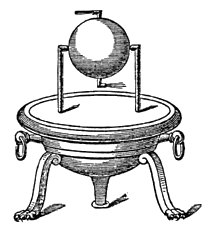
150824AeliopileThe Roman empire had a problem. It was just too big. When a crisis developed on one frontier, it could take weeks for the emperor to hear about it, then months or even years to move troops and supplies into position to deal with it. The large frontier army consumed supplies which had to be delivered at great expense from the agricultural heartlands. The roads built by the Roman army helped make all this travel faster and easier, but if the Romans had built railroads they could have made it much easier still. A Roman empire with railroads might not have fallen apart in the fifth century CE. So why didn’t the Romans build them?

The obvious answer is that they didn’t have the technology of steam power, nor the resources of coal and iron needed to build a functioning railroad. It’s a good answer, but like many such obvious answers it’s missing something.

Continue reading

Ant-Man’s Unanswered Question

We finally got around to seeing Ant-Man a couple of days ago. I know that movie is so last month and everybody’s moved on to other things, but I have a few thoughts to share. There will be spoilers, just in case you’re even later than me in getting around to this movie.

150820Ant-manI liked Ant-Man. I put it in the middling range of the Marvel moves along with the first and third Iron Man films. It kept me entertained on a hot summer day, it held together a lot better than the noble failure that was Avengers 2, and it didn’t insult me like last summer’s Guardians of the Galaxy. The jokes landed, the characters were interesting, and the story was fun. My strongest impression of the movie, though, is that it kept asking and conspicuously failing to answer one question: Why is Hope not putting on the suit?

The central plot of the movie is the heist to steal and destroy the Yellowjacket weapon prototype before evil corporate genius Darren Cross can unleash it on the world. Inventor Hank Pym recruits good-hearted cat burglar Scott Lang to don the Ant-Man super-shrinking-and-insect-mind-control tech to get the job done, even though Hank’s daughter Hope van Dyne is obviously a better choice. She already knows about the technology and how to use it. She has access to the facility that is the target of the heist. She is smart, cool-headed, and tough. Why do they need Scott?

The movie half-heartedly offers a few possible answers, but it seems to be aware that none of them really holds up.

Because Scott is such an awesomely inventive cat burglar

Eh. The script does the bare minimum job of showing us Scott thinking on his feet. It’s okay, but it’s hardly persuasive. In any case, the Yellowjacket heist is already planned out; not much on-feet thinking required. At best, Scott could be useful on the coms Leverage-style to advise Hope in case of surprises. We really don’t see any of that vaunted inventiveness at play in the heist.

Because Hope needs to stick with Cross during the heist

Apparently not, because she really doesn’t do anything important during the heist besides help a wounded Hank get out of the building. Her presence with Cross doesn’t seem to make any contribution to pulling the heist off.

Because her father is afraid for her safety if she uses the Ant-suit

That’s fine. He can worry. We all worry about the people we care about. Pepper Potts worries about Tony Stark. Laura Barton worries about Clint. That’s not a reason for them not to suit up and get the job done when it matters.

Because she gets to be Wasp in the next movie

Great! Why couldn’t she be Wasp in this movie? “It’s about damn time,” she says as she eyes the Wasp suit at the end of the film. It was about damn time at the start of the film, too.

I give Ant-Man credit for at least tacitly acknowledging that none of these reasons stands up. We need more good female superheroes (and villains, for that matter) on our screens and there’s no good reason why we don’t have them already. I take Ant-Man as an admission from Marvel that they recognize the problem, and that’s a step towards fixing it. Whether they are willing to take the next step of actually giving us the female characters we’ve been waiting for is another unanswered question.

Image: Comic-Con Ant-Man Poster via Wikimedia

In the Seen on Screen occasional feature, we discuss movies and television shows of interest.

The Billion-Dollar Pyramid

150817PyramidWe all know that the pyramids of Egypt were tombs for the pharaohs. (Yes, yes, and landing pads for Goa’uld spaceships; you can put your hands down now.) Thinking about what it took to build them, though, gives us an idea of what else they were.

The construction of the pyramids is a perpetual favorite subject of cranks and crackpots (Lost technologies of Atlantis! Sound waves!). Even among the more reality-bound, there is no end of theories ranging from the mundane (ramps and sledges) to the reasonably plausible (pulleys and levers) to the unlikely but not impossible (poured concrete). No matter what technique we imagine, however, one thing was definitely required: massive amounts of labor.

What most armchair pyramidologists miss about the problem of megalithic construction is that the physics of moving large stones are very simple. Apply enough force to a mass and it will move. Some things can make the application of force easier: ramps, pulleys, rollers, whatever you’ve got, but in the end it’s just a matter of force versus inertia. No matter how you go about building a pyramid, what you need in the end is the same: muscle power and time. With enough muscle power and time you can build pretty much anything, but labor is expensive. The real problem that would-be pyramid builders have to solve isn’t technological, it’s economic. The real question isn’t “How did they build the pyramids?” but “How did they afford the pyramids?”

Continue reading

Gatesmashing

We’re all familiar with gatekeeping: when members of a fandom (or geekishness in general) try to exclude others for not being true fans or real geeks because they haven’t seen/read/played every obscure iteration of the franchise or don’t know every minute detail of the lore. “Oh, you haven’t seen the Holiday Special?” they sniff. “Well, you’re not really a Star Wars fan, then.” “You don’t know how many buttons were on the second Doctor’s costume? Begone, fake Whovian!”

If you’re fortunate enough to have never witnessed or experienced gatekeeping, here’s a few discussions (picked more or less at random) to give you an idea of what it is and why it sucks:

No One Can Deny You Entry to Geekdom, But Some Can Make It Really Hard to Get Through the Door First by Michi Trota on Geek Melange

The Psychology of the Fake Geek Girl: Why We’re Threatened by Falsified Fandom by Dr. Andrea Letamendi on The Mary Sue

A Creator’s Note to “Gatekeepers” by John Scalzi on Whatever

You see what I mean? Gatekeeping is wrong, hurtful, and no fun. And while it’s true that it can be done by anybody to anybody (I’m a straight man and I’ve had my fandom cred challenged by queer women half my age), it is a weapon frequently deployed by the privileged against the un-privileged, in whatever terms those categories may be defined.

Gatekeeping needs to stop. It’s time we all acknowledge that none of us has seen everything and none of us knows everything, even about the things we love the most. No one is any less of a geek or a fan because of the things they don’t know. All it means is there are still things for us to watch and read and play and find out about, and that’s awesome. Seriously, I feel so sorry for anyone who has nothing new left to learn or experience.

And so, I propose a new pastime: gatesmashing! Instead of obsessing over the things we have seen and read and played, let’s proclaim the things we haven’t. Tell us what you’ve never experienced, and tell us proudly. Not a comprehensive list, of course, but the first few things that come to mind.

I’ll go first.

I have never seen:

  • Rocky Horror Picture Show
  • Starship Troopers
  • The Dark Crystal
  • Any Doctor Who starring the first or fifth-through-eighth Doctors

I have never read anything by:

  • Neil Gaiman
  • Terry Pratchett
  • Ursula K. Le Guin

I have never played:

  • Skyrim
  • Minecraft
  • Dragon Age

And the fact that I haven’t doesn’t make me any less of a geek than anyone who has.

Here there be opinions!

Labor

150810oxcartThe majority of the stuff that needs to get done in an agrarian society is basic manual labor: primarily farm work, but also things like construction, building and road maintenance, mining, carrying, housework, etc. Any functioning pre-industrial society needs lots of workers to do all that work, but there are many different kinds of workers, some of which are not so familiar to us today. Some of these kinds of workers had it much better than others.

Here’s a list of possibilities, by no means exhaustive, arranged roughly in order from worst to best conditions.

Continue reading

35 Isn’t Old and Everyone’s a Royal

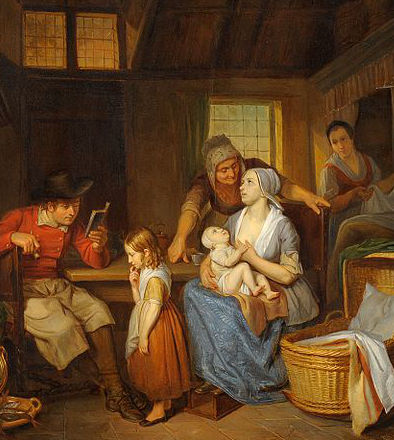
150703FamilyI suppose that title’s a little more interesting than “Pre-modern Demography.”

You’ve probably heard the statistic that the average lifespan in the European middle ages was 35. I remember learning that when I was young. Most of my students have heard it, too, and just like I used to, they imagine that it means that when medieval people got to thirty-two or thirty-three it was time to start looking around for a cemetery plot and a good gravedigger, and that anyone who made it to forty must have been a revered elder, if not a terrifying freak on nature. The truth is much more interesting.

Data about births and deaths is hard to come by for periods before the rise of modern bureaucracies. In a few localities there are church records going back into the late middle ages. Legal documents like wills, deeds, and contracts occasionally offer information about peoples’ births, ages, and deaths, but such documents come from only a very restricted class of people and they may be unreliable because people misrepresented the truth when it suited their political and economic purposes. Archaeological studies of burials can be very useful, although determining age from skeletal remains is imprecise, and we are at the mercy of biases in burial customs and survival of remains. All of these sources of information are partial and biased, but pulling them together gives us a rough sense of how people lived and died in earlier ages.

There are broad patterns that can be discerned from the evidence, but as with most such broad patterns we should always be alert to local variations. Another caution: I’m working from the evidence that I happen to be familiar with, which is mostly European and Mediterranean. Many of the same forces that were at work in that region of the world are relevant to others as well, but we must be alert to regional differences.

Continue reading

Hugo Voting, “Good” Stories, and Politics

I just submitted my Hugo ballot for 2015. We’ll know soon enough who won what. We’ve had months of online arguing about who should win and why, and I’m sure we’ll soon have months of arguing about who won and why, and if you’re at all like me, you’re sick to death of the whole business. So, I’m not going to talk about who I voted for or why I think they should win. Instead, I want to talk about two ideas that have arisen from the conversations that have unfolded around the Hugos this year. Both have to do with how we evaluate stories and both, I think, are founded in misguided ideas about what a story is.

The ideas I’m talking about are:

1. “We should vote for stories that are good, not just the ones we like”

Most of the time, I like things because I think they are good and I think things are good because I like them.

There’s some slippage around the edges. There are some things that I can see are technically well executed, but that I don’t enjoy (The Hunger Games, the rebooted Battlestar Galactica), and there are some things I enjoy despite their technical failings (early-season Star Trek: The Next Generation, The Princess Bride). For the most part, though, the overlap between “stuff I like” and “stuff I think is good” comes pretty close to 100%.

There is no objective standard of what makes a story “good.” You can’t measure and quantify it. There are things that a lot of people agree on about what makes for a good story, but subjectivity in large amounts is not the same as objectivity. Lots of people think that Ender’s Game is a great work of science fiction, but in the end all that means is that lots of people like it.

Calling on people to vote for stories that are “good” is meaningless. If nothing else, the controversy around this year’s Hugo nominees has been an excellent demonstration of the fact that we all have different definitions of what good means. We vote for the stories we like because those are the stories we think are good. The winners will be the stories that the greatest number of people liked, and that’s all there is to it.

2. “We shouldn’t judge a story on whether we agree with its politics or not”

As one of my college writing teachers told us: “A story is an experiment in moral physics.” At the core of a story, any story, is an idea about how the world does, could, or should work. You can call that politics or a message, but all it is in the end is an idea, and an idea that shapes how the world of a story works and how its characters interact with one another is just as integral to that story as any other element.

It is just as legitimate to judge a story on its ideas as on its plot, characters, dialogue, or any other element. A vital part of what make so many of us love, say, The Lord of the Rings is the idea that doing the right thing matters, even when it seems like no one will ever notice or care. Without that guiding idea, the story would not be at all the same. When we are deciding whether we like a story or not, we cannot take the ideas of that story out of the picture and it would be a mistake to try.

And that is all I have to say about the 2015 Hugos. You pay your money and you cast your vote. We’ll see the results soon enough.

Story Time is an occasional feature all about stories and story-telling. Whether it’s on the page or on the screen, this is about how stories work and what makes us love the ones we love.

Recommended Reading: Herodotus, “The Tale of the Clever Thief”

150727ringWe learn to write by reading, and so I’d like to share with you some of the works of classical literature that have inspired me as a writer. There’s no better place to start than with the Greek historian Herodotus. Herodotus’ Histories is my favorite book of all time. I re-read Herodotus like some people re-read Tolkien. “The Tale of the Clever Thief” (that’s my own name for it; Herodotus didn’t give that particular story a name of its own) is one of the most delightful parts of the work.

Herodotus is popularly known as the Father of History. He is also known as the Father of Lies. Both titles are appropriate. Herodotus was the first (surviving) author in the western tradition to write about the past in terms of human actions and motivations, not the deeds of gods and heroes. He was also a storyteller who enjoyed spinning a good tale, even if he didn’t think it was true (and some of the things he did think were true are pretty outrageous).

Continue reading