To accompany the first of our Star Wars rewatches, I made a dark chocolate mousse. As rich as Queen Amidala’s wardrobe and as dark as Senator Palpatine’s heart, this mousse kept us happy through the podrace and droid battles.
Ingredients
7 oz dark chocolate
2 tablespoons butter
4 tablespoons dark rum
3 eggs
Melt the chocolate, butter, and rum together in a double boiler over barely simmering water
Separate the eggs
Remove the melted chocolate from the heat and whisk in the egg yolks
Beat the egg whites until they form soft peaks
Whisk the egg whites into the chocolate mixture
Spoon into dishes and chill for an hour
Image by Eppu Jensen
Geeks eat, too! Second Breakfast is an occasional feature in which we talk about food with geeky connections and maybe make some of our own. Yum!
The words revision and revisionism, when it comes to history, have a bad smell. They are lobbed as insults against people who propose new ways of understanding things that already have a conventional explanation. “We had it right the first time, stop monkeying with it” is the implied retort. Revision, however, is essential to the study of history. No matter how well we think we understand something, our grasp of history is always partial and conditional. New evidence, new ideas, and new questions applied to the known sources frequently yield new results and we often discover that our conventional explanations, while not wrong, are incomplete. And sometimes they are just wrong.
Here’s an example. As the European study of ancient Egyptian history developed in the 1800s, European colonialism was also spreading across Africa. For scholars who supported the imperialist agenda, or at least accepted its intellectual framework (and there were those who didn’t, but they were a minority), ancient Egypt presented a problem. Imperialist thinking declared that Africans were incapable of reaching a high level of culture without the help of superior white men, and therefore European colonization of Africa was not just a profitable venture but a moral imperative. Yet there could be no denying that ancient Egypt had been a high culture. How could both things be true?
Sometimes you put a lot of time and effort into solving a problem, only to realize that you were coming at the problem from the wrong angle and your solution doesn’t actually fix anything, or even just makes things worse. (Or at least I do. I do this all the time.) It’s what I think of as “solving the wrong problem.” Blizzard Entertainment, creators of World of Warcraft, has been solving the wrong problem in the latest expansion, and garrisons are the manifestation of that mistake.
The Aliance garrison, where I’ve spent entirely too much of my gaming time.
It’s not that there aren’t problems to be solved. WoW‘s player base is getting older and a lot of us have less time to play, can’t sit down and play in long sessions like we used to, and aren’t as interested in investing lots of time and effort into chasing big goals, but we still want to play and enjoy the game. Garrisons were, in my opinion, a good-faith effort at solving this problem, but they came at it from the wrong direction.
This weekend is Blizzcon, Blizzard’s big event when they talk about what’s coming for their games and we’re going to hear all about the next expansion for WoW. I hope we hear something that addresses what garrisons got wrong.
It is odd to find oneself arguing that a ghost story would be better without the ghosts, but that’s how I felt coming away from Crimson Peak.
Crimson Peak, as others have noted, is a Gothic romance. Ghosts are de rigeur for the genre. They give form to emotional traumas and compel the hero or heroine to uncover the horrible secrets behind them. The ghosts of Crimson Peak fulfill this role and prod the film’s heroine to expose the dark past in the house. Eventually. She takes an awful lot of prodding. In the meantime, the ghosts just take up screen time being ghostly and doing ghost stuff, none of it terribly interesting.
“The ghosts are a metaphor,” we are told early in the film, except they aren’t. A metaphor is when one thing stands for or represents another, but there is nothing metaphorical about the ghosts of Crimson Peak. The ghost of the old woman in the bathtub with a meat cleaver in her head does not represent the lingering traumas of the past or the madness of the characters. It represents the fact that an old woman was killed in that bathtub with a meat cleaver to the head. The crumbling, bleeding house is a metaphor for the unraveling of the family that dwells there, but the ghosts are the most literal ghosts you have ever met.
The only purpose the ghosts serve in the narrative is to nudge our heroine Edith into uncovering the truth. They might as well just be standing in the hallway holding signs that say “PLOT-RELEVANT INFORMATION IN THIS CLOSET” or “ASK QUESTIONS ABOUT THIS BATHROOM.” They are narrative shortcuts that save the heroine the bother of actually having to do much thinking. The most interesting part of the story is when Edith finally does a little investigating, but the ghosts do most of the uncovering for her and rob the story of complexity. I would rather have watched Edith do the work of piecing together what was going on at Allerdale Hall without the ghosts standing around holding their “THIS WAY TO THE PLOT” signs.
“It’s not a ghost story,” we are also told early in the film. “It’s a story with ghosts.” I give the movie enormous credit for its gorgeous visual design and for showing how well a period piece can incorporate active and effective female characters. But maybe it should have been a story without ghosts.
Image: Crimson Peak, (c) Universal Pictures 2015 via imdb
In the Seen on Screen occasional feature, we discuss movies and television shows of interest.
Halloween will soon be upon us. The origins of this holiday are obscure. It is often connected with the Gaelic festival of Samhain, which marked the end of the harvest and the beginning of winter, but Halloween, at least as popularly celebrated today in the US and some other countries, has wider connections. It is an example of a type of holiday found in many cultures: the “feast of fools.”
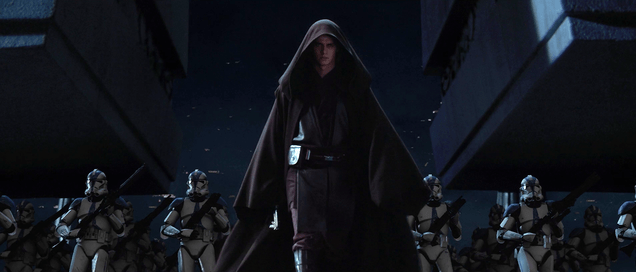
It’s well known that George Lucas drew inspiration from mythology when writing Star Wars. Luke Skywalker, the young hero from the planet farthest from the bright center of the universe, gets the call to adventure delivered by droid and goes off on a Campbellian journey to rescue a princess, seek out an ancient mentor, and finally confront his fallen father. The prequel trilogy gave us the tragic version in which Anakin, the great warrior, was driven to madness and destroyed the things he loved the most.
There are smaller touches of myth throughout the Star Wars hexalogy. Luke receives his father’s lightsaber like King Arthur drawing his father’s sword from the stone. The escape from the imperial garbage masher has hints of Jonah and the whale. Luke in the Wampa’s cave has shades of Beowulf.
Like most of the rest of geeky internet, I’ve been watching the trailers for The Force Awakens with excitement. I’ve been struck by something, especially in the latest trailer. The mythology that this latest iteration of Star Wars is working hardest to evoke is… Star Wars.
Star Wars: The Force Awakens Trailer (Official) via Star Wars
Star Wars has transcended being a movie franchise or even an expanded universe. It has reached the point where we can speak of it in terms of mythology.
One of the definitions of myth is that it is a story you know even if you can’t recall ever being told it. Star Wars has that. It is part of our cultural consciousness to the point that even people who haven’t seen the movies (yes, they exist) recognize the sound of a lightsaber and the cadences of the imperial march. Star Wars was all over my childhood, and even though I didn’t get around to seeing the movies until I was a teen (I was a Star Trek fan and young and dumb enough to think that I had to pick one over the other), I recognized Darth Vader, Princess Leia and Yoda on my friends’ lunchboxes.
Another characteristic of myth is that all myths are versions. There is no original, no canon. Though some may disagree on whether this is a good thing, Star Wars has always been an evolving story, getting new versions from small tweaks to big changes. (Yes, I see you in the back in the “Han Shot First” shirt, you can put your hand down.) The new wave of Star Wars movies leaves the old hexalogy alone but reboots the post-Return-of-the-Jedi expandeduniverse.
For those of us who grew up in the world of Star Wars, it is hard to imagine a time when these stories were not a part of the popular culture, yet there was a time when no one had heard Darth Vader’s breathing or Yoda’s grammar, when no one knew what a lightsaber or a Death Star was. By connecting to the ancient stories we already knew, Star Wars made itself feel timeless. Now it has become a part of that universal memory to be played upon and invoked in its own right.
… Marcus Licinius Crassus would have been the first emperor of Rome instead of Julius Caesar.
Stick with me here.
Alfalfa is a plant in the pea family that resembles clover. It originally comes from south central Asia and was cultivated in the northern parts of the Iranian plateau as animal fodder. Compared with other fodder plants, alfalfa is very high in protein, so it is mostly fed to cattle. It can be given in small amounts to most horse breeds, but in large amounts it causes bloating as horses cannot use the excess protein.
The exception is Nisaean horses, a breed of horse that was developed in northern Persia and bred to feed on alfalfa. These horses were able to absorb the extra protein of alfalfa into their bones, giving them denser, stronger bones than other horses. These dense bones enabled the Nisaean horses to make sudden turns while galloping at high speed that would have broken other horses’ legs and to carry heavier weights than other horses of the ancient world could manage.
Down the crimson marble steps of the temple of Zurukh, god of blood, came a bald priest in the red robes of the Order.
“Heathens!” he cried, pointing with his holy whip at Our Heroes. “Heretics! Blasphemers! You shall bow down and worship Zurukh or burn in the fires of the Scarlet Inquisition!”
“Silence!” answered Inessa, stepping forward from the party and raising aloft her crosier. “Repent of your wickedness! The power of Adnea, Lady of the Pure Light, compels you!”
Religions are tricky to write. If you’ve delved into much fantasy, you’ve probably seen a lot of faiths that seem oddly familiar. In fact, the religions of some fantasy worlds can be charitably described as “Catholicism with the serial numbers filed off.” Even given a profusion of gods with their own temples and cults and spheres of influence, fantasy religions tend to work more like the modern monotheisms than like the actual ancient “pagan” traditions they are outwardly imitating.
How can you make your fantasy religion feel more authentically ancient? There’s no rules to it, but in this and some future History for Writers posts, I’ll share some of what we know about historical beliefs from around the world that may help you imagine a religious worldview that feels less modern.
In this age of selfies and Instagram, we are very aware of how consciously we all create the image of ourselves that we show to the world. The people of antiquity were no less self-conscious about their public image. Look at these two sculptures of Cleopatra VII.
Cleopatra VII Philopator is the famous Cleopatra, Queen of Egypt and lover of both Julius Caesar and Marcus Antonius. She was the last of the Ptolemaic dynasty in Egypt, founded by Ptolemy I, one of the generals of Alexander the Great. The Ptolemies ruled Egypt for almost three hundred years, arguably the first European colonial state in Africa. Like other Macedonian dynasties in the relics of Alexander’s short-lived empire, Ptolemy and his heirs took a pragmatic approach to ruling over a large population that did not share in their Hellenized Macedonian culture. They embraced a kind of cultural bilingualism in which they presented themselves in very different ways to different audiences.
Portrait head of Cleopatra VI, photograph by Louis le Grand via Wikimedia (Altes Museum, Berlin; 40-30 BCE; white marble)
This marble head of Cleopatra is sculpted in a Hellenistic style and presents the queen in a Greek cultural context. White marble was favored for sculpture in the Greek world because it reacts to light in ways similar to human skin, making marble sculpture appear more naturalistic. Details like the soft rendering of the mouth, the detailed delineation of the hair, and the slightly off-center tilt of the head are drawn from the artistic repertoire of late Classical and Hellenistic portrait sculpture. This statue asserts Cleopatra’s Greekness and her participation in the broader Mediterranean cultural world. It was probably displayed in Alexandria, the Ptolemaic capital, which had a cosmopolitan population largely made up of Macedonians and Greeks, along with substantial Jewish and Persian communities and a variety of other peoples, but few ethnic Egyptians. It was meant to be seen by an audience that would recognize and appreciate the way this portrait fit into the larger history of Hellenistic ruler portraiture.
Statue of Cleopatra VII photograph by George Shuklin via Wikimedia (Hermitage Museum, St. Petersburg; late 1st c. BCE; basalt)
This basalt statue of Cleopatra uses not only an Egyptian artistic style, but an almost entirely Egyptian iconographic vocabulary. Many different stones were used for Egyptian portrait sculpture, but basalt was a popular one since the stone is very hard and durable, giving a sense of permanence especially to royal portraiture. Cleopatra is presented here as an Egyptian pharaoh. She wears a wig adorned with the royal uraeus and carries an ankh in her right hand. The cornucopia in her left hand is a Greek symbol, but its connotation of bounty is similar to the ankh’s symbolism of life. Also note that one of her feet is advanced. Egyptian women were typically depicted with feet together and men with one foot advanced, but the adoption of masculine traits to represent a ruling queen is also traditionally Egyptian. This statue was intended for an Egyptian audience and meant to convey Cleopatra’s commitment to ruling over her Egyptian subjects through the forms and structures that they had long been accustomed to.
The Ptolemaic monarchs were aware that their power rested on two precarious premises: that the people of Egypt would accept rulers who were not themselves ethnically Egyptian and that other Mediterranean, African, and Asian powers would respect as equals a royal house of comparatively recent vintage. These sculptures show the confidence with which Cleopatra balanced those two needs and reinvented her image for two different audiences.
The Visual Inspiration occasional feature pulls the unusual from our world to inspire design, story-telling, and worldbuilding. If stuff like this already exists, what else could we imagine?
The Martian got me thinking about Tolkien (and not just because of the Council of Elrond reference, although I loved that bit). On a basic level, The Martian is about the same thing that The Lord of the Rings is about. No, Mark Watney doesn’t have to destroy a magic ring and Frodo and Sam weren’t planting potatoes in Mordor, but the question that both works keep coming back to is the same: how do you make good decisions when you don’t have the information you need?
I was thinking about The Lord of the Rings recently after listening in on a conversation between a couple of fantasy geeks about why they don’t like Tolkien. Their complaints were that Tolkien’s writing moves slowly, people talk about things instead of doing them, and most of the action doesn’t even happen on the page. These are all perfectly valid points, and if you prefer action to talking, they are good reasons to read something else. We all like the things we like and there’s no right or wrong about it. What struck me, though, was that the things they didn’t like about Tolkien are precisely the things I love.
There is a rich vein of fantasy literature all about heroes who charge boldly into the thick of battle and remake the world by sheer force of their will. Tolkien’s heroes are not of this kind. For him, what makes a hero is slowing down, thinking carefully, and making the best decision you can, even when you can’t be sure your choice is the right one.
My favorite part of The Lord of the Rings is the Council of Elrond. I know that I am in a minority in this and that even many people who love Tolkien find the whole chapter tedious. I understand the objections, but I can’t help loving the fact that dealing with the ring is something the heroes have to puzzle over and work out. Some fantasy writers would just slip in a helpful ancient prophecy or have Elrond drop a little exposition on the party and get the Fellowship on the road as soon as possible. (Peter Jackson, working within the constraints of film, understandably comes pretty close to this.) But Tolkien lets them take their time, piecing together scraps of information that are all fragmentary and biased. What they end up with is not a perfect answer but the best they can do with what they have. The courage of Tolkien’s heroes is less about facing the danger of Sauron and more about facing the fact that the best decision they can make might still be wrong.
And that’s what I love about The Martian. Mark Watney is a Tolkienian hero. He has to make the best decisions he can even when he can’t be certain what NASA is doing a planet away, or if anyone even knows he’s still alive. He survives not by strength or force of will but by slowing down, thinking things through, and facing the inescapable uncertainties of his predicament. He does the best he can with what he has. Or, as he puts it: sciencing the shit out of things.
I could use a few more heroes like this. We have enough heroes who swing swords, shoot guns, drive cars, and punch things. Let’s have more heroes who plant potatoes. Sam Gamgee would approve.