In Defense of Peter Jackson’s Hobbit Trilogy

There’s a lot wrong with Peter Jackson’s Hobbit trilogy, make no mistake. It is an overstuffed, poorly structured jumble of unnecessary action sequences, juvenile humor, and tedious subplots, all ending in an interminable final battle that makes neither narrative nor tactical sense. Still, not all the problems are of Jackson’s making, and there are some things it does right that deserve notice.

Many of the structural weaknesses in the plot come from Tolkien’s original. The Hobbit was a children’s book about Bilbo Baggins and a band of Dwarves having a series of random encounters on their way to a spectacularly poorly planned heist. The characters are for the most part so flat as to be interchangeable and the plot is little more than an excuse to trundle from one retold Nordic folktale to another. I loved the book as a child and I still have a great fondness for it, but it does not have the depth or cohesion of The Lord of the Rings. Jackson’s writing team put in heroic efforts to make thirteen distinct characters out of Tolkien’s lyrical list of Dwarf names and to fill in much of the background story that makes sense of Bilbo’s disjointed adventures. (To be fair, this fleshing-out work is also the source of many of the movies’ problems. On one hand, developing the Dwarves’ characters too often just provided more opportunities for out-of-place slapstick. On the other hand, filling in the gaps in Tolkien’s plot led to inventing new characters, which Jackson’s team too often fell in love with and allowed to take over the story.)

Despite these problems, some of the best moments in the trilogy are iconic scenes from Tolkien’s original that were put on screen with very few changes. Scenes like Bilbo’s riddling contest with Gollum in the depths of the Misty Mountains, Gandalf’s wily approach to Beorn, and Bilbo’s conversation with Smaug are rendered with a fidelity that shows a real love and respect for Tolkien’s creation. They are a delight to watch, even if they can’t make up for the rest of the films around them.

Even the less authentic scenes are often elevated by the quality of the performances. Ian McKellen, Hugo Weaving, Cate Blanchett, and Christopher Lee reprise their roles as Gandalf, Elrond, Galadriel, and Saruman with intelligence and gravitas. Andy Serkis gets to present a less desperate, more playful version of Gollum while Orlando Bloom performs a younger Legolas who is, as Tolkien said of the Mirkwood Elves, “more dangerous and less wise” than the character we remember from The Lord of the Rings. The newcomers to the series give it their best, too. Martin Freeman shows us how Bilbo finds his courage and taste for adventure without ever losing his Hobbitish love of home and comfort. The Dwarf actors, for all that they mostly get used for broad comedy, give their characters an individuality and personality that Tolkien never did. Benedict Cumberbatch is smoothly menacing as the voice of Smaug. Sylvester McCoy’s Radagast does a bit too much slapstick, but he also gives us a wild fresh take on wizardry that sits at the other end of the spectrum from Saruman’s aloof grandeur.

The sets, props, costuming, and other art direction live up to the high standards set by Weta in the first trilogy. From the ancient depths of Erebor to the workaday fishing village of Lake Town, from the rugged traveling gear of the Dwarves to the cold glamour of the Elvish king Thranduil, there isn’t a place, character, or object on screen that doesn’t show the art department’s commitment to creating a world that feels real and lived-in. Over it all, Howard Shore’s music is as rich and operatic as ever.

But the best thing about the Hobbit trilogy, though, the thing that redeems the whole troubled production and its many missteps, is not the films themselves but the discs full of extras that come with the extended editions. Most studios are content to slap in a few deleted scenes, a handful of trailers for unrelated movies, and maybe a couple five-minute promo interviews with the big-name stars talking about how awesome the movie is (seriously, movie studios, you don’t need to market your movie to the people who have already bought the DVD), but not Jackson & Co. Each of the Hobbit films comes with hours upon hours of in-depth documentaries on every aspect of the production, from concept art to final edits. These documentaries do more than go behind the scenes in the usual self-promoting Hollywood way. They also show us the false starts, the mistakes, the ideas that went nowhere and the things that went seriously wrong. You get a fuller appreciation of the good things in the movies when you see how hard it was to get some of them on screen.

The extra features are also well designed for usability. Everything is subtitled, which is great for those of us who don’t always hear well. The menus are easy to use and it’s obvious which item you’re choosing, unlike some discs which make you do a lot of tedious scrolling back and forth and use only a slight difference in color to tell you what button you’re about to hit. Every section tells you how long it is, so you can plan your watching accordingly. The Hobbit extras are the gold standard of how to do bonus features and I wish that more studios and franchises would take as much care both in what they offer for extra material and the functionality of their products.

The Hobbit trilogy is not great cinema. The whole does not measure up to the sum of its parts, but some of those parts are in themselves fascinating and beautiful. They make it worth going there and back again.

Image: Promotional still from The Hobbit: An Unexpected Journey via IMDb

In the Seen on Screen occasional feature, we discuss movies and television shows of interest.

Gender-Flipped Black Panther

One of the great things about Black Panther is that it allows plenty of room for both male and female characters, but what if we flipped them? Here’s our imaginary cast for a gender-flipped Black Panther.

Halle Berry as T’Challa / Black Panther

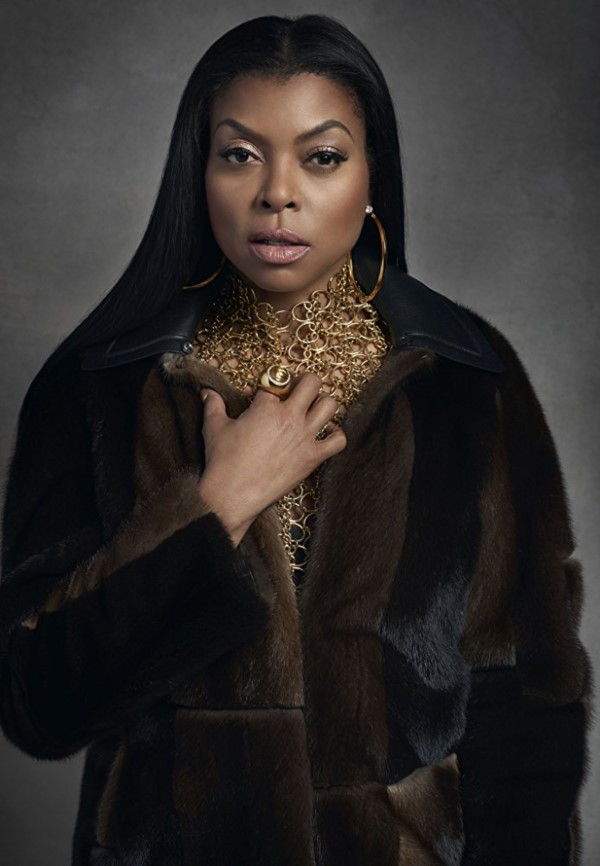
Taraji P. Henson as Killmonger

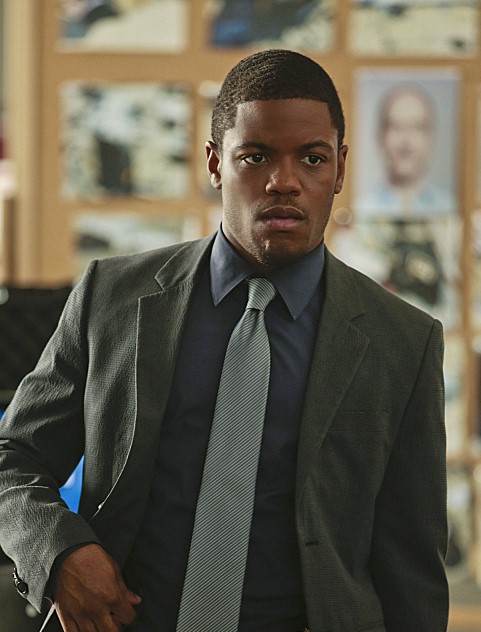
Jon Michael Hill as Nakia

Idris Elba as Okoye

Emily Blunt as Eve Ross

Alfre Woodard as W’Kabi

Donald Glover as Shuri

LA Weekly Donald Glover

Ann Wolfe as M’Baku

IMDB Ann Wolfe in Wonder Woman

Whoopi Goldberg as Zuri

IMDB Whoopi Goldberg in Ghost

Denzel Washington as Ramonda

IMDB Denzel Washington in The Book of Eli

Amanda Abbington as Penelope Klaue

Fandom Observations Amanda Abbington in Sherlock

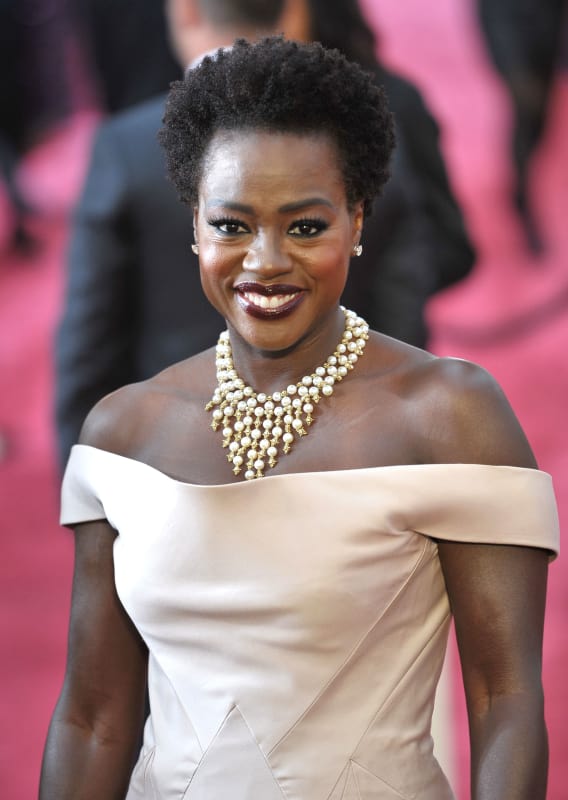
Viola Davis as T’Chaka

The Hollywood Gossip viola-davis-at-the-2015-oscars

Images: Halle Berry in Perfect Stranger via IMDB. Taraji P. Henson in Empire via IMDb. Jon Michael Hill in Elementary via IMDb. Idris Elba in Pacific Rim via IMDb. Emily Blunt in The Five Year Engagement via IMDb. Alfre Woodard in Luke Cage via IMDb. Donald Glover via LA Weekly. Ann Wolfe in Wonder Woman via IMDB. Whoopi Goldberg in Ghost via IMDB. Denzel Washington in The Book of Eli via IMDB. Amanda Abbington as Mary Watson in BBC’s Sherlock via Fandom Observations. Viola Davis at the 2015 Oscars via The Hollywood Gossip.

Creative Differences is an occasional feature in which we discuss a topic or question that we both find interesting. Hear from both of us about whatever’s on our minds.

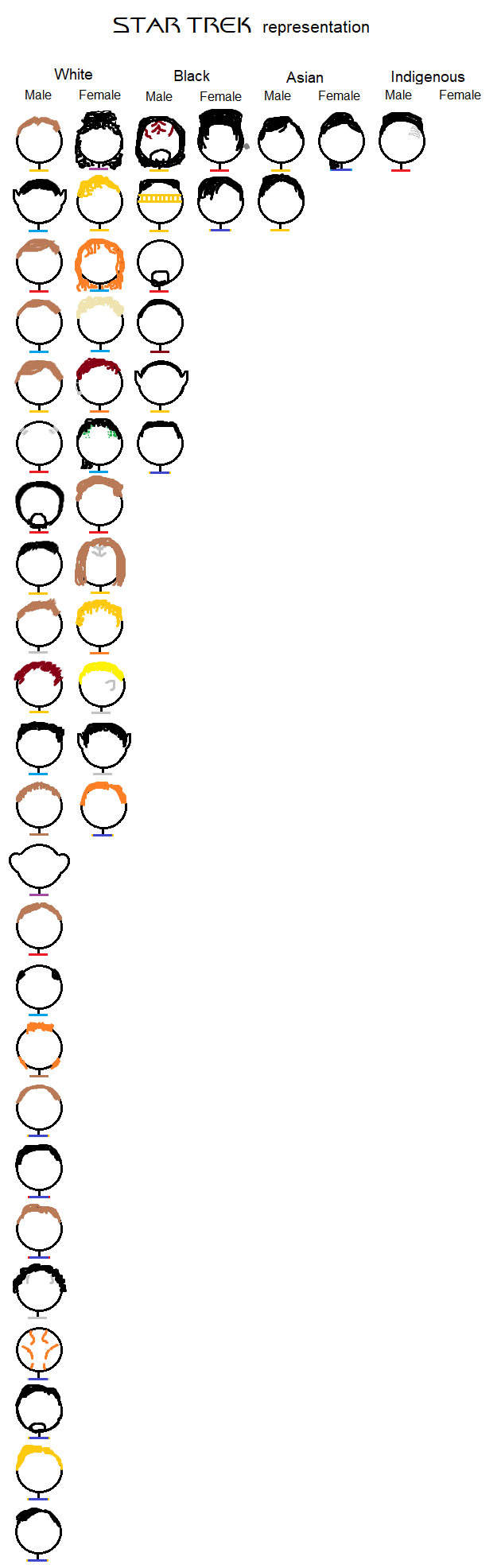
Representation Chart: Star Trek

We all know that the representation of people of different genders and races is imbalanced in popular media, but sometimes putting it into visual form can help make the imbalance clear. This is the first of a series breaking down, in basic terms, who’s represented and who isn’t.

Here’s Star Trek. I’ve included the credited main cast from all the live-action television series.

Notes

Characters included

  • Star Trek: Kirk, Spock, Scotty, McCoy, Checkov, Uhura, Sulu
  • Star Trek: The Next Generation: Picard, Riker, Data, Wesley, Troi, Yar, Crusher, Pulaski, Worf, La Forge
  • Star Trek: Deep Space Nine: O’Brien, Bashir, Odo, Quark, Kira, Dax, Sisko, Jake
  • Star Trek: Voyager: Paris, Doctor, Neelix, Janeway, Torres, Kes, Seven, Tuvok, Kim, Chakotay
  • Star Trek: Enterprise: Archer, Reed, Tucker, Phlox, T’Pol, Mayweather, Sato
  • Star Trek: Discovery: Saru, Tyler, Stamets, Lorca, Tilly, Burnham

Corrections and suggestions welcome.

Rules

In the interests of clarity, here’s the rules I’m following for who to include and where to place them:

  • I only count characters portrayed by an actor who appears in person on screen in more or less recognizable form (i.e. performances that are entirely CG, prosthetic, puppet, or voice do not count).
  • For human characters that can be reasonably clearly identified, I use the race and gender of the character.
  • For non-human characters or characters whose identity cannot be clearly determined, I use the race and gender of the actor.
  • I use four simplified categories for race and two for gender. Because human variety is much more complicated and diverse than this, there will inevitably be examples that don’t fit. I put such cases where they seem least inappropriate, or, if no existing option is adequate, give them their own separate categories.
  • “White” and “Black” are as conventionally defined in modern Western society. “Asian” means East or South Asian. “Indigenous” encompasses Native Americans, Polynesians, Indigenous Australians, and other indigenous peoples from around the world.
  • There are many ethnic and gender categories that are relevant to questions of representation that are not covered here. There are also other kinds of diversity, including sexuality, language, disability, etc. that are equally important for representation that are not covered here. A schematic view like this can never be perfect, but it is a place to start.

Messing with numbers is messy.

Race in Antiquity: Who Were the Greeks?

“What race were the ancient Greeks and Romans?”

It sounds like a simple question that ought to have a straightforward answer, but both the question and its answer are far more complicated than they appear. In these posts, I dig into the topic to explore what we know, what we don’t know, and what we mean by race in the ancient Mediterranean world.

Part 5: Who Were the Greeks?

As we have discussed before, modern racial categories are not easy to apply to the ancient Mediterranean world. Ancient peoples like the Greeks and Roman had complicated ideas about their own identities, but those ideas do not readily line up with the ways in which we modern people define race. If we want to better understand the identity of the ancient Greeks—in ancient or modern terms—we first have to know who we’re talking about. That may sound like a silly question. Isn’t the answer obvious? The Greeks! But who was a Greek?

This is a more difficult question than it may seem. In the modern world, nations have citizenship laws to regulate who is, say, an American, a Canadian, a Belgian, etc. Even today, though, not everyone’s identity is easily defined. Immigrants, expatriates, refugees, and other people who travel between nations can have complicated relationships to the places they come from and the places they end up. Individual feelings and societal attitudes are not always in line with the letter of the law.

The situation was even more complicated in ancient Greece. The people of ancient Greece were never politically unified on their own initiative. Individual city-states like Athens, Sparta, Corinth, and Thebes had their own citizenship laws, but these regulations varied widely between cities and changed in response to political pressures. Spartans who fled from battle could lose their citizenship. In Athens, challenging a rival’s citizen status was a common tactic in the tussle of political and family feuding. New citizens were enfranchised to serve political and military needs. The nearest thing there was to a central arbiter of Greekness was the Hellanodikai, the judges who oversaw the Olympic Games, in which only Greeks were allowed to compete. The judgments they made, though, were individual and only applied to the athletes. Decisions could also be swayed by political considerations: the Hellanodikai judged King Alexander I of Macedonia (great-great-great-grandfather of Alexander the Great) to be a Greek, while holding that the people of Macedonia themselves were not. (Herodotus, Histories 5.22)

The standards used for arguing about Greekness could also change with time and circumstances. In the sixth century BCE, most discussions of Greek identity were framed in terms of descent, specifically descent from particular mythic ancestors. The crucial figure was Hellen (a son of either the god Zeus and a human woman, Pyrrha, or Pyrrha and a human man, Deucalion—and not to be confused with the beautiful Helen, who sparked the Trojan War). Those who claimed descent from Hellen were counted among the Greeks, while those who did not were excluded. One of the fullest renderings of this tradition is in the poem known as the Catalogue of Women, a sixth-century poem known today only in fragments, which presented an account of the Greek heroic age structured around the genealogies, marriages, and progeny of certain women. This poem identified various groups of Greeks with three sons of Hellen: Dorus, Xuthus, and Aeolus.

The Catalogue, though, was not the final word on Greekness. As a primarily oral tradition, Greek myth had no canonical texts, and the family lines of gods and heroes were always up for debate. Other sources rearranged the family trees to change the determination of who did or did not count as Greek. (Thucydides, History 2.80.5-6; Pausanias, Description of Greece 1.11.1) Nor did ancestry remain the only way of asserting Greek identity. In the fifth century, many writers also began to refer to shared language, culture, and ways of life as defining who was Greek. (Herodotus 8.144) By the fourth century, we find the Athenian orator Isocrates explicitly rejecting common ancestry as a way of determining who was a Greek or not:

[Athens] has caused the name of “Greek” to apply not to a tribe but to a way of thought, so that those who are called Greeks are those who share our education rather than those who share our origins.

– Isocrates, Panegyric 50

(All translations my own)

In the Successor Kingdoms of the Hellenistic age (the remnants of Alexander’s empire in the Aegean, Egypt, and southwestern Asia), Greekness took on new meanings. In Egypt under the Ptolemaic kings, “Greek” was an administrative rather than ethnic designation applied to anyone who was not a native Egyptian. Thus not only immigrants from Greece and Macedonia were classed as “Greeks,” but also, for instance, Jews, Syrians, and Persians. Being designated Greek carried certain legal and tax benefits, so even members of the native Egyptian aristocracy who supported the Ptolemaic regime were granted Greek status. In the Seleucid kingdom, centered on Mesopotamia and Syria, Greekness was a communal rather than individual status. Certain cities founded by immigrants from Greece and Macedonia were recognized as “Greek,” which brought some administrative benefits to everyone who lived there, regardless of their origins.

Many different people lived with identities that were more complex than simply “Greek” or “not Greek.” From the seventh century BCE on, many individuals with special skills left the small, economically underdeveloped cities of the Aegean to find employment elsewhere, including mercenaries, physicians, courtesans, artisans, and actors. These emigrants settled in places ranging from the Iberian peninsula to the Iranian plateau and integrated themselves into local societies. Their descendants tended to adopt local names, languages, and cultures, such as Wahibre-em-Akhet, the son of two Greek-named parents who was buried in Egypt in a traditional Egyptian sarcophagus. Larger groups of emigrants founded colonies around the Mediterranean and Black Seas. While some of these colonies asserted a strong sense of Greek identity, many had more complex cultures, such as the Geloni of the Black Sea steppes, a fusion of Greek settlers and local peoples who spoke a Greek-Scythian creole language. (Herodotus 4.108)

Many people from the greater Mediterranean world also settled in the Greek cities of the Aegean. By the fourth century BCE there were Egyptian and Thracian immigrant communities in Athens that were substantial enough to successfully petition for the right to build temples to their own goddesses, Isis and Bendis. (Inscriptiones Graecae II2 337) The Carthaginian philosopher Hasdrubal moved to Athens and, in 129 BCE, became head of Plato’s Academy. Like Wahibre-em-Akhet in Egypt, Hasdrubal accommodated himself to the local culture by adopting the Greek name Clitomachus. (Cicero, Academica 2.31; Diogenes Laertius, Lives and Opinions of Eminent Philosophers 4.10) At the other end of the social scale, the Aegean cities of Delos and Rhodes were major centers for the slave trade. Captive people from origins stretching from Gaul to Persia and Scythia to Egypt are recorded passing through their harbors. Farther afield, Hellenistic-era Jews claimed to have proof that they shared a common ancestry with the Spartans and that sons of the Jewish patriarch Abraham had accompanied the Greek hero Heracles on his adventures. (1 Maccabees 12.5-23; Josephus, Jewish Antiquities 1.240-41, 12.225-27)

Greek culture and identity did not stand alone and aloof from others. The sense of cultural interconnection and flexibility was expressed in Egypt by a poem written in Greek but addressed to the Egyptian goddess Isis which explicitly identified Isis with the goddesses of several other peoples:

The Syrians call you Astarte, Artemis, and Nanaia,

the people of Lycia address you as Queen Leto,

men of Thrace call you the mother of the gods,

and the Greeks name you great-throned Hera, sweet Aphrodite,

good Hestia, Rhea, and Demeter,

but the Egyptians call you The Only One, for you are the one who is all

other goddesses named by humanity.

– Supplementum Epigraphicum Graecum 8.584.18-24

The multiplicity of ways in which Greekness could be claimed may be best exemplified by comparing two examples. On one hand, there were descendants of Hellenistic settlers in India in the last centuries BCE and early centuries CE who had assimilated into Indian culture but who still identified themselves as “Yavana,” the word for Greek in the local language. This term appears in inscriptions on offerings made to Indian gods in local temples. In terms of culture, language, and ways of life, these Yavana had become thoroughly Indian; it was only through their ancestry that they still identified as Greek. On the other hand, the philosopher Favorinus, in the second century CE, argued that he counted as Greek despite his Gaulish ancestry because he had adopted a Greek culture, language, and way of life. (Favorinus, Corinthian Oration 25-26)

Greekness was never a racial identity; it was a cultural identity, and one that was open to many different interpretations, not all of them compatible with one another. Any questions we ask about the racial identity of the ancient Greeks are bound to have complex answers. Nor are we, as modern people, in a position to dispute the lived and felt identities of ancient peoples. To impose our own rules on whose Greekness was legitimate and whose was not would simply be begging the question. The idea that people can be categorized into coherent ethnic groups with well-defined boundaries that were stable over time and across great distances is a figment of the imperialist and Romantic nationalist imagination. If we are serious about investigating the identity of the ancient Greeks, we have to be prepared for the bewildering and irreducible complexities involved in defining exactly who we mean.

Other posts on Race in Antiquity:

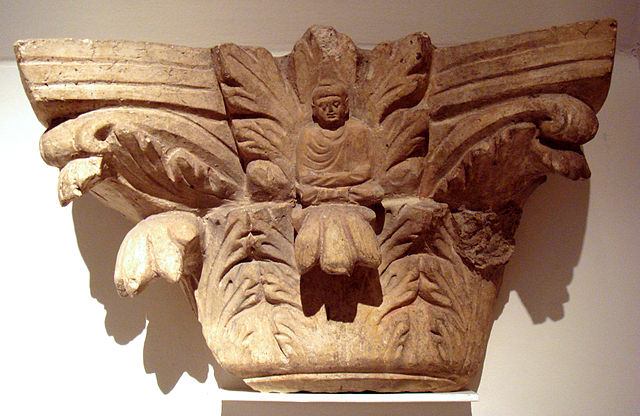
Image: Corinthian capital with seated Buddha, via Wikimedia (originally Gandhara, currently Musée Guimet, Paris; 3rd-4th c. CE; stone)

History for Writers is a weekly feature which looks at how history can be a fiction writer’s most useful tool. From worldbuilding to dialogue, history helps you write. Check out the introduction to History for Writers here.


Rating: Doctor Who, Season 7

We’re back at it, rewatching and rating season 7 of new-series Doctor Who. Here’s our take on this season’s episodes:

  1. “The Doctor, the Widow, and the Wardrobe” – 1.5
  2. “Asylum of the Daleks” – 6
  3. “Dinosaurs on a Spaceship” – 5
  4. “A Town Called Mercy” – 5
  5. “The Power of Three” – 2
  6. “The Angels Take Manhattan” – 3
  7. “The Snowmen” – 6.5
  8. “The Bells of Saint John” – 6.5
  9. “The Rings of Akhaten” – 3
  10. “Cold War” – 5
  11. “Hide” – 6.5
  12. “Journey to the Center of the Tardis” – 2
  13. “The Crimson Horror” – 4
  14. “Nightmare in Silver” – 4
  15. “The Name of the Doctor” – 3

The average rating for this season is an unimpressive 4.2, a slight comedown from season 6’s 4.4, though better than season 5’s 3.7. On the whole, this season just feels half-baked. There are some great ideas here that are just wasted on meandering, unfocused, episodes. An evil living sun! A Martian warrior on a Soviet submarine at the height of the cold war! Dinosaurs on a freakin’ spaceship! All of these ideas must have sounded great when first pitched, but the episodes developed from them just feel like underdeveloped first drafts. There are also some episodes that start out with great potential and then just flop. Mysterious black cubes appear all over the world and no one knows what they do! A pulp crime novel predicts the future! Despite their promising starts, these episodes just fizzle out in the end. Many of these episodes feel like they could have been standouts if more attention had been paid to developing the script.

At the bottom of the heap this time around is the Christmas episode “The Doctor, the Widow, and the Wardrobe,” at 1.5, about the Doctor trying to inject some delight into the lives of a grieving family by giving the children a magical trip to a winter wonderplanet. This episode’s problems are many, including misplaced comedy, uninteresting characters, and mediocre child acting. The biggest problems, though, run deeper. The whimsy is forced, and the story never quite decides how close it wants to hew to the C. S. Lewis original. Unlike some of this season’s other disappointing episodes, it’s hard to see this one’s problems being solved with another draft or two.

For best episodes of the season, it’s a three-way tie among “The Snowmen,” “The Bells of Saint John,” and “Hide,” all at a decent-if-not-outstanding 6.5. “The Snowmen” finds the Doctor grieving the loss of his companions Amy and Rory by hiding out in Victorian London, while sentient snow threatens a family whose governess is one version of Clara Oswald. “The Bells of Saint John” brings the Doctor and Clara together properly with a story of a nefarious company stealing people’s minds through wi-fi. “Hide” is a ghost-hunting story with a time-travel twist.

All of these episodes have their strengths. “The Snowmen” does a better job playing with it’s Mary Poppins inspiration than “The Doctor, the Widow, and the Wardrobe” does with Narnia. It also allows Clara’s character plenty of room to breathe and brings back the ever-delightful Madame Vastra, Jenny, and Strax. “The Bells of Saint John” is a tightly-paced paranoia thriller with lots of good action (even though the wi-fi mind-stealing plot never makes the least bit of sense). “Hide” begins as an atmospheric haunted house story that slowly unfolds to reveal surprising layers of complexity. While they all could have done with a bit more development, there are satisfying moments in each.

There are also some good long-term developments this season. Curious, resourceful Clara is a much more enjoyable companion to watch than Amy the bully. There is also much less hero-worshiping of the Doctor than in previous seasons.

That’s our take on Doctor Who‘s seventh season. What’s yours? Do you have favorites (or unfavorites) this season? Let us know!

Image: Doctor Who Season 7 cover via IMDb

In the Seen on Screen occasional feature, we discuss movies and television shows of interest.

Some Random Thoughts on Avengers: Infinity War

In no particular order. Spoiler warnings in effect.

Eppu’s random thoughts:

I went in knowing nothing for sure and having read only non-spoilery impression pieces and bits of barely-even news. A heads-up: half-baked musings to follow, plus at least one f-bomb.

  • You must know the previous Marvel Cinematic Universe movies to follow the Avengers: Infinity War story—none of the characters or their histories are introduced. Which makes sense: the previous movies are all in their way leading to AIW, and there’s no way you could introduce everyone and still have enough time left for a new story. Good for fans, not so good for regular moviegoers.
  • Superhero stories aren’t fully my cup of tea, not like for instance Jane Austen is, but my inner nerd is very pleased to have such an unprecedented series of high-quality movies like this.
  • I knew AIW was going to be stuffed to the gills with details, dialog, and derring-do, and indeed it was. Yet, strangely, it felt like we were in a holding pattern throughout the movie. You can tell it’s just the first act of a two-parter.
  • I missed so many lines among the sound effects. How about some subtitling in the theaters, USA? They’re helpful for all sorts of people, not just the deaf and hard of hearing.
  • The death toll started climbing earlier and got higher than I thought, even before the ashing at the end.
  • The writers started pushing Vision and Wanda Maximoff together already in Civil War (which they also co-wrote) but I never could buy their relationship. It felt forced then, and it still feels forced in AIW.
  • My favorite scene is when Black Widow, Captain America, and Falcon turn up to help Scarlet Witch and Vision in Edinburgh. Such seamless teamwork—so awesome!
  • Another awesome thing: Spidey got a nano suit.
  • I know it’s not what the movie actually did, but there was so much of it that the fighting felt almost unending. On the other hand, they did a fairly good job balancing the multiple storylines / locations for such an overstuffed movie.
  • There’s still way too much Stark. Like Civil War, AIW‘s not supposed to be yet another Tony show but of course that’s what they’ve made it into. On the other hand, Iron Man and Doctor Strange worked pretty well together despite—or maybe due to?—both being rich entitled jerks. In a way, they almost canceled each other out.
  • Also, the annoying git otherwise known as Peter Quill was pleasantly diluted by the presence of so many other characters. That man-child needs to fucking grow up. (Unpopular opinion: the Guardians of the Galaxy movies barely made it to “Meh” and certainly didn’t rise beyond.)
  • AIW did some unusual character pairings that worked really well: Stark and Strange plus Thor and Rocket come immediately to mind. Rhodey and Sam had a few promising moments while handling air defence during the Wakandan fight, but it didn’t amount to much.
  • Sadly, pretty much all of the Black Panther characters felt tacked-on and not properly integrated. However, it was marvellous to be back in Wakanda. We barely saw Shuri, though, and that’s just plain wrong. (Imagine her and Peter Parker geeking about tech together!)
  • OMG, Nat and Okoye and Wanda teaming up! Give me a buddy movie for those three any day! And throw in Maria Hill, too, please!
  • Another great thing was the deliberate refusal to overuse the Hulk. Instead, they gave Banner a suit version of Veronica the Hulk-buster.
  • Others have noted this, too, but some of the special effects looked clunky and unfinished (especially next to the finished ones). Many of Proxima Midnight’s scenes were affected, for example. (Speaking of her—was anyone else reminded of demon hunters from WoW?)
  • Considering how much Doctor Strange did in his eponymous movie, he contributed seemingly little to the world’s defense. I suspect we’ll see a lot more of his magic in part 2; what shape that takes remains to be seen. Especially since so many popular characters were turned to ash (like Spider-Man who we know will return in a sequel of his own next year), we cannot but see a lot of un-ashing.
  • What ultimately turned me off reading super comics is what I call the escalation-squish cycle: the tendency to time and again up the stakes ridiculously high, kill or shelve multiple characters, destroy cities or planets or whatnot, and then undo everything with a gimmick of the month. There’s only so much of it that I can take. Unfortunately it seems MCU may be headed in that direction. I hope not.
  • Major grumble here: Whose stupid-ass idea was it at the this-really-is-the-end fight to have our heroes go at Thanos one at a time, in a stupid-ass single-file? They’re not that dumb. Stupid-ass, lazy railroading. *grumble!*
  • I knew beforehand that AIW would end with a cliffhanger. I guess I was expecting the ending to be a bit more explosive and not as quiet as it was.

In the end, AIW just wasn’t as good as I wanted it to be. Here’s hoping part 2 will pick up the slack.


Erik’s random thoughts:

To a certain extent, it feels unfair to be critiquing Infinity War at this point, since we’ve only seen half the story. Still, my overall reaction is disappointment. There are some particular reasons for this feeling, which I’ll try to lay out here.

  • Most of the movie is spent watching characters flail around, trying to respond to a desperate situation and not accomplishing much. Even when it looks like one character or group of characters has taken a small step towards posing a meaningful challenge to Thanos, their gains are quickly nullified. While it’s true that some amount of failure is necessary for drama and there’s nothing interesting about watching heroes who only ever succeed, there’s nothing interesting about watching heroes who only ever fail, either.
  • A lot of the heroes’ failures feel unearned. Again, while it’s more common to complain about unearned successes, dramatically interesting failures need to be warranted by character and plot. Too much of the failure in Infinity War feels like it is driven by the writers’ desire to build up Thanos as a villain. It feels cheap.
  • Put these observations together with the fact that for there to be any MCU at all after part 2, much of what happened in part 1 will have to be undone, and a lot of the movie ends up feeling pointless. Why did we sit through all of this if none of it matters in the end?
  • Thanos is interesting as a villain. His motivating emotion is not anger or greed but sorrow and the desire to spare other people the anguish he and his planet went through. Still, we spent too much time listening to him monologue. In a movie already packed to overflowing with other characters, he took up too much air.
  • I never liked the Guardians of the Galaxy movies, but the way the team was written in this movie, I could see their appeal. Except for Peter Quill. He is still just as much of an impulsive, self-centered man-child as ever and I cannot stand one second of him. (To be fair, world events in recent years have severely depleted my patience with impulsive, self-centered man-children.)
  • For a movie that had such serious problems with its overall story, many of the individual scenes were beautifully written and perfectly acted. At the small scale, this movie works like a charm; it’s at the large scale that it falls flat.

Image: Avengers: Infinity War screenshot via IMDb

In the Seen on Screen occasional feature, we discuss movies and television shows of interest.

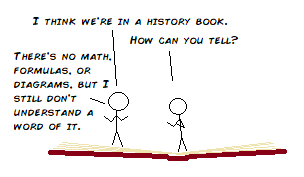
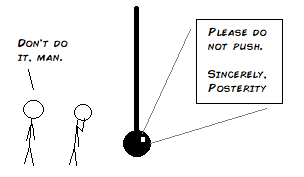
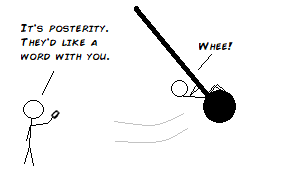
Historiography (With Comics)

I encourage anyone who wants to write SFF to read history, and to go beyond popular history to good scholarly history. Historical scholarship has its challenges for non-specialists, though, first among them: historiography.

It’s a rather intimidating word. The bane of history majors everywhere and a source of confusion to ordinary folks who pick up an academic history book trying to learn a little more about people and places in the past. It doesn’t have to be so intimidating, though. Historiography just means the ways in which we explain history.

There are many different theories of history with bewildering and unhelpful names: Marxism (which is not the same as Marxist economic theory), the Annales school, Whig history (which has nothing to do with wigs), and many more. Each of these theories encompasses a different set of questions that historians ask about the past, a different way of organizing evidence, and a different approach to interpreting cause and effect. At the most basic level, though, they are all just different ways of explaining change.

The study of change is, fundamentally, what the study of history is about. The past was not the same as the present. People lived in different ways, they held different beliefs about the world and made different decisions. When you take all of the individual choices that individual people made while going about the business of their daily lives and add them all together, the result is large-scale changes over time.

Different historical theories see that change differently. While every school of historical thought has its own specific approaches, some of the basic differences can be summed as the difference between seeing history as a pendulum, a circle, or a line.

Pendulum

Pendulum theories are based on the idea that most societies most of the time are basically static. People get up, go to work, come home, go to bed, and not much changes from one day, year, or generation to the next. Occasionally something will happen that upsets that equilibrium, like an outbreak of deadly disease or the introduction of a new crop, and it takes time for people to adjust to the new circumstances. Eventually, though, things settle down and people get back to the business of getting up, going to work, coming home, and going to bed. The population recovers as survivors acquire immunity to the disease or markets catch up as farmers start growing the new crop instead of some old ones.

From this point of view, the thing that’s important to study is the resting state of the pendulum, the condition that everything will tend back towards when it’s not being knocked about. We study history in order to understand basic things about human nature and society. The things that bump the pendulum are less important than where it will eventually come back to.

Circle

Circle theories believe that rather than one natural state to which societies return, there is a cycle that societies repeatedly go through. Each generation is shaped by the circumstances it grew up in and makes different choices than the generation that came before, but eventually things come back around again. A generation of spendthrifts, for instance, leaves its children in debt. When those children grow up, they tend to pinch their pennies. Their children grow up free from the fear of privation and more willing to take risks. Some of them get rich and raise children who grow up spoiled and irresponsible with money, which starts the cycle again.

To historians of this persuasion, the study of history is not about identifying a basic state we will return to but recognizing where we are in the cycle so we can better prepare for what comes next.

Line

Line theories believe that history is going somewhere and it won’t turn back. Small changes accumulate over time. Every choice that people make creates a new set of circumstances that future people have to respond to, and things will never go back to the way they were before. From this point of view, changes in society whether small, like a new drink becoming popular, or big, like industrial production taking over from individual crafting, have consequences that roll forward and are impossible to ever entirely undo. The demand for tea in England, for instance, created new incentives for trade, which led to new imperialist policies in Asia, which destroyed some local governments and elevated others, and so on. Even if Brits someday stop drinking tea, none of these effects will be undone.

Some line historians see the line pointing towards progress and an ultimate good for all humanity; others see it pointing towards degeneration and the collapse of the human race. Others simply see it as a process of ongoing and inevitable change. The point of studying history for all of them, though, is that we can make better choices for the future by understanding how we got to the present. The past is never going to come around again, but if we can tell which way the wind is blowing, we know which way to spit.

If this still seems a bit too theoretical, here’s an example in practice. How would historians of these different persuasions approach a particular historical event? Let’s take, say, the American Revolution.

To a pendulum historian, not much really changed because of the revolution. After several years of fighting that killed many people and interfered with daily life, Anglo-American men replaced one distant aristocracy with a slightly closer one who only inherited land and wealth, not land, wealth, and titles. For many colonial denizens, the revolution simply changed who they paid their taxes to and which politicians they grumbled about over their beer after coming in from the fields or workshops at the end of the day. For women, poor folks, enslaved Africans, indigenous peoples, and anyone else outside the landowning elite, hardly anything was different in the years after the war compared with the years before it.

To a circle historian, the revolution was an example of an ongoing pattern in which the inability to reconcile political differences leads to violence. Stresses had been building up over time as the British government had different needs and priorities than the American colonists. Eventually these stresses reached a breaking point where negotiation and accommodation failed. The only way forward was turn to violent revolt. This pattern had played out before in English history going back at least as far as the Magna Carta and would continue to play out in American history, leading to the Civil War and to unrest in the late twentieth and early twenty-first centuries. The same cycle of stress, failed attempts at reconciliation, and violent upheaval has occurred all across the world in societies large and small

To a line historian, the revolution was a turning point which changed everything that came after. There are many different ways of understanding that change. One historian might call it the beginning of American exceptionalism while another might see it as a step in the disintegration of European empires in the western hemisphere. Another historian might see it as cutting off American law from the progress Britain was making toward ending slavery, or changing the focus of American trade towards the Pacific Ocean rather than the Atlantic. Whatever the focus, the war created a new set of circumstances that led people to behave in new ways.

Of course, there’s more to it than that. Not all histories fall neatly into one of these categories, but these basic ideas are at the core of many. Understanding what kind of history you’re reading can help you get what you want out of it, and knowing what kind of histories are out there can help you find the one you’re looking for. Happy history reading!

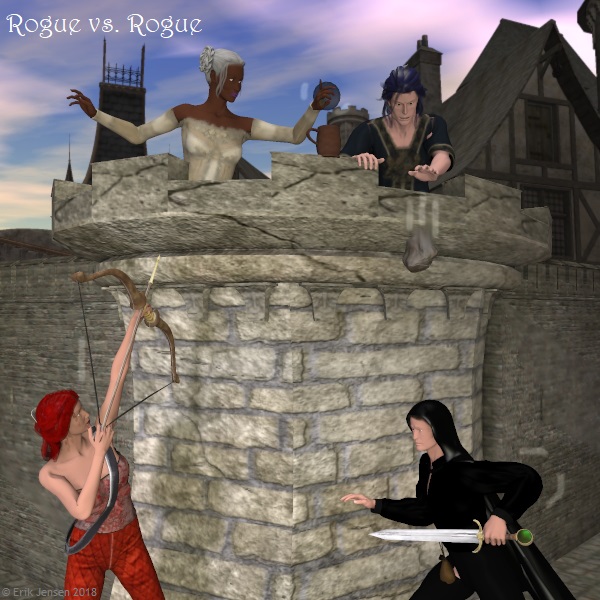
Comics by Erik Jensen

History for Writers is a weekly feature which looks at how history can be a fiction writer’s most useful tool. From worldbuilding to dialogue, history helps you write. Check out the introduction to History for Writers here.
The Rules of (Ancient) Magic

Not too long ago I was perusing a post by the fantasy author N. K. Jemisin about magic in fantasy. (The post is from several years back, but it only came to my attention recently—it’s well worth reading both the post and the comments after, if you’re interested in fantasy writing.) Jemisin takes issue with contemporary writers who obsess over rules and systems for magic rather than letting magic be the strange, unpredictable, sometimes frightening force that it often was in older fantasy by authors like Tolkien and Le Guin.

Naturally, being a historian of the ancient Mediterranean by training and a fantasy fan and author by inclination, it got me thinking about how magic is used in ancient Greek and Roman literature. The first problem is how to define magic. Lots of strange things happen in classical myths, but most of those are the action of gods, to whom turning people into peacocks or birthing fully-armed daughters out of their heads comes naturally. Ancient societies also widely believed that humans had the ability to invoke the gods to take action on their behalf through rituals including offerings, prayers, curses, and dances. I’m taking a more limited definition of magic, however: supernatural powers and events produced directly by humans at their will without requiring the aid and participation of gods or other superhuman entities. Using this definition, magic is actually quite rare in ancient literature, but here are a few examples.

In the Odyssey by Homer, the witch Circe uses enchanted food and a magic wand to transform Odysseus’ crew into animals. The god Hermes points Odysseus to a special herb which protects him from Circe’s magic as long as he is holding it, which allows him to overcome Circe and force her to restore his crew. (As a side note, this part of the epic may ultimately derive from Babylonian myths about the god Marduk, who held a sweet-smelling herb to protect himself from the poisonous blood of the dragon Tiamat and her monstrous children.)

In Euripides’ drama Medea, the sorceress Medea, abandoned by her husband Jason, sends a poisoned robe and crown to Jason’s new bride, Glauce. When Glauce dons the poisoned gifts, they cling to her body and burn her to death.

In Apuleius’ novel Metamorphoses (often also called The Golden Ass), the narrator Lucius learns that his friend’s wife dabbles in magic and can transform into a bird by rubbing a magic potion on her body. Lucius wants to try the same and steals some of her potion, but by mistake he gets the wrong one and is turned into a donkey. From the lady’s maid, Photis, he learns that the secret to reversing his transformation is to eat rose petals, but roses are not in season and the rest of the novel follows Lucius the donkey from one misadventure to the next as he tries to find roses to eat.

From these examples, we can notice some patterns about how Green and Roman authors thought about and used magic. On one hand, there is no sign of a magic system, as described by Jemisin. There are no universal rules and no explanation for how or why magic works. Every individual case is different. It depends upon secrets known only to its users, never shared with the audience, and its results often shock and terrify those who encounter them.

At the same time, even though we cannot call this magic systematic, there is a consistency to it. It tends to require special objects or substances, such as enchanted food, magic flowers, poisons, and potions. Those who are initiated into its powers can use them with confidence: Medea knows that her poison will be effective, just as Circe knows she is defeated when she sees Odysseus carrying the plant that makes him immune to her power. When the effects fail or go awry, it is because of ignorance or ineptitude on the part of the wielders, like Lucius using the wrong potion.

Despite this general consistency, the magic remains narratively powerful. It does not become dull and predictable or divert the stories away from the characters’ choices and their consequences. In fact, magic makes possible the human stories that are at the center of these narratives, from Medea’s calamitous vengeance to Lucius’ comic wanderings. How does it achieve these things? A few observations:

The stories include magic; they aren’t about magic. Magic is a MacGuffin. It sets things in motion or presents characters with choices to make, but once the magic has done its job, it disappears into the background and lets the characters get on with things.

Magic does not solve or circumvent the crucial problems. The human issues and choices at the center of these stories are ones that magic cannot touch. Odysseus is trying to get home. He deals with magic and monsters on his way, but it isn’t magic that gets him where he wants to go. Medea’s magic gives her the power to deeply hurt Jason in a way that a mundane woman in her position could not, but the story is about how she makes the choice to use that power. Lucius’ magical mishaps drive him to rethink his unsatisfying life and resolve to be a better person. Magic presents these characters with challenges and choices they wouldn’t otherwise face, but their stories are still about what happens in their hearts and minds.

We know only as much as we need to know. Apuleius does not list the ingredients in Lucius’ donkeyfying draught, nor is there an appendix at the end of the Odyssey to explain how Odysseus’ magical plant disrupted the mystical ether currents that Circe manipulated with her wand. Medea does not take time out from her revenge plot to give the audience a primer on fiery poisons. The magic simply works the way it is supposed to, and that’s all we need to know.

Thoughts for writers

There’s room in fantasy literature for many kinds of magic, from complex and internally consistent systems to strange and unpredictable effects. There’s even a place for fantasy with no magic at all. Whatever kind of fantasy you feel like writing, though, remember this: the story comes first. Whatever you do with your magic, don’t let it get in the way of your characters and the choices they have to make.

Image: Circe flees from Odysseus, with animal-headed crew, detail of photograph via Wikimedia (Metropolitan Museum of Art; c. 440 BCE; red-figure vase; by the Persephone Painter)

History for Writers is a weekly feature which looks at how history can be a fiction writer’s most useful tool. From worldbuilding to dialogue, history helps you write. Check out the introduction to History for Writers here.
Rating: Doctor Who, Season 6

Our rewatching and rating project carries on with season 6 of new-series Doctor Who. Here’s our ratings for this season’s episodes:

  1. “A Christmas Carol” – 7
  2. “The Impossible Astronaut” – 6
  3. “The Day of the Moon” – 7
  4. “The Curse of the Black Spot” – 4
  5. “The Doctor’s Wife” – 4.5
  6. “The Rebel Flesh” – 4
  7. “The Almost People” – 1.5
  8. “A Good Man Goes to War” – 6.5
  9. “Let’s Kill Hitler” – 6
  10. “Night Terrors” – 2
  11. “The Girl Who Waited” – 2
  12. “The God Complex” – 3.5
  13. “Closing Time” – 4
  14. “The Wedding of River Song” – 3.5

The average episode rating for this season is 4.4, which is a rebound from last season’s 3.7, but still well below the first four seasons.

This season has its good moments. The production team seems to have gotten a better handle on things and most of the episodes feel polished. The actors seem more comfortable in their roles and more willing to stretch their interpretations of the characters. A few episodes deliver new and creative stories. At the same time, a lot of this season feels underwhelming or poorly thought-out.

Our lowest-rated episode for the season, at 1.5, is “The Almost People,” the second part of a grimy industrial-punk story about goop-doppelgangers (goopelgangers?) gone rogue in a future acid-mining operation that for some reason happens in the remains of a medieval monastery. (Someone on the Who team clearly has a thing for goopelgangers: see season 4’s “The Sontaran Strategem” and “The Posion Sky.”) The first part was a bit nonsensical and left a lot of unanswered questions hanging (Why is acid-mining such a big deal in the future? Why use goopelgangers for it? Why are they in a medieval monastery? How did any of this get past health and safety, let alone the heritage council?), but at least it promised the possibility of a good old classic sci-fi “Who’s real?” and “What is the measure of a human?” story. The second part, though, just kind of falls apart and doesn’t pay off. Like last season’s “Flesh and Stone,” and “Cold Blood,” the second half of the story gets sidetracked into serving the season-long arc.

There are brights spots this season, though. Things start off at a strong 7 with an ingenious Christmas episode in which the Doctor finds himself traveling back in time to play Ghosts of Christmases Past, Present, and Future and save the soul of a heartless old plutocrat just in time to save a crashing spaceship with his friends Amy and Rory on board. A two-parter follows, “The Impossible Astronaut,” rated 6, and “The Day of the Moon,” another 7, about the Doctor’s friends trying to save the Doctor from being killed by a mysterious figure in a spacesuit and in the process discovering the sinister Silence, who erase themselves from the memory of anyone who sees them. These episodes are a good mix of horror, action, and comedy, and the Silence make interesting counterparts to the Weeping Angels: while the Angels disappear when you look at them, the Silence disappear when you look away.

Although this season has its ups and downs, it also has some larger problems. One is the ongoing obsession with an arc story, which gets significantly more convoluted in this season, sometimes to the detriment of what could have been decent stand-alone stories. New-series Doctor Who has a pretty bad track record when it comes to season-long arcs. Most of them feel obligatory and ratings-driven rather than organic and meaningful. Arc-dependent episodes have consistently been some of the worst, while the best episodes have been those that have nothing to do with the arc. I’d be happy to see Doctor Who stop trying to be Lost and focus on being Doctor Who.

Another problem, which appeared in earlier seasons but gets significantly worse over seasons 5 and 6, is the amount of time and narrative attention given to other characters talking about how great the Doctor is. It was used as a cheap get-out-of-plot-free card at the end of season 3’s “The Last of the Time Lords,” in which a world full of people thinking good thoughts about the Doctor powers the deus ex machina ending, but in season 6 it becomes a recurring theme as ubiquitous as the whooshing of the Tardis. Even River Song, who started off as a fascinating character in her own right, gets reduced to a chorus girl singing the “Oh, Doctor, you’re so amazing” refrain this season. This character shilling goes along with the continuing attitude that special people get a pass on basic human decency to make some scenes really uncomfortable to watch.

How do the rest of you feel about this season? Got any favorites (or anti-favorites) you want to share? We know that not everyone shares our tastes or out perspective on Doctor Who, so let us know in the comments what you loved or didn’t about this season.

Image: Doctor Who season 6 via IMDb

In the Seen on Screen occasional feature, we discuss movies and television shows of interest.