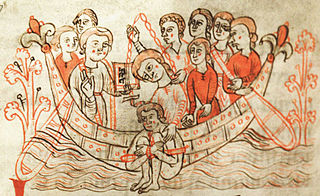
Testing Witches with Water

There is an old story about how medieval people used to test whether or not someone was a witch, and it goes like this: Throw them in a pond. If they sink into the water and drown, that means they weren’t a witch. If they float, that means they are a witch, so you haul them out and burn them to death. Either way, just getting accused of witchcraft was a death sentence, but medieval people were too dumb to realize it.

This story is wrong. It was popularized by Victorian writers who spread many false stories depicting people of the European middle ages as ignorant, illogical, and stupid. At best, we might attribute this story to the intellectual laziness of Victorians who didn’t bother to distinguish between the use of ducking victims in water as punishment or torture and the use of immersion in water to test those accused of witchcraft or other crimes. At worst, we can see it as part of a concerted effort by Protestant English and American writers to paint contemporary Catholics as the benighted heirs to an age of barbarity and unreason. The truth about testing witches in water is more complicated, though in some ways even worse.

Here’s how the water test actually worked. In some places, a person accused of witchcraft, heresy, or a variety of other offenses was lowered into a small body of water like a pond or a still river, generally with a rope tied around their waist or something similar for lifting them out again. They were allowed to float for a moment and a jury selected from the surrounding community (or sometimes a priest) observed whether their body seemed to float on the surface or sink into the water. It was believed in some places and times that water would reject an unholy person, so their body would float high, while a blameless person would sink into the water. Once the jury had had a chance to observe the result, the accused was pulled out again and the jury gave its judgment.

No one was supposed to drown, neither the innocent nor the guilty. They were not left in the water for long, and whatever device was used to lower them in could quickly pull them up again. No doubt there were sometimes mishaps, as there can be whenever people are around the water, but being cleared of suspicion did not require drowning.

Trial by ordeal, which included not only the water test but other tests including carrying heavy stones or hot metal, reaching into a boiling cauldron, and similar challenges to physical endurance, was common in the legal traditions of some peoples in early medieval Europe. Such tests were an attempt to create objective tests for complicated questions about an accused person’s character, morals, and other hard-to-quantify qualities.

Trials by ordeal largely disappeared from European custom by the thirteenth century, but there was a revival during the witch-hunting hysteria of the early modern period when variations of the trial by water were used along with other methods of torture to extract false confessions from victims. In those cases the accusation alone was, for most people, a death sentence, since the point of the various “tests” was to compel a confession, not to arrive at a judgment.

The important element in a trial by ordeal is the community jury. Someone had to judge whether the accused was floating or not, which is not as obvious as it may sound. Human bodies are naturally buoyant, but not so much as to float on top of the water like a pool noodle. In the water, everyone kind of floats, and everyone kind of sinks. Distinguishing between how much floating is enough and how much is too much is no simple task. Those who were called for the jury were typically members of the accused’s village, extended family, or social network. They did not go into the test with an unbiased opinion but took with them all their knowledge, history, and feelings about the accused.

The floating ordeal gave the jury an objective external event to lodge those existing prejudices in. Those who went in with a poor opinion of the accused were likely to think that they floated too much, while those who went in well-disposed to the accused were likely to think they had adequately sunk into the water. Attaching those preexisting prejudices to an external event like the water test allowed the members of the jury to treat those prejudices as if they were objective facts and condemn or exonerate the accused with a clear conscience, as their own leanings dictated.

It is this fact about trials by ordeal that makes them, in some ways, even more horrible than the foolish heads-you-drown/tails-you-burn legend. If you were condemned by the water test it didn’t mean you just randomly floated too much. It meant that your own neighbors hated you so much they wanted to see you dead, they just didn’t feel comfortable saying so until the trial gave them permission to.

Post edited to correct a spelling error.

Image: Illustration of a trail by water via Wikimedia (late 12th c.; manuscript illustration)

History for Writers looks at how history can be a fiction writer’s most useful tool. From worldbuilding to dialogue, history helps you write.

The Past is Haunted

I grew up in a two-hundred-year-old New England farmhouse. Like many houses of that age, it was full of peculiarities left over from the many generations who had lived there before us. There was a set of stairs we never used. My bedroom had a blocked-up door in one wall. If you measured out the rooms, you would find a big blank space between the dining room and the living room where the walls hid an old brick oven. In the decades they were living in that house, my parents were always in the midst of some renovation project, during which they often came across the remnants of previous renovations, and not always very well done ones at that (one of the old families in town had a reputation for having some odd notions about how houses should be built). That house was never quiet, even when the people in it were; the background noise of my childhood was a slow symphony of creaks, groans, gurgles, and yawns, all of them as familiar and comforting as my favorite songs. I never imagined that my house was haunted, but I can understand how someone who hadn’t grown up there might think so.

Our sense of hauntedness, the feeling that some presence we can barely perceive occupies a space, is often attached to places like my old house. Not just places that are old, but places where there is evidence of a previous life we no longer fully grasp. The traditional sites of ghost stories and Gothic novels are such places: abandoned houses, ruined castles, derelict towns. Stories about haunted places manifest our unease at finding ourselves in places that once belonged to other people but whose lives and experiences we cannot recover.

There is nothing new about this feeling that the past is haunted. Many cultures in history have shared the sense that there is something supernatural or unsettling about places that show the trace of lost lives. In classical Greece, temples and shrines to the gods were built on hilltops that had ruins of Mycenaean palaces from hundreds of years earlier, while ancient Greek tourists in Egypt were regaled by their guides with ghostly legends about pyramids and tombs that were thousands of years old. In early medieval Britain, folklore connected supernatural forces with the prehistoric tombs, mounds, and megaliths visible in the landscape. In Edo-period Japan, the popular parlor game Hyakumonogatari Kaidankai, in which players took turns telling ghost stories and extinguishing lanterns, encouraged the collection of scary folktales grounded in old rural traditions.

Some places have even been built to artificially evoke the same sense. The classic haunted house in US culture is the Victorian mansion. When houses of this type were built in the 1800s, they were designed in accord with the Romantic style of the times to include asymmetrical layouts, odd corners, superfluous towers and gables, intentionally irregular decorations, and other such purpose-built neo-Gothic oddities meant to evoke the sense of a lost past the house never had. As these houses have themselves become old and sometimes decrepit, it is no wonder that they have attracted more than their share of ghostly tales.

Like any other supposedly supernatural phenomenon, haunted places may lose some of their glamour when we find out the mundane explanations for them. Those eerie sounds are not the wails of ghosts but the whistling of the wind through lose clapboards and decayed horsehair insulation. The empty space between rooms is not a hidden chamber of untold horrors but a brick hearth covered over decades ago when modern heating made it superfluous. The staircase that leads nowhere is not a portal to unknown dimensions but the trace of household servants whose bedrooms have since been turned into storage space. What we sacrifice in eeriness, though, we gain in understanding as history and archaeology help make ways of life of those who went before us more visible and comprehensible to us today.

Image: Historic James Alldis House, photograph by Droncam via Wikimedia, CC BY-SA 3.0 (Torrington, Connecticut, built 1895)

History for Writers looks at how history can be a fiction writer’s most useful tool. From worldbuilding to dialogue, history helps you write.

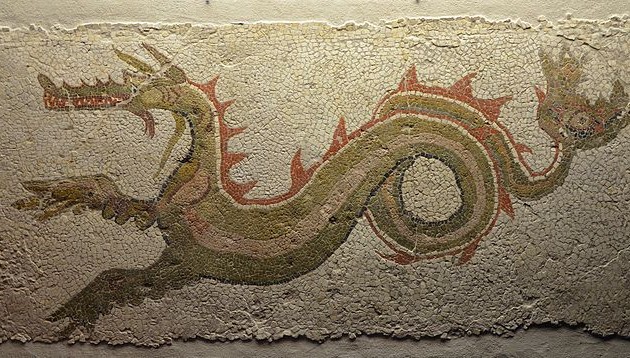
Just a Happy Little Sea Monster

Wherever you want it to be, there it will be.

Sea monster, photograph by Carole Raddato via Wikimedia (Casa del Drago, Caulonia, Italy; 3rd c. BCE, mosaic)


This particular sea monster is in a mosaic from a house in the ancient Greek city of Caulonia in southern Italy from the third century BCE. Ancient depictions of sea monsters like this one often have long, snaky bodies, spiky fins, broad tails, and wings. These various pieces may have been cobbled together in the imagination from scattered sightings of whales, dolphins, sharks, squid, and other large sea creatures.

Out There is an occasional feature highlighting intriguing art, spaces, places, phenomena, flora, and fauna.

Alexander and the Sea Monsters

Sea monsters prevented Alexander from building Alexandria. He took a wooden container in which a glass box was inserted, and dived in it to the bottom of the sea. There he drew pictures of the devilish monsters he saw. He then had metal effigies of these animals made and set them up opposite the place where building was going on. When the monsters came out and saw the effigies, they fled. Alexander was thus able to complete the building of Alexandria.

– Ibn Khaldun, Kitab al-‘Ibar

Translated by Franz Rosenthal

This wild tale about the foundation of Alexandria is cited by the 14th-century North African historian Ibn Khaldun as an example of the ludicrous fictions that some earlier historians had filled their histories with but that had no place in the kind of scientific, rational history he set out to write.

The story as Ibn Khaldun relates it seem to go back to a legend in the Alexander Romance, a highly fictionalized account of Alexander the Great’s campaigns, about a large snake that frightened the workers who were building the city of Alexandria on the coast of Egypt until Alexander had the snake caught and killed. Over centuries of retelling, the hunt for one big snake turned into a struggle against terrible sea monsters.

The story of Alexander and the sea monsters is fiction, not history, as Ibn Khaldun rightly points out, but what a story it is! Wood and glass submarines! Ancient kaiju! Tactical deployment of art! How has no one made a movie out of this already?

Serving exactly what it sounds like, the Quotes feature excerpts other people’s thoughts.

Rating: Elementary, Season 3

Season 3 of Elementary adds a new character to the mix, shaking up the relationship between Sherlock and Joan in some interesting ways.

Here’s our episode ratings:

  1. “Enough Nemesis to Go Around” – 3.5
  2. “The Five Orange Pipz” – 5
  3. “Just a Regular Irregular” – 6
  4. “Bella” – 4
  5. “Rip Off” – 6
  6. “Terra Pericolosa” – 8
  7. “The Adventure of the Nutmeg Concoction” – 7
  8. “End of Watch” – 7
  9. “The Eternity Injection” – 5.5
  10. “Seed Money” – 6
  11. “The Illustrious Client” – 4.5
  12. “The One That Got Away” – 4.5
  13. “Hemlock” – 6
  14. “The Female of the Species” – 8
  15. “When Your Number’s Up” – 5.5
  16. “For All You Know” – 4
  17. “T-Bone and the Iceman” – 3.5
  18. “The View from Olympus” – 7.5
  19. “One Watson, One Holmes” – 8
  20. “A Stitch in Time” – 7
  21. “Under My Skin” – 7.5
  22. “The Best Way Out Is Always Through” – 6
  23. “Absconded” – 8
  24. “A Controlled Descent” – 0.5

The average rating this season is a solid 6, which is pretty good and a small step up from season 2’s 5.4. This season continues the previous season’s efforts at threading larger stories through the individual episodes. These larger stories include Watson striking out on her own as a detective and tangling with a female drug dealer, and Holmes taking on a new apprentice, Kitty (based on a character from one of the original Conan Doyle stories). Since one of our few ongoing complaints about the series is the shortage of female characters other than Watson, we find both these story lines offer positive developments, although we miss the Holmes-Watson camaraderie that the first two seasons had built up so carefully.

We are spoiled for choice for the best episodes this season with four topping out at 8: “Terra Pericolosa,” about the hunt for an antique map, “The Female of the Species,” in which Holmes and Bell chase stolen zebras, “One Watson, One Holmes,” about an internecine feud in the hacker collective Everyone, and “Absconded,” a kidnapping case connected to bees. Each of these episodes offers the wonderful complexity and unexpected turns that we have come to expect of Elementary, while leading to a satisfying conclusion. It is also significant that, although there are dead bodies in each episode, none of them is primarily a murder investigation. Not only does this ring true to the original stories, in which Holmes investigated everything from bank robberies to things that go clang in the night, it also makes a nice change of pace from the usual routine of the murder mystery procedural.

While there are a few weaker episodes in the 3-5 range, only one stands out as singularly bad: “A Controlled Descent,” at 0.5. In this episode, Holmes is dragged back into his drug-using ways by a lonely former dealer. While there is something to be said for the complexity with which Elementary handles Holmes’s addiction and recovery, this episode just feels cheap and forced, its dealer character a flat and uninteresting plot device.

Image: Watson and Holmes interview a prisoner, from “One Watson, One Holmes” via IMDb

In the Seen on Screen occasional feature, we discuss movies and television shows of interest.

Petosiris: Being Roman-Egyptian

We often think of hyphenated identities as a particularly modern thing: Italian-American, African-Caribbean, etc. Not far from where I grew up you could go to a Franco-American heritage festival in the summer and see people walking around in t-shirts that said “Made in America with Irish Parts.” The idea that our identities can contain several distinct strands woven together is a familiar one to us, but not one we often apply to the past.

But look at this wall painting from the tomb of Petosiris, a local official in the Kharga Oasis in the western desert of Egypt. Petosiris lived during the second century CE, a time when Egypt was part of the Roman Empire. In his tomb, Petosiris took care to present himself as both Egyptian and Roman.

Wall painting from the tomb of Petosiris, photograph by Roland Unger via Wikimedia (Kharga Oasis; 2nd c. CE; fresco)

The large figure standing on the left is Petosiris himself (the damage to his face may have been done by Christians or Muslims in later centuries who mistakenly thought the image represented a pagan god). Petosiris’ name is Egyptian, but his image is painted in a typically Roman style, he wears a Roman tunic and toga, and he carries a scroll, a symbol of role as a local official for the Roman state. At the same time, he is twice the size of the other two figures in the scene, a characteristic of Egyptian art in which size was often used to indicate social status.

The other two figures are presenting Petosiris with offerings of bread and wine. The one on the left is painted in a Roman style, partially turned toward the viewer and painted with varying shading to suggest a three-dimensional image. He carries a tray of bread and pours wine from a jug into the ground. The figure on the right is painted in classic Egyptian style, clearly outlined and standing in a stylized two-dimensional posture. He offers a jug of wine and several loaves of bread on a tray. The rest of the space is filled up with a Roman-style grapevine and text in Egyptian hieroglyphics.

In this image, Petosiris proclaims an identity that is both Egyptian and Roman. We cannot be sure how he understood the combination of those identities. Did he think of himself as an Egyptian who could dress up as Roman when the occasion called for it? Or as a Roman who showed respect to the customs of his Egyptian ancestors? Or as a Roman-Egyptian, fully embracing both parts of his identity? While we cannot say for sure, it is clear that he wanted to be memorialized in his tomb as someone who could be, in some senses, both Egyptian and Roman. For Petosiris, there was a value in asserting both these parts of his identity.

Where there was one such person, there must have been many more who have not left us evidence of their identities. Clearly the local market in the oasis supported artists who could paint in either Roman or Egyptian style, as their clients requested. Kharga was a small, sleepy backwater far from the busy market towns and great harbor cities of the Mediterranean. If even in Kharga there was a demand to be able to assert a complex identity, we can only imagine how complicated the lives of people in Alexandria, Carthage, or Rome must have been.

History for Writers looks at how history can be a fiction writer’s most useful tool. From worldbuilding to dialogue, history helps you write.

Roman Law to the Rescue

If you’ve ever had to make a choice with a group—picking what restaurant to go to for dinner with your spouse, what movie to watch with a bunch of friends, where to go on vacation with your family, etc.—you know how frustrating it can be. Some people like one thing, others like something else, some are happy with whatever, some have strong feelings, and yet everyone has to end up agreeing on one thing. In the worst case, you can get into uncomfortable power struggles over who gets to pick and who has to go along with someone else’s choice, which can just ruin what should be a good time for all.

Ancient Roman law provides an answer.

When Romans went to court, the various parties involved had to agree on who would be the judge in the case. Roman judges were not legal professionals and did not make decisions of law (those fell to the praetor or another local magistrate); they were laypeople who heard the evidence of both sides and made a judgment on who was telling the truth, a role similar to that of the jury in modern Anglo-American law. Since judges were just members of the community, there was always a risk that any potential judge might favor one side or the other out of family loyalty, personal ties, business relationships, or similar factors, so the Romans needed some way to ensure that the judge chosen to hear a case would be acceptable to both sides.

Here’s how it worked. Every year, a list was drawn up of respectable members of the community who were eligible to serve as judges. This list was then randomly distributed across three tablets. When it came time for a plaintiff and a defendant to decide who would hear their case, they looked at the three tablets. First the plaintiff eliminated one tablet, then the defendant eliminated another, leaving just one. Then they took turns going through that last tablet, crossing off names one by one until just one name was left. That person was assigned to be the judge in the case: not necessarily either party’s first choice, but the one who was least unacceptable to both of them.

The same method can be a good way of choosing a restaurant, a movie or something similar for a group, as long as there are more choices than there are people in the group. Make a list of all options. Choose someone at random to start. That person crosses off one one option. The next person crosses one off, and so on in turn until only one option is left. It may not have been anyone’s first choice to start with, but it will be the one that will make everyone least unhappy, which is what you really need when trying to choose for a group.

In our house, we sometimes use this method when deciding what to watch together. We have been known to pull piles of DVDs off the shelf, then take turns putting one series or movie back until just one is left. (On a side note, this method also provides a convenient opportunity for dusting the back of the DVD shelf.)

A few notes:

  • If the number of options does not evenly work out with the number of people making the choice, some people will get to more chances to rule things out than others. (If four people are choosing among six restaurants by this method, for instance, whoever gets the first pick will also get one extra pick.) If this feels unfair under the circumstances, you can collectively agree to rule out enough things to make the numbers even, or use this method as a way of reducing the number of options you have to choose among.
  • It can be useful to impose a “no explanations” rule: no one is required to explain why they crossed something off, and no one is allowed to ask anyone else for an explanation.
  • The person who makes the first elimination has the most options to choose from, but the person who makes the last elimination is the one who ultimately decides what the result will be. If that matters to you, keep it in mind when deciding what order people get to pick in.

Image: Artist’s vision of the Roman law of the twelve tables via Wikimedia

History for Writers looks at how history can be a fiction writer’s most useful tool. From worldbuilding to dialogue, history helps you write.

Not Flying Yet

The latest patch for World of Warcraft, which makes it possible to fly in the Battle for Azeroth zones, has been out for a while now, but we’re still earthbound. Not because we don’t want to fly—we love flying both for the convenience of getting around and for the visceral pleasure of getting to see the beautiful artwork of the game world from new angles—but because of what it takes to get it.

The first step toward flying came with the initial release of Battle for Azeroth, with the Pathfinder Part 1 achievement, and involved playing through the expansion’s content, exploring its new zones, and gaining reputation with its various factions. All of this we did quite happily. We enjoyed questing through the new expansion and seeing the sights. Reaching revered level with six factions was a little tedious at times, but watching for world quests made it quite doable.

Once that was done, it was a long wait for the latest patch with Pathfinder Part 2, which requires more of the same: questing, exploration, and gaining rep. This time around, though, we’re not enjoying the process at all.

The difference in our response to part 1 and part 2 largely comes down to the design of the two new zones: Nazjatar and Mechagon. Nazjatar is complex, confusing, and hard to navigate. Significant parts of it are full of tough elites that make riding through looking for quests annoying. The daily quests are often vague and unhelpful about what exactly we are supposed to do, and the mobs drop tons of non-trash loot that clutters up our bags without clearly telling us what it’s actually for and whether we should be keeping it or not. The companion we have to take out adventuring with us in order to get all the quests has the annoying habit of pulling more mobs than we want, getting in the way of the things we’re trying to click on, and standing right on top of our loot when we’re done with a fight. For us, Nazjatar is pure aggravation.

We haven’t looked into Mechagon much yet, but the very little time we have spent there has similarly loaded up our bags with things we don’t know what to do with but don’t dare get rid of in case we need them later. At least it is somewhat less annoying to find our way around there and doesn’t seem to saddle us with an irritating companion. We’re saving Mechagon for after we’re done with Nazjatar in the hopes that it will be something of a relief.

I can certainly see how the things that annoy us about Nazjatar could be great for someone else with a different play style. I’m sure that what for us is confusing and hard to navigate is, for someone else, an exciting new area to explore and learn about. What we see as useless crap filling up our bags is someone else’s intriguing new inventory management challenge. The companion who is always getting in our way must make it possible for other people to tackle content that would otherwise be out of their reach.

Nazjatar is like a lot of things this expansion (island expeditions, warfronts, mythic+ dungeons, war mode): well done for what it is, but not the content we want to play. The good thing about all those other things is that we can completely ignore them and just play the parts of the game that appeal to us. If we want to fly, though, we’re going to have to drag our way through Nazjatar and Mechagon. That’s why we’re not flying yet.

How are your adventures going? Are you soaring over Kul Tiras and Zandalar already? Are Nazjatar and Mechagon exactly what you wanted? Or are you still stuck in the slog with us?

Of Dice and Dragons is an occasional feature about games and gaming.

Lego Star Wars Droids Play Star Wars Music

What else is there to say about this video? It’s an orchestra of Lego’s programmable Star Wars droid models playing the Star Wars theme on real instruments. What more can you ask for?

“Watch this awesome droid orchestra! – LEGO Star Wars™ BOOST Droid Commander” via LEGO

This project is the work of Sam Battle. Find more of his inventive musical performances at lookmumnocomputer.com.

Hey, look! We found a thing on the internet! We thought it was cool, and wanted to share it with you.

You Don’t Want War Elephants

If you’re building an army to conquer the pre-modern world (or a fantasy world something like it), you might be tempted to include war elephants. At first glance, they seem like a great idea. Elephants are large, thick-skinned, strong, and intelligent, with long tusks and powerful trunks. Including them in your army is about as close as the real world gets to having dragons on your side. Well, I’m here to tell you that in most cases, they’re actually not such a great idea. (There are a few exceptions; I’ll get back to those later.)

Not all elephants are trainable. Three species of elephants survive in today’s world: Asian, African bush, and African forest. Asian elephants can be trained, but the African bush and forest elephants cannot. Several other species and/or subspecies of elephants once existed in various parts of Africa and Asia, but they went extinct in antiquity as a result of hunting and habitat loss. Elephants susceptible to domestication have historically been used in North Africa and Southeast Asia for labor, transport, and war.

Elephants do have their uses in war. They have been used as mobile platforms for archers and light artillery. They can also trample and gore enemy soldiers, and use their strength to help demolish the defenses of towns and fortresses under siege. Horses who have not been trained with elephants will not go near them, so war elephants can be good for disrupting enemy cavalry. Off the battlefield, they are good for carrying or dragging supplies and heavy pieces of baggage like siege weapons. Despite these uses, there are a number of serious problems with using elephants in combat.

We may as well start with the moral problem. Elephants do not breed well in captivity, and so most elephants used for labor or war must be captured as calves from the wild and trained into obedience, often using quite brutal methods. It goes without saying that this is a terrible thing to do to any creature, let alone such an intelligent and social animal, but if you’re already building an army for world domination, I assume you’re beyond such niceties as moral scruples, so let’s move on to the practical problems.

One big problem is that elephants are not naturally combative. Apart from males competing for mates, mothers defending their young, and occasional rogue elephants behaving abnormally, an elephant is much more likely to run away from danger than toward it. It takes extensive training to get an elephant to withstand the chaos of a battlefield, and even then it was a common practice in the past to feed war elephants fermented fruit to get them drunk before battle. Getting elephants drunk helps keep them aggressive, but it also makes them harder to control. There is a real risk that a sober elephant facing the clamor and commotion of a battle will turn and run away, or that a drunk one will ignore its driver’s commands and simply go on a rampage. Now, I know what you’re thinking—drunk rampaging elephants sound like an awesome weapon to unleash on your foes, but keep in mind that around half the soldiers on an average battlefield are going to be your own, and there’s no way to be sure that an out of control elephant will do more harm to your opponents than to you.

Another problem with war elephants is the cost. Elephants in the wild may eat up to 300 kilograms of forage per day. In captivity, eating a richer diet, elephants consume around 50 kg of grain and vegetables per day, more if they are doing heavy work. That amounts to at least 18,250 kg per year. Pre-industrial agricultural yields could vary widely with region, climate, and farming techniques, but at best you could expect around 500 kg of grain per hectare of farmland per year. That means you’d need about 36 hectares of land dedicated to feeding just one elephant. 1 square kilometer of farmland could, under the very best conditions, just barely maintain three elephants. If you have a big enough empire with a strong enough agrarian economy, this may sound like it’s worth it, but consider the opportunity cost. The same farmland could also support 100 soldiers for a year, who can be trained in any number of specializations, will (hopefully) not get drunk and turn on your own troops, and can be more useful in most situations than three elephants.

Now there are a few situations in which elephants can offer a real advantage in war. One is when you’re fighting forces who have never encountered them before. To the inexperienced foot soldier, an elephant is a huge, loud, monster with giant tusks and a disturbingly prehensile nose. Few inexperienced armies have the discipline to withstand their first sight of an elephant, and many have been known to run in panic in the face of an elephant charge. After a little experience, though, this advantage wears off. Those who have seen elephants a few times learn how to deal with them, by facing them with a dense hedge of pikes or aiming for their eyes, mouths, and the soles of their feet with javelins. The Carthaginian general Hannibal got one battle’s worth of use out of his elephants before the Romans figured out how to counteract them.

The other situation in which elephants can be useful is among warring peoples who all use and fight with elephants. In this case, since all sides know how difficult and expensive it is to maintain elephant forces, putting on a big display of elephants in the field serves as a show of force, demonstrating the resources and organizing capacity of your army, which may convince your opponents to come to terms rather than risk a battle. War elephants were historically used as battlefield showpieces in this way by the kingdoms of India and Southeast Asia, as well as the Hellenistic kingdoms formed from the breakup of Alexander the Great’s empire. Getting effective use of your elephants in such a case, however, requires a major investment of resources which might be more practically spent elsewhere.

In short, if you are bent on conquering the world, I don’t recommend using war elephants. For the occasional times when they would actually be useful, they aren’t worth the cost. (And brutalizing elephants is horrible.)

Image: “The Padava Brothers Do Battle with the King of Anga” from a manuscript of the Razmnama via Wikimedia (currently Ashmolean Museum, Oxford; 1598; paint on paper; by Mohan, son of Bawari)

History for Writers looks at how history can be a fiction writer’s most useful tool. From worldbuilding to dialogue, history helps you write. Check out the introduction to History for Writers here.