Lego Star Wars Droids Play Star Wars Music

What else is there to say about this video? It’s an orchestra of Lego’s programmable Star Wars droid models playing the Star Wars theme on real instruments. What more can you ask for?

“Watch this awesome droid orchestra! – LEGO Star Wars™ BOOST Droid Commander” via LEGO

This project is the work of Sam Battle. Find more of his inventive musical performances at lookmumnocomputer.com.

Hey, look! We found a thing on the internet! We thought it was cool, and wanted to share it with you.

You Don’t Want War Elephants

If you’re building an army to conquer the pre-modern world (or a fantasy world something like it), you might be tempted to include war elephants. At first glance, they seem like a great idea. Elephants are large, thick-skinned, strong, and intelligent, with long tusks and powerful trunks. Including them in your army is about as close as the real world gets to having dragons on your side. Well, I’m here to tell you that in most cases, they’re actually not such a great idea. (There are a few exceptions; I’ll get back to those later.)

Not all elephants are trainable. Three species of elephants survive in today’s world: Asian, African bush, and African forest. Asian elephants can be trained, but the African bush and forest elephants cannot. Several other species and/or subspecies of elephants once existed in various parts of Africa and Asia, but they went extinct in antiquity as a result of hunting and habitat loss. Elephants susceptible to domestication have historically been used in North Africa and Southeast Asia for labor, transport, and war.

Elephants do have their uses in war. They have been used as mobile platforms for archers and light artillery. They can also trample and gore enemy soldiers, and use their strength to help demolish the defenses of towns and fortresses under siege. Horses who have not been trained with elephants will not go near them, so war elephants can be good for disrupting enemy cavalry. Off the battlefield, they are good for carrying or dragging supplies and heavy pieces of baggage like siege weapons. Despite these uses, there are a number of serious problems with using elephants in combat.

We may as well start with the moral problem. Elephants do not breed well in captivity, and so most elephants used for labor or war must be captured as calves from the wild and trained into obedience, often using quite brutal methods. It goes without saying that this is a terrible thing to do to any creature, let alone such an intelligent and social animal, but if you’re already building an army for world domination, I assume you’re beyond such niceties as moral scruples, so let’s move on to the practical problems.

One big problem is that elephants are not naturally combative. Apart from males competing for mates, mothers defending their young, and occasional rogue elephants behaving abnormally, an elephant is much more likely to run away from danger than toward it. It takes extensive training to get an elephant to withstand the chaos of a battlefield, and even then it was a common practice in the past to feed war elephants fermented fruit to get them drunk before battle. Getting elephants drunk helps keep them aggressive, but it also makes them harder to control. There is a real risk that a sober elephant facing the clamor and commotion of a battle will turn and run away, or that a drunk one will ignore its driver’s commands and simply go on a rampage. Now, I know what you’re thinking—drunk rampaging elephants sound like an awesome weapon to unleash on your foes, but keep in mind that around half the soldiers on an average battlefield are going to be your own, and there’s no way to be sure that an out of control elephant will do more harm to your opponents than to you.

Another problem with war elephants is the cost. Elephants in the wild may eat up to 300 kilograms of forage per day. In captivity, eating a richer diet, elephants consume around 50 kg of grain and vegetables per day, more if they are doing heavy work. That amounts to at least 18,250 kg per year. Pre-industrial agricultural yields could vary widely with region, climate, and farming techniques, but at best you could expect around 500 kg of grain per hectare of farmland per year. That means you’d need about 36 hectares of land dedicated to feeding just one elephant. 1 square kilometer of farmland could, under the very best conditions, just barely maintain three elephants. If you have a big enough empire with a strong enough agrarian economy, this may sound like it’s worth it, but consider the opportunity cost. The same farmland could also support 100 soldiers for a year, who can be trained in any number of specializations, will (hopefully) not get drunk and turn on your own troops, and can be more useful in most situations than three elephants.

Now there are a few situations in which elephants can offer a real advantage in war. One is when you’re fighting forces who have never encountered them before. To the inexperienced foot soldier, an elephant is a huge, loud, monster with giant tusks and a disturbingly prehensile nose. Few inexperienced armies have the discipline to withstand their first sight of an elephant, and many have been known to run in panic in the face of an elephant charge. After a little experience, though, this advantage wears off. Those who have seen elephants a few times learn how to deal with them, by facing them with a dense hedge of pikes or aiming for their eyes, mouths, and the soles of their feet with javelins. The Carthaginian general Hannibal got one battle’s worth of use out of his elephants before the Romans figured out how to counteract them.

The other situation in which elephants can be useful is among warring peoples who all use and fight with elephants. In this case, since all sides know how difficult and expensive it is to maintain elephant forces, putting on a big display of elephants in the field serves as a show of force, demonstrating the resources and organizing capacity of your army, which may convince your opponents to come to terms rather than risk a battle. War elephants were historically used as battlefield showpieces in this way by the kingdoms of India and Southeast Asia, as well as the Hellenistic kingdoms formed from the breakup of Alexander the Great’s empire. Getting effective use of your elephants in such a case, however, requires a major investment of resources which might be more practically spent elsewhere.

In short, if you are bent on conquering the world, I don’t recommend using war elephants. For the occasional times when they would actually be useful, they aren’t worth the cost. (And brutalizing elephants is horrible.)

Image: “The Padava Brothers Do Battle with the King of Anga” from a manuscript of the Razmnama via Wikimedia (currently Ashmolean Museum, Oxford; 1598; paint on paper; by Mohan, son of Bawari)

History for Writers looks at how history can be a fiction writer’s most useful tool. From worldbuilding to dialogue, history helps you write. Check out the introduction to History for Writers here.

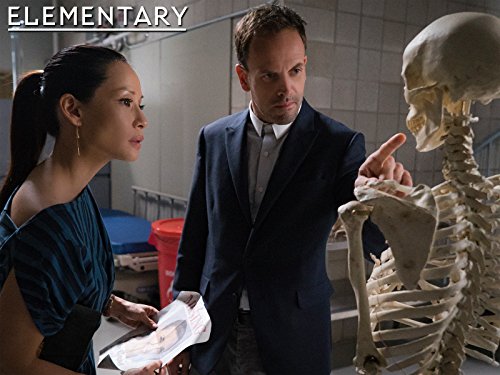
Rating: Elementary, Season 2

Sherlock Holmes and Joan Watson are back on the case in New York in season 2 of Elementary. Here’s how we rated this season’s episodes:

  1. “Step Nine” – 5.5
  2. “Solve for X” – 4
  3. “We are Everyone” – 5
  4. “Poison Pen” – 6
  5. “Ancient History” – 6
  6. “An Unnatural Arrangement” – 4.5
  7. “The Marchioness” – 4
  8. “Blood is Thicker” – 6
  9. “On the Line” – 4.5
  10. “Tremors” – 5
  11. “Internal Audit” – 6
  12. “The Diabolical Kind” – 6
  13. “All in the Family” – 7.5
  14. “Dead Clade Walking” – 6
  15. “Corpse de Ballet” – 5.5
  16. “The One Percent Solution” – 4.5
  17. “Ears to You” – 4
  18. “The Hound of the Cancer Cells” – 6.5
  19. “The Many Mouths of Aaron Colvillle” – 8
  20. “No Lack of Void” – 6
  21. “The Man with the Twisted Lip” – 6
  22. “Paint it Black” – 5.5
  23. “Art in the Blood” – 4
  24. “The Grand Experiment” – 3.5

The average for this season is 5.4, which is fine but a bit of a dip from the first season’s 6.5. There are few standout episodes this season, but none that really fall flat, either. It’s mostly a competently handled second season for Holmes and Watson.

This season sees an attempt to introduce arcs and connected stories, all of which more or less work, but few of which are really compelling. The main arc of the season has to do with Sherlock’s brother Mycroft, an interestingly reimagined version of the original lazy, self-indulgent polymath whose brilliant mind was the interconnecting tissue in the late Victorian British government. This version of Myrcoft is a self-indulgent restauranteur who turns out to have a different but equally complicated role in the modern British government. He makes for an interesting character who plays off Sherlock and Joan in surprising ways, but his story lacks payoff. Our lowest-rated episode of the season is the finale, “The Grand Experiment,” at 3.5, in which the truth about Mycroft is revealed, and it doesn’t add up to much.

Other arcs and extended stories this season include the formation and healing of a rift between Sherlock and Detective Bell, the reappearance of Holmes’s former collaborator and self-promoting drunk Inspector Lestrade, and the emergence of Everyone, an anarchic hacker collective who sometimes help with investigations in return for various acts of public humiliation by Sherlock and Joan. Some of these stories work out better than others. Bell and Holmes’s rancorous split isn’t always fun to watch, but it does give Jon Michael Hill, who plays Bell, some rich material to work with. Lestrade is an entertaining buffoon, another interesting take on a classic Holmes character. The hackers of Everyone are a nebulous group who become mostly-unseen recurring side characters providing useful information for Sherlock and Joan and creating amusing opportunities for Sherlock to do ridiculous things in return.

As usual, though, the most rewarding part of Elementary is not any season arc, but the devious crimes Sherlock and Joan get to untangle while Joan grows as a detective in her own right and Sherlock comes to appreciate the value of their partnership. The best episodes this season, the only two that rise above competently average, offer just such cases. “All in the Family,” at 7.5, gives Detective Bell a chance to shine as he uncovers a long-term mafia plot. “The Many Mouths of Aaron Colville,” at 8, presents a curious challenge as bite marks found on recent murder victims seem to implicate a serial killer who died years ago.

Not everything this season works as well as we might hope, but it’s still a solid season full of intriguing cases for Sherlock and Joan.

Image: Joan and Sherlock, from “Ears to You” via IMDb

In the Seen on Screen occasional feature, we discuss movies and television shows of interest.
Quotes: Everything in the World Is Beginning to Fail

“No one should be amazed that everything in the world is beginning to fail, since the world itself is already failing and near its end.”

– Cyprian, To Demetrianus 4

(My own translation)

How’s that for a cheery thought to start your week?

We hear a lot of grim takes on the world and its fate these days, but this one is far from recent. This line comes from a letter written by St. Cyprian, bishop of Carthage in the mid-third century CE. Cyprian had plenty of reason to feel gloomy about the state of the world. The Roman Empire was in disarray, in the midst of a long period of civil wars and violence. When the empire did periodically pull itself together, it engaged in repeated persecution of Christians. On top of this, the Mediterranean was in the midst of a widespread epidemic of a deadly infectious disease, possibly smallpox or a hemorrhagic fever similar to Ebola. It’s no wonder that Cyprian’s world felt like it was coming to an end.

I share this quote not to depress you all further, but as a reminder that, however dire our times may seem, they are not unique. The world didn’t end in the third century. The Roman Empire pulled itself back together again, at least for a while. The persecutions were ended, and Christians were allowed to worship in peace. The epidemic passed. None of these things happened quickly or easily. It took an awful lot of hard work and sacrifice from an awful lot of people to bring the Mediterranean world back from the brink, but it happened.

It’s going to take an awful lot of hard work and sacrifice from an awful lot of people to bring today’s world back from the brink, too, but it can be done. Cyprian was wrong about the end of the world. Let’s make sure that today’s direst predictions turn out to be wrong, too.

The Persian Version

We know the story of the Greco-Persian Wars very well from the Greek side of things, especially from Herodotus whose Histories is all about the conflict. Modern histories have tended to tell the story the same way the Greeks told it—as a triumphant victory of hardy, democratic Greeks over soft, despotic Persians—in large part because we have no Persian version for comparison.

Even though we don’t have a Persian account comparable to Herodotus, however, we do have a hint as to how the wars may have been remembered inside the Persian Empire. This hint comes from a second-hand story reported several centuries after the fact by the Greek rhetorician Dio Chrysostom:

I heard a Mede say that the Persians do not agree at all with the Greeks’ version of events. Instead, he said that Darius sent Datis and Artaphernes against Naxos and Eretria, and that after capturing these cities they returned to the king. A few of their ships—not more than twenty—were blown off course to Attica and the crews had some kind of scuffle with the locals. Later on, Xerxes made war on the Spartans. He defeated them at Thermopylae and slew their king Leonidas. Then he captured the city of Athens, razed it, and enslaved those who did not flee. When this was done, he made the Greeks pay him tribute and returned to Asia.

– Dio Chrysostom, Discourses 11.148-149

(My own translation)

This version of events is not exactly wrong. The basic sequence matches up with our other evidence: in 490 BCE, King Darius sent a campaign against Greece that successfully captured the cities of Naxos and Eretria, but was defeated at Marathon and failed to take Athens. Ten years later, Darius’ son and successor Xerxes led an invasion of Greece which defeated a small Spartan-led holding force at Thermopylae and killed the Spartan king Leonidas, then captured and burned Athens. Numerous Greek cities became tribute-paying subjects of Persia rather than fight Xerxes’ force.

The only real differences between this Persian account and the Greek legend are the ways it emphasizes successes and downplays defeats. The battle of Marathon becomes a mere fistfight between a few stragglers and some local color. The capture and destruction of Athens is celebrated, even though the aim of the campaign was to absorb Athens into the empire, not just burn it and leave. The Persian kings could rightly say that they had made a significant show of force against the Greeks, while leaving out the fact that they hadn’t quite achieved what they set out to. As spin goes, this isn’t spun too far.

We know the Greek stories about the wars so well that we can easily see the places where the Persians seem to have burnished their memories, but that observation should also make us question the Greek stories themselves. If Persians could tweak their story to make themselves look better after the fact, what’s to say that the Greeks didn’t do the same? If we had a fuller Persian account of the conflicts in Greece, we might well find plenty of places where Herodotus and his fellow Greeks had played up their own successes and swept some embarrassing missteps under the historical rug.

Image: A Persian “Immortal,” selection from photograph by Mohammed Shamma via Flickr (currently Pergamon Museum, Berlin; 5th c. BCE; glazed brick) CC BY 2.0

History for Writers looks at how history can be a fiction writer’s most useful tool. From worldbuilding to dialogue, history helps you write. Check out the introduction to History for Writers here.

Rating: Elementary, Season 1

Elementary is the American answer to Sherlock, a modern-day Holmes and Watson series which we have found to be more enjoyable than its British inspiration. Jonny Lee Miller plays Sherlock Holmes, a brilliant detective and recovering drug addict. Lucy Liu plays Joan Watson, former surgeon, who starts out as Sherlock’s sober companion but soon becomes his partner and an accomplished detective in her own right. Here’s how we rated season 1.

  1. “Pilot” – 10
  2. “While You Were Sleeping” – 8
  3. “Child Predator” – 8
  4. “The Rat Race” – 6
  5. “Lesser Evils” – 7
  6. “Flight Risk” – 6
  7. “One Way to Get Off” – 4
  8. “The Long Fuse” – 5.5
  9. “You Do It to Yourself” – 6
  10. “The Leviathan” – 7.5
  11. “Dirty Laundry” – 8
  12. “M.” – 6
  13. “The Red Team” – 6
  14. “The Deductionist” – 5.5
  15. “A Giant Gun, Filled with Drugs” – 6
  16. “Details” – 4.5
  17. “Possibility Two” – 4
  18. “Deja Vu All Over Again” – 8
  19. “Snow Angels” – 10
  20. “Dead Man’s Switch” – 5
  21. “A Landmark Story” – 4
  22. “Risk Management” – 5
  23. “The Woman / Heroine” – 10

Elementary gets off to a roaring start in its first season with a great combination of complex characters, rich performances, and intricate mysteries. The average rating for season 1 is 6.5, which is very strong showing for a new series.

There’s a lot of credit to go around for that strong start. The writers give the actors a lot to work with, and the actors take it and run with it. Sherlock and Joan are both interesting characters in their own right, but the dynamic between them as they slowly figure out how to live and work together and each one starts to bring out the best qualities of the other is wonderful to watch. In the best Holmesian tradition, the mysteries they investigate unfold in surprising but logical ways, often leading to resolutions far afield from where they began. The production design feels real and precise—you can smell the dirt on the New York sidewalks and the money in the corporate offices. Even though this series takes some dramatic departures from the Holmes and Watson canon, it is also filled with loving touches of fannishness that reward those familiar with the original stories—if you remember, for instance, that in one original story Holmes tells Watson that his nemesis Professor Moriarty has a painting in his front hall that he could not possibly afford on his academic salary, you are a step ahead of one episode’s twist.

Of course, even in such a good first season, not everything quite works. The lowest rating for this season, a passable but uninspired 4, is shared by three episodes: “One Way to Get Off,” about a potentially wrongly convicted man from Captain Gregson’s past, “Possibility Two,” in which a client comes to Holmes believing that he has somehow been given a genetic disorder, and “A Landmark Story,” which begins the set up to the final reveal of Moriarty. Each of these episodes has its merits, but they suffer from some weak plotting.

These three low episodes, though, are balanced by three full 10s. The pilot episode combines an interesting case in which a deliberate murder was cleverly stage-managed to look random—a subtle callback to the original Holmes story A Study in Scarlet—with our introduction to the characters of Sherlock and Joan and the first steps in their friendship. “Snow Angels” pits the detective pair against not just a daring robbery but a blizzard which knocks out power throughout the city (and, as a bonus, gives us the delightful side character of Pam the snow plow driver). The double-episode finale, “The Woman / Heroine” offers the most interesting take on both Irene Adler and Moriarty that we’ve ever seen.

I’m often disappointed in Sherlock Holmes adaptations that pit the detective against his nemesis Professor Moriarty. In the original stories, Moriarty is nothing more than a plot device to get rid of a character Conan Doyle was tired of writing. He appears in only one story and is briefly mentioned in just a couple of others. I find Holmes to be at his best when he is unraveling a problem, not chasing an enemy, but Elementary found a way to make Moriarty work.

We look forward to reviewing and rating season 2.

Got your own take on Elementary? Let us know!

Image: Joan and Sherlock from Elementary via IMDb

In the Seen on Screen occasional feature, we discuss movies and television shows of interest.

Classifying Warfare: Predatory and Hierarchical

In his history of Western weapons and warfare, Of Arms and Men (Oxford: Oxford University Press, 1991), Robert O’Connell proposes an interesting model for examining the military systems of different cultures by analogy to the animal world. Animals use violence for different purposes and in different ways. Some violence is predatory, as when a wolf hunts a deer or an owl snatches a mouse out of a field. The point of the violence is to kill and consume prey. These animals’ methods and weapons (fangs, claws, beaks) are practical and efficient. They are meant to get the job of killing done as quickly and effectively as possible. Some prey animals have evolved similarly efficient weapons (hooves, horns, teeth) for self-defense. Other times, violence is hierarchical, as when deer lock antlers or dogs tussle with each other to establish an order of dominance within a pack. In these cases, the way that animals fight each other tends to be limited, almost ritualized, in a way that focuses more on display and intimidation than actual wounding—when deer are defending themselves from predators, they can kick and bite with wounding force, but when competing for dominance they lock antlers and shove in a way that minimizes the chance of one deer seriously harming another. The same model can be used as a way of thinking about warfare in human societies.

Some cultures’ ways of making war are like predatory animals’. Their weapons are simple and brutally efficient. Their goal is to kill and destroy, not just to force their opponents into submission. They do not recognize rules of war or limits on where, when, how, or against whom violence can legitimately be used. A classic example is the Roman legion. A legionary’s primary weapon was the gladius, a short sword used for thrusting and slashing at an enemy’s lower torso. The wounds left by a gladius were gory and horrible; the sight of bodies mutilated by Roman blades was enough to demoralize some warriors. Contemporary observers describe Roman soldiers going into a bestial frenzy on the battlefield and slaughtering everything in their path, not just enemy fighters but civilians, children, even animals.

Other cultures fight more like animals competing for dominance within a herd. Their warfare is contained within rules dictating what violence is acceptable and what is not. Battles often begin only after showy demonstrations of power and attempts to negotiate some peaceful resolution. The act of battle itself is brief and bounded by rituals; the goal is not to annihilate the enemy but to compel them to submit and recognize the superiority of the winning side. Ancient Greek hoplite warfare fits this model. Hoplites fought in brief campaigns between city-states, often decided in a single battle on a field which had been mutually agreed to by the two sides. Casualties in a hoplite battle were generally low; victory came when one side broke ranks and fled the field, not with the elimination of one army by the other. The violence of hoplite fighting was real, but it was strictly limited by rules of engagement and commonly understood principles of honor.

Whether a society leans toward predatory or hierarchical violence often depends on who their enemies are. Among people who share culture, history, and traditions, violence tends to be hierarchical. When communicating with the other side is easy and the belligerents in a war already agree on certain principles and ideals, it is easier to agree on limits and rules about war and to be confident that your opponents will abide by their promises. When fighting people with whom you don’t share culture and history, it is harder to rely on commonly agreed rules of war or to trust that the other side will stick to their agreements. Hoplite warfare developed among Greek city-states who were repeatedly fighting their close neighbors, and legionary warfare developed in an expansionist empire venturing further and further into unknown territory, but we can see similar patterns play out in other historical settings as well.

During the eighteenth century, wars among European states were often carried out in hierarchical ways. A British commander facing French troops and not feeling confident of victory could trust that if he surrendered instead of chancing a battle, he and his troops would not be slaughtered but would be treated according to certain basic rules and eventually ransomed back or released at the end of hostilities. Conditions for prisoners of war could certainly be horrendous—especially for the rank and file—but surrender was an acceptable, even honorable, option when there was no reasonable chance of victory. Since the best way to win a battle is to not have to fight it in the first place, convincing enemy troops to give up became as tactically important as fighting them in the first place. Hence the development of flashy, colorful uniforms and elaborate drill performances. The goal was to make one’s own troops look as impressive as possible in order to intimidate the enemy into giving up without a fight.

Meanwhile, in European colonies in the Americas, Africa, and Asia, European settlers faced off against native peoples whose languages, cultures, and traditions they did not share. Neither side could trust that the other would honor agreements or abide by even basic rules on the treatment of prisoners or civilians. Colonial warfare tended to be brutal and predatory. There was no point to trying to intimidate the enemy or force them to come to terms; the only goal of warfare was to kill as efficiently as possible. In England’s North American colonies, settlers developed a style of warfare for fighting against the indigenous people which diverged very far from the elaborate rituals of European warfare at the time. In the early battles of the American Revolution, the orderly performance of the British redcoat drill came up against the guerrilla tactics of American minutemen trained in the harsh school of frontier raiding and counter-raiding.

Hierarchical warfare, seen from outside the culture that practices it, can seem ineffective or even silly, war reduced to symbols and shadowplays, but hierarchical warfare is serious. It has real casualties, sometimes even carnage on a terrible scale. The point of the displays of power, the rules and rituals, is to preserve one’s own fighting force for the moment when it can make a decisive difference. The Cold War between the United States and the Soviet Union was one large struggle for hierarchical dominance, but it had real and devastating consequences for people throughout the world.

Societies that practice predatory warfare, encountering hierarchical-war cultures for the first time, often have an advantage, at least at first. The army not limited by rules of engagement and focused on killing rather than putting on an impressive display can be devastatingly effective against an unprepared opponent. At the same time, predatory warfare can also be self-defeating. The force that does not respect common rules of war can have a hard time concluding truces and treaties and may find itself dragged into wars it does not want to fight because no one trusts them enough to make peace with them.

Thoughts for writers

This way of classifying how societies fight can be useful for defining the terms of conflict in your stories. When you have powers that share a lot of culture and history fighting one another, like a world based on medieval European kingdoms or the states of ancient India, it makes sense to build in rituals, displays of power, and rules of war that are generally recognized. Of course, just because rules of war exist doesn’t mean that everyone follows them, but breaking those rules has consequences, not just for how your enemies treat you but for how your allies or potential allies think about you, too. Therein lies plenty of potential for interesting conflict and character development.

On the other hand, when two or more very different cultures run up against one another, such as in the borderlands between different cultures or at the edge of an expanding empire, warfare is likely to take on a more predatory nature. The absence of agreed-upon rules of war or rituals for establishing dominance without fighting will lead to more violence and brutality. Again, even within a predatory context, there can be opportunities for displays of power taking the place of fighting or the emergence of rough-and-ready rules of engagement. These sorts of developments would be important in-world events for characters engage in, too.

Image: “Battle of Bunker Hill” via Wikimedia (1909; paint on canvas; by E. Percy Moran)

History for Writers looks at how history can be a fiction writer’s most useful tool. From worldbuilding to dialogue, history helps you write. Check out the introduction to History for Writers here.

Representation Chart: Marvel Cinematic Universe, Phase 3

We all know that the representation of people of different genders and races is imbalanced in popular media, but sometimes putting it into visual form can help make the imbalance clear. Here’s a chart of the Phase 3 movies of Marvel’s Cinematic Universe (Captain America: Civil War; Doctor Strange; Guardians of the Galaxy Vol. 2, Spider-Man: Homecoming, Thor: Ragnarok, Black Panther, Avengers: Infinity War, Ant-Man and the Wasp, Captain Marvel, Avengers: Endgame, Spider-Man: Far from Home)

Characters included

(Characters are listed in the first movie in which they qualify for inclusion under the rules given below.)

  • Captain America: Civil War: Tony Stark / Iron Man, Steve Rogers / Captain America, Bucky Barnes / Winter Soldier, Rumlow / Corssbones, Clint Barton / Hawkeye, Vision, Scott Lang / Ant-Man, Zemo, Thaddeus Ross, Everett Ross, Natasha Romanoff / Black Widow, Wanda Maximoff / Scarlet Witch, Sharon Carter / Agent 13, Colonel Rhodes / War Machine, Sam Wilson / Falcon, King T’Chaka, T’Challa / Black Panther
  • Doctor Strange: Dr. Stephen Strange, Kaecilius, Dr. West, Dr. Christine Palmer, the Ancient One, Mordo, Wong
  • Guardians of the Galaxy Vol. 2: Peter Quill / Star-Lord, Yondu, Stakar Ogord, Ego, Taserface, Kraglin, Nebula, Ayesha, Gamora, Mantis
  • Spider-Man: Homecoming: Peter Parker / Spider-Man, Adrian Toomes / Vulture, Happy Hogan, Flash, Mason, Mr. Delmar, Mr. Harrington, May Parker, Betty, Shocker, Abe, Coach Wilson, Michelle, Liz, Ned, Principal Morita
  • Thor: Ragnarok: Thor, Loki, Grandmaster, Skurge, Bruce Banner, Odin, Hela, Heimdall, Topaz
  • Black Panther: Ulysses Klaue, Killmonger, W’Kabi, Shuri, M’Baku, N’Jobu, Ramonda, Zuri, Nakia, Okoye
  • Avengers: Infinty War: Eitri
  • Ant-Man and the Wasp: Luis, Hank Pym, Sonny Burch, Kurt, Hope Van Dyne / Wasp, Cassie, Janet Van Dyne, Dave, Bill Foster, Ava / Ghost, Agent Woo, Uzman
  • Captain Marvel: Talos (as Keller), Yon-Rogg, Ronan, Agent Coulson, Carol Danvers / Captain Marvel, Wendy Lawson, Nick Fury, Korath, Att-Lass, Maria Rambeau, Monica Rambeau, Minn-Erva
  • Avengers: Endgame: Pepper Potts, Morgan
  • Spider-Man: Far from Home: Quentin Beck / Mysterio, William Riva, Maria Hill, Janice, Mr. Dell, Brad

Rules

In the interests of clarity, here’s the rules I’m following for who to include and where to place them:

  • I only count characters portrayed by an actor who appears in person on screen in more or less recognizable form (i.e. performances that are entirely CG, prosthetic, puppet, or voice do not count).
  • The judgment of which characters are significant enough to include is unavoidably subjective, but I generally include characters who have on-screen dialogue, who appear in more than one scene, and who are named on-screen (including nicknames, code names, etc.)
  • For human characters that can be reasonably clearly identified, I use the race and gender of the character.
  • For non-human characters or characters whose identity cannot be clearly determined, I use the race and gender of the actor.
  • I use four simplified categories for race and two for gender. Because human variety is much more complicated and diverse than this, there will inevitably be examples that don’t fit. I put such cases where they seem least inappropriate, or, if no existing option is adequate, give them their own separate categories.
  • “White” and “Black” are as conventionally defined in modern Western society. “Asian” means East, Central, or South Asian. “Indigenous” encompasses Native Americans, Polynesians, Indigenous Australians, and other indigenous peoples from around the world.
  • There are many ethnic and gender categories that are relevant to questions of representation that are not covered here. There are also other kinds of diversity that are equally important for representation that are not covered here. A schematic view like this can never be perfect, but it is a place to start.

Corrections and suggestions welcome.

In the Seen on Screen occasional feature, we discuss movies and television shows of interest.