Tell, Don’t Show

“Show, don’t tell” is one of the old chestnuts of writing advice. Like most such nuggets of wisdom, it has value, but there are also good cases for ignoring it, even sometimes doing the exact opposite.

Telling, as a writer, means giving the reader a direct and straightforward description of a character’s thoughts, emotions, or personality. Showing means providing the reader with tangible evidence of the same things without stating them outright. “She was nervous” is telling. “She fidgeted and took hesitant, aimless steps while her eyes darted about, refusing to focus on anything in the room” is showing.

Showing is valuable in writing because it engages the reader’s imagination. It makes the characters’ experiences more relatable, but also requires the reader to pay attention and figure things out for themselves. When we read about a character fidgeting and taking hesitant steps, we discover her nervousness for ourselves rather than have it served to us. Making little discoveries like this is part of the joy of reading, and that joy is diminished if we have nothing to figure out.

While it’s useful to show your readers things, there is also a good case for telling things sometimes. You don’t want your readers to have to figure out everything for themselves. For one thing, that’s exhausting. For another, it divides your readers’ attention and keeps them from focusing on the elements of the story that you want them to pay attention to. It’s perfectly fine to write “She was nervous,” if the character’s nervousness isn’t the point of the scene.

Jane Austen uses telling rather than showing to excellent effect in her novel Emma. The very first line of the novel tells us exactly who Emma is:

Emma Woodhouse, handsome, clever, and rich, with a comfortable home and a happy disposition, seemed to unite some of the best blessings of existence; and had lived nearly twenty-one years in the world with very little to distress or vex her.

As the novel goes on, we get plenty of chances to observe these qualities in Emma for ourselves, but Austen starts by telling us straight out who her heroine is. By giving us this portrait of Emma up front, Austen frees us from having to figure her out for ourselves and allows us to focus our attention on the world around her, discovering the characters who make up her life bit by bit through their own interactions with handsome, clever, rich Emma.

At the same time, the straightforward way Austen introduces Emma may trip us up. As the novel unfolds, Emma discovers that she has misunderstood who her friends and neighbors in Highbury really are. By telling us about Emma instead of showing her to us, Austen lulls us as readers into expecting similarly straightforward introductions to the other characters, and so we get to go along with Emma’s own discoveries rather than getting ahead of her.

Showing is a skill you need as a fiction writer, but knowing when to tell is a valuable skill, too.

Quotes: A Life Was Built on the Back of Firsts

For fiction to work, it has to balance a certain amount of realism with the fictional. A shared experience between the writer and reader is needed to make sense of the invented. Too much of the latter, and the text becomes gibberish; too much of the mundane, and the spark goes out.

Most published writers manage it well, but now and then you find a detail that practically smacks you in the face with suspension of disbelief, but not necessarily through any fault of the author.

Take this section of a sci-fi novel, for instance:

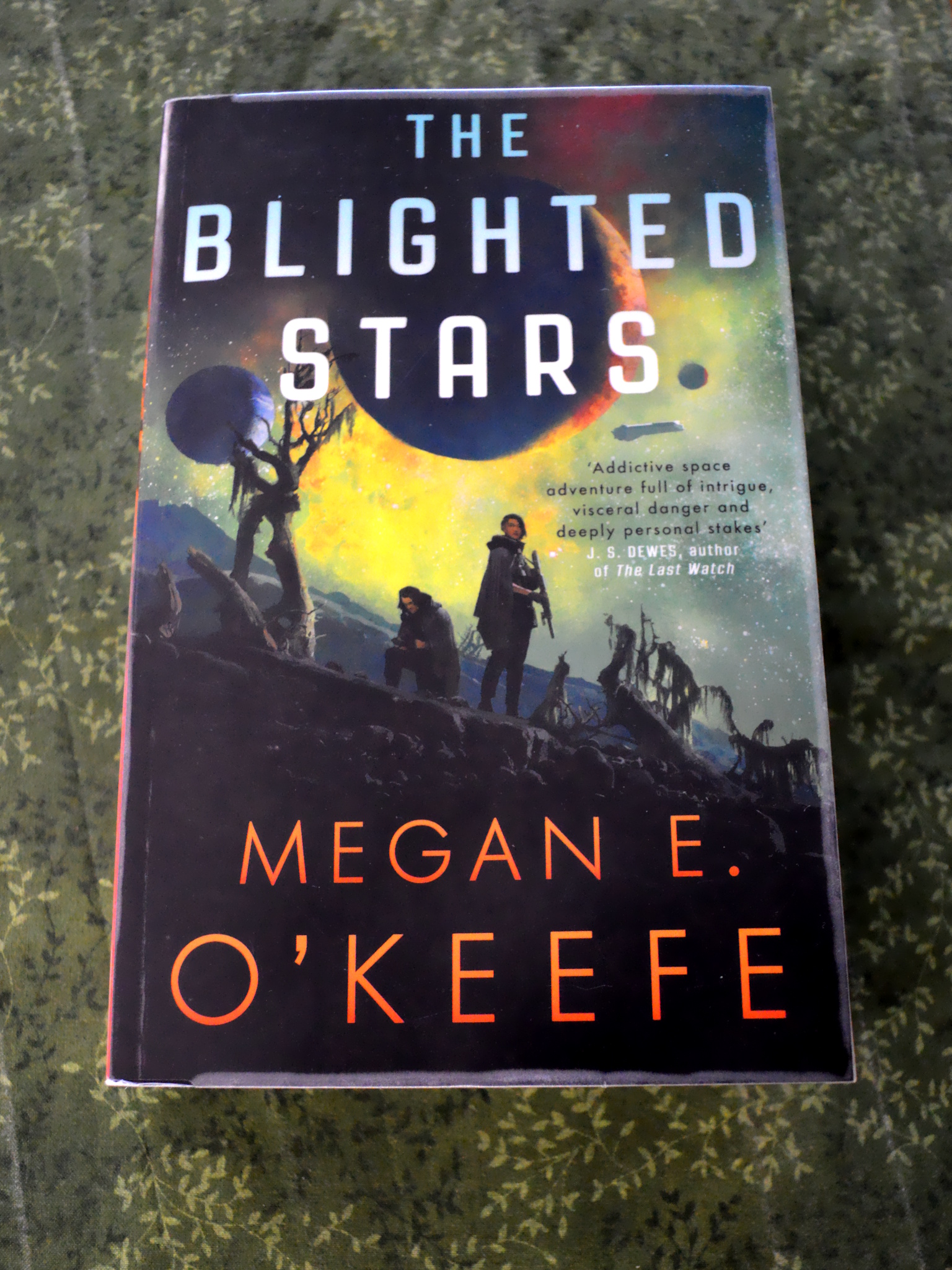
“Everyone remembered firsts. Your first love, first kiss, the birth of your first child, or the sight of your first snowfall. A life was built on the back of firsts. Shining moments, pins in the timeline, holding who you were together.”

–Acaelus Mercator in The Blighted Stars by Megan E. O’Keefe

Current Reading The Blighted Stars

I have to confess that the first snowfall had me laughing out loud, and long and heartily, too! Not because it’s an unreasonable first to remember per se. (I gather there are a lot of people for whom it was indeed a remarkable moment to witness!) I laughed because this is a case of inadvertent but nevertheless a complete and a total case of nooope.

My first snow would be extremely unlikely for me to remember, having grown up two hours south of the Arctic Circle. As unusual as remembering your first rain for the Irish, maybe, or your first mountain for someone who grew up in the Rockies.

Sometimes, despite your best efforts, your audience just completely bounces off your writing. And that’s fine, because at best it’s how we discover the remarkable in our everyday.

O’Keefe, Megan E. The Blighted Stars. London: Orbit, 2023, p. 180.

Image by Eppu Jensen

Top Five Posts of 2024

Happy New Year, everyone! We’ve closed the lid on 2024. Time to sit and reflect for a moment on the year that was.

Here’s a look at the posts we wrote in 2024 that got the most views from all of you:

  1. News on the Murderbot Screen Adaptation, with Thoughts. Nothing got a bigger audience this year than Eppu’s reflections on what we knew at the time about the upcoming tv adaptation of Martha Wells’s Murderbot Diaries, about the self-named killing machine who would actually rather just be left alone to watch media.
  2. Trailer for Megalopolis, with Thoughts. Eppu was underwhelmed by the trailer for Francis Ford Copola’s sci-fi man-epic. Given how the movie came and went with little visible effect on the public consciousness, it looks like she wasn’t alone in that feeling.
  3. A Homebrew Alchemy System for Dungeons & Dragons. Erik’s attempt at homebrewing an alchemical crafting system for tabletop role-playing. We hope some of you have found it useful in your own games.
  4. Night Elf Survival Hunter Transmog Tweak. Eppu put together a new dragon-y transmog for her survival hunter in the waning days of the Dragonflight expansion.
  5. Train Like a Spartan. Erik’s review of what we know about how the ancient Spartans trained themselves for war—which may not be quite what you would expect.

It’s been a pleasure to share our thoughts and ideas with you again this past year. We hope you’ve enjoyed it as well. May the new year bring you lots of new and interesting things to enjoy!

Archaeology and Intentionality

One of the themes that guides a lot of what I post here is that thinking historically is good practice for thinking fictionally. As an example of what I mean by that, let me present the question of intentionality in archaeology.

Much of what we know about ancient cultures comes from archaeology. For all that we can learn from texts, there are many things, peoples, and experiences that were either never written about, or for which the texts have been lost. Individual artifacts can be interesting in their own right, but we often get the most valuable insights from studying objects found together as a group. When we examine groups of artifacts, though, it is essential to begin by asking questions about intentionality: were these objects intentionally grouped together by the people who used them, and was that group of objects intentionally placed where it was discovered? How we answer those initial questions determines a great deal about what further questions we can ask.

When thinking about groups of artifacts, there are two important terms to start with: assemblage and deposition. In archaeology an assemblage is a group of objects found together in the same place. Deposition is the process, whether through human or natural action, by which those objects came to rest in that place. Questions of intentionality are important for how we analyze both assemblages of artifacts and the processes of deposition that left them for us to find.

Assemblages can be either intentional or unintentional. Sometimes we find groups of objects that were purposefully grouped together by the people who used them. In other cases, the objects in an assemblage are not connected except by happenstance. Similarly, some acts of deposition were intentional, while others were not. Recognizing the differences between intentional and unintentional assemblages and depositions is crucial for asking the right questions about the things we find.

For example, the objects placed in a grave were purposefully chosen by the family and friends of the deceased and intentionally deposited. We can pose questions about why these objects were chosen for this person, what it meant for the people who gave them to see them buried, and what the whole assemblage conveys about the person they were deposited with.

The goods we find on a shipwreck, on the other hand, were deliberately chosen, and share an important facet of their history, but they were not intended to end up where we find them. We can pose useful questions about how and why the people who laded this ship choose this particular set of cargo and equipment for their voyage, much as we can ask questions about why mourners chose particular objects to go into a grave. On the other hand, we also have to keep in mind that the ship’s crew expected it to reach port safely, not go down and leave its cargo on the bottom of the sea. If we want to understand the objects found on the ship, we have to consider their intended destinations once they were offloaded from the ship, which were probably numerous and varied.

We also find assemblages of objects that were not intentionally put together by the people who lived with them, some deliberated deposited and some not. The objects we find in an ancient settlement’s rubbish heaps were deliberately disposed of, but not purposefully chosen to go together as a set. Such finds are useful for understanding how the people of that settlement used and disposed of their material goods, but we have to be careful not to assume that the things we find in such a deposit were used by the same people, in the same households, or even within the same timeframe. In fact, looking at what kinds of goods people discarded and how they changed over time can tell us a lot about the life of the place they were found in.

The debris we find in the silt of a disused drainage ditch, by contrast, was neither purposefully assembled nor deliberately deposited. Such finds are useful in examining what kinds of objects were casually lost in a particular place that were too insignificant to their owners to be worth the effort of searching for or retrieving, which in turn tells us about the economic life and material culture of the settlement.

The important thread that unites all of these possibilities is that they require us to think about the people of the past as people, individuals who made choices about what to do with the things around them, just as we do. The habits of thought we apply to archaeology and history are ones that also serve us well when writing fiction: just as we have to think about people in the past as people, we have to think about our characters as people with intentions and desires, too. In a work of fiction, everything is intentional from the author’s point of view, but not everything is intentional from the characters’ point of view. Thinking about what choices characters make, and when they are making a choice at all, is a helpful habit to have.

Image: Dishes from the Helmsdale Hoard, photograph by Erik Jensen (found Helmsdale, Scotland; currently National Museum of Scotland, Edinburgh; 200-400 CE; bronze)

Top Five Posts of 2023

2023 is behind us now, so we’ve had look back at what posts got the most attention this year. Among the things we posted during 2023, here’s the ones that got the most views:

  1. A Competence Porn Viewing List. Eppu’s list of some of her favorite movies and shows to watch that are about awesome characters being awesome together.
  2. Completely New Night Elf Balance Druid Transmog. Eppu’s butterfly-winged transmog for her druid.
  3. Visual Inspiration: Bohemian Waxwing in White. A bit of striking nature photography shared by Eppu.
  4. Are You Aware of National Velociraptor Awareness Day? A silly little comic by Erik for a silly little holiday.
  5. A Compelling Mashup of Columbo and Star Trek: TOS. Some fun cross-fandom stuff found by Eppu.

The lion’s share of views on our site in this past year, though, went to posts from a few years back. Here are the posts that got the most views overall in 2023:

  1. Testing Witches with Water. A whole bunch of you are still really interested in how (or how not to) determine if someone is a witch; this post from 2019 still gets a lot of attention.
  2. Race in Antiquity: Skin Color. A post from 2018 about the complex intersection of skin color and racial diversity in the ancient Mediterranean.
  3. Race in Antiquity: Who Were the Romans? Another 2018 historical post about identity and its convolutions in the Roman world.
  4. Tali for Satrunalia. A post from 2018 about how to play the ancient Roman game of tali.
  5. A Random Find: Ancient and Early Medieval Persian or Iranic Women’s Clothing. An interesting find we posted in 2018 showing some reconstructions of women’s clothing from the cultures of ancient Iran.

Thanks for visiting in 2023. We’ll do our best to keep sharing things worth reading and looking at in 2024!

Top Five Posts for 2022

2022 was… well, it was certainly a year. It didn’t have the apocalyptic awfulness of 2020 or the confused energy of 2021. 2022 had some good parts and some terrible parts, but for a lot of us the year just kind of happened.

It was a calmer year for the two of us, being finally settled in our new home. We haven’t done a top five post in the last few years, but now that 2022 is coming to a close, we thought we’d have a look at what you guys have been looking at here.

Here are our posts from 2022 that got the most views this year:

  1. World of Warcraft Dragonflight Talent Calculator. Eppu posted a link to Wowhead’s talent calculator in the run-up to Dragonflight along with some of her own thoughts, and it looks like a lot of you found that helpful.
  2. Blood Elf Protection Paladin Transmog. Erik’s flashy paladin transmog got some views.
  3. Gold and Silver in Fantasy Coinage. Erik wrote about why gold and silver make historical sense for coinage in a fantasy setting.
  4. Fine Art as a Three-in-One Quilt. Eppu shared an amazing piece of textile art that has to be seen to be believed.
  5. Ukraine Is at War, and I’m Not Okay. Eppu’s heartfelt post about how one of the year’s worst stories touches her as a Finn.

The most viewed posts overall this year also include some older posts. Here’s the all-time Co-Geeking posts that got the most views this past year:

  1. Testing Witches with Water. A lot of you are still really interested in how (or how not to) determine if someone is a witch; this post from 2019 still gets a lot of views.
  2. Race in Antiquity: Skin Color. A post from 2018 about an important topic: looking for evidence of racial diversity in the ancient Mediterranean.
  3. Race in Antiquity: Who Were the Romans? Another 2018 historical post about coming to terms with the complexities of identity in the Roman world.
  4. World of Warcraft Dragonflight Talent Calculator. This 2022 post got a lot of traction this year!
  5. A Striking Greek Gods Photoshoot. A post from 2020 celebrating some beautiful design and photography.

That’s our last word for 2022. Thanks, everyone, for being with us this year. We’ll see you in the next one!

Messing with numbers is messy.

Visual Inspiration: Ruins Don’t Need to Be Grey and Dull

Ruins and abandoned places are often seen as plain and boring. Granted, the color of untreated, inexpensive rock (which the majority of surviving buildings tend to be made from) often isn’t anything to write home about. But in our fiction, ruined areas don’t need to be austere and grim. You can even find real-life ruins in a variety of styles for inspiration.

For example, houses in Herculaneum famously featured colorful mosaics and painted murals. In addition, paint was generously applied elsewhere, like these pillars and external wall from House of the Relief of Telephus show:

Flickr Andy Hay Herculaneum

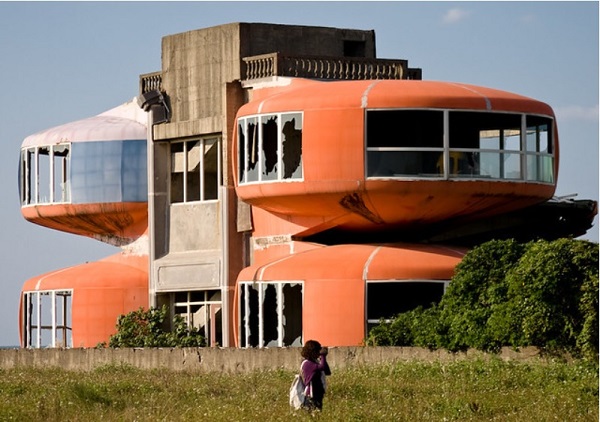
In Sanzhi, Taipei County, Taiwan, clusters of colorful pod houses or UFO houses once stood:

Flickr mingshah Sanzhi Pod Houses

It’s not always humans who have applied the color onto the ruins either. At the ancient Maya site called Bonampak or Ak’e, in the Chiapas area, Mexico, strikingly orange lichen is taking over building facades:

Flickr Carsten ten Brink Bonampak

(Check out the Bonampak Wikipedia article for a stunning relief carving and a painted mural!)

In Dutch photographer Roman Robroek’s shots we can see that a ruin definitely need not be grey, blocky, and boring. Partly overrun by nature could mean an almost orderly takeover, like in the photo of a Gothic-style former chapel built at the end of 19th century, below:

Robroek Former Gothic Chapel Sm

Beautiful, brightly colored arches among rubble from the childhood house of Lebanese singer Fairuz (who was born in 1934) in Beirut form a striking contrast to the greenery outside:

Robroek Arches House of Fairuz

Finally, a still strikingly turquoise—if peeling—underside of a round staircase:

Robroek Blue Staircase Sm

It vaguely reminds me of peacock feathers! I wish the photographer gave us a little more information about the history of this place. Browse more via Colossal or at Robroek’s website.

Since they exist in real life, I would be delighted to read about vibrantly colored and visually striking abandoned places in my genre fiction, too.

Images: Herculaneum by Andy Hay via Flickr (CC BY2.0). Sanzhi Pod Houses by mingshah via Flickr. Bonampak by Carsten ten Brink via Flickr (CC BY-NC-ND 2.0). Images by Roman Robroek: Former chapel. Arches at the house of Fairuz. Blue staircase.

Out There is an occasional feature highlighting intriguing art, spaces, places, phenomena, flora, and fauna.

Quotes: Being Awesome While Female

Sam Hawke guest posted at Fantasy Book Cafe about tomboy protagonists for the blog’s annual Women in SF&F feature in 2019:

“There is a particular kind of character in SFF. You know her. She’s smart and tough, determined, decisive, and she can kick the collective arses of any takers. She comes in a few varieties—in better stories she’s an Alanna of Trebond or a Brienne of Tarth, with depth and history and more than one dimension; in weaker ones she’s an empty Strong Female Character™ who has no real contribution to the plot other than Being Awesome While Female—but either way it’s her prowess at fighting, particularly against men, that sets her apart. […]

“Instead, I wrote a woman, Kalina, with a chronic illness who couldn’t fight to save her life. Literally. I wrote a book in which the main characters’ problems couldn’t be solved by the strategic and entertaining use of violence even if they had the skills to deploy, and I did it purposefully. I did it in part in response to my own sewing test.

“Let me explain.

“The sewing test is failed when a book deploys a lazy code to tell me how much better, more interesting, more deserving, the female character is than those silly other women by making a point of having her hate sewing or embroidery or [insert other feminine-coded activity or trait of your choice—but you wouldn’t believe how often it’s sewing]. These days, if a book does this, I’m out. It’s not just lazy, it’s not just a cliché, it’s a statement by the author that I’m expected to cheer on one woman by disparaging the rest of them. […]

“Basically, there’s a nasty underbelly to over-reliance on this very limited model of ‘strength’, and it’s rooted in the same insidious patriarchal BS that gave us the old style women-as-objects-to-be-rescued stories: here are traits which are traditionally coded as masculine, which you have been taught are more valuable than traits which are coded as feminine. See how you should cheer on this woman because she’s different and better than those other women, who are weak and shallow and worthless. Reward her for those traits, and punish those who lack them.”

author Sam Hawke at Fantasy Book Cafe blog, 2019
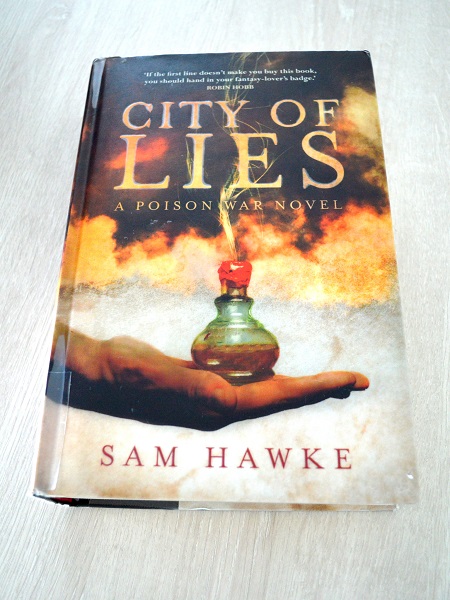
Hawke City of Lies

Hawke is perfectly right, if you ask me. As awesome as ass-kicking women are, other ways of being awesome exist and should be recognized more widely. Because the variety of life skills to be excelled in is much, much wider than merely physical prowess, fighting skill, or attitude.

Moreover, as we all know, there are situations where the application of know-how or just the right tool will create such a better outcome than anything else that at best it’s not even fair to compare them. Why should genre literature forget these skills when women stand in the protagonists’ shoes?

I’m going to be adopting the phrase “being awesome while female” for all kinds of amazing things that women do. It’s just that awesome. 🙂

P.S. I just read City of Lies, Hawke’s book with the female protagonist who has a chronic illness. I thoroughly enjoyed her strategic and entertaining use of her brain—and ditto for the male protagonists, Kalina’s brother and his best friend.

Image by Eppu Jensen

Serving exactly what it sounds like, the Quotes feature excerpts other people’s thoughts.

Writing Prophecies

Prophecies are a staple of fantasy fiction, and for good reason: they are a convenient way of providing the heroes with information to get the plot moving while also imparting an aura of ominous mystique. How do you write a good prophecy for your story or game? Let’s start by looking at how prophecies worked in historical cultures.

Nearly every people in history has believed in some way of communicating with supernatural forces in order to gain special knowledge or insight, but the methods, purposes, and results of that communication could vary widely from culture to culture. By “prophecy” we usually mean something more particular: statements about specific future events which impart the necessary knowledge for the recipient to avert, influence, or at least cope with the effects of those events. Numerous cultures in history believed in some way of gaining these kinds of insights.

The problem that historical oracles faced, of course, was that predicting the future doesn’t actually work. The priestesses at Delphi or the authors of the Sibylline Books at Rome had no special insight into the future any more the authors of modern horoscopes and fortune cookies do. Nevertheless, many people believed in the power prophecy. The Histories by Herodotus, a work which makes frequent references to oracles, gives a useful view of the ways in which people coped with the unreliability of prophecy.

Reasonable guesswork. Prophets may not have special knowledge of the future, but they can make reasonable guesses about what is likely to happen, the same as anyone else. When the small Greek city of Miletus led a rebellion against the powerful Persian Empire, it didn’t take much special foreknowledge to predict that things were going to go badly for Miletus. The Delphic oracle produced this prophecy: “Miletus, you who scheme at evil deeds, will be a feast and splendid gifts for many. Your wives will wash the feet of long-haired men. Strangers will tend my shrine at Didyma.” (Herodotus, Histories 6.19, my own translations) This prophecy turned out to be true, but plenty of other Greeks claiming no connection to the gods also knew that things were going to go badly for Miletus, and so refused to join the revolt.

Vagueness. The standard dodge for prophets from Delphi to Nostradamus is to give an answer vague and cryptic enough that it will seem to suit whatever actually happens. The most famous example is perhaps the Delphic oracle’s response to the Lydian king Croesus, who asked whether he should invade Persia. The oracle replied that by doing so, Croesus would destroy a great empire, neglecting to mention which empire would be destroyed. As it happened, Croesus’ attack on Persia led to the Persian conquest of Lydia, but if things had gone the other way, the oracle would still have been right. (Herodotus 1.53)

Unspecificity. Some prophecies, like the one given to Croesus about his war with Persia, gave vague information about a specific event; others gave detailed information without specifying what event it related to. For example, a little-known Athenian seer named Lysistratus predicted that “The women of Colias will cook with oars,” which came true when wreckage from the naval battle of Salamis washed up on Cape Colias and was used as firewood by the locals. (Herodotus 8.96) This prophecy is unambiguous about what will happen, but says nothing about when or why. Colias was downstream of an important harbor and shipping channel; it was not hard to predict that wreckage from some significant event would wash up there and be salvaged sooner or later.

Selection bias. People tend to remember things that confirm their beliefs and forget things that don’t. People who believed in the power of oracles accordingly tended to remember prophecies that turned out to be true or could be interpreted to be true. Almost all the historical prophecies we have recorded were written down only after they had apparently come true. A number of recorded prophecies from the Delphic oracle begin with the word “But,” suggesting that some preceding part of the oracle has been left out, possibly because it turned out to be wrong or not relevant, such as in another Delphic reply to Croesus: “But when a mule becomes the king of the Medes, then flee, soft-footed Lydian, by the pebbly Hermus, and do not be ashamed to be a coward.” (Herodotus 1.55) This part of the prophecy was interpreted after the fact to refer to the Persian king Cyrus, whose ancestry was both Persian and Median, analogous to a mule, which is the progeny of a horse and a donkey.

Intrigue. Sometimes prophecies were manipulated in order to achieve the results some party wanted. It was an open secret that the priests at Delphi could be bribed to give particular answers. Other oracles and seers were no doubt similarly open to influence. The Alcmaeonid family of Athens were known to have bribed the Delphic priests to encourage the Spartans to help them against their rivals in Athens. (Herodotus 5.63) Another kind of manipulation is exemplified by Onomacritus, a collector of oracles who tried to encourage the Persian king Xerxes to invade Greece by sharing only those prophecies in his collection that seemed positive for him and hiding any that seemed negative. (Herodotus 7.6)

Now, as an author with full control over the world of your imagination, you don’t have to resort to any of these dodges. If you want your ancient prophecies to come true, then they will. The problem with prophecies in fiction, though, is they risk undermining the agency of the main characters. If prophecies predict the threat or its resolution too reliably or in too much detail, opportunities for drama are lost. If your work is for a game or some other setting where other people will have input to the plot, you can bet your dice that as soon as you hand them a prophecy they will try to exploit, invalidate, or weasel out of it in some way.

Uncertainty is a source of drama. When your audience already knows how everything is going to end, it’s harder to keep them interested in the story. Prophecies risk diminishing drama by introducing too much certainty. How do you keep the uncertainty in a story when there’s a prophecy involved? The techniques mentioned above are a good place to start because they serve the same function for a different reason: historical prophets had to keep uncertainty in their predictions because they didn’t actually know what was going to happen. You can use the same ideas in order to avoid tipping your hand too much to your audience or players.

Reasonable guesswork. If an in-story prophecy confirms something your heroes already suspect or adds useful detail to a picture that was already becoming clear, it can add impulse to the plot without dominating it. Conversely, a prophecy that doesn’t provide answers but spurs your heroes to ask important questions can be a good way to get things moving.

Vagueness and unspecificity. Both these techniques are good ways of keeping a prophecy from overwhelming the agency of your characters. If the prophecy refers to a specific event but doesn’t give clear details about it, or gives a clear prediction without specifying when, why, or how it will come about, there’s more room for your characters to work around it.

Selection bias. Lean in to the fact that prophecies can be wrong. If your characters (or their players) are aware that prophecies are unreliable or only seem true after the fact, their doubts about the truth or usefulness of the prophecy they’ve received can be a good source of drama.

Intrigue. There’s even more drama to be mined out of the fact that a prophecy might have been tampered with or invented, or that an authentic prophecy might have been delivered to your characters in such a way as to influence their understanding of it. Such puzzles open up interesting possibilities for side plots and interactions with antagonists.

As an author, the future is in your hands, a power that historical prophets never had. Still, you can learn from their examples how to make your prophecies sufficiently portentous without overwhelming your characters and plot.

History for Writers looks at how history can be a fiction writer’s most useful tool. From worldbuilding to dialogue, history helps you write.
History for Writers: 2021 Compendium

History for Writers explores history to offer ideas and observations of interest to those of us who are in the business of inventing new worlds, cultures, and histories of our own. Here’s what we’ve been talking about in 2021:

Worldbuilding exercises

Organizing society

Thinking about history and justice

The details that make a different world

Join us in 2021 for more history from a SFF writer’s perspective.

History for Writers is a weekly feature which looks at how history can be a fiction writer’s most useful tool. From worldbuilding to dialogue, history helps you write.