The other day I was browsing a random blog. Seeing a post title “101 Things to Do When Bored at Home” or something to that effect, I turned to Erik and said: “I don’t understand the concept.”
I truly don’t, not for my part!
We’re both introverts who love our home. Home is where our books are. Where we can watch tv in comfort. Play games. Craft, sew, write. Go nap or lie down with a blanket to think about things. Heck, even clean or mend things—it’s something to do, and we do enjoy a well-functioning home (even if cleaning and mending aren’t favorite pastimes themselves).
I literally can’t remember the last time I’ve been bored at home.
I can—and do—give my brain rest breaks. Idling is important to creativity, which is important to all of life, if you ask me. But boredom…? Nope. It just doesn’t happen, there’s so much to do.
I’m actually looking forward to the time when I’m old enough to need less sleep—more time to enjoy being conscious! 🙂
“For me, one of the biggest draws of the Internet has always been how I can be alone and yet find connection with other people. I am an introvert. I can fake extroversion, but it is exhausting. I prefer quiet, even when I am happily around other people. I spend an inordinate amount of time in my head. Online, I can be in my head and with interesting people. I can be alone but feel less lonely.”
A fantastic explanation—which, of course, means that it lines up with my experience of the world, heh heh. 🙂
I’m sure if you’re reading this you know that in general introverts do not hate people—that would be misanthropy—nor do they fear social encounters—that’s shyness. (Well, of course they can, but it’s not baked into every introvert.) It seems there’s now more understanding in general that introversion is about social energy, and that introverts recharge by being alone.
I’ve come to realize that alone time is just a part of how my introversion manifests itself. I feel enormously better, for example, if my home is in a corner instead of the middle. Text-based communication is better than voice. Listening before leaping is a better strategy at meetings or gatherings. And sometimes, when I want to be around people but don’t have the energy to actually engage, it’s enough to hang out in a library or a less-busy corner of a mall, or go out to eat, or spend time browsing in a brick-and-mortar store.
Life is so much easier when you know what makes yourself tick. 🙂
One of the most prominent topics currently is artificial intelligence. Of course everyone knows—or should know—it’s not real intelligence as we generally understand it. The term seems to have some real staying power, though.
Regardless of what one wants to call the current iterations, machine learning or algorithm-based systems appear to be here to stay. People are starting to figure out what they could be used for in everyday life, not just at the office or lab.
One popular sentiment among creatives goes along the lines of: I want AI to do the dishes for me so I can create, I don’t want AI to create for me so I can do the dishes. I hear you, fellow creatives, and agree! This post talks about what I’d want those systems to do for me. (Eventually. We still must solve several issues, e.g. how to program them without egregious copyright breaches, to mention just one.)
(Please also note: I do realize that computing takes a lot of energy and materials, and that energy production and extraction of minerals aren’t unproblematic processes. Also, the ethics of the current generative models need serious attention; I’m still fuming over Meta’s massive book pirating as revealed by The Atlantic. The point of my post is not to dwell on the problems, however. This is basically just a random, long-winded wish list.)
TL;DR: My preferences boil to complex tasks, specificity instead of generic sludge, and effective analysis of massive amounts of data.
Below is a non-comprehensive list of some specific tasks I want done better, whether by “AI” or not, in no particular order.
The newest expansion of World of Warcraft, The War Within, has been out for a few months now. Time for a first impressions post.
Eppu
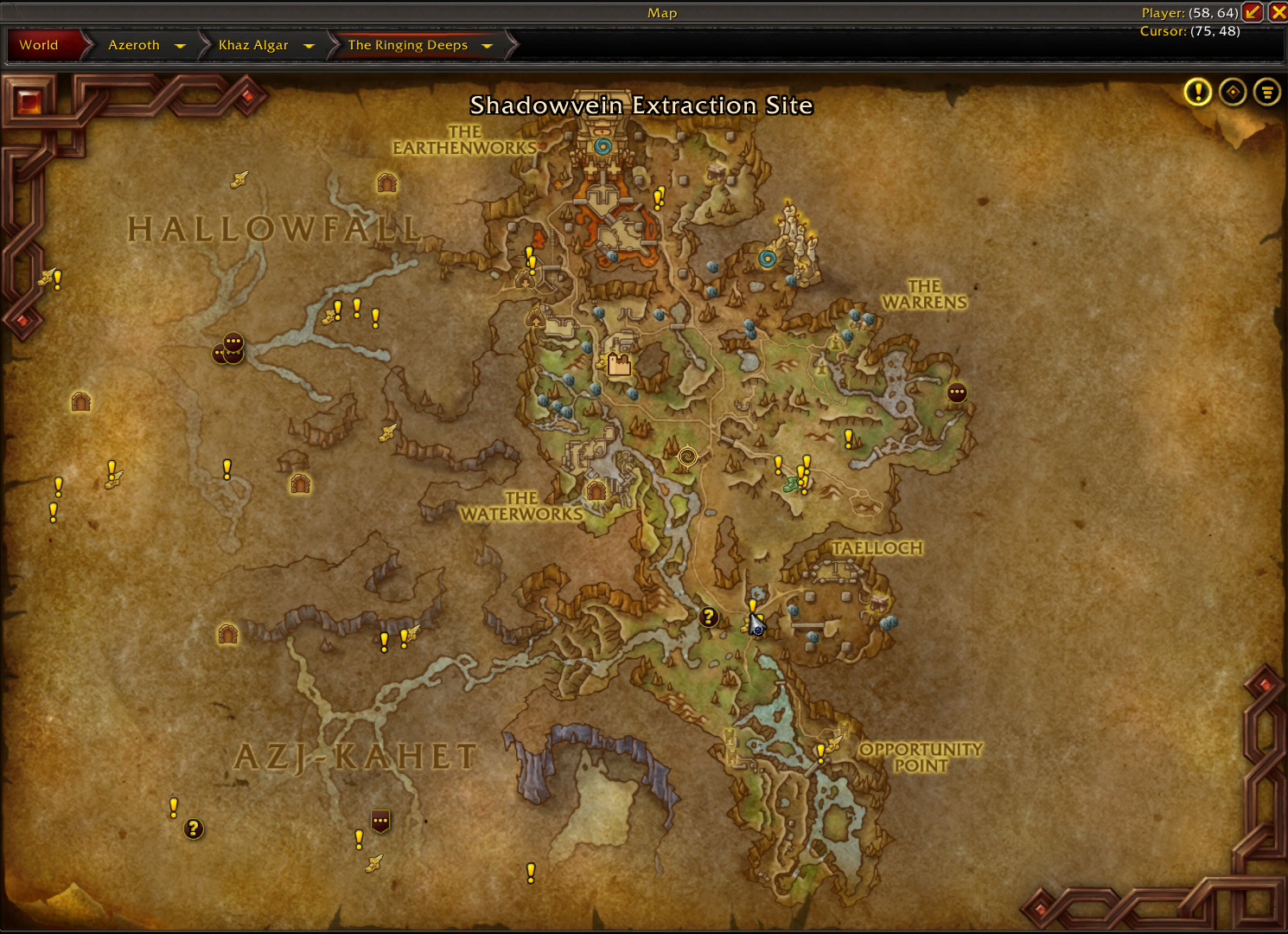
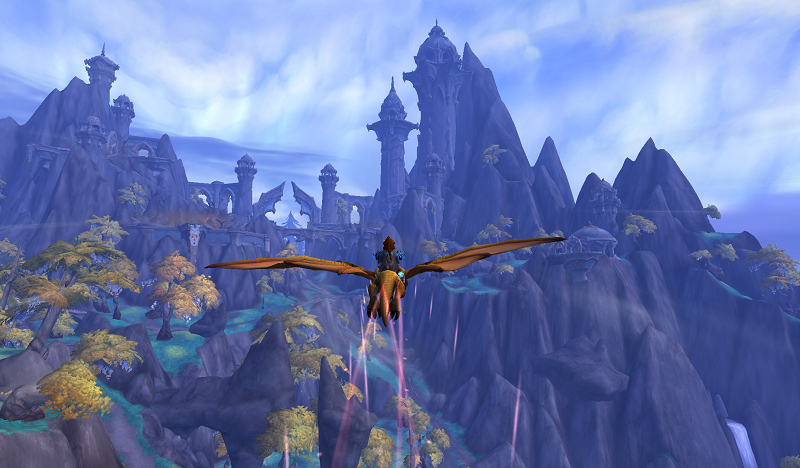
The environments are really impressive, both visually and geographically (for the lack of a better term). The landscapes look more like they could’ve developed according to natural processes. (Check out, for instance, the Ruptured Lake and the descent into Azj-Kahet from Hallowfall!) And into all that, they’ve squeezed an incredible amount of distinctive questing areas, some above or below others or just down a cliff, hidden behind a hump in the hill, or the like. The flora is imaginative and unusual—we are largely underground, after all.
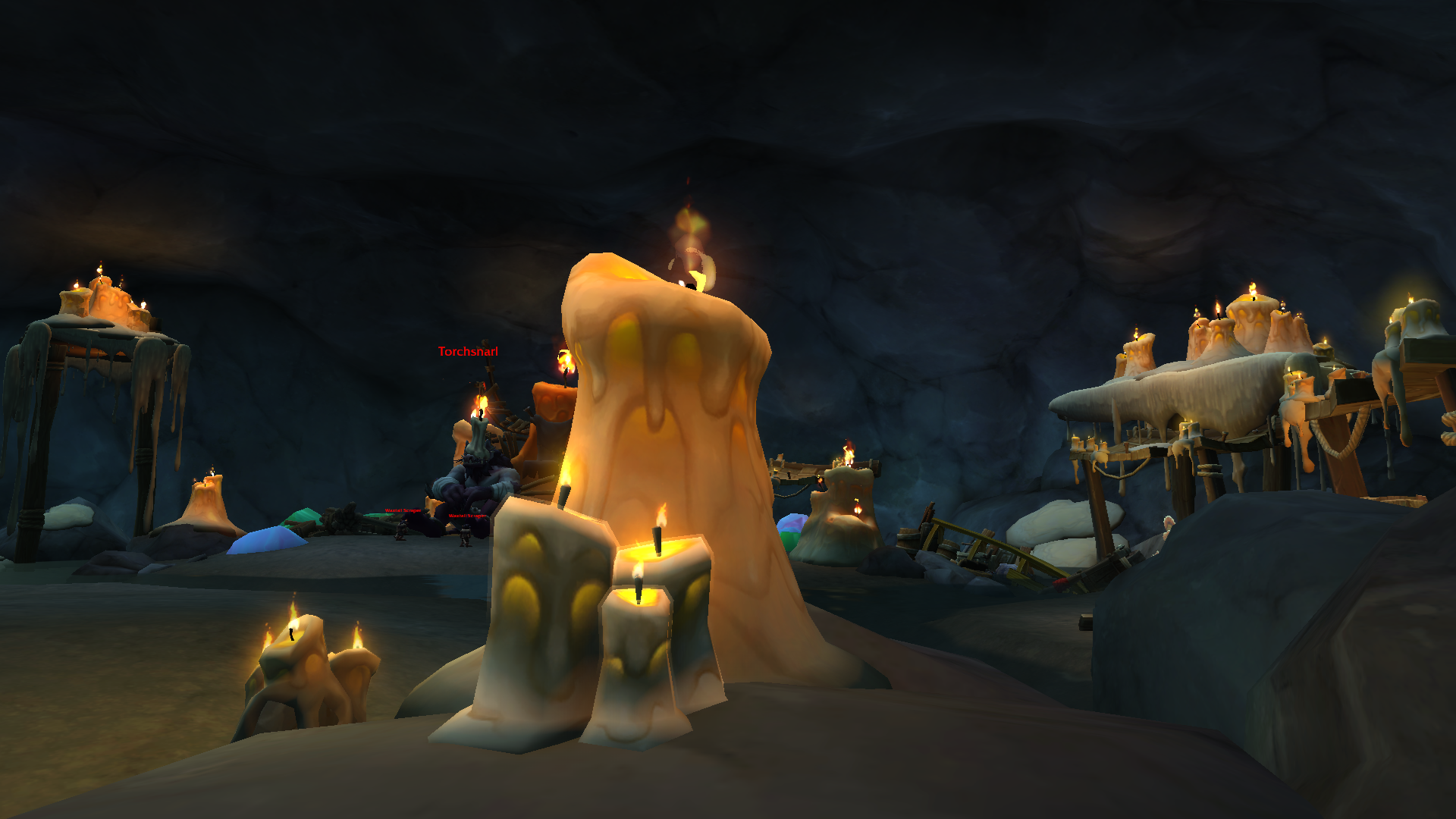
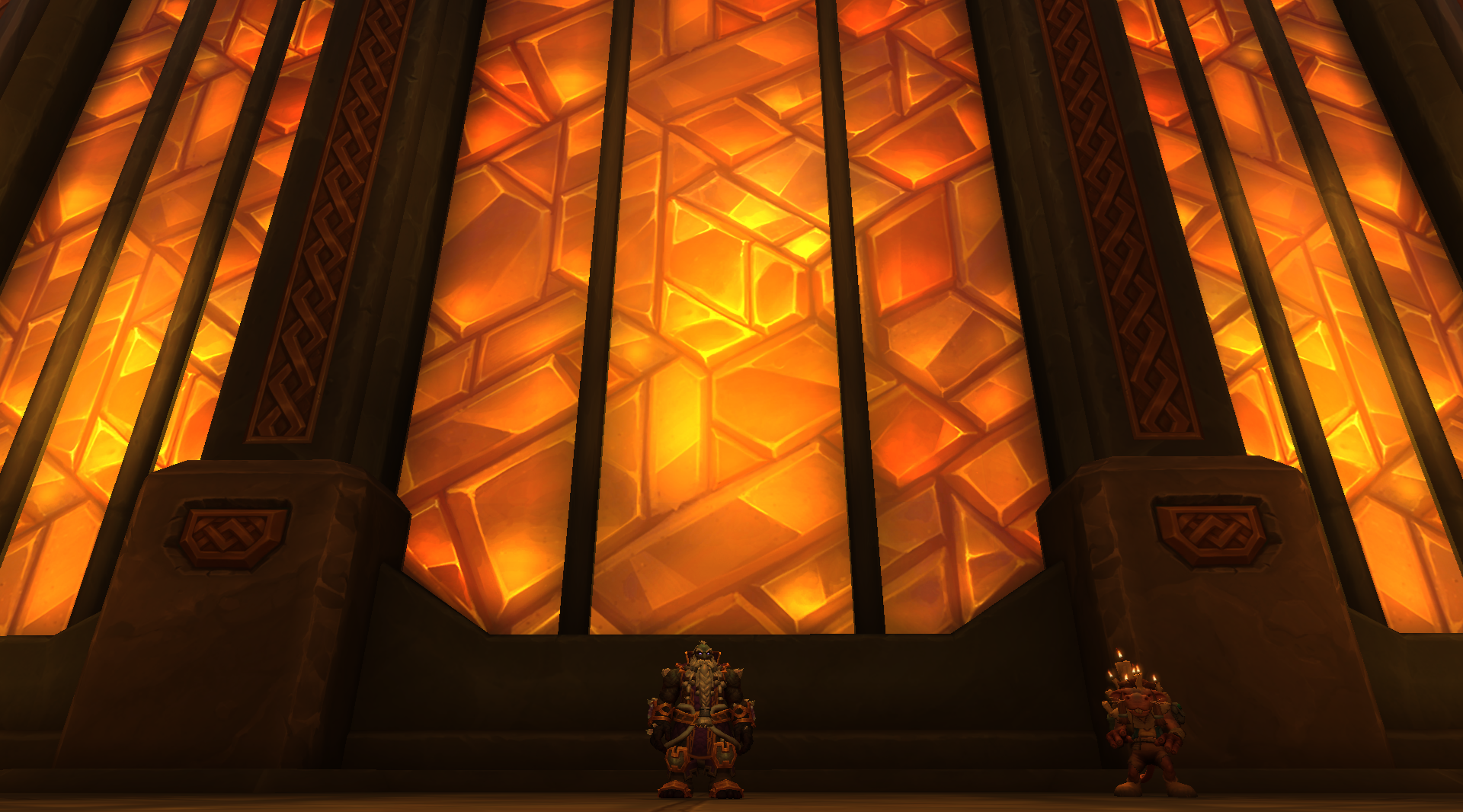
There are also a lot of fun details. To mention only a few: The tents that look like books are neat, and kinda remind me of the upside down ship houses in Boralus. The masses of candles in the Kobold areas look amazing, as does the darkness effect in e.g. Kriegval’s Rest. The Steam Vent in Dornogal has these heated beds for the Earthen to relax on. Looks very cozy!
The only zone I don’t care for is Azj-Kahet; it’s too dark overall, even if some areas have really cool and interesting details. (The exception here is the Wildcamp Or’lay area, where the Beneath the Roots quest ends; I really could’ve gone on adventuring there much longer. Fabulous, I love it!)
Most of the music is lovely, nicely varying, and thought-out. On the other hand, almost all of the nerubian characters have too deep voices; they’re incomprehensible. Bad directing leads to wasted voice acting.
This time, Blizzard opted to hoist hero talents on top of the talents introduced in Dragonflight. (With tweaks to the talents, because you have to tweak talents for a new expansion, otherwise the world would implode, right?) That works really well, I think; no need to re-learn absolutely everything. With professions, it’s possible to craft something useful for your toons from the beginning; that’s really nice.
There are lots of creature comforts I wish Blizzard had included years ago. For example, more options to skip certain story quests on alts, the Warband bank and Deposit All button (even if it deposited also all applicable Dragonflight items, so I had to go prune them out afterwards), the Leave-O-Bot at the end of delves, or quartermasters in cities marked on the map. And speaking of maps, the functionality of clicking anywhere on the map and have that point become a tracking caret on your screen (much like it’s been possible for quests).
Also the fact that flight points are opened to alts once one of your toons has discovered them (and reached 80?) is fantastic. As a visual person, I deeply appreciate the difference in the map boot graphics: yellow boot with wings = a discovered flight point, green boot without wings = an undiscovered one.
I LOVE that there now are a few dragonriding mounts that can carry a second character! As Erik doesn’t like dragonriding at all and I love it, when playing together we get to take advantage of the higher speed of dragonriding if I steer and Erik travels as a passenger. 🙂
Delves are a lot of fun, but they could also use some improvement. Like Torghast in Shadowlands, I really love the flexibility of delves—except this time, we do get loot at the end! (Something we wished had been a feature of Dragonflight.) On the other hand, we don’t get many interesting game effects like the anima powers in Torghast. Also, delves are set apart from dungeons and raids in that travel to their location is required and simply queueing (like for follower dungeons, which offer a similar type of flexibility) isn’t possible. Love the Leave-O-Bot, though, plus an easy exit at the end of a dungeon. I also like follower dungeons a lot, they make playing dungeon content easier. They could use some fine tuning, but the concept works.
A random observation to end with: Something about how the story in TWW unfolds reminds me a lot of Battle for Azeroth. Perhaps it has to do with the character-focused approach? Just about every plot point refers to its effects on people, and many quests literally focus on the personal, instead of running around fetching bucket handles or grinding through endlessly respawning faceless enemy mooks. Also, children aren’t entirely forgotten.
Erik
Almost everything I have to say about The War Within is good. This expansion delivered a lot for me to enjoy.
When the new expansion was announced as an underground experience, I was nervous. I’ve never much liked WoW‘s underground zones. I found Deepholm dull and Zaralek Cavern claustrophobic. Still, I was willing to wait and see what the design team would do, and I have been pleasantly surprised. The Ringing Deeps and Hallowfall are both beautiful zones that feel very distinct. You know you’re underground, but they don’t feel dull or oppressive. And when you need fresh air and sky above you, you can always go up to the Isle of Dorn. I don’t care for Azj-Kahet, but three out of four zones is more than enough for me to have a fulfilling game experience.
Within those zones, there is lots of attention to detail in both environment and storytelling to fill out our sense of the new peoples we meet there. The culture of the Earthen is fascinating to explore, as they find their way between the dictates of order and the pull to free will. Our kooky, scrappy, candle-wearing Kobold friends make excellent comic foils to the serious Earthen. The Arathi of Hallowfall introduce fascinating possibilities in the larger lore of WoW. I’m not interested in the Nerubians, but as with the zones, there is more than enough in the rest of the expansion for me to discover and enjoy.
Turning to aspects of gameplay, delves and follower dungeons bring a welcome new range of possibilities to the game for people like us who don’t like to do group content. Delves are short enough to fit a casual play schedule, challenging enough to be a satisfying test of skill, and rewarding enough to be worth doing repeatedly. Follower dungeons make it easy to enjoy dungeon content at the appropriate level without worrying about bad groups and grouchy strangers. Delves, follower dungeons, world quests, and weekly quests offer great flexibility in how to play and advance my characters. This expansions gives players like me more to do than ever before.
The most fundamental mechanical change of the expansion, of course, is the introduction of Warbands. The ability to share everything from renown progress to crafting materials seamlessly across all my characters is liberating and refreshing. Combined with the changes to transmog that let you learn any appearance you pick up, whether the character you’re playing can use it or not, these changes mark a significant shift in Blizzard’s attitude toward players. We finally have an expansion that welcomes me to play as many alts as I feel like without making it feel as though I am missing out on something important.
With all of these positives, the things that I don’t like about the expansion seem minor and unimportant. I don’t like Azj-Kahet and have no interest in the Nerubians. My dislike for the zone is not because it is badly done, though, and I hope that everyone who is into dark spidery stuff has a blast there. It is completely okay for Blizzard to make parts of the game that aren’t for me.
Dornogal feels a bit bland as a capital, less thriving and alive than Valdrakken, less magical than Dalaran, less characterful than Boralus or Zul’dazar. Still, it does have a sense of place and its own kind of beauty. I’d much rather spend an expansion in Dornogal than in Oribos.
Hero talents have turned out to be less interesting than I hoped. On most of my characters, the choice is made for me because of the two options available, one revolves around a talent I don’t use or serves a playstyle I’m not interested in. Few of the individual hero talents feel like they make much of a difference to how I play. On the other hand, I don’t really want a big shake-up to how I play my characters, so on balance, I’m fine with the system.
I find the main story of Smug Floating Shadow Elf Doing Vaguely Evil Stuff to be boring, but the truth is that in every expansion, I’m usually bored by the main story. I find my joy in the small stories we experience along the way, and The War Within has not disappointed with its side stories. From wacky Kobold bedtime stories to sensitive reflections on aging and the loss of treasured memories, this expansion has plenty to offer. Just like Azj-Kahet and the Nerubians, I can completely ignore the Smug Elf, Traumatized Prince, and Angry Ranger Show and still have more than enough to do.
Overall, my reaction to this expansion is: There are things I don’t care for and am not interested in, but there are so many things for me to enjoy that I hardly even notice the rest.
“The companies that make AI—which is, to establish our terms right at the outset, large language models that generate text or images in response to natural language queries—have a problem. Their product is dubiously legal, prohibitively expensive […], and it objectively does not work. All of these problems are essentially intractable. […]
“That non-technology industries are falling for this spin [that AI is inevitable] is perhaps unsurprising […] What’s more interesting is that other Silicon Valley companies are doing the same, even though, again, the result is almost always to make their product worse. Google has essentially broken its key product, and Microsoft is threatening to spy on all its users and steal their data, all because a bunch of CEOs have been incepted into the idea that this technology is the future and they cannot afford to be left behind.”
Nussbaum is packing quite a bit into a relatively short post. With regard to the claim that Google’s search engine is broken, she refers to an article in The Verge by Elizabeth Lopatto. Lopatto in turn provides some examples that are truly hair-raising: apart from unusable—or plain wrong—data, Google has offered potentially life-threatening answers to user queries.
Personally, for at least a decade if not longer, I haven’t used Google unless I can’t get anything sensible out of other engines, so I’m not the best person to comment on Google specifically. However, I have noticed that pretty much every search engine I’ve tried has gotten worse.
(Please note that my opinion below is based on my experience as an information professional, and on the experiences of my friends and acquaintaces as well; I don’t want to repeat “in my experience“ in every other sentence. Please also note that your experience may differ, and that I am aware of this possibility. And, finally, please note that this is an opinion post, so I will be selective with my point of view and using hyperbole.)
For one large problem, ads are rife among search results. It used to be possible to see a page of results with a couple of ads. Now it’s almost a page of ads with a couple of results sprinkled in for appearance’s sake. I understand the necessity of procuring funding. What I do not understand is destroying customer trust by no longer providing the service you claim to provide.
For another, advanced search is disappearing. (Here Google does seem to work slightly better than its competition, at least in some contexts, at least some of the time.) One example of a basic operation that’s stopped being reliable is excluding a word from your query by typing a minus in front of it; the term almost always if not always shows up in your results anyway. Another example is specifying a phrase by surrounding it with quotation marks. For example, at times I want to check a new-to-me multi-word term, or try to find a phrase I only hazily remember. But that only works if the search works. Even if it does work, an engine might offer other phrases containing your search terms, just in a different order. Obviously that isn’t helpful. A recent example is “price cliff”, for which Google offered the Instagram profile of one “Cliff Price” among the top results. Categorically not what I was looking for!
The results might also be interspersed not just by ads but other irrelevant blocks (“People also ask” or “Related Searches” or such). Granted, related searches do have their use; there are times when it is helpful to see adjacent topics or terminology. They definitely shouldn’t take space from the most relevant results, though, and the suggestions must actually be, you know, related to be relevant.
Further, search engines have stopped displaying the number of results for a query. (Remember when that was a thing?) These days it’s anyone’s guess whether you’re being served with a butt-load or a crap-ton of increasingly poor results.
Finally, at worst your search engine of choice will serve pop-ups in the margins (“See all!” “More from source!”) or push their “mobile experience”. *sigh*
These days, the search engine “experience” (WTH is that even supposed to be?!?) is like going to a restaurant and ordering pasta, but being served paste instead: not at all what was expected, entirely wasteful, and potentially harmful—and if you were to claim that the deliverable is “close” to the request, it is just insulting.
If this is what “smart” business people believe counts as quality output these days, I wouldn’t trust them to think their way out of a pillow case. (Yes, a pillow case, since the poor airbrains would probably hurt themselves with something as sharp as a paper bag.)
According to BBC, a Google spokesperson has defended AI-created overviews saying that “[t]he vast majority […] provide high quality information, with links to dig deeper on the web”. Speaking of vast majorities, most people are just not interested in digging and absolutely will not dig deeper; they want a clear-cut answer and they want it quickly. That means improving the quality of results, and neither the recent, pre-AI iterations nor the curret AI-“improved” engines deliver that.
I can’t think what the heck is up with the encrapification of search engines. Or why does it seem absolutely necessary to keep tweaking a good product what feels like every few months until it’s unrecognizeable.
Is it sunk cost fallacy? A form of mass hysteria spreading from Silicon Valley? Is maintaining a steady level of good service so moth-eaten a concept that it can’t attract resources anymore beyond the barest minimum? Are developers (or developers’ bosses) really that unable to comprehend that a change does not automatically mean an improvement? Is the only thing that matters the ceaseless chase after new features, regardless of whether they will shape up your service or shatter it?
It’s so frustrating, in any case. We, here, are nerds and do at times dig very deep. Sadly, these days search engines often hinder research instead of helping. Lately I’ve noticed that I’m turning more to bookmarks saved in my browser, or pick a specific site I’ve vetted earlier. It’s obviously not a foolproof answer, either, because I need to remember which entity has or might have the information I’m after in order to go and search their pages.
I’m quite ready to live in the most boring of times, with reliable basic services, please and thank you.
“I’m talking that massive, never-ending Discord chat with your bestie? The one that makes you giggle through the day? It’s not a ‘waste of time,’ it’s what time was made for“
– atlinmerrick on Tumblr
Hear, hear!
As much as it might frighten us some days, change is permanent and the only absolutely realiable thing in life. (Apart from the sheer impossibility of taking anything with you when it’s time to go.) Why not find happiness while you can? Why not allow yourself to feel the joy you feel? Lots of adults would be happier, I think, if they allowed more of the delight they used to feel in their childhood to remain in their lives. (Mostly talking to my Protestant forebears here…!)
Recently I’ve been trying to read more SFFnal classics among my normal selection. I can’t remember why I added Blindsight by Peter Watts (published in 2006) onto my library holds list. When it finally became available and I started to read, I discovered that one of the characters is called Jukka Sarasti (which is a Finnish name), so perhaps that was it.
Content note: spoiler alert!
The novel’s events start in the year 2082. A first contact situation arises after thousands of unknown devices burn up in Earth’s atmosphere in a coordinated manner and radio signals are detected near a Kuiper belt object.
Earth sends a ship captained by an AI (called the Captain) to investigate. Theseus is crewed by five augmented humans or transhumans, including their leader, a genetically reincarnated vampire (Sarasti). When the crew wakes from hibernation they discover that Theseus was rerouted mid-flight to a new destination in the Oort cloud. Orbiting a previously undetected rogue gas giant is an enormous, constantly growing object, presumably a vessel, which the crew dub Rorschach.
The Theseus crew begin studying Rorschach with telemetry and excursions despite some very hostile environmental conditions. Additional challenges are posed by psychological effects (hallucinations) and extremely fast, multi-limbed organisms on Rorschach, and on Theseus the crew’s aggravation with the narrator, synthesist Siri Keeton. Eventually relations between Theseus and Rorschach culminate in physical attacks, and only one crew member, Keeton, is sent back to Earth in an escape pod with copies of the information collected before Theseus detonates its payload to destroy Rorschach.
What was especially delightful is that—setting aside Sarasti, who as mission commander and a predator is kind of outside the crew anyway—Theseus’s crew consists of two men and two women, and everyone is described the same way regardless of the configuration of their bodies. Skills and personalities are what matter most. (This is especially enjoyable after reading certain other classic SF novels, which I will leave unnamed to languish in their stifling obsolescence.)
Another interesting detail is that Susan James, the linguist in the crew, actually carries three other personalities or cores in her head, all working and socializing in harmony, and collectively referred to as the Gang by the rest of the crew.
Blindsight turned out to have one suprisingly topical detail. The Gang figure out that despite conversing with the Theseus crew seemingly normally, Rorschach doesn’t really understand the communication. This sounds very much like the recent discussion of Chat-GPT and other AI engines, doesn’t it?
One of the strengths of Blindsight is that it fuses elements from both the so-called hard sciences and the social sciences. Surely SFF (and all storytelling, for that matter) is at its strongest when it’s questioning our perceived realities or possible realities, starting from what makes humans tick. I’m quite tired of SFF that takes bland “and then they went to x and did y” travel narratives and merely cloaks them in fancy wrappings.
Alas, Blindsight has quite a few horror elements and closes with a rather despondent situation. Despite being skillfully written and constructed, it’s therefore not for me.
Blindsight was followed (in 2014) by the novel Echopraxia to make up the Firefall duology.
ICBIHRTB—pronounced ICK-bert-bee—is short for ‘I Can’t Believe I Haven’t Read This Before’. It features book classics that have for some reason escaped our notice thus far.
The other day, fueled by our discussion on what to watch after dinner, I started musing about a certain mood of mine and what connects the works I gravitate towards when in that mood. I landed on the term competence porn without realizing it is an existing term. (There’s even a Wikipedia article on competence porn.)
In alphabetical order, here is my short viewing list:
Charlie’s Angels (2019)
Elementary
Leverage
Ocean’s Eight
Rogue One
Wonder Woman
And a back-up list with works that fulfill some criteria, fail others, but that I nevertheless often like to watch when in that mood of mine:
Black Widow
Captain Marvel
Miss Marple (the series with Joan Hickson)
Murdoch Mysteries
Star Wars VII-IX (specifically Rey’s storyline)
There seems to be surprisingly much variance in the use of the term competence porn, so rather than dissect the alternatives, here is what I mean by it:
Typically has multiple competent, intelligent characters of different skills or areas of expertise working together, often towards a fairly big goal.
Involves complex problem-solving. Can but need not include a heist.
There’s a somewhat nebulous aspect I haven’t yet been able to quite define for myself. For example, on the surface, the action flick Gunpowder Milkshake fills the above requirements—it has multiple competent and intelligent characters, lots of problem-solving, women being awesome, and learning to work together, and yet I cannot count it as competence porn for my purposes. I guess it’s an aspect of fun? Or a lack of despair / despondency / dejection / melancholy / gloom?
Anyway, I’ll talk a little about why I’ve placed each of the works above onto my viewing list.
1. Charlie’s Angels
I find the protagonist Elena (played by Naomi Scott) very irritating; on the other hand, Jane and Sabina (Ella Balinska’s and Kristen Stewart’s characters) plus Boz and Bosley (Elizabeth Banks and Djimon Hounsou) are great. Stewart has a bad rep, I guess, and I guess primarily from the Twilight movies (the only things I have seen her in), but on the basis of her performance here I’d suggest she does have skills but was just badly directed in that series. Anyway, it’s a learning to work together story, which I like a lot, and all the women down to the side characters are awesome.
2. Elementary (2012-2019)
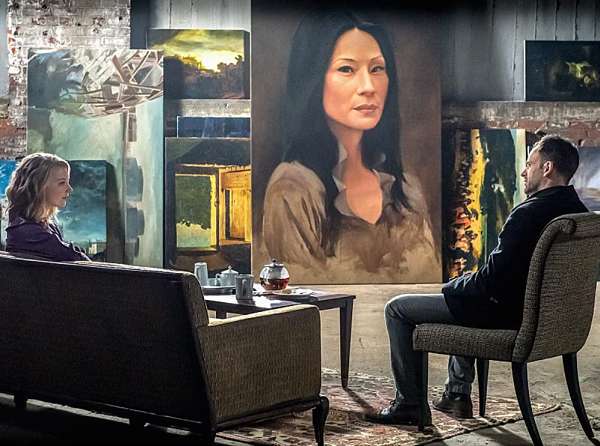
A modernized version of Sherlock Holmes set loose in New York City with a gender-flipper Watson. Both Jonny Lee Miller and Lucy Liu are fantastic as the detective duo, and the smart NYPD cast, Captain Gregson and Detective Bell (played by Aidan Quinn and Jon Michael Hill), also contribute their fair share. The Ms. Hudson and Moriarty versions were also interesting, but all in all there are too few women. (Still half of the population, hello?) Nevertheless, the astounding cases, quality acting, and scenes of real NYC in all its glitter and grime continue to keep my interest despite some less successful story lines.
3. Leverage (2008-2012)
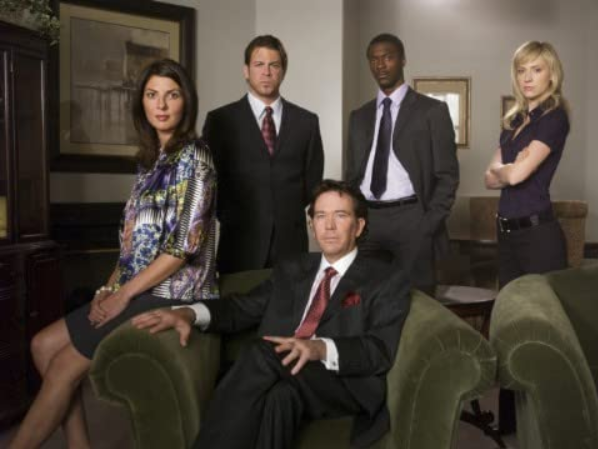
Yes, yes, yes—ticks all the boxes despite some unevenness in the writing. If only it didn’t have Nate nor the actor, Timothy Hutton; I’m so fed up with wallow-y man pain (and, whoo boy, does he wallow) with or without alcohol, but it’s infinitely worse with.
The three youngsters should’ve had a series of their own; THAT would’ve been great, and I would throw money at it!
4. Ocean’s Eight
Yes, yes, YES! (Despite Sandra Bullock, Anne Hathaway, and Helena Bonham Carter, who all are far from favorites of mine.) Cate Blanchett, Mindy Kaling, and Rihanna were fabulous. The heist is simply staggering, and it helps it’s also a learning to work together story in part.
5. Rogue One
Although in the beginning we only see a glimpse of Jyn Erso’s childhood and we hear little of how she lived afterwards, it’s clear that she can handle herself, backwards and blindfolded if needs be. I enjoy seeing just how the Rogue One group slowly comes together to run their desperate mission. It needs more women, though.
Rogue One is clearly the least fun of my six competence porn stories, which makes it really hard to put into words why it’s on my list. I just know that it is.
6. Wonder Woman
There are some plotholes and/or weaknesses I’d rather do without, but the learning to work together aspect of the story nevertheless makes the movie work for me. And—need I say it?—SO many awesome women. I could spend more time seeing Amazon action on Themyscira!
Do you have a competence porn viewing or reading list? If so, I’d like to hear yours.
Dragonflight, the newest World of Warcraft expansion, has been out three months now. Here are some initial opinions.
Eppu’s thoughts
Let’s get the negatives out of the way first:
The world quest cycle seems too slow. Way too slow!
The climbing-related world quests seem to have inordinately many glitches. (I stopped doing them for quite a while, in fact.)
Positives:
Playing Horde and Alliance together outside of dungeons as well seems to have been enabled (at least for world quests) even before Dragonflight launched properly. Yay!
It’s so nice that the Horde don’t continue to embody only awful-looking designs. In the earlier expansions—speaking very roughly, of course—Alliance areas and characters looked normal and nice, whereas Horde ones were full of spikes and angst. In the past Blizzard has introduced nods in the direction of changing it (Blood Elves, Pandaren, Vulpera), but then they eventually slide back to the dark/awful-pretty/shiny divide (e.g. Maldraxxus and Revendreth vs. Bastion and Ardenweald in Shadowlands).
Dragonriding (which I’ve started to call gliding as opposed to flying with regular flying mounts) is fun!
The druid pink paw buff is back—hooray! I’ve so missed having Mark of the Wild.
Among the background sounds, there are chickadees! While they’re nothing I grew up with, they’re nevertheless similar enough to some childhood favorite birds that I appreciate having them. (As a rule, I also appreciate including actual northern biomes into any story. There’s little enough of the real north in mainstream media that isn’t ridiculously exaggerated—seriously, it sounds like people think we live on the planet Hoth from the Star Wars universe.)
I’d like to retain player choice with regard to dungeons: that, like Torghast, you can choose to faceroll or challenge yourself. However, I’d also like to get actual loot reliably, like a normal dungeon. (Haven’t been in one yet due to life getting in the way.)
Taking into account the story, environment and sound design, talents and professions plus the mechanics thereof, and the personal gaming experience (as nebulous as that can be), I’d say Dragonflight is the best WoW expansion so far.
Erik’s thoughts
I really only have one negative, so I’ll get it out of the way up front.
I didn’t like dragonriding at first. I really didn’t like dragonriding. I was physically cringing every time I had to do it. Figuring out how to turn off the screen-distorting effects at high speed made a big difference, though, and now I can use it just fine. I still don’t enjoy it, though. It’s useful if you’re starting somewhere high up and want to go somewhere far away and lower down (and you don’t care very much about where exactly you land) but otherwise I miss the reliability, pausability, and accuracy of regular flying. If we get regular flying later in the expansion, which I hope we do, I’m just going back to my old flying mounts and won’t touch dragonriding again.
Now, on to the positives.
What beautiful environments! I have a hard time picking out a favorite zone, but Azure Span delights me every time I go there. Unlike Maldraxxus and Revendreth in Shadowlands or Drustvar in Battle for Azeroth, there’s nowhere in Dragonflight that I don’t enjoy spending time in.
I’m really enjoying the new talent system. It probably still needs some tweaking, but I like being able to make choices that really affect how I play my characters.
I hope that Blizzard continues on the path laid out in Dragonflight for Alliance-Horde relations. It is a relief to finally have an expansion where it just doesn’t feel like it matters what faction you play. Now if they would continue this to let Horde and Alliance characters communicate, group up, and play every part of the game together, that would be great.
This one is a little harder to define, but quests feels more meaningful this expansion. It feels as though we are addressing real problems, not cleaning up after someone else’s emotional tantrum, which describes too much of Shadowlands. I rarely get to the end of a questline in Dragonflight and think to myself: “This could all have been avoided if some people had just gotten around a table and talked to each other.”
I still don’t quite feel like I have a handle on the new crafting systems, and there are aspects that I don’t like (like having to be near a designated crafting table to make a lot of recipes), but I enjoy the fact that crafting is now more complicated, and I can specialize different characters in different aspects of the same profession.
Anything else come to mind that we didn’t think of? Please share in the comments!
By all public accounts, the new Star Wars trilogy was not planned with an overarching plot. The intent was that each director would put their own stamp on each movie. The effects of that choice are visible all over The Last Jedi, which moves about as far away from The Force Awakens as it can without technically breaking continuity. The reaction from fans was strong, as most of us probably remember. Some of that reaction was beyond the pale, up to and including online harassment of some stars (notably those who were not white men). For a good year and a half, it was just about impossible to have a conversation about the movie online without things devolving into a scorched-earth flame war. Disney seems to have been shaken enough by the reaction to turn back to J. J. Abrams for an encore of The Force Awakens to close out the trilogy. The Rise of Skywalker slams the door hard on everything The Last Jedi was trying to do and doesn’t look back.
This about-face is visible all over The Rise of Skywalker. New characters like Rose and D’Acy are demoted to background extras; Rey’s parents are retroactively promoted from mere junk traders to scions of Palpatine; Poe and Finn get to be heroic and do things that actually matter to the plot. The Rise of Skywalker rejects The Last Jedi so thoroughly that it attempts to fit an alternative second movie into its first half. Although we’ve been told that there was no overarching plan for the sequel trilogy, it sure seems like Abrams and company at least had ideas sketched out for two more installments after The Force Awakens. When called on to helm the third movie, Abrams tried to fit all of those ideas into one.
The first half of The Rise of Skywalker has traces of what could have been the second movie of the trilogy. While there isn’t a simple breaking point where a theoretical Episode 8 ends and Episode 9 begins, the action on Kijimi makes a suitable climax at around the halfway point. We reconnect with Lando Calrissian in the first half and with Endor in the second. Ending the movie somewhere around Kijimi would leave Chewbacca in the First Order’s hands, C-3PO out of commission, and Rey confronting the reality of her parentage, a cliffhanger ending for the middle movie of the trilogy and an echo of the ending of The Empire Strikes Back.
Seeing the movie as two films packed into one helps make sense of some of its odder features. For one thing, The Rise of Skywalker is overstuffed with plot. Compared with either of the movies that came before it there are more new locations, more new characters, and a less direct narrative line. The plot even overspills the edges of the movie, with crucial set-up squished into a rushed beginning and the suggestion of further adventures packed into the ending. There is also a curious amount of doubling in the movie that makes sense if it was originally conceived as two. Our heroes set out in search of two different devices that lead to destinations: first a Sith dagger, then a Sith wayfinder. There are two planets with women who connect to our heroes’ past and offer potential love interests for their future: Zorii on Kijimi who has a history with Poe, and Jannah on the Endor moon who is a rebel stormtrooper like Finn.
As it stands now, the movie undermines its own script. Rey and the audience alike hardly have a chance to react to Kylo Ren’s revelations about her ancestry because the movie has to rush on with the rest of the story. The discovery that Plapatine’s brand new fleet has planet-destroying capabilities is similarly underwhelming with so much else for the movie to do. C-3PO’s self-sacrifice to translate the Sith blade is played as an emotional farewell, but then almost immediately undercut when R2-D2 reloads his memories; if we had waited two years between movies to get our old droid friend back, the moment would have had the emotional weight it seemed written for.
The middle entry in the sequel trilogy, The Last Jedi, for all its flaws, introduced the most interesting and challenging new ideas Star Wars has seen in decades. Even if all The Rise of Skywalker did was reject those ideas, it would still be a disappointment of a movie. In trying to not only turn away from The Last Jedi but retroactively create its own Episode 8, the movie ends up being not only lifeless but messy and overstuffed.
It is a shame that none of the new trilogy lived up to the hopes of fans. Every film has its good points and enjoyable moments, and I am at least mildly fond of them all, despite their problems. It is interesting to observe, though, that each of the new trilogy’s movies has an entirely different problem with its structure.
You must be logged in to post a comment.