A Peek into Color Gothic Aesthetics

I was browsing a ren faire board the other day for research. Someone there was asking for inspiration and advice, saying they usually dress “quite gothic”, which I somehow misread as “white gothic”.

That would be really interesting, I thought, and wanted to check whether it’s a thing… And of course it is! Known as white goth or ice goth: instead of the ubiquitous black, dressing only (or mostly) in white, but spiky or moody, sometimes puffy or lacy or ruffly, too.

Then I poked around some more. I already knew that various flavors of goth aesthetic exist, of course, but I was specifically interested in color-based ones. Apart from red and purple goth, less immediately obvious colors such as pastel goth (especially pink goth looks big), blue, and green goth do seem to exist. Yellow, orange, and brown goth seem marginal (with varying levels of recognition), but there doesn’t seem to be gold, silver, or bronze goth, per se.

Color Goth Styles Mashup

The most intriguing find, I think, emerged from my yellow goth search. There seems to be some interest in dressing styles inspired by bugs, including bees. One seller on Etsy even used both the word bee and goth in their sweater description. (Personally, I couldn’t call that sweater goth style, but you do you.) Below is a bee-inspired ensemble by EJ on Pinterest that the user labeled as “yellow Y2K goth outfit”:

Pinterest EJ Yellow Y2K Goth Outfit

So, there’s bee goth now? Bee core? (Buzz core???)

Live and learn!

Images: Mashup by Eppu Jensen: red and black outfits by hystericb0y on Tumblr; purple goth by sabikuma on tiktok, found via peri on Pinterest; blue goth by dogmaz on Tumblr; green goth via Yasmin on Pinterest; white goth via Mabel Manley on Pinterest. Yellow Y2K goth outfit (bee goth) by EJ on Pinterest.

Kangina: Half a Year’s Worth of Fresh Grapes from a Pile of Mud

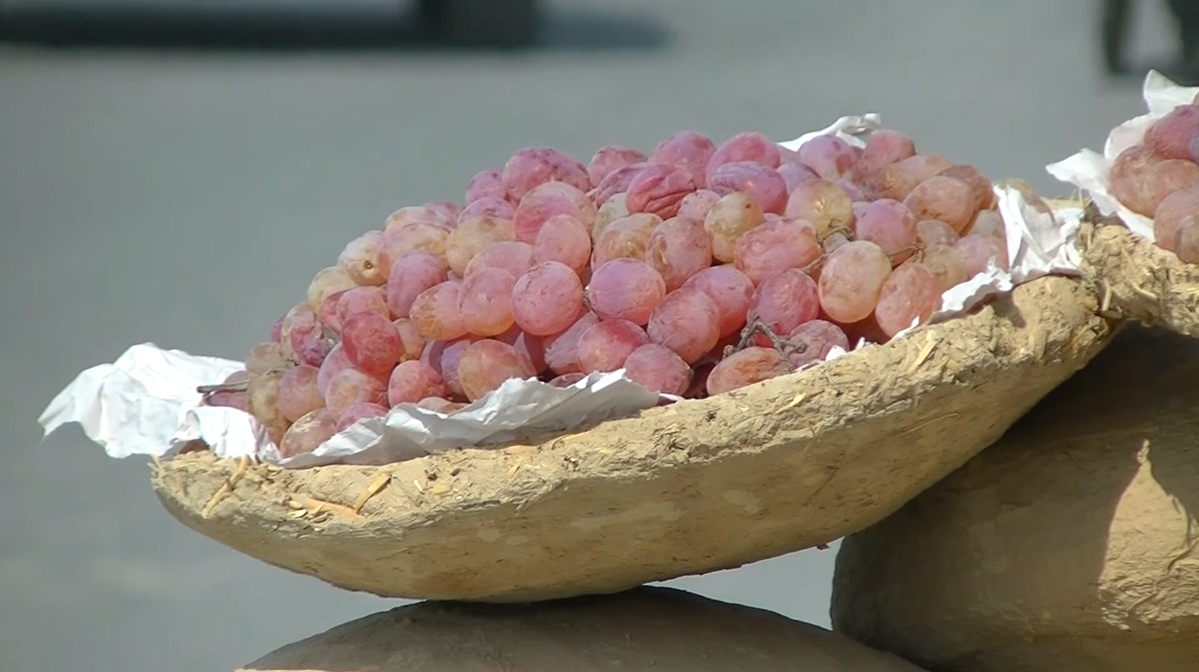
Kangina are traditional, ecological, and effective northern Afghani mud-straw containers for keeping fresh fruit good longer. They work best with a particular type of grapes with thick skins and a late harvest.

Wikipedia Voice of America Kangina

Freshly formed bowls are first baked in the sun for a few hours. The fruit is then placed inside, another bowl is placed on top, and the join sealed with more mud.

Atlas Obscura Stefanie Glinski Kangina Pile

The kangina are then stored in a cool, dry place for up to five or six months. To open, you gently crack the kangina halves apart. (Seen, for example, in this Voice of America video.)

Definitely not quick or low-effort, but still an impressive way to preserve fruit and introduce variety into your winter diet, isn’t it? Perhaps not the best containers for a party of intrepid D&D adventurers to carry with them, either, but certainly an inspired method of storing food they could run into while resting between quests.

Images: Grapes in a kangina by Voice of America via Wikipedia. A storage pile of kanginas by Stefanie Glinski via Atlas Obscura.

Repurposing Old Wind Turbine Blades as Bike Shelters

Apparently, for a good long while, retired wind turbine blades were difficult to deal with. (Sounds like recyclable blades have since been created.) They were made of materials that can’t easily be recycled and are bulky to just dump.

Repurposing used blades has been an obvious solution. But as what? Among others, they’ve been turned into utility poles, playground equipment, bridge girders, and park benches, for example. In addition, in Aalborg, Denmark, sections of old, disused wind turbine blades have been set up as bike shelters.

WEF Siemens Gamesa Turbine Bike Shelter

This is an older project by now, but I thought it clever and worth noting. Also, it’s cool how the shape of the repurposed section nods just a tiny bit towards the Art Nouveau spirit.

Image by Siemens Gamesa, found via World Economic Forum

The Fascinating Art of Fridgescaping

Have you heard of fridgescaping? The phenomenon apparently started on TikTok, and in a nutshell comes from “landscaping” your fridge.

Sounds like some people got into it during the covid lockdowns. There are various approaches to decorating the inside of your refrigerator, and ways to organize are, of course, as varied as the creators.

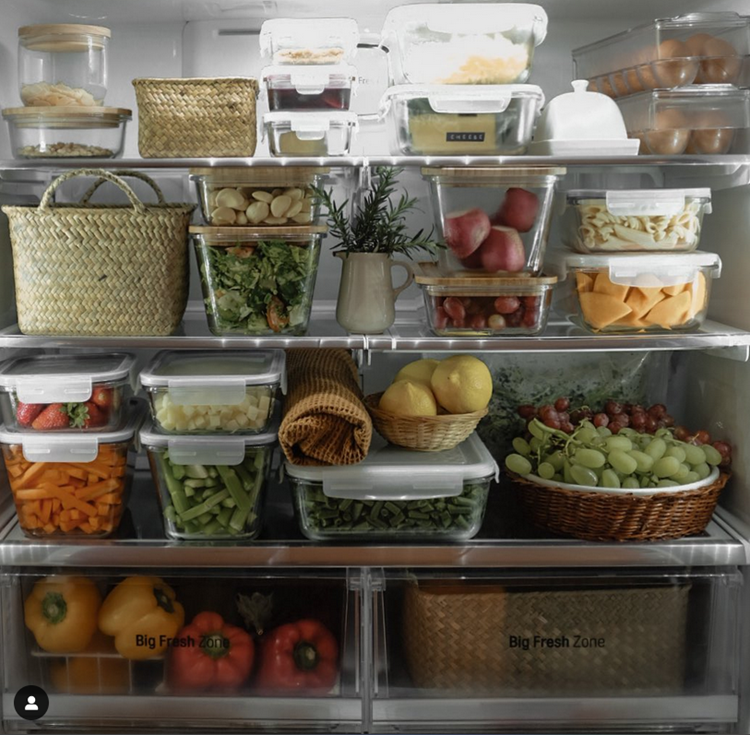
Some are more pragmatic, others kinda outlandish. There is practical with pastels, like Samantha Klein (samswhurld) prefers

Instagram Samantha Klein Freshly Cleaned

…or rustic and earthy, as for instance the styling by Amira Youssef (dusk2illdawn):

Instagram Amira Youssef Fridge Organization

Others favor bright and colorful arrangements, like Tânia Lourenço (homganize):

Instagram Tania Lourenco Greens Yellows

All of the above are still mainstream. Lynzi Judish (lynziliving) takes fridgescaping to another level. Hers designs are very pretty, lushly styled, and themed. There is, for instance, a Beetlejuice

Instagram Lynzi Judish Beetlejuice

…and a Hobbit project:

Instagram Lynzi Judish Hobbit

If you prefer, you can see Judish’s Hobbit fridgescape as a video. She’s also posted photos of a fall-themed project (with a cute squirrel mug) and a Bridgerton fridgescape. (Ha! There’s a hastag #fridgerton! 😀 )

The themed fridges are, I admit, kinda fun.

However: I have A LOT of questions! I’m not on Instagram or TikTok, and plan not to begin just to do a bit of research. But, like—

  • I see a lot of snack-type produce. Where do the fridgescapers store their actual food? Food food, the cooked food? (Surely they do cook warm meals…?) Or leftovers?
  • Are the containers food safe? Please tell me they all are!
  • Are they ruining the books or photos or decorative boxes placed in the fridge?
  • Why does everything need to be decanted? (Yes, I know why—it’s the look. However, all those themed empty containers are just more clutter to store elsewhere and more $$$ down the drain.)
  • How do they keep re-arranging their fridges without wasting an inordinate amount of energy?

Also: While I do enjoy a (thoughtfully) decorated space, for me, function has to come first. It absolutely must; I cannot live otherwise. I have to have a home that works; if it looks good, too, that’s great! But I must be able to use things I need when I need them, not after five minutes of digging or setup. (Which is also why I must have a dedicated sewing room with the machine on a table, ready to go at a moment’s notice.) If a space or area isn’t useable, it’s a source of frustration for me, which isn’t worth it, especially not for everyday functions like the fridge.

(Apparently, the scaping fad is spreading: there is now also talk about pantryscaping, deskscaping, and doorscaping. Good grief—it feels almost like another (insert-your-term-here)core is on the loose!)

Verdict: there’s something appealing in the idea, but ultimately it’s not for me. You should do you, though. 🙂

Images: Freshly cleaned & stocked by Samantha Klein on Instagram. Fridge organization by Amira Youssef on Instagram. Greens and yellows by Tânia Lourenço on Instagram. Beetlejuice and Hobbit by Lynzi Judish on Instagram.

Tiny Baskets out of Local Materials

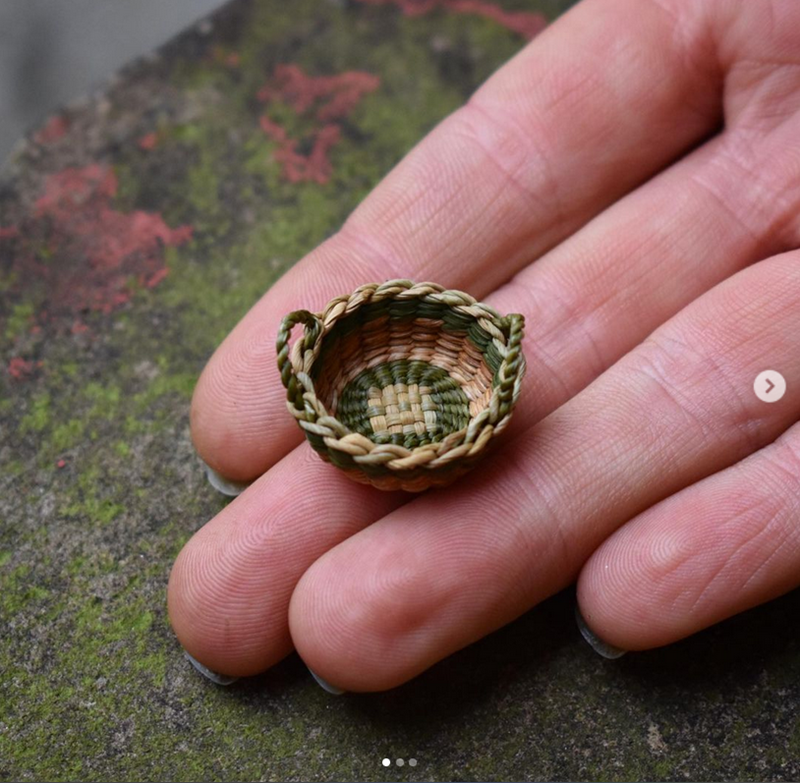
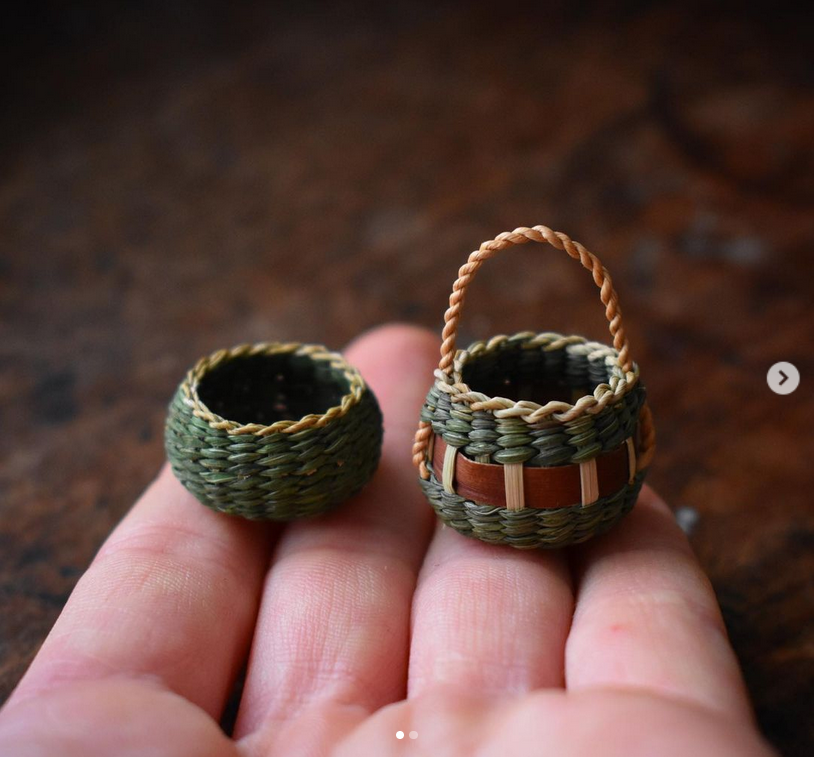
Artist Suzie Grieve harvests materials from the local woodlands and fields in the Lake District, U.K., with a focus on the weeds and invasive species, and weaves baskets out of the fibers. And they are very neat and beautiful:

Instagram Suzie Grieve Miniatures

The twist? Some of her baskets are not just neat and beautiful, and they’re not just small, they’re tiny. T I N Y!

Instagram Suzie Grieve Tiny leafy basket
Instagram Suzie Grieve Two Tiny Baskets

Even if these baskets were of a more typical size, they would be impressive: the careful selection of materials to create stripes from naturally different colors, the planning and placement of patterns to create a pleasing whole, and the high quality of the work.

Then you shrink everything down to mere millimeters and centimeters, and the challenge grows larger. MUCH larger! I’ve done enough small-scale sewing to comprehend some of the challenges involved when scaling down the size of a project.

This is seriously impressive work requiring skill, imagination, and dedication. Kudos!

Found via Colossal.

Images by Suzie Grieve on Instagram: Miniatures. Tiny leafy basket. Two baskets.

Visual Inspiration: Living Root Bridges

Living root bridges are an ingenious type of suspension bridge shaped from plant roots. They are common in the southern part of the Indian state of Meghalaya (in the northeast of the country), home for some of the wettest locations on Earth.

Flickr Roman Korzh Double Decker

The Khasi and Jaintia communities who inhabit the region needed a low-cost way to cross the valleys and gorges in the rainforest during monsoon season. Living root bridges are sturdy and easy to build—albeit time-consuming—and apparently they withstand flash flooding and storm surges quite well.

Flickr Ashwin Kumar Double Decker Living Root Bridge

The building process is described by Zinara Rathnayake for BBC Future as follows:

“Building these bridges takes decades of work. It begins with planting a sapling of Ficus elastica – a tree that grows abundantly in the subtropical terrain of Meghalaya – in a good crossing place along the riverbank. First the trees develop large buttressing roots and then, after about a decade, the maturing trees sprout secondary aerial roots from further up. These aerial roots have a degree of elasticity, and tend to join and grow together to form stable structures.

“In a method perfected over centuries, the Khasi bridge builders weave aerial roots onto a bamboo or another wooden scaffolding, wheedle them across the river and finally implant them on the opposite bank. Over time, the roots shorten, thicken and produce offshoots called daughter roots, which are also trained over the river. The builders intertwine these roots with one another or with branches and trunks of the same or another fig tree. They merge by a process called anastomosis – where branching systems like leaf vessels, tendrils and aerial roots naturally fuse together – and weave into a dense frame-like structure. Sometimes, the Khasi builders use stones to cover the gaps in root structures. This network of roots matures over time to bear loads; some bridges can hold up to 50 people at once.”

Flickr Roman Korzh Living Root Bridge

Despite not having the capacity of bridges built entirely from man-made materials, the capabilities of living root bridges are nothing to sneeze at in the kinds of difficult terrains they’re used for. For example, the longest living root bridge is the Rangthylliang bridge at 50+ meters long. That kind of length makes for plenty of potential for similar live-plant-based bridges in speculative gaming campaigns or stories, from ad hoc methods of river crossing for an army or a group of refugees (with the help of plant-growth spells) to permanent structures for local communities.

Living bridges can also last for many hundreds of years in ideal conditions. Even if the oldest currently existing bridges were “merely” from the 1800s, it’s clear that that kind of longevity wouldn’t be possible without community building and traditions passed on and cherished. I.e., the structures solve a concrete problem in a way that both suits and takes advantage of local conditions. We humans tend to be smart like that. 🙂

Images: Double decker by roman korzh via Flickr (CC BY-NC-ND 2.0). Second double decker by Ashwin Kumar via Flickr (CC BY-SA 2.0). Closeup of stone walkway by roman korzh via Flickr (CC BY-NC-ND 2.0).

Ancient Greek Clay Cooker for Multiple Dishes

Look at this amazing ancient multi-tier clay cooker:

Imgur TheRainbowegoSweet007 Delos Cooker

There seems to be frustratingly little information available online. I haven’t been been able to track down full details for this apparatus, but some sources call it an anthrakia. Considering that anthrakia means ‘a heap of burning coals’ it sounds at least plausible (but as I said I don’t know). Apparently it’s from 500 BCE or so (although one source says 2nd c. BCE), and was found on the island of Delos, Greece.

Delos was one of the most sacred places of ancient Greece—claimed to be the birthplace of Artemis and Apollo—and a busy trade center for centuries if not millenia. It looks like the only images of this cooker come from the Archaeological Museum of Delos. No-one seems to have posted the associated text, though, so I still don’t know quite as much as I’d like.

Such an ingenious arrangement, though, isn’t it? The oven has space for a hand-held grill and an area at the front for raking coals into (I assume). Above the oven, there is an opening to rest a frying pan on. As if that’s not enough, above that to the back of the cooker there are tube-like stands for three cooking pots, through which the pots also have access to heat from the oven. You could have five dishes cooking at the same time. And it looks like the cooker is also portable.

It’s impressive both from the point of view of functionality and design—the oven-stove-grill combo seems to have been made as one piece. (Or possibly two pieces, if the pedestal that looks like an upside-down plant pot was made separately.)

Not bad for a 2,000+ year-old kitchen gadget, right? I can almost hear the sizzling of frying food.

With that, I’ll wish our readers in the U.S. a Happy Thanksgiving! 🙂

Image via TheRainbowegoSweet007 on Imgur

Visual Inspiration: Late Babylonian Clay Map

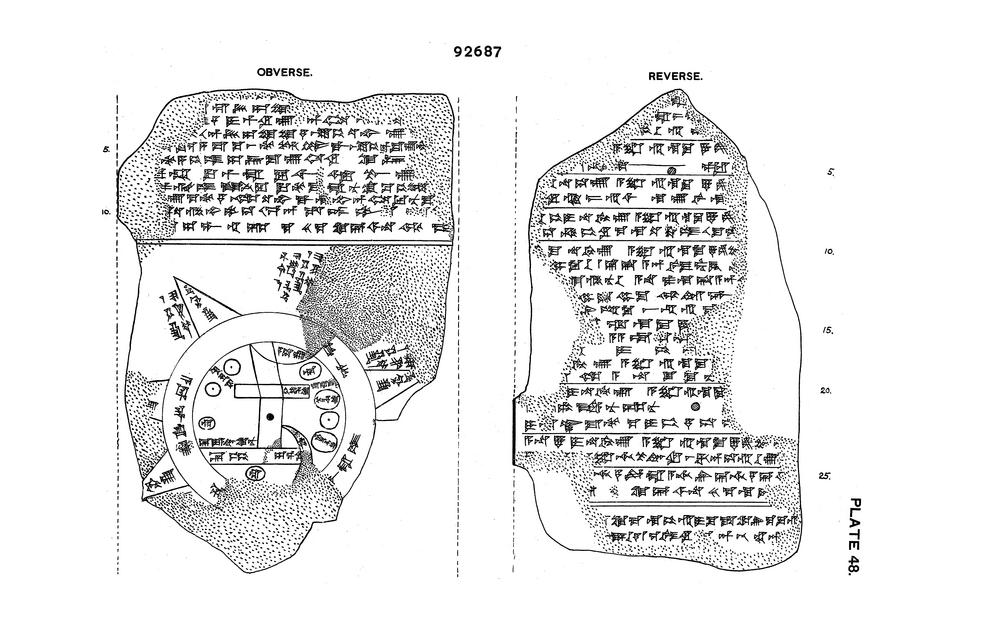
Recently I ran into this Late Babylonian map of the world on a clay tablet from the British Museum:

BM Late Babylonian World Map
The Map of the World, Late Babylonian (found Abu Habba (Sippar), currently British Museum; c. 6th c. BCE; clay)

The map shows the world as a disc surrounded by the circular “Bitter River”. Babylon is marked as a rectangle, the river Euphrates flows south in the middle, and small circles show cities or districts.

The curator’s comment in the BM catalog says that according to the tablet it was copied from an earlier one. Clearly there was an established practice by 6th c. BCE—this object is quite recent in Mesopotamian terms, after all.

Obviously, the map was meant to be more conceptual than realistic. However, there are many notes (and even some time / linear measurements) which make it more usable. (Please visit BM and read the item description; it’s quite fascinating.)

BM Late Babylonian World Map Drawn Plate
The Map of the World, Late Babylonian (found Abu Habba (Sippar), currently British Museum; c. 6th c. BCE; drawing of clay tablet)

What an intriguing map, isn’t it?

As the fragment is approximately 12 by 8 cm (approx. 3″ x 5″), it’s believable that it could’ve easily been transported if desired. Which makes it quite plausible that intrepid adventurers in a story or role-playing campaign in a similar setting could carry around maps made in the same style. There could quite well be professional mapmakers and a developed cartography for your world, even if writing doesn’t happen on sheets of paper as we know it.

Images: The Trustees of the British Museum (CC BY-NC-SA 4.0)

Light Academia: Love of Optimism, Joy, and Happy Endings

I posted about dark academia about a year ago when I learned of the phenomenon. Time for a sibling post of sorts: since then, I’ve discovered the style light academia.

According to Aesthetics Wiki, light academia favors positive themes in general, “focusing on optimism, sensitivity, joy, gratitude, friendship, motivation, and happy endings.” (Naturally still associated with the love of learning.)

Etsy HeatDigitalClub Watercolor Light Academia Clipart Bundle Sm

Apparently, the term was coined on Tumblr already in 2019. (Man, I must’ve been hanging around the wrong side of Tumblr not to have heard about it then!) Also, apparently cottagecore can overlap with light academia, as can a romanticized view of coffee shops as places for people-watching and studying.

Sounds like neutrals, earthy colors, white, gold, and pastels are especially favored. One article lists movies and shows with light academia aesthetics, including classics like Little Women, but also newer productions like Bridgerton, the 2005 version of Pride & Prejudice or the 2022 Netflix adaptation of Persuasion. There are, of course, playlists and recommended activities or crafts. Some people even sell light academia mystery boxes on online platforms! I’ve found out that there are also other, established flavors I hadn’t heard of before: green academia and chaotic academia.

(Good grief, I feel officially old! At least there doesn’t seem to be any academia cores.)

While I love reading, knowledge, and learning, I confess I’m a little perplexed by this dissecting of various aspects of campus / university life into separate aesthetics. (Not to even mention the fact that Finnish universities by and large look quite different from these Anglo-American-style ones.) But I guess that’s what we humans do—we create endless groupings out of the same elements.

Image: light academia watercolor clipart by Anna Zhar at HeatDigitalClub on Etsy

World’s First eVTOL Taxi Is Now on the Market

According to Reuters, Chinese drone maker E Hang Holdings has started selling an eVTOL taxi on Taobao, a Chinese online shopping platform. EHang was certified for traffic by China’s aviation authority in October 2023.

EHang 216-S Airborne

The model, EH216-S, is an unmanned vehicle with 16 rotors and capacity for two passengers. Its maximum speed is 130 kilometres per hour and range 30 kilometres. It retails for about €300,000 (depending on exchange rates).

At first glance, around 300,000 euros sounds quite steep. Then again, in the U.S. market at least, pickup trucks can go for almost $100,000. That’s not even mentioning exotic cars, sports cars, and other specialized vehicles.

The bottleneck at the moment surely is the combo of safety regulations and pragmatics (the lack of infra). It seems that charging points for electric vechicles are being built so slowly, I cannot imagine what it would take to try and fit the maintenance facilities and parking spaces for flying cars, let alone flying electric cars, into our cities in a larger scale. Plus, what it would take to figure out how, in practice, they would fit into existing traffic patterns. It looks, though, that we might have to resolve those questions sooner than I thought.

Image by EHang