Someone Liked Our Rohan Recipes

Well, how about that!

We just discovered that our recipes for the Riders of Rohan were referenced in a piece of Middle Earth fanfiction over on Archive of Our Own. The story is called “she had a spirit and courage at least the match of yours” by shOokspeared, and it’s a lovely little slice-of-life tale following Éowyn on a visit to the Shire in the days of peace after the War of the Ring. In a letter home to her husband Faramir, Éowyn mentions enjoying the familiar tastes of braised beef and saffron and cream pancakes for lunch with her Hobbit friends one day.

We’re astonished and delighted to see that our work is still interesting and useful to others!

One (or More) Rings to Rule Them All

For an artifact as iconic as the One Ring from Tolkien’s Lord of the Rings, it’s not surprising that people have come up with some creative versions of their own. Here are a few interesting ones that could be yours if you want!

If you want a classic ring that you can wear on your finger or as a pendant, TimJewelerCo makes them, both in gold and in silver. As a bonus feature, the Elvish writing on the band glows in the dark!

Glow in the Dark Elvish Ring Necklace by TimJewelerCo via Etsy

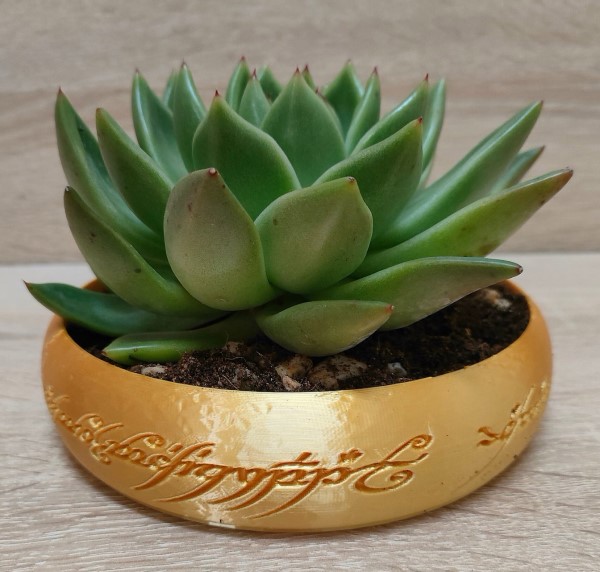
For a different take on what you can do with a ring, 3DMadeGifts makes a scaled-up version as a shallow planter. Now your potted succulents can enjoy the power of everlasting evil.

Gold Ring of Power One Ring Succulent Planter by 3dMadeGifts via Etsy

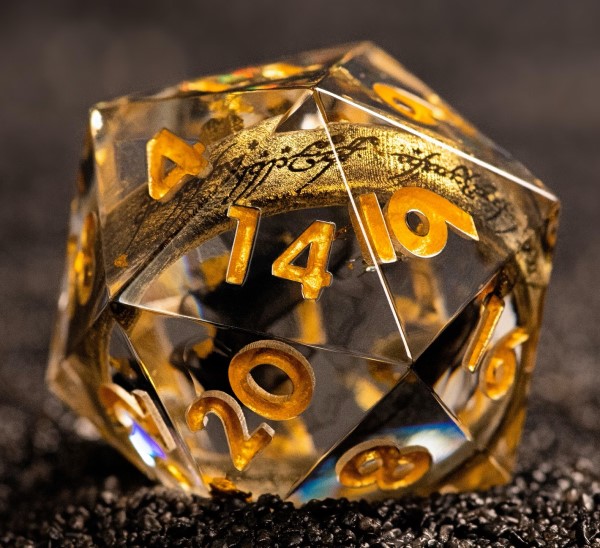
Or roll for initiative with this ring-themed dice set from DracaenaDraco. One die to roll them all!

Lord of the Rings Dice Set by DracaenaDraco via Etsy

All these products are available on Etsy, if you want to get a good head start on holiday shopping.

A New Translation to Honor the 50th Anniversary of Tolkien’s Passing

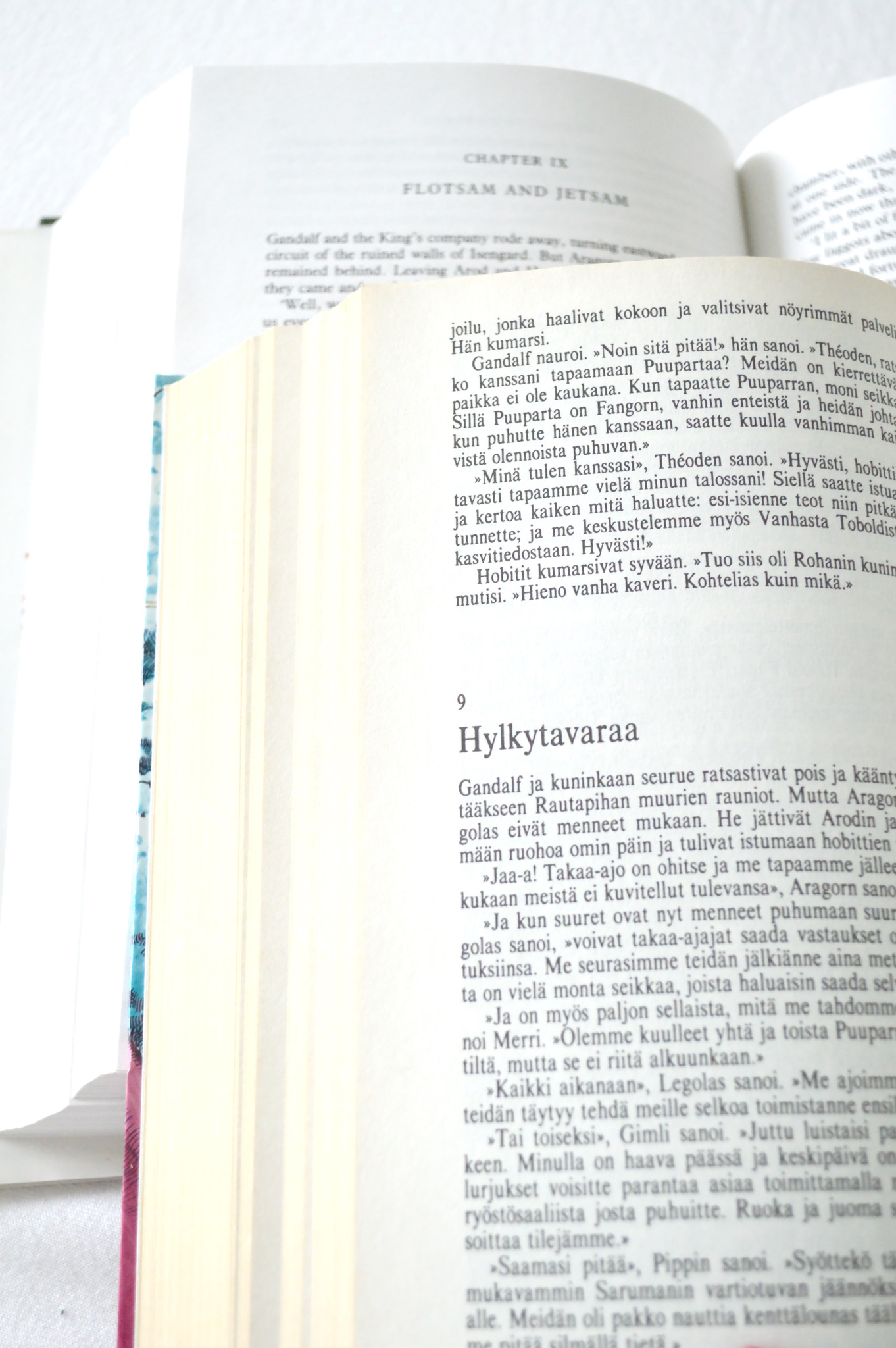
J.R.R. Tolkien died on September 02, 1973, exactly 50 years ago this Saturday. Also 50 years ago this year saw the publication of The Fellowship of the Ring in a Finnish translation. In celebration, a new, improved Finnish translation of the whole trilogy will be published this September.

Often a translation, especially of a fictional work, seems less good—less satisfying, skillful, expressive, vivid, what have you—as the original.

In my experience, however, there is one exception—and perhaps you guess the connection? The Finnish translation of The Lord of the Rings trilogy.

Issuu Screencap WSOY TSH tarkistettu suom lukunayte kansi

The prose for Taru sormusten herrasta is by Kersti Juva and Eila Pennanen; the poems were translated by Panu Pekkanen. It was Juva’s first job as translator. In fact, Juva did most of the work while Pennanen supervised the first two books, and Juva got solo credit for the prose in The Return of the King.

The translation is wondrous. Somehow in the Finnish version, the Hobbits seem more homey, the Dwarves more earthy, and Elves more ethereal than in the original. The desolate areas feel more despondent, and darkness deeper. I’d also say that Pekkanen’s poetry translations wipe the floor with Professor Tolkien’s—having first read the Finnish, I was, frankly, disappointed in the English-language poems in the LotR.

I’m sure some of my appreciation of Taru sormusten herrasta comes down to nostalgia and sense of wonder—I first read the trilogy when I was in my early teens, an impressionable age if there ever was one. Some of it, I’m also sure, comes down to reading my native language.

These days, however, after decade+ of higher ed in and on the language plus daily use with a fellow language nerd, my English is quite as good as my Finnish. I can and do recognize the skill in Tolkien’s writing, plus many of the references and nuances, including some of the Old English. (Though not being a mainstream literature person, I’m sure I also miss other connections—my degree in English is primarily in the language, not lit.)

I’ve been reading in foreign-for-me languages for about 35 years now. Most of my non-native-language reading has been in English, either as original or translations. Some has been in Swedish, German, or Estonian, all translations of works I’ve previously read in the original language. While I can’t boast university education in the field of translating, I’d call myself an educated hobbyist. And as such, I can see the quality of Juva’s work. Erik and I have even read the first 400 pages or so of Fellowship out loud to each other, first a sentence in English and followed by the same passage in Finnish. You really do see Juva and Pekkanen’s skill in the text.

LotR and TSH Side by Side

This new, improved version of Taru sormusten herrasta is also by Kersti Juva. In interviews she’s said the focus of the new version is to polish the language and to weed out the uncertainties a newly-minted translator (herself) wasn’t yet able to see her way past.

Sounds ever so good to me! In fact, I already have a preorder in. 🙂 Also, the celebratory edition looks to be a gorgeous, gorgeous book, with the famous LotR illustrations by Tolkien himself.

Image: screencap from a sample of the newly revised Finnish translation of The Lord of the Rings trilogy by WSOY via Issuu. LotR and TSH side by side by Eppu Jensen.

Tolkien Reading for Tolkien Reading Day

Saturday of this week, March 25th, is Tolkien Reading Day, and what better way to celebrate than with Tolkien himself reading one of his favorite passages from The Lord of the Rings?

Before The Lord of the Rings had a publisher, Tolkien was visiting a friend who had a tape recorder and encouraged him to record himself reading a selection from his work. Tolkien chose to read one of the most powerful moments from the novel, the charge of the Rohirrim against the Orcs of Mordor at Minas Tirith. Here that recording plays over the same scene from Peter Jackson’s movie version of The Return of the King, for extra powerful effect.

Tolkien narrates the Ride of the Rohirrim by Sîdh Aníron on YouTube

This moment is one of my favorite pieces from both the novel and the film. What a rare treat to hear it in Tolkien’s own voice!

Story Time is all about story-telling and how stories work, and what makes us love our favorites.

DIY of Eowyn’s Camp Dress

What a fantastic DIY cosplay of Eowyn’s camp dress from Peter Jackson’s Lord of the Rings movies this is:

Cation Designs Cindy Eowyns Camp Dress Cosplay

Made and worn by Cindy at Cation Designs, photo by @captured.by.shirelle. You can read more about the construction process at Cindy’s blog.

One of the really creative solutions she came up with is to inexpensively bone the corselet with zip ties. Much easier to get than corset bones! Another trick Cindy uses is to buy solid-color cotton sateen sheets in good condition from the thrift store to use as costuming material. (I’d add thrift store curtains, but in those there’s much more variability of both quality of material and fiber content, so they might require more time to go through to find anything worthwhile. Then again, if you do find good panels, often there’s quite a bit of fabric.)

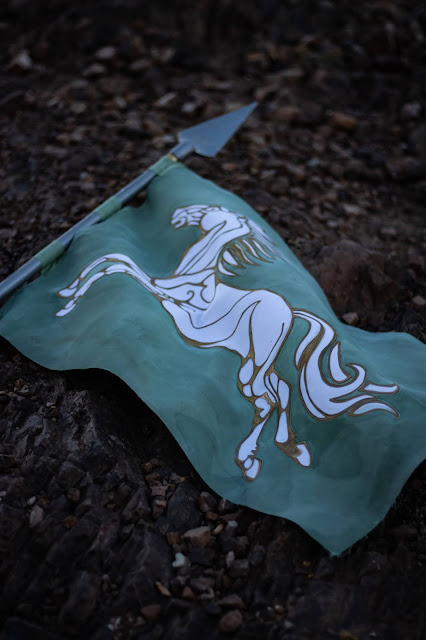
Cindy also made the flag herself from a pillowcase using acrylic paint and gold pens. It’s as staggeringly handsome as the costume. Here’s a closeup:

Cation Designs Cindy Rohan Flag

The spear is made from foam, duct tape, and a wooden dowel, and looks as fantastic as the rest of the outfit. Kudos all round!

Images: Eowyn cosplay at rocky landscape by @captured.by.shirelle via Cation Designs. Rohan banner by Cindy at Cation Designs.

How It Happens is an occasional feature looking at the inner workings of various creative efforts.

Mashup of Themes from Avengers and The Lord of the Rings

Perfection can be improved on occasion. Bearing witness is this inventive mashup of various themes from The Lord of the Rings by Howard Shore and the Marvel Cinematic Universe’s Avengers by Alan Silvestri:

The Lord of The Rings X Avengers EPIC ORCHESTRAL MASHUP by Samuel Kim Music on YouTube

The mashup was arranged and orchestrated by Samuel Kim. I don’t have enough formal musical education to tell you why it works—both movie scores certainly are epic enough—I just know it does. 🙂 Kudos!

An occasional feature on music and sound-related notions.

Living Vicariously Through Social Media: Inspiration for Moria Doors

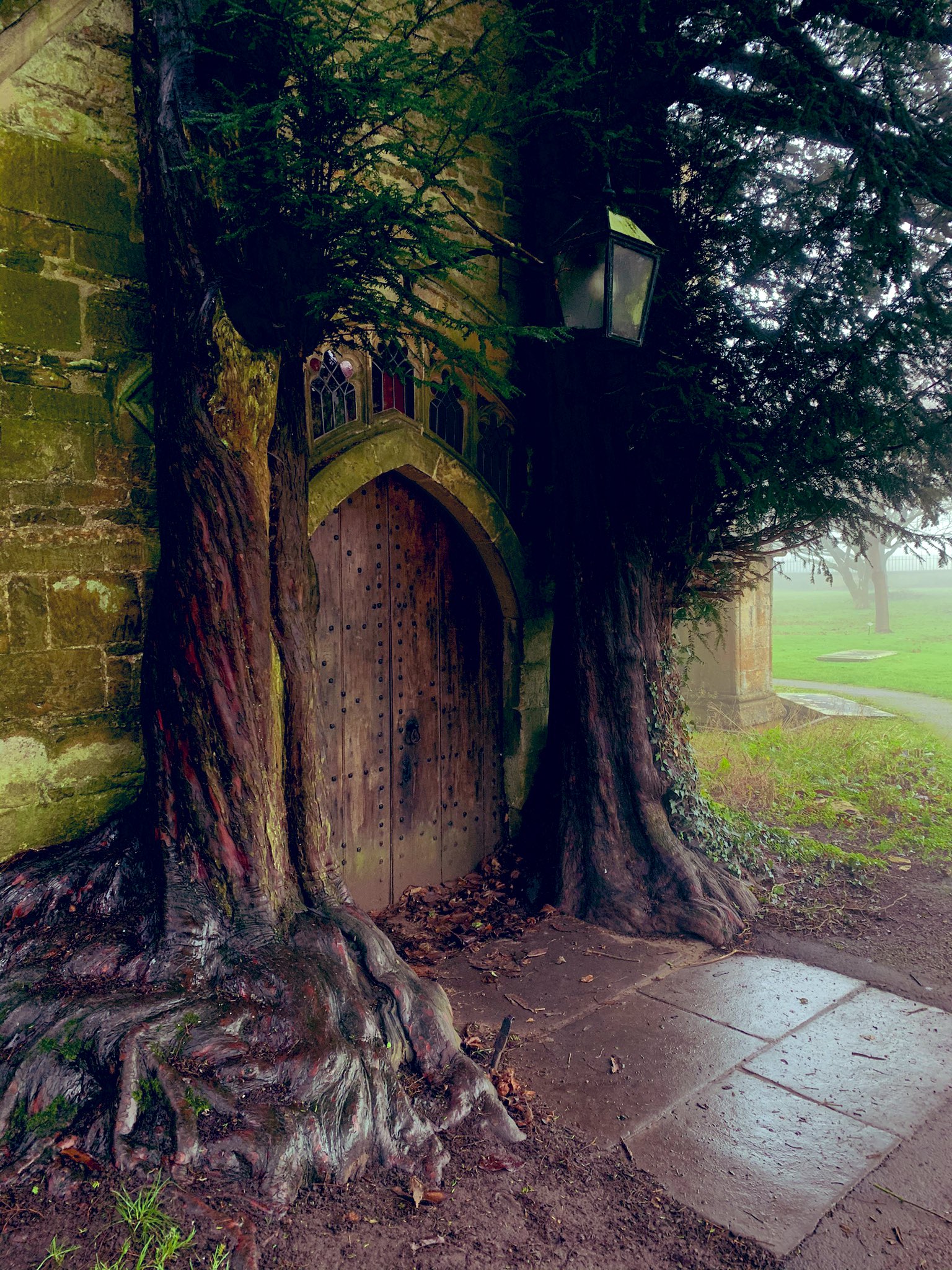
Sophie Berry on Twitter shared this amazing photo of a church door flanked by two trees that have basically grown into the wall:

Twitter Sophie Berry St Edwards Stow-in-the-Wold Back Door

Apparently it’s thought to be the inspiration for the doors of Moria in Tolkien’s Lord of the Rings. No surprise there. How incredible!

Image via Sophie Berry on Twitter.

Out There is an occasional feature highlighting intriguing art, spaces, places, phenomena, flora, and fauna.

Custom Bookcases with Carvings for a LotR Collection

Now this is a treasure, preciouss! A Finland-based company built these amazing custom bookcases for a collection of figurines and other materials from the Lord of the Rings and The Hobbit.

FB Puustikki LotR Bookcases

Many (if not all?) of the bookcases also have carved crowns. Here’s the Rohan one:

FB Puustikki LotR Bookcases Rohan

There are also metal shields that function as handles:

FB Puustikki LotR Bookcases Dragon

Puustikki talk about their project a bit on Facebook:

“Finally we’re able to publish photos of these custom made, epic showcases for LOTR and Hobbit figurine collection. Probably the biggest collection in Finland and now it’s also displayed in showcases it deserves! This whole thing is 100% handmade out of solid oak and we wanted to use glass doors to maximize visibility into the cases. Each one of the showcases has distinct features to corresponding races/nations; carvings on the top and a custom made steel handle.

“Height of these wooden marvels is 250cm, so they barely fit into a regular house! [sic]”


Puustikki is run by carpenter Jarkko Pilvinen and jeweler Juho Manninen. The makers pull their inspiration from history and historical fantasy. At this writing, their online store includes drinking horns, a picnic table and benches, beds, dragon pegboards, runed coasters, and jewelry, among others.

My goodness! Astounding, aren’t they? Stylistically, a lot of their other wares are not our style at all, but as a maker myself, I really admire and appreciate the consideration and effort that went into all of their designs.

Check out the Puustikki website or Instagram for more.

Images by Jukka Alasaari Photography via Puustikki on Facebook

In Making Stuff occasional feature, we share fun arts and crafts done by us and our fellow geeks and nerds.

Tolkien, Fantasy, and Race

Wizards of the Coast recently announced that they will be changing how the Dungeons & Dragons role-playing game system handles race. These changes include, among others, reimagining the traditionally evil Drow and Orcs as complex and nuanced cultures, revising how a player’s choice of race affects their character’s stats, and removing racially insensitive text from reissues of old content. You can read the company’s statement about these changes here.

Some of these changes are more obviously necessary than others. It’s not hard for most of us to see how having a race of dark-skinned Elves who are almost universally evil in your game is a poor design choice that needs to be rectified, but it’s less obvious to a lot of people why the game should be changed so that your Elf isn’t necessarily clever and dexterous or your Dwarf stout and tough. To understand why rules like these are problematic, it helps to look at how ideas about portraying non-human beings in fantasy have been shaped. Fantasy is as complex and varied as any other genre of literature and no single person is responsible for the development of its tropes and principles, but when we think about race in fantasy, there is one crucial place to start: Tolkien.

Tolkien’s Middle Earth legendarium profoundly shaped fantasy literature in the twentieth century and the other media drawing from it, such as role-playing games like Dungeons & Dragons. Tolkien’s versions of Elves and Dwarves, as well as his invention of Hobbits (made lawyer-friendly as “Halflings”), formed the basis for D&D’s early options for players who wanted an alternative to humans. Much of the popular fantasy archetypes for what non-human races are like (ethereal, wise, bow-wielding Elves; stubborn, pugnacious, axe-hefting Dwarves) were either created or codified by Tolkien.

Tolkien’s relationship to race is complicated. On one hand, he was vocally opposed to the antisemitism common in his time and to the Nazis’ attempts to claim his beloved Germanic mythology as a prop to their racist regime. His Middle Earth tales can be read as a counter-argument to white supremacist ideology, as the “lesser” folk of Middle Earth, like the Hobbits and the Wild Men, prove more resistant to the lies of evil than the “higher” races of Men. At the same time, there is no denying that Tolkien’s fiction is suffused with familiar racial assumptions, filled with white characters and portraying dark-skinned people only as strange or threatening others.

But it is Tolkien’s work as a scholar that is most important for understanding his effect on the depiction of race in fantasy. Tolkien’s academic training as an Oxford student in the early twentieth century was grounded in the traditions of the nineteenth century, which defined nations as coherent, natural entities existing across time and marked by inherent characteristics. This academic worldview was linked to the Romantic and nationalist movements at work in Europe in that century, as well as the ongoing imperialist projects of Britain, France, and other nations of Europe. At its core was the belief that culture and biology are equivalent, that people have fundamental national traits inherited from their ancestors which define their culture, character, even moral worth.

Every academic discipline concerned with the human past was engaged in some way with this project. Historians traced the ancestry of their own and other peoples as far back as written sources would allow, at which point archaeologists stepped in to carry the line further back. Scholars of literature and art looked to both nationally famous artists and rural folk traditions to delineate the defining characteristics of a culture. Scholars in different nations concocted their own versions of national culture and interpreted both ancient and recent history in terms of discreet nations wrangling with one another: while English writers explained their early history as the victory of the serious, diligent Anglo-Saxon over the moody, whimsical Celt, French historians conceived of the French Revolution as a primordial Gallic peasantry overthrowing the Germanic overlords who had dominated them since the fifth century CE. Even forgeries and hoaxes followed the same principle, like the collection of Gaelic poetry attributed to the bard Ossian or the fake primordial Englishman buried with a battered cricket bat at Piltdown. While the work of such historians, folklorists, artists, pranksters and others was in itself fairly benign, it was part of a larger politics that justified the exploitation and oppression of some ethnic groups for the benefit of others based on specious claims about national characters and destinies.

Tolkien’s subject, philology, was no exception. Scholars believed that language could be a key to those parts of the past that neither history nor archaeology could reach, perhaps even the most important parts, for what can be more fundamental to our identity than the words we use to describe our world? Linguistic research, starting in the eighteenth century with the realization that the ancient Indian language Sanskrit came from the same source as Greek and Latin, had demonstrated that it was possible to discover regular principles that governed shifts in sound as languages evolved and split into new languages. Applying these principles to the earliest documented fragments of existing languages made it possible to reconstruct, with a high degree of certainty, elements of vocabulary and grammar belonging to languages that had never been written down.

Tolkien, and other philologists of his generation, believed that it was possible to go a step further and apply the same principles to myths, legends, even history. Working backwards from the earliest recorded elements of a culture—its oldest literature and art, archaeological remains, and whatever fragments of ancient knowledge survived in folk tradition—they hoped to reconstruct the primordial beliefs, practices, and character of that culture. Tolkien carried this same spirit into his literary work and with his Middle Earth stories tried to reimagine a history that might have lain behind the scattered remnants of Germanic mythology that come down to us through English, Norse, German, and Icelandic sources.

The result of this labor was a fictional world that incorporates numerous traces of ancient tradition—Smaug, from The Hobbit, has shades of Fafnir from the Volsunga Saga, while the arrival of Aragorn, Gimli, Legolas, and Gandalf at Edoras in The Lord of the Rings recreates the Geatish heroes’ arrival at Heorot in Beowulf—but put together in a distinctly nineteenth-century way. The various races of Men in Tolkien’s work reflect contemporary belief in inherent national cultures to the extent that the Dunedain of the north retained their culture for many long generations cut off from Gondor in the south. Other peoples of Tolkien’s world are culturally defined by their ancestry, stretching over thousands of years.

Tolkien’s Elves and Dwarves are a similar combination of ancient Nordic lore and nineteenth-century nationalistic culture-construction. Tolkien took stories about Elves and Dwarves from different times, cultures, and genres, extracted the elements he believed were characteristic, and fused them together to create the kind of singular, coherent cultures that scholars of his day believed could be found among real peoples. The idea of Elves as archers comes from a Scottish tradition of referring to prehistoric arrow points as “Elf-shot.” The intermarriage of Elves and humans comes from Icelandic sagas. The bewildering power of an encounter with Elves derives from medieval German folklore. Tolkien believed that these various fragments were the remains of what had once been a clear, consistent belief in Elves as beings with defined characteristics, much as words in Sanskrit, Greek, and Old Norse were the remains of an older language, and that by putting them together he could reconstruct the nature of Elves in same way philologists reconstructed lost languages. The same applies to Tolkien’s Dwarves.

Tolkien’s assumptions about lost cultural knowledge only make sense in the context of the scholarship he worked in. Modern research has found that the image of Elves in northern European mythology is widely varied. Writers in different times and cultures had vastly different ideas about what Elves were, ranging from benevolent ancestor spirits to malicious swamp creatures that would steal your baby and eat it. There is no evidence that the original Elf Tolkien thought he could reconstruct was ever anything but a mirage. Indeed, it is not just that Elves did not have consistent characteristics in northern mythology, early northern writers don’t even seem to have viewed “Elf” as a stable category that could be defined. Many texts use the term fluidly for many different sorts of supernatural creature, overlapping with Dwarves, demons, angels, and others in ways that do not allow for any clear definition.

It is primarily to Tolkien that we owe the idea, not just that Elves, Dwarves, and other fantastical creatures have consistent characteristics, but that they exist as discreet groups that can be defined. This conception of fantasy folks is a product of a particular cultural and scholarly worldview, one that is increasingly out of date. Aloof archer Elves and beefy brawling Dwarves running around your game world may seem perfectly harmless, but the archetypes that define these as the standard types of Elves and Dwarves are rooted in a history of imperialism and racism.

It is time to leave behind this artifact of the nineteenth century and embrace a world in which Dwarves can be slender bookworms and Elves can be boisterous bruisers, or anything else you want them to be.

Post edited for grammar

Image: Elf and Dwarf cosplay, photograph by Tomasz Stasiuk via Flickr (CC BY-SA 2.0)

History for Writers looks at how history can be a fiction writer’s most useful tool. From worldbuilding to dialogue, history helps you write.

A Minas Tirith Wedding Cake

One reason I love my fellow geeks and nerds so much is the dedication we put into things we care about. Exhibit number 18,452: a Minas Tirith wedding cake.

Flickr Jenny Wenny Minas Tirith Wedding Cake at Enchanted Forest

Photographer Jenny Wenny gives only this detail about it: “Minas Tirith wedding cake at the Enchanted Forest”; sadly no other information is available at all.

Isn’t it astounding, though? So incredibly detailed I wouldn’t want to touch it! And even though it’s a few levels short of its literary model, the adaptation works for its intended purpose perfectly. Kudos to the creator(s)!

Image by Jenny Wenny on Flickr.

Geeks eat, too! Second Breakfast is an occasional feature in which we talk about food with geeky connections and maybe make some of our own. Yum!