The Sacred Argippaioi

The Greek historian Herodotus provides some interesting information about a people living in the mountains beyond the eastern steppes whom he calls the Argippaioi:

They are said to be bald from birth, men and women alike, and they have flat noses and large chins. They speak their own language, but wear Scythian clothes, and depend on trees for their food. The tree they live off of is called “pontic.” It is about as big as a fig tree and bears stone fruits the size of beans. When the fruit is ripe, they strain it through cloth, and it yields a thick black juice, which they call “askhy.” They lick this juice up or mix it with milk and drink it; they make cakes out of the thickest of the leavings and eat them. They do not keep large flocks, for their pastures are not suited to it. Each of them lives under a tree, which they cover with white wool felt in the winter, but not in the summer. No person harms them, for they are said to be sacred, and they carry no weapons. Their neighbors refer conflicts to them for judgment, and anyone who flees to them for refuge is safe from harm. They are called Argippaioi.

– Herodotus, Histories 4.23 (my translation)

This is an interesting passage both from a historical perspective and as storytelling inspiration.

Historically speaking, many of the details Herodotus presents seem to indicate some actual knowledge of a central Asian culture. The geographic description could apply to the Altai Mountains, which lie east of the broad Eurasian steppes. The physical description of the people might be a garbled attempt to describe Asian features. The description of the tree fruit and its use matches fairly well with traditional ways of using the fruit of the bird cherry. The tree covered in white cloth could be a Greek’s misunderstanding of a chum or other type of tent. In contrast to some of Herodotus’ wilder accounts of the distant regions of the world, it sounds like he may have gathered some fairly accurate information about peoples in central Asia, which he put together as best he could given the limits of his own knowledge. The trade routes that we know as the silk road were already active carrying people and goods across Eurasia in his time, so it is not implausible that during his research among the Scythians he might have learned about peoples at the farther end of the route.

On the other hand, the idea of a sacred people who live without weapons and are left unharmed by their neighbors is an interesting concept to think about as a writer. Herodotus perhaps mistakenly associated privileges that belonged to a priestly or shamanic class with a whole people, but what if there actually were a sacred people living in peace in the mountains, acting as wise advisers to others and providing refuge to the desperate? What would it be like to live in such a culture, and what kind of conflicts could arise among a people who don’t fight? What worldbuilding could you do around such an idea? In one kind of story, the sacred people could be a refuge for the hero on their journey and a source of wise counsel, like the Elves are to Tolkien’s Hobbit heroes. In a different kind of story, imagine how power struggles would play among a people who do not fight, who even must not fight in order to preserve the awe that their neighbors feel for them. Replace the battles and murders of Game of Thrones with competitions over personal purity or devious advice given to neighboring peoples, and you could have a story that is dramatically different but with just as many opportunities for vicious betrayals and sudden reversals.

History can be a great source of writing inspiration when we get it right, but it can spark good narrative ideas even when it’s wrong.

Kangina: Half a Year’s Worth of Fresh Grapes from a Pile of Mud

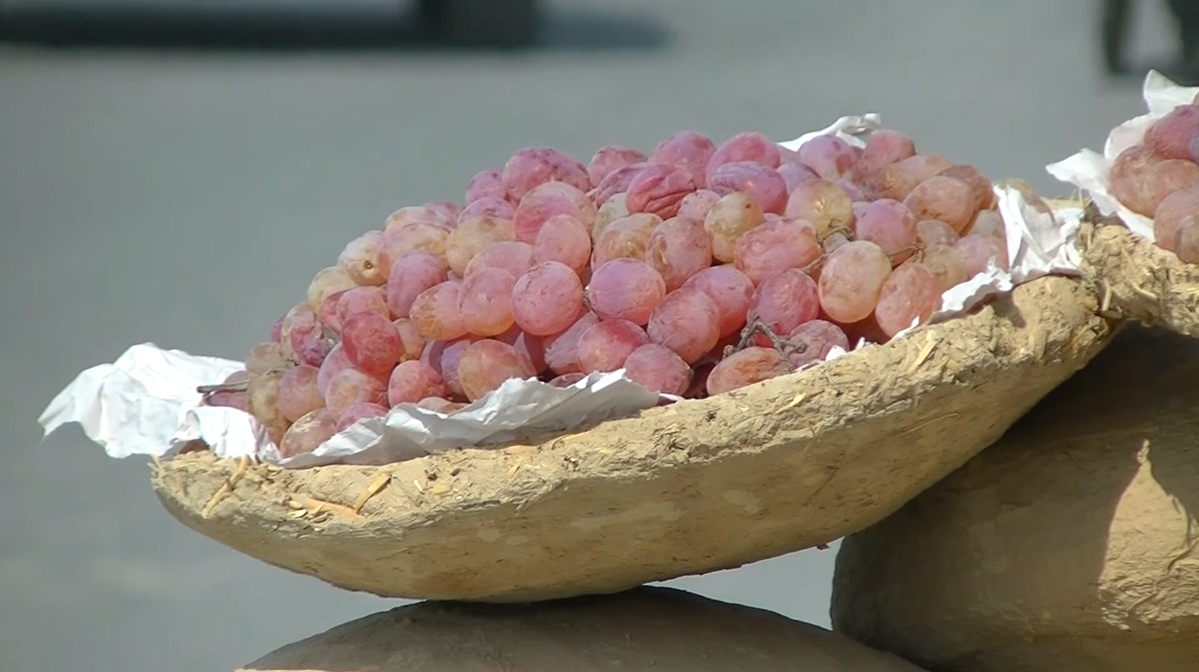
Kangina are traditional, ecological, and effective northern Afghani mud-straw containers for keeping fresh fruit good longer. They work best with a particular type of grapes with thick skins and a late harvest.

Wikipedia Voice of America Kangina

Freshly formed bowls are first baked in the sun for a few hours. The fruit is then placed inside, another bowl is placed on top, and the join sealed with more mud.

Atlas Obscura Stefanie Glinski Kangina Pile

The kangina are then stored in a cool, dry place for up to five or six months. To open, you gently crack the kangina halves apart. (Seen, for example, in this Voice of America video.)

Definitely not quick or low-effort, but still an impressive way to preserve fruit and introduce variety into your winter diet, isn’t it? Perhaps not the best containers for a party of intrepid D&D adventurers to carry with them, either, but certainly an inspired method of storing food they could run into while resting between quests.

Images: Grapes in a kangina by Voice of America via Wikipedia. A storage pile of kanginas by Stefanie Glinski via Atlas Obscura.

Tomyris: Standing for Women

The Greek historian Herodotus tells us a story about the death of the Persian king Cyrus that centers a fascinating female character, Queen Tomyris of the Massagetae.

Cyrus, king of Persia, wanted to expand his empire eastward into the lands of the Massagetae, a nomadic people ruled by their widowed queen Tomyris. Cyrus at first proposed marriage to Tomyris as a ruse for conquest, but she refused him. He then mustered his army and prepared to invade.

Cyrus’ adviser Croesus cautioned Cyrus against trying to fight the wild Massagetae, but since Cyrus was determined to proceed, Croesus proposed a stratagem to overcome them. Following Croesus’ advice, Cyrus led his army into Massagetae territory, then had them make camp and prepare a sumptuous feast with plenty of wine, but they did not eat it. He then withdrew with most of his army, leaving behind his weakest soldiers.

When a part of the Massagetae army led by Tomyris’ son Spargapises came upon the Persian camp, they easily defeated the Persian troops there. Then they saw the feast. Being used to living rough, they had never seen such an amazing spread of food before, so they immediately sat down and filled their bellies. When the feast had made them all drunk and sleepy, Cyrus led the rest of his army back to attack them, easily defeating the Massagetae warriors and capturing Spargapises.

When Tomyris learned of her people’s defeat and her son’s capture, she sent a message to Cyrus proposing a peaceful end to the conflict: if Cyrus returned Spargapises safe, Tomyris would allow the rest of Cyrus’ army to retreat from her lands unharmed. If he refused, Tomyris promised to satisfy his desire for blood. Cyrus refused, and when Spargapises came to his senses and found himself a prisoner, he killed himself.

Tomyris then marshaled the rest of her people and fell upon the Persians. The fighting was intense, but at the end of the day the Persians were routed and Cyrus himself was killed. Tomyris found the body of Cyrus and thrust his head into a wineskin full of blood, fulfilling her promise to slake his thirst for blood.

It’s a good story, as many of Herodotus’ are, but what are we to do with this as historical evidence? Did any of these events happen? Did Tomyris even exist?

We have reasons to be skeptical. No other historian mentions Tomyris, not even other historians who wrote about the life of Cyrus. The story Herodotus tells is full of dramatic moments that sound like they come from a Greek tragedy rather than from history. Cyrus figures as the tragic hero, a noble leader driven by ambition to attempt something that wiser men warn against and meeting an ironically fitting end. Tomyris’ line about sating his thirst for blood is a bit too on-the-nose to be real. Does anything in this story hold up?

The Massagetae at least were a real people, known from plenty of other sources, one of many nomadic cultures of the Central Asia steppes. Ancient sources are uncertain about their location, placing them anywhere between the Caspian Sea and the Altai Mountains, although whether this variation reflects the migrations of a mobile people, smaller sub-groups joining and leaving a tribal coalition, or just the ignorance of Mediterranean writers about the geography of Central Asia is hard to say. Among many ancient steppe cultures, women could wield both weapons and power. The idea that Cyrus died while leading an unsuccessful campaign against steppe nomads is likely to be true, and it is plausible that those people might have been ruled by a woman.

The rest of Herodotus’ narrative has more to do with Greek literature and oral tradition than with historical events, but that narrative also serves a larger point for Herodotus. Many powerful and wise women feature in Herodotus’ account of history. Tomyris is the first whose story he tells in detail, but she is followed by many others in both large roles and small, with Artemisia of Halicarnassus, who commanded her own ships in Xerxes’ invasion of mainland Greece, among the most prominent. Tomyris in some ways prefigures Artemisia: a wise warrior queen who gives the Persian king a chance to save himself from defeat and embarrassment, though he fails to heed her.

Tomyris appears near the beginning of Herodotus’ history, playing a role in the life of the first Persian king; Artemisia comes in at the end, taking her place next to the last Persian king to feature in Herodotus’ text. The repetition of the theme of the wise warrior woman at both the beginning of Herodotus’ history and at the end gives it a particular weight and prompts us to consider what point the historian was making. Herodotus’ text is layered with subtle messages, and many of the stories he tells have some applicability to the audience he was writing for. Herodotus lived and worked in Classical Athens, a society in which the status of women was low.

Women’s participation in Athenian social and political life was a casualty of democracy: since Athenian democracy was based on solidarity between citizen men across class lines, as manifested in all-male institutions like the voting assembly and the hoplite militia, the stronger the democracy was, the more women were pushed aside. Herodotus was a fan of democracy. His text points out how democracy, and especially the Athenian version of it, gave the Greek allies the strength and resilience to resist invasion by the monarchic Persian Empire. At the same time, he also seems to have been warning his Athenian audience that by leaving women out of public life, they were squandering one of their most valuable resources.

While contemporary Greek philosophers and playwrights were denigrating women’s capacity for rational thought and scoffing at the idea of them playing a role in politics, Herodotus had a different message. In his narrative, women can both lead military forces to victory and give sound advice on political matters, two areas of life that Athenian women were barred from. Herodotus’ women keep their heads in a crisis, and powerful men would be better off if they listened to what women told them.

Tomyris may be a fictional or heavily fictionalized character, but she helps us understand a critique of Athenian democracy as framed by someone who both lived with and admired it.

Image: “Head of Cyrus Brought to Queen Tomyris” via Wikimedia (Museum of Fine Arts, Boston; c. 1622-1623; oil on canvas, by Peter Paul Rubens)

Ancient Pants for a Rider Reconstructed

The precise construction of ancient textiles is often a matter of educated guesswork, since fibers—if they survive in the first place—tend to rot in most soil types. Now we have a little more to go on: in March 2022, a study was published on the technical details of fabric and finishing techniques of eight wool garments, including a spectacular pair of pants, belonging to a rider buried ca. 1200-1000 BCE.

One of the oldest preserved pairs of trousers in the world, the garment was found at Yanghai, Turfan (also known as Turpan), in the Xinjiang area in Northwest China. It’s an area with a long history and multiple tombs, as befits a stop on the Silk Road.

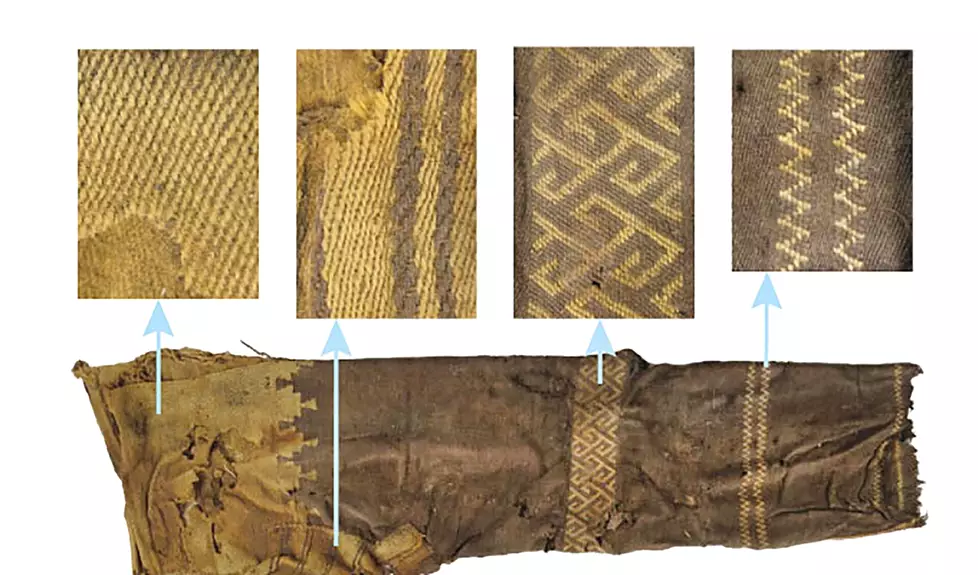
The breeches were made from three pieces: one for each leg and one for the crotch to combine the two sides.

HS Archaeological Research in Asia Wagner et al Turfan Rider Pants1

All three pieces included some woven patterning. Besides striping, the leg pieces also had a decorative band in a T-hook pattern (a kind of geometric design) around the knees.

HS Archaeological Research in Asia Wagner et al Turfan Rider Pants2

Interestingly, it seems that the pant pieces were woven on a loom into the final size and shape; no cutting from a longer length of cloth was involved. A combination of multiple techniques was also discovered: regular twill weave on the majority of the work, the weave on the knees, and a third method on the upper areas to create a thick waistband.

All this means a high skill level was needed in gauging not just the size of the future wearer, but also the amount of yarn required, plus naturally the various weaving techniques.

In the course of studying these clothes, reproductions were made. The outfit consists of the trousers, a poncho with belt, two pairs of braided bands (one below the knees and another at the ankles), and a wool headband.

HS Archaeological Research in Asia Wagner et al Turfan Rider Pants3

I’ve recently done some reading on recreating prehistorical clothing from scratch, and let me tell you, all of the shearing, washing, sorting, carding, spinning, dyeing, and—only at the very end—weaving plus sewing was no mean feat. The gorgeous (pre)historic garments we have managed to find must have taken a simply enormous amount of work to create. Even with a little weaving and band making plus a lot of sewing under my belt (pun intended—sorry, not sorry) I have a hard time imagining the magnitude of effort required in textile production before modern machinery.

Found and images via Helsingin Sanomat. (NB. Finnish only.) In English, you can read more at Science News.

How It Happens is an occasional feature looking at the inner workings of various creative efforts.

Hand- and Footprints in Tibet Potentially the Earliest Prehistoric Art Found

Potentially the earliest stone age art consists of hand- and footprints on stone, and was found in investigations between 2018 and 2020.

From the September 2021 Science Bulletin abstract covering the find:

“At Quesang on the Tibetan Plateau we report a series of hand and foot impressions that appear to have been intentionally placed on the surface of a unit of soft travertine. The travertine was deposited by water from a hot spring which is now inactive and as the travertine lithified it preserved the traces. On the basis of the sizes of the hand and foot traces we suggest that two track-makers were involved and were likely children. We interpret this event as a deliberate artistic act that created a work of parietal art. The travertine unit on which the traces were imprinted dates to between ∼169 and 226 ka BP.”

Below is a contour map from the article, showing the prints on the rock surface:

Science Bulletin Sept 2021 Zhang et al Earliest Parietal Art Contour

Fascinating. I’m sure there are still many open questions, like intentionality (if such a thing is even possible for prints left hundreds of thousands of years ago) and the identity of the creator(s). (The discovery team posits they may have been children, potentially at play.)

It’s just… Do these prints remind anyone else of of how Gollum moves?

Found via Colossal.

Image via Zhang, David D., et al. “Earliest parietal art: Hominin hand and foot traces from the middle Pleistocene of Tibet.” Science Bulletin September 10, 2021

Placing Heaven in a Bowl

Bowl enameled in green and purple with intricate metalwork
Modern minakari bowl, photograph by Interesting009 via Wikimedia

This gorgeous bowl is an example of a style of enamel work known as minakari (also spelled meenakari or mina-kari), which literally means “to place heaven into an object.”

The style was developed in Persia under the Safavid kingdom in the sixteenth and seventeenth centuries CE. Artists of that time took enameling techniques from Europe and China and used them to create works whose intricate designs and vivid colors drew on the rich legacy of Persian and Islamic art.

Minakari works are still being produced today, especially in and around the city of Isfahan. “Placing heaven in an object” seems like a good enough description to me.

Out There is an occasional feature highlighting intriguing art, spaces, places, phenomena, flora, and fauna.

Living Vicariously Through Social Media: Swans in a Winter Wonderland

Reportedly, the Swan Spring wetland park in Ili, Xinjiang, China, has some amazing winter settings. This scene definitely qualifies:

Tumblr F Yeah Chinese Garden Swan Spring Screenshot

I don’t like cold very much, but I do like the look of clean, white snow, and I love blue. This shot is astoundingly beautiful. I’m so sorry I don’t know who filmed the clip this is from.

Here in Massachusetts we have way too much snow for pandemic comfort at the moment. Some of it is pretty, yes, but instead of the graceful swans we have chunky wild turkeys, LOL! Ohwell; at least we’ll get plenty of physical activity by shoveling.

Found via Fuck Yeah Chinese Garden on Tumblr. (Follow the link for a short video.)

Out There is an occasional feature highlighting intriguing art, spaces, places, phenomena, flora, and fauna.

Trailer for Tomiris

Apparently, there is a Kazakhstani movie on the historical female leader Tomyris of the Massagetae, and we also have a trailer with English subtitles:

TOMIRIS – Official trailer (HD) (English subtitles) by SATAIFILM on YouTube

We know for sure that Tomyris fought Persians in the 500s BCE, but as far as we know she did not unite all the people of the steppe as the movie claims. Well, it wouldn’t be the first movie to play fast and loose with history.

At this writing, IMDB only has the most rudimentary information and gives the year 2019 for release. Director Akan Satayev’s credits include a dozen or so writing and producing projects, mostly local and directed at a decidedly non-English-speaking audience.

It’s possible, then, that Tomiris will also remain outside of the Anglo-American market. I, for one, would find that sad, for the production looks really interesting (although I could do with a little less blood flying around).

Come to think of it, I should have a look to see if I can find any movies of ancient Persia or thereabouts. Anything you can suggest would be welcome!

Found via Helsingin Sanomat (NB. Finnish only).

Hey, look! We found a thing on the internet! We thought it was cool, and wanted to share it with you.

Living Vicariously Through Social Media: The Clay Forest in Western Tibet

One of the best things about social media—like the Internet, too—is how many different phenomena you can witness if not first hand then at least in a secondary capacity; way more than would be possible in a regular human lifetime.

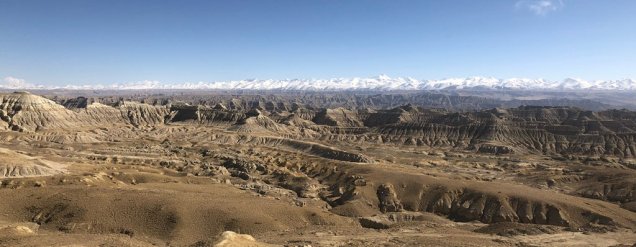
Case in point: the Clay Forest is a massive gorge like the Grand Canyon, except it’s located in Western Tibet. Apparently it wasn’t really accessible for Westerners until 2015.

Twitter UrsulaV Clay Forest Canyon
Ursula Vernon on Twitter

Author and illustrator Ursula Vernon posted this and a few other images from Tibet on her Twitter account. Thank you for sharing!

I’m slack-jawed and stunned. Phew!

Out There is an occasional feature highlighting intriguing art, spaces, places, phenomena, flora, and fauna.

Gleaned from Bodleian Libraries Workshop on Ultramarine Blue

Did you know that the Bodleian Libraries at the University of Oxford have a Tumblr micro blog? I didn’t until just recently. And oh my, it’s a treasure trove!

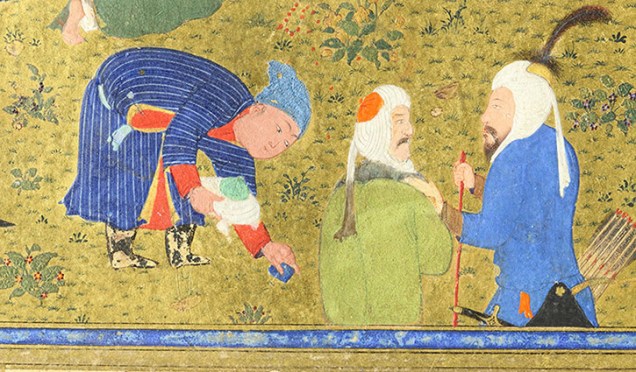
Bodleian Libraries Ultramarine Young Man Blue Rock Bodl MS Elliott 287 fol34a

A short post gives a few tantalising details on lapis lazuli, the mineral that was ground down to get bright blue pigment for example for illuminating Medieval manuscripts:

“In his travels Marco Polo vividly described the cold province of Badakhshan, a prosperous land where horses that descended from Alexander’s horse Bucephalus were once bred and where priceless rubies and the finest lapis lazuli were found.

“Since ancient times lapis lazuli has been sourced in this remote region, north-east of modern Afghanistan, and exported over vast distances. Its mines on the steep Hindu Kush Mountains, above the Valley of the Kokcha River, can only be reached through a tortuous and dangerous route.

“Lapis lazuli consists of a large number of minerals, including the blue mineral lazurite, the white mineral calcite and golden specks of iron pyrites.

“A laborious process transforms this composite mineral into the pigment ultramarine; various grades of ultramarine can be obtained, from the purest extremely expensive deep blue, composed mostly of lazurite particles to the pale grey so-called ultramarine ash.”


Tumblr Bodleian Libraries Ultramarine Workshop Screencap

The conservators at Bodleian (Anita Chowdry, David Margulies and Marinita Stiglitz) learned how to make pigment from scratch in a two-day workshop, and shared their notes in a longer post.

Bodleian Libraries Ultramarine Detail Bodl MS Arab d98 fol1b

Both the historical process and conservators’ efforts are fascinating! Did you know, for instance, that before explosives were developed, lapis lazuli was mined with the help of large fires and cold water?

Visit the Tumblr post for more photos, and read more in the Bodleian blog post “Exploring Ultramarine”.

Found via MedievalPOC on Tumblr.

Images via Bodleian Libraries: Young man picks a blue rock, Bodleian Library, MS. Elliott 287, fol. 34a. Workshop image collage screencapped from Tumblr. Detail of Bodleian Library, MS. Arab. d. 98, fol. 1B.

How It Happens is an occasional feature looking at the inner workings of various creative efforts.