Quotes: Shooting People Was Such a Stupid Activity

“Shooting people was such a stupid activity, why should everybody–anybody!–be so impressed? Silver wondered irritably. You would think she had done something truly great, like discover a new treatment for black-stem rot.”

– Lois McMaster Bujold: Falling Free

Silver, one of the genetically engineered, learning-oriented people known as quaddies, expresses her deep dislike of violence.

Bujold, Lois McMaster: Falling Free. Riverdale, NY: Baen, 1988, p. 266.

(This quote comes from my 21 new-to-me SFF authors reading project.)

Serving exactly what it sounds like, the Quotes feature excerpts other people’s thoughts.

Quotes: You Can’t Unite Woman and Human

“There is the vanity training, the obedience training, the self-effacement training, the deference training, the dependency training, the passivity training, the rivalry training, the stupidity training, the placation training. How am I to put this together with my human life, my intellectual life, my solitude, my transcendence, my brains, and my fearful, fearful ambition? I failed miserably and thought it was my own fault. You can’t unite woman and human any more than you can unite matter and anti-matter; they are designed not to be stable together and they make just as big an explosion inside the head of the unfortunate girl who believes in both.”

– Joanna Russ: The Female Man

A somber view of what it’s to be an intelligent, determined woman in a world run by men who don’t recognize their value.

Russ, Joanna: The Female Man. Boston, MA: Beacon Press, 1975, p. 151.

(This quote comes from my 21 new-to-me SFF authors reading project.)

Serving exactly what it sounds like, the Quotes feature excerpts other people’s thoughts.

Quotes: She Was Born a Thing

“She was born a thing and as such would be condemned if she failed to pass the encephalograph test required of all newborn babies. There was always the possibility that though the limbs were twisted, the mind was not, that though the ears would hear only dimly, the eyes see vaguely, the mind behind them was receptive and alert.”

– Anne McCaffrey: The Ship Who Sang

The opening sentence of the titular, first story in the collection.

McCaffrey, Anne: The Ship Who Sang. New York, NY: Del Rey, 1969 [stories originally published between 1961 and 1969], p. 1.

(This quote comes from my 21 new-to-me SFF authors reading project.)

Serving exactly what it sounds like, the Quotes feature excerpts other people’s thoughts.

Proud and Prejudiced Zombies

160212ppzI’m really the wrong person to say anything about Pride and Prejudice and Zombies, since I am not a fan of zombie stories to begin with, but having a fondness for Jane Austen I went to the movie hoping for something entertaining. I was not entirely disappointed, but something about the movie bothers me.

It’s not just that it feels like a joke that has gone on too long without getting to a punchline. It is Pride and Prejudice with zombies added, exactly as advertised. The confined and unvarying quality of the movie is a feature, not a bug, and I can live with that. What bothers me about it is what it does to Austen’s characters and in particular the female characters.

Continue reading

Quotes: An Agreed, Understood Silence

“Secrecy in Karhide is to an extraordinary extent a matter of discretion, of an agreed, understood silence – an omission of questions, yet not an omission of answers.”

– Ursula K. Le Guin: The Left Hand of Darkness

In the country of Karhide on planet Gethen, acceptable modes of behavior and communication—and through them, people’s social standing—depend on what isn’t said as much as what is. In that sense, the world reminds me of Jane Austen’s novels, where discretion and the ability to read other people’s reactions are highly valued. And as a Finn, I certainly know and sympathize with an understood silence. In Finland, silence—even beyond an understood silence—is normal. In the U.S., for me, silence is a way to connect to my home country and therefore a solace.

Le Guin, Ursula K.: The Left Hand of Darkness. New York, NY: Ace Books, 1976 [originally published 1969], p. 287.

(This quote comes from my 21 new-to-me SFF authors reading project.)

This post has been edited to correct spelling errors and for style.

Serving exactly what it sounds like, the Quotes feature excerpts other people’s thoughts.

The Kindness of Sherlock Holmes

It’s a good time to be a Sherlock Holmes fan. There are now plenty of adaptations to choose from. There’s the BBC’s Sherlock if you like visual inventiveness and whip-crack dialogue. For a more traditional procedural that does interesting things with characters, there’s CBS’s Elementary. For Hollywood thrills you can go back a few years to the films starring Robert Downey Jr. as the great detective. For series in the Holmesian spirit without the same characters there’s the medical drama House or the mystery/comedy Psych.

However the setting may change, there are some key elements of Sherlock Holmes’s character that remain the same: the keen powers of observation and deduction, the cycles of intense focus on a problem and lethargic dissipation, the antisocial habits that make him near impossible to live with.

Oh, and Sherlock Holmes is a total jerk-ass.

160204sociopath

The standard interpretation of Holmes in modern media is that he is an asshole with no patience for anyone else, either because he’s not neurotypical in some fashion or because he just can’t be bothered to care about anything so pedestrian as decent manners. He gets away with it because he’s just so brilliant.

Well, lately I’ve been rereading the original Sherlock Holmes stories by Conan Doyle, something I’ve been meaning to do for years. I’ve gotten very used to the modern Holmes, so I was surprised to rediscover that the original Holmes wasn’t like that at all. In fact, Conan Doyle’s Holmes is compassionate and generous.

Continue reading

Ursula Le Guin: The Left Hand of Darkness

My latest reading project rolls on with The Left Hand of Darknessby Ursula Le Guin (first published in 1969).

The Left Hand of Darkness

Genly Ai is sent to planet Gethen (also known as Winter due to its extremely cold climate) as an envoy for the Ekumen of Known Worlds, an interstellar conglomeration for trade and cultural exchange. His mission is to convince the planet to join the Ekumen, easier said than done on a world where the conditions are semi-arctic even at the warmest time of the year and where cultures and technologies change at a glacial pace. (Pardon the pun!)

I knew a little of Left Hand before reading it. I knew that it’s highly regarded, that the inhabitants of the world are androgynous (or something) and that there’s an arduous trek across a glacier (or snowy steppes or somesuch) that’s somehow significant.

I also knew that some people describe the book as being about gender. Gethenians are all of the same sex – or, rather, of no sex until their monthly reproductive cycle known as kemmer comes around. At that point, depending on who else is in kemmer nearby, a person may turn either into a Gethenian male or female, and it’s quite usual for someone to be both a mother and a father.

I’m not entirely sure yet what Left Hand is about for me. The Gethenian biology does get a lot of attention, but I suspect it’s because it’s so unfathomable to Ai. The importance of hospitality and cooperation in the cold climate is also significant, as are the balancing of opposite forces (like you-me or individual-society), the complex Gethenian honor system shifgrethor and their aversion to war. Karhide’s neighboring country Orgoreyn sounds like a communist regime, with its people described as units instead of citizens and its communal resources or endless bureaucracy; Orgoreyn may, in an unprecedented step, be moving towards starting a war with Karhide, and we might have a Cold War echo there.

Structurally, Left Hand avoids infodump by alternating the present-day narrative chapters with short chapters on Gethenian mythology. I was a little bothered by how much longer the primary narrative chapters were, for it made reading the novel choppy; I may well change my mind about that if I read Left Hand again.

I’ve seen Le Guin’s writing described as zen-like. The descriptor fits her style in Left Hand well, especially when she’s describing traveling across the icy landscape. A fascinating read, and one I may well like to get back to after mulling it over. Considering that I very much enjoy and have read Le Guin’s Earthsea stories several times in two languages, I can’t believe I haven’t read The Left Hand of Darkness before!

Image by Eppu Jensen

This post has been edited.

ICBIHRTBpronounced ICK-bert-bee—is short for ‘I Can’t Believe I Haven’t Read This Before’. It’s an occasional feature for book classics that have for some reason escaped our notice thus far.

Quotes: Don’t Have to Understand Things for Them to Be

“I don’t understand it any more than you do, but one thing I’ve learned is that you don’t have to understand things for them to be.”

– Madeleine L’Engle: A Wrinkle in Time

Ain’t that the truth! (Understanding does help, though, I find.)

L’Engle, Madeleine. A Wrinkle in Time. New York, NY: Square Fish, 2007 [originally published 1969], p. 29.

(This quote comes from my 21 new-to-me SFF authors reading project.)

Serving exactly what it sounds like, the Quotes feature excerpts other people’s thoughts.

Things I Can Do Without

We all have our storytelling pet peeves: the things that make us yell in frustration at the screen or put down a book in disgust. Some things have been done to death already and we want to see something new. Some things play on outdated assumptions and problematic tropes. Some are just lazy writing.

Misery loves company, so let’s share. Here’s a few of mine.

1. Fathers and sons who have a bad relationship.

A father who was never emotionally available to his son and is now disappointed in his son’s failure to live up to his expectations? A son who resents the pressure put on him to be like his father and craves the love and approval his father never gave him?

It’s been done. Really, it has. Everyone from Homer to Shakespeare to George Lucas has done it. That dead horse has been pounded into subatomic particles by now. There is nothing new to be said on the subject. Time to move on.


160107Kirk2. Heroes who have no plan

Or if they do have a plan, it depends on factors that the hero can’t control or predict.

This doesn’t mean that plans have to be perfect or go off without a hitch. You can’t control for everything. Plans have to change in response to unforeseen events. There can be plenty of good drama in the uncertainties of chance, and I’ll even take the occasional deus ex machina if it’s clever enough. But a hero who’s counting on the deus ex machina for victory? That’s right out.


160107Moriarty3. Villains who have no goal

A good villain has a goal they are trying to accomplish and a plan for achieving that goal. No matter how fiendishly complicated the plan, if the goal is just to indulge a vaguely sexual obsession with the hero, something has gone wrong in the writing.

“Annoy the hero and force them to play with me” isn’t a goal, it’s a toddler tantrum.
160107CSI4. Weirdos who can’t tell fantasy from reality

A terrible murder has happened at an SFF convention. When the police show up to question witnesses, the bystanders refuse to speak English and answer all their questions in Klingon. It turns out a vampire cosplayer killed a werewolf LARPer. Why? Because vampires hate werewolves! No other motive required!

This one isn’t just lazy writing, it’s insulting. The usual targets are fandom or kink communities, but anyone who isn’t in the mainstream can be a victim. I’m a history professor. According to popular media, that means I must show up in class wearing a toga and insist that my students address me as “emperor.”

Writers of the world: the inability to distinguish reality and fantasy is a sign of a serious mental illness. It is not how those of us who belong to non-mainstream interest groups go through life.


160107Se7en5. “Gimmick” serial killers

This one is really just the intersection of 3 and 4, but it shows up often enough to merit special mention. These are the characters who kill people as part of some elaborate symbolic game. “My God, the killer is targeting people whose names are anagrams of Alice in Wonderland characters and staging their bodies to look like scenes from Rogers and Hammerstein musicals, and they’re doing them in reverse alphabetical order when translated into Albanian!”

That sound you hear is my suspension of disbelief repeatedly slamming its head into a wall in hopes of inducing a coma.


I could go on, but that’s enough from me for now. Your turn. Got something on your mind that you could do without ever reading or watching again? Share in the comments!

Images: Community via ScreenCrush. Kirk via Memory Beta. Moriarty via Baker Street. CSI Blood Moon via dkompare. Se7en via Crash/Burn

Story Time is an occasional feature all about stories and story-telling. Whether it’s on the page or on the screen, this is about how stories work and what makes us love the ones we love.

One Last Best of 2015 List with a Finn

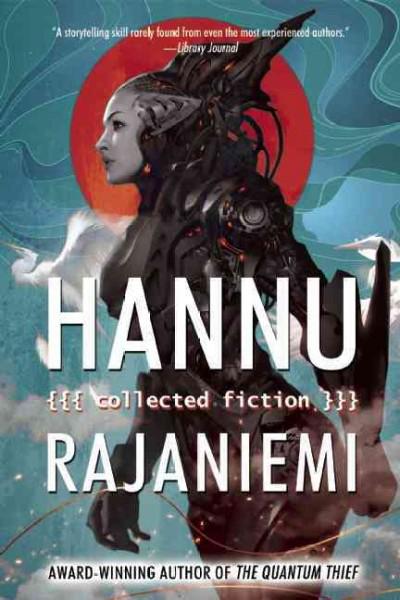
Hello, hello; Happy New Year! Over the holidays I had the chance to catch up on my blog reading and found yet another piece of delightful news for Finnish SFF: Hannu Rajaniemi’s Collected Fiction made it onto NPR’s Guide to 2015’s Great Reads.

hannu-rajaniemi-collected-fiction

The guide contains some 260 titles contributed by NPR staff and critics. Other science fictional books on the guide include Shadowshaper by Daniel José Older, The Traitor Baru Cormorant by Seth J. Dickinson, and Sorcerer to the Crown by Zen Cho, for example.

Found via Amal El-Mohtar.

Image via Tachyon Publications