Ending of Rogue One Seamlessly Connected to A New Hope

This nine-minute video by Barre Fong combines the very ending of Rogue One seamlessly to A New Hope:

https://vimeo.com/209263699

“Rogue One” Spliced with “A New Hope” by Barre Fong

Nice job! It was pretty clear from just seeing Rogue One in the theaters how well the team not only wrote but propped, set-dressed, and costumed their movie to match the George Lucas -led original. This merger makes it very explicit, though. A hat-tip to all involved.

In general, I really enjoy comparing originals and recreations (or originals and adaptations), and the pleasure is multiplied when the successor is expertly and thoughtfully made. That’s one reason why Peter Jackson et al.’s making-of documentaries for the Lord of the Rings and Hobbit trilogies are still the gold standard for movie extras—hearing about the design process is fascinating.

Hey, look! We found a thing on the internet! We thought it was cool, and wanted to share it with you.

Nitocris’ Vengeance

Here’s a story told by the Greek historian Herodotus about an ancient queen of Egypt, as told to him by the Egyptian priests he was interviewing about their country’s history:

The priests read out from a papyrus scroll the names of three-hundred and thirty kings. In all these generations there were eighteen Ethiopians and one Egyptian woman; the rest were Egyptian men. The woman’s name was Nitocris… They said that she avenged her brother. The Egyptians had killed him when he was their king and then given the kingship to her, so she slaughtered many Egyptians by a trick to avenge him. She had an underground chamber built and invited those Egyptians whom she knew to be most guilty of her brother’s death on the pretense of an inaugural feast, although she was actually planning something else. As they were feasting, she had the river let in to flood the chamber through a great hidden channel.

– Herodotus, Histories 2.100

My own translation

Like Herodotus’ other stories about Egypt, this shows an interesting mix of actual historical knowledge with folklore, probably both Egyptian and Greek.

It is very difficult to verify the number of kings Herodotus’ interviewees listed for him. Earlier Egyptian records of kings have survived only in very fragmentary forms and later writings about Egyptian history, even those by Egyptians, tended to rely on Herodotus. When Egyptian dynasties recorded the reigns of their kings, they had as much incentive as an other politicians to exaggerate some things and erase others. When Herodotus was traveling in Egypt, the country was under Persian rule and not particularly happy about it. The priests that Herodotus talked to had their own reasons to encourage a certain view of Egyptian history.

Nevertheless, in rough terms, 330 is a reasonable estimate of the number of kings who had ruled in Egypt over 3,000 years. The priests’ count also includes a number of “Ethiopian” kings, who correspond to the Twenty-Fifth Dynasty, when Egypt was conquered and ruled by Nubians for about a hundred years between the mid-eighth and mid-seventh centuries BCE.

That leaves Nitocris herself. The name may be a garbled form of a very early king who had otherwise been forgotten about by Herodotus’ time. We now know from ancient inscriptions that more than one woman ruled Egypt, whether as regents for their sons or as pharaoh themselves. The most famous of these female pharaohs is Hatshepsut, who ruled from 1478 to 1458 BCE, just over a thousand years before Herodotus visited Egypt. The “underground chamber” mentioned in the story may be a distorted recollection of Hatshepsut’s mortuary temple, which was built partially into the side of a cliff and which is surrounded by the underground tombs of later pharaohs who chose to be buried at the same site (now known as the Valley of the Kings).

Hatshepsut’s successor, Thuthmosis III, had her name stricken from monuments and her public statues destroyed—not necessarily out of any personal animosity, but simply because the existence of a female predecessor may have threatened the legitimacy of his own and his descendants’ reign. The erasure of her public memory, though, may have opened room for some of the more outlandish and dramatic elements of her legend to grow (and may explain the loss of her name).

At the same time, the themes of family chaos, murder, and revenge that run through this story are very much in tune with Greek mythology. Whether Herodotus invented them or the priests enlivened the tale, they seem calculated to appeal to a Greek audience. There may well be some of both: the priests may have adapted their native oral tradition to better suit their Greek interviewer, while Herodotus may have amplified the familiar elements of the story as he retold the story for his Greek readers.

It may best for us to see the story of Nitocris as a kind of collaborative Greco-Egyptian historical fiction.

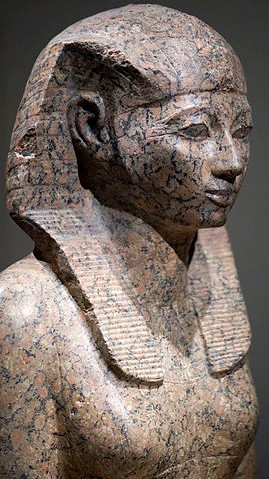
Image: Portrait statue of Hatshepsut, photograph by Rob Koopman via Wikimedia (Rijksmuseum van Oudheden, Leiden; granite; c. 1450 BCE)

History for Writers is a weekly feature which looks at how history can be a fiction writer’s most useful tool. From worldbuilding to dialogue, history helps you write. Check out the introduction to History for Writers here.
A Little Droid Love for Star Wars Day

When a droid meets a droid…

Star Wars inspired crochet patterns by Luvbug026 via Etsy

Sometimes they feel a special connection…

BB8 and R2-D2 romance t-shirt via Teepublic

And that leads to…

R2-D2 and BB8 wedding cake topper by SpecialDesignForYou via Etsy

Now, personally, I always thought of R2-D2 as a precocious kid. When I saw The Force Awakens, BB8 seemed more like a very smart dog. But, hey, if other people want to see them as friends and soulmates, who am I to argue?

Happy Star Wars Day, everyone! May the Fourth be with you!

In Character is an occasional feature looking at some of our favorite characters from written works and media to see what drives them, what makes them work, and what makes us love them so much.

1899 Beer Fridge as Inspiration for Morgue Fridge in Murdoch Mysteries?

One recent introduction in our tv diet is Canadian detective fiction series Murdoch Mysteries. It’s based on novels by Maureen Jennings and set in Toronto during the 1890s and early 1900s. The series includes historical characters (Winston Churchill, Alexander Graham Bell, Emma Goldman and others), inventions (fingerprinting), and events (the Great Fire of 1904 in season 10) in their fictitious plots, and often hints at or spoofs future phenomena (telefax, sonar, Area 51).

Although not without issues, Murdoch is fun and interesting in its approach to history. Even if the Victorian era hasn’t ever really been my cup of tea, the production manages to make the era feel alive, not stuffy or staid.

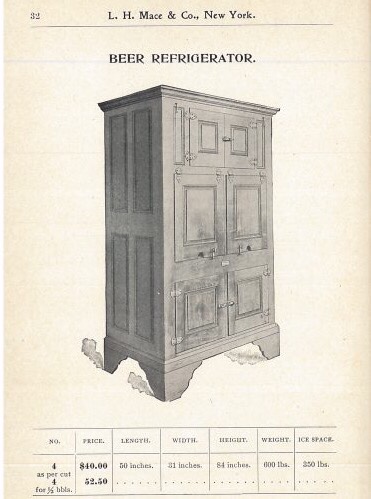
And while I know just barely enough of Victoriana to say that feature X in Dr. Ogden’s dresses looks a little odd, or feature Y on that building appears historical, most of the time I’m guessing. It’s therefore nice to run into a historical detail that looks to have informed elements on the set, like this beer refrigerator from 1899:

Smithsonian Mace et Co Beer Fridge 1899

The image comes from a catalog of by L. H. Mace & Co. of New York, currently in the Smithsonian Libraries collections. (It’s also very interesting to note that this fridge was actally sold and marketed as a beer fridge, specifically.)

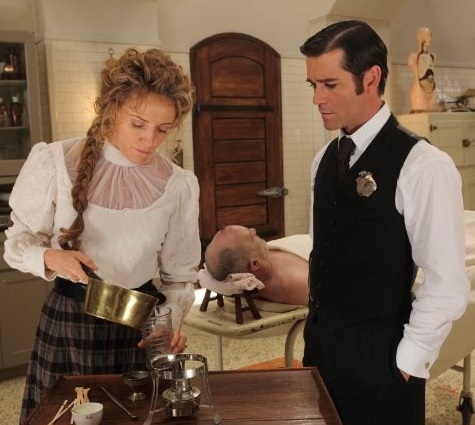
In the earlier Murdoch seasons, there used to be an ice cabinet for storing smaller body parts in addition to larger cadaver drawers. I don’t happen to have a screenshot handy, but fortunately the fridge appears in the background of a few random shots on the Internet: in the photo below, behind Dr. Julia Ogden and Detective Murdoch on the right…

Scannersuniverse ogden_and_murdoch_2

…and behind Dr. Emily Grace in the photo below:

Pinterest Murdoch Mysteries Dr Grace at Morgue

It looks almost identical to the L. H. Mace & Co. beer fridge. Really very, very cool!

It’s such a great detail it’s a shame that at some point when the set was re-decorated it seems not to have made the cut. I will have to try to get a better screenshot of it when we re-watch.

Images: A beer fridge from 1899 via The Smithsonian Institution on Tumblr; Dr. Julia Ogden and Detective Murdoch via Scannersuniverse; Dr. Grace via Pinterest

Hey, look! We found a thing on the internet! We thought it was cool, and wanted to share it with you.

Cassini’s Grand Finale Begins

The Cassini spacecraft is set to make its first dive through the gap between Saturn and its rings today, April 26, 2017. This dive, first of 22, opens the last stage of the Cassini-Huygens mission before the vehicle is driven into Saturn on September 15, 2017.

To celebrate, here are a few of the amazing photos sent back from the mission.

NASA Catching Its Tail 5329_PIA12826

NASA Colorful Colossusses 5631_PIA14922

NASA Spring at the North Pole 5805_PIA14945

NASA Water World 6275_PIA18343

Incredible. At this writing, the mission’s been running for over 19 years. It’s amazing what we can do when there’s a will.

The Cassini-Huygens mission is a cooperative project of NASA, ESA (European Space Agency) and the Italian Space Agency. JPL, a division of Caltech in Pasadena, California, manages the mission for NASA’s Science Mission Directorate. JPL designed, developed and assembled the Cassini orbiter.

Follow the grand finale milestones, read the mission-end FAQs, browse graphics, documents, videos in a dedicated grand finale gallery, or follow Cassini on Twitter.

Images by NASA/JPL-Caltech/SSI: Catching Its Tail; Colorful Colossuses and Changing Hues (Titan and Saturn); Spring at the North Pole; Water World (Enceladus and Saturn’s rings). Earth Day tweet photo with more info is available at The Day the Earth Smiled.

This post has been edited for formatting.

Out There is an occasional feature highlighting intriguing art, spaces, places, phenomena, flora, and fauna.

Roman Ducky, You’re the One…

You make the caldarium oh so fun.

Roman ducky, I sing of arms and you!

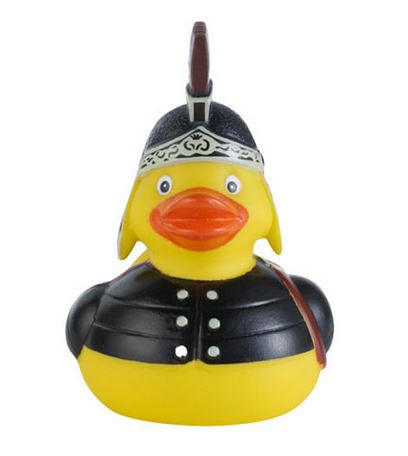
This cute little fellow wearing a legionary’s helmet and lorica segmentata armor comes from the British Museum shop, where you can also find his Egyptian, samurai, Viking, and Greek god pals.

Bathing was important in Roman culture, not just for personal cleanliness but as a social activity. Friends would meet at the baths to exercise, swim in the large cold pools, or relax in the hot pools. Some Roman baths had steam rooms similar to the Finnish sauna. Even at the farthest edge of the empire, Roman forts along Hadrian’s Wall in northern Britain had bathhouses. Many were built with sophisticated under-floor heating to keep them toasty even in the winter.

One crucial piece of bathing technology the Romans, lacked, however, was the rubber duck. They never knew what they were missing.

Hey, look! We found a thing on the internet! We thought it was cool, and wanted to share it with you.

Quotes: In the Hopes that They Will Be Able to Pass for One of the Glintelligentsia

“The Merita hotel chain offers rooms at a steep discount to people whose Information shows that they are interesting: as cocktail-chatter counterparts, as connections for enterpreneurs, as potential romantic partners. It’s a strategy to convince wealthier, duller clientele to pay a premium in order to share some sparkling conversation, or in the hopes that they will be able to pass for one of the glintelligentsia themselves.”

– Malka Older, Infomocracy

I just love the word glintelligentsia! It should be in mainstream use already. 🙂

Older, Malka. Infomocracy. New York, NY: Tor.com, 2016, p. 77.

Serving exactly what it sounds like, the Quotes feature excerpts other people’s thoughts.

Rating: Leverage, Season 2

We’ve been rewatching and rating Leverage and we’ve got season 2 under our belts now. (For more on how our rating system works, see here, which also covers season 1 of Leverage.) Here’s our take on the season.

Leverage, season 2

  1. “The Beantown Bailout” – 5.5
  2. “The Tap-Out Job” – 2.5
  3. “The Order 23 Job” – 6
  4. “The Fairy Godparents Job” – 4.5
  5. “The Three Days of the Hunter Job” – 8
  6. “The Top Hat Job” – 2
  7. “The Two Live Crew Job” – 8
  8. “The Ice Man Job” – 8
  9. “The Lost Heir Job” – 7
  10. “The Runway Job” – 5.5
  11. “The Bottle Job” – 5.5
  12. “The Zanzibar Marketplace Job” – 4
  13. “The Future Job” – 7
  14. “The Three Strikes Job” – 8
  15. “The Maltese Falcon Job” – 4

This season is a lot of highs and lows. Several weak episodes are balanced out by a number of strong ones. The average for the season is 5.7, which is respectable but a step down from season 1, which averaged just under 6. The show was finding its footing this season and striking out in some new directions, which sometimes paid off but other times just fell flat.

We have a four-way tie for the best episode, all at a solid 8. In “The Three Days of the Hunter Job” the team manufactures a government conspiracy in order to discredit a ruthless reporter. In “The Two Live Crew Job,” they compete with another team (featuring Wil Wheaton as a pain-in-the-ass hacker!) to steal a priceless painting. In “The Ice Man Job,” Hardison, the hacker, gets in over his head while trying to show that he can get out from behind the computer and do an in-person grift, and the rest of the team has to improvise a heist around him to get him out. In “The Three Strikes Job,” the whole team get in over their head as they get tangled up in a larger plot involving the mob, the FBI, and a corrupt mayor. All of these episodes play with the heist/con formula in interesting ways and give the actors a chance to stretch their wings and tackle something new. In these episodes, we really see the creative team’s willingness to tinker with the mechanics of the procedural format pay off well.

The lesser episodes of the season also show attempts to vary the formula, but they don’t come off as well. The worst of the season is “The Top Hat Job,” at only 2. In this episode, the heist is pretty simple and most of the screentime is taken up by the team’s distraction event: Nate, the most mediocre and uninteresting character on the team, putting on a mediocre and uninteresting magic show.

Any Leverage fans out there want to weigh in? Got a different pick for the best or worst episodes of the season? Let us know in the comments!

Image: Leverage cast via IMDb

In the Seen on Screen occasional feature, we discuss movies and television shows of interest.

A Flight Suit Resembling Iron Man’s Is in the Works

Inventor Richard Browning has bold thinking in abundance. With the company he started, Gravity Industries, he’s developed a jet-engine suit like Iron Man’s to re-imagine manned flight.

British entrepreneur invents, builds and files patent for Iron Man-like flight suit by Gravity Industries

This 3.5-minute YouTube video captures the highlights of the development during a year. It closely resembles Tony Stark’s faltering design process in Iron Man—except this time it’s real. And while Gravity’s suit isn’t streamlined nor capable of long-distance flight at this point, there seems to be a modicum of potential. Staggering!

Found via File 770.

Hey, look! We found a thing on the internet! We thought it was cool, and wanted to share it with you.

Keep Out

The image above is a papyrus sign found near an ancient temple complex at Saqqara, Egypt. The original is 36 cm (a little more than a foot) wide. The text is in Greek and reads:

By order of Peukestes:

No entry.

This is a sacred enclosure.

My own translation

What does this sign mean and why was it posted in Greek somewhere near an Egyptian temple?

The name Peukestes helps us towards an answer. There is one important Peukestes we know from the sources with a connection to Egypt. In 332 BCE, Alexander the Great arrived in Egypt with his Greek and Macedonian army. The Egyptian people had lived unhappily under the rule of the Persian empire for generations and they greeted the newcomers as liberators. When Alexander moved on the next year to continue his conquest of Persia, he left Egypt under the charge of two of his commanders, Balakros and Peukestes. (Arrian, Anabasis of Alexander 3.5.5)

The Greeks and Macedonians of Alexander’s army had Egyptian good will on their side and they did not want to lose it. At the same time, Egypt and its great monuments were a source of endless fascination to foreign visitors in antiquity, just as much as today, and not all foreigners knew how to behave with respect. Centuries earlier, Greek mercenaries in the service of the Egyptian pharaohs had carved graffiti into the stones of ancient temples. Balakros and Peukestes, trying to hold onto a valuable province through the turmoil of liberation, certainly did not want any of that going on.

The sign was probably originally posted outside of the temple complex at Saqqara as a warning to any Greek troops indulging in a bit of sight-seeing that they had better be on their best behavior, including staying out of places that were sacred to their Egyptian friends.

Multicultural and cross-religious encounters are nothing new in the world. People have been thinking about the problem of how to get along peacefully with those whose ways of life are different from ours for thousands of years. Respecting other peoples’ religious traditions isn’t just polite, it’s sound policy.

Reference for the papyrus: Eric G. Turner, “A Commander-in-Chief’s Order from Saqqara,” Journal of Egyptian Archaeology 60 (1974): 239-42.

History for Writers is a weekly feature which looks at how history can be a fiction writer’s most useful tool. From worldbuilding to dialogue, history helps you write. Check out the introduction to History for Writers here.