We’ve probably all seen endless examples of stereotypical fantasy Elves: those slim, tall, tranquil, ethereal, Art Nouveau-esque figures that glide effortlessly through a major convocation or battle field carnage alike. The type that for example various Weta artists immortalized for Peter Jackson’s Lord of the Rings and Hobbit trilogies.
I’ve been hankering for something slightly different for a while. (At least in depictions of taller Elves; ElfQuest Elves and other Elves smaller in stature already start with some variety.) Here’s what I’ve come across.
Some illustrators make their Elves with non-stereotypical weaponry or gear. Pavel Hristov’s Steppe Elf carries a whopper of an axe and chews on a stalk of grain. There are also tassels hanging from the piece of cloth on his waist; those don’t seem to go with the Elf stereotype.
This Elven marksman explorer by L3monJuic3 has more typical weaponry—bow and arrow—but unlike her, stereotypical Elves are rarely seen carrying backpacks loaded with mundane items like shovels and cauldrons. Elves do typically eat and presumably have other bodily needs, right, even in the more highfalutin high fantasy worlds?
I cannot think off the top of my head any tinkerer nor wanderer type Elves (except for Drizzt Do’Urden in Forgotten Realms), but I don’t consider myself terribly well-read as far as fantasy goes. Anyway, for me these alternative takes were delightful.
Closest to my heart, however, are illustrations of Elves in non-stereotypical environments, especially among birches, in addition to ones showing different body shapes and happy demeanors.
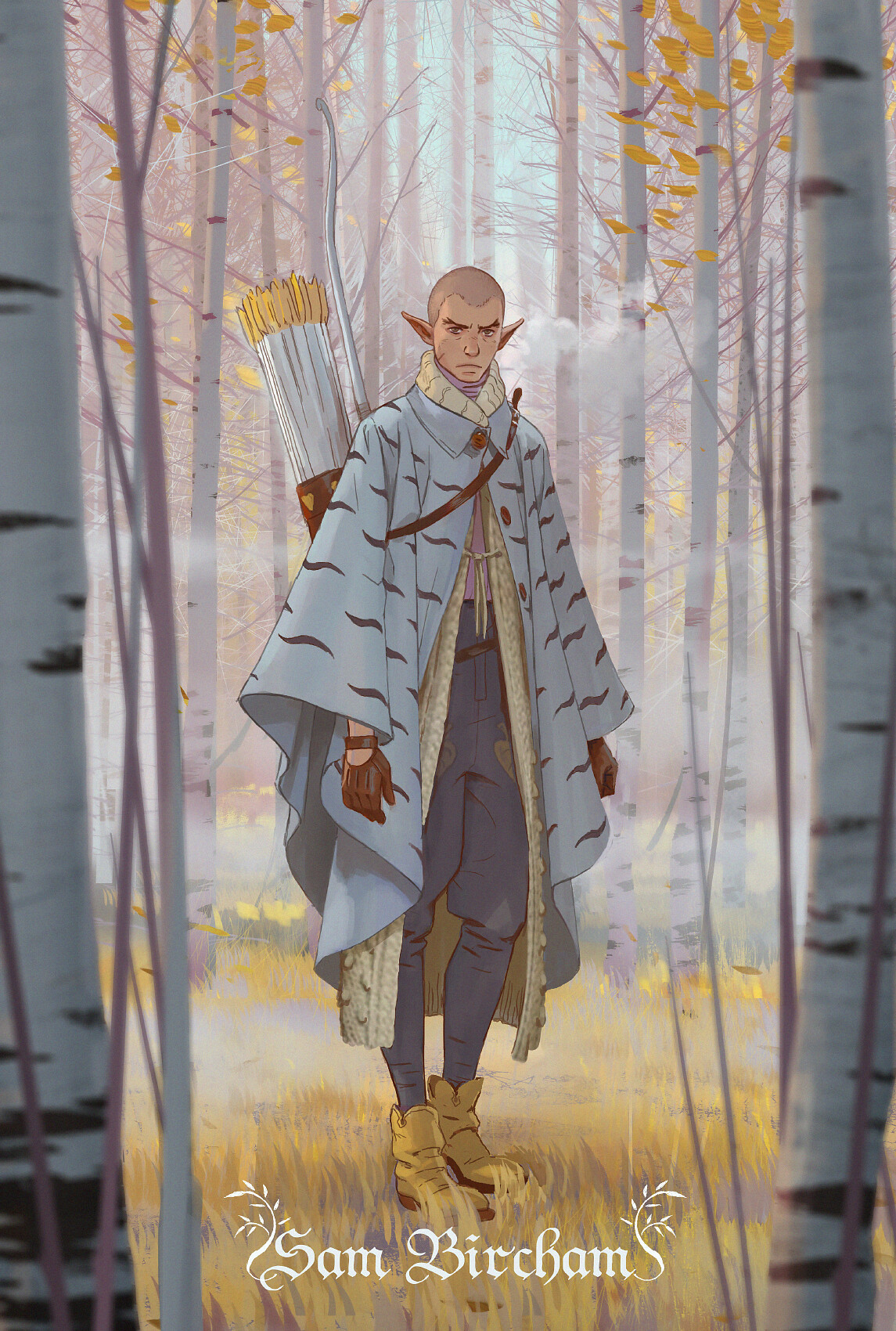
This birchwood Elf by Andrius Matijosius may be a little scruffy-looking, but I love how his cape mimicks birch bark and arrows resemble leaf-topped trunks.
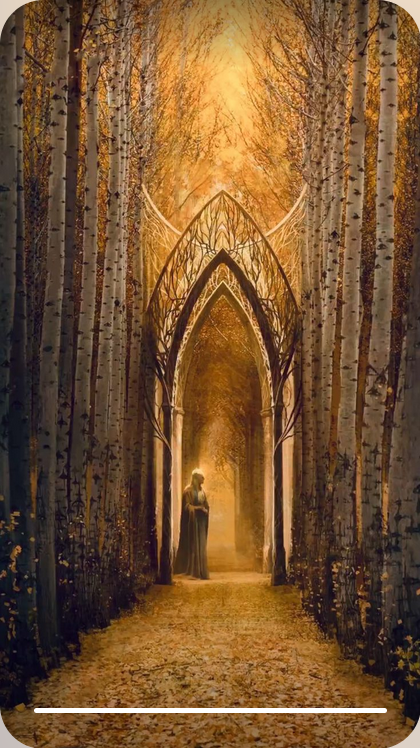
The Gate of Forest Elf Castle by ZAHD&ART also features fall colors. I love this birch-lined alley. A forest of birches with their white trunks lined up always looks so striking.
Moving to physical characteristics. Un Lee’s illustration of an Elf company is marvellous! Lee wanted to create a varied group much like the Dwarves in the Hobbit but with Elves instead.
Besides uniform body shapes, stereotypical Elves come in a fairly narrow range of moods. This portrait of an ancient Elf by eccentric_bee is serene on the surface, yes, but it looks to me that there’s joy underneath that’s often missing in depictions of Elves. Love it!
In Making Stuff we share fun arts and crafts done by us and our fellow geeks and nerds.
Now there are news of a Christopher Nolan adaptation. Nolan is to write, produce, and direct a “mythic action epic”, with backing from Universal Pictures.
Unlike the ill-fated Lionsgate project, this time more than one actor were reportedly already attached by the time the adaptation was announced. (At this writing: Zendaya, Tom Holland, Anne Hathaway, Robert Pattinson, Matt Damon, Charlize Theron, and Lupita N’yongo—gosh!) On the basis of the big-name initial cast, it sounds likely that this time there will actually be a movie.
Also, judging by the current publicity poster, there will be some ship action (maybe even ship-vs-monster action!) and in IMAX, no less. Writing in Nolan’s movies is either a hit or miss for me, but at least there’s usually been something interesting to see, so the sailing scenes might look truly magnificent. On the other hand, action sequence special effects in recent block busters have sometimes been—shall we kindly say—too implausible (and sometimes just badly made) for my enjoyment. I’m hoping that the effects teams, Nolan, other producers, and the studio can strike a sensible balance.
At this writing, the release day is set to July 17, 2026.
The literary works of Agatha Christie and J. R. R. Tolkien may not seem to have much in common. One wrote murder mysteries set in genteel English country houses, the other high fantasy in a mythic secondary world. When you look at the themes and ideas of their work, though, interesting parallels appear.
The two authors were close contemporaries; Christie was born in 1890, Tolkien in 1892. They belonged to the generation whose young adulthood was shattered by the First World War. Their experiences were different—Tolkien saw battle firsthand as an officer, Christie its terrible aftereffects as a nurse—but they both reflect the shock of the war in their writing.
One theme that occupies both writers is death. Death was, naturally, a crucial element of Christie’s murder mystery stories. In Tolkien’s legendarium, death and the things people will do out of the fear of it is a running theme. But neither writer’s work is focused on death as a fact; rather, the underlying drive in their work is a search for some way in which death makes sense.
In Christie’s case, this theme is more obvious: she writes about detectives solving crimes. By the time we reach the drawing room summation at the end of the book, we can see clearly how and why the victim or victims died. Order is restored to the world, and reason triumphs over the illogic of death, whether that reason is embodied in a fussy Belgian’s love for methodical neatness or a wise spinster’s deep observation of human nature.
In Tolkien’s work, the drive to make sense of death is subtler. Death often appears pointless in Tolkien. Boromir dies defending Merry and Pippin from Orcs, but after he falls the young Hobbits are captured nonetheless. Denethor dies in despair instead of living to see his city saved. But the larger point of Tolkien’s work is that hopelessness is an illusion. We never know the end of our own story or how profoundly the choices we make will affect the world. In the legendarium as a whole, death is the greatest mystery, but also the greatest hope. The world of Middle Earth had a beginning and will someday end, yet the spirits of mortal beings will not end with the world but transcend it through death.
It is not just the death of individuals that occupied Christie and Tolkien, but also how ways of life come to an end. They both witnessed the end of the world, in a sense. The innocence and hope of the time they grew up in perished on the battlefields of the Great War, but they did not. They kept going and witnessed as the world around them changed.
Tolkien’s The Lord of the Rings is about the ending of an age, the Third Age of Middle Earth to be precise. The story takes place during the last days before the Elves either depart into the magical west or dwindle into creatures of fairy tale and folklore, taking their beauty and wisdom with them. Yet the story also carries hope for what is to come after in the ages of Men—hope without guarantees, as Gandalf puts it. The Elf Legolas and Dwarf Gimli reflect on the promise and weaknesses of humans in the streets of Minas Tirith:
“If Gondor has such men still in these days of fading, great must have been its glory in the days of its rising.”
“And doubtless the good stone-work is the older and was wrought in the first building,” said Gimli. “It is ever so with the things that Men begin: there is a frost in Spring or a blight in Summer, and they fail of their promise.”
“Yet seldom do they fail of their seed,” said Legolas. “And that will lie in the dust and rot to spring up again in times and places unlooked-for. The deeds of Men will outlast us, Gimli.”
– The Lord of the Rings. Book 5, Chapter 9, “The Last Debate”
Christie reflects the changing world in different ways, but also with hope for what the future will bring. Her early works are set in the interwar world of country estates and garden parties that we typically think of when we think of a Christie mystery, but that world was ending. She kept writing through the fifties and sixties as the life and culture of Britain changed around her.
The traces of this change are all over Christie’s writing. One of the ongoing themes in her mysteries is that it is difficult to know who people really are. Many of her plots hinge on people passing themselves off as or being mistaken for someone else. Such impersonations were possible only because the world of country villages and garden parties where everyone knew one another was ending. Miss Marple speaks of this shift in A Murder is Announced:
Fifteen years ago one knew who everybody was. The Bantrys in the big house—and the Hartnells and the Price Ridleys and the Weatherbys … They were people whose fathers and mothers and grandfathers and grandmothers, or whose aunts and uncles, had lived there before them. If somebody new came to live there, they brought letters of introduction, or they’d been in the same regiment or served in the same ship as someone there already.
…
But it’s not like that any more. Every village and small country place is full of people who’ve just come and settled there without any ties to bring them. The big houses have been sold, and the cottages have been converted and changed. And people just come—and all you know about them is what they say of themselves.
– A Murder is Announced. Chapter 10, “Pip and Emma”
At the same time, Christie also saw that the fundamentals of human nature that underlay her stories were not changed by the passing of time. People might live differently, but they still had the same jealousies and aspirations, desires and fears as they ever had. Miss Marple, again, reflects on this fact in The Mirror Crack’d from Side to Side as she explores the new housing development at the edge of her beloved village:
She turned out of Aubrey Close and was presently in Darlington Close. She went slowly and as she went she listened avidly to the snippets of conversation between mothers wheeling prams, to the girls addressing young men, to the sinister-looking Teds (she supposed they were Teds) exchanging dark remarks with each other. Mothers came out on doorsteps calling to their children who, as usual, were busy doing all the things they had been told not to do. Children, Miss Marple reflected gratefully, never changed. And presently she began to smile, and noted down in her mind her usual series of recognitions.
That woman is just like Carry Edwards—and the dark one is just like that Hooper girl—she’ll make a mess of her marriage just like Mary Hooper did. Those boys—the dark one is just like Edward Leeke, a lot of wild talk but no harm in him—a nice boy really—the fair one is Mrs Bedwell’s Josh all over again. Nice boys, both of them. The one like Gregory Bins won’t do very well, I’m afraid. I expect he’s got the same sort of mother…
She turned a corner into Walsingham Close and her spirits rose every moment.
The new world was the same as the old. The houses were different, the streets were called Closes, the clothes were different, the voices were different, but the human beings were the same as they had always been.
– The Mirror Crack’d from Side to Side. Chapter 1
Some days now it feels like we are living through the end of the world we knew, and none of us knows what will come next. In these times, there is comfort in going back to writers who lived through the end of one world and saw that there was hope in the next.
Tolkien, J. R. R. The Lord of the Rings. London: HarperCollins, 1994, p. 855.
Christie, Agatha. A Murder is Announced. London: HarperCollins, 2023, pp. 132-133.
Christie, Agatha. The Mirror Crack’d from Side to Side. London: HarperCollins, 2023, pp. 13-14.
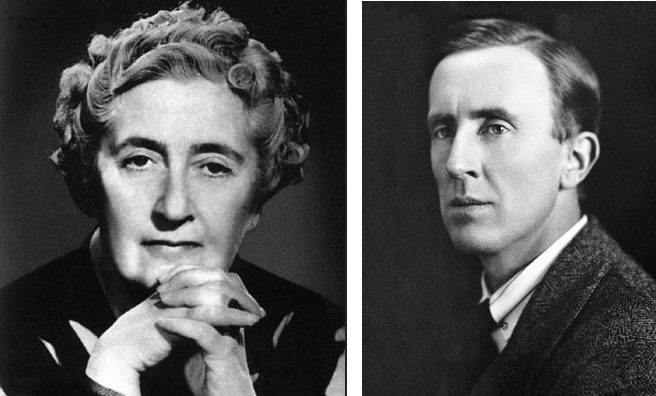
Image: Photo collage of Agatha Christie and J. R. R. Tolkien by Erik Jensen. Photograph of Christie via Wikimedia; photograph of Tolkien via Wikimedia
Post edited to correct formatting errors
Story Time is all about story-telling and how stories work, and what makes us love our favorites.
Happy New Year, everyone! We’ve closed the lid on 2024. Time to sit and reflect for a moment on the year that was.
Here’s a look at the posts we wrote in 2024 that got the most views from all of you:
News on the Murderbot Screen Adaptation, with Thoughts. Nothing got a bigger audience this year than Eppu’s reflections on what we knew at the time about the upcoming tv adaptation of Martha Wells’s Murderbot Diaries, about the self-named killing machine who would actually rather just be left alone to watch media.
Trailer for Megalopolis, with Thoughts. Eppu was underwhelmed by the trailer for Francis Ford Copola’s sci-fi man-epic. Given how the movie came and went with little visible effect on the public consciousness, it looks like she wasn’t alone in that feeling.
A Homebrew Alchemy System for Dungeons & Dragons. Erik’s attempt at homebrewing an alchemical crafting system for tabletop role-playing. We hope some of you have found it useful in your own games.
Train Like a Spartan. Erik’s review of what we know about how the ancient Spartans trained themselves for war—which may not be quite what you would expect.
It’s been a pleasure to share our thoughts and ideas with you again this past year. We hope you’ve enjoyed it as well. May the new year bring you lots of new and interesting things to enjoy!
“You learned better and you got on with things. You learned that you were what you were, and tried to be the best version of that person, because you were never going to be anybody else. And you stopped envying other people because everyone had problems you didn’t know about.”
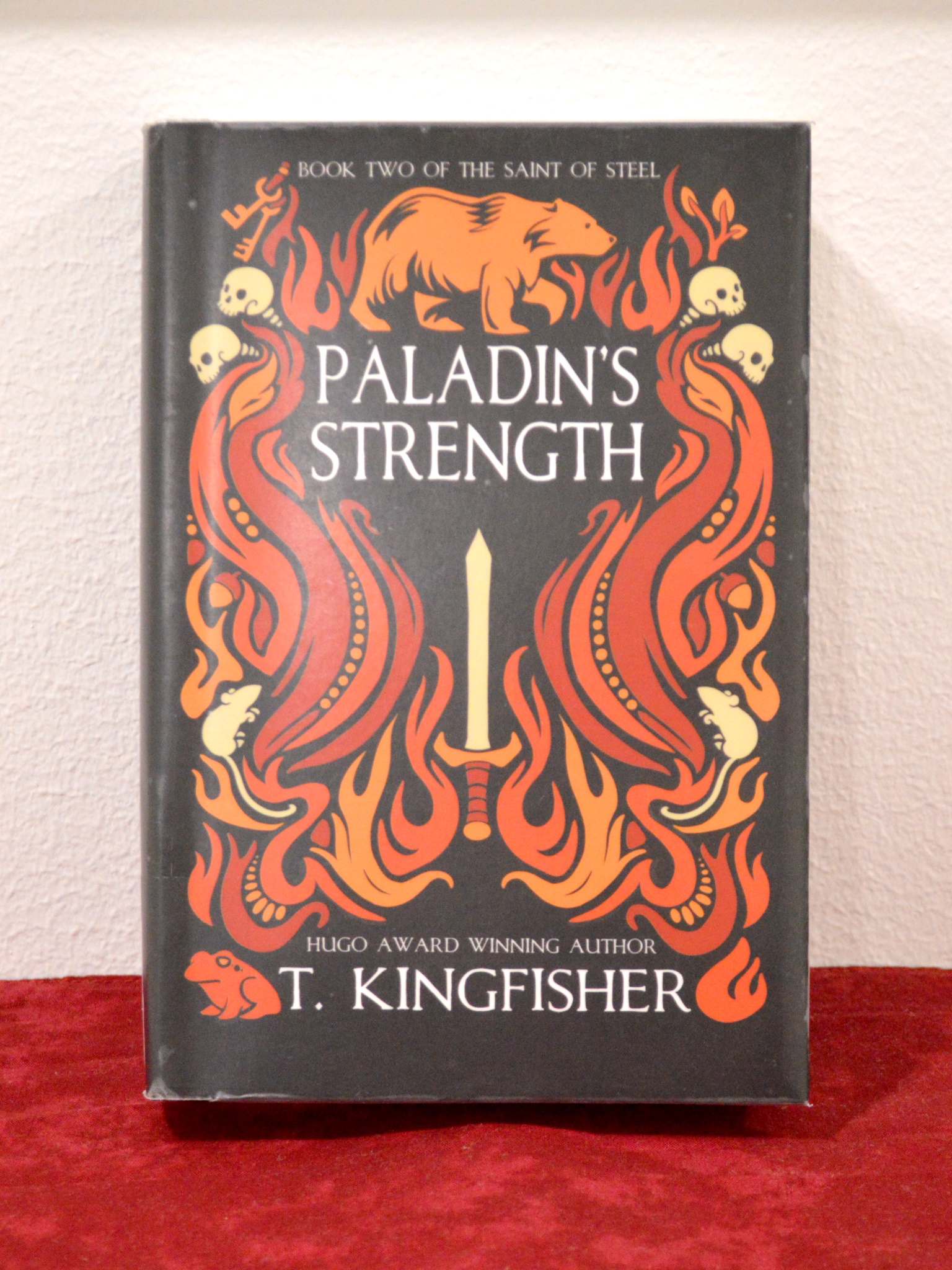
–Sister Clara in Paladin’s Strength by T. Kingfisher
I can’t think when I’ve last felt envious of another person. I’m sure it has happened, and relatively recently, too; I just can’t remember it. Which means—I hope, at least!—it can’t have been a very strong emotion or moment, which is a good thing.
In any case, more of the best version of myself for the coming year would also be great, not just for me but for the people around.
Kingfisher, T. Paladin’s Strength. Dallas: Argyll Productions, 2021, p. 200.
Image by Eppu Jensen
Serving exactly what it sounds like, the Quotes feature excerpts other people’s thoughts.
2024 was again a tough one, for me at least. I wasn’t the only one in my extended family dealing with unforeseen health issues. The situation is, fortunately, improving slowly but surely. And, at the very least, my circumstances allowed me to read a lot. 🙂
We’re vacationing for the rest of the year. Until 2025, Happy Merry and a Happy New Year! We hope your end-of-the-year celebrations bring you joy, whichever shape it may take. Stay safe.
We know that the ancient world was full of music. Some of the earliest texts to survive from antiquity are songs, and ancient art is full of musical performances. Sadly, we know very little about what that music sounded like. The texts of many songs survive, but not the melodies that went with them.
It’s a rare treat, therefore, when we find evidence for the music that went along with a text. The modern form of musical notation developed only in the past several centuries, but ancient people had their own forms of musical notation. The earliest complete song preserved without gaps or fragmentation is known as the Song of Seikilos, from the name on the dedicatory inscription that included it.
The text and its notation are preserved on a stone stele found at Ephesus in 1883. It was set up in the first or second century CE. The stele itself has had an interesting life since then, being at one time used as a stand for a flower pot, before ending up in the National Museum of Denmark in Copenhagen. It is generally thought that the stele was set up as a gravestone, but the original context of the find has long since been lost, so it is no longer possible to be certain. The text of the song inscribed on the stone would certainly fit:
For as long as you have to live, shine out.
Be entirely free of any pain.
There’s not much to life.
Time demands its due.
(My own translation)
Since this text is preserved with its musical notation, the song can still be performed today, and we can hear what the music of the ancient Greeks sounded like. Here’s an interpretation performed with lyre, flute, and drum.
Seikilos Epitaph (the earliest complete tune) Greek 200BC [sic] via YouTube
Image: Seikilos Stele, photograph by Artem G via Wikimedia (found Ephesus; currently National Museum, Copenhagen; 1st-2nd c. CE; marble)
An occasional feature on music and sound-related notions.
The newest expansion of World of Warcraft, The War Within, has been out for a few months now. Time for a first impressions post.
Eppu
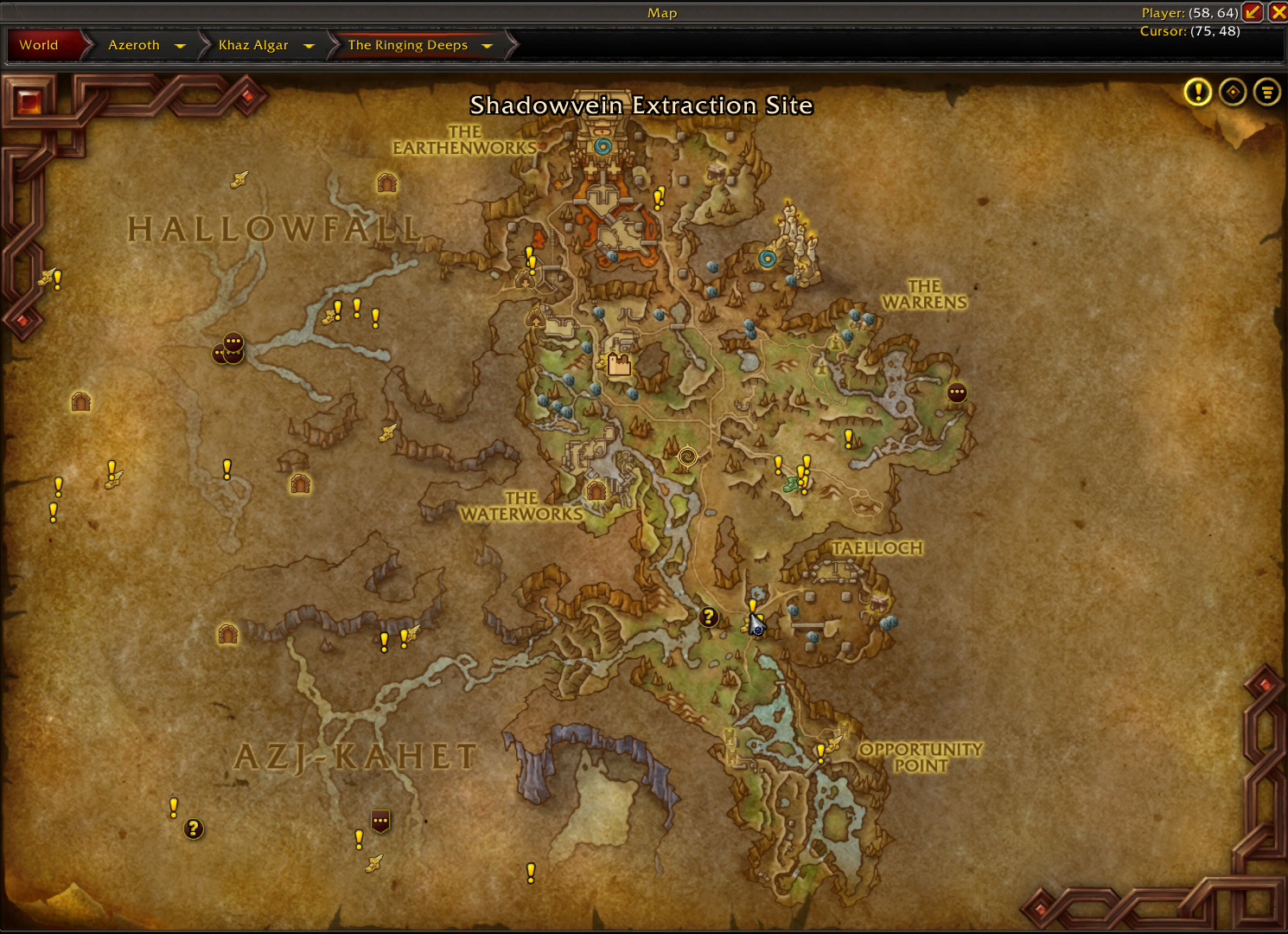
The environments are really impressive, both visually and geographically (for the lack of a better term). The landscapes look more like they could’ve developed according to natural processes. (Check out, for instance, the Ruptured Lake and the descent into Azj-Kahet from Hallowfall!) And into all that, they’ve squeezed an incredible amount of distinctive questing areas, some above or below others or just down a cliff, hidden behind a hump in the hill, or the like. The flora is imaginative and unusual—we are largely underground, after all.
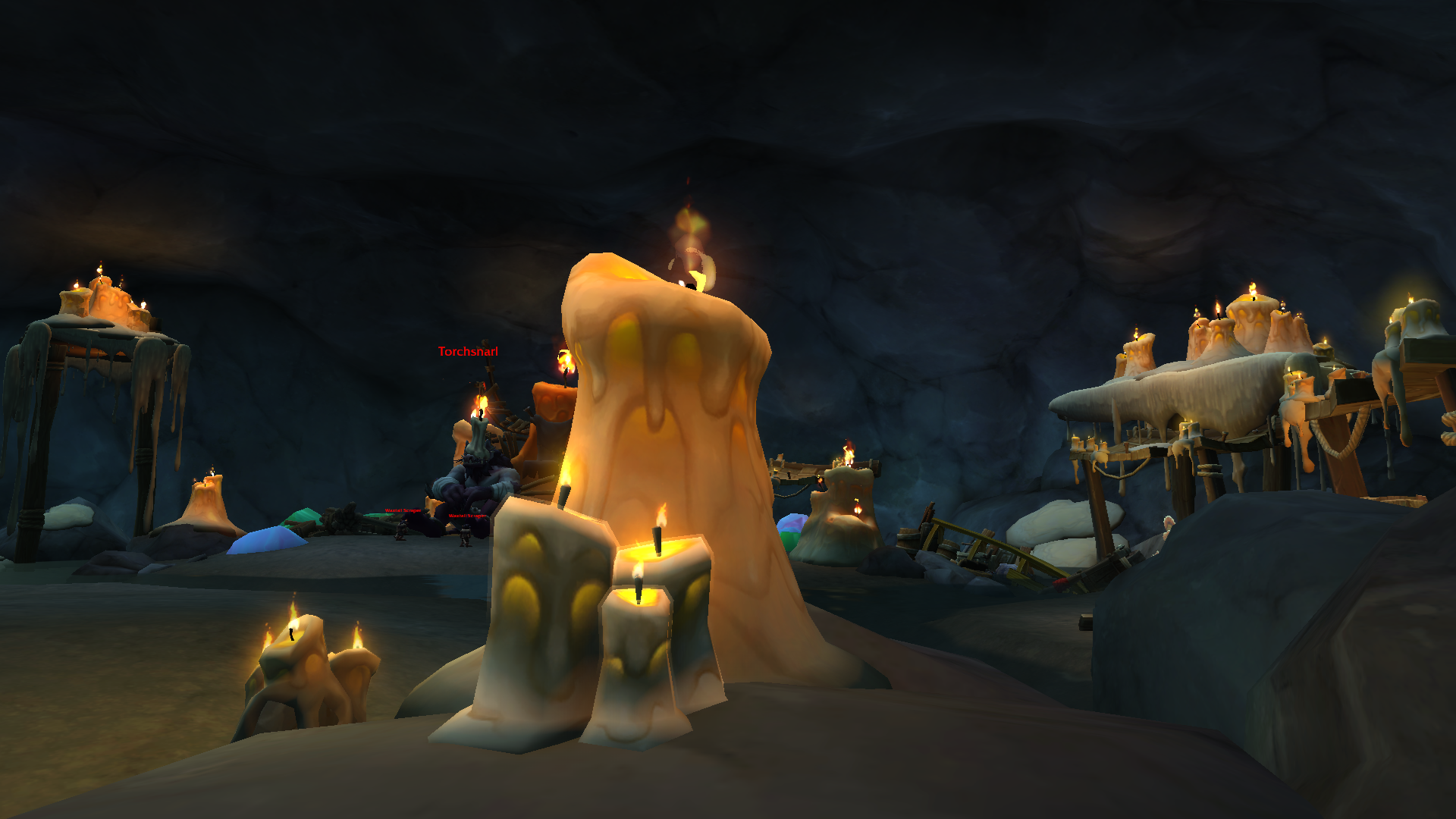
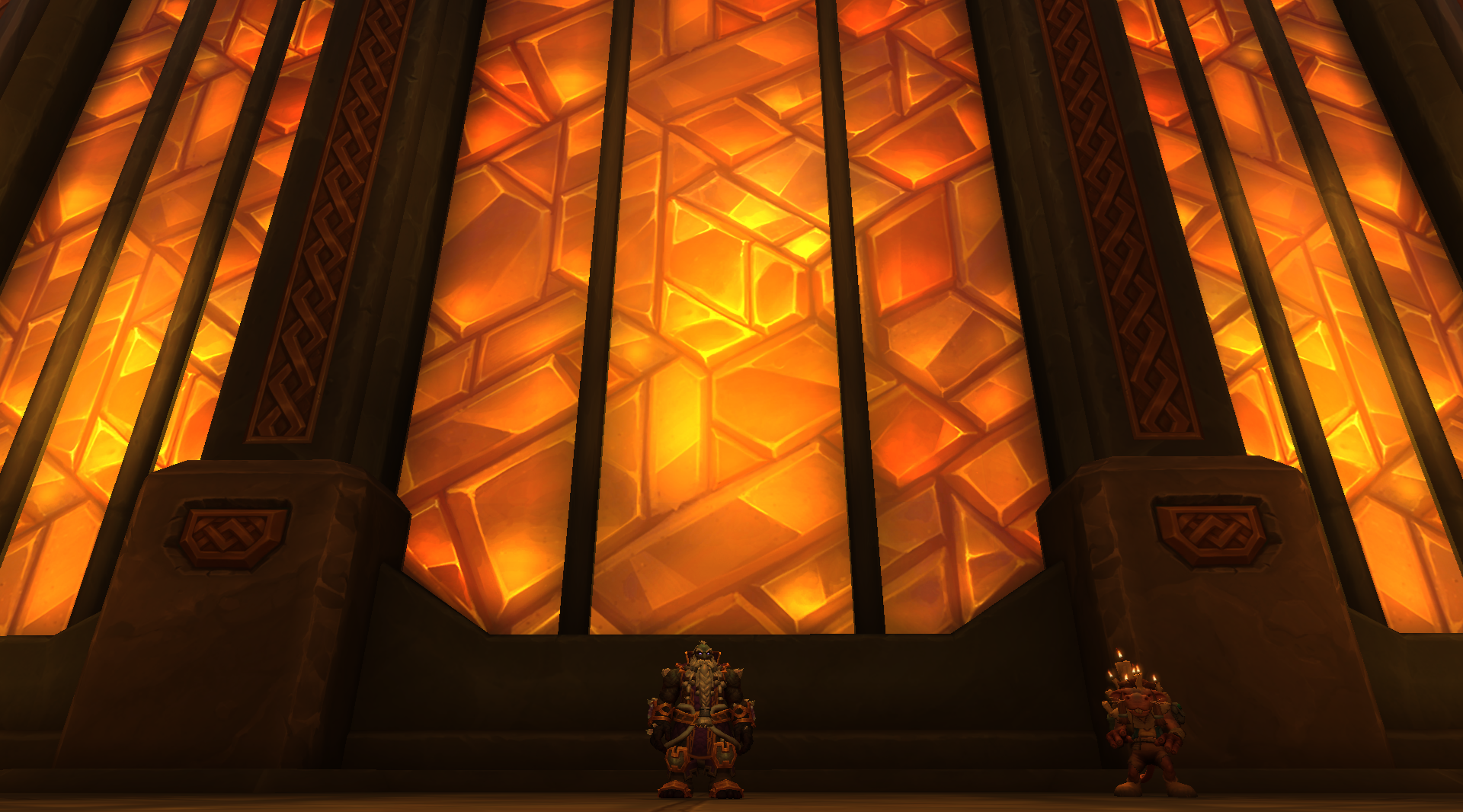
There are also a lot of fun details. To mention only a few: The tents that look like books are neat, and kinda remind me of the upside down ship houses in Boralus. The masses of candles in the Kobold areas look amazing, as does the darkness effect in e.g. Kriegval’s Rest. The Steam Vent in Dornogal has these heated beds for the Earthen to relax on. Looks very cozy!
The only zone I don’t care for is Azj-Kahet; it’s too dark overall, even if some areas have really cool and interesting details. (The exception here is the Wildcamp Or’lay area, where the Beneath the Roots quest ends; I really could’ve gone on adventuring there much longer. Fabulous, I love it!)
Most of the music is lovely, nicely varying, and thought-out. On the other hand, almost all of the nerubian characters have too deep voices; they’re incomprehensible. Bad directing leads to wasted voice acting.
This time, Blizzard opted to hoist hero talents on top of the talents introduced in Dragonflight. (With tweaks to the talents, because you have to tweak talents for a new expansion, otherwise the world would implode, right?) That works really well, I think; no need to re-learn absolutely everything. With professions, it’s possible to craft something useful for your toons from the beginning; that’s really nice.
There are lots of creature comforts I wish Blizzard had included years ago. For example, more options to skip certain story quests on alts, the Warband bank and Deposit All button (even if it deposited also all applicable Dragonflight items, so I had to go prune them out afterwards), the Leave-O-Bot at the end of delves, or quartermasters in cities marked on the map. And speaking of maps, the functionality of clicking anywhere on the map and have that point become a tracking caret on your screen (much like it’s been possible for quests).
Also the fact that flight points are opened to alts once one of your toons has discovered them (and reached 80?) is fantastic. As a visual person, I deeply appreciate the difference in the map boot graphics: yellow boot with wings = a discovered flight point, green boot without wings = an undiscovered one.
I LOVE that there now are a few dragonriding mounts that can carry a second character! As Erik doesn’t like dragonriding at all and I love it, when playing together we get to take advantage of the higher speed of dragonriding if I steer and Erik travels as a passenger. 🙂
Delves are a lot of fun, but they could also use some improvement. Like Torghast in Shadowlands, I really love the flexibility of delves—except this time, we do get loot at the end! (Something we wished had been a feature of Dragonflight.) On the other hand, we don’t get many interesting game effects like the anima powers in Torghast. Also, delves are set apart from dungeons and raids in that travel to their location is required and simply queueing (like for follower dungeons, which offer a similar type of flexibility) isn’t possible. Love the Leave-O-Bot, though, plus an easy exit at the end of a dungeon. I also like follower dungeons a lot, they make playing dungeon content easier. They could use some fine tuning, but the concept works.
A random observation to end with: Something about how the story in TWW unfolds reminds me a lot of Battle for Azeroth. Perhaps it has to do with the character-focused approach? Just about every plot point refers to its effects on people, and many quests literally focus on the personal, instead of running around fetching bucket handles or grinding through endlessly respawning faceless enemy mooks. Also, children aren’t entirely forgotten.
Erik
Almost everything I have to say about The War Within is good. This expansion delivered a lot for me to enjoy.
When the new expansion was announced as an underground experience, I was nervous. I’ve never much liked WoW‘s underground zones. I found Deepholm dull and Zaralek Cavern claustrophobic. Still, I was willing to wait and see what the design team would do, and I have been pleasantly surprised. The Ringing Deeps and Hallowfall are both beautiful zones that feel very distinct. You know you’re underground, but they don’t feel dull or oppressive. And when you need fresh air and sky above you, you can always go up to the Isle of Dorn. I don’t care for Azj-Kahet, but three out of four zones is more than enough for me to have a fulfilling game experience.
Within those zones, there is lots of attention to detail in both environment and storytelling to fill out our sense of the new peoples we meet there. The culture of the Earthen is fascinating to explore, as they find their way between the dictates of order and the pull to free will. Our kooky, scrappy, candle-wearing Kobold friends make excellent comic foils to the serious Earthen. The Arathi of Hallowfall introduce fascinating possibilities in the larger lore of WoW. I’m not interested in the Nerubians, but as with the zones, there is more than enough in the rest of the expansion for me to discover and enjoy.
Turning to aspects of gameplay, delves and follower dungeons bring a welcome new range of possibilities to the game for people like us who don’t like to do group content. Delves are short enough to fit a casual play schedule, challenging enough to be a satisfying test of skill, and rewarding enough to be worth doing repeatedly. Follower dungeons make it easy to enjoy dungeon content at the appropriate level without worrying about bad groups and grouchy strangers. Delves, follower dungeons, world quests, and weekly quests offer great flexibility in how to play and advance my characters. This expansions gives players like me more to do than ever before.
The most fundamental mechanical change of the expansion, of course, is the introduction of Warbands. The ability to share everything from renown progress to crafting materials seamlessly across all my characters is liberating and refreshing. Combined with the changes to transmog that let you learn any appearance you pick up, whether the character you’re playing can use it or not, these changes mark a significant shift in Blizzard’s attitude toward players. We finally have an expansion that welcomes me to play as many alts as I feel like without making it feel as though I am missing out on something important.
With all of these positives, the things that I don’t like about the expansion seem minor and unimportant. I don’t like Azj-Kahet and have no interest in the Nerubians. My dislike for the zone is not because it is badly done, though, and I hope that everyone who is into dark spidery stuff has a blast there. It is completely okay for Blizzard to make parts of the game that aren’t for me.
Dornogal feels a bit bland as a capital, less thriving and alive than Valdrakken, less magical than Dalaran, less characterful than Boralus or Zul’dazar. Still, it does have a sense of place and its own kind of beauty. I’d much rather spend an expansion in Dornogal than in Oribos.
Hero talents have turned out to be less interesting than I hoped. On most of my characters, the choice is made for me because of the two options available, one revolves around a talent I don’t use or serves a playstyle I’m not interested in. Few of the individual hero talents feel like they make much of a difference to how I play. On the other hand, I don’t really want a big shake-up to how I play my characters, so on balance, I’m fine with the system.
I find the main story of Smug Floating Shadow Elf Doing Vaguely Evil Stuff to be boring, but the truth is that in every expansion, I’m usually bored by the main story. I find my joy in the small stories we experience along the way, and The War Within has not disappointed with its side stories. From wacky Kobold bedtime stories to sensitive reflections on aging and the loss of treasured memories, this expansion has plenty to offer. Just like Azj-Kahet and the Nerubians, I can completely ignore the Smug Elf, Traumatized Prince, and Angry Ranger Show and still have more than enough to do.
Overall, my reaction to this expansion is: There are things I don’t care for and am not interested in, but there are so many things for me to enjoy that I hardly even notice the rest.
“The companies that make AI—which is, to establish our terms right at the outset, large language models that generate text or images in response to natural language queries—have a problem. Their product is dubiously legal, prohibitively expensive […], and it objectively does not work. All of these problems are essentially intractable. […]
“That non-technology industries are falling for this spin [that AI is inevitable] is perhaps unsurprising […] What’s more interesting is that other Silicon Valley companies are doing the same, even though, again, the result is almost always to make their product worse. Google has essentially broken its key product, and Microsoft is threatening to spy on all its users and steal their data, all because a bunch of CEOs have been incepted into the idea that this technology is the future and they cannot afford to be left behind.”
Nussbaum is packing quite a bit into a relatively short post. With regard to the claim that Google’s search engine is broken, she refers to an article in The Verge by Elizabeth Lopatto. Lopatto in turn provides some examples that are truly hair-raising: apart from unusable—or plain wrong—data, Google has offered potentially life-threatening answers to user queries.
Personally, for at least a decade if not longer, I haven’t used Google unless I can’t get anything sensible out of other engines, so I’m not the best person to comment on Google specifically. However, I have noticed that pretty much every search engine I’ve tried has gotten worse.
(Please note that my opinion below is based on my experience as an information professional, and on the experiences of my friends and acquaintaces as well; I don’t want to repeat “in my experience“ in every other sentence. Please also note that your experience may differ, and that I am aware of this possibility. And, finally, please note that this is an opinion post, so I will be selective with my point of view and using hyperbole.)
For one large problem, ads are rife among search results. It used to be possible to see a page of results with a couple of ads. Now it’s almost a page of ads with a couple of results sprinkled in for appearance’s sake. I understand the necessity of procuring funding. What I do not understand is destroying customer trust by no longer providing the service you claim to provide.
For another, advanced search is disappearing. (Here Google does seem to work slightly better than its competition, at least in some contexts, at least some of the time.) One example of a basic operation that’s stopped being reliable is excluding a word from your query by typing a minus in front of it; the term almost always if not always shows up in your results anyway. Another example is specifying a phrase by surrounding it with quotation marks. For example, at times I want to check a new-to-me multi-word term, or try to find a phrase I only hazily remember. But that only works if the search works. Even if it does work, an engine might offer other phrases containing your search terms, just in a different order. Obviously that isn’t helpful. A recent example is “price cliff”, for which Google offered the Instagram profile of one “Cliff Price” among the top results. Categorically not what I was looking for!
The results might also be interspersed not just by ads but other irrelevant blocks (“People also ask” or “Related Searches” or such). Granted, related searches do have their use; there are times when it is helpful to see adjacent topics or terminology. They definitely shouldn’t take space from the most relevant results, though, and the suggestions must actually be, you know, related to be relevant.
Further, search engines have stopped displaying the number of results for a query. (Remember when that was a thing?) These days it’s anyone’s guess whether you’re being served with a butt-load or a crap-ton of increasingly poor results.
Finally, at worst your search engine of choice will serve pop-ups in the margins (“See all!” “More from source!”) or push their “mobile experience”. *sigh*
These days, the search engine “experience” (WTH is that even supposed to be?!?) is like going to a restaurant and ordering pasta, but being served paste instead: not at all what was expected, entirely wasteful, and potentially harmful—and if you were to claim that the deliverable is “close” to the request, it is just insulting.
If this is what “smart” business people believe counts as quality output these days, I wouldn’t trust them to think their way out of a pillow case. (Yes, a pillow case, since the poor airbrains would probably hurt themselves with something as sharp as a paper bag.)
According to BBC, a Google spokesperson has defended AI-created overviews saying that “[t]he vast majority […] provide high quality information, with links to dig deeper on the web”. Speaking of vast majorities, most people are just not interested in digging and absolutely will not dig deeper; they want a clear-cut answer and they want it quickly. That means improving the quality of results, and neither the recent, pre-AI iterations nor the curret AI-“improved” engines deliver that.
I can’t think what the heck is up with the encrapification of search engines. Or why does it seem absolutely necessary to keep tweaking a good product what feels like every few months until it’s unrecognizeable.
Is it sunk cost fallacy? A form of mass hysteria spreading from Silicon Valley? Is maintaining a steady level of good service so moth-eaten a concept that it can’t attract resources anymore beyond the barest minimum? Are developers (or developers’ bosses) really that unable to comprehend that a change does not automatically mean an improvement? Is the only thing that matters the ceaseless chase after new features, regardless of whether they will shape up your service or shatter it?
It’s so frustrating, in any case. We, here, are nerds and do at times dig very deep. Sadly, these days search engines often hinder research instead of helping. Lately I’ve noticed that I’m turning more to bookmarks saved in my browser, or pick a specific site I’ve vetted earlier. It’s obviously not a foolproof answer, either, because I need to remember which entity has or might have the information I’m after in order to go and search their pages.
I’m quite ready to live in the most boring of times, with reliable basic services, please and thank you.
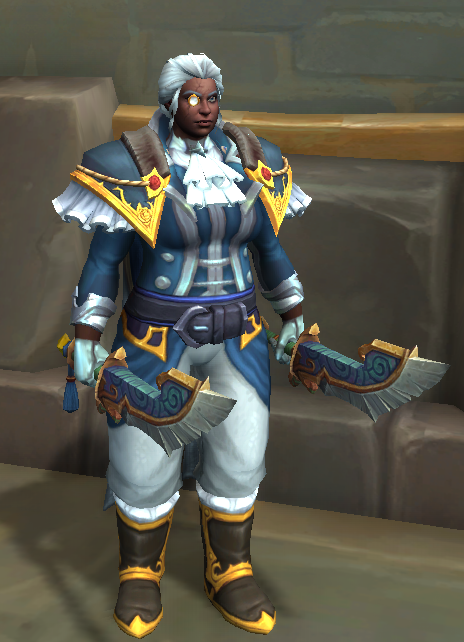
I love the old-time nautical style of the Kul Tirans in World of Warcraft. I like imagining that my Kul Tiran warrior stepped off the pages of the fantasy equivalent of a Patrick O’Brien novel. So, now that the season of holiday parties is coming, it seems like a good time to give her a proper dress uniform transmog. What do you think?
The outfit uses the Sky-Captain’s Formal Coat and a couple of pieces from the Gilnean Noble’s set, which I think go together handsomely. The swords are older models, but they pick up the blue and gold tones of the rest of the outfit and look appropriately cutlass-like. Here’s all the pieces.










 Co-Geeking


You must be logged in to post a comment.