Official Trailer for Thor: Love and Thunder

Thor rambles on in Thor: Love and Thunder, this time partnered with another deity capable of throwing lightning around:

Marvel Studios’ Thor: Love and Thunder | Official Trailer by Marvel Entertainment on YouTube

Jane Foster wielding Mjölnir will be something to see! I have no idea of the comic book storylines, so I can’t say how the tidbits we see compare to those—I have literally no idea—but the main antagonist, Gorr, seems musty and uninspired. We’ll see if that’s just that trailers always lie.

I do find the realm with a fancy, floating (although quite open) city interesting, and all of the other sets, props, costumes, and effects are handsome, as usual. Since this is another Thor movie co-written and directed by Taika Waititi, I’m inclined to see it in the theater.

Thor: Love and Thunder is set to debut on July 08, 2022, in the U.S.

Hey, look! We found a thing on the internet! We thought it was cool, and wanted to share it with you.

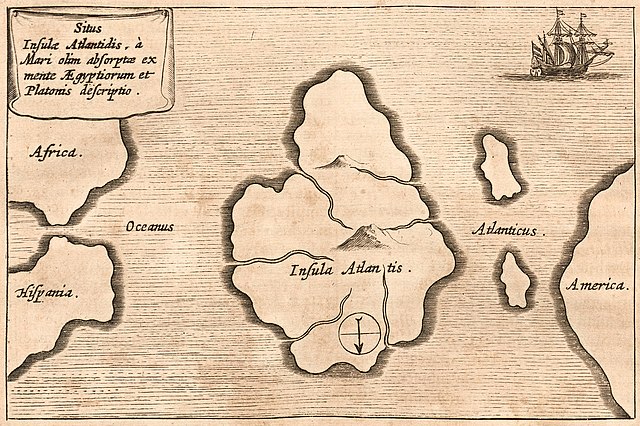
Atlantis Is Not a Myth

Atlantis is not a myth. And I don’t mean it’s real, either. Atlantis is something neither mythic nor real: it’s fiction.

Atlantis is an old Greek story, but not all old stories are myths. Myths are stories passed down and retold over time as part of a culture’s collective tradition. They have no identifiable author and no original, canonical form. Every version of a mythic story is a retelling of something older and usually already familiar to its audience. The stories of the Trojan War, for example, are myths. They were part of the common oral tradition of ancient Greece, reimagined in particular versions by the Homeric poets, Athenian dramatists, the Roman poet Virgil, and countless other storytellers and artists in the ancient Mediterranean and beyond. Every version of the story represents just one person’s imagination playing with existing ideas, characters, and motifs.

Modern attempts to find some truth behind the story of Atlantis often approach it as if it were a myth, something from deep in Greek history with an unrecovered truth behind it. It isn’t. There is no myth of Atlantis, no long tradition of reinterpreting a shared narrative like the tradition of the Trojan War. Stories about Atlantis appear in only two ancient texts, Timaeus and Critias, both written by Plato.

Plato was a philosopher who liked to create thought experiments and fictional stories to illustrate his ideas. He told a story about people chained up in a cave watching shadows on a wall to describe minds unenlightened by philosophy. He imagined a magic ring that made its wearer invisible as a way of talking about how people behave when they have the power to do what they want without fear of consequences. He made an analogy between the human soul and a charioteer trying to manage unruly horses. None of these stories were myths; they were invented to get philosophical ideas across. There was no deep oral tradition about people trapped in a cave. Plato just made it up.

Atlantis is the same. Plato made up a story about an ancient rival to Athens as a vehicle for philosophical discussions about law, society, and human nature. There is no deeper history behind Atlantis. No writer or artist before Plato had ever depicted the city; no one after him told any stories about it either. Some later authors discussed Plato’s Atlantis story and its meaning, but no one in antiquity independently told their own story of Atlantis the way that Greek poets and playwrights created their own versions of the Trojan War. Folks today looking for some historical reality behind Atlantis are missing the point just as much as if they were to go looking for an actual cave with people chained up watching shadows.

Now, this does not mean that Plato’s imaginary city has no connection to the real world. When people make up fictional stories, they often draw on actual things they know about. When Tolkien invented Middle Earth, he based the Shire on his childhood memories of the English countryside, the Dead Marshes on the horrific battlefields of the Great War, and the Riders of Rohan on his knowledge of early English history and legend. Elements of the real world found their way into Tolkien’s imaginary world, but these do not make Middle Earth real. You could go out and explore English villages and country pubs, even the very same ones that Tolkien knew from his youth, but that doesn’t mean you’ve found the Shire.

The same is true of Plato’s Atlantis. When Plato was imagining his fictional city, he probably drew on details of the world and history that he knew. Plato described Atlantis as the home of a powerful empire based in a circular city with concentric rings of land and sea that was ultimately destroyed by earthquakes. The idea of a powerful empire was not much of a reach for an Athenian; in the century before Plato, Athens had fought against the expansion of the Persian Empire before becoming an imperialist power itself. The idea of a city with a circular plan suited Plato’s philosophical allegory, but it might also have been suggested by real-world settlements he had seen or heard about (possibly translated through the imagination of other Greeks, such as Herodotus’ rather fantastical description of the city of Ecbatana). The idea of concentric harbors may have been suggested by the island of Thera (modern Santorini), which has a core island nearly surrounded by outer islands. The Greek world in Plato’s day had plenty of experience with earthquakes, landslides, and coastal floods from which he could imagine a land sinking beneath the water. Given Greek trade connections with the eastern Mediterranean, he may well have also heard flood myths from the Levant or Mesopotamia that he drew on for his tale of destruction. While Plato’s fictional Atlantis may have drawn on some preexisting real or mythic features for its details, that does not mean there is any more substance to the story. Thera is not the “real” Atlantis any more than a house with a green door is the “real” Bag End. We can’t use the Atlantis story to learn anything about actual history any more than we can learn the history of England from Tolkien.

Our desire to find a truth behind a myth can lead us to dismiss the intelligence and creativity of people in the past. Ancient people were just as complicated and imaginative as we are. Every story we tell does not have some shadowy reality behind it; sometimes we just make stuff up. So did they. In the case of Atlantis, we’re not even dealing with a mythic tradition handed down from previous generations. It’s fiction. Plato just made it up. There is no reality to find behind the story. There isn’t even a myth behind it.

Image: Fictive map of Atlantis from Mundus Subterraneus via Wikimedia (1664; engraving; by Athanasius Kircher)

History for Writers looks at how history can be a fiction writer’s most useful tool. From worldbuilding to dialogue, history helps you write.
Quotes: Being Awesome While Female

Sam Hawke guest posted at Fantasy Book Cafe about tomboy protagonists for the blog’s annual Women in SF&F feature in 2019:

“There is a particular kind of character in SFF. You know her. She’s smart and tough, determined, decisive, and she can kick the collective arses of any takers. She comes in a few varieties—in better stories she’s an Alanna of Trebond or a Brienne of Tarth, with depth and history and more than one dimension; in weaker ones she’s an empty Strong Female Character™ who has no real contribution to the plot other than Being Awesome While Female—but either way it’s her prowess at fighting, particularly against men, that sets her apart. […]

“Instead, I wrote a woman, Kalina, with a chronic illness who couldn’t fight to save her life. Literally. I wrote a book in which the main characters’ problems couldn’t be solved by the strategic and entertaining use of violence even if they had the skills to deploy, and I did it purposefully. I did it in part in response to my own sewing test.

“Let me explain.

“The sewing test is failed when a book deploys a lazy code to tell me how much better, more interesting, more deserving, the female character is than those silly other women by making a point of having her hate sewing or embroidery or [insert other feminine-coded activity or trait of your choice—but you wouldn’t believe how often it’s sewing]. These days, if a book does this, I’m out. It’s not just lazy, it’s not just a cliché, it’s a statement by the author that I’m expected to cheer on one woman by disparaging the rest of them. […]

“Basically, there’s a nasty underbelly to over-reliance on this very limited model of ‘strength’, and it’s rooted in the same insidious patriarchal BS that gave us the old style women-as-objects-to-be-rescued stories: here are traits which are traditionally coded as masculine, which you have been taught are more valuable than traits which are coded as feminine. See how you should cheer on this woman because she’s different and better than those other women, who are weak and shallow and worthless. Reward her for those traits, and punish those who lack them.”

author Sam Hawke at Fantasy Book Cafe blog, 2019
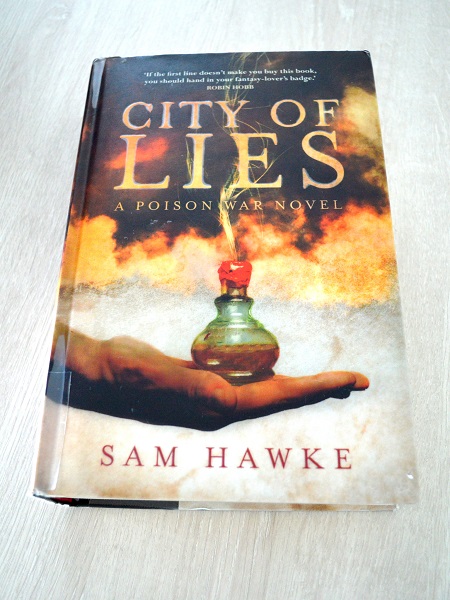
Hawke City of Lies

Hawke is perfectly right, if you ask me. As awesome as ass-kicking women are, other ways of being awesome exist and should be recognized more widely. Because the variety of life skills to be excelled in is much, much wider than merely physical prowess, fighting skill, or attitude.

Moreover, as we all know, there are situations where the application of know-how or just the right tool will create such a better outcome than anything else that at best it’s not even fair to compare them. Why should genre literature forget these skills when women stand in the protagonists’ shoes?

I’m going to be adopting the phrase “being awesome while female” for all kinds of amazing things that women do. It’s just that awesome. 🙂

P.S. I just read City of Lies, Hawke’s book with the female protagonist who has a chronic illness. I thoroughly enjoyed her strategic and entertaining use of her brain—and ditto for the male protagonists, Kalina’s brother and his best friend.

Image by Eppu Jensen

Serving exactly what it sounds like, the Quotes feature excerpts other people’s thoughts.

Official Trailer for Obi-Wan Kenobi

Another trailer for the Obi-Wan Kenobi series shows a lot of reused footage, but also new, tantalizing scenes:

Obi-Wan Kenobi | Official Trailer | Disney+ on YouTube

Apart from the Empire’s hunt for Obi-Wan, most of the plot seems to revolve around interpersonal conflict. (Those of you who have started watching already may be able to fill us in on this!) There seems also to be an introduction of the first true female antagonist of the franchise. (I don’t count Captain Phasma, as she didn’t get nearly enough screentime.)

Obi-Wan Kenobi was released on May 27, 2022.

Hey, look! We found a thing on the internet! We thought it was cool, and wanted to share it with you.

Ukraine Has Been at War for 105 Days

Ukraine has been at war for 105 days now. That’s 15 long, grueling weeks. (Also the length of Finland’s Winter War with the USSR, which is why the number is significant to me.)

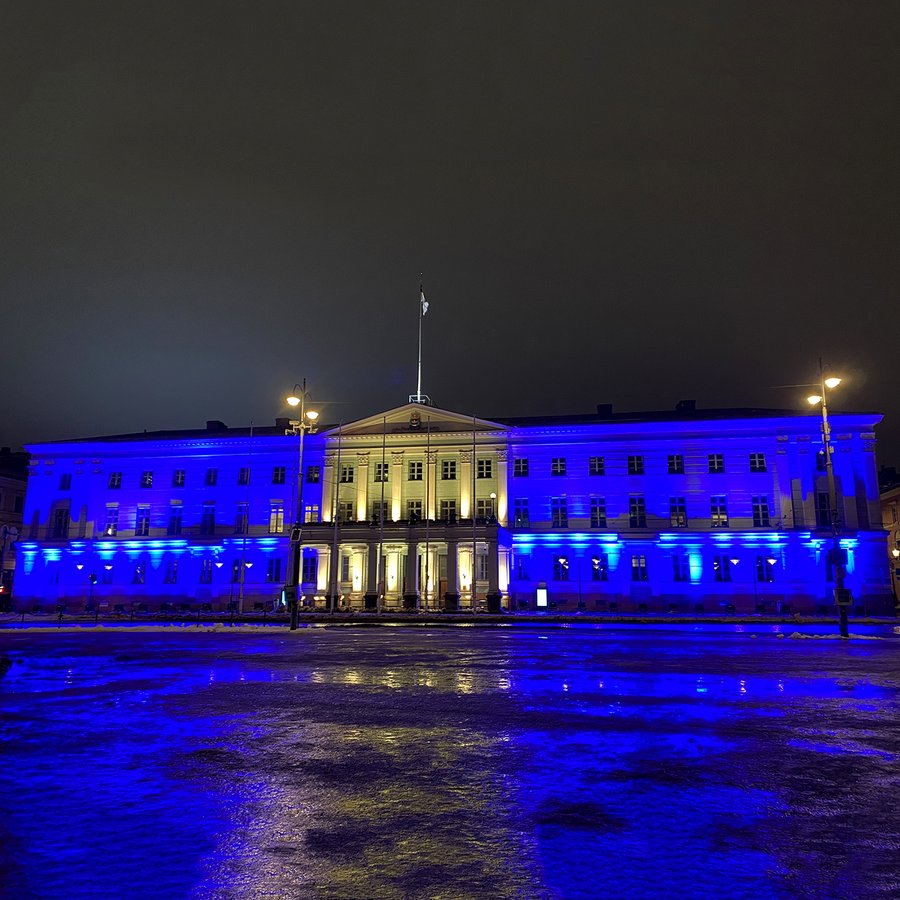
Twitter Helsingin kaupungintalo valaistu

Russia’s craven attack (despite the incompetence it seems to have been implemented with) did change the world, albeit a bit differently than intended. Ukraine, Moldova, and Georgia have submitted their applications to join the EU.* There’s an unprecedented feeling and showing of solidarity towards Ukraine in Europe. Russia—and especially their petty, piddling thing of a presidential figure—is becoming something of a pariah at least in the Euro-American world. Furthermore, Finland and Sweden are joining NATO, ditching their long-cherished military independence.**

That’s in the first three months. Much like the beginning of the covid-19 pandemic, it’s felt three times as long. Unfortunately, I’m afraid this conflict will be a matter of years. Sigh.

World, any time you want to return to duller times is okay by me.

*) Getting even a membership candidate status isn’t simple, though, so this isn’t happening soon.

**) And thanks to Turkey’s pretentions of power-playing, this isn’t going to be as much of an open-and-shut case as we thought, either. Ohwell. I do believe Finland’s and Sweden’s NATO membership will happen eventually.

Image: Helsinki City Hall lit in blue and yellow in solidarity with Ukraine by the city of Helsinki on Twitter

When the suckage just sucks too much.

Writing Prophecies

Prophecies are a staple of fantasy fiction, and for good reason: they are a convenient way of providing the heroes with information to get the plot moving while also imparting an aura of ominous mystique. How do you write a good prophecy for your story or game? Let’s start by looking at how prophecies worked in historical cultures.

Nearly every people in history has believed in some way of communicating with supernatural forces in order to gain special knowledge or insight, but the methods, purposes, and results of that communication could vary widely from culture to culture. By “prophecy” we usually mean something more particular: statements about specific future events which impart the necessary knowledge for the recipient to avert, influence, or at least cope with the effects of those events. Numerous cultures in history believed in some way of gaining these kinds of insights.

The problem that historical oracles faced, of course, was that predicting the future doesn’t actually work. The priestesses at Delphi or the authors of the Sibylline Books at Rome had no special insight into the future any more the authors of modern horoscopes and fortune cookies do. Nevertheless, many people believed in the power prophecy. The Histories by Herodotus, a work which makes frequent references to oracles, gives a useful view of the ways in which people coped with the unreliability of prophecy.

Reasonable guesswork. Prophets may not have special knowledge of the future, but they can make reasonable guesses about what is likely to happen, the same as anyone else. When the small Greek city of Miletus led a rebellion against the powerful Persian Empire, it didn’t take much special foreknowledge to predict that things were going to go badly for Miletus. The Delphic oracle produced this prophecy: “Miletus, you who scheme at evil deeds, will be a feast and splendid gifts for many. Your wives will wash the feet of long-haired men. Strangers will tend my shrine at Didyma.” (Herodotus, Histories 6.19, my own translations) This prophecy turned out to be true, but plenty of other Greeks claiming no connection to the gods also knew that things were going to go badly for Miletus, and so refused to join the revolt.

Vagueness. The standard dodge for prophets from Delphi to Nostradamus is to give an answer vague and cryptic enough that it will seem to suit whatever actually happens. The most famous example is perhaps the Delphic oracle’s response to the Lydian king Croesus, who asked whether he should invade Persia. The oracle replied that by doing so, Croesus would destroy a great empire, neglecting to mention which empire would be destroyed. As it happened, Croesus’ attack on Persia led to the Persian conquest of Lydia, but if things had gone the other way, the oracle would still have been right. (Herodotus 1.53)

Unspecificity. Some prophecies, like the one given to Croesus about his war with Persia, gave vague information about a specific event; others gave detailed information without specifying what event it related to. For example, a little-known Athenian seer named Lysistratus predicted that “The women of Colias will cook with oars,” which came true when wreckage from the naval battle of Salamis washed up on Cape Colias and was used as firewood by the locals. (Herodotus 8.96) This prophecy is unambiguous about what will happen, but says nothing about when or why. Colias was downstream of an important harbor and shipping channel; it was not hard to predict that wreckage from some significant event would wash up there and be salvaged sooner or later.

Selection bias. People tend to remember things that confirm their beliefs and forget things that don’t. People who believed in the power of oracles accordingly tended to remember prophecies that turned out to be true or could be interpreted to be true. Almost all the historical prophecies we have recorded were written down only after they had apparently come true. A number of recorded prophecies from the Delphic oracle begin with the word “But,” suggesting that some preceding part of the oracle has been left out, possibly because it turned out to be wrong or not relevant, such as in another Delphic reply to Croesus: “But when a mule becomes the king of the Medes, then flee, soft-footed Lydian, by the pebbly Hermus, and do not be ashamed to be a coward.” (Herodotus 1.55) This part of the prophecy was interpreted after the fact to refer to the Persian king Cyrus, whose ancestry was both Persian and Median, analogous to a mule, which is the progeny of a horse and a donkey.

Intrigue. Sometimes prophecies were manipulated in order to achieve the results some party wanted. It was an open secret that the priests at Delphi could be bribed to give particular answers. Other oracles and seers were no doubt similarly open to influence. The Alcmaeonid family of Athens were known to have bribed the Delphic priests to encourage the Spartans to help them against their rivals in Athens. (Herodotus 5.63) Another kind of manipulation is exemplified by Onomacritus, a collector of oracles who tried to encourage the Persian king Xerxes to invade Greece by sharing only those prophecies in his collection that seemed positive for him and hiding any that seemed negative. (Herodotus 7.6)

Now, as an author with full control over the world of your imagination, you don’t have to resort to any of these dodges. If you want your ancient prophecies to come true, then they will. The problem with prophecies in fiction, though, is they risk undermining the agency of the main characters. If prophecies predict the threat or its resolution too reliably or in too much detail, opportunities for drama are lost. If your work is for a game or some other setting where other people will have input to the plot, you can bet your dice that as soon as you hand them a prophecy they will try to exploit, invalidate, or weasel out of it in some way.

Uncertainty is a source of drama. When your audience already knows how everything is going to end, it’s harder to keep them interested in the story. Prophecies risk diminishing drama by introducing too much certainty. How do you keep the uncertainty in a story when there’s a prophecy involved? The techniques mentioned above are a good place to start because they serve the same function for a different reason: historical prophets had to keep uncertainty in their predictions because they didn’t actually know what was going to happen. You can use the same ideas in order to avoid tipping your hand too much to your audience or players.

Reasonable guesswork. If an in-story prophecy confirms something your heroes already suspect or adds useful detail to a picture that was already becoming clear, it can add impulse to the plot without dominating it. Conversely, a prophecy that doesn’t provide answers but spurs your heroes to ask important questions can be a good way to get things moving.

Vagueness and unspecificity. Both these techniques are good ways of keeping a prophecy from overwhelming the agency of your characters. If the prophecy refers to a specific event but doesn’t give clear details about it, or gives a clear prediction without specifying when, why, or how it will come about, there’s more room for your characters to work around it.

Selection bias. Lean in to the fact that prophecies can be wrong. If your characters (or their players) are aware that prophecies are unreliable or only seem true after the fact, their doubts about the truth or usefulness of the prophecy they’ve received can be a good source of drama.

Intrigue. There’s even more drama to be mined out of the fact that a prophecy might have been tampered with or invented, or that an authentic prophecy might have been delivered to your characters in such a way as to influence their understanding of it. Such puzzles open up interesting possibilities for side plots and interactions with antagonists.

As an author, the future is in your hands, a power that historical prophets never had. Still, you can learn from their examples how to make your prophecies sufficiently portentous without overwhelming your characters and plot.

History for Writers looks at how history can be a fiction writer’s most useful tool. From worldbuilding to dialogue, history helps you write.
Trailer for Jurassic World Dominion

Good grief! Either I haven’t been paying attention, or there really is a whole slew of SFFnal trailers out in the past month for me to blog about and comment on. Here we go…

The end cap for the dinosaur park franchise(s), Jurassic World Dominion, puts together characters from the original trilogy and the sequel trilogy. And dinos, of course:

Jurassic World Dominion | Trailer 2 [4K] by Jurassic World on YouTube

I was surprised to learn the movie takes place four years after the preceding one; it will be interesting to see how the writing team will have figured humans and dinosaurs might coexist. It will also be very nice to see some of the older characters, and I hope there will be less time spent on my least favorite faces and more on the nicer ones.

There is, however, one thing I will NEVER want to see again: high heels that stay glued to the female protagonist’s feet while she’s running through the jungle. Oh, hello?! Yuckkk!

At this writing, Jurassic World Dominion will be released on June 10, 2022 in the U.S.

Hey, look! We found a thing on the internet! We thought it was cool, and wanted to share it with you.

Living in the Science-Fictional Now: Photos from Another Planet Are Trivial

One of the astounding things about living right now is the sheer amount of scientific knowledge and technical skills humanity has gained in the past 100 years or so alone.

These days it’s trivial, for example, to get high-quality photos from a neighboring planet brought to your personal device.

(Ok, it’s not truly trivial in the strictest sense since so many steps and technologies are involved, but at the same time: Photos. From another planet. Automatically delivered. Via the Internet. Which many (if not most) of us in the West have casual access to. Pretty much daily! So yes. Trivial.)

Specifically, I’m talking about the Persevererance Imgage Bot on Twitter. It’s a project by computer engineer Niraj Sanghvi. He has automated image tweeting mostly from NASA/JPL-Caltech sources for an impressive, ever-growing collection.

The photos are purely functional, of course, helping the rover to operate, but some are also quite interesting as photographs. Below are some recent favorite shots.

Twitter PersevereImgBot Rock and Sand
Twitter PersevereImgBot Hilly Landscape
Twitter PersevereImgBot SkyCam and Stars
Twitter PersevereImgBot Smooth Sand

(Click on the image source links below to find more about each photo.)

As a bonus, here’s a short video of a Martian solar eclipse by the moon Phobos taken by Perseverance:

NASA’s Perseverance Rover Sees Solar Eclipse on Mars by NASA Jet Propulsion Laboratory on YouTube

Cool. Cool, cool, cool. 🙂

Images by NASA/JPL-Caltech/ASU via PersevereImgBot on Twitter: Rock and sand. Hilly landscape. SkyCam with stars. Smooth sand.

Out There is an occasional feature highlighting intriguing art, spaces, places, phenomena, flora, and fauna.

Dwarven Windwalker Monk Transmog Tweak

Besides the Blood Elf subtlety rogue transmog update I already shared, I’ve also tweaked my Dwarven windwalker monk’s mog for Shadowlands. This new look is more sombre and subdued in color as befits the expansion’s theme.

Shadowlands F Dwarf Windwalker Monk Transmog

As before, the head and shirt slots are hidden and the bracers aren’t visible. I also retained the two fist weapons mogs (Silithid Claw).

The update is built around the Bronzebeard Heritage Armor set. Since I tend to find the pre-made sets often a bit lifeless, however, I only used the shoulders, chest, hands, and feet, and filled out my new transmog with Dignitary’s Traveling Cloak, Stygian Belt, and Harvester’s Court Leggings. I was suprised how well the diamond-patterned quilting in the Revendreth pants fit with the diamonds in the Bronzebeard shoulders, and the red in the belt exactly matches the pants.

Finally, I added some red tattoos (Gryphon pattern) to match the pants color and the detailing on the shoulders.

If interested, you can have a look at the set in Wowhead’s Dressing Room.

Image: World of Warcraft screencap

Of Dice and Dragons is an occasional feature about games and gaming.

Quotes: No Man’s Faculties Could Be Developed without an Extensive Acquaintance with Books

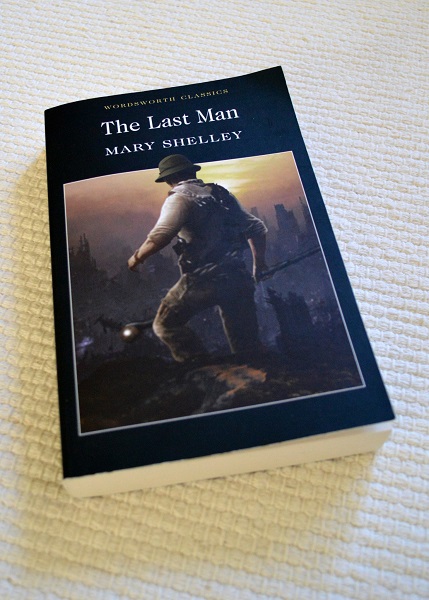
Mary Wollstonecraft Shelley’s speculative work The Last Man starts very much like a run-of-the-mill regency-era novel with its three-book structure. You even start to wonder whether much of interest is ever going to happen.

And then a plague hits. Book three, especially, where people drop off like flies, felt rather grim even before living through a pandemic myself. (I read it a few years ago.)

Shelley The Last Man

Since the plague aspect is a little too on the nose, I’m going to skip all of that for now. Instead, below is what the protagonist thought about reading:

“I felt convinced that however it might have been in former times, in the present stage of the world, no man’s faculties could be developed, no man’s moral principle be enlarged and liberal, without an extensive acquaintance with books. To me they stood in the place of an active career, of ambition, and those palpable excitements necessary to the multitude.”


– Lionel Verney in Mary Shelley’s The Last Man

Sounds astonishingly like Mr. Darcy’s line about a truly accomplished woman who must improve “her mind by extensive reading” in Jane Austen’s Pride and Prejudice, doesn’t it? It must’ve been very much in the air in the early 19th century.

If you’re interested, a free e-version of The Last Man is available on Project Gutenberg.

Shelley, Mary. The Last Man. Ware, Hertfordshire: Wordsworth, 2004 [originally published 1826], p. 124.

Image by Eppu Jensen

Serving exactly what it sounds like, the Quotes feature excerpts other people’s thoughts.