In honor of its 40th anniversary, Monty Python and The Holy Grail will be re-released on October 14, 2015. The release will be twofold: an anniversary disc version (DVD & Blu-ray) and a limited, one night only theatrical showing.
Co-director Terry Jones goes on YouTube to introduce some never before seen material gleaned from video archives:
“Put together after months of searching through the Python archives, scanning the original negatives and reassembling scenes, this video includes extended versions of ‘Sir Robin and the Three Headed Knight’, ‘Get On With It!’, ‘Old Crone’, ‘Wedding Slaughter’, alternative takes from the ‘Constitutional Peasants’ scene, a shorter take from the ‘Black Knight’ scene and some lost silly bits.”
A nifty tidbit from Jones’s intro: the hip amputee who played the Black Knight with his leg cut off also did the voice work for his lines, and did a pretty good job.
Hey, look! We found a thing on the internet! We thought it was cool, and wanted to share it with you.
Down the crimson marble steps of the temple of Zurukh, god of blood, came a bald priest in the red robes of the Order.
“Heathens!” he cried, pointing with his holy whip at Our Heroes. “Heretics! Blasphemers! You shall bow down and worship Zurukh or burn in the fires of the Scarlet Inquisition!”
“Silence!” answered Inessa, stepping forward from the party and raising aloft her crosier. “Repent of your wickedness! The power of Adnea, Lady of the Pure Light, compels you!”
Religions are tricky to write. If you’ve delved into much fantasy, you’ve probably seen a lot of faiths that seem oddly familiar. In fact, the religions of some fantasy worlds can be charitably described as “Catholicism with the serial numbers filed off.” Even given a profusion of gods with their own temples and cults and spheres of influence, fantasy religions tend to work more like the modern monotheisms than like the actual ancient “pagan” traditions they are outwardly imitating.
How can you make your fantasy religion feel more authentically ancient? There’s no rules to it, but in this and some future History for Writers posts, I’ll share some of what we know about historical beliefs from around the world that may help you imagine a religious worldview that feels less modern.
Finland’s national public broadcasting company Yle interviewed actor Sean Bean (article in Finnish; the 4-minute video in English) during his promo tour for The Martian.
(Note: I wasn’t able to share the video; you’ll have to follow the link to Yle and play it there.)
Bean mentions that the Lord of the Rings reference – Project Elrond – was something he didn’t know how to react to. My partial transcription from the interview (from ca. 1:50-2:30) picks up with Bean’s answer to how it came about:
“I don’t know. I think it was in the script originally and it stayed in there, and it was very funny ’cause I’ve never been in a f– I was in a film that– then– which was– within a film. So it was very funny. [Laughs.] And, erm, you know, I just kind of listened to it, I didn’t know how to react, really [laughs], to that. It’s an unusual kind of situation I was in. But it was great, it’s great. I love that, it’s nice.”
When asked whether they joked about the reference on set, Bean answered:
“Not really, no, you said it and everyone went, like– [indistinct; laughs.] You know, I couldn’t kind of go, like, ‘Oh yeah, I was in [that]’, you know. But I– So I just kind of– [makes a gesture of playing it cool] went on with it.”
Other questions touch on the large number of team leader roles he’s played or characters who die (which Bean doesn’t seek out, specifically), how Bean built the character of Mitch Henderson with director Ridley Scott, and the kind of roles Bean would like to play in the future.
Serving exactly what it sounds like, the Quotes feature excerpts other people’s thoughts.
Star Wars group costumes. Photo by Ashley Thalman / Say Yes.
Perfect for Halloween: evocative outfits that are easy to create almost entirely by using everyday items. Sometimes it’s the whole that matters more than individual details. Great job!
Credits: models Aaron, Kayti and little Monroe Oldham; photography by Ashley Thalman; styling by Sarah Larsen; production by site manager Ashley Aikele; creative direction by Liz Stanley at Say Yes.
This post has been edited.
In Making Stuff occasional feature, we share fun arts and crafts done by us and our fellow geeks and nerds.
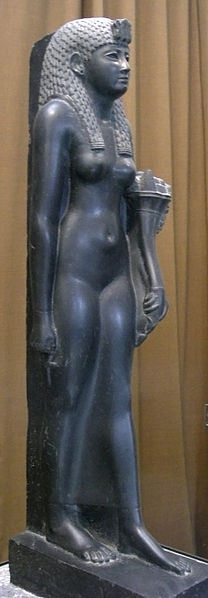
In this age of selfies and Instagram, we are very aware of how consciously we all create the image of ourselves that we show to the world. The people of antiquity were no less self-conscious about their public image. Look at these two sculptures of Cleopatra VII.
Cleopatra VII Philopator is the famous Cleopatra, Queen of Egypt and lover of both Julius Caesar and Marcus Antonius. She was the last of the Ptolemaic dynasty in Egypt, founded by Ptolemy I, one of the generals of Alexander the Great. The Ptolemies ruled Egypt for almost three hundred years, arguably the first European colonial state in Africa. Like other Macedonian dynasties in the relics of Alexander’s short-lived empire, Ptolemy and his heirs took a pragmatic approach to ruling over a large population that did not share in their Hellenized Macedonian culture. They embraced a kind of cultural bilingualism in which they presented themselves in very different ways to different audiences.
Portrait head of Cleopatra VI, photograph by Louis le Grand via Wikimedia (Altes Museum, Berlin; 40-30 BCE; white marble)
This marble head of Cleopatra is sculpted in a Hellenistic style and presents the queen in a Greek cultural context. White marble was favored for sculpture in the Greek world because it reacts to light in ways similar to human skin, making marble sculpture appear more naturalistic. Details like the soft rendering of the mouth, the detailed delineation of the hair, and the slightly off-center tilt of the head are drawn from the artistic repertoire of late Classical and Hellenistic portrait sculpture. This statue asserts Cleopatra’s Greekness and her participation in the broader Mediterranean cultural world. It was probably displayed in Alexandria, the Ptolemaic capital, which had a cosmopolitan population largely made up of Macedonians and Greeks, along with substantial Jewish and Persian communities and a variety of other peoples, but few ethnic Egyptians. It was meant to be seen by an audience that would recognize and appreciate the way this portrait fit into the larger history of Hellenistic ruler portraiture.
Statue of Cleopatra VII photograph by George Shuklin via Wikimedia (Hermitage Museum, St. Petersburg; late 1st c. BCE; basalt)
This basalt statue of Cleopatra uses not only an Egyptian artistic style, but an almost entirely Egyptian iconographic vocabulary. Many different stones were used for Egyptian portrait sculpture, but basalt was a popular one since the stone is very hard and durable, giving a sense of permanence especially to royal portraiture. Cleopatra is presented here as an Egyptian pharaoh. She wears a wig adorned with the royal uraeus and carries an ankh in her right hand. The cornucopia in her left hand is a Greek symbol, but its connotation of bounty is similar to the ankh’s symbolism of life. Also note that one of her feet is advanced. Egyptian women were typically depicted with feet together and men with one foot advanced, but the adoption of masculine traits to represent a ruling queen is also traditionally Egyptian. This statue was intended for an Egyptian audience and meant to convey Cleopatra’s commitment to ruling over her Egyptian subjects through the forms and structures that they had long been accustomed to.
The Ptolemaic monarchs were aware that their power rested on two precarious premises: that the people of Egypt would accept rulers who were not themselves ethnically Egyptian and that other Mediterranean, African, and Asian powers would respect as equals a royal house of comparatively recent vintage. These sculptures show the confidence with which Cleopatra balanced those two needs and reinvented her image for two different audiences.
The Visual Inspiration occasional feature pulls the unusual from our world to inspire design, story-telling, and worldbuilding. If stuff like this already exists, what else could we imagine?
Or: Some History behind Ostrich Riding, Part 4 of 7
Background: I ran into two historicalimages from California with ostriches used as transportation. That got me wondering about the history of ostrich riding. And that lead me down quite a rabbit hole.
I’ve divided my findings into separate posts (find them with the ostrich riding tag). Warning: serious early history and language nerdery ahead in Serious Academic Voice.
TL;DR – Tracing ostrich riding to a 3rd century BCE tomb find (a statue of Arsinoe II) from Egypt doesn’t hold up. The use of various ostrich products in human material culture dates back thousands of years. A few ancient depictions involve humans handling ostriches; however, extant sources don’t tell us whether ostriches were merely hunted or whether they were also tamed in the ancient world. The most promising source seems to be a description of a magnificent parade put together by Arsinoe II’s husband-brother Ptolemy II. This Grand Procession included eight chariots drawn by pairs of ostriches, and the ostriches may have been ridden by boys in costumes.
I had hoped to find a nice, neat selection of ancient texts putting the Greek word for ‘ostrich’ in context, but even a cursory look reveals that the history of the word strouthos is complex. At best, we can say that there are no immediate red flags either in the original Greek or modern English translations for Arsinoe II’s statue or Ptolemy II’s Grand Procession.
The Martian got me thinking about Tolkien (and not just because of the Council of Elrond reference, although I loved that bit). On a basic level, The Martian is about the same thing that The Lord of the Rings is about. No, Mark Watney doesn’t have to destroy a magic ring and Frodo and Sam weren’t planting potatoes in Mordor, but the question that both works keep coming back to is the same: how do you make good decisions when you don’t have the information you need?
I was thinking about The Lord of the Rings recently after listening in on a conversation between a couple of fantasy geeks about why they don’t like Tolkien. Their complaints were that Tolkien’s writing moves slowly, people talk about things instead of doing them, and most of the action doesn’t even happen on the page. These are all perfectly valid points, and if you prefer action to talking, they are good reasons to read something else. We all like the things we like and there’s no right or wrong about it. What struck me, though, was that the things they didn’t like about Tolkien are precisely the things I love.
There is a rich vein of fantasy literature all about heroes who charge boldly into the thick of battle and remake the world by sheer force of their will. Tolkien’s heroes are not of this kind. For him, what makes a hero is slowing down, thinking carefully, and making the best decision you can, even when you can’t be sure your choice is the right one.
My favorite part of The Lord of the Rings is the Council of Elrond. I know that I am in a minority in this and that even many people who love Tolkien find the whole chapter tedious. I understand the objections, but I can’t help loving the fact that dealing with the ring is something the heroes have to puzzle over and work out. Some fantasy writers would just slip in a helpful ancient prophecy or have Elrond drop a little exposition on the party and get the Fellowship on the road as soon as possible. (Peter Jackson, working within the constraints of film, understandably comes pretty close to this.) But Tolkien lets them take their time, piecing together scraps of information that are all fragmentary and biased. What they end up with is not a perfect answer but the best they can do with what they have. The courage of Tolkien’s heroes is less about facing the danger of Sauron and more about facing the fact that the best decision they can make might still be wrong.
And that’s what I love about The Martian. Mark Watney is a Tolkienian hero. He has to make the best decisions he can even when he can’t be certain what NASA is doing a planet away, or if anyone even knows he’s still alive. He survives not by strength or force of will but by slowing down, thinking things through, and facing the inescapable uncertainties of his predicament. He does the best he can with what he has. Or, as he puts it: sciencing the shit out of things.
I could use a few more heroes like this. We have enough heroes who swing swords, shoot guns, drive cars, and punch things. Let’s have more heroes who plant potatoes. Sam Gamgee would approve.
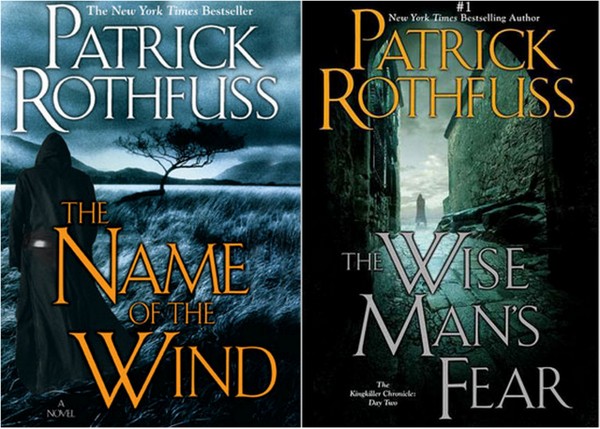
Author Patrick Rothfuss is known for the charity Worldbuilders and his Kingkiller Chronicle – a trilogy of The Name of the Wind (published 2007), The Wise Man’s Fear (2011), and a thus far unnamed, unpublished final installment.
Patrick Rothfuss / DAW.
Rothfuss just shared some great news: The Chronicle was signed by Lionsgate for a “big narratively intertwined multi-platform development deal” (in Rothfuss’s words). The plan is to produce a tv-series with a connecting movie and a video game – how awesome is that?
“You see, I never expected a studio would treat me like a human being. But through this whole process, Lionsgate has treated me with amazing respect. I’ve made what to me seem like reasonable requests, and they responded to them… reasonably. And I’m not just talking about pretty words here, they’re making contractual agreements granting me control of things. They haven’t just been reasonable, they’ve been kind, and understanding. […]
“Lionsgate is making its own press release today and there will be stories in all manner of Hollywood news outlets pretty soon. It’s not a coincidence that my blog is launching up on the very same day as their big announcement. In the same hour, even. Lionsgate coordinated with me so I could share this news on my blog at the same time they’re launching their story.
“This was important to me because if you read my blog or follow me on social media… well… you’re a part of the reason my books are a big deal. A lot of you have been a part of my team for years, and I wanted the chance to tell you about this piece of news myself rather than have you hear it on the street.
The fact that Lionsgate was willing to go to some lengths to let me launch this blog simultaneously with their press release is another good sign, in my opinion. It shows they respect me, and it shows they respect you guys, too.”
Sounds good to me! Scratch that – it sounds great. Empathy and respect make valuable capital for businesses, too. I’ll surely be keeping an eye on this project. And the best of luck to Rothfuss in the development process!
File 770 has a nice roundup of ten clips from and about The Martian, ranging from teasers and trailers to interviews and talks. The coolest is perhaps a 20-some minute call between two The Martian actors and two of six members of the International Space Station crew:
From the ISS, Expedition 45 Commander Scott Kelly and Flight Engineer Kjell Lindgren were on the horn; from the movie cast, Sebastian Stan and Mackenzie Davis during a visit they made to Mission Control at the Johnson Space Center in September.
Hey, look! We found a thing on the internet! We thought it was cool, and wanted to share it with you.
We happened to have excellent conditions for the 2015 supermoon lunar eclipse: clear skies, warm weather, and a dark backyard for early night viewing. The best shot I got is from the beginning of the eclipse (with a little computer enhancement).
Very neat. And, although celestial photography won’t become a part of my skills in a hurry, it was nice to try.
Image by Eppu Jensen
This post has been edited.
Out There is an occasional feature highlighting intriguing art, spaces, places, phenomena, flora, and fauna.






 Co-Geeking


You must be logged in to post a comment.