To prepare for Star Wars: Episode VII – The Force Awakens, we’re Doing a Project. We’ll see all six Star Wars movies in order, roughly one a week, and for each movie, we’ll give our opinion on the following:
Best fight
Best line
Best minor character
Best reveal
Best save
Best visual
For extra fun, Erik decided to make a dessert to go with each movie. We’ll share photos of those, too. Follow the posts with the SW rewatch tag.
And please join us – leave a link for your own posts, or comment with your own Best list!
In the Seen on Screen occasional feature, we discuss movies and television shows of interest.
From time to time, I get sucked into thinking about the pragmatics of fictional worlds. By that I mean all the mundane details of how people lead their everyday lives, starting from the very basic human (or creature) needs like food, clothing, waste management, and social interaction. Not just who takes care of, say, the laundry and when, but where do they go to do it, how do they get there, what kinds of implements are they expected to bring in themselves and what is shared, how long does it take, what physical motions do they go through, is it a solo activity or a joint effort, and the like.
For me as a visual person, often thinking about everyday activities and movement through spaces tumbles into thinking about what exactly do these various spaces look like. It’s a way to add depth and realism into a story – we are physical beings who love tactile experiences and accumulate all sorts of personal possessions, and if a fictional world ignores that, it makes that world fall flat for me. (Hello, Star Trek!)
The Hunger Games is one of the current ones in my mind because of the approaching Mockingjay – Part 2 premiere and because of an article on Colossal I saw about a World War II era bomb shelter in London that has been turned into an underground farm.
The company running the operation, Growing Underground, produces leafy greens like watercress, basil, coriander, and radish in hydroponic beds lit by LED lamps.
In the The Hunger Games world, the population of District 13 lives in underground bunkers; the above-ground structures were destroyed by the Capitol. In the Mockingjay novel, Collins mentions various spaces like the armory, the laundry, labs, testing ranges, and farms in passing. She describes these spaces mostly just in very generic terms; e.g., the color of the living compartments is white, and we hear of furniture like dressers and conference tables with individual screens, but that’s about the extent of the detail.
Scenes in the movie Mockingjay – Part 1 show the special weapons lab with a shooting range, the hangar, the bunker, and some hospital and apartment rooms, among others, but I don’t think we’ve seen any underground farms of any kind, nor the poultry farm, for example, that was destroyed in the book version of the bombing of 13 by the Capitol.
Clockwise from top: living quarters, cafeteria, and infirmary at District 13. Images via Jabberjays.net.
The Growing Underground photos of their growing beds fit quite well with Collins’s carefully frugal description and the established Hunger Games visual style. So, in my headcanon, even if we haven’t seen them on screen, District 13’s underground hydroponics now look very much like those of Growing Underground.
Out There is an occasional feature highlighting intriguing art, spaces, places, phenomena, flora, and fauna.
The words revision and revisionism, when it comes to history, have a bad smell. They are lobbed as insults against people who propose new ways of understanding things that already have a conventional explanation. “We had it right the first time, stop monkeying with it” is the implied retort. Revision, however, is essential to the study of history. No matter how well we think we understand something, our grasp of history is always partial and conditional. New evidence, new ideas, and new questions applied to the known sources frequently yield new results and we often discover that our conventional explanations, while not wrong, are incomplete. And sometimes they are just wrong.
Here’s an example. As the European study of ancient Egyptian history developed in the 1800s, European colonialism was also spreading across Africa. For scholars who supported the imperialist agenda, or at least accepted its intellectual framework (and there were those who didn’t, but they were a minority), ancient Egypt presented a problem. Imperialist thinking declared that Africans were incapable of reaching a high level of culture without the help of superior white men, and therefore European colonization of Africa was not just a profitable venture but a moral imperative. Yet there could be no denying that ancient Egypt had been a high culture. How could both things be true?
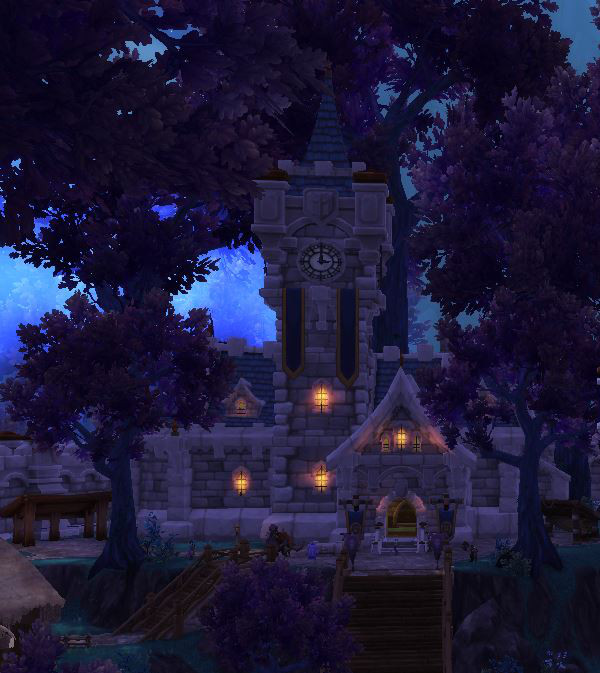
Sometimes you put a lot of time and effort into solving a problem, only to realize that you were coming at the problem from the wrong angle and your solution doesn’t actually fix anything, or even just makes things worse. (Or at least I do. I do this all the time.) It’s what I think of as “solving the wrong problem.” Blizzard Entertainment, creators of World of Warcraft, has been solving the wrong problem in the latest expansion, and garrisons are the manifestation of that mistake.
The Aliance garrison, where I’ve spent entirely too much of my gaming time.
It’s not that there aren’t problems to be solved. WoW‘s player base is getting older and a lot of us have less time to play, can’t sit down and play in long sessions like we used to, and aren’t as interested in investing lots of time and effort into chasing big goals, but we still want to play and enjoy the game. Garrisons were, in my opinion, a good-faith effort at solving this problem, but they came at it from the wrong direction.
This weekend is Blizzcon, Blizzard’s big event when they talk about what’s coming for their games and we’re going to hear all about the next expansion for WoW. I hope we hear something that addresses what garrisons got wrong.
The movie will be released on February 05, 2016. I’m generally turned off by zombies, but even still, I’ll certainly go see this one. And I’m looking forward to seeing Lily James (whom I know from Downton Abbey) and Lena Heady (Cersei in Game of Thrones) in action. Matt Smith’s Mr. Collins should also be something to see! 🙂
Hey, look! We found a thing on the internet! We thought it was cool, and wanted to share it with you.
Have you read Dune? If so, you might enjoy this early art by John Schoenherr:
John Schoenherr: Dawn at the Palace of Arrakeen.John Schoenherr: Stilgar and His Men.
John Schoenherr: Defeating the Sardaukar.
Apparently, Frank Herbert said Schoenherr (1935-2010) was “the only man who has ever visited Dune.” Schoenherr’s paintings of Herbert’s Dune were published first in the Analog magazine and later in a fully illustrated version.
For me, along with John Christopher’s The Tripods, Dune is one of the SFF books I read in my (much) younger days and have kept re-reading over the years. Seeing this early art was certainly a treat!
What’s a party without munchies? Make some mini monster eyeball treats for yours from donuts and candy with this how-to by Ashley Rose at Sugar & Cloth; photo by Jared Smith.
Ashley Rose at Sugar & Cloth; photo by Jared Smith.
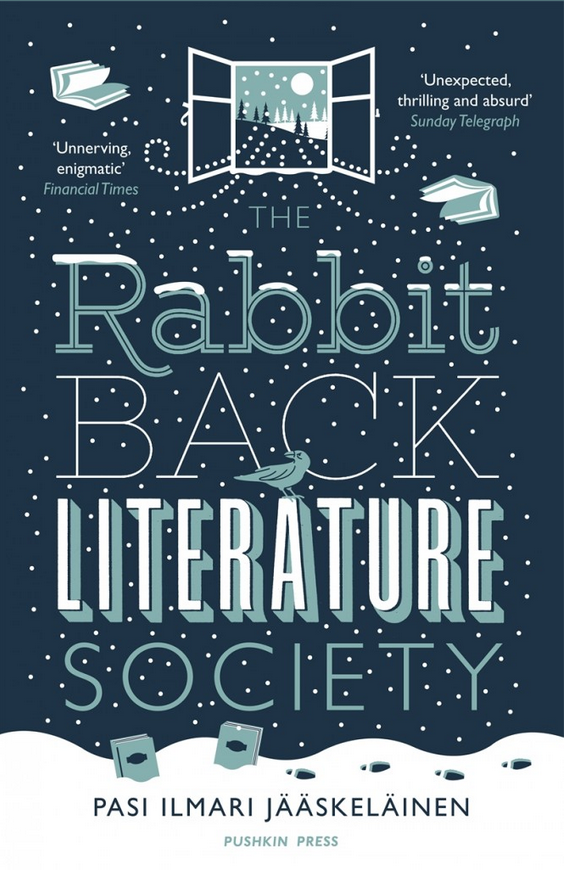
Novelist and short-story writer Jääskeläinen writes realistic fantasy (to translate his term reaalifantasia). The Rabbit Back Literature Society, published in 2014 in UK and 2015 in US, is Jääskeläinen’s first novel and the first of his works to be translated into English (from the original Lumikko ja yhdeksän muuta, 2006).
“Only very special people are chosen by children’s author Laura White to join ‘The Society’, an elite group of writers in the small town of Rabbit Back.
“Now a tenth member has been selected: Ella, literature teacher and possessor of beautifully curving lips.
“But soon Ella discovers that the Society is not what it seems. What is its mysterious ritual, ‘The Game’? What explains the strange disappearance that occurs at Laura’s winter party, in a whirlwind of snow? Why are the words inside books starting to rearrange themselves? Was there once another tenth member, before her?
“Slowly, disturbing secrets that had been buried come to light…
“In this chilling, darkly funny novel, the uncanny brushes up against the everyday in the most beguiling and unexpected of ways.”
The only other piece of Jääskeläinen in English at this writing is Where the Trains Turn (orig. Missä junat kääntyvät, 2000), published in November 2014 by Tor.com.
Apart from Finnish SFF, the book club program for this fall contains Danish contemporary fiction and two Swedish crime thrillers. From scandinaviahouse.org:
“Read and discuss Scandinavian literature in translation as part of Nordic Book Club – ASF’s newest literary series. This season’s selections include Swedish crime thrillers, Danish contemporary fiction, and Finnish fantasy. Discussions typically take place the last Tuesday of the month in the Halldór Laxness Library at Scandinavia House and online at scandinaviahouse.org.”
Jääskeläinen’s book will be discussed on November 24, 2015, at 6 pm at Scandinavia House, 58 Park Ave (Manhattan). The entry is free.
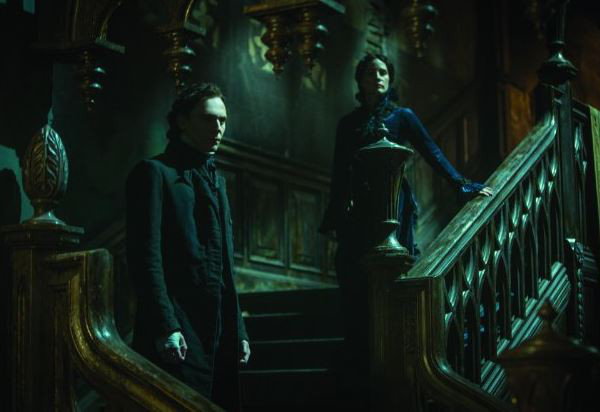
It is odd to find oneself arguing that a ghost story would be better without the ghosts, but that’s how I felt coming away from Crimson Peak.
Crimson Peak, as others have noted, is a Gothic romance. Ghosts are de rigeur for the genre. They give form to emotional traumas and compel the hero or heroine to uncover the horrible secrets behind them. The ghosts of Crimson Peak fulfill this role and prod the film’s heroine to expose the dark past in the house. Eventually. She takes an awful lot of prodding. In the meantime, the ghosts just take up screen time being ghostly and doing ghost stuff, none of it terribly interesting.
“The ghosts are a metaphor,” we are told early in the film, except they aren’t. A metaphor is when one thing stands for or represents another, but there is nothing metaphorical about the ghosts of Crimson Peak. The ghost of the old woman in the bathtub with a meat cleaver in her head does not represent the lingering traumas of the past or the madness of the characters. It represents the fact that an old woman was killed in that bathtub with a meat cleaver to the head. The crumbling, bleeding house is a metaphor for the unraveling of the family that dwells there, but the ghosts are the most literal ghosts you have ever met.
The only purpose the ghosts serve in the narrative is to nudge our heroine Edith into uncovering the truth. They might as well just be standing in the hallway holding signs that say “PLOT-RELEVANT INFORMATION IN THIS CLOSET” or “ASK QUESTIONS ABOUT THIS BATHROOM.” They are narrative shortcuts that save the heroine the bother of actually having to do much thinking. The most interesting part of the story is when Edith finally does a little investigating, but the ghosts do most of the uncovering for her and rob the story of complexity. I would rather have watched Edith do the work of piecing together what was going on at Allerdale Hall without the ghosts standing around holding their “THIS WAY TO THE PLOT” signs.
“It’s not a ghost story,” we are also told early in the film. “It’s a story with ghosts.” I give the movie enormous credit for its gorgeous visual design and for showing how well a period piece can incorporate active and effective female characters. But maybe it should have been a story without ghosts.
Image: Crimson Peak, (c) Universal Pictures 2015 via imdb
In the Seen on Screen occasional feature, we discuss movies and television shows of interest.




 Co-Geeking
You must be logged in to post a comment.