New Ancient Mediterranean Database: Public Monuments in Roman Greece

A new project called Monuments of Roman Greece is under development at the University of Oxford. It covers about four centuries, c. 200 BCE – 200 CE, from when Rome began to expand into the Greek area of influence to the height of the Roman Empire, and will result in a series of articles plus a database.

The Met Bronze Veiled Masked Dancer

From the project website:

“Under the Roman Empire the marketplaces, streets, gymnasia and theatres of the cities of Greece were full of monuments such as tombs, inscribed stelai and – most numerous of all – statues. There were statues of bronze and of marble, portraying gods, heroes, emperors, kings and local dignitaries. Some of these monuments had already stood for centuries; others were fairly recent. Arguably no urban culture in history, with the possible exception of Rome itself, has set up such vast numbers of monuments in its public spaces. The nearest modern analogy for the amount of cultural material on display in the Roman period polis would be the museum. Yet the analogy falls short – the settings where these monuments stood were not places designed primarily for the passive viewing of works of art, they were vibrant public spaces, alive with the tumult and commotion of the city. If we are to understand the society and culture of these cities it is vital that we understand the impact of public monuments on the people who moved about them in their daily lives.“

The work is carried out by Dr. C. P. Dickenson at the Faculty of Classics, with Prof. R. R. R. Smith as scientific adviser. Both the website and the database are still in progress. Also, it sounds like the final home of the database is not finalized at the time of this writing; however, a browsable version is currently up on the University of Oxford website.

Visit the Public Monuments in Roman Greece website for scope and instructions on searching plus more info, or read Dr. Dickenson’s blog for behind-the-scenes tidbits on the development work, among other things.

Image: Bronze statuette of a veiled and masked dancer, from the collections of The Metropolitan Museum of Art, bequest of Walter C. Baker in 1971, accession number 1972.118.95, by Eppu Jensen (Greek; 3rd-2nd century BCE)

Hannibal’s Route Identified?

160407didrachm In 218 BCE, the Carthaginian general Hannibal led an army across the Alps into Italy, touching off the Second Punic War. On the question of exactly where Hannibal crossed the Alps, there’s always been a lot of, for lack of a better term, horse pucky. The ancient sources are vague and of dubious reliability. In the absence of solid evidence, numerous distinct schools of thought on the question have emerged. There are the military professionals who argue that Hannibal must have taken the easiest, most straightforward route open to him. There are the romantics who insist that Hannibal’s army must have taken a difficult and dangerous route befitting such a momentous expedition. The folklorists are persuaded by local legends in the Alps while the textualists wrangle over which of the literary sources is more reliable. Now some literal horse pucky may be getting us closer to an answer.

The whole route hangs on the identification of two specific points. One is an area called the “island” somewhere in the valley of the Rhone river. The other is the pass by which Hannibal’s army crossed the Alps. While the “island” is still uncertain, recent archaeological work may have identified the Alpine pass. As reported in Archaeometry in March, 2016, a large deposit of horse manure and disturbed soil near the Col de la Traversette indicates the passage of a large number of horses dated to the period of the Second Punic War. If this finding stands up to further scrutiny, it may allow us to pin down Hannibal’s Alpine crossing.

Identifying the Traversette as the pass Hannibal’s army took would have some interesting implications for our interpretation of the war as a whole. Although favored by some scholars (notably Sir Gavin de Beer), the Traversette has usually been dismissed as too high, narrow, and difficult for Hannibal’s army, especially when several lower, wider, easier passes were available within a few days’ march. The military-history school in particular has argued that Hannibal would not have set out on his march without good advance intelligence about the Alpine passes and that intelligence would have persuaded him never to attempt the Traversette. If Hannibal did indeed take his army by the Traversette, it suggests that his advance intelligence was not as good as modern historians imagine (whether because Hannibal didn’t know enough about the available passes or because he allowed his army to get into such desperate straits that he had to take a pass he knew was a bad choice).

If Hannibal’s intelligence-gathering was less than optimal, that would also help to explain the major strategic failure of his campaign: overestimating the central Italian cities’ readiness to cast off Roman hegemony. Hannibal’s strategy against Rome depended on stripping Rome of its allies and conquests. While he found ready support in the areas of northern and southern Italy that had only recently been conquered by Rome, very few cities in Rome’s core central Italian territory were willing to join him.

It’s always important to take new findings with caution. Further research may cast doubt on this new evidence. For now though, the poop looks promising.

Post edited for clarity

Image: Tarentine didrachm struck during the Second Punic War, photograph by Classical Numismatic Group via Wikimedia (c. 212-209 BCE; silver)

Space Archaeologist Discovers Potential Viking Site in Southern Newfoundland

A team of archaeologists has unearthed a potential new Viking site in Newfoundland, Canada with the help of satellites. Dr. Sarah H. Parcak, an archaeologist, space archaeologist, and Egyptologist, lead the effort to take infrared images from space to find new archaeological sites.

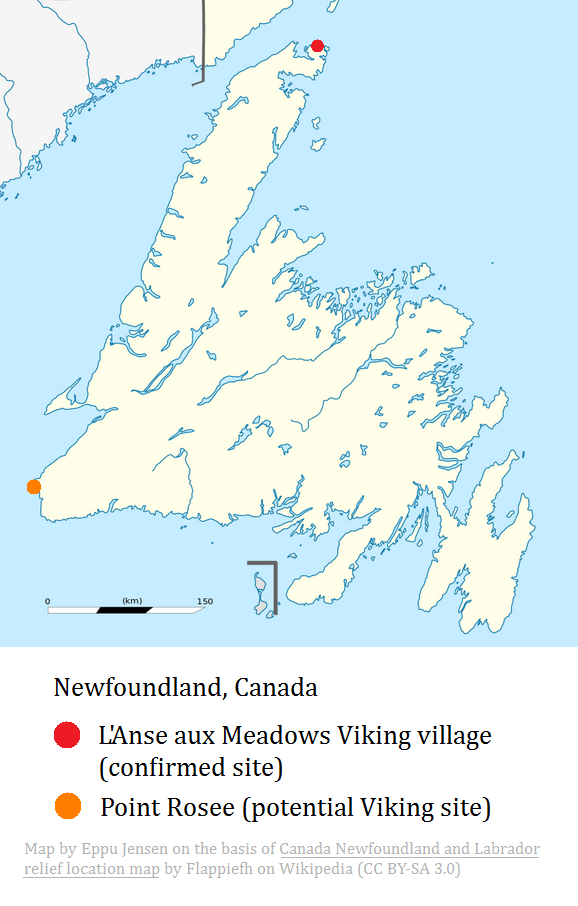
Newfoundland with Viking Activity
Newfoundland with Viking activity. Map by Eppu Jensen on the basis of Canada Newfoundland and Labrador relief location map by Flappiefh on Wikipedia (CC BY-SA 3.0)

According to The New York Times, while searching the coastlines from Baffin Island (in the Canadian territory of Nunavut, west of Greenland) to Massachusetts, she found

“hundreds of potential ‘hot spots’ that high-resolution aerial photography narrowed to a handful and then one particularly promising candidate — ‘a dark stain’ with buried rectilinear features.

“Magnetometer readings later taken at the remote site […] showed elevated iron readings. And trenches that were then dug exposed Viking-style turf walls along with ash residue, roasted ore called bog iron and a fire-cracked boulder — signs of metallurgy not associated with native people of the region.

“In addition, radiocarbon tests dating the materials to the Norse era, and the absence of historical objects pointing to any other cultures, helped persuade scientists involved in the project and outside experts of the site’s promise.”

Point Rosee is approximately 700 km (approximately 400 miles) away from L’Anse aux Meadows, the only currently confirmed Viking site in North America. The Norsemen staying at L’Anse must have traveled further south, though, because butternuts and worked pieces of butternut wood – which are not native to Newfoundland – were found among the Norse objects at the settlement.

CBC News reports that evidence of a Norse-like hearth and 8 kilograms (approx. 16 pounds) of bog iron was found at Point Rosee during a dig in 2015. It isn’t yet known for sure whether the site was a temporary base camp or a settlement, or whether it even was associated with Vikings. If confirmed, Point Rosee would be the second known Viking site in North America.

The evidence is still clearly on the scant side. Digging at Point Rosee is to resume this summer, so maybe they’ll find more.

As a sidenote, isn’t it so cool that we now have space archaeologists?!

An End and a New Beginning for Bede’s World

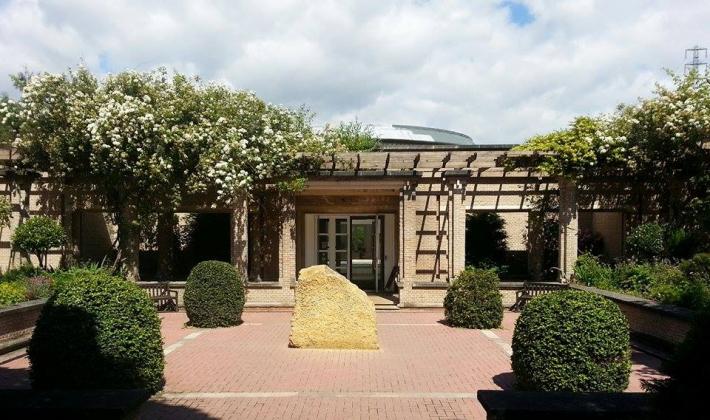
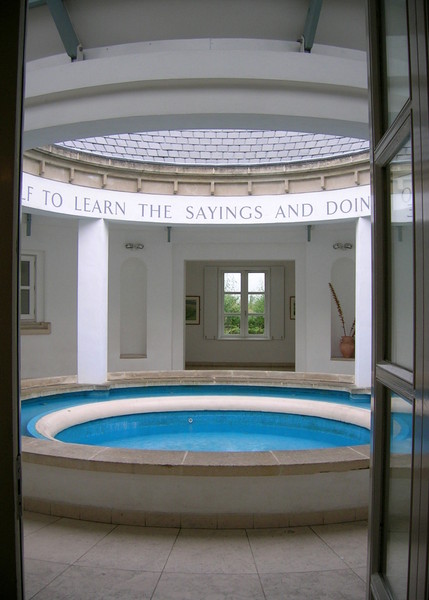
Bede’s World, a small museum in Jarrow, Tyne & Wear, Northumbria, dedicated to the Venerable Bede and 7th-century England, shut down its operations in February 2016.

Bedes World Main Entry

Bedes World Entrance Inside

In addition to indoor exhibits, the museum includes several replica wattle and daub buildings, modeled on structures excavated in Anglo-Saxon Northumbria and built with original materials and contemporary methods. On the grounds there is also a herb garden and a working farm with a small collection of rare breed animals resembling those that lived 1,300 years ago.

Bedes World Collage

The museum issued the following statement:

“It is with great regret that the Trustee Board took the decision for Bedes World [sic] to cease operation from Friday 12 February 2016 due to a lack of funds.

“Steps are being taken to put the company into administration through the appointment of an Insolvency Practitioner.

“The Trustee Board have made arrangements for the immediate care of the farm animals and the security of the site.

“The Board would like thank all staff, volunteers and stakeholders for their hard work and dedication to Bedes World. [sic]”

Fortunately, only a few weeks afterwards better news surfaced: a new operator was found to run the site. At this writing it isn’t clear what their plans for Bede’s World are, though. (Follow this link to read the statement by Groundwork South Tyneside and Newcastle, the new operator.)

Found via Anne Bennett and BBC.

Images: Bede’s World main entrance, outside view via Bede’s World. Other photographs by Eppu Jensen

Tove Jansson to Be Inducted into Eisner Hall of Fame

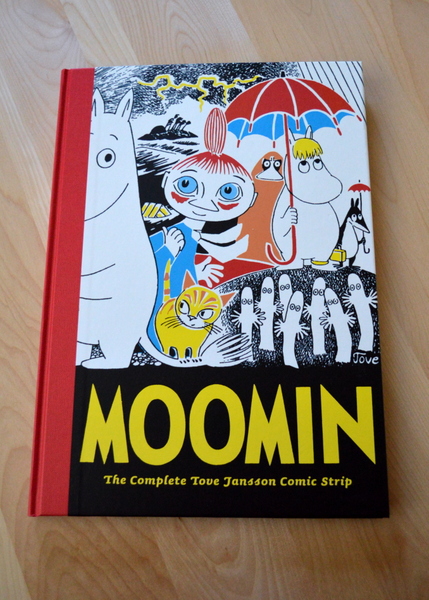
According to Comic-Con International, Tove Jansson, a Finnish visual artist and author, has been selected by the Eisner Award judges to be automatically inducted into the Will Eisner Comic Awards Hall of Fame for 2016. Hooray, Tove!

Tove Jansson Complete Moomin Comic Strip

Jansson (1914-2001) is best known as the creator of the incredibly popular Moomins books and comics. Besides Jansson, there’s a second automatic inductee: Carl Burgos, Golden Age creator of The Human Torch.

In addition, the judges have also chosen 14 nominees from which voters will select four to be inducted in the Hall of Fame. Visit the Comic-Con International: San Diego Eisner Awards page for details. The ceremony takes place July 22, 2016, in San Diego.

Found via File 770.

Image by Eppu Jensen

R.I.P. Alan Rickman

Actor Alan Rickman has passed. Apart from a fantastic Professor Severus Snape, Rickman brought to life both on stage and screen numerous other characters, including my favorite Colonel Brandon in the 1995 adaptation of Jane Austen’s Sense & Sensibility.

Sense & Sensibility – Weep You No More Sad Fountains via anotherrainbow2008

I also have fond memories of his performance as Alexander Dane / Dr. Lazarus in Galaxy Quest and the sheriff of Nottingham in Robin Hood: Prince of Thieves (with the unforgettable delivery of “Because it is dull, you twit, it’ll hurt more!”, on the desirability of a spoon as a torture device).

Rest in peace, sir. You will be missed.

One Last Best of 2015 List with a Finn

Hello, hello; Happy New Year! Over the holidays I had the chance to catch up on my blog reading and found yet another piece of delightful news for Finnish SFF: Hannu Rajaniemi’s Collected Fiction made it onto NPR’s Guide to 2015’s Great Reads.

hannu-rajaniemi-collected-fiction

The guide contains some 260 titles contributed by NPR staff and critics. Other science fictional books on the guide include Shadowshaper by Daniel José Older, The Traitor Baru Cormorant by Seth J. Dickinson, and Sorcerer to the Crown by Zen Cho, for example.

Found via Amal El-Mohtar.

Image via Tachyon Publications

Leena Krohn on The New Yorker’s Best of 2015

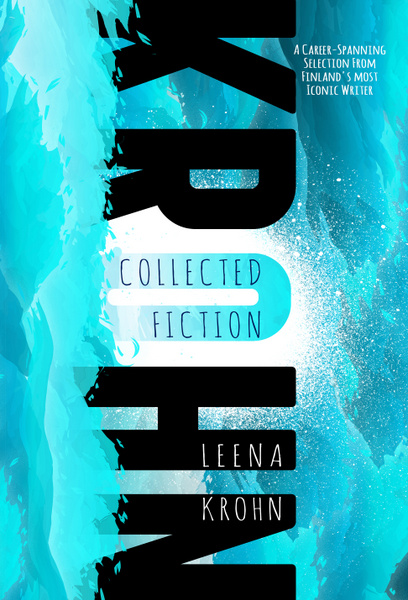
Leena Krohn’s Collected Fiction, an anthology edited by Ann and Jeff VanderMeer, made it onto The New Yorker‘s best-of list!

Cheeky Frawg krohn-cover-largeJoshua Rothman writes of his selection of Krohn for The Books We Loved in 2015 like this:

“I also found myself hypnotized by Leena Krohn, a Finnish writer whose collected stories and novels, rendered into English by many different translators, have just been published as a single volume, ‘Leena Krohn: Collected Fiction.’ Broadly speaking, Krohn is a speculative writer; one of the novels in the collection, for example, consists of thirty letters written from an insect city. (‘It is summer and one can look at the flowers face to face.’) Krohn writes like a fantastical Lydia Davis, in short chapters the length of prose poems. Her characters often have a noirish toughness; one, explaining her approach to philosophy, says that when she asks an existential question, ‘life answers. It is generally a long and thorough answer.’”

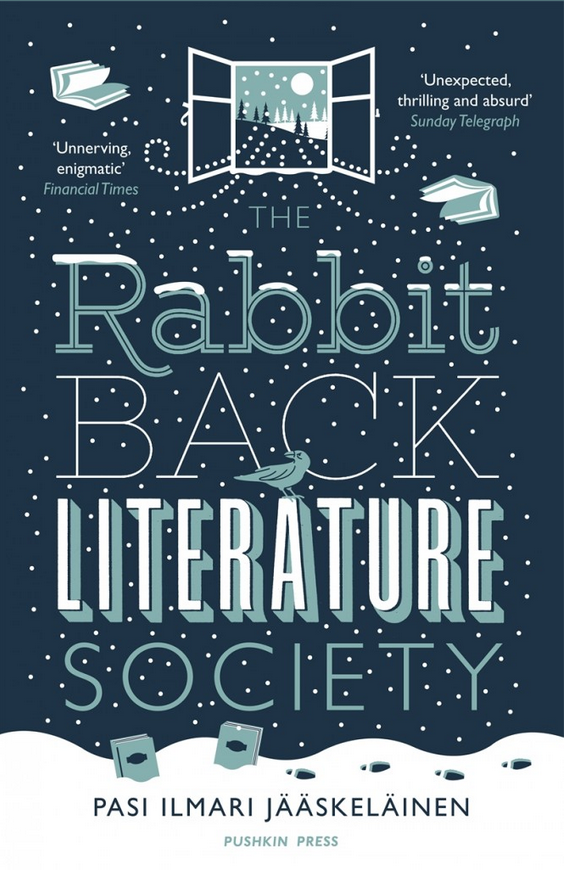
Just a week ago, Krohn’s anthology appeared on The A.V. Club‘s Best of 2015 list (along with The Rabbit Back Literature Society by Pasi Ilmari Jääskeläinen). Again, congratulations!

Found via Helsingin Sanomat.

P.S. Try Krohn’s Lucilia Illustris for free, published in December 2015 by Electric Literature.

Image via Cheeky Frawg Books

Two Finnish Authors on The A.V. Club’s Best of 2015

Two Finnish authors made it onto The A.V. Club‘s favorite books of the year. Their Best of 2015 list includes Leena Krohn’s Collected Fiction, a whopper of an anthology (at 800+ pages in hardcover) edited by Ann and Jeff VanderMeer, and The Rabbit Back Literature Society by Pasi Ilmari Jääskeläinen.

Jaaskelainen Krohn Covers

Keeping company to Krohn and Jääskeläinen on the Best of 2015 list “[a]fter a stellar year for the written word” are renowned authors like Ta-Nehisi Coates, Judd Apatow, and Paula Hawkins. Congrats, both!

For a taste of their writing, try Jääskeläinen’s Where the Trains Turn (orig. Missä junat kääntyvät, 2000), published in November 2014 by Tor.com, or Krohn’s Lucilia Illustris, published in December 2015 by Electric Literature.

Found via Helsingin Sanomat.

Images: The Rabbit Back Literature Society via Pushkin Press. Collected Fiction via Cheeky Frawg Books

November 2015: Nordic Book Club in NYC Reads Jääskeläinen

Scandinavia House in New York City runs a new Nordic book club, and this November’s book is The Rabbit Back Literature Society by Finnish author Pasi Ilmari Jääskeläinen.

Jaaskelainen Rabbit Back Lit Soc

Novelist and short-story writer Jääskeläinen writes realistic fantasy (to translate his term reaalifantasia). The Rabbit Back Literature Society, published in 2014 in UK and 2015 in US, is Jääskeläinen’s first novel and the first of his works to be translated into English (from the original Lumikko ja yhdeksän muuta, 2006).

Here’s the publisher’s description:

“Only very special people are chosen by children’s author Laura White to join ‘The Society’, an elite group of writers in the small town of Rabbit Back.

“Now a tenth member has been selected: Ella, literature teacher and possessor of beautifully curving lips.

“But soon Ella discovers that the Society is not what it seems. What is its mysterious ritual, ‘The Game’? What explains the strange disappearance that occurs at Laura’s winter party, in a whirlwind of snow? Why are the words inside books starting to rearrange themselves? Was there once another tenth member, before her?

“Slowly, disturbing secrets that had been buried come to light…

“In this chilling, darkly funny novel, the uncanny brushes up against the everyday in the most beguiling and unexpected of ways.”

The only other piece of Jääskeläinen in English at this writing is Where the Trains Turn (orig. Missä junat kääntyvät, 2000), published in November 2014 by Tor.com.

Apart from Finnish SFF, the book club program for this fall contains Danish contemporary fiction and two Swedish crime thrillers. From scandinaviahouse.org:

“Read and discuss Scandinavian literature in translation as part of Nordic Book Club – ASF’s newest literary series. This season’s selections include Swedish crime thrillers, Danish contemporary fiction, and Finnish fantasy. Discussions typically take place the last Tuesday of the month in the Halldór Laxness Library at Scandinavia House and online at scandinaviahouse.org.”

Jääskeläinen’s book will be discussed on November 24, 2015, at 6 pm at Scandinavia House, 58 Park Ave (Manhattan). The entry is free.

Image: Pushkin Press.

Post edited for style.

Hey, look! We found a thing on the internet! We thought it was cool, and wanted to share it with you.