Favorite Star Trek characters. Go!
Star Trek (Original Series)
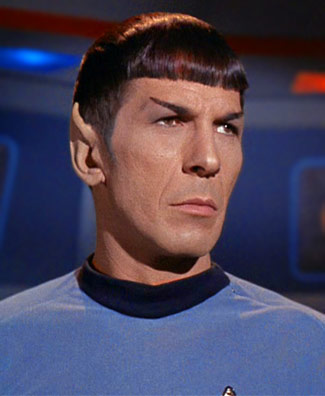 Erik: Mr. Spock. Hands down, Spock. When I first discovered the original Star Trek in afternoon reruns, I was in elementary school, the shy, quiet kid who spent recess reading and didn’t understand the social rules hat other kids lived by. I identified with Spock so hard. After growing up on cartoons that always stigmatized the smart characters as snooty, unsympathetic Brainy Smurf types, Spock was proof that being the thoughtful, unemotional observer of humanity could be awesome, too.
Eppu: This is a tough one. I don’t think I really have one. In general, I’m more drawn to the supporting characters in stories than the main character / protagonist, and ST:TOS is most definitely one of those cases. I find Kirk intolerable and McCoy a little too emotional for my preference, but the rest of the core cast offers more qualities I like: Spock’s cool head and nuggets of extremely dry humor; Uhura’s patience and dedication; Sulu’s enjoyment of life; Checkov’s nonchalance and ability to roll with the punches; Scotty’s inventiveness and flexibility in the face of an unrelenting barrage of technical problems.
The Next Generation
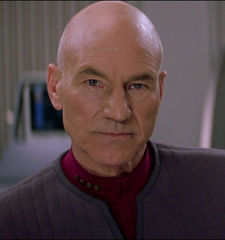 Erik: Captain Picard. I’ll admit, it’s mostly Patrick Stewart’s acting chops that make the character for me, but I love Picard’s gravitas, his cool head in a crisis, and his humanity. I came of age with Next Generation, in the post-Cold-War world that believed in hope and human progress, and despite what we have lived through in the last few decades, I still carry some of that optimism with me. Picard’s compassion and level-headedness are the solid ground on which the moral universe of Next Generation rests.
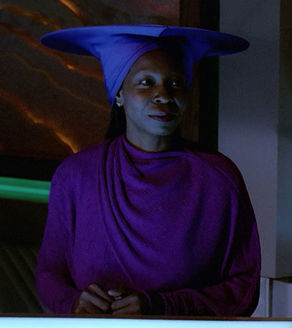 Eppu: Guinan! She stares in the face of her people’s diaspora and stays serene, but is not shy about pulling out the rifle stashed behind the bar when needed. Even if she was written as a supporting cast member, Guinan gets some brilliant moments of character development, like when she begins to question her black-or-white attitude to the Borg in the season 5 episode I Borg. Also, Whoopi Goldberg’s performance is fa-bu-lous. Every scene where Patrick Stewart and Goldberg appear together, no matter how simple, is golden.
Deep Space Nine
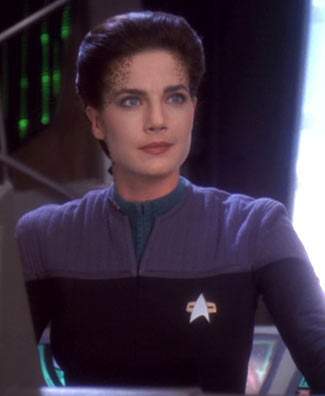 Erik: Jadzia Dax. Specifically the later-seasons’ Jadzia Dax: not the ethereal above-it-all beauty of the first season, but the wise-cracking, tongo-playing, bat’leth-slinging, unflappable smart-ass and scientist extraordinaire that she developed into by the third. Not that I’m much for practicing Klingon martial arts or playing Ferengi card games into the wee hours, but I love the self-possession with which she does everything. She reminds me of some of the great professors I had in college, the ones who loved teaching their subjects, did it with passion and commitment, and didn’t much care what anyone outside the classroom thought of them.
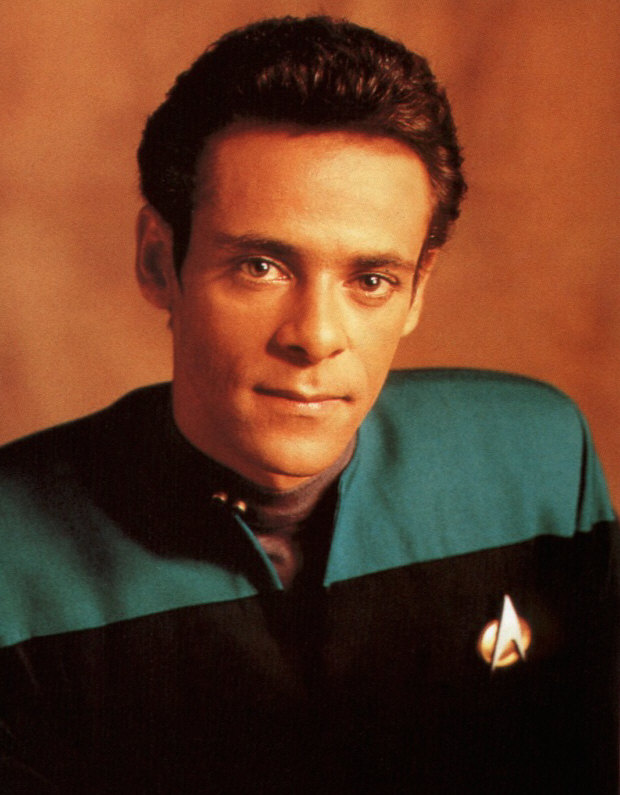
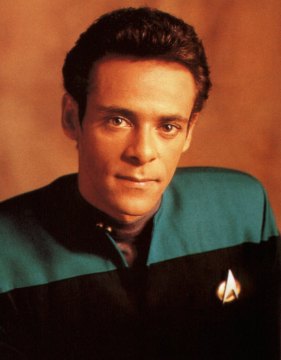 Eppu: Doctor Bashir. We rarely get to see such a full personal growth arc as we see with Bashir. When he arrived to the station, he was so wet behind the ears his whole being basically emanated green. To follow him from firmly planting his foot in his mouth in those early episodes, to his worshipful puppy-love towards Dax, to his growing confidence in his position and friendships, to adjusting to the fact that his much-appreciated intellectual abilities were grafted onto him in an illegal procedure and not in-born, to maturing into a confident, capable officer, supportive and loyal to his friends, is a delight. I also love Bashir’s relationship with Garak, and how the spy-turned-tailor educates our man Bashir about the larger world beyond the Federation.
Voyager
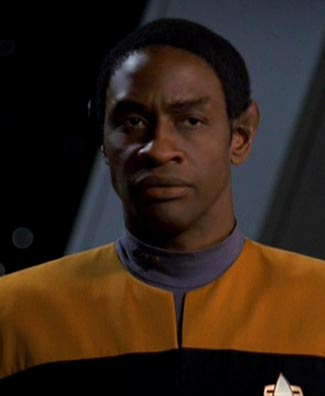 Erik: Tuvok. Tim Russ did a masterful job taking up the Vulcan mantle from Leonard Nimoy. While many actors cast as Vulcans come off as robotic or bored, Russ’s Tuvok showed us that self-control can be just as interesting as unbridled passion. As someone who isn’t often emotionally expressive, it’s nice to see a similar character on screen (and without the presumption that he is damaged or needs to “loosen up.”)
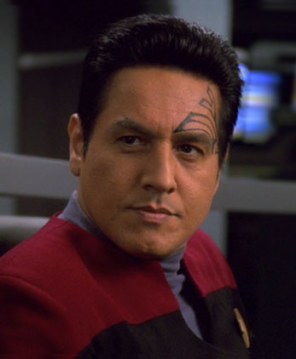 Eppu: Chakotay. He embodies quiet get-it-done effectiveness and deep emotions without being abrasive. Respectful towards and supportive of – even if not always in complete agreement with – Captain Janeway through thick and thin. It’s also very refreshing that no romance was artificially forced into the relationship between Janeway and Chakotay: they just slowly became and remained friends.
Enterprise
Erik: I don’t have one. The show never really worked for me, which is too bad, because I love the concept and some of the details. I kind of wish whoever owns the franchise now would stuff Enterprise into the memory black hole and start over from the basic concept of humanity’s first interstellar exploration and the founding of the Federation instead of the soulless reboot movies we’re getting.
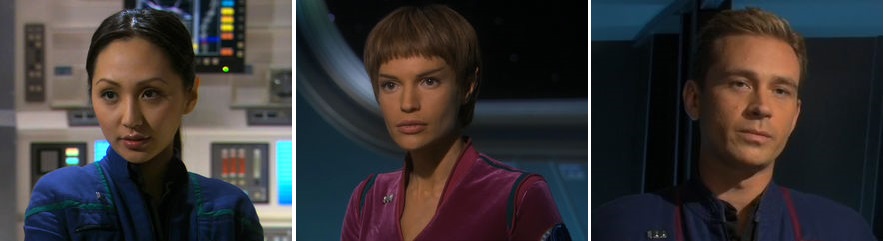
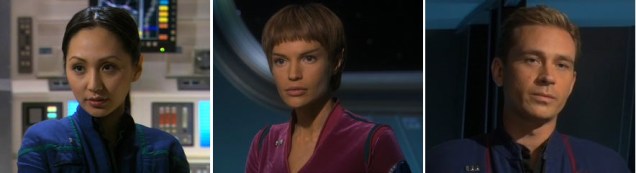
Eppu: Never saw all of it, and I don’t remember it well. As much as I can have a favorite character, it’s a three-way tie between Hoshi Sato, T’Pol, and Tucker.
Who are your favorites and why? Share in the comments!
Images: Spock via Memory Alpha. Picard via Memory Alpha. Guinan via Memory Alpha. Jadzia Dax via Memory Alpha. Julian Bashir via TrekCore. Tuvok via Memory Alpha. Chakotay via Memory Alpha. Hoshi Sato via Memory Alpha. T’Pol via Memory Alpha. Tucker via Memory Alpha
Creative Differences is an occasional feature in which we discuss a topic or question that we both find interesting. Hear from both of us about whatever’s on our minds.