Quotes: My dear admiral, that post!

Admiral and Mrs. Croft, out driving in their one-horse chaise have come across a group of their acquaintances walking and offered to give a ride to one of them. Anne Elliot joins them.

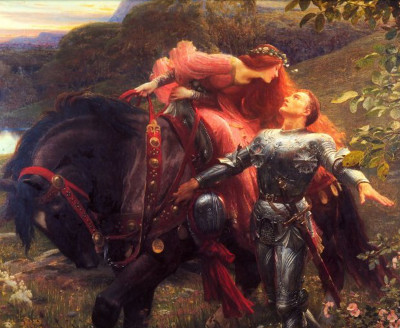
“Very good-humoured, unaffected girls, indeed,” said Mrs. Croft… “and a very respectable family. One could not be connected with better people.—My dear admiral, that post!—we shall certainly take that post!”

But by coolly giving the reins a better direction herself, they happily passed the danger; and by once after judiciously putting out her hand, they neither fell into a rut nor ran foul of a dung-cart; and Anne, with some amusement at their style of driving, which she imagined not a bad representation of the general guidance of their affairs, found herself safely deposited by them at the cottage.

– Jane Austen, Persuasion


One of the loveliest descriptions of marriage I have ever read: we make up for one another’s eccentricities and, however strange we may look to anyone else, we get where we’re going in the end.

Austen may be famous for her romantic pairings like Elizabeth Bennet and Mr. Darcy, or Marianne Dashwood and Colonel Brandon, but I think Admiral and Mrs. Croft are one of her best images of real marital happiness.

Serving exactly what it sounds like, the Quotes feature excerpts other people’s thoughts.

Greek Myth, Etruscan Tomb

We like to think of the modern world as one in which different cultures intertwine and overlap with one another, but there were complicated cross-cultural interactions in the ancient world as well. For example, look at this wall painting from an Etruscan tomb.

Sacrifice of Trojan captives, photograph by Battlelight via Wikimedia (François Tomb, Vulci; late 4th c.; fresco)

This scene depicts an incident from the Trojan War. After his friend Patroclus was killed in battle, the great Greek warrior Achilles went mad with grief. He piled up an enormous funeral pyre for Patroclus, on top of which he also killed twelve Trojan prisoners. At the center of this painting, Achilles slits the throat of a naked Trojan prisoner while a Greek soldier leads another prisoner to the slaughter from the right. To the left, the ghost of Patroclus, in a blue cloak with a bandage over the fatal wound in his chest, looks on in dismay.

This incident comes from the Greek legends of the Trojan War and is mentioned in the Iliad, but it is a rather obscure scene. It was rarely, if ever, referred to in later Greek literature or depicted in Greek art. The fact that an Etruscan artist could use this event as the basis for a tomb painting demonstrates a more than passing knowledge of Greek myth.

The Etruscans were a people of northern Italy who had extensive trade contacts with the Greeks and imported large quantities of fine pottery and other Greek luxury goods. They also imported Greek legends and stories, which they frequently depicted in their own artworks. Like the painting in the François Tomb, Etruscan art often picks up on obscure or unusual incidents that were not widely depicted in Greek art. This selectiveness tells us that Etruscans were not just copying the Greek art that they acquired but were making conscious artistic choices based on extensive knowledge of the Greek material.

This painting also adds some uniquely Etruscan elements to the scene. The winged woman directly behind Achilles is Vanth, an Etruscan goddess whose role seems to have been to decide the fate of the souls of the dead. The blue-skinned man to Achilles’ right is Charu, another Etruscan god who led the souls of the dead to wherever Vanth decided to send them. Vanth and Charu are purely Etruscan characters with no basis in the Iliad. Greek myth had figures who performed similar functions, but they looked nothing like Vanth and Charu.

These two figures are not simply added to the scene. The way that they frame the sacrificial act and share a knowing look over Achilles’ head changes the scene’s meaning. Rather than just seeing Achilles’ awful act, we see that his act happens in a context that transcends the mortal world. The Greek afterlife was pretty much universally bleak, except for a few select troublemakers who got ironically tortured. The Etruscan afterlife is poorly understood, but they seem to have believed that the deeds of the living affected the fate of the dead, which could be pleasant or terrifying. In this painting, Vanth and Charu seem to be saying to one another: “We see what’s happening here, and it won’t be forgotten. We’re here for the Trojans this time, but Achilles’ day is coming.”

This painting is one that a Greek artist would never have painted and that a Greek viewer wouldn’t have understood. It only made sense to an Etruscan, but to an Etruscan who knew their Iliad well enough to recognize the figures of Achilles and Patroclus and identify the moment in the story that was being depicted. Here in this image we have a moment of cross-cultural interaction on display.

History for Writers is a weekly feature which looks at how history can be a fiction writer’s most useful tool. From worldbuilding to dialogue, history helps you write. Check out the introduction to History for Writers here.
Rating: Leverage, Season 5

We’ve been rewatching and rating Leverage and we’ve gotten up through season 4. (For more on how our rating system works, see here, which also covers season 1 of Leverage.) Here’s what we thought.

  1. “The (Very) Big Bird Job” – 6
  2. “The Blue Line Job” – 4
  3. “The First Contact Job” – 10
  4. “The French Connection Job” – 8
  5. “The Gimme a K Street Job” – 4
  6. “The D. B. Cooper Job” – 1.5
  7. “The Real Fake Job” – 6
  8. “The Broken Wing Job” – 10
  9. “The Rundown Job” – 10
  10. “The Frame-Up Job” – 9
  11. “The Low Low Price Job” – 8
  12. “The White Rabbit Job” – 3
  13. “The Corkscrew Job” – 6
  14. “The Toy Job” – 5
  15. “The Long Good-bye Job” – 9

Leverage goes out on a high note with an average rating of 6.6 for its final season, a small step up from 6.4 for season 4 and the best of any season. There are a mix of better and worse episodes this season, including a couple of real duds, but there’s a slew of 9s and 10s that just sparkle. This season has a mix of traditional con procedurals and more ambitious episodes that break out of the formula. The best episodes include both perfectly executed traditional grift stories and some of the more unusual attempts. The effort to do something different doesn’t always pay off, though, and this season’s failures are some of the episodes that stray farthest from the formula.

The absolute worst of the season—and in the running for worst of the entire series—is “The D. B. Cooper Job,” at 1.5, which, like season 4’s “The Van Gogh Job” is mostly about other characters played by the main cast, this time reinventing the story of skyjacker D. B. Cooper. While “The Van Gogh Job” had the advantage of a charming, if sad, love story, “The D. B. Cooper Job” is just a whole lotta brooding white guys being emotionally unavailable and stuff, which is pretty much the last thing we need more of on tv. Dishonorable mention also goes to “The White Rabbit Job,” at 3, which tries to do an Inception and seriously fails to pull it off.

Happily, we have three standouts tied for best of the season at a full 10 points. “The First Contact Job” is a kooky X-Files riff with a faked alien contact and tons of tongue-in-cheek sci-fi geek humor. “The Broken Wing Job” is a solo adventure for Parker (our favorite character!) which challenges her to figure out how to do the work of the whole team while recovering from a broken leg. Watching Beth Riesgraf play the whole range of Parker’s emotions from climbing-the-walls stir-crazy to oh-no-you-don’t-hurt-my-friend badass is a sheer delight. Finally, “The Rundown Job” trades in the series’ usual quirky humor for an action-packed bioterror thriller in Washington D. C. with just Parker, Hardison and Eliot (our three favorite characters!).

And that’s Leverage! A lot of good episodes and great characters. Well worth a rewatch!

Any Leverage fans out there want to weigh in? Got a different pick for the best or worst episodes of the season? Let us know in the comments!

In the Seen on Screen occasional feature, we discuss movies and television shows of interest.

Know Your Barbarians

The word “barbarian” today conjures a fairly specific image: a large, muscular man or woman wearing leather or furs hefting an enormous weapon. They are ragged and dirty and if they have any kind of organization, it is as a rabble of warriors following whoever happens to be the strongest. This image has its roots in classical Greek and Roman literature, but Greco-Roman ideas about barbarians were broader and more complicated than this.

Greeks and Romans both had complicated relationships with the outside world. The economy of ancient Greece depended on foreign trade, especially with Egypt, but Greece was also on the northwestern frontier of the Persian empire, which often threatened Greek cities or interfered in their internal politics. Rome was an expansionist empire with ambitions of conquering the whole world, but the strength and stability of the empire depended on integrating conquered peoples into Roman culture.

Out of these historical experiences, Greek and Roman writers, artists, and philosophers developed a wide repertoire of narrative models for describing other peoples. These narratives ranged from the nuanced and admiring to the stereotyping and pejorative. “Barbarian” could mean many different things in different times and contexts. Among this repertoire, there were conventional archetypes that authors and artists could draw on and expect that their audience would recognize them.

These archetypes were nebulous conglomerations of tropes and stereotypes, not always consistent and liable to be manipulated, tweaked, and subverted in individual works of art or literature. They could be reduced to caricature or filled out with individual details. They functioned much like modern national and ethnic stereotypes. Imagine the caricature version of a British gentleman, replete with bowler hat and umbrella. We might expect such a character to have certain typical qualities, both positive (unflappable, chivalrous, witty) and negative (stodgy, proud, insensitive) and engage in typical behaviors (sipping tea, playing polo, driving a Jaguar). Of course, stereotypes don’t have to be followed. A Brit in a bowler hat with an umbrella may also turn out to be a tongue-tied chocoholic who raises miniature goats and likes to watch telenovelas, but the author who creates such a character and the audience that encounters them will recognize how the standard tropes have been played with.

Greeks and Romans had two principal archetypes for barbarians. One was based on small, materially poor, less well organized cultures mostly found to the west or north, such as Scythians, Thracians, Gauls, Germans, Iberians, Britons, and Dacians. The other was based on large, wealthy, sophisticated cultures mostly found to the east or south, such as Egyptians, Persians, Phoenicians, Lydians, Carthaginians, and Etruscans.

The northwestern barbarians are the ancestors of the modern “barbarian” image. They were portrayed as violent, ignorant, savage, and lacking in technology and social organization. They had no idea how to behave in a civilized society and were almost like wild animals. They lived in poverty and with barely any kind of government except the ability of the strong to impose their will on others. They could also be shown with good qualities, such as generosity and honesty. The were the original “noble savages,” ignorant of the benefits of civilization but also uncorrupted by its temptations.

The southeastern barbarians were the opposite. They were portrayed as weak, decadent, devious, overwhelmed by luxury and tangled in arcane social hierarchies. They had given in to the corrupting effects of civilization and overindulged in every kind of physical pleasure. They lived like slaves under the rule of despotic tyrants, but they were so accustomed to the comforts of luxury that they lacked the will to resist. They could have positive qualities as well. Their cultures were ancient and sophisticated, rich in accumulated knowledge. We don’t have a good term for the opposite of “noble savages,” but we might call them “depraved sophisticates.”

Central to both of these archetypes is one of the key values of Greco-Roman society: self-control. The southeastern barbarians displayed too little of it, giving in every kind of indulgence and unable to resist the rule of a tyrant. The northwestern barbarians, by contrast, were too willful, unable to subordinate themselves to the structures of law and social order. By creating these archetypes, Greeks and Romans positioned themselves in the middle—sophisticated enough to enjoy the benefits of civilization, but strong enough to resist its corrupting effects.

Both of these archetypes have come down into modern literature. The northwestern barbarian has become the standard modern “barbarian,” but aspects of it can also be seen in modern Western stereotypes of Africans, African Americans, and Native Americans. “Darkest Africa” stories about wild cannibal tribes dumbfounded by modern technology and scientific knowledge play upon the same images of violence, savagery, and technological ignorance that Romans applied to the Gauls and Germans. The southeastern barbarian formed the basis for romanticized Western depictions of the Islamic world, China, and India. “Arabian Nights” fantasies of scandalous harems and treacherous palace politics, ancient secrets and fabulous treasures hidden in the twisting back streets behind markets filled with spices and gems evoke Greek tales about Egypt and Persia.

These archetypes have also found their way into fantasy and science fiction. Tolkien’s Elves reflect some of the more positive southeastern qualities of wisdom and sophistication while his Orcs display the violent, fractious, bestial traits of the northwest. Star Trek‘s Klingons and Romulans represent the tropes of warlike honor and treacherous sophistication. The people of Westeros in A Song of Ice and Fire and Game of Thrones face the rugged, wild, disorderly peoples of the north and the rich, old, devious kingdoms of the east.

Once you know your barbarians, you’ll recognize them everywhere.

Images: Hyboria, by Yan R. via Flickr. Sultan from the Arabian Nights, by Rene Bull via Wikimedia.

History for Writers is a weekly feature which looks at how history can be a fiction writer’s most useful tool. From worldbuilding to dialogue, history helps you write. Check out the introduction to History for Writers here.

Rating: Leverage, season 4

We’ve been rewatching and rating Leverage and we’ve gotten up through season 4. (For more on how our rating system works, see here, which also covers season 1 of Leverage.) Here’s what we thought.

Leverage, season 4

  1. “The Long Way Down Job” – 5
  2. “The 10 Li’l Grifters Job” – 3
  3. “The 15 Minutes Job” – 8
  4. “The Van Gogh Job” – 6
  5. “The Hot Potato Job” – 10
  6. “The Carnival Job” – 5.5
  7. “The Grave Danger Job” – 8
  8. “The Boiler Room Job” – 10
  9. “The Cross My Heart Job” – 8.5
  10. “The Queen’s Gambit Job” – 4
  11. “The Experimental Job” – 8
  12. “The Office Job” – 1.5
  13. “The Girls’ Night Out Job” – 8.5
  14. “The Boys’ Night Out Job” – 6
  15. “The Lonely Hearts Job” – 6.5
  16. “The Gold Job” – 7
  17. “The Radio Job” – 4
  18. “The Last Dam Job” – 6

Leverage makes a jump in this season from last season’s average of 5.6 to 6.4. Despite a few poorly-performing episodes dragging down the average, there are a lot of gems this season that show off the skill of the writing team and the versatility of the cast. This season’s episodes continue to experiment with the form, such as “The 10 Li’l Grifters Job,” a Christie-esque murder mystery, the parallel stories of “The Girls’ Night Out Job” and “The Boys’ Night Out Job,” and “The Office Job,” which is just The Office with our heroes blundering around in it. Some of these efforts pay off; others, not so much.

The worst episode of the season is “The Office Job” at just 1.5. Maybe if you’re a fan of The Office you’ll enjoy this, but we’re not, and it just doesn’t work as a Leverage episode. “The 10 Li’l Grifters Job,” “The Queen’s Gambit Job,” and “The Radio Job” don’t work very well as episodes, but they all have their moments. Like last season, season 4 also has another half-hearted attempt at an arc which really isn’t worth the trouble the writers went to in setting it up.

On the other hand, we get two brilliant 10s out of this season: “The Hot Potato Job,” in which the crew rescues a bio-engineered super potato from an evil agri-corp, and “The Boiler Room Job,” in which our heroes have to figure out how to scam a scammer who knows all the scams in the book. Both of these episodes pit the characters against formidably smart adversaries who keep them on their toes. Besides these two, there’s also a good selection of 8s and 8.5s

There’s also an oddity this season: “The Van Gogh Job,” which we rated a 6. The two of us usually give episodes pretty close to the same rating, so when an episode rates a 6, that usually means we both gave it a 3 on our scale of 1 to 5. For this episode, though, we were poles apart: one 5 (because it’s a powerful emotional story that lets the main cast show off their range by playing entirely new characters) and one 1 (because it’s just not a Leverage story and there’s no con to watch unfold).

Any Leverage fans out there want to weigh in? Got a different pick for the best or worst episodes of the season? Let us know in the comments!

Image: Leverage cast via IMDb

In the Seen on Screen occasional feature, we discuss movies and television shows of interest.

Star Trek and Conflict

The word went out last week that Star Trek: Discovery will be ditching one of the long-standing rules of the franchise: that the main crew must not have conflicts with each other.

Good!

This rule has not only been an impediment to Star Trek‘s story-telling but represents a misunderstanding of Gene Roddenberry’s original hopeful vision for the future. Unfortunately, it is a misunderstanding perpetrated by Roddenberry himself, in his later years.

Star Trek has always been at its best when it embraced conflict among the crew. What is important is that those conflicts arise because different members of the crew honestly represent different points of view, not because they are driven by pettiness, jealousy, spite, greed, or other base instincts. The vision of Star Trek is that human conflicts driven by these basic flaws are unimportant distractions that we can overcome. When we achieve that, it doesn’t mean that we stop having conflicts, it just means that we can get down to the ones that actually mean something. We can argue passionately for our own points of view without devolving into petty sniping and backstabbing. We can disagree with someone else’s ideas and still respect and work with them.

This is why Deep Space Nine has always been my favorite version of Star Trek. It shows us characters who strongly disagree with each other, even to the point of yelling and storming out of rooms, but who still respect one another and work as a team. Their conflicts don’t get resolved at the end of the episode with one side proven right and the other wrong, because the conflicts that really matter are the ones that have no simple resolution. Exploring those kinds of conflicts is what Star Trek is about. It is why we have Star Trek. It is what Star Trek does.

If Discovery is going to give us more of that, then I couldn’t be happier. In these days of internet flame wars and political absolutism, the idea that we can argue about things that matter and still work together as a crew to escape the mysterious space energy field of the week is utopian enough for me.

Images: “Damn it, Spock” via Imgur. “No, but it is interesting” via Giphy. Sisko and Kira via Star Trek Gifs.

In the Seen on Screen occasional feature, we discuss movies and television shows of interest.

Wonder Woman Transmog

I loved Wonder Woman so much that I decided to try my hand at putting together a Diana-themed transmog. Here’s what my protection paladin is sporting now:

It may not be perfect, but I’m pretty happy with the results.

Here’s a link to the set, if anyone’s curious about the pieces. Anybody got any better suggestions? I’d love to see someone else’s take on it!

(And, of course, she has a horse.)

Of Dice and Dragons is an occasional feature about games and gaming.

Roman Dice Tower

People have been playing games with dice for a very long time, and for as longs as we’ve been playing with dice we’ve been worrying about how to make sure we (and everybody else we’re playing with) get a fair throw. One solution to this problem is the dice tower, a box you can toss your dice into and have them rattle out the bottom. Dice towers are nothing new, either. Here’s a Roman version.

Dice tower, photograph by Rheinisches Landesmuseum via Wikimedia (Rheinisches Landesmuseum, Bonn; 4th c. CE; copper alloy)

This tower was found on a villa in Germany, near the Rhine River. Dice tossed in the top cascaded through a series of baffles to randomize them and then down a series of steps a the bottom. On their way out, they would have knocked and rung thee little bells (only one of which survives).

The Latin text on the step face reads: “The Picts are defeated. The enemy is destroyed. Play in peace.” This text helps date the tower to the fourth century, when the Picts first emerged as a power on the Roman frontier in Scotland. The Rhine was an important trade route that connected across the North Sea to Britain, so it is no surprise that people in the German provinces might want to celebrate a victory over the Picts with a game of dice.

Of Dice and Dragons is an occasional feature about games and gaming.

Rating: Leverage, Season 3

We’ve been rewatching and rating Leverage and we’re through season 3. (For more on how our rating system works, see here, which also covers season 1 of Leverage.) Here’s how the season looks to us.

Leverage, season 3

  1. “The Jailhouse Job” – 4.5
  2. “The Reunion Job” – 5
  3. “The Inside Job” – 7
  4. “The Scheherazade Job” – 4
  5. “The Double-Blind Job” – 5.5
  6. “The Studio Job” – 5.5
  7. “The Gone-Fishin’ Job” – 7
  8. “The Boost Job” – 5.5
  9. “The Three-Card Monte Job” – 1
  10. “The Underground Job” – 6
  11. “The Rashomon Job” – 8
  12. “The King George Job” – 7.5
  13. “The Morning After Job” – 4.5
  14. “The Ho, Ho, Ho Job” – 8
  15. “The Big Bang Job” – 4.5
  16. “The San Lorenzo Job” – 6

Season 3 has a lot of decent but not excellent episodes in the 4-6 range, but the average for the season is brought down to 5.6 (just a hint below season 2’s 5.7) by one real stinker.

To get the bad stuff out of the way first: “The Three-Card Monte Job” is the season’s worst episode and only total bomb. It’s a story about a father and son who have a bad relationship and are bad at communicating with each other. Snore. We are so, so over father-son angst. Even a few clever on-the-spot caper bits by the team can’t save this episode. This season also includes a half-hearted attempt at an arc which never really pays off, but at least it doesn’t get in the way of the usual heists and capers too badly.

On the other hand, we have two solid episodes tied for best of the season at 8. “The Rashomon Job” is a sparklingly clever take on the heist genre as the main characters all recount, from their own perspectives, how once, before they all started working together, they were all after the same priceless work of art at the same time. The main cast really shines in this one as they get to play out different versions of the same scene, and so does John Billingsley in a brilliant guest performance. “The Ho, Ho, Ho Job” is a feel-good Christmas episode that also features the return of Wil Wheaton’s pain-in-the-ass hacker Kaos. There are lovely character bits in this episode, too, including Parker’s childlike love of Christmas and Elliot playing the grumpiest Santa Claus ever.

Any Leverage fans out there want to weigh in? Got a different pick for the best or worst episodes of the season? Let us know in the comments!

Image: Leverage cast via IMDb

In the Seen on Screen occasional feature, we discuss movies and television shows of interest.