Some Random Thoughts on Thor: Ragnarok

In no particular order. Spoiler warnings in effect.

  • This is so much better than either of the previous Thor movies. Apparently goofy comedy smashfest is a better mode for space-Viking superhero movies than Shakespearean family drama is.
  • Chris Hemsworth’s performance in this movie is about halfway between his previous Thor performances and his performance in Ghostbusters. It works.
  • This wacky colorful space opera works for me so much better than the Guardians of the Galaxy movies. I seem to be in a minority position, but I hated Guardians of the Galaxy, both times, though not for the wacky colorful space opera parts. What I hated was the arrogant, incompetent male “heroes” and the misogyny-as-comedy. Without those things, I’m totally down for the wacky colorful space opera.
  • Cate Blanchett and Tessa Thompson both give brilliant performances. Maybe someday—hopefully someday soon—we can get a superhero movie with more than two leading roles for women.
  • Korg was amusing, and I can tell Taika Waititi had a blast playing him, but he really felt unnecessary most of the time. The same can be said for Doctor Strange (although, to be fair, the whole Doctor Strange movie franchise feels a bit unnecessary to me).
  • After the last few Marvel movies, we now have Captain America without his shield, Iron Man without a reactor in his chest, and Thor without his hammer. It’s going to be interesting to see how these characters develop without some of their iconic accouterments.
  • A fun romp with good jokes, exciting fights, and beautiful visuals is pretty much exactly what I needed right now, so thank you, Marvel!


Additional thoughts by Eppu

  • As a rule of thumb, I don’t care a whit whether the Marvel Cinematic Universe Thor matches the comic books Thor canon, or even Nordic mythology. There was fairly good consistency, story-wise. However, I’m not sure what to think of the decision to crank up the humor to eleven. I enjoyed the movie a lot, yes, but if memory serves, stylistically it deviates quite a bit from the two previous ones, and that seems to be deviating from the MCU convention. I’m still mulling it over.
  • The design for the trash planet Sakaar was refreshingly different. Colors!
  • Two plotholes stood out (or I missed the explanation because there were no subtitles): 1) Thor and Hulk inexplicably left their arena fight in the middle of action, and were all buddy-buddy afterwards. 2) The gladiators were railroaded to Asgard on their stolen spaceship. Um, I thought they started a revolution…? (If it’s a revolution, you stay; if not, it’s an escape.)
  • It was great to see so many women in the background, and two big speaking roles for women, but I want more. And not just girlfriends, or wives, or hookers, or fridged corpses. More women as people in their own right! More women speaking! More women! MORE WOMEN!


Recommended reading

Dan Taipua at The Spinoff reveals the Maori / New Zealander mentality hidden in T:R.

Emily Asher-Perrin’s writeup at Tor.com on all the three Thor movies is really good.

Taika Waititi: Paying It Forward on Thor: Ragnarok (found via Good Stuff Happened Today on Tumblr)

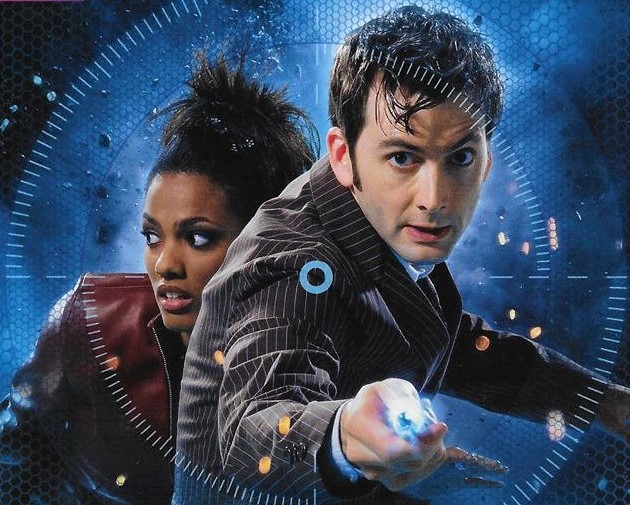
Image: Still from Thor: Ragnarok via IMDb

In the Seen on Screen occasional feature, we discuss movies and television shows of interest.

A Ghost Story

The Met Bronze Veiled Masked DancerWe often tell scary stories not just to evoke screams and chills but with a message. The monsters of our creepy tales reflect our larger fears, but sometimes the point of the story is that the most frightening things are done by our fellow human beings, not by spooks or spectres. Such is the case with a ghost story told by Herodotus.

The source of this tale was a meeting of representatives from various Greek cities convened by the Spartans in the late 500s BCE to consider going to war against Athens. Athens had been in a state of political turmoil and the Spartans proposed invading the city and imposing a tyrant to restore order and stability.

The representatives of Corinth spoke out strongly against the proposal. Corinth had been ruled by tyrants for three generations, and Corinthians knew better than anyone what tyrants were like. Socles of Corinth told the story of Periander, the Corinthian tyrant. Periander had killed his own wife, Melissa. He then tried to consult her spirit when he mislaid a treasure that a friend had left with him:

He sent messengers to the oracle of the dead at the River Acheron in Thesprotia to inquire about his friend’s deposit, but when the spirit of Melissa appeared, she would not indicate, by speech or action, where the deposit lay, for she was naked and shivering. The clothes that had been buried with her were of no use to her since they had not been burned. As proof that what she said was true, she added that Periander had put his loaves in a cold oven.

When this message was reported to Periander, he knew it to be the truth, for he had had intercourse with Melissa when she was dead. He at once issued a proclamation that all the women of Corinth should gather at the temple of Hera. They came out dressed in their best as if for a festival, but Periander had his guards fall upon them and strip them all naked, ladies and servants alike. The clothes were heaped up in a ditch and Periander, with a prayer to Melissa, burned them all.

After this he sent a second time to the oracle, and the spirit of Melissa pointed out where the deposit lay.

– Herodotus, Histories 5.92.g

(My own translation.)

Some things are more frightening than ghosts.

Image: Bronze statuette of a veiled and masked dancer, from the collections of The Metropolitan Museum of Art, bequest of Walter C. Baker in 1971, accession number 1972.118.95, by Eppu Jensen (Greek; 3rd-2nd century BCE)

Story Time is an occasional feature all about stories and story-telling. Whether it’s on the page or on the screen, this is about how stories work and what makes us love the ones we love.

Race in Antiquity: The Question

“What race were the ancient Greeks and Romans?”

It sounds like a simple question that ought to have a straightforward answer, but both the question and its answer are far more complicated than they appear. In this and some upcoming posts, I’ll dig into the topic to explore what we know, what we don’t know, and what we mean by race in the ancient Mediterranean world.

Part 1: The Question

“What race were the ancient Greeks and Romans?”

As simple as it may sound, almost every word in this question hides layers of assumptions. It assumes that race is a valid category for describing human beings, and is equally applicable to ancient societies as to modern ones. It assumes that we can reconstruct ancient demographic information in some comprehensive way. It assumes that “Ancient Greeks and Romans” are definable groups of people, and that we know who we mean by that designation.

These are not trivial issues, and I’ll take them up in future posts, but today I want to address an even more fundamental and persistent assumption: that the racial identity of the ancient Greeks and Romans matters.

Now, I am an ancient historian and a geek. I’ve spent my entire life, both at work and at leisure, being told by people that the things I care about don’t matter. (The title of my field, “ancient history,” is even used as a synonym for “irrelevant.”) That’s never stopped me from trying to figure things out and it shouldn’t stop us from thinking about race in antiquity, but it should make us step back and ask: Why do we want to know?

When we ask questions about the race of ancient peoples, we are not posing these questions in a vacuum. There is, in fact, a long history of people arguing about the answer, and if we don’t understand their reasoning and motivations we may fall into the same traps and make the same mistakes that they did.

We can start around 1500 CE when the Western concept of race was taking on its modern contours. Variations in physical and genetic features—from skin color to blood type—are part of the reality of human biology, but the belief that these features can be used to divide humanity into distinct and meaningful categories, along more or less the terms we recognize today, was a product of European imperialism and colonialism. The European powers that were busy conquering and colonizing the rest of the world had to define themselves as superior to the people they were displacing, exploiting, or massacring. The idea of a “white” race—a superior “white” race, no less—began with the need to justify European activities abroad.

Once Europeans had defined themselves as both white and superior, history had to fall in line. On one hand, the roots of white superiority had to be found in the depths of history; on the other hand, any great accomplishments in history had to become the property of white people. Any evidence that could be interpreted as suggesting that white people had made significant achievements before anyone else were celebrated, such as Piltdown Man, a hoax that got out of hand because it conformed so perfectly to what archaeologists expected: the crucial first steps towards modern humans happened in northwestern Europe. The achievements of non-European peoples were denied or claimed for Europeans wherever possible, like the “dynastic race theory” in Egypt or the assertion that major centers of African civilization like Great Zimbabwe must have been built by white (or white-ish) settlers. Civilizations that could be neither denied nor claimed for whiteness, like those of ancient India, China, and Mesoamerica, were denigrated or dismissed.

European Christian culture had long idolized the civilization of ancient Greece, a habit that went back as far as the Roman Republic. The Romans had had an uneasy relationship with their Greek neighbors and subjects, as they tended to elevate the great literary, artistic, and philosophical works of the classical Greek past while sneering at contemporary Greeks as unworthy of their ancestors. After the fall of the western Roman Empire, as Greek and Latin became learned rather than vernacular languages, Greek and Latin literature collectively acquired an aura of cultural authority. This aura of authority was further supported by the association of Greek and Latin learning with religious authority in the Christian church.

By the imperial age, when European nations were asserting their racial superiority over their colonial subjects and slaves, ancient Greek and Roman civilizations had come to be perceived as the peaks of intellectual, philosophical, and artistic culture. A defense of European superiority therefore required the assertion of a direct link to Greece and Rome. Since race was the accepted currency of identity, that link had to be defined in racial terms. It therefore became essential that the ancient Greeks and Romans should be white.

Various strategies existed for making the argument that the ancient Greeks and Romans were white, but one of the most influential was the Aryan invasion model. According to this model, the Aryans were a primordial superior white race whose origins lay somewhere in northern or northeastern Europe. At various times in history, individual branches of this race would explode outwards, traversing great distances and conquering all the “inferior” peoples in their path, eventually colonizing a swath of Eurasia stretching from England to northern India. These Aryan invaders could be credited with cultural achievements anywhere they went, but most importantly they were hailed as the ancestors of the classical Greeks. Western and northern Europeans who claimed descent from other branches of Aryan settlers could therefore claim an ancestral connection to the glories of Greece and its Roman successors.

It was not enough for the ancient Greeks and Romans to be white. Since Europeans looked back to Greco-Roman culture as a source of authority, those who wanted to validate imperial projects required that the opinions of the great ancient authors should support their sense of racial superiority. Scholars searched ancient texts for passages congenial to the imperialist drive and elevated these as the true beliefs of the Great Thinkers of antiquity. Any passages which expressed a different perspective were dismissed or reinterpreted. Through the centuries of this scholarly activity, the ancient Greeks and Romans became not only “white” but the very founders of white supremacy.

Modern scholarship recognizes that the “Aryan race” was a figment of the imagination (the term “Aryan” is now reserved for certain historical peoples of northern India). Both the ethnic identity of the ancient Greeks and Romans and their opinions about that identity are now seen to be far more complicated issues with no easy answers, but the insights of the past several decades of scholarship are only slowly coming into wider public consciousness. The relics of the racially-determined Aryan invasion model are still all around us, some of them stripped of the most obvious racism of the older scholarship but still grounded in the urge to assert the fundamental whiteness of the ancient Mediterranean.

When we ask questions about the race of the ancient Greeks and Romans, this is the context we must be conscious of. Much older scholarship is suffused with its ideas, and even more recent popular discussions of the subject tend to be unknowingly aligned with the Aryan model.

The mistakes of the Aryan model and other arguments that asserted the whiteness of the ancient Greeks and Romans arose from the desire to make the past reflect the concerns of the present. The past does not exist to make us feel better about ourselves or validate our contemporary politics. This is the assumption we must guard against most carefully in any historical research. If we assume that the Greeks and Romans are a measure of civilization and that any similarities we can find between ourselves and them prove our own worth, our arguments will go hopelessly askew.

Instead, if there is any use in examining Greek and Roman ethnic identity, it is as part of the larger work of history: to help us understand our own society better by giving us useful examples for comparison. We will not prove our own value by showing that the Greeks and Romans were like us, but we may better grasp the complex forces at work in forming our own identities by understanding how they were different from us.

Other posts:

Image: Janifrom kantharos, via People of Color in European Art History (Etruria, currently Villa Giulia; 6th c. BCE; ceramic)

History for Writers is a weekly feature which looks at how history can be a fiction writer’s most useful tool. From worldbuilding to dialogue, history helps you write. Check out the introduction to History for Writers here.
Secondary Characters in Love

I realized something recently.

There are lot of books, movies, television series, and so on about people falling in love, or whose main characters end up in a relationship. (No, that’s not the thing I realized.) Mulder and Scully. Lizzie and Darcy. Aragorn and Arwen. For a lot of people, these pairings are a big deal. Fans of these works love watching the characters fall in love (or arguing endlessly on the internet about it) and creators tease us with will-they-or-won’t-they flirtation and big payoff wedding days.

All of this is perfectly fine, but it’s not for me. I don’t mind that Mulder and Scully end up together, but that was never what I watched X Files for. I love Pride and Prejudice for the witty dialogue, expertly crafted story, and deliciously wicked satires of social pretension, not for the Darcy-Bennet nuptials.

Now here’s the thing I realized: even though I have no investment in main character romances, I adore secondary character romances. I love watching side and background characters fall in love and get down to happily-ever-after-ing. I don’t care one way or another if Phryne Fisher and Jack Robinson end up together, but I’m all in for Dot and Hugh. To me, the climax of Pride and Prejudice is not when Mr. Darcy proposes (for the second time) to Elizabeth Bennet, but when Mr. Bingley proposes to Jane Bennet.

I think there are some reasons for this. Side characters’ romances are not generally made to carry the same dramatic weight as main characters’. That means they don’t usually get saddled with tedious will-they-or-won’t-they teases or artificial roadblocks to “build drama.” More often they get to be sweet, silly, stories of love. In longer-form works, like television series, secondary characters also often get to make progress in their romance, moving on from flirtation to dating to marriage to wedded life while main characters tend to get stuck in stasis.

Then again, maybe I just love secondary characters.

Anybody else feel this way? Or am I just peculiar?

Image: Jane and Charles via Giphy

In Character is an occasional feature looking at some of our favorite characters from written works and media to see what drives them, what makes them work, and what makes us love them so much.

Too Familiar

Cats and alchemy don’t mix.

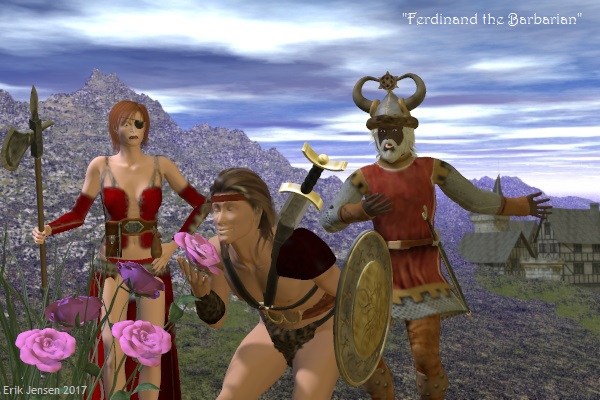
Since Eppu posted one of my old Away From Reality comics last week, I’ve been reminded of how much fun I had making them. I don’t have the time, energy, or creativity to start up the comic again, but I was inspired to dust off the old Poser and whip up something appropriate to the season.

Image by Erik Jensen

In Making Stuff occasional feature, we share fun arts and crafts done by us and our fellow geeks and nerds.

Learning in Safe Spaces

I remember when my father taught me to drive. The first time I got behind the wheel of a vehicle and tried to figure out how to get my feet on the right pedals and work the gear shifter, we weren’t sitting in a high-powered sports car. We weren’t on the highway or in the middle of rush hour. We were in an old Ford Custom truck with three-on-the-tree (for those of you who know what that means), on a deserted dirt road that had fields on one side and woods on the other. I did my false starts and gear-grinding in that truck where the worst thing that could happen was that I might slide off into a ditch. No matter how badly I messed up, I wasn’t going to hurt myself or anyone else. After a good long time of practice, I learned how to listen to the engine, smoothly slide my feet from pedal to pedal, ease the shifter into gear, and start and stop on anything from flat to a good steep hill. I have since driven confidently on single-lane mountain roads and through a Boston rush hour in everything from a sports sedan to a moving truck, but it all began with the skills I developed through slow practice on those sunny afternoons.

Much the same is true about a lot of the important things I’ve become good at in life. I didn’t learn to swim by being tipped off the side of a boat in the middle of a shipping lane. I learned by splashing around in water wings with my parents keeping a watchful eye on me. I didn’t learn to cook by tossing together a souffle or a pig roast. I learned by mastering one recipe at a time with my mother teaching me why each ingredient mattered and what each step in the process accomplished. Pretty much anything difficult I’ve learned to do, anything where getting it wrong risked doing harm to myself or someone else, I’ve learned by starting slowly with someone helping me figure out what I was doing and how to do it safely and well.

The same is true of my academic education. Now, studying history is not like learning to drive or swim. If you do it badly or recklessly, you aren’t likely to pose an immediate risk of physical harm to yourself or anyone else, but history is powerful. So much of our sense of identity, both as individuals and as communities, is wrapped up in how we think about our past. Misunderstanding how and why things happened in the past can lead us to make seriously bad choices in the present with real and devastating consequences. My teachers and professors were as careful in how they constructed their lessons as my father was when he took me down that dirt road and handed me the keys. It wasn’t that they kept us away from the hard parts and the painful questions, any more than my father kept my hands off the shifter or my mother locked up the salt. It was that they made the classroom a place where everyone felt welcome to bring their own experiences and observations into the discussion, where we could get things wrong and still know that we were respected as students and scholars, and where we could tackle complicated issues a little piece at a time.

There is a lot of talk these days about “safe spaces” in college classrooms, and a lot of misunderstanding about what that term actually means. It doesn’t mean a space in which we avoid difficult ideas. It means a space in which we engage with difficult ideas carefully, thoughtfully, and purposefully. Learning to grapple with challenging and painful ideas and with opinions radically different from our own is an essential part of a good education, but these are not things we learn effectively in a free-for-all. Part of my role as a professor is to be careful about how we engage with difficult ideas, the same care I exercise in choosing what texts my students will read and what assignments I will have them write.

That care includes meeting my students where they are, both as scholars and as human beings. It includes respecting the fact that everyone in my classroom is a unique individual with their own talents and burdens. It means recognizing that what is easy for some of my students to do will be exhausting for others. History is a powerful thing. How we think about the past has enormous consequences for the present, and the weight of those consequences falls more heavily on some people than on others. If I am to teach all my students effectively, my classroom must be a place where everyone feels welcome and knows that they will be taken seriously.

The history of the ancient Mediterranean may seem so distant and so tame that nothing arising from its study could possibly harm anyone, but the cultural authority of Greece and Rome has often been invoked in modern times to justify declaring certain groups of people outside the bounds of civilization. The detritus of past and present racism, sexism, anti-immigrant bigotry, and other prejudices still clings to the history of Greco-Roman antiquity. Even students with no ill intent may unintentionally poke at raw wounds in other students’ lives. It is my role as professor to know when we need to slow the discussion down, peel back the historiographical layers with care, and acknowledge the discomfort that comes not only from having our own wounds poked but also from realizing that other peoples’ wounds are not the same as our own.

Some people are fond of claiming that there are no safe spaces in the world and that colleges should prepare students for the harsh realities awaiting them by being equally unsafe. On one hand, this claim is far from true. The world is absolutely full of safe spaces for those of us who happen to have been born into the right demographic and socioeconomic groups. Ideas that unsettle the powerful are frequently pushed out of public view. My students who will have the hardest time finding a safe space in the world are already perfectly well aware of this fact and need no further education on that score.

But it is true that one of the functions of a college education is preparing our students to engage intelligently and productively with a world that will not always respect their histories or give them the space to think critically and carefully. Staying thoughtful in the midst of a shouting match is a difficult skill, and like any other difficult skill it is best learned with careful practice under a teacher’s guidance in places where the cost of making a mistake is minimal. Whether it’s rush hour traffic or the tumble of political discourse, we gain the skills and confidence to handle unsafe spaces by practicing in safe ones. I will do the best I can to make sure that my classroom is always a safe space for my students.

Here there be opinions!

Rating: Miss Fisher’s Murder Mysteries

We’ve now rewatched and rated season 3 of Miss Fisher’s Murder Mysteries, and it is over too soon! Season 3 is several episodes shorter than the first two seasons (on 8 episodes, compared with 13). The quality of the episodes also suffers a little in the third season, but it was still a delight to watch.

  1. “Death Defying Feats” – 6
  2. “Murder and the Maiden” – 7.5
  3. “Murder and Mozzarella” – 7
  4. “Blood and Money” – 7
  5. “Death and Hysteria” – 7
  6. “Death at the Grand” – 4
  7. “Game, Set, and Murder” – 6
  8. “Death Do Us Part” – 6

The average for this season is 6.3, a bit of a step down from the previous season’s 7.1, but still perfectly respectable. Most of the season’s episodes are at least average and there’s a good bunch of 7s.

Our diminished enjoyment of this season can be largely put down to one cause: Phryne’s father, who pops up in several episodes and dominates the season’s low point, “Death at the Grand,” which we rated only a 4. He is a selfish, irresponsible man who aggravates Phryne and us. Fiction, of course, is not real life; sometimes terrible people make for great characters, but this is not one of them. All Phryne’s father does for us is to put a damper on the wit, sparkle, and verve that we love this series for.

To balance that, the high point of the season is “Murder and the Maiden,” an interesting and complicated mystery surrounding the death of a pilot who turns out to have been leading a double life.

And now we have a Miss Fisher movie to look forward to! This is a series that definitely deserves a good send-off, so we can’t wait.

Image: Miss Fisher’s Murder Mysteries via IMDb

In the Seen on Screen occasional feature, we discuss movies and television shows of interest.

Custom is King

We often think of multiculturalism as a particularly modern virtue, but the ancient Greek historian Herodotus gave a pretty good argument for respecting other peoples’ cultures more than two millennia ago.

Here’s the story he tells:

When Darius was king [of Persia], he summoned the Greeks who were at his court and asked them how much money it would take to get them to eat the bodies of their deceased fathers. They replied that nothing would make them do so. Darius then summoned some Indians, called Kallatiai, whose custom it is to eat their dead parents, and asked them—in the presence of the Greeks, who had an interpreter to explain the Kallatiai’s words—how much money it would take to convince them to cremate their deceased fathers [as was the Greek custom]. The Kallatiai exclaimed that he should not even mention such an abomination. Custom dictates such things, and it seems to me that [the poet] Pindar got it quite right when he said that custom is king.

– Herodotus, Histories 3.38

Herodotus does not tell this story at random but to illustrate a point. Cambyses, a different Persian king, had mocked the Egyptians for worshiping a black bull, and Herodotus felt that Cambyses had been very wrong, even insane, to do so. This story about Darius’ cultural investigations was meant to drive the point home: everyone believes in their own way of doing things, and it is wrong to dismiss or disparage other peoples’ culture, even if you don’t share it or even understand it. We can respect other people’s culture just as we expect them to respect ours. No culture is right or wrong.

So, for those of you keeping score, that’s a Greek author standing up for Egyptian traditions against the scorn of a Persian king and citing another Persian king’s discussions with Greeks and Indians to do it. Herodotus’ defense of multiculturalism is itself multicultural.

Image: Relief sculpture of Darius via Wikimedia (Persepolis; sixth century BCE; stone)

History for Writers is a weekly feature which looks at how history can be a fiction writer’s most useful tool. From worldbuilding to dialogue, history helps you write. Check out the introduction to History for Writers here.

Artifacts and Transmogrification: Blood Death Knight and Demonology Warlock

I’ve talked before about how some of the Legion artifacts just don’t work for my characters, but sometimes the issues go even deeper.

With Legion, Blizzard declared that they were pushing the idea of “class fantasy:” your druid should feel like a druid and your mage should feel like a mage, not just interchangeable combinations of game mechanics. In many ways, they’ve done an excellent job of bringing flavor and distinctiveness back into the classes we play. But what if Blizzard’s idea of what your class is all about doesn’t fit with your idea, either about the class as a whole or your individual character themselves? That’s what’s happened with a couple of my characters this expansion: my blood death knight and my demonology warlock.

Now, death knights and warlocks have always been “dark” classes. In the game’s story, death knights are the corpses of fallen fighters reanimated by the nefarious Lich King, who then reclaimed their individual will by force. Warlocks are spellcasters who summon demons to do their bidding and dabble in forbidden magic. It’s easy to play both of them as edgy, angst-ridden characters, but before Legion there were other ways you could approach the classes.

Though not an active role-player, I generally have some vague sense of backstory and personality for my characters. My death knight chose to stand strong in the face of the darkness and reclaim her past identity as a righteous defender of the innocent. My warlock was a sort of magical naturalist who viewed her demon minions as interesting specimens to be studied and put to good use, but carefully managed and controlled.

With Legion, it’s gotten harder to maintain those distinct perspectives under the weight of Blizzard’s “class fantasy” push. For both classes, Blizzard has been ramping up the dark, grim, angsty aspects of these classes, and that comes through in the artifact weapons. I’ve used my transmog to push back and reassert how I see my characters and how I want to play them.

For my death knight, I’ve shunned the dark, spiky, skull-heavy style that Blizzard seems to love and put her in glorious golden armor with touches of blue and purple. The artifact axe that blood death knights get does not suit the look at all, so I’ve transmogged over the axe with a gleaming silver and blue mace that feels much better for her.

(Here’s what the weapon looks like un-mogged. Bleah.)

My warlock has been more of a problem. The demonology artifact is a floating skull that follows you around. (Someone at Blizzard is really in love with skulls.) The trouble is that the demonology artifact, unlike all the rest, cannot be transmogrified. It’s either walk around followed by a hideous floating skull or just not use the artifact. (I could, of course, change her spec, but she has always been a demonologist and she always will be, no matter how ugly Blizzard tries to make the spec.)

So, she has simply not used the artifact this expansion. I know that makes her very underpowered and means she misses out on most of the character advancement in this expansion, but it’s a price I’m willing to pay to make her look the way I want. She carries a staff which I have transmogged to one of the most beautiful and extraordinary appearances in my collection. She’s not a character I try to do challenging or group content with, so it’s good enough for me.

How are you feeling about Blizzard’s attempt at class fantasy? It it working for you? Are you rebelling against it? Share your thoughts (and your transmogs!).

Of Dice and Dragons is an occasional feature about games and gaming.

Rating: Miss Fisher’s Murder Mysteries, Season 2

We’ve rewatched and rated season 2 of the Australian 1920s detective series, Miss Fisher’s Murder Mysteries. The first season gave us lots of great episodes. Here’s how season 2 measured up:

  1. “Murder Most Scandalous” – 5.5
  2. “Death Comes Knocking” – 6
  3. “Dead Man’s Chest” – 7.5
  4. “Deadweight” – 6
  5. “Murder a la Mode” – 7
  6. “Marked for Murder” – 6
  7. “Blood at the Wheel” – 6.5
  8. “The Blood of Juana the Mad” – 5.5
  9. “Framed for Murder” – 10
  10. “Death on the Vine” – 7
  11. “Dead Air” – 7.5
  12. “Unnatural Habits” – 8
  13. “Murder under the Mistletoe” – 9.5

The average for this season is 7.1, which is pretty good and not too far off from season 1’s average of 7.4. There are some lackluster episodes balanced by a number of gems.

The lowest-rated episode is a tie between “Murder Most Scandalous,” in which our hero Phryne Fisher goes undercover at a gentlemen’s club, and “The Blood of Juana the Mad,” about the murder of a university professor which involves a secret hidden in a sixteenth-century manuscript. Both episodes have their good points, but they don’t hold together very well.

At the top of the chart this season we have “Framed for Murder,” a spirited romp surrounding a murder on a movie set which lovingly recreates both the glamour and the spit-and-bailing-wire spirit of early movie-making. When the movie’s director is killed, Phryne gets to step in and take over the job, complete with jodhpurs.

Any Miss Fisher fans out there want to weigh in? Got a different pick for the best or worst episodes of the season? Let us know in the comments!

Image: Miss Fisher’s Murder Mysteries via IMDb

In the Seen on Screen occasional feature, we discuss movies and television shows of interest.