Shadowlands, A Year in the Land of Death

World of Warcraft: Shadowlands released a year ago today. Can you believe we’ve been adventuring in the after life for a whole year? For only a year? What is time even?

We thought we’d mark the occasion by looking back at our experiences with the expansion so far and talking about what it’s been like to play in WoW‘s eighth expansion.

New systems

Eppu: The new mission table seems hardly to have changed from its previous iterations, but since my playing time has been very limited during this expansion, I can’t say I’ve really understood all of the mechanics of leveling and missions. I can say, however, that accumulating companions is surprisingly speedy. However, the animated-by-default battle at the conclusion annoys me—considering what a minuscule part of the game it is, that’s a waste of processing power and having to always bypass it with a click is a waste of time.

Soulbinds is a more interesting case. Essentially, they’re a version of the old talent trees, with the exception that you can have three separate ones and that switching between them is easy. Accumulating a good smattering of basic conduits via world quests is simple, too.

Anima, unfortunately, is where Blizzard over-corrected in this expansion. The system is clunky and complex and not intuitive. For example, gathering anima for X purpose is added to the quest tally when you complete a quest that grants anima rewards, as opposed to Y purpose it’s counted when you empty the anima rewards from your inventory into the reservoir.

Erik: Anima really seems like a step back. We’re getting a lot of clutter in our bags this expansion after Battle for Azeroth did a much better job of streamlining its power-accumulation systems. Conduits are another piece of bag clutter I could do without, but the overall soulbind system works pretty well. It allows a fair amount of flexibility in customizing your character’s play style with some interesting trade-offs to think about.

Blizzard keeps tweaking the mission table, but it’s never been particularly interesting. I do it because it’s a low-effort way of getting small amounts of anima and reputation, but it’s never been a compelling part of gameplay. After four expansions, I still don’t understand why I am sending other people off to have adventures instead of having them for myself.

I have to say that after a year of playing in this expansion, I still don’t feel like I really know what I’m doing with a lot of my covenant sanctum things. It’s at least partly because anima has been so hard to get that I haven’t activated or upgraded most of what’s offered. I supposed that fits the theme of the “anima drought,” but it also makes anima a really unwieldy game mechanic.

The one new system I like the best is renown. It feels much more accessible and rewarding to build renown levels with a covenant than to grind out reputation.

Eppu: Renown is a nice change from grinding rep, you’re quite right. For such a long time, everything used to be a grind; it’s nice to have some variety.

What do you think about the transport networks within covenant zones?

Erik: I like them, and I also like that they are thematic to the zones they’re in. It’s a good combination of artistic and practical designs. (And we get to hang out with a cheerful old mushroom guy.)

Torghast

Erik: One new system that stands out from the rest is Torghast, the randomized, size-flexible dungeon. I have to say that Torghast is one of the best things in Shadowlands for me. I really like that there is content that is so replayable, with so much flexibility for difficulty level and group size. I’ve done a lot of solo running through Torghast, and we’ve done plenty of it together. For such a long time I have wished that there was content in WoW of a comparable challenge level to running a dungeon but tuned for two players instead of five, so that we could do something challenging but doable together. Torghast is finally that. I hope this is a system they keep developing for future expansions.

I also love how adaptable Torghast is. If I just want to go squish monsters and get fun new powers, I can set it low and crash through; if I want something that pushes me to use my skills an abilities to their fullest, I can set it high and enjoy the tactical challenge.

The one thing I wish were different about Torghast is that I wish there were some reward to running it beyond gathering materials for the legendary system. As fun as Torghast can be, it doesn’t really feel worthwhile to play when I know I won’t get any gear or new transmog appearances at the end, or much else to reward me for my time and effort.

Eppu: You’re right; for me, too, just about the only major flaw in Torghast is the lack of any fun transmog gear. (Otherwise, I still stand by my previous opinion.)

New zones

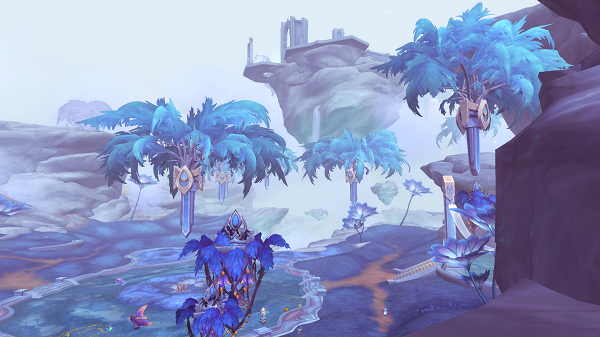
Eppu: I quite like the design of three new zones: Ardenweald, Bastion, and Revendreth. The really fascinating feature about the Shadowlands landscapes is how aggressively height differences—ledges, ridges, ginormous trees, stupendously tall buildings, levitating platforms—are used to squeeze questing areas side by side in order to keep the whole zone from ballooning out to an uncontrollable size. Blizzard has used the same principle before; in Shadowlands it’s really matured, but I don’t think you could take it any further without land shapes turning ludicrous. (Then again, this is fantasy, perhaps they could do it and make it work!)

It’s an interesting choice to tweak each zone’s color scheme so far, though—it’s not unheard of to have a subtle overall color in zones (e.g. Icecrown, Suramar, or Drustvar)—but this time Blizzard really pushed it. There have been times when I’ve switched zones after a while, because I’ve wanted more variation in the colors around my toon.

Lastly, I’m irritated that moving between covenant zones only can take place via Oribos. (Forced hub-centered travel is one of my pet peeves in the real world, too.)

Erik: I agree about wishing for ways to get between zones that don’t rely on Oribos. I understand the idea of Oribos as a central point, but we’ve seen individuals travel directly between zones in the questing experience, and I see no reason we as players couldn’t have gotten some options for that, too.

The artistic design of the zones is really strong this expansion. Each zone feels very different not just in terms of color palette but landforms and buildings. There are some that I like (Bastion, Ardenweald) and some I don’t (Revendreth, Maldraxxus), but every zone feels like a deeply concentrated expression of an idea. I find that Bastion and Maldraxxus feel small, while Ardenweald and Revendreth feel big. I wonder if that’s intentional, or just an effect of how I experience the zones.

And then there’s the Maw. All I can say is that they did such a good job designing the zone to feel like a bad place to be that I spend as little time there as possible. If the Maw was supposed to be what kept our characters occupied once they got to max level, it missed the mark.

Although my favorite covenant is the Night Fae, I think my favorite zone to spend time in is Bastion. Do you have a favorite?

Eppu: Hm. Ardenweald or Bastion, for both have strong pros and some cons. Although I have to say none of the areas feel quite right for hanging out with my numerous female Dwarves.

WoW Shadowlands Bastion Near Heros Rest

Story

Erik: I’ve enjoyed the story of Shadowlands on the whole. It’s interesting to go to a new place we’ve never known about before and start figuring out just how it all works. We have met a lot of compelling characters and seen some great moments along the way. They’ve done a lot with the characters we interact with to help us understand the nature of the different realms of the Shadowlands, from the earnest soul-searching of the Kyrian aspirants to the gung-ho warmongering in Maldraxxus, the intertwining of despair and hope in Ardenweald, and the crumbling ancien regime in Revendreth.

The parts of the story that haven’t worked for me have been the overarching plot involving the Jailer and the Maw. I know some people really enjoy digging up secrets and spinning tin-foil-hat theories about the nefarious motives of cosmic powers, but I’m not among them. The Jailer is just one more generic villain to me. I am also utterly uninterested in Tyrande’s super-powered vengeance rampage or the emotional life of Sylvanas. As so often in expansions past, I find the little, ground-level stories in Shadowlands much more interesting than the big story of the overarching plot. Give me more Kyrian buddy cops and Night Fae drama nerds, not another giant villain vaguebooking about their plans to conquer reality.

Eppu: I’m trying to figure out just why I felt that playing through the zones differed from previous expansions. The basic progression through all of the covenant zones is surprisingly similar from area to area—until you hit Maldraxxus. There we get an item with runes periodically slapped on along with the story reveal, which felt more drastic to me than reveals elsewhere. The other areas felt more or less like the usual quest grind. Combined with the utterly unique landscape design ethos, Maldraxxus really stands out to me.

Have a take of your own? Do chime in!

Of Dice and Dragons is an occasional feature about games and gaming.

The Couple that Eats Together Stays Together

This terra cotta Etruscan sarcophagus depicts a couple reclining on a dining couch together. Etruscans adopted a great deal of cultural influences from the Greek world (including, for instance, the style of dining while lying on a couch), but one sharp difference from the Greeks was while in the Greek world dinner parties were exclusively male affairs, Etruscan women and men dined together.

This couple looks particularly happy and loving, smiling and holding one another affectionately. Of course, art is not always a reflection of life; just because a couple wanted to be depicted as a happy family in their funeral portrait doesn’t necessarily mean they were happy together in life, but it’s certainly nice to imagine that they were, and the very fact that they wanted to be perceived as a loving, intimate couple tells us something about the values of their culture.

Image: Sarcophagus of the spouses, photograph by Sailko via Wikimedia (CC BY-SA 4.0) (found Caere, currently National Etruscan Museum at Villa Giulia, Rome; c. 530-520 BCE; terra cotta)

Out There is an occasional feature highlighting intriguing art, spaces, places, phenomena, flora, and fauna.

Fantasy Religions: Divinity and the World

It’s been a while since I last wrote about ways of making religious elements of a secondary world feel more authentic, but here’s another thought worth considering when you’re writing: how people feel about the gods tends to reflect how they feel about the world.

Traditional religions tend to see the world differently and posit that divinity exists within the world, that the physical world around us and the social world we inhabit as humans is also inhabited by sacred forces. Interacting with the world means necessarily interacting with divine entities. Some modern religions preserve this view of the divine, notably Hinduism and Shinto. In traditions like these, divine forces are located within the world, whether they are gods associated with natural features such as mountaintops or rivers, or divinities connected to human relationships, such as blessed ancestors or household spirits.

For many of the major modern religions, by contrast, such as Buddhism, Christianity, Islam, and some versions of Judaism, the divine exists outside the world. The physical world we live in and the social world we inhabit as human beings is a barrier between ourselves and divinity, and the function of religion is to help us transcend that barrier. Attachments to worldly goods or to social relationships are seen as impediments that must be resisted or shed in order to achieve harmony with the divine.

This distinction is not an absolute one. Traditional religions can also understand divine forces as abstractions or seek ways of achieving a closer communion with the divine through asceticism, and modern religions can see sacredness connected to specific places and people. Still, one of the defining characteristics of any religious tradition is whether it encourages people to seek harmony with the divine by inhabiting the ordinary world in meaningful ways or by escaping from its distractions and temptations.

The point for writers is not that one or the other of these religious approaches is right or wrong for an imagined world, but that each one responds to the needs of societies under different circumstances. People are inclined to see the divine in the world around them when they feel at home in that world. Well-established cultures with a strong sense of identity and long history moored in place are likely to see the world itself as sacred. Shinto in Japan and Hinduism in India both arise out of this kind of long history. Religions that see the world as a barrier to be overcome tend to arise in times when people are unsettled and feel powerless within the world they live in. Buddhism, Christianity, and Islam all arose among peoples who lived with chaos, violence, and a lack of control over their own destinies, while Judaism has been deeply shaped by a history of diaspora and oppression.

What kind of religions exist in your invented worlds depend on what the people in them have experienced. If your characters feel connected to and safe within the world they inhabit, they are likely to perceive divine forces all around them; if their world feels dangerous and alien, they are likely to feel equally alienated from the divine.

Other entries in Fantasy Religions:

History for Writers looks at how history can be a fiction writer’s most useful tool. From worldbuilding to dialogue, history helps you write.

Rating: Babylon 5, Season 4

It’s an action-packed, emotional roller coaster of a season for Babylon 5. The previous three seasons of development and growth come to a head in some unexpected ways. Here’s how we rated this season’s episodes:

Babylon 5 season 4 DVD cover
  1. “The Hour of the Wolf” – 6
  2. “Whatever Happened to Mr. Garibaldi” – 3.5
  3. “The Summoning” – 6.5
  4. “Falling Towards Apotheosis” – 5
  5. “The Long Night” – 7
  6. “Into the Fire” – 9.5
  7. “Epiphanies” – 4
  8. “The Illusion of Truth” – 2.5
  9. “Atonement” – 3
  10. “Racing Mars” – 3.5
  11. “Lines of Communication” – 4
  12. “Conflicts of Interest” – 2.5
  13. “Rumors, Bargains, and Lies” – 5.5
  14. “Moments of Transition” – 3.5
  15. “No Surrender, No Retreat” – 6
  16. “The Exercise of Vital Powers” – 1.5
  17. “The Face of the Enemy” – 1.5
  18. “Intersections in Real Time” – 0
  19. “Between the Darkness and the Light” – 7.5
  20. “Endgame” – 6.5
  21. “Rising Star” – 6
  22. “The Deconstruction of Falling Stars” – 4

Various shenanigans with the networks broadcasting Babylon 5 led to the originally planned seasons 4 and 5 being squished down into a single season, and the results are visible. In some ways, the results were good, as the pace of the action noticeably picks up and gives an urgency to important episodes dealing with the Vorlon-Shadow war and the Earth civil war. In other ways, the effects were less positive, though, as the story often feels cramped and rushed. In the end, we have an average rating for this season of 4.5, down from season 3 but on par with season 2.

Given how much story had to be condensed into this season, it is particularly jarring when the season pauses for a number of self-contained (and sometimes self-indulgent) episodes such as “The Illusion of Truth,” a demonstration of how propaganda works, “Intersections in Real Time,” in which Sheridan is tortured, and “The Deconstruction of Falling Stars,” a meditation on how history is transformed into legend. None of these episodes scored very well with us. “Intersections in Real Time” is our lowest rated episode of the season, at a complete 0, for being both unpleasant to watch and unnecessary to the larger story. The season also spends an inordinate amount of time watching Garibaldi make bad life choices, which we could also do without.

But when this season works it really works. At the top of the ratings we have “Into the Fire,” at 9.5, which pays off years of development as the younger races of the galaxy stand up to the ancient Vorlons and Shadows and tell them to get the hell out. This episode fully delivers on the promise of the series, being both exciting and thoughtful, and deftly transforming our entire perspective on the two mysterious races at the heart of the series’ central story. The last few episodes of the season proper, “Between the Darkness and the Light” (7.5), “Endgame” (6.5), and “Rising Star” (6), are less spectacular, but they bring the long-simmering Earth storyline to a satisfying close.

A lot of what makes Babylon 5 great is on screen in season 4. It may not be exactly what was planned at the outset, but it lives up to the promise of the earlier seasons.

Season 1

Season 2

Season 3

Image: Babylon 5 Season 4 DVD cover via IMDb

In the Seen on Screen occasional feature, we discuss movies and television shows of interest.

Bringing Color Back to Ancient Statues with Light

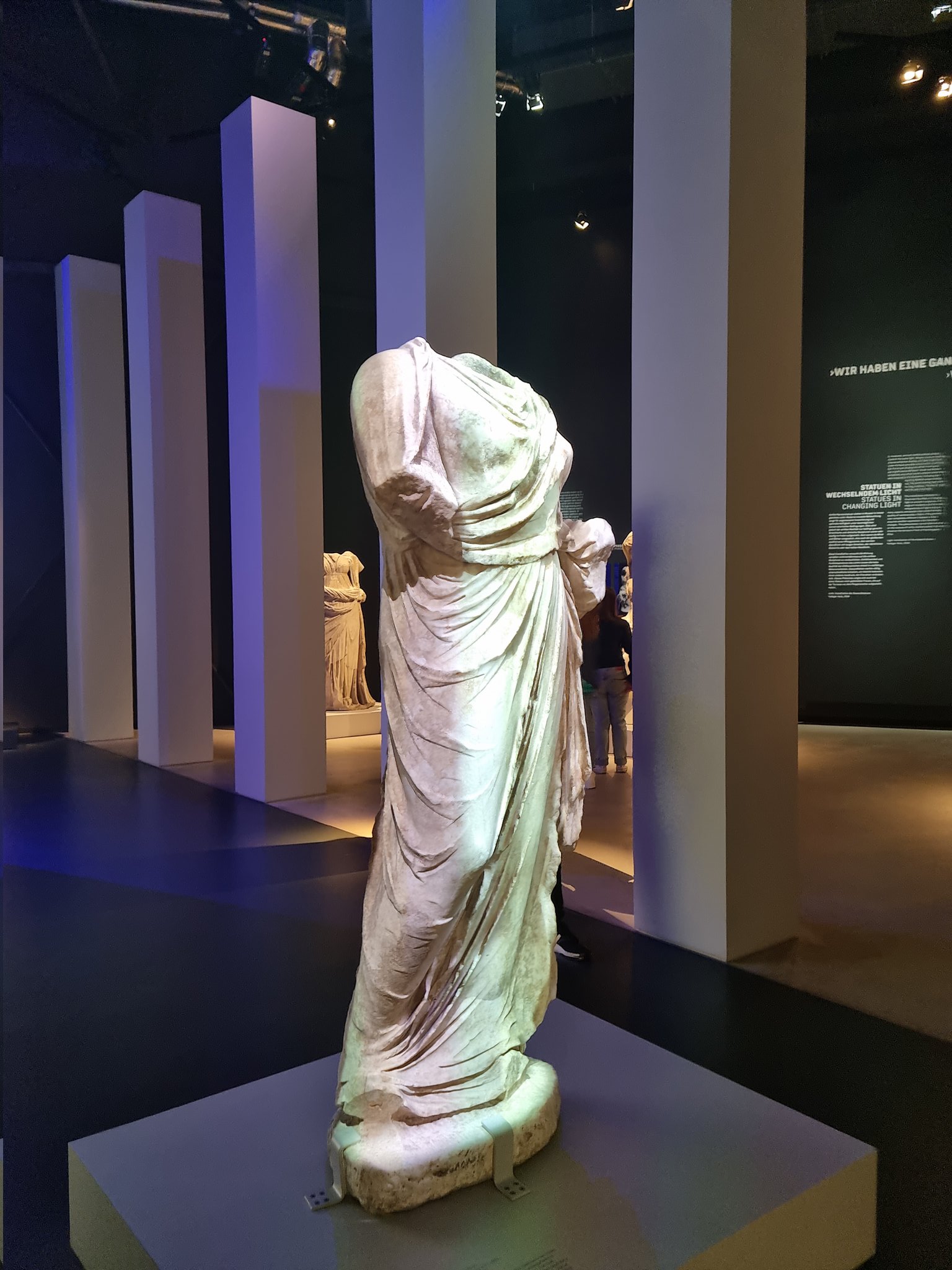
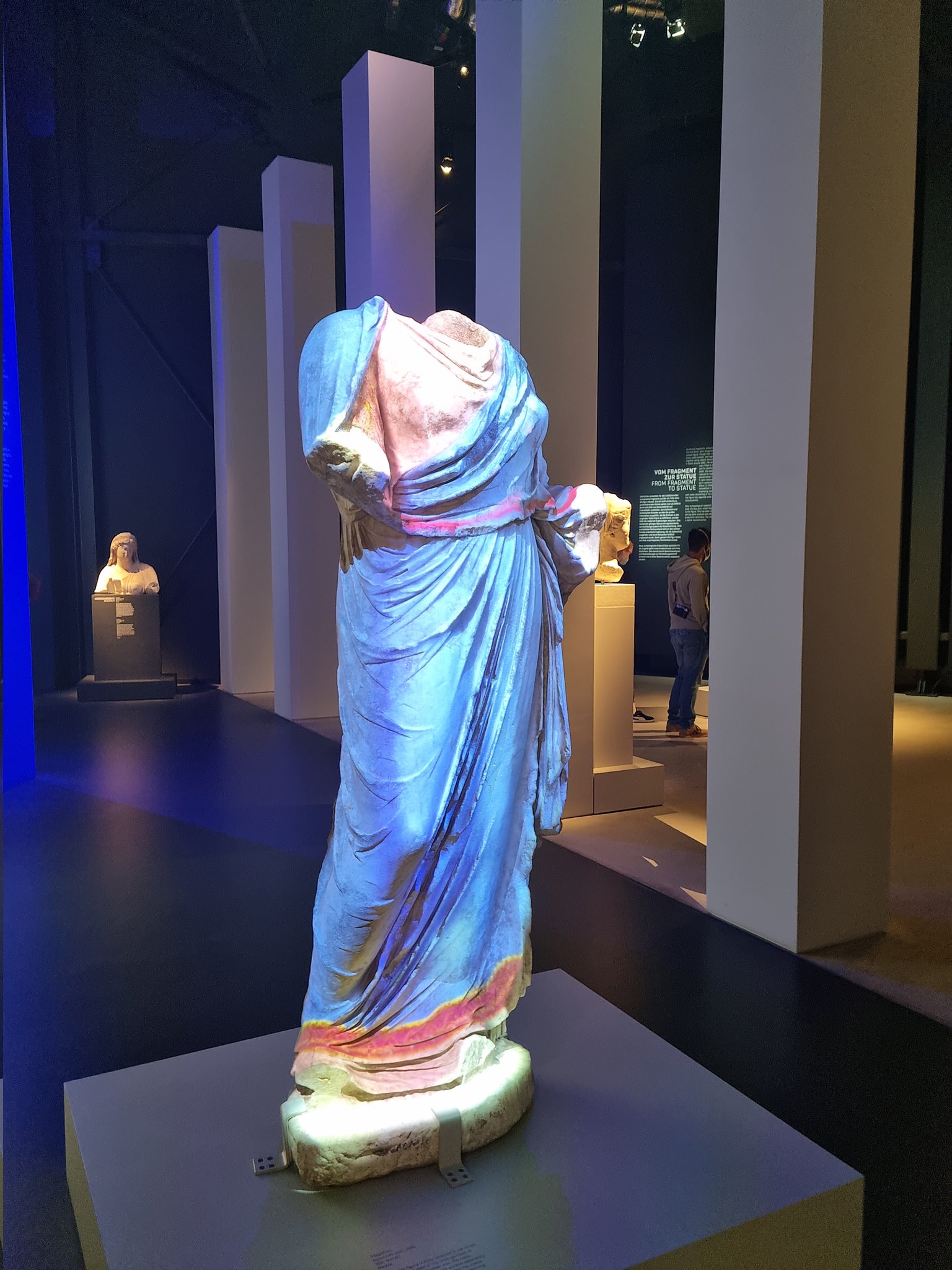
Here are a few interesting pictures from the Pergamon Panorama in Berlin where colored lights are used to show a few different variations on what marble ancient statues might have looked like in their original colors. A very neat idea and some great photography from Twitterer @BelovedOfOizys!

An ancient Greek marble statue of a draped woman
An ancient Greek marble statue of a draped woman with blue light showing on the clothing
An ancient Greek marble statue of a draped woman with magenta light showing on the clothing

Images: Statuary from Pergamon with colored lights, photographs by @BelovedOfOizys via Twitter

Out There is an occasional feature highlighting intriguing art, spaces, places, phenomena, flora, and fauna.

Worldbuilding in a Sentence

This fall I am finally teaching a course I have long dreamt of: History for Fantasy Writers. The course is built around the same ideas that I often blog about here, that studying history is a good way of exploring the possibilities of human societies and is our best resource when we want to imagine a world that is not like the one we live in.

As an early exercise to examine this idea, I asked my students to consider the following sentence: “The knight in shining armor rode his trusty steed toward the queen’s castle.” What can we tell about the world of this story just from this one sentence? They came up with some good answers:

  • The existence of knights and queens implies a stratified social structure. If we’re hearing about the people at the top, there must also be a lot of people at the bottom.
  • For instance, the knight must have dozens of people supporting them: someone to take care of the horse, someone to polish the shining armor, lots of people working the farms so they all have something to eat. The same and much more goes for the queen. Someone had to build that castle and keep it running. The lifestyle of a queen involves both politics and pageantry, for which she needs advisers and staff. All those people have to be clothed and fed.
  • Castles and knights in armor only make sense with certain kinds of warfare. In particular, this world must not have effective gunpowder weapons, which made both castles and mounted knights obsolete in our history.
  • If the queen lives in a castle, that means there must be a lot of fighting in this world. A castle is designed for defense, and it’s not a particularly convenient kind of place to live in peacetime. A queen wouldn’t be likely to live in one if she didn’t need to defend herself on a regular basis.
  • The fact that it’s the queen’s castle means that at least in some cases women in this world can wield power.
  • Castles and armor tell us something about the level of their technology. Building a castle takes a lot of quarrying, cutting, transport, and fitting of stones; armor requires mining and smelting ore to create metal, then working that metal into some complex shapes to make effective armor.

Of course, any of these observations could be undone in fiction. Maybe in this world horses magically take care of themselves. Maybe everyone is a knight or a queen and they’re all equal. Maybe the castle is carved out of a mountain of crystal, and the armor is made of enchanted tree bark. You can do that sort of thing in fantasy if you want to, but that’s where history helps you understand the “rules” so that you can break them in a way that is thoughtful and interesting.

I’m impressed by my students’ work so far and looking forward to more conversations like this one.

History for Writers looks at how history can be a fiction writer’s most useful tool. From worldbuilding to dialogue, history helps you write.

Deconstructing the Star Wars Sequels: The Rise of Skywalker

The first two movies in the Star Wars sequel trilogy had their problems: The Force Awakens was driven too much by nostalgia for A New Hope, and The Last Jedi was too dependent on an intellectual conceit. The Rise of Skywalker has a different and rather unusual problem: it is two movies crammed into one.

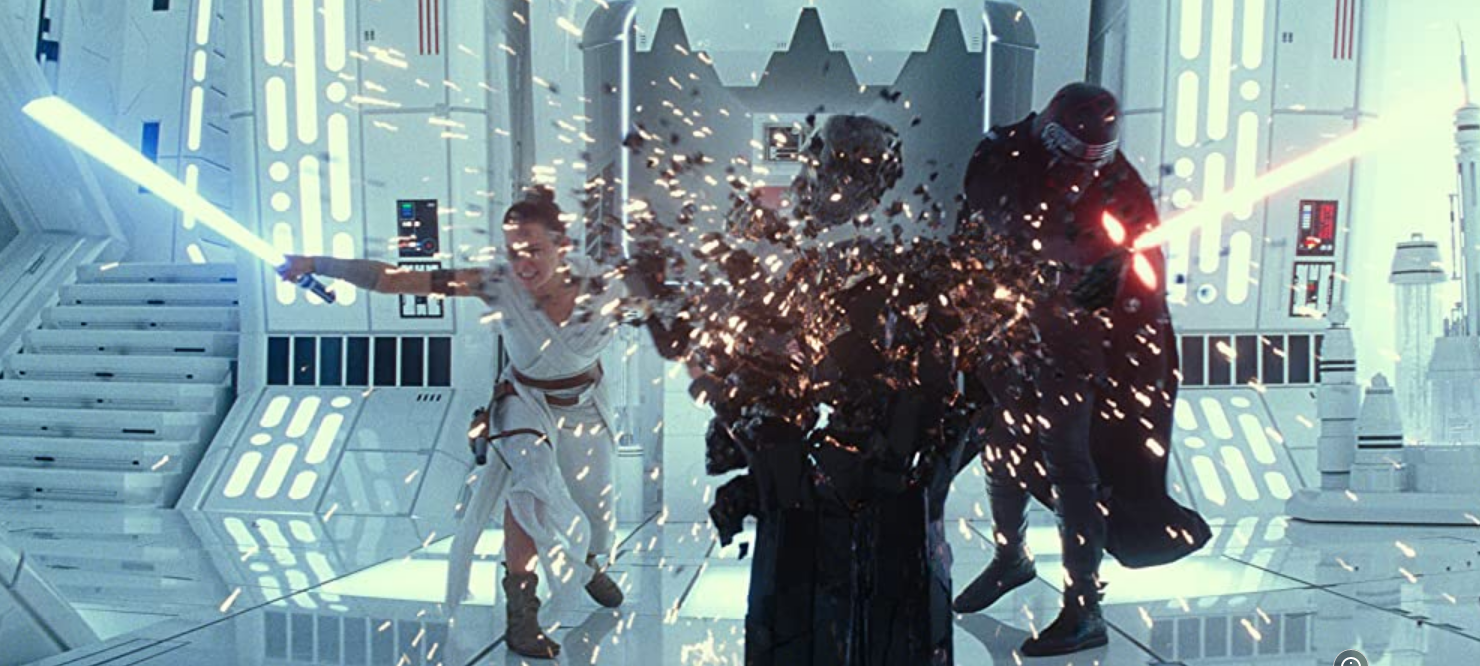
Rey and Kylo Ren smash stuff as they duel, screenshot from Star Wars 9: The Rise of Skywalker

By all public accounts, the new Star Wars trilogy was not planned with an overarching plot. The intent was that each director would put their own stamp on each movie. The effects of that choice are visible all over The Last Jedi, which moves about as far away from The Force Awakens as it can without technically breaking continuity. The reaction from fans was strong, as most of us probably remember. Some of that reaction was beyond the pale, up to and including online harassment of some stars (notably those who were not white men). For a good year and a half, it was just about impossible to have a conversation about the movie online without things devolving into a scorched-earth flame war. Disney seems to have been shaken enough by the reaction to turn back to J. J. Abrams for an encore of The Force Awakens to close out the trilogy. The Rise of Skywalker slams the door hard on everything The Last Jedi was trying to do and doesn’t look back.

This about-face is visible all over The Rise of Skywalker. New characters like Rose and D’Acy are demoted to background extras; Rey’s parents are retroactively promoted from mere junk traders to scions of Palpatine; Poe and Finn get to be heroic and do things that actually matter to the plot. The Rise of Skywalker rejects The Last Jedi so thoroughly that it attempts to fit an alternative second movie into its first half. Although we’ve been told that there was no overarching plan for the sequel trilogy, it sure seems like Abrams and company at least had ideas sketched out for two more installments after The Force Awakens. When called on to helm the third movie, Abrams tried to fit all of those ideas into one.

The first half of The Rise of Skywalker has traces of what could have been the second movie of the trilogy. While there isn’t a simple breaking point where a theoretical Episode 8 ends and Episode 9 begins, the action on Kijimi makes a suitable climax at around the halfway point. We reconnect with Lando Calrissian in the first half and with Endor in the second. Ending the movie somewhere around Kijimi would leave Chewbacca in the First Order’s hands, C-3PO out of commission, and Rey confronting the reality of her parentage, a cliffhanger ending for the middle movie of the trilogy and an echo of the ending of The Empire Strikes Back.

Seeing the movie as two films packed into one helps make sense of some of its odder features. For one thing, The Rise of Skywalker is overstuffed with plot. Compared with either of the movies that came before it there are more new locations, more new characters, and a less direct narrative line. The plot even overspills the edges of the movie, with crucial set-up squished into a rushed beginning and the suggestion of further adventures packed into the ending. There is also a curious amount of doubling in the movie that makes sense if it was originally conceived as two. Our heroes set out in search of two different devices that lead to destinations: first a Sith dagger, then a Sith wayfinder. There are two planets with women who connect to our heroes’ past and offer potential love interests for their future: Zorii on Kijimi who has a history with Poe, and Jannah on the Endor moon who is a rebel stormtrooper like Finn.

As it stands now, the movie undermines its own script. Rey and the audience alike hardly have a chance to react to Kylo Ren’s revelations about her ancestry because the movie has to rush on with the rest of the story. The discovery that Plapatine’s brand new fleet has planet-destroying capabilities is similarly underwhelming with so much else for the movie to do. C-3PO’s self-sacrifice to translate the Sith blade is played as an emotional farewell, but then almost immediately undercut when R2-D2 reloads his memories; if we had waited two years between movies to get our old droid friend back, the moment would have had the emotional weight it seemed written for.

The middle entry in the sequel trilogy, The Last Jedi, for all its flaws, introduced the most interesting and challenging new ideas Star Wars has seen in decades. Even if all The Rise of Skywalker did was reject those ideas, it would still be a disappointment of a movie. In trying to not only turn away from The Last Jedi but retroactively create its own Episode 8, the movie ends up being not only lifeless but messy and overstuffed.

It is a shame that none of the new trilogy lived up to the hopes of fans. Every film has its good points and enjoyable moments, and I am at least mildly fond of them all, despite their problems. It is interesting to observe, though, that each of the new trilogy’s movies has an entirely different problem with its structure.

Image: Rey and Kylo smashing stuff via IMDb

In the Seen on Screen occasional feature, we discuss movies and television shows of interest.

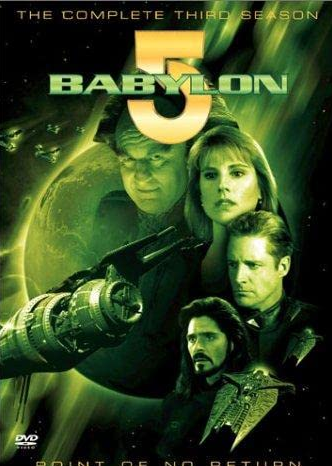
Rating: Babylon 5, Season 3

The action revs up in season 3 of Babylon 5, bringing both new characters and higher stakes. Here’s how we rated this season’s episodes:

Babylon 5 season 3 cover
  1. “Matters of Honor” – 5.5
  2. “Convictions” – 2.5
  3. “A Day in the Strife” – 4
  4. “Passing through Gethsemane” – 5.5
  5. “Voices of Authority” – 4
  6. “Dust to Dust” – 5.5
  7. “Exogenesis” – 2
  8. “Messages from Earth” – 5.5
  9. “Point of No Return” – 8
  10. “Severed Dreams” – 8
  11. “Ceremonies of Light and Dark” – 4.5
  12. “Sic Transit Vir” – 6
  13. “A Late Delivery from Avalon” – 3
  14. “Ship of Tears” – 4
  15. “Interludes and Examinations” – 6
  16. “War Without End, Part 1” – 7.5
  17. “War Without End, Part 2” – 8
  18. “Walkabout” – 4.5
  19. “Grey 17 is Missing” – 4.5
  20. “And the Rock Cried Out, No Hiding Place” – 6.5
  21. “Shadow Dancing” – 5.5
  22. “Z’Ha’Dum” – 8

There’s a step up in the ratings this season, with the average hitting 5.4 after the previous season’s 4.5. Most episodes are comfortably in the 4-6 range of “okay, but not great,” with only a few lower and several standing out higher.

This season sees a couple of changes to the cast. The Minbari-trained human ranger Marcus Cole joins the station, bringing a distinctive wry quirkiness. At times the witty, roguish, smooth character veers perilously close to being a Mary Sue, but the warmth and charm of Jason Carter’s performance is usually enough to save him from tipping over the edge. In addition, the telepath Lyta Alexander returns in a shake-up of the cast (the previous seasons’ telepath, Talia Winters, was reportedly a casualty of contract negotiations with the actor). Lyta’s return is welcome, and Patricia Tallman plays the ambiguity of the character—a human serving the mysterious Vorlons—well enough.

Along with the changes to the cast we get some significant forward motion in the larger story this season. The war with the Shadows heats up at the same time that the Earth government goes full-bore fascist. Our heroes on the Babylon 5 station are caught in the middle of both developments and have to move fast in response. Meanwhile, the Centauri invasion of Narn enters a dangerous new phase.

Our lowest-rated episode of this season is a side-story without much connection to the larger arcs. In “Exogenesis,” a 2, Marcus and Dr. Franklin investigate strange goings-on among the station’s homeless. The episode does offer Marcus and Stephen a chance to bond, but beyond that there’s not much substance to the story. It feels more like a first-season episode, a self-contained story building the background of the setting but not connected to much else.

For the best episode of this season, though, we are spoiled for choice. Four episodes get an 8 from us, with a fifth one close behind at 7.5. First there’s “Point of No Return” and “Severed Dreams,” not properly speaking a two-parter, but two episodes in a row that both see the Babylon 5 crew have to deal with the consequences of Earthgov’s violent power grabs, culminating in a watershed moment when Babylon 5 declares itself independent. The next is a proper two-parter: “War Without End,” Parts 1 and 2, a clever revisiting of the first season’s time travel story “Babylon Squared” in which we see the reappearance of the Babylon 4 station from a new perspective, and Captain Sinclair gets his send-off. Finally there’s the last episode “Z’Ha’Dum,” in which Captain Sheridan sets off to the homeworld of the Shadows to discover what drives them.

Season 3 effectively builds on what seasons 1 and 2 accomplished, and it sets the stage for the dramatic events coming in season 4. Overall, quite a strong season and worth a rewatch.

Image: Babylon 5 season 3 cover via IMDb

In the Seen on Screen occasional feature, we discuss movies and television shows of interest.

Deconstructing the Star Wars Sequels: The Last Jedi

A couple of weeks ago I wrote about the storytelling structure in The Force Awakens and how it mimics the narrative shape of A New Hope without the character growth to support it. Today we look at The Last Jedi, the second and most challenging of the new trilogy movies. Where The Force Awakens was too committed to reenacting a familiar story to offer any new ideas, The Last Jedi is too much in love with its ideas to build a story around them.

Rey on the Jedi island, from Star Wars VIII: The Last Jedi

The Last Jedi does not run on nostalgia like The Force Awakens. It toys with some echoes of The Empire Strikes Back—the rebels are on the run chased by Imperial forces while the novice Jedi goes off to train with an old master, learning something about their parents along the way—but these echoes do not drive the plot the same way A New Hope did for The Force Awakens. The story of The Last Jedi is instead driven by Rian Johnson’s desire to challenge every trope and convention of the space opera that he can.

The movie does a good job posing the questions. What if the hot-shot pilot who doesn’t play by the rules is actually making things worse with his antics? What if the old master is broken by guilt and remorse and doesn’t want to train the chosen one? What if the chosen one isn’t actually all that chosen? What if the previous movie’s shadowy overhanging villain is actually a chump who gets himself bisected mid-monologue? What if the rebels and the Empire both buy their weapons from the same scummy arms dealers? What if the heroes send out a desperate last call for help in their hour of need and no one comes? The what-ifs go on and on, each of them a worthy hook to hang plot on, but none ever taking up any weight. The movie asks plenty of questions, but never gets around to the answers.

Instead of actual development for the plot and characters, we get empty gestures at development. We are clearly meant to think that Poe has Learned a Lesson by the end of the movie when Leia tells the others to follow him, but just what that lesson was and how he learned it are a mystery. Similarly, Finn’s retort to Phasma, calling himself “Rebel scum,” is framed as if it ought to mark a turning point for the character, but the rest of the movie doesn’t do the work of showing us that his relationship to the Rebellion/Resistance matters. Rey comes the nearest to having a character arc. After spending most of the movie looking to others to guide her on what being a Jedi means, she strikes out on her own and uses the Force to move rocks and save her friends. It’s the closest the movie comes to a payoff, but it barely adds anything to her development in The Force Awakens, and it’s not much to show for having Rey stuck between grumpy uncle Luke and creepy stalker Kylo for most of the movie. The structure of a narrative arc is built into the film, but the story isn’t there to fill it.

The time and narrative energy that could have been put into building the story and challenging the characters is instead spent on gambit after gambit that doesn’t pay off. Luke’s lessons teach Rey nothing. Finn and Rose’s side quest to the casino planet is pointless and deflates much of the tension built by the First Order’s pursuit of the fleeing rebels. Poe’s mutiny gets undone with a kicked-over steam vent and a blaster. The movie invests more energy into critiquing the socio-economics of a galaxy far far away than in giving our heroes anything meaningful to do.

Perhaps the most frustrating thing about this movie is how it dangles the possibility of meaningful development in front of us only to do nothing with it. Characters like Vice Admiral Holdo and Commander D’Acy are vast untapped wells of awesomeness reduced to Teaching a Man a Lesson. The number of times that important moments in the movie correspond to women with outstretched hands—from Rey lifting rocks and Leia pulling herself back out of space to Rose patting a giant horse-puppy and Holdo jumping into hyperdrive—makes it seems as though the gesture ought to mean something, it just doesn’t. Johnson’s other movies, notably his following creation, Knives Out, show that he is quite capable of handling complex story structures (something I’m not confident I can say about J. J. Abrams). In this case, though, it feels as though the director got so focused on making his movie about failure that he ended up failing to make a movie.

None of this is to say that there aren’t good things in The Last Jedi. It has some of the sequel trilogy’s sharpest dialogue and most striking visuals, from Poe’s jabs at Hux at the beginning to the red scars of battle streaming across the stark white ground of the salt planet at the end. It introduces what may in fact be the most daring idea in the new Star Wars universe: that a Jedi can come from anywhere (at least until the next movie took a big step back.) But these things arrive within a movie that is so committed to the task of deconstructing Star Wars that it deconstructs it right down to the ground and leaves nothing behind.

Image: Rey from The Last Jedi via IMDb

In the Seen on Screen occasional feature, we discuss movies and television shows of interest.

1,001 Posts

This is our thousand-and-first post on Co-Geeking! Goodness, did any of us expect to get here?

We started off six years ago in the summer of 2015 with some ideas of what we wanted to write about. The blog has grown and developed since then as we sometimes dig into big projects together and other times just share whatever comes to mind.

Here are the most popular posts we’ve done in all that time:

  1. Do-It-Yourself Fantasy Place Name Generator – A technique for creating place names that feel authentic and lived-in.
  2. Testing Witches with Water – Digging into the myths about dunking people in water to see whether they’re witches or not.
  3. Sean Bean on the LotR Joke in The Martian – A bit from an interview with Sean Bean about his role in The Martian and the movie’s Lord of the Rings joke.
  4. Hogwarts Dueling Club Tablecloth Transformed into Wall Hanging – A beautiful example of geeky crafting if you want to add some wizarding-school flair to your home.
  5. Custom is King – A glimpse at multiculturalism in action over two thousand years ago.

Thanks for being with us, everyone. More to come!

Eppu and Erik

Announcements from your hosts.