Star Wars group costumes. Photo by Ashley Thalman / Say Yes.
Perfect for Halloween: evocative outfits that are easy to create almost entirely by using everyday items. Sometimes it’s the whole that matters more than individual details. Great job!
Credits: models Aaron, Kayti and little Monroe Oldham; photography by Ashley Thalman; styling by Sarah Larsen; production by site manager Ashley Aikele; creative direction by Liz Stanley at Say Yes.
This post has been edited.
In Making Stuff occasional feature, we share fun arts and crafts done by us and our fellow geeks and nerds.
Or: Some History behind Ostrich Riding, Part 4 of 7
Background: I ran into two historicalimages from California with ostriches used as transportation. That got me wondering about the history of ostrich riding. And that lead me down quite a rabbit hole.
I’ve divided my findings into separate posts (find them with the ostrich riding tag). Warning: serious early history and language nerdery ahead in Serious Academic Voice.
TL;DR – Tracing ostrich riding to a 3rd century BCE tomb find (a statue of Arsinoe II) from Egypt doesn’t hold up. The use of various ostrich products in human material culture dates back thousands of years. A few ancient depictions involve humans handling ostriches; however, extant sources don’t tell us whether ostriches were merely hunted or whether they were also tamed in the ancient world. The most promising source seems to be a description of a magnificent parade put together by Arsinoe II’s husband-brother Ptolemy II. This Grand Procession included eight chariots drawn by pairs of ostriches, and the ostriches may have been ridden by boys in costumes.
I had hoped to find a nice, neat selection of ancient texts putting the Greek word for ‘ostrich’ in context, but even a cursory look reveals that the history of the word strouthos is complex. At best, we can say that there are no immediate red flags either in the original Greek or modern English translations for Arsinoe II’s statue or Ptolemy II’s Grand Procession.
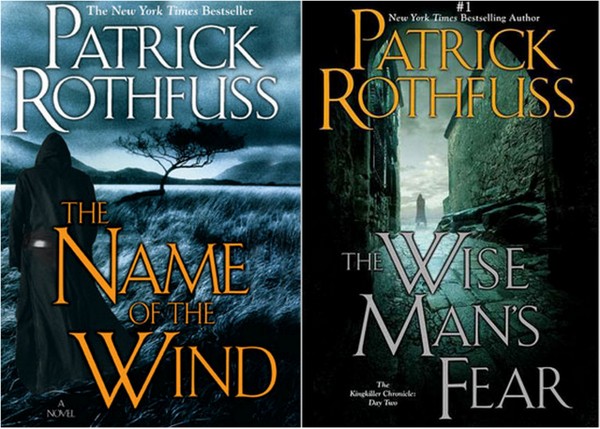
Author Patrick Rothfuss is known for the charity Worldbuilders and his Kingkiller Chronicle – a trilogy of The Name of the Wind (published 2007), The Wise Man’s Fear (2011), and a thus far unnamed, unpublished final installment.
Patrick Rothfuss / DAW.
Rothfuss just shared some great news: The Chronicle was signed by Lionsgate for a “big narratively intertwined multi-platform development deal” (in Rothfuss’s words). The plan is to produce a tv-series with a connecting movie and a video game – how awesome is that?
“You see, I never expected a studio would treat me like a human being. But through this whole process, Lionsgate has treated me with amazing respect. I’ve made what to me seem like reasonable requests, and they responded to them… reasonably. And I’m not just talking about pretty words here, they’re making contractual agreements granting me control of things. They haven’t just been reasonable, they’ve been kind, and understanding. […]
“Lionsgate is making its own press release today and there will be stories in all manner of Hollywood news outlets pretty soon. It’s not a coincidence that my blog is launching up on the very same day as their big announcement. In the same hour, even. Lionsgate coordinated with me so I could share this news on my blog at the same time they’re launching their story.
“This was important to me because if you read my blog or follow me on social media… well… you’re a part of the reason my books are a big deal. A lot of you have been a part of my team for years, and I wanted the chance to tell you about this piece of news myself rather than have you hear it on the street.
The fact that Lionsgate was willing to go to some lengths to let me launch this blog simultaneously with their press release is another good sign, in my opinion. It shows they respect me, and it shows they respect you guys, too.”
Sounds good to me! Scratch that – it sounds great. Empathy and respect make valuable capital for businesses, too. I’ll surely be keeping an eye on this project. And the best of luck to Rothfuss in the development process!
File 770 has a nice roundup of ten clips from and about The Martian, ranging from teasers and trailers to interviews and talks. The coolest is perhaps a 20-some minute call between two The Martian actors and two of six members of the International Space Station crew:
From the ISS, Expedition 45 Commander Scott Kelly and Flight Engineer Kjell Lindgren were on the horn; from the movie cast, Sebastian Stan and Mackenzie Davis during a visit they made to Mission Control at the Johnson Space Center in September.
Hey, look! We found a thing on the internet! We thought it was cool, and wanted to share it with you.
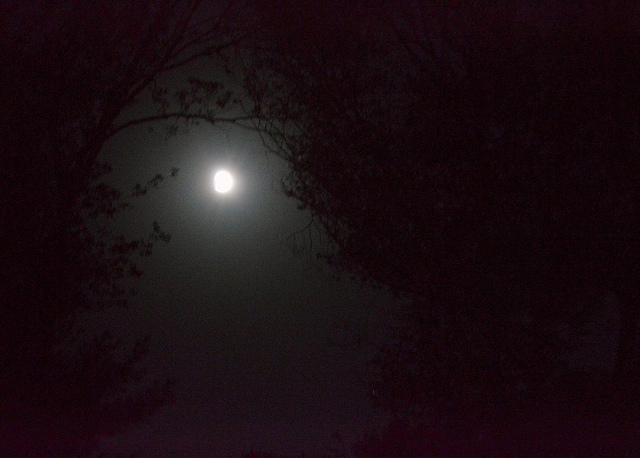
We happened to have excellent conditions for the 2015 supermoon lunar eclipse: clear skies, warm weather, and a dark backyard for early night viewing. The best shot I got is from the beginning of the eclipse (with a little computer enhancement).
Very neat. And, although celestial photography won’t become a part of my skills in a hurry, it was nice to try.
Image by Eppu Jensen
This post has been edited.
Out There is an occasional feature highlighting intriguing art, spaces, places, phenomena, flora, and fauna.
“The truth is, said she, wheresoever is learning, there is most commonly also controversy and quarreling; for there be always some that will know more, and be wiser than others; some think their arguments come nearer to truth, and are more rational than others; some are so wedded to their own opinions, that they never yield to reason; and others, though they find their opinions not firmly grounded upon reason, yet for fear of receiving some disgrace by altering them, will nevertheless maintain them against all sense and reason, which must needs breed factions in their schools, which at last break out into open wars, and draw sometimes an utter ruin upon a state or government.”
– Margaret Cavendish, Duchess of Newcastle, The Blazing World and Other Writings
There is nothing new under the sun, not even disagreements.
Cavendish, Margaret, Duchess of Newcastle. The Blazing World and Other Writings. Edited by Kate Lilley. London: Penguin, 2004 [originally published 1666; reprint with a new chronology and further reading], p. 202.
Rob James-Collier certainly knows how to put fun in fundraiser! For his London Marathon fundraiser run, the actor (who played the sly footman Thomas Barrow in Downton Abbey) wrote and directed an exclusive Downton Abbey clip to benefit the Chiltern MS Centre. Filmed on his smartphone in between takes, the spoof features other Downton actors and lightsabers!
In the end, James-Collier raised more than £15,000 and created a second episode as a thank you. In this second installment, the whole house gets in a Star Wars mood with even more lightsaber action! The absolute best, though, is when the two venerable old ladies, the Dowager Countess and Mrs. Isobel Crawley, played by Maggie Smith and Penelope Wilton, pick up lightsabers!
J. R. R. Tolkien’s The Story of Kullervo edited by Verlyn Flieger will be published only a few weeks from now in the U.S. The October release was preceded by a late August launch in the U.K.
“Kullervo son of Kalervo is perhaps the darkest and most tragic of all J.R.R. Tolkien’s characters. ‘Hapless Kullervo’, as Tolkien called him, is a luckless orphan boy with supernatural powers and a tragic destiny.
“Brought up in the homestead of the dark magician Untamo, who killed his father, kidnapped his mother, and who tries three times to kill him when still a boy, Kullervo is alone save for the love of his twin sister, Wanona, and guarded by the magical powers of the black dog, Musti. When Kullervo is sold into slavery he swears revenge on the magician, but he will learn that even at the point of vengeance there is no escape from the cruellest of fates.
“Tolkien wrote that The Story of Kullervo was ‘the germ of my attempt to write legends of my own’, and was ‘a major matter in the legends of the First Age’; his Kullervo was the ancestor of Túrin Turambar, tragic incestuous hero of The Silmarillion. In addition to being a powerful story in its own right, The Story of Kullervo – published here for the first time with the author’s drafts, notes and lecture-essays on its source-work, The Kalevala, is a foundation stone in the structure of Tolkien’s invented world.”
As The Kalevala is my national epic, it feels odd to see the storylines and names used with little or no change by a celebrated international author. I’m used to thinking of my country and culture as small and unimportant. Perhaps that is our strength, after all – we’ve managed to hold on to some unique features in our little corner of Europe.
Or: Some History behind Ostrich Riding, Part 3 of 7
Background: I ran into two historicalimages from California with ostriches used as transportation. That got me wondering about the history of ostrich riding. And that lead me down quite a rabbit hole.
I’ve divided my findings into separate posts (find them with the ostrich riding tag). Warning: serious early history and language nerdery ahead in Serious Academic Voice.
TL;DR – Tracing ostrich riding to a 3rd century BCE tomb find (a statue of Arsinoe II) from Egypt doesn’t hold up. The use of various ostrich products in human material culture dates back thousands of years. A few ancient depictions involve humans handling ostriches; however, extant sources don’t tell us whether ostriches were merely hunted or whether they were also tamed in the ancient world. The most promising source seems to be a description of a magnificent parade put together by Arsinoe II’s husband-brother Ptolemy II. This Grand Procession included eight chariots drawn by pairs of ostriches, and the ostriches may have been ridden by boys in costumes.
Lately there’s been some talk about casting Idris Elba as the most famousest of British spies, most notably a Bond author stuffing his foot in his mouth about the hypothetical casting. Vulture had the brilliant idea of asking video artists Diane Bullock and Mike Schuster to put together a mock trailer for the upcoming movie Spectre with Elba as 007.


 Co-Geeking
You must be logged in to post a comment.