Browsing Tumblr the other day, I ran into what looked like stills from a scifi series. My immediate reaction was “What is this? Who’s she? I wanna see it!!”
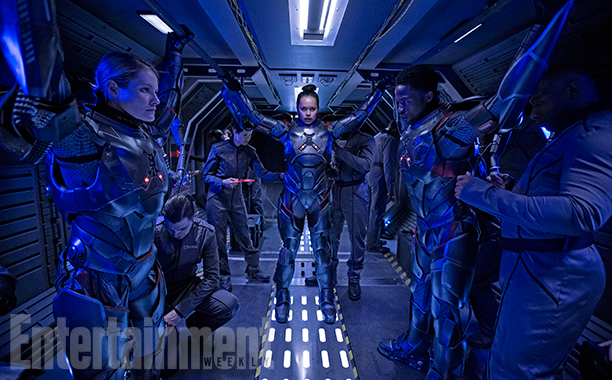
Turns out they were indeed scifi show stills. The pictures come from an article by Dalton Ross on Entertainment Weekly. He talked with The Expanse showrunner Naren Shankar about a new character introduced in season 2, and shared these photos.
The commanding presence that drew my eye is marine Roberta “Bobbie” Draper from Mars, played by New Zealand actress, model, and boxer Frankie Adams.
Mr. Shankar talked about casting Ms. Adams for the role:
“When you ask a casting director to find a 6-foot half-Polynesian, the response is usually one of stunned silence, like, ‘Really?’ And we were like, ‘Yeah, really.’ We’ve been very conscious about maintaining the ethnic identity of the characters in the book as much as humanly possible. And we were really intent on doing that with Bobbie.
“We actually looked in the U.K., Los Angeles, New York, Toronto, Hawaii, and New Zealand. And when [co-author] Ty Franck saw the first casting tape on her, he said, ‘That’s her, that’s her,’ right away. She’s a professional boxer, as well as being a model and so she had the physicality and a very interesting, unusual kind of face you rarely see on television. She’s awesome and we couldn’t be more delighted to have her on the show.”
I have to say that the third shot (above) reminds me a lot of the 2004 Galactica reboot. I’ve only seen the pilot for The Expanse, though, and that streamed over a very hiccupy connection. It looked interesting, but for some reason or another I never got back to it.
I seriously hope that Bobbie won’t just be another case of Strong Female Character syndrome. Kick-ass female characters can be awesome, and they are definitely an improvement over women as mothers or love interests. But I’m done with women written as one-dimensional beings, be it demure damsels in distress or forceful fighters.
I want the people in my entertainment to be complex and three-dimensional regardless of their gender. Whether The Expanse delivers or not will remain to be seen, though. (Haven’t read the books that it’s based on, so I’ve nothing to go on there.) Apparently I now must check out season 1 in order to see season 2 when it comes out. 🙂
MARVEL || Glitter & Gold (collab w/ djcprod) by Grable424
They’ve skillfully intercut clips from Iron Man and Captain America movies, Guardians of the Galaxy, and Ant-Man, among others; the Doctor Strange trailer also features, even if the movie wasn’t out yet. The song is “Glitter & Gold” by new-to-me artist Barns Courtney, and very catchy. Love it!
Hey, look! We found a thing on the internet! We thought it was cool, and wanted to share it with you.
While there were solid choices on the list, what struck me was that out of 15 named creators only 2 were women. That’s 13%. Since women make up half of the world’s population, an eighth is an unacceptably low proportion in my eyes, so I made a list of my own.
Even Achilles knows that women are an integral part of the world.
Notes on my list: 1) it’s novels only (no anthologies), 2) in a random order, 3) with no double entries (otherwise I’d include also Jemisin’s The Inheritance Trilogy), 4) and I include not only a variety of flavors within the fantasy genre but also historical fiction. Moreover, 5) I’ve included old and newer favorites as well as new-to-me authors whose works sound intriguing. Finally, 6) the common denominator is (like in the Game of Thrones) the presence of power struggles of various sorts, negotiation of identities, and survival.
1. Ursula K. Le Guin. The Earthsea cycle (A Wizard of Earthsea; The Tombs of Atuan; The Farthest Shore; Tehanu; Tales from Earthsea; The Other Wind)
Aspects of identity examined in an island-based early medievalesque world with magic and lots of sailing.
2. Kai Ashante Wilson. Sorcerer of the Wildeeps
Sword and sorcery, gods and mortals, with a band of mercenaries working as caravan guard in focus. (Linguist’s note: Fascinating mix of vernacular and more formal language.)
3. N.K. Jemisin: The Dreamblood duology (The Killing Moon; The Shadowed Sun)
Ancient-Egyptian-flavored fantasy on a moon orbiting a Jupiter-like gas giant.
4. Samuel R. Delany. Nevèrÿon series (Tales of Nevèrÿon; Neveryóna; Flight from Nevèrÿon;The Return to Nevèrÿon)
Sword and sorcery in a world before the dawn of history, with strong elements of power, economic development and breaking barriers.
A blend of a coming-of-age story with high-stakes intrigue and danger on an island with water-based tech.
Enjoy! I know I will get back to this list after finishing my current reading project.
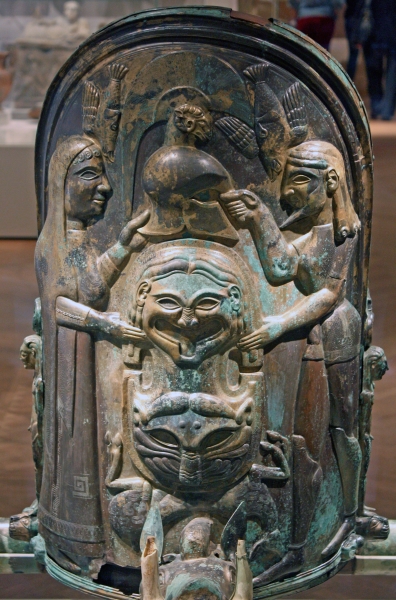
Image: Monteleone chariot with Thetis and Achilles, detail of image by Peter Roan on Flickr CC BY-NC 2.0 (Etruscan, currently Greek and Roman galleries, The Metropolitan Museum of Art; 2nd quarter of the 6th century BCE; bronze inlaid with ivory)
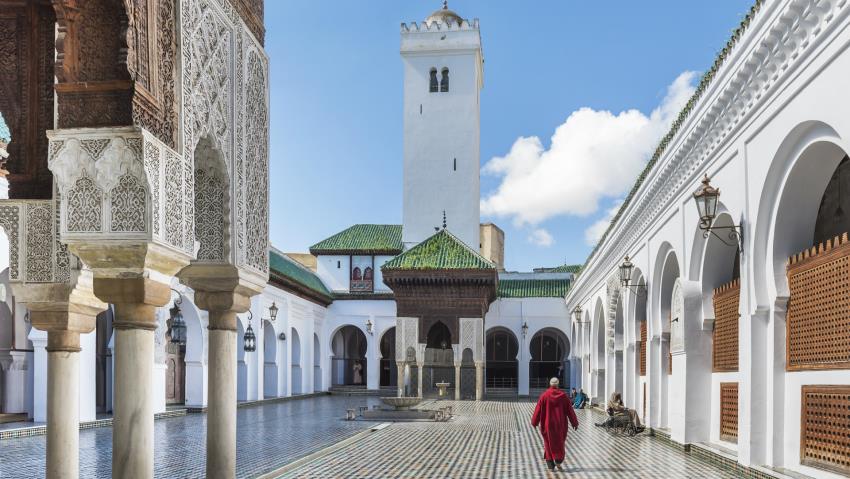
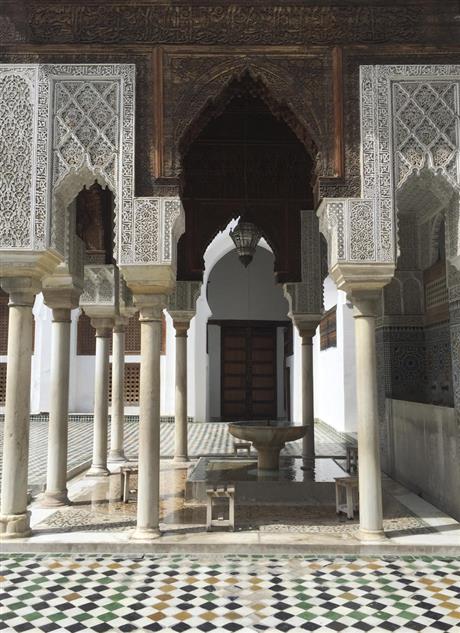
The library attached to al-Qarawiyyin mosque and university (alternate western spellings include Al Karaouin and Al Quaraouiyine, among others) in Fez, Morocco, is not just the oldest active library in the world, it’s also exceptionally beautiful.
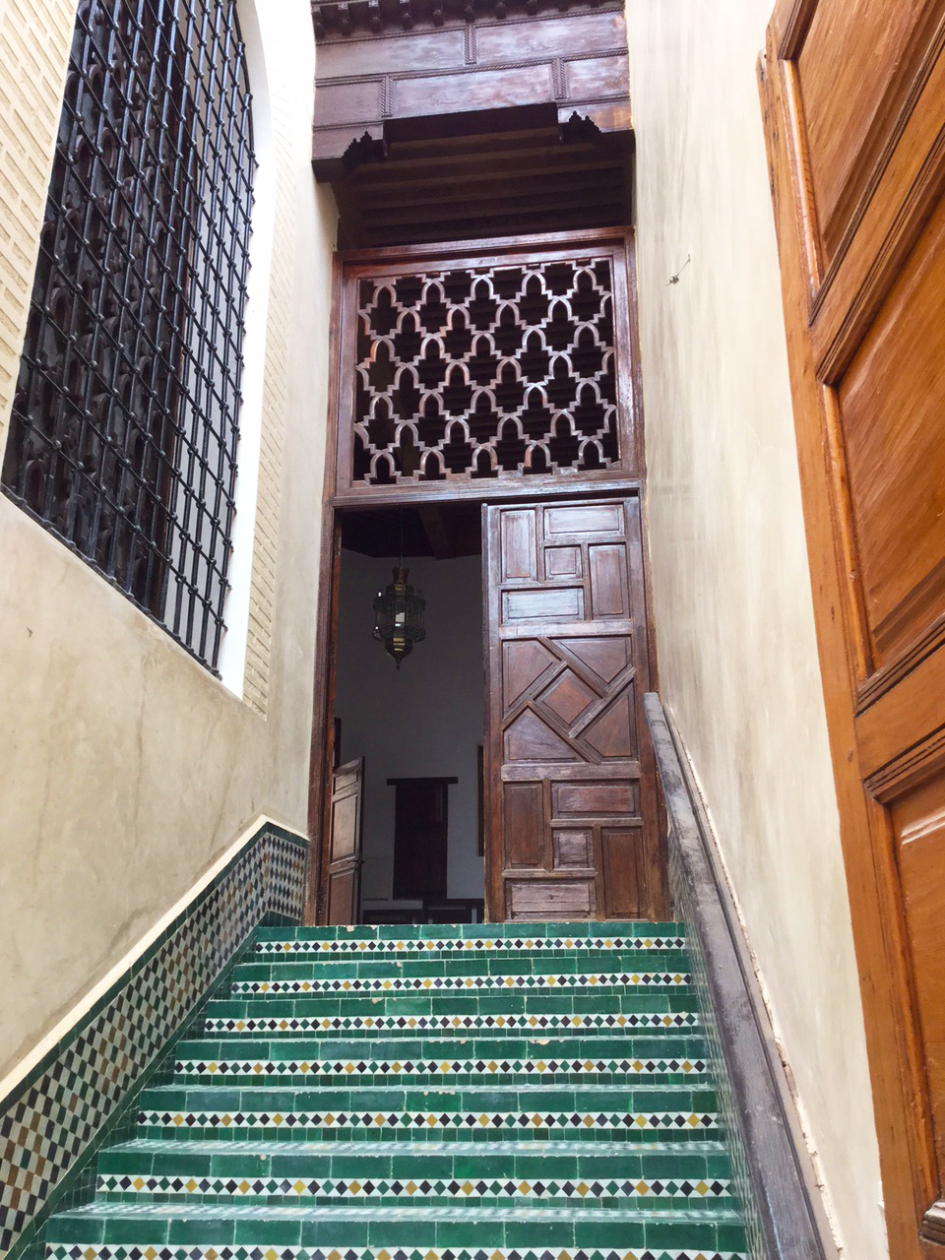
Al-Qarawiyyin was founded in 859 by Fatima Al Fihri. The architecture of the university reflects various past styles and ruling dynasties. The decorated interiors include calligraphic designs on the walls, ceramic patterns on the floors, and wooden carvings on the ceilings.
“When I first visited, I was shocked at the state of the place.
“In rooms containing precious manuscripts dating back to the 7th century, the temperature and moisture were uncontrolled, and there were cracks in the ceiling. […]
“Throughout the years, the library underwent many rehabilitations, but it still suffered from major structural problems, a lack of insulation, and infrastructural deficiencies like a blocked drainage system, broken tiles, cracked wood beams, exposed electric wires, and so on.”
One of Chaouni’s leading principles was respect to its authenticity. Her restoration team preserved and salvaged what they could, but when it wasn’t possible, features and details were created from scratch. This included using local materials and construction systems, like furniture by local craftsmen who used native wood. Says Chaouni:
“There has to be a fine balance between keeping the original spaces, addressing the needs of current users, including students, researchers and visitors, and integrating new sustainable technologies — solar panels, water collection for garden irrigation, and so on.”
Currently a part of Morocco’s state university system, the library is now open to the public in addition to historians and students.
(Incidentally, the university’s famous alumni include the 16th-century Andalusian adventurer known as Leo Africanus, whose book Description of Africa was considered the most authoritative source for northern Africa until the beginning of European exploration and expansion in the African continent.)
The Visual Inspiration occasional feature pulls the unusual from our world to inspire design, story-telling, and worldbuilding. If stuff like this already exists, what else could we imagine?
“Because it’s those things we celebrate as ‘other’ that make us truly human. It’s what we label ‘soft’ or ‘feminine’ that makes civilization possible. It’s our empathy, our ability to care and nurture and connect. It’s our ability to come together. To build. To remake. Asking men to cut away their ‘feminine’ traits asks them to cut away half their humanity, just as asking women to suppress their ‘masculine’ traits asks them to deny their full autonomy.
“What makes us human is not one or the other–the fist or the open palm–it’s our ability to embrace both, and choose the appropriate action for the suitable situation we’re in. Because to deny one half […] is to deny our humanity and become something less than human.”
– Kameron Hurley: The Geek Feminist Revolution
Because people are not stereotypes. Stereotypes aren’t just lazy, they’re outright dangerous if carelessly applied.
Hurley, Kameron. The Geek Feminist Revolution. New York, NY: Tor, 2016. Chapter “Women and Gentlemen: On Unmasking the Sobering Reality of Hyper-Masculine Characters.”
Serving exactly what it sounds like, the Quotes feature excerpts other people’s thoughts.
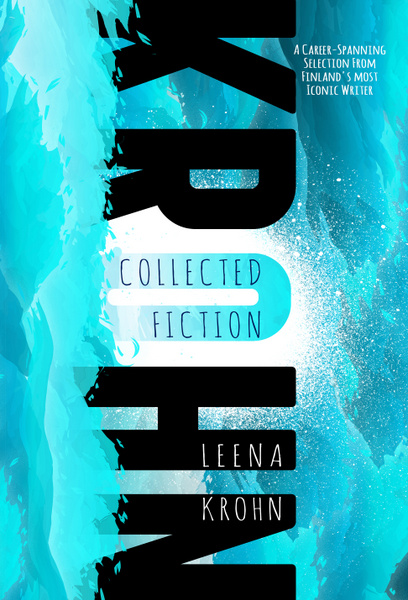
Finnish author Leena Krohn’s English-language anthology Collected Fiction (Cheeky Frawg Books, 2015) is a finalist for the World Fantasy Awards in the Collection category.
“’I’ve got a bit of a stew for you, and some broth, Mr. Frodo. Do you good. You’ll have to sup it in your mug; or straight from the pan, when it’s cooled a bit. I haven’t brought no bowls, nor nothing proper.’
“Sam and his master sat just within the fern-brake and ate their stew from the pans, sharing the old fork and spoon. They allowed themselves half a piece of the Elvish waybread each.”
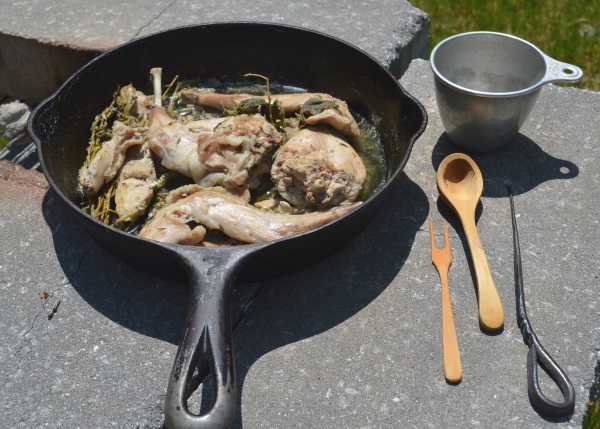
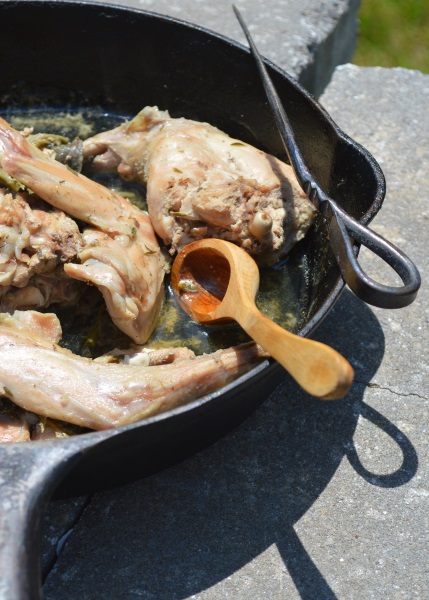
The simplest and most famous of all meals in The Lord of the Rings is without doubt the rabbit stew cooked in the wilds of Ithilien by Sam Gamgee. This is the closest Tolkien comes to giving us a recipe and we have done our best to honor both Tolkien’s words and the simplicity of the scene he evokes. This month we have a simple rabbit stew cooked on a fire outdoors and accompanied by our version of lembas bread.
Like in The Lord of the Rings, our stew is served from the pan. Hobbit implements from previous dinners (Long-Expected Party and Farewell Feast in Bag End) make a reappearance. There’s also a skewer-like metal poker for cooking, and an old metal measuring cup has pretensions of mughood. Lembas wrapped in strawberry leaves and blackberries inside a piece of cloth add a hint of comfort to the austerity.
The copyright infringement case filed by Paramount Pictures Corporation against the Star Trek fan production Axanar has been in the news a bit this spring. I have a mild interest in it, but I don’t spend much time following the reports—with one marvellous, excellent, and hilarious exception.
Attorney Marc Randazza wrote an amicus curiae brief for Language Creation Society (i.e., for the defendant’s benefit) to counter a copyright claim by Paramount “over the entire Klingon language, not any particular words or portions of dialogue from any episodes of Star Trek, but in the entire vocabulary, graphemes, and grammar rules of Klingon.”
Mr. Randazza not only argues that one cannot copyright an entire language, invented or not; he also briefly summarizes the history and some current uses of Klingon. (Did you know, for example, that the Klingon Language Institute has overseen Klingon wordplay contests? I didn’t. Check them out; the palindromes are especially awesome.)
The best thing about the brief, however, is how Mr. Randazza uses Klingon—complete with the Klingon font, transliterations to the Latin alphabet, and translations—to illustrate his arguments.
I’ve copied three examples below without the Klingon font, using the Latin transliterations instead and adding the English translations Mr. Randazza provides. It’s worthwhile to visit the .pdf brief available online (here or here) for the full effect, though.
“Plaintiff Paramount Pictures Corporation (“Paramount”) has claimed this copyright interest for many years, but has not actually asserted it in court before now – most likely because the notion of it is [meq Hutlh / it lacks reasons].”
[p. 9 of 26]
“Just as poker jargon is unprotectable, so is Klingon. To grant such protection would be to attempt to leash that which Plaintiffs have no right to control. Plaintiffs will learn that [Suvlu’taHvIS yapbe’ HoS neH / brute strength is not the most important asset in a fight].”
[pp. 16-17 of 26]
“Plaintiffs attempt to downplay the significance of their claim of ownership over the Klingon language by arguing that ‘a language is only useful if it can be used to communication [sic] with people, and there are no Klingons with whom to communicate.’ […]
“A language is not constrained to a given ethnic or racial group. By their logic, Ancient Greek is not ‘useful’ because the Ancient Greeks are no longer with us, and the language has no native speakers, despite it being the original language of some of the seminal literary and philosophical works of the western world. Plaintiffs’ logic would seem to dictate that French is not ‘useful’ if spoken by a native German. [qoH vuvbe’ SuS / The wind does not respect a fool.]”
[pp. 23-24 of 26]
At the very least, do yourself a favor and check out how the first line of the Sesame Street theme song translates into Klingon (pp. 23-24). Ha!
Mr. Randazza’s straightforward and humorous writing not only counters stereotypes about legal language, but it’s also very informative. (And he did it pro bono!) Qapla’, sir!
Image: Screencap from Brief of Amicus Curiae by Marc J. Randazza for Paramount v. Axanar (case no. 2:15-cv-09938-RGK-E) filed April 26, 2016
Out There is an occasional feature highlighting intriguing art, spaces, places, phenomena, flora, and fauna.






 Co-Geeking
You must be logged in to post a comment.