Ancient Greek Clay Cooker for Multiple Dishes

Look at this amazing ancient multi-tier clay cooker:

Imgur TheRainbowegoSweet007 Delos Cooker

There seems to be frustratingly little information available online. I haven’t been been able to track down full details for this apparatus, but some sources call it an anthrakia. Considering that anthrakia means ‘a heap of burning coals’ it sounds at least plausible (but as I said I don’t know). Apparently it’s from 500 BCE or so (although one source says 2nd c. BCE), and was found on the island of Delos, Greece.

Delos was one of the most sacred places of ancient Greece—claimed to be the birthplace of Artemis and Apollo—and a busy trade center for centuries if not millenia. It looks like the only images of this cooker come from the Archaeological Museum of Delos. No-one seems to have posted the associated text, though, so I still don’t know quite as much as I’d like.

Such an ingenious arrangement, though, isn’t it? The oven has space for a hand-held grill and an area at the front for raking coals into (I assume). Above the oven, there is an opening to rest a frying pan on. As if that’s not enough, above that to the back of the cooker there are tube-like stands for three cooking pots, through which the pots also have access to heat from the oven. You could have five dishes cooking at the same time. And it looks like the cooker is also portable.

It’s impressive both from the point of view of functionality and design—the oven-stove-grill combo seems to have been made as one piece. (Or possibly two pieces, if the pedestal that looks like an upside-down plant pot was made separately.)

Not bad for a 2,000+ year-old kitchen gadget, right? I can almost hear the sizzling of frying food.

With that, I’ll wish our readers in the U.S. a Happy Thanksgiving! 🙂

Image via TheRainbowegoSweet007 on Imgur

Official Trailer Offers More on Captain America: Brave New World

Besides the teaser trailer, there’s now a new, official Captain America: Brave New World trailer:

Captain America: Brave New World | Official Trailer by Marvel Entertainment on YouTube

Sounds like the plot will be grimmer than the teaser intimated. There are a few funny moments, too, like the Marvel Cinematic Universe prefers, for instance when Sam lands with a *whump* in the middle of a handful of soldiers guarding a mansion, quips “Wait for it”, and just pauses while the concussive blast from his landing knocks the soldiers back.

Liv Tyler makes a comeback as Betty Ross according to IMBD, even if we haven’t seen her yet—yay! In the cast listing there is also a whole bunch of new-to-me characters with superhero names, like Sidewinder (played by Giancarlo Esposito), Rachel Leighton / Diamondback (Rosa Salazar), Samuel Sterns / The Leader (Tim Blake Nelson), and Ruth Bat-Seraph / Sabra (Shira Haas). Looking forward to finding out more about them.

On one hand, topic-wise this would not be my nr. 1 pick for entertainment while two wars are being fought in Europe: the teaser mentioned shifting global power, and now this official trailer straight-up talks about coordinated terrorist attacks and President Ross being a wartime president. Brr.

They are also clearly trying to imply something by the repetitive division of the screen into two halves during the trailer. It could be just a way to stuff more material in, of course, but I suspect something more nefarious is intended, especially with the line about the President’s inner circle being compromised, the scratching “Reset Ross Reset America” on the wall, hints of brainwashing or other kinds of manipulation, etc.

On the other hand, the MCU movies really aren’t that deep or complex even when they pretend to be. I’m sure they’ll serve a nicely enough wrapped-up solution, if not in this movie, then in a future installment. A simple, black-and-white action romp may be just the thing to while away a couple of hours.

Just one little snarky hint to President Ross, though: if you don’t want a variable out there that you can’t control, do not be a president. A soldier should know that.

Stories in which Being Good is Smart

I’ve been thinking a bit lately about how to describe the kind of stories I want to experience, whether on the page or the screen. I’ve long known that I enjoy stories about characters solving problems. But that’s not the only thing I look for in fiction.

I enjoy reading about people who are good to one another, kind, compassionate, and generous. I don’t enjoy stories in which kindness is portrayed as weakness, or in which the most manipulative, cruel, or ruthless characters prosper at the expense of others. I want to see how being kind and treating others well is the best way to go about solving problems. I like stories in which being a good person isn’t just the right thing to do, it’s the smart thing to do.

I don’t mean stories with a moralistic bent, in which some outside force (be it divinity, fate, or just the author’s guiding hand) intervenes to reward virtue and punish vice. I don’t want to see good people win just because they are good. I want to see them win because complicated problems can’t be solved by one person acting alone, no matter how devious or ruthless they may be. Big problems only get solved by people working together, and the best way to get people working together is to treat them decently.

Here are a few my favorite stories on page and screen that fit what I’m looking for.

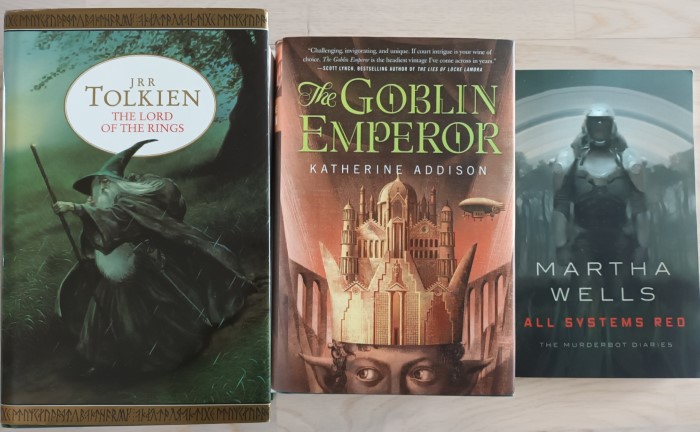
J. R. R. Tolkien’s The Lord of the Rings is a tale of cosmic good and evil, but one that plays out on the individual level. The forces of good ultimately triumph because many individual people, some of them quite small and unimportant, choose the good of others over their own safety or comfort. Katherine Addison’s The Goblin Emperor follows Maia, a neglected half-goblin prince, as he is thrust by circumstance onto the throne of an Elvish empire. Maia is surrounded by devious plotters and dangerous revolutionaries, but he keeps his throne and his head by listening to others, finding trustworthy allies, and being compassionate to the weak and vulnerable. In Martha Wells’s Murderbot Diaries series, the sarcastically self-named Murderbot is a human/machine construct designed by a ruthless ultra-capitalist corporation to fight and kill, but who would rather just be left alone to watch media. Over the course of the stories, it discovers humans who are not ruthless ultra-capitalists, whom it ends up learning to trust and value.

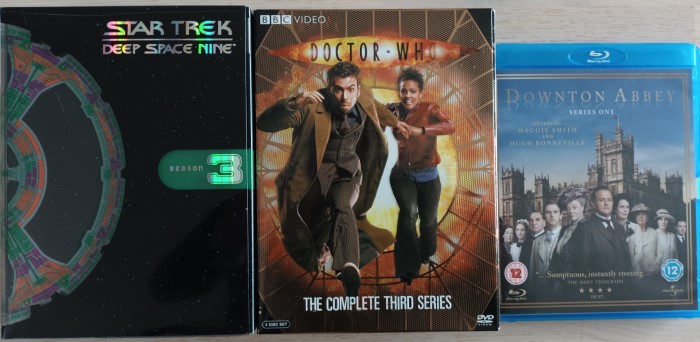
Star Trek is all about characters being good. Deep Space Nine pushes its characters to the limits of the universe’s hopeful utopianism through trauma and war, but ultimately finds them trusting one another, working together, and finding compassion even for their most implacable enemies. In Doctor Who, the wandering Time Lord stumbles into one disaster after another, but approaches them all with a spirit of hope and understanding, asking questions always and shooting never. Downton Abbey follows the inhabitants of the titular manor, both the family upstairs and the staff downstairs, through the tumultuous social changes of the early twentieth century. All the characters have their flaws, and some can be quite vicious, but the series follows how the characters come to rely on one another, and how even the most mercenary of them learn that kindness and compassion are vital for surviving in a changing world.

These are the kinds of stories I want more of: people being good or learning to be good, not just because it’s the right thing to do, but because it works.

Images by Erik Jensen

Dune: Prophecy Official Teasers and Series Trailer, with Thoughts

Based on director Denis Villeneuve’s Dune movies, the spin-off series Dune: Prophecy premieres in a few days on HBO (also to stream on Max). Here is the official trailer:

Dune: Prophecy | Official Series Trailer | Max by Max on YouTube

And the two older teasers:

Dune: Prophecy | Official Teaser – Influence | Max by Max on YouTube

Dune: Prophecy | Official Teaser 2 – Control | Max by Max on YouTube

Ok, wow. Not sure how to unpack it all.

I read the original Dune trilogy at an impressionable age, so I have fond memories of the world, even if I wasn’t then able to grasp all the bleaker implications. I’m also in general of the opinion that published stories including—if not especially—the SFFnal ones need more women who are active in their own right.

On one hand, D:P is specifically a creation story for Bene Gesserit, i.e., it should be full of active women. As Bene Gesserit can use their training for impressive physical feats as well as truthsaying, it should also have potential for women being awesome, which is always, well, awesome. 🙂

On the other hand, while I find their training conceptually intriguing, the major goal of Bene Gesserit is a breeding program. Women used as broodmares turns me off (as does considering men little else than sperm donors or cannon fodder), and the fact that the perps here are women makes it only very slightly better.

Furthermore, these clips have numerous unsavory-to-me details: e.g. the imperative “Sisterhood above all” sounds incredibly obnoxious, dancing around a fire pseudo-mystic claptrap, screaming with messy hair and scribbling edgy art projects in black borders on unhinged. (Then again, trailers always lie, so who knows.) Nor do I care for brutalist concrete architecture, nor an arid planet after a desolate one—there just doesn’t seem to be enough variety in this supposedly interstellar empire’s culture or environments.

The main foil seems to be this scruffy dude. He generates no interest at all in me, just a fleeting bafflement of how can someone apparently lacking merit of any kind have the gall to appear before the emperor looking so scruffy. (Harrison Ford’s Han Solo at least had the charisma and skills, even if he supposedly was scruffy-looking. He was well cast; the young Solo wasn’t. On the basis of these clips, this dude isn’t either.) What is this great power he’s supposedly gifted with, anyway? Being able to bore others to death?

Olivia Williams and Emily Watson (playing the founding sisters of Bene Gesserit, Tula and Valya Harkonnen, respectively) plus Mark Strong (as the emperor) are the only actors I remember seeing elsewhere. In addition, I have previously seen the work of only one of the named series writers.

Also, while in general I want my entertainment to involve brainy plots, at the moment I’m not too keen on stories about power acquisition, political intrigues, or backstabbing.

All of the above put together (plus my lukewarmness towards Villeneuve’s adaptation) means I will nope out of D:P. I really would’ve wanted to like the movies more, and consequently this series, especially since it tells us more about Bene Gesserit.

Anyone here planning to see D:P?

Archaeology and Intentionality

One of the themes that guides a lot of what I post here is that thinking historically is good practice for thinking fictionally. As an example of what I mean by that, let me present the question of intentionality in archaeology.

Much of what we know about ancient cultures comes from archaeology. For all that we can learn from texts, there are many things, peoples, and experiences that were either never written about, or for which the texts have been lost. Individual artifacts can be interesting in their own right, but we often get the most valuable insights from studying objects found together as a group. When we examine groups of artifacts, though, it is essential to begin by asking questions about intentionality: were these objects intentionally grouped together by the people who used them, and was that group of objects intentionally placed where it was discovered? How we answer those initial questions determines a great deal about what further questions we can ask.

When thinking about groups of artifacts, there are two important terms to start with: assemblage and deposition. In archaeology an assemblage is a group of objects found together in the same place. Deposition is the process, whether through human or natural action, by which those objects came to rest in that place. Questions of intentionality are important for how we analyze both assemblages of artifacts and the processes of deposition that left them for us to find.

Assemblages can be either intentional or unintentional. Sometimes we find groups of objects that were purposefully grouped together by the people who used them. In other cases, the objects in an assemblage are not connected except by happenstance. Similarly, some acts of deposition were intentional, while others were not. Recognizing the differences between intentional and unintentional assemblages and depositions is crucial for asking the right questions about the things we find.

For example, the objects placed in a grave were purposefully chosen by the family and friends of the deceased and intentionally deposited. We can pose questions about why these objects were chosen for this person, what it meant for the people who gave them to see them buried, and what the whole assemblage conveys about the person they were deposited with.

The goods we find on a shipwreck, on the other hand, were deliberately chosen, and share an important facet of their history, but they were not intended to end up where we find them. We can pose useful questions about how and why the people who laded this ship choose this particular set of cargo and equipment for their voyage, much as we can ask questions about why mourners chose particular objects to go into a grave. On the other hand, we also have to keep in mind that the ship’s crew expected it to reach port safely, not go down and leave its cargo on the bottom of the sea. If we want to understand the objects found on the ship, we have to consider their intended destinations once they were offloaded from the ship, which were probably numerous and varied.

We also find assemblages of objects that were not intentionally put together by the people who lived with them, some deliberated deposited and some not. The objects we find in an ancient settlement’s rubbish heaps were deliberately disposed of, but not purposefully chosen to go together as a set. Such finds are useful for understanding how the people of that settlement used and disposed of their material goods, but we have to be careful not to assume that the things we find in such a deposit were used by the same people, in the same households, or even within the same timeframe. In fact, looking at what kinds of goods people discarded and how they changed over time can tell us a lot about the life of the place they were found in.

The debris we find in the silt of a disused drainage ditch, by contrast, was neither purposefully assembled nor deliberately deposited. Such finds are useful in examining what kinds of objects were casually lost in a particular place that were too insignificant to their owners to be worth the effort of searching for or retrieving, which in turn tells us about the economic life and material culture of the settlement.

The important thread that unites all of these possibilities is that they require us to think about the people of the past as people, individuals who made choices about what to do with the things around them, just as we do. The habits of thought we apply to archaeology and history are ones that also serve us well when writing fiction: just as we have to think about people in the past as people, we have to think about our characters as people with intentions and desires, too. In a work of fiction, everything is intentional from the author’s point of view, but not everything is intentional from the characters’ point of view. Thinking about what choices characters make, and when they are making a choice at all, is a helpful habit to have.

Image: Dishes from the Helmsdale Hoard, photograph by Erik Jensen (found Helmsdale, Scotland; currently National Museum of Scotland, Edinburgh; 200-400 CE; bronze)

Some Thoughts on The Hunt for Gollum Adaptation

The news has been out for a good long while now: a new live-action Middle-Earth movie is in the works, set to be released in 2026 and produced by Peter Jackson, Fran Walsh, and Philippa Boyens. It’s provisionally called The Lord of the Rings: Hunt for Gollum, and Andy Serkis will both direct and play Gollum. Apparently it’ll be the first of multiple films by Warner Bros. based on Tolkien’s books, and told from Gollum’s perspective.

Since this fall has been surprisingly full of Tolkien for us (we both re-read LotR in addition to our two trips to Tampere, first to see the John Howe exhibit and then the theatrical adaptation), we ended up talking about the upcoming Gollum movie and our misgivings with it. Below are some of those thoughts.

Erik

I’m not excited for The Hunt for Gollum. Nothing about the character of Gollum or the long and mostly fruitless search for him, as described in the book, sounds like promising material for further on-screen exploration. I fear that this film will turn into more overstuffed action/fantasy/comedy like the Hobbit trilogy. At best I hope to enjoy the settings, costumes, props, and other details that were made with such love and dedication by the production team on the earlier Middle-Earth films. Still, I’m always ready to be pleasantly surprised.

For films that fill in more of the story we haven’t yet seen on screen, I’d be more excited about an exploration of Sauron’s attacks to the north. The appendices to The Lord of the Rings mention that Sauron’s forces at Dol Guldur assaulted Lothlorien and ravaged the lands of the Mirkwood Elves while an army of his allies from the east came against the Men of Dale and the Dwarves of Erebor. In the end, Sauron’s forces were defeated. Galadriel, Celeborn, and Thranduil cleansed Mirkwood and overthrew Dol Guldur while Bard II of Dale and Thorin III of Erebor pushed Sauron’s allies back to the east. There is plenty of scope here for big action set pieces, drama between the folk of Middle-Earth, and the return of some favorite characters. At the same time, there is enough blank canvas that for new characters to join the cast without feeling like they were squeezing out Tolkien’s story. It would be nice to see what was happening to places and people we know from The Hobbit and The Lord of the Rings while Sauron’s main offensive against Gondor was going on.

I could also enjoy a movie set in the Shire in the years after The Hobbit. A light-hearted comedy of Hobbit manners about the Sackville-Bagginses and their designs on Bag End could intertwine with the growing up of Frodo, Merry, Pippin, and Sam and the forging of the friendships that would be tested in the crucible of war far from home. A movie like this could give appropriate scope to Jackson’s taste for slapstick comedy while also allowing hints of the slowly creeping darkness of the ring and its effects on Bilbo to show through.

Eppu

My very first thought was: why would we want to see this particular story? Andy Serkis’s performance as Gollum will always be stellar, and I’m always up for seeing more of Weta’s work, but otherwise I’m quite unsure why this story was picked and why it should excite us.

Firstly, there isn’t that much to go on in LotR. According to Appendix B, Aragorn and Gandalf searched for Gollum together a few separate times, and the whole process takes them some 16 years.* In the second chapter of book two, The Council of Elrond, we get the most detail. There’s first a reference to a long and hopeless search. (Gandalf says that they went to the Mountains of Shadow and “the fences of Mordor”, where they guessed that “he dwelt there long in the dark hills; but we never found him, and at last I despaired”.)

Aragorn is the one to actually catch him: apparently he by chance found Gollum’s footprints leading away from Mordor and caught him somewhere in the Dead Marshes. Then followed an unpleasant walk to Mirkwood, and, finally, Gandalf questioning Gollum there.

What I see so far is a long, tedious, and possibly uneventful beginning followed by sleeplessness, stink, and cruelty (Aragorn himself says that Gollum “bit me, and I was not gentle […] making him walk before me with a halter on his neck, gagged, until he was tamed by lack of drink and food”).

A very skilled writing team is required to make something exciting out of that.

You know what I would rather see? For instance:

  • anything do do with the Hobbits arriving into Eriador (1050, c. 1150 of Third Age) and settling first Bree-land (c. 1300) and then the Shire; also the Stoors leaving the Angle and some returning to Wilderland (1356)
  • the heyday of Osgiliath (before the city was burned and its palantir lost in 1437)
  • Gondor and Arnor renew communcations and form an alliance (1940)
  • the fall of Arnor and the northern kingdom; how the heirlooms of Arnor are given to Elrond’s safekeeping (1976)
  • Dwarves live and mine in Moria and eventually are driven out
  • Thorin I leaves Erebor and goes north to the Grey Mountains (2210)
  • excavations of Great Smials (begun 2683), Bandobras Took defeats Orcs in the Northfarthing (2747), Gandalf comes to aid Hobbits (2758)
  • life in Dale, the coming of Smaug (2770)
  • Thráin II and Thorin wander westwards (from Moria?) and settle in southern Ered Luin beyond the Shire (2799-2802)
  • how and where Aragorn’s mother Gilraen (born 2907) lived in the north, her wedding to Arathorn, son of Arador (2929); death of Arador (2930) and birth of Aragorn (2931), Gilraen’s travels to Imladris with Aragorn after the death of her husband (2933)
  • The Fell Winter when many northern rivers are frozen, incl. the Baranduin (Brandywine) (2911)
  • Gandalf and Balin visit Bilbo in the Shire (2949)
  • Aragorn meets Gandalf and their friendship begins (2956), Aragorn’s journeys in the Wild begin in earnest, including time in Rohan and in Gondor in disguise (2957-2980)
  • Balin leaves Erebor and enters Moria (2989), the end of Balin and the Moria Dwarf colony (2994)
  • The Scouring of the Shire and the Battle of Bywater after the destruction of the Ring
  • King Elessar rides north, lives by Lake Evendim for a while, including meeting his Hobbit friends on the Brandywine Bridge, Elanor, daughter of Samwise, becomes a maid of honor to Queen Arwen (1436 Shire Reckoning)
  • Samwise, Rose, and Elanor ride to Gondor, stay there a year (1442 S.R.); Elanor marries Fastred of Greenholm (1451 S.R.), they have a child, Elfstan Fairbairn (1454 S.R.), and later move to Undertowers on the Tower Hills (1455 S.R.); Rose dies and Sam rides to Tower Hills and gives the Red Book to the Fairbairn’s keeping before leaving for the Grey Havens (1482 S.R.)

(All pulled from Appendix B of The Lord of the Rings.)

So much could be told about the the Shire’s early history. The tidbits on fighting with Orcs, a company of Hobbit archers sent to assist the King in the north, and the Fell Winter are tantalizing. Or the later history, too, especially focusing on Sam, Merri, and Pippin and their families.

There also has got to be a lot of unmentioned history behind details like “Gondor and Arnor renew communcations and form an alliance”, but I can see the (probably economic or marketing) reasons for focusing on characters we’ve already seen on the screen.

So, you could go with “Thráin II and his son Thorin wander westwards. They settle in the South of Ered Luin beyond the Shire”, or “Gandalf and Balin visit Bilbo in the Shire”, and keep a reasonable connection to events in the movie adaptations. The latter took place some eight years after the events of The Hobbit and 40 years before Balin sets out for Moria—surely a lot of leeway for embellishment there.

I also would really love to see the scouring of the Shire. Understandably the sequence would take a lot of reworking, since Jackson et al. chose to kill off Saruman and Wormtongue already at Isengard, but that kind of major revamping is hardly new to the team.

In any case, we’ll reserve final judgment until we know more. Here’s hoping it’ll be good.

This post has been edited to correct a typo.

*) Appendix B lists three years to do with the hunt for Gollum. First, in the year 3001, “Gandalf seeks for news of Gollum and calls on the help of Aragorn.” Second, in 3009, “Gandalf and Aragorn renew their hunt for Gollum at intervals during the next eight years, searching in the vales of Anduin, Mirkwood, and Rhovanion to the confines of Mordor. At some time during these years Gollum himself ventured into Mordor, and was captured by Sauron.” Third, in 3017, “Gollum is released from Mordor. He is taken by Aragorn in the Dead Marshes, and brought to Thranduil in Mirkwood.”