Quotes: Because the World Is Yours and It Is up to You

I remember reading Susan Cooper’s The Dark Is Rising pentalogy in a Finnish translation as a child. This summer I read them all in the original English. I didn’t remember much of them at all, just impressions, and was struck by how much more simplistic the story was than I’d thought.

Current Reading The Dark Is Rising

There was only one section in the whole 1,000+-word tome that the present-day me reponded to:

“We [Old Ones] have delivered you [humakind] from evil, but the evil that is inside men is at the last matter for men to control. The responsibility and the hope and the promise are in your hands—your hands and the hands of the children of all men on this earth. The future cannot blame the present, just as the present cannot blame the past. The hope is always there, always alive, but only your fierce caring can fan it into a fire to warm the world.

“[…] and you may not lie idly expecting the second coming of anybody now, because the world is yours and it is up to you. Now especially since man has the strength to destroy this world, it is the responsibility of man to keep it alive, in all its beauty and marvellous joy.”

– Merriman in Susan Cooper’s novel Silver on the Tree

The novel this quote comes from, Silver on the Tree, was originally published in 1977. I wonder whether World War II and/or the fear of atomic power might have been behind this paragraph? For me, however, it clearly applies to the current climate crisis.

Cooper, Susan. The Dark Is Rising: The Complete Sequence. New York: Margaret K. McElderry Books, p. 1079.

Image by Eppu Jensen

Serving exactly what it sounds like, the Quotes feature excerpts other people’s thoughts.

Testing Witches with Water

There is an old story about how medieval people used to test whether or not someone was a witch, and it goes like this: Throw them in a pond. If they sink into the water and drown, that means they weren’t a witch. If they float, that means they are a witch, so you haul them out and burn them to death. Either way, just getting accused of witchcraft was a death sentence, but medieval people were too dumb to realize it.

This story is wrong. It was popularized by Victorian writers who spread many false stories depicting people of the European middle ages as ignorant, illogical, and stupid. At best, we might attribute this story to the intellectual laziness of Victorians who didn’t bother to distinguish between the use of ducking victims in water as punishment or torture and the use of immersion in water to test those accused of witchcraft or other crimes. At worst, we can see it as part of a concerted effort by Protestant English and American writers to paint contemporary Catholics as the benighted heirs to an age of barbarity and unreason. The truth about testing witches in water is more complicated, though in some ways even worse.

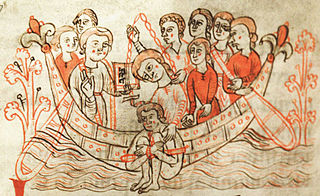
Here’s how the water test actually worked. In some places, a person accused of witchcraft, heresy, or a variety of other offenses was lowered into a small body of water like a pond or a still river, generally with a rope tied around their waist or something similar for lifting them out again. They were allowed to float for a moment and a jury selected from the surrounding community (or sometimes a priest) observed whether their body seemed to float on the surface or sink into the water. It was believed in some places and times that water would reject an unholy person, so their body would float high, while a blameless person would sink into the water. Once the jury had had a chance to observe the result, the accused was pulled out again and the jury gave its judgment.

No one was supposed to drown, neither the innocent nor the guilty. They were not left in the water for long, and whatever device was used to lower them in could quickly pull them up again. No doubt there were sometimes mishaps, as there can be whenever people are around the water, but being cleared of suspicion did not require drowning.

Trial by ordeal, which included not only the water test but other tests including carrying heavy stones or hot metal, reaching into a boiling cauldron, and similar challenges to physical endurance, was common in the legal traditions of some peoples in early medieval Europe. Such tests were an attempt to create objective tests for complicated questions about an accused person’s character, morals, and other hard-to-quantify qualities.

Trials by ordeal largely disappeared from European custom by the thirteenth century, but there was a revival during the witch-hunting hysteria of the early modern period when variations of the trial by water were used along with other methods of torture to extract false confessions from victims. In those cases the accusation alone was, for most people, a death sentence, since the point of the various “tests” was to compel a confession, not to arrive at a judgment.

The important element in a trial by ordeal is the community jury. Someone had to judge whether the accused was floating or not, which is not as obvious as it may sound. Human bodies are naturally buoyant, but not so much as to float on top of the water like a pool noodle. In the water, everyone kind of floats, and everyone kind of sinks. Distinguishing between how much floating is enough and how much is too much is no simple task. Those who were called for the jury were typically members of the accused’s village, extended family, or social network. They did not go into the test with an unbiased opinion but took with them all their knowledge, history, and feelings about the accused.

The floating ordeal gave the jury an objective external event to lodge those existing prejudices in. Those who went in with a poor opinion of the accused were likely to think that they floated too much, while those who went in well-disposed to the accused were likely to think they had adequately sunk into the water. Attaching those preexisting prejudices to an external event like the water test allowed the members of the jury to treat those prejudices as if they were objective facts and condemn or exonerate the accused with a clear conscience, as their own leanings dictated.

It is this fact about trials by ordeal that makes them, in some ways, even more horrible than the foolish heads-you-drown/tails-you-burn legend. If you were condemned by the water test it didn’t mean you just randomly floated too much. It meant that your own neighbors hated you so much they wanted to see you dead, they just didn’t feel comfortable saying so until the trial gave them permission to.

Post edited to correct a spelling error.

Image: Illustration of a trail by water via Wikimedia (late 12th c.; manuscript illustration)

History for Writers looks at how history can be a fiction writer’s most useful tool. From worldbuilding to dialogue, history helps you write.

BB-Hate Pumpkin for Halloween

Grab black paint, duct tape in a few colors, permanent markers, and two plastic pumpkins to make your very own BB-hate pumpkin this Halloween.

Desert Chica Karen Heffren How-to-make-a-Star-Wars-BB-9E-Pumpkin

Check out the tutorial by Karen Heffren at Desert Chica. She’s also made a cool BB-8 from an actual pumpkin!

Image by Karen Heffren

This post has been edited.

In Making Stuff occasional feature, we share fun arts and crafts done by us and our fellow geeks and nerds.

The Past is Haunted

I grew up in a two-hundred-year-old New England farmhouse. Like many houses of that age, it was full of peculiarities left over from the many generations who had lived there before us. There was a set of stairs we never used. My bedroom had a blocked-up door in one wall. If you measured out the rooms, you would find a big blank space between the dining room and the living room where the walls hid an old brick oven. In the decades they were living in that house, my parents were always in the midst of some renovation project, during which they often came across the remnants of previous renovations, and not always very well done ones at that (one of the old families in town had a reputation for having some odd notions about how houses should be built). That house was never quiet, even when the people in it were; the background noise of my childhood was a slow symphony of creaks, groans, gurgles, and yawns, all of them as familiar and comforting as my favorite songs. I never imagined that my house was haunted, but I can understand how someone who hadn’t grown up there might think so.

Our sense of hauntedness, the feeling that some presence we can barely perceive occupies a space, is often attached to places like my old house. Not just places that are old, but places where there is evidence of a previous life we no longer fully grasp. The traditional sites of ghost stories and Gothic novels are such places: abandoned houses, ruined castles, derelict towns. Stories about haunted places manifest our unease at finding ourselves in places that once belonged to other people but whose lives and experiences we cannot recover.

There is nothing new about this feeling that the past is haunted. Many cultures in history have shared the sense that there is something supernatural or unsettling about places that show the trace of lost lives. In classical Greece, temples and shrines to the gods were built on hilltops that had ruins of Mycenaean palaces from hundreds of years earlier, while ancient Greek tourists in Egypt were regaled by their guides with ghostly legends about pyramids and tombs that were thousands of years old. In early medieval Britain, folklore connected supernatural forces with the prehistoric tombs, mounds, and megaliths visible in the landscape. In Edo-period Japan, the popular parlor game Hyakumonogatari Kaidankai, in which players took turns telling ghost stories and extinguishing lanterns, encouraged the collection of scary folktales grounded in old rural traditions.

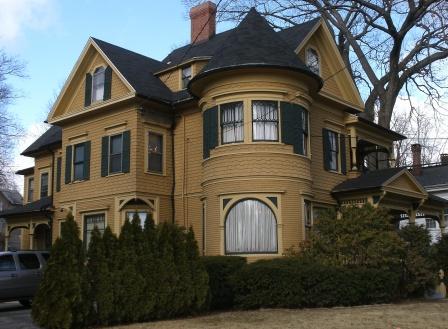
Some places have even been built to artificially evoke the same sense. The classic haunted house in US culture is the Victorian mansion. When houses of this type were built in the 1800s, they were designed in accord with the Romantic style of the times to include asymmetrical layouts, odd corners, superfluous towers and gables, intentionally irregular decorations, and other such purpose-built neo-Gothic oddities meant to evoke the sense of a lost past the house never had. As these houses have themselves become old and sometimes decrepit, it is no wonder that they have attracted more than their share of ghostly tales.

Like any other supposedly supernatural phenomenon, haunted places may lose some of their glamour when we find out the mundane explanations for them. Those eerie sounds are not the wails of ghosts but the whistling of the wind through lose clapboards and decayed horsehair insulation. The empty space between rooms is not a hidden chamber of untold horrors but a brick hearth covered over decades ago when modern heating made it superfluous. The staircase that leads nowhere is not a portal to unknown dimensions but the trace of household servants whose bedrooms have since been turned into storage space. What we sacrifice in eeriness, though, we gain in understanding as history and archaeology help make ways of life of those who went before us more visible and comprehensible to us today.

Image: Historic James Alldis House, photograph by Droncam via Wikimedia, CC BY-SA 3.0 (Torrington, Connecticut, built 1895)

History for Writers looks at how history can be a fiction writer’s most useful tool. From worldbuilding to dialogue, history helps you write.
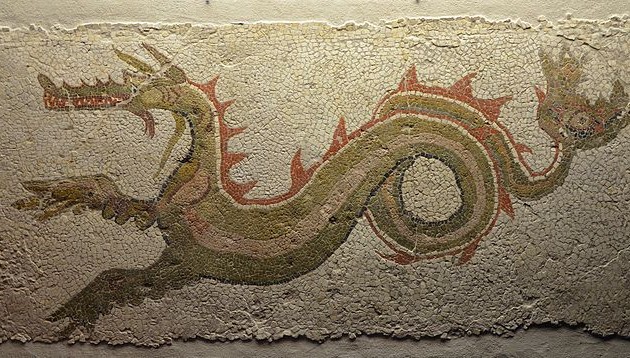
Just a Happy Little Sea Monster

Wherever you want it to be, there it will be.

Sea monster, photograph by Carole Raddato via Wikimedia (Casa del Drago, Caulonia, Italy; 3rd c. BCE, mosaic)


This particular sea monster is in a mosaic from a house in the ancient Greek city of Caulonia in southern Italy from the third century BCE. Ancient depictions of sea monsters like this one often have long, snaky bodies, spiky fins, broad tails, and wings. These various pieces may have been cobbled together in the imagination from scattered sightings of whales, dolphins, sharks, squid, and other large sea creatures.

Out There is an occasional feature highlighting intriguing art, spaces, places, phenomena, flora, and fauna.

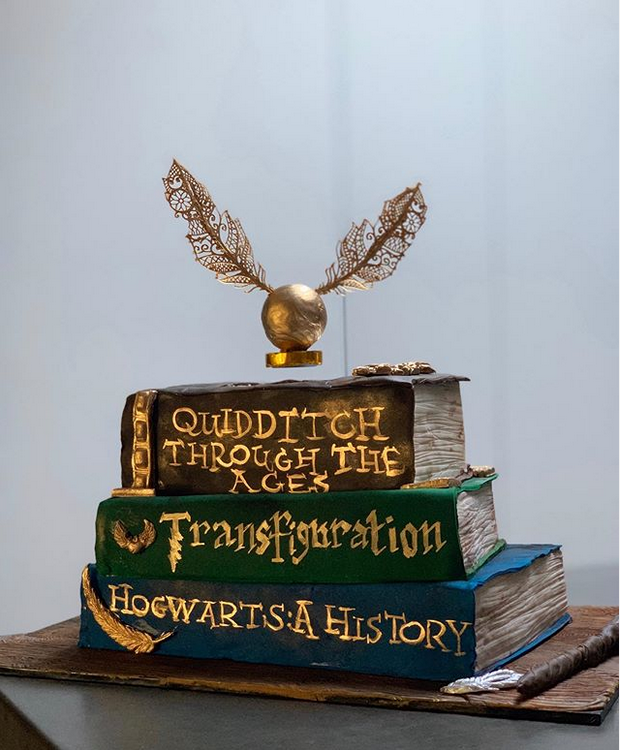
A Levitating Snitch Cake

Twitter user Michael Harris shared a cake made by his significant other, Kate Pritchett, with an actually levitating quidditch snitch (follow the link for a video):

Instagram Kate Pritchett Levitating Quidditch Snitch Cake

She shared a few details of the cake:

“I told you I was going to make a floating Snitch cake. (3 x 2 layer white chocolate mud cakes with vanilla meringue buttercream and blueberry and lemon or raspberry and black pepper filling. Special shout out to the wood-look board I made. [fist icon])”


Instagram Kate Pritchett Levitating Quidditch Snitch Cake Detail

Pritchett clearly is a foodie—just have a look at her amazing Twitter and Instagram feeds. Her dedication to getting the details just right is incredible. Everything is thoroughly thought-out and carefully prepared.

Instagram Kate Pritchett Levitating Quidditch Snitch Wings

I’m gawping here! (Yes, I just declared gawp to be a word.)

Kudos!

Images by Kate Pritchett via Instagram: Cake. Closeup of details. Snitch wing prototypes.

Geeks eat, too! Second Breakfast is an occasional feature in which we talk about food with geeky connections and maybe make some of our own. Yum!

The Mandalorian Trailer

The Star Wars family of spinoffs is about to have a new member: The Mandalorian. Here’s the trailer:

The Mandalorian | Official Trailer | Disney+ | Streaming Nov. 12 by Star Wars on YouTube

A much darker view of the SW galaxy like in Rogue One; the story is set after the fall of the Empire and before the emergence of the First Order.

The writing credits are split between George Lucas and Jon Favreau, and episode directors include Taika Waititi and Bryce Dallas Howard. It won’t be Howard’s first directing gig, but the first I’m likely to see. (Basically I only know her as the twit of a corporate lady whose heels were practically glued on for the chase scenes in Jurassic World, although apparently I’ve seen her as Gwen Stacy in Sam Raimi’s Spider-Man 3.) The series music is by Ludwig Göransson, whose work on Black Panther I really liked, so that’s also promising.

One point of personal delight is the glimpse of a small craft flying over a flat, wooded land dotted with small lakes and smaller fields (the sequence starts at about the 15-second mark). It’s one of the very few instances on the large, international screens of places that look like my home that I’ve seen. I hope that’s not all of it!

Other than that there’s not much definite info to be got, so we’ll have to see. I can’t even decide yet on the basis of this trailer whether The Mandalorian is worth the trouble of looking up what Disney+ streaming might take to access or whether we should just wait for the disc release.

Hey, look! We found a thing on the internet! We thought it was cool, and wanted to share it with you.

Alexander and the Sea Monsters

Sea monsters prevented Alexander from building Alexandria. He took a wooden container in which a glass box was inserted, and dived in it to the bottom of the sea. There he drew pictures of the devilish monsters he saw. He then had metal effigies of these animals made and set them up opposite the place where building was going on. When the monsters came out and saw the effigies, they fled. Alexander was thus able to complete the building of Alexandria.

– Ibn Khaldun, Kitab al-‘Ibar

Translated by Franz Rosenthal

This wild tale about the foundation of Alexandria is cited by the 14th-century North African historian Ibn Khaldun as an example of the ludicrous fictions that some earlier historians had filled their histories with but that had no place in the kind of scientific, rational history he set out to write.

The story as Ibn Khaldun relates it seem to go back to a legend in the Alexander Romance, a highly fictionalized account of Alexander the Great’s campaigns, about a large snake that frightened the workers who were building the city of Alexandria on the coast of Egypt until Alexander had the snake caught and killed. Over centuries of retelling, the hunt for one big snake turned into a struggle against terrible sea monsters.

The story of Alexander and the sea monsters is fiction, not history, as Ibn Khaldun rightly points out, but what a story it is! Wood and glass submarines! Ancient kaiju! Tactical deployment of art! How has no one made a movie out of this already?

Serving exactly what it sounds like, the Quotes feature excerpts other people’s thoughts.

Visual Inspiration: Organic Shapes in a Garden Cottage

This ensuite cottage in Pali Hill, Mumbai, sits within a garden and literally brings the nature to your side. There are doors and windows, but both are oval or roundish, and even the former are see-through.

The White Room Garden Room Bed

It was created by the India-based architectural studio The White Room, run by Nitin Barchha and Disney Davis. The organic shapes immediately have an otherworldly effect—at least I’ve never been in and rarely seen a house like this.

The White Room Garden Room Entry Hall

The White Room Garden Room TV

And here’s the ensuite bathroom:

The White Room Garden Room Ensuite

I do have a vague recollection of maybe seeing something like this in Star Trek somewhere. Other than that, the closest existing visuals that come to mind are sets Weta Workshop created for The Hobbit and Lord of the Rings trilogies. It would be nice to see—or read of—more interiors that deviate so starkly from our own.

Found via Colossal.

Images by The White Room

The Visual Inspiration occasional feature pulls the unusual from our world to inspire design, story-telling, and worldbuilding. If stuff like this already exists, what else could we imagine?

Quotes: Where Despotism Can Be Taken Pure

Abraham Lincoln, later the President of the U.S., is reported to have reacted to the white supremacist movement of 1840s thus:

“As a nation, we began by declaring that ‘all men are created equal.’ We now practically read it ‘all men are created equal, except Negroes.’ When the Know-Nothings get control, it will read ‘all men are created equal, exept Negroes, and foreigners, and Catholics.’ When it comes to this I should prefer emigrating to some country where they make no pretense of loving liberty—to Russia, for instance, where despotism can be taken pure, and without the base alloy of hypocrisy.” [original emphasis]

– Abraham Lincoln

Whoa, that’s pretty pointed. Granted, it’s decades since my U.S. history classes—not that we were taught that much to begin with, the focus was always on our fellow Nordics, Europe, and Russia—so it’s no wonder I can’t remember coming across this view of Lincoln’s.

Ghaemi, Nassir. A First-Rate Madness: Uncovering the Links Between Leadership and Mental Illness. New York: Penguin, 2011, p. 71-72.

Serving exactly what it sounds like, the Quotes feature excerpts other people’s thoughts.