Quotes: More Open to Imagining Better Worlds that Might Be Possible

“Science fiction came into being in response to a new thing in human history: the understanding that not only was the world changing, but also that the rate of change was speeding up. That in a normal lifetime, you could expect to experience multiple episodes of rapid, disorienting change. Science fiction at its best has always been about examining and inhabiting those experiences when the world passes through a one-way door.

“Modern science fiction grew up in the Great Depression and flourished in World War II. It thrived in the strangeness of the 1950s and the different strangeness of the 1960s. It has continued to be an essential set of tools for engaging with our careening world.

[…]

“And I really do believe that science fiction and fantasy storytelling makes us, in some fundamental way, a bit more practiced in the ways of a world caught up in wrenching change—and more open to imagining better worlds that might be possible.”

– Editor Patrick Nielsen Hayden

Like I wrote in my Arrival Recap: I explicitly do not want all of my reading and viewing rehashing the same old stories over and over, because SFF is explicitly about examining other possibilities.

Nielsen Hayden, Patrick. “The prospect before us.” Making Light, November 9, 2016

Serving exactly what it sounds like, the Quotes feature excerpts other people’s thoughts.

Ancient Nubian Antibiotic Beer

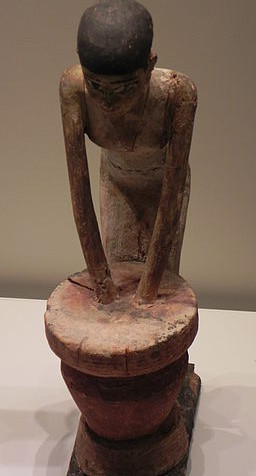
161128shabtiNo, that’s not not the name of my new band. It’s the answer to a mystery in the bones of ancient Nubians.

You see, strains of bacteria that live in the soil of Nubia—the middle region of the Nile, south of Egypt—naturally produce tetracycline, an antibiotic that the bacteria use to kill off competing bacteria. During the fourth and fifth centuries CE, the people of Nubia stored their grain underground and some of it got contaminated. The result was that the things they then made with that grain, like bread and beer, contained tetracycline. Eating and drinking these products gave the Nubians a dose of antibiotics, which probably helped them resist diseases and infections.

The traces of these antibiotics turned up in the bones of Nubian mummies. We don’t know to what extent the ancient Nubians were aware of the effect their beer was having on them. No one in the ancient world had the medical knowledge to understand antibiotics, but even without understanding causes, people can be very observant of effects. They may well have known that their beer helped keep them healthy, even if they didn’t know why.

Beer. It’s good for you.

Image: Ancient Egyptian shabti statuette of a woman making beer, photograph by yov dothan via Wikimedia (Currently Israel Museum, Jerusalem; c. 2000 BCE; painted wood)

Geeks eat, too! Second Breakfast is an occasional feature in which we talk about food with geeky connections and maybe make some of our own. Yum!

Maria Turtschaninoff’s Novel Maresi Optioned

Swedish-speaking Finnish author Maria Turtschaninoff announced last week that her fantasy novel Maresi has been optioned for a movie by the U.K.-based company Film4.

Congrats—grattis! Awesome news!

The historically inspired fantasy was originally published in Finland in 2014 and awarded the prestigious Finlandia Junior Prize in the same year. It’s the first in the Red Abbey Chronicles series.

Turtschaninoff Maresi US 2017 Cover

Film4 has developed and co-financed many of the most successful films from the U.K. in recent years, including Academy Award winners 12 Years a Slave and Slumdog Millionaire. Earlier Film4 productions include K-Pax, Trainspotting, and Four Weddings and a Funeral.

The U.S. edition of Maresi will be released January 03, 2017.

A freestanding sequel called Naondel has just been published in Swedish and Finnish, but at this writing there’s no information about translations. Turtschaninoff is currently working on book three for the series.

Maresi comes highly recommended by a friend of mine, but I haven’t yet been able to get it. I’m eagerly looking forward to January!

Image via Maria Turtschaninoff

Celebrating Hidden Youth With Rhodopis

161121bendisHidden Youth comes out today! Among the many short stories in this collection about young people from marginalized groups in history is my story, “How I Saved Athens from the Stone Monsters,” about the adventures of two flute girls, one Egyptian and one Thracian, on one strange and terrifying night in ancient Athens. I hope you’ll consider picking up the collection, not just for my story but for all the other amazing work in it.

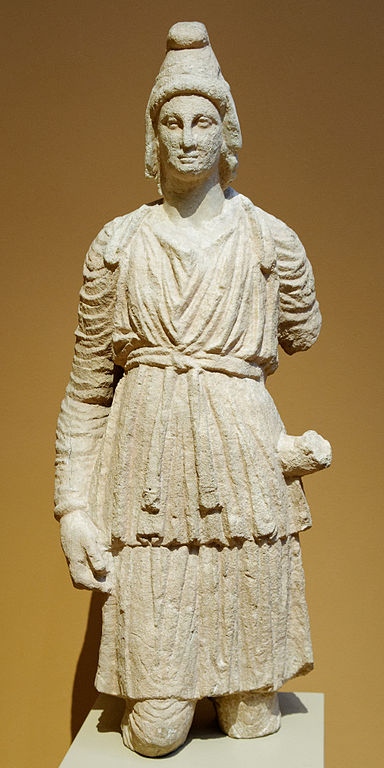
My story was inspired in part by the Egyptian and Thracian immigrant communities we know existed in Classical Athens. There were temples in the city to both the Egyptian goddess Isis and the Thracian goddess Bendis. But Athens wasn’t the only place Egyptians and Thracians crossed paths.

A famous Thracian courtesan named Rhodopis worked in Naucratis, the Greek trading city in Egypt in the 6th century BCE. She seems to have been a larger-than-life character whom people liked to tell stories about. It was apparently widely believed in antiquity that one of the three great pyramids at Giza was built for her by her lovers. Another fanciful story about her is the closest ancient equivalent to the story of Cinderella:

They say that one day, when Rhodopis was bathing, an eagle snatched her sandal from her serving maid and carried it away to Memphis. There the king was administering justice in the open air and the eagle, flying over his head, dropped the sandal in his lap. The king, moved by the beauty of the sandal and the extraordinary nature of the event, sent all through the country to find out whose it was. She was found in Naucratis and conducted to the king, who made her his wife.

– Strabo, Geography 17.1.33

(My own translation)

While this is obviously just a bit of a fairy tale, Rhodopis was a real person. One of her lovers was Charaxus, the brother of the lyric poet Sappho. Sappho evidently didn’t think much of the relationship. A fragment of one of Sappho’s poems throws a little shade the courtesan’s way (referring to Rhodopis as Doricha—it was not unusual for courtesans to use several different names):

O, Aphrodite, may she find you too bitter for her taste,

and don’t let her go boasting:

“What a sweet thing Doricha has got herself into

this time around!”

– Sappho, fragment from Oxyrhynchus papyrus 1231.1.1.(a)

(My own translation)

Herodotus reports that the rich offering Rhodopis made at Delphi at the end of her life to celebrate her good fortune—an enormous pile of iron roasting spits—was still to be seen there in his day. (Herodotus, Histories 2.135)

Rhodopis sounds like she would have been an interesting person to hang around with, and Hidden Youth is one more reminder that interesting people were everywhere in history, not just in the places we expect.

Image: Greek statue of Bendis, photograph by Marie-Lan Nguyen via Wikimedia (Cyprus, currently Metropolitan Museum of Art, New York; 3rd c. BCE; limestone)

Announcements from your hosts.

The Expanse Season 2 Trailers

Trailers for the second season of The Expanse are out!

THE EXPANSE | Season 2 Trailer | Syfy

THE EXPANSE | Season 2 Trailer #2 | Syfy

I saw the first season well after it had broadcasted. It’s clear that it merely scraped the surface of the story, but I liked it enough to want more. The writing managed quite well to avoid infodumps while giving us enough to understand any given situation. Most of the cast was new to me, but I enjoyed their performances. Detective Miller was the most boring character of all; I liked the crew of the Rocinante, though, especially Nagata and Burton.

Season 2 will be out February 8, 2017.

Hey, look! We found a thing on the internet! We thought it was cool, and wanted to share it with you.

Making The Return of the King

Here’s a look at how we made yesterday’s The Return of the King.

Dinner11

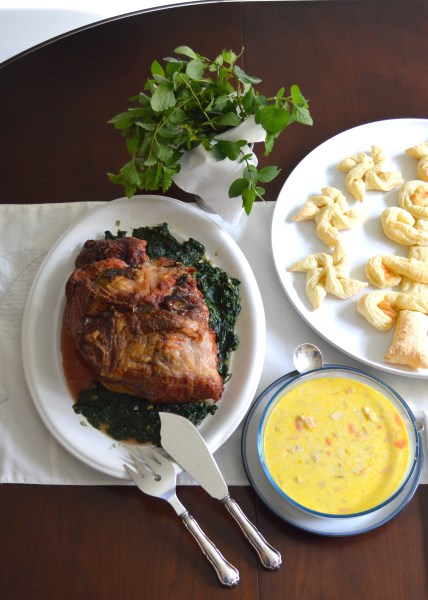
The menu

  • Saffron seafood soup
  • Roasted pork with olives and dates
  • Sauteed spinach
  • Almond pastries

erikchef1Since we really only see Gondor in a time of war and Tolkien gives us very little detail about what daily life was like after the defeat of Sauron, it takes some imagination to come up with a proper meal for such an occasion. In creating this month’s menu, I had a specific idea in mind: a feast that would represent all the people of Gondor. Aragorn’s coronation meant a new beginning for a kingdom that had been in a long decline. It touched all of Gondor’s people and it made sense that they would all contribute something to the table.

From the fishing folk of Ethir Anduin, we get a seafood soup. This recipe uses a variety of different seafoods combined with carrots and onions. It is, at heart, food for a hardworking family making a living from the sea and small coastal gardens, but the addition of cream and saffron makes it richer, sweeter, and more luxuriant. (5.1)

From the small farmers and herders of the hill country, we have a haunch of roast pork. To reflect the southern climes of Gondor, the pork is stuffed with herbs, olives and dates. This, too, is simple food, but presented in royal style.

From the fields and gardens of Pelennor, we get sauteed spinach, flavored with garlic and ginger. This recipe is inspired by a medieval dish from the middle east which seems appropriate for the Mediterranean-ish setting of Gondor.

Finally, from the sophisticated city-dwellers of Minas Tirith itself, we end with an artful set of almond pastries representing the white tree and seven stars of Gondor.

Continue reading

Dining in Middle Earth: The Return of the King

“Frodo gave way; and Gandalf, as if he were their esquire, knelt and girt the sword-belts about them, and then rising he circlets of silver upon their heads. And when they were arrayed they went to the great feast; and they sat at the King’s table with Gandalf, and King Eomer of Rohan […]”

LotR Dinner11

This month, we try to imagine a celebratory feast in Minas Tirith for the coronation of Aragorn. The people of Gondor had lived through war and privation, but they would surely have laid on the best they could for their new king and the return of peace. Our feast includes saffron seafood soup, roasted pork with olives and dates, sauteed spinach, and almond pastries for dessert.

LotR Dinner11 Main

Our table setting is based on a contrast of primarily white dishware and the dark tabletop. Most of the color comes from the food. The shapes of the dishware are simple, with no patterns or surface decorations. Silver cutlery, silvery candlesticks, and a white, shimmery table runner introduce a touch of luxury. A pewter cup holds mint sprigs for additional color and flavoring.

LotR Dinner11 Dessert

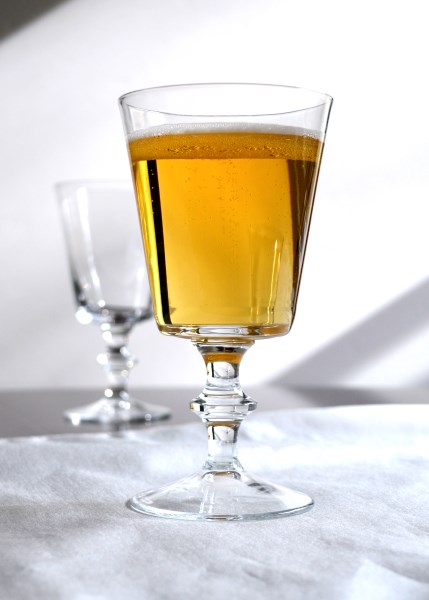
LotR Dinner11 Drink

Check out what’s it about in the introduction, or read the how-to!

Images by Eppu Jensen

Geeks eat, too! Second Breakfast is an occasional feature in which we talk about food with geeky connections and maybe make some of our own. Yum!

Arrival Recap

So, here are some initial thoughts on Arrival. Spoiler alert is most definitely in effect!

Twitter Arrival Movie Poster Aug 16 2016

Things I loved:

  • No stealth female protagonists here, but an actual, full-time, proper female lead who isn’t there for her boobs and butt, but brains!
  • Top notch plotting, dialogue, and characters, all in all. Also the directing, sets, music, and effects were impressive.
  • Some of the trailers make it look like the linguistics lecture in the very beginning is in a huge auditorium with only a handful of students attending, which might have meant that the movie university was going to have a neglected linguistics department or lukewarm students. Not so. There was a good reason why students didn’t show up, i.e., the alien landing.
  • Dr. Louise Banks (Amy Adams) was treated as an expert almost universally. Notable exceptions were a CIA bloke at the Montana camp and Dr. Ian Donnelly (Jeremy Renner), the male lead. The latter, upon meeting Dr. Banks for the very first time, quoted something she’d written and said something to the effect of “Too bad it’s wrong.” Tut tut. He got over himself, though.
  • Colonel Weber (Forest Whitaker), the army liaison for the civilian consultants, was an actual ally to Dr. Banks and Dr. Donnelly, not an antagonist. It would’ve been so easy to take the lazy road. (Then again, they did take it with the antagonistic CIA bloke.)
  • The complexities of language and communication were explained with easily understandable comparisons.
  • Languages were treated as the complex systems that they are, i.e., other levels beyond the lexicon got attention.
  • Many of the English translations of the heptapods’ language were messy (e.g., “Abbott is death process” = “Abbot is dying”). As a non-native English speaker who operates with two languages on a daily basis, I found it very realistic. There are times when quick and dirty is what you need, and others when you can spend more time pondering. In a first contact situation where political and military pressures are high, there might not even be a need to polish the English syntax as long as the message is unambiguous.
  • Some of the aliens’ language was subtitled. I’m a visual person; in addition, I can’t always hear everything in noisy environments such as movie theaters or restaurants. ❤ subtitles!
  • The story is very explicit about the need for people work together to solve problems without feeling preachy. YMMV.
  • A male hero doesn’t punch an alien in the face at the end. I’m all for punching the bad guys—now and then. I explicitly do not want all of my reading and viewing rehashing the same old stories over and over, because SFF is explicitly about examining other possibilities. It feels (’cause I haven’t seen any statistics or anything) like lately we’ve mostly gotten the punchy kind of SFF. It was so nice to face a different fare for a change.

Things I didn’t think were quite as successful:

  • Only one prominent female speaking role. For realz. Surely you’re better than that, writing team.
  • The conflation of linguistics and translating. Of course the two disciplines are related, but each comes with its own set of principles and tools.
  • Dr. Banks and Dr. Donnelly each got their own team in Montana, but the teams were hugely underused. They might have been completely omitted for all the difference they made.
  • Dr. Banks’s visions affected her thinking and behavior, but weren’t integrated into the dialogue terribly well. The one time they tried (“Are you dreaming in their language?”), she responded very defensively, and the matter was dropped without further exploration.
  • Non-linear time as part of the plot. It’s a very difficult concept to pull off successfully. I haven’t come across a story yet where I think it works to its full effect. (I might feel differently about “Story of Your Life.” Note to self: Find it & read.) Even so, the execution in Arrival was one of the most elegant I’ve encountered, and the reveals were well-paced.
  • At the end, the aliens indicate that they’re sharing their full language with Dr. Banks because in 3,000 years they will need humanity, but that was it. What a cliffhanger!

I’ll finish with a couple of links:

How the writer of ‘Arrival’ spent a decade getting his sci-fi Oscar contender made. An interview with screenwriter Erik Heisserer that sheds light to the difficulties in getting a movie project greenlit and adapting the inspiration story.

‘Arrival’ Author’s Approach To Science Fiction? Slow, Steady And Successful. An interview with Ted Chiang, whose short story “Story of Your Life” (1998) was the basis for Arrival.

Ted Chiang, the science fiction genius behind Arrival. Another focus piece on Chiang.

Image via Arrival Movie on Twitter

In the Seen on Screen occasional feature, we discuss movies and television shows of interest.

The Attack on the Hermas

161114hermaA strange thing happened one night in ancient Athens. This incident, the attack on the hermas, provides the background for my short story “How I Saved Athens from the Stone Monsters,” in the collection Hidden Youth. While there are no stone monsters in the actual history, it’s a fascinating story in its own right.

It was the spring of 415 BCE. All around the city—at crossroads, in marketplaces, in front of houses and temples—stood square stone posts carved with human heads on top and crude penises in front. These were the hermas, stones sacred to the god Hermes that the Athenians believed protected their homes and city against bad fortune. The people of the city woke up one morning to discover that the hermas had been smashed up in the night.

Now, in any city, you would expect people to be upset to wake up to widespread vandalism, but Athens was no ordinary city and these were no ordinary times. Athens had been at war with Sparta for more than a decade. A war that both sides had expected to be quick and decisive had turned into a long, unwinnable slog. The Spartans had repeatedly ravaged the Athenian countryside. Farms had been burned and vineyards wrecked. Behind the walls of Athens, plague had slaughtered the refugees who sought shelter from the Spartans. Athens had not seen such suffering since the Persian army of Xerxes captured and burned the city more than half a century before.

In the midst of the destruction, democracy and social cohesion suffered. The poor farmers from the countryside whose homes and fields got burned lost everything while the rich merchants and landowners in the city were mostly unaffected. The leading general Pericles’ strategy of pulling back behind the walls and sending out the fleet to raid the Spartan coast felt slow and cowardly to people used to the swift clash of the hoplite phalanx. Indeed, it was the solidarity of standing shoulder-to-shoulder, row upon row in the phalanx, regardless of family or property, that grounded the Athenian democracy, but those who served as hoplites were now helpless behind the walls. When the plague struck, already weakened social bonds were snapped as everyone looked out for themselves and people who felt sure they were going to die anyway indulged in every impulse and vice.

In times like this, when social solidarity was strained by factional and regional conflicts, many Greek cities had turned to tyrants: aristocrats who held themselves out as champions of the people and leveraged popular anger as a way to propel themselves into power. Athens itself had had tyrants, in the decades before the wars with Persia. Wherever tyrants had risen, they crushed their rivals and abused their power until finally they were driven out and replaced with new, more balanced forms of democracy. The same had happened in Athens, but the time seemed ripe for a new tyrant to rise and sweep away the democratic system with the anger of a frustrated and fed-up populace.

A new leader had already arisen to promise the people of Athens a better future. Alcibiades, a rich and flamboyant aristocrat with time on his hands, had pushed for a major expedition to sail to Sicily and attack Syracuse. Syracuse had largely stayed out of the war between Athens and Sparta, but they had cultural ties to Sparta and were a major exporter of grain, so there was a fear that Syracuse might decide to step in and shore up Sparta against Athenian raids. The people of Athens were enthusiastic about the prospect of getting out of the city for a fight they could win. They looked forward to looting the treasuries of Syracuse and coming home victorious and rich.

Then the hermas got smashed.

Suspicion fell immediately on Alcibiades. It seemed like the sort of thing he would do. He was well known for holding raucous drinking parties with other rich young men and had a reputation for flippancy and arrogance. He was a student of Socrates, that annoying old man who refused to participate in the democratic assembly but liked to ask people tricky questions and make them look stupid. If anyone in Athens wouldn’t respect the hermas and would think that running around town at night doing some property damage would be a good joke, it would be Alcibiades.

There was some legal wrangling about whether to bring charges against Alcibiades at once or let the expedition go ahead as planned, but the upshot was that the expedition went out and Alcibiades fled Athens to find refuge among his friends in Sparta.

This all may seem like an overreaction to what amounts to little more than the ancient Athenian equivalent of some frat boys going on a bender and playing a little mailbox baseball, but context is everything. It wasn’t just that the people of Athens valued their good luck statues. This sort of flippant disregard for tradition was exactly what one expected from a tyrant. The hermas may have been old-fashioned relics of simpler times, but so, in its way, was the democracy. In the Athenian assembly, the will of the people was the law, and if it was the will of the people to have crude statues in front of their houses, to disrespect that choice was to disrespect democracy itself.

Alcibiades was exactly the sort of person who aimed at tyranny: rich, idle, and dismissive of tradition. The smashing of the hermas made those qualities obvious in a way that no one could ignore.

Thoughts for writers

It’s easy to look at the past and be perplexed by the weight people attached to symbols and minor events, but it is context that gives importance to those things that seem trivial to us. In other times, the attack on the hermas would have been a case of petty vandalism, a scandal to be argued over in the marketplace for a few days and in time forgotten. Because of the times in which it happened, it became the tangible symbol of something far more perilous: a threat to Athenian democracy itself.

This is one of the challenges of worldbuilding. Making a world that works differently from our own means creating contexts in which things that seem trivial to us carry profound weight. The power of such small things depends on the context in which they occur. The smashing up of the hermas might not seem important to us, just like no one from a hundred years ago would grasp the significance of yellow stars and shattered shop windows, or a woman refusing to give up her seat on a bus. Creating such moments—and giving our readers the context to understand them—is part of how we make our worlds feel real.

Image: herma, photograph by André Frantz via Wikimedia (Siphnos; c 520 BCE; marble)

History for Writers looks at how history can be a fiction writer’s most useful tool. From worldbuilding to dialogue, history helps you write. Check out the introduction to History for Writers here.