Random Thoughts on Doctor Strange

161107strangeIn no particular order. Spoiler warning in effect.

  • Doctor Strange is a perfectly good movie, but not the great movie I hoped it might have been. This year, and this fall in particular, have been so lacking in entertaining movies, though, that I’ll happily take “perfectly good.”
  • In terms of narrative structure, character arcs, and facial hair, this was pretty much just Iron Man with magic instead of tech. Iron Man was great, and if anybody can both live up to Robert Downey Jr.’s Tony Stark and at the same time make his version of the insufferable arrogant genius not feel like a poor copy, it’s Benedict Cumberbatch, but I still feel like I’ve seen this movie enough times already.
  • Speaking of insufferable arrogant geniuses, it’s been noted that Cumberbatch is already pretty adept at playing them. Which he is, but his Dr. Strange is, again, a distinctly different kind of insufferable arrogant genius from his Sherlock Holmes. Cumberbatch doesn’t just do insufferable arrogant genius well, he does it with specificity and nuance, which is what makes him such a great actor.
  • Speaking of great acting, Tilda Swinton’s Ancient One is a delight to watch: mysterious without being obscure, playful without being childish, dangerous without being menacing. She and Strange play off one another beautifully.
  • The erasure of Asian people from their own culture and history is a problem, one to which this movie has contributed. This and the above are both true; neither one negates the other.
  • Speaking of erasure, it’s really rather pathetic that there are only two female characters in this movie. One of them dies and a cape has more of an independent story than the other one. Marvel has seriously got to do better.
  • Chiwetel Ejiofor is playing his Serenity character in reverse.
  • The magic in this movie is a beautiful combination of movement and color. This is what magic should look like in film.

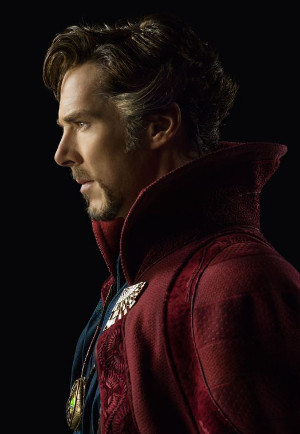
Image: Doctor Strange poster via IMDb

In the Seen on Screen occasional feature, we discuss movies and television shows of interest.

Ancient d20s

If you’re a role-playing gamer, you probably recognize the profile of a twenty-sided die, or d20, right away: the collection of triangles making up a bumpy sphere by which we invoke the capricious god of random numbers. This shape (technically known as an “icosahedron”) has been in use a lot longer than Dungeons & Dragons has been around. Here’s an example from Roman-period Egypt which has the names of Egyptian gods marked on its faces in demotic, an Egyptian script.

161103dakhleh
Dakhleh die showing “Isis” face via Martina Minas-Nerpel, “ A Demotic Inscribed Icosahedron from Dakhleh Oasis,” Journal of Egyptian Archaeology 93 (2007), 137-48 (Dakhleh Oasis, Egypt, currently Valley Museum, Kharga, Egypt; 1st c. CE; limestone)

Here’s another example from Egypt. This one has Greek letters on each of its faces.

Icosahedron via Metropolitan Museum of Art (Egypt, currently Metropolitan Museum; 2nd c. BCE - 4th c. CE; serpentine)
Icosahedron via Metropolitan Museum of Art (Egypt, currently Metropolitan Museum; 2nd c. BCE – 4th c. CE; serpentine)

It’s possible that these dice were used for some kind of game, but more likely they were used for divination. The die with the names of gods may have been used to determine which god a person should pray to for help. The Greek letters probably corresponded to a list of pre-written oracular responses: ask your question, roll the die, and consult the table for the answer, sort of like the ancient version of a magic 8-ball.

Some might say the uses of the twenty-sided die haven’t changed much in a couple thousand years.

Of Dice and Dragons is an occasional feature about games and gaming.

Stained Glass Dalek

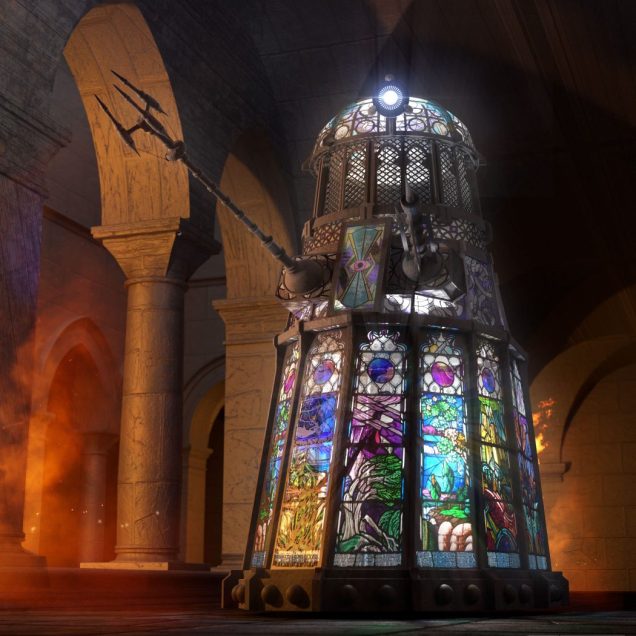
Did you see this amazing stained glass Dalek already?

Jamie Anderson Chris Thompson Stained Glass Dalek Stainley-1050x1050

Producer / director / writer Jamie Anderson worked with designer Chris Thompson to help make the lead and stained glass Dalek a reality. It’s based on a Doctor Who audio drama script by Mike Tucker called Order of the Daleks.

Thompson describes the making-of process:

“My main thought process was to create a “Gothic” Dalek and replace all the flat surfaces with glass designs. My initial sketches had palisades, crowns, spikes and other gothic elements, but we decided to dial a lot of these back for story reasons. In the episode itself these Dalek casings are made by very primitive monks so the focus needed to be on the stained glass and not the metal elements.”

The detailing is absolutely exquisite. There is, of course, more to the design than that—visit Jamie Anderson’s site for the full story and the meaning of some of the elements.

Found via Tor.com.

Image via Jamie Anderson

Out There is an occasional feature highlighting intriguing art, spaces, places, phenomena, flora, and fauna.