Grammatically Female Dwarves in Tolkien

Jimtheviking on Tumblr wrote about how the Dwarven names in J.R.R. Tolkien’s The Hobbit connect with Old Norse, especially Dwarf names listed in the poem Völuspá.

According to Jimtheviking, Tolkien chose a number of names from Old Norse and tweaked those names in an interesting way. Namely, Tolkien grasped Old Norse grammar well enough to know that the omission of one n from a name ending in –inn changed it from masculine to feminine. To quote Jimtheviking:

“Well, I give you the names of the Dwarves from the Hobbit, as they appear in Dvergatal (stanzas 14-16) and in the order they appear:

“Dvalins, Dáinn, Bívurr, Bávurr, Bömburr, Nóri, Óinn, Þorinn, Þráinn, Fíli, Kíli, Glóinn, Dóri, Óri

“Now, in the Hobbit, they’re named as follows:

“Dwalin, Dáin, Bifur, Bofur, Bombur, Nori, Óin, Thorin, Thráin, Fíli, Kíli, Glóin, Dori, Ori.

“Now, you notice something with the way those names got changed? That’s right, he changed the masculine -inn definite suffix to -in, which is feminine.

“That means that, at least grammatically, Dwalin, Dáin, Thorin, Thráin, and Glóin are female Dwarves.”


Then, moving on from purely linguistic, Jimtheviking continues with an intriguing argument:

“Since we know Tolkien was meticulous about his grammar, this was done most likely as an in-joke […] [emphasis original]

“But there’s a not-inconceivable chance that the Dwarves were using the masculine pronouns in Westron because that’s what the Men who met them used, despite the fact that a third of the company was female, and hey, it’s kinda neat to think he wrote a bunch of Dwarf-ladies going on an adventure.”

It is really interesting, isn’t it, to posit male and female Dwarves in Tolkien’s adventures?!

500px Alexander Turchanin Thorin Cosplay


Poking around, I found versions of Völuspá that differ from the Dwarf list as given by Jimtheviking*. Not just the list itself, but also spellings differ depending on the edition you’re using (which isn’t rare at all in philology). Nevertheless, the main point stands: Tolkien changed names that had –inn in the original to just –in in English.

Of all Tolkien’s Dwarf names, he seems to have adopted Durin, Dwalin, Náin, Dáin, Bifur, Bofur, Bombur, Nori, Óin, Thorin, Thrór, Thráin, Fíli, Kíli, Fundin, Náli, Oakenshield (Eikinskjaldi, cf. Icelandic ‘oak shield’), Glóin, Dori, and Ori from the Völuspá.

Of them, Durinn, Dvalinn, Náinn, Dáinn, Óinn, Þorinn, Þráinn, Fundinn, and Glóinn are all originally spelled with a double n. (In addition, there’s a change from a double r to a single one in Bívurr / Bívǫrr, Bávurr / Bávǫrr, and Bömburr / Bǫmburr, which Jimtheviking does also comment on.)

Anyway, the whole thing kinda reminds me of the first time I read The Lord of the Rings, decades ago now. I was young enough that it was in translation, which means the young me ploughing through LotR was quite confused over the gender of some characters. The Finnish language doesn’t have grammatical gender, you see. Instead of he or she, we just have one third-person singular pronoun, hän, which is used of all people regardless of sex, gender, age, kinship, marital status, whatever, just like the English third-person plural they is. Normatively, in Finnish everyone is a hän.

Even at that young age, I knew that (apart from Astrid Lindgren) most of the publications, including those for the younger audience, centered boys and male characters. Contextually, I could tell that Frodo and Sam were male. Same for Legolas and Gimli, Aragorn and Boromir, and Gandalf and Elrond. Arwen, Galadriel, and Eowyn were female.

But Glorfindel? Maybe male, I thought, but there is nothing explicit at all in the Finnish translation. And Merri and Pippin? Somehow at that time I couldn’t make them out at all; indeed, they’re the two characters whose gender confused the young me the most.

Having grown up reading the Moomins, Pippi Longstocking, Ronia the Robber’s Daughter, The Famous Five series, and The Dark Is Rising sequence, I saw nothing odd in girls and women also going on adventures. So I thought it was quite plausible that Merri and Pippin could be female, and was too young to read all of the textual cues that imply they aren’t. (Remember that in Finnish the gender-neutral pronoun hän gives absolutely no clue whatsoever about anyone’s gender.)

The possibility of a linguistic in-joke regarding these Dwarven names really tickles the imagination and would be completely plausible of Tolkien. Interestingly, the name Gandalf also originally comes from the Dvergatal (see e.g. stanza 12 in Pettit’s 2023 edition, which lists the name as Gandálfr). A Dwarven Gandalf would, indeed, give quite a different vibe to LotR.

And now I kinda want new movies of The Hobbit, with the amazing attention to detail that Weta lavished on the effects and props in Peter Jackson’s versions, but with more heedful writing and with half the Dwarves in the party female. That would be a truly intriguing take!

Images: Thorin cosplay by Alexander Turchanin on 500px.

*) Dwarves are named in stanzas 10-16, starting with Mótsognir and Durinn. The undated Völuspá version linked to by Jimtheviking, edited by Guðni Jónsson, includes more rows than the newest edition I found. The extra lines must come from (an)other extant version(s) of the text.

Names in the undated Völuspá version linked to by Jimtheviking (ed. Guðni Jónsson):

Durin (stanza 10: Durinn)

Dwalin (11: Dvalinn)

Náin (11: Náinn)

Dáin (11: Dáinn)

Bifur (11: Bívurr)

Bofur (11: Bávurr)

Bombur (11: Bömburr)

Nori (11: Nóri)

Óin (11: Óinn)

Thorin (12: Þorinn)

Thrór (12: Þrár)

Thráin (12: Þráinn)

Fíli (13)

Kíli (13)

Fundin (13: Fundinn)

Náli (13)

Oakenshield (13, 16: Eikinskjaldi)

Glóin (15: Glóinn)

Dori (15: Dóri)

Ori (15: Óri)

Names in Edward Pettit’s 2023 edition of the Völuspá:

Durin (stanza 10: Durinn)

Dwalin (11: Dvalinn)

Bifur (11: Bívǫrr)

Bofur (11: Bávǫrr)

Bombur (11: Bǫmburr)

Nori (11: Nóri)

Thrain (12: Þráinn)

Thorin (12: Þorinn)

Thrór (12: Þrór)

Fíli (13)

Kíli (13)

Fundin (13: Fundinn)

Náli (13)

Oakenshield (13, 16: Eikinskjaldi)

Gloin (15: Glói)

Note that Pettit’s version doesn’t include Náin, Dáin, Óin, Dori, or Ori.

Discovering Genderbent Ori Cosplays from The Hobbit

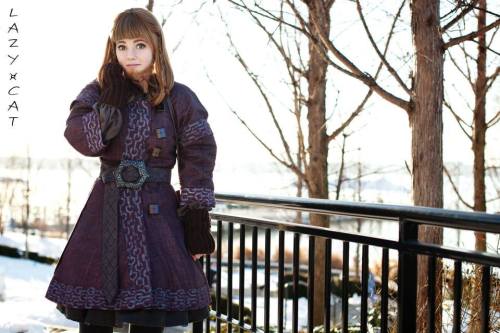
The other day I fell into the rabbit hole of cosplay from Peter Jackson’s Hobbit trilogy. I was sure there’d be a lot, but I was surprised of how much there actually is. And so much of it exquisite! The cutest ones by far are female versions of Ori, the youngest Dwarf in Jackson’s movies. I found three. Lizard Leigh both made and modeled this detailed outfit:

Tumblr frauleinninja Ori Cosplay1
Tumblr frauleinninja Ori Cosplay2

AmeZaRain’s version of Ori was a group effort:

DeviantArt AmeZaRain Ori Cosplay

This unknown cosplayer…

Alexander Turchanin Unknown Ori Cosplay

… even looks a little like Adam Brown from the movies!

Pinterest Chen Ori Portrait

I do love how she included Ori’s notebook and quill; a very nice detail that’s also beautifully included in the photo.

Here’s Ori’s base costume on display for comparison:

Pinterest Sofia Ferreira Oris Costume on Display

They all did a great job invoking the essence of the character, didn’t they?

Images: Lizard Leigh’s Ori by Karina as Lazy Cat via Leigh’s Tumblr (frauleinninja). AmeZaRain’s Ori by Elemental Sight via AmeZaRain’s DeviantArt account. Unknown Ori cosplay by Alexander Turchanin on 500px. Ori portrait found via Chen on Pinterest. Ori’s costume on display found via Sofia Ferreira on Pinterest.

In Making Stuff we share fun arts and crafts done by us and our fellow geeks and nerds.

Most Famousest of The Hobbit Soundtrack Covers

Recently we rewatched The Hobbit trilogy, which made me—again—root around looking for Dwarf-ish music. This time, though, I went wider and also included cover versions of melodies from all of the six Peter Jackson movie soundtracks.

Taylor Davis is one of the fabulous violinists out there doing YouTube covers. Here is her “Misty Mountains”:

The Hobbit – Misty Mountains (Dwarven Song) Violins Cover – Taylor Davis on YouTube

Nathan Mills aka Beyond the Guitar’s version of “Misty Mountains” by classical guitar is so lovely:

THE HOBBIT: Misty Mountains – Classical Guitar Cover by BeyondTheGuitar on YouTube

Guitar at its best, hands down.

This orchestral cover medley/remix by Parademics has an impressive range of instruments—I think we spotted an electric guitar in the background in the Ring Wraiths melody towards the end:

The Hobbit | Epic Orchestral Cover by Parademics on YouTube

Albert Chang’s arrangement of “Misty Mountains” incorporates 6 violins, 6 cellos, and a cajon, and shows why underappreciating cellos is a bad idea:

The Hobbit – Misty Mountains Orchestral Cover by sleightlymusical on YouTube

So much depth comes from the deeper-voiced string instruments!

Scott Sutherland’s tuba version is really solemn and somber:

Misty Mountains Cold – The Hobbit (Euphonium and Tuba Cover) by Scott Sutherland Music on YouTube

I have an impression that the tuba family is typically considered a bit silly, at least in the mainstream culture, but it shouldn’t.

The following Lord of the Rings medley also has an incredible cello part:

Lord of The Rings – The Hobbit (Piano/Cello Cover) – ThePianoGuys on YouTube

By ThePianoGuys aka Jon Schmidt, Steven Sharp Nelson, and Al van der Beek, with van der Beek’s arrangement.

Jasmine Thompson’s cover of “I See Fire” from The Desolation of Smaug is as good if not better than the original:

“I See Fire” Ed Sheeran The Hobbit: The Desolation of Smaug – cover by Jasmine Thompson on YouTube

Guitar for Thompson’s cover is by Seye Adelekan.

This gender-flipped version of “Into the West” from The Return of the King is awesome:

Into the West (Cover) – Josh Sahunta & Nicholas Yee on YouTube

Josh Sahunta singing and playing the piano, with Nicholas Yee on the cello.

Finally, being a Finn, I would be remiss not to include this instrumental metal version of the Lord of the Rings theme by Doug Anderson:

Lord of the Rings Theme – Epic Metal Rendition by Doug Anderson on YouTube

Do you have a favorite cover from either The Hobbit or Lord of the Rings? Please share!

An occasional feature on music and sound-related notions.

In Defense of Peter Jackson’s Hobbit Trilogy

There’s a lot wrong with Peter Jackson’s Hobbit trilogy, make no mistake. It is an overstuffed, poorly structured jumble of unnecessary action sequences, juvenile humor, and tedious subplots, all ending in an interminable final battle that makes neither narrative nor tactical sense. Still, not all the problems are of Jackson’s making, and there are some things it does right that deserve notice.

Many of the structural weaknesses in the plot come from Tolkien’s original. The Hobbit was a children’s book about Bilbo Baggins and a band of Dwarves having a series of random encounters on their way to a spectacularly poorly planned heist. The characters are for the most part so flat as to be interchangeable and the plot is little more than an excuse to trundle from one retold Nordic folktale to another. I loved the book as a child and I still have a great fondness for it, but it does not have the depth or cohesion of The Lord of the Rings. Jackson’s writing team put in heroic efforts to make thirteen distinct characters out of Tolkien’s lyrical list of Dwarf names and to fill in much of the background story that makes sense of Bilbo’s disjointed adventures. (To be fair, this fleshing-out work is also the source of many of the movies’ problems. On one hand, developing the Dwarves’ characters too often just provided more opportunities for out-of-place slapstick. On the other hand, filling in the gaps in Tolkien’s plot led to inventing new characters, which Jackson’s team too often fell in love with and allowed to take over the story.)

Despite these problems, some of the best moments in the trilogy are iconic scenes from Tolkien’s original that were put on screen with very few changes. Scenes like Bilbo’s riddling contest with Gollum in the depths of the Misty Mountains, Gandalf’s wily approach to Beorn, and Bilbo’s conversation with Smaug are rendered with a fidelity that shows a real love and respect for Tolkien’s creation. They are a delight to watch, even if they can’t make up for the rest of the films around them.

Even the less authentic scenes are often elevated by the quality of the performances. Ian McKellen, Hugo Weaving, Cate Blanchett, and Christopher Lee reprise their roles as Gandalf, Elrond, Galadriel, and Saruman with intelligence and gravitas. Andy Serkis gets to present a less desperate, more playful version of Gollum while Orlando Bloom performs a younger Legolas who is, as Tolkien said of the Mirkwood Elves, “more dangerous and less wise” than the character we remember from The Lord of the Rings. The newcomers to the series give it their best, too. Martin Freeman shows us how Bilbo finds his courage and taste for adventure without ever losing his Hobbitish love of home and comfort. The Dwarf actors, for all that they mostly get used for broad comedy, give their characters an individuality and personality that Tolkien never did. Benedict Cumberbatch is smoothly menacing as the voice of Smaug. Sylvester McCoy’s Radagast does a bit too much slapstick, but he also gives us a wild fresh take on wizardry that sits at the other end of the spectrum from Saruman’s aloof grandeur.

The sets, props, costuming, and other art direction live up to the high standards set by Weta in the first trilogy. From the ancient depths of Erebor to the workaday fishing village of Lake Town, from the rugged traveling gear of the Dwarves to the cold glamour of the Elvish king Thranduil, there isn’t a place, character, or object on screen that doesn’t show the art department’s commitment to creating a world that feels real and lived-in. Over it all, Howard Shore’s music is as rich and operatic as ever.

But the best thing about the Hobbit trilogy, though, the thing that redeems the whole troubled production and its many missteps, is not the films themselves but the discs full of extras that come with the extended editions. Most studios are content to slap in a few deleted scenes, a handful of trailers for unrelated movies, and maybe a couple five-minute promo interviews with the big-name stars talking about how awesome the movie is (seriously, movie studios, you don’t need to market your movie to the people who have already bought the DVD), but not Jackson & Co. Each of the Hobbit films comes with hours upon hours of in-depth documentaries on every aspect of the production, from concept art to final edits. These documentaries do more than go behind the scenes in the usual self-promoting Hollywood way. They also show us the false starts, the mistakes, the ideas that went nowhere and the things that went seriously wrong. You get a fuller appreciation of the good things in the movies when you see how hard it was to get some of them on screen.

The extra features are also well designed for usability. Everything is subtitled, which is great for those of us who don’t always hear well. The menus are easy to use and it’s obvious which item you’re choosing, unlike some discs which make you do a lot of tedious scrolling back and forth and use only a slight difference in color to tell you what button you’re about to hit. Every section tells you how long it is, so you can plan your watching accordingly. The Hobbit extras are the gold standard of how to do bonus features and I wish that more studios and franchises would take as much care both in what they offer for extra material and the functionality of their products.

The Hobbit trilogy is not great cinema. The whole does not measure up to the sum of its parts, but some of those parts are in themselves fascinating and beautiful. They make it worth going there and back again.

Image: Promotional still from The Hobbit: An Unexpected Journey via IMDb

In the Seen on Screen occasional feature, we discuss movies and television shows of interest.