Tomyris: Standing for Women

The Greek historian Herodotus tells us a story about the death of the Persian king Cyrus that centers a fascinating female character, Queen Tomyris of the Massagetae.

Cyrus, king of Persia, wanted to expand his empire eastward into the lands of the Massagetae, a nomadic people ruled by their widowed queen Tomyris. Cyrus at first proposed marriage to Tomyris as a ruse for conquest, but she refused him. He then mustered his army and prepared to invade.

Cyrus’ adviser Croesus cautioned Cyrus against trying to fight the wild Massagetae, but since Cyrus was determined to proceed, Croesus proposed a stratagem to overcome them. Following Croesus’ advice, Cyrus led his army into Massagetae territory, then had them make camp and prepare a sumptuous feast with plenty of wine, but they did not eat it. He then withdrew with most of his army, leaving behind his weakest soldiers.

When a part of the Massagetae army led by Tomyris’ son Spargapises came upon the Persian camp, they easily defeated the Persian troops there. Then they saw the feast. Being used to living rough, they had never seen such an amazing spread of food before, so they immediately sat down and filled their bellies. When the feast had made them all drunk and sleepy, Cyrus led the rest of his army back to attack them, easily defeating the Massagetae warriors and capturing Spargapises.

When Tomyris learned of her people’s defeat and her son’s capture, she sent a message to Cyrus proposing a peaceful end to the conflict: if Cyrus returned Spargapises safe, Tomyris would allow the rest of Cyrus’ army to retreat from her lands unharmed. If he refused, Tomyris promised to satisfy his desire for blood. Cyrus refused, and when Spargapises came to his senses and found himself a prisoner, he killed himself.

Tomyris then marshaled the rest of her people and fell upon the Persians. The fighting was intense, but at the end of the day the Persians were routed and Cyrus himself was killed. Tomyris found the body of Cyrus and thrust his head into a wineskin full of blood, fulfilling her promise to slake his thirst for blood.

It’s a good story, as many of Herodotus’ are, but what are we to do with this as historical evidence? Did any of these events happen? Did Tomyris even exist?

We have reasons to be skeptical. No other historian mentions Tomyris, not even other historians who wrote about the life of Cyrus. The story Herodotus tells is full of dramatic moments that sound like they come from a Greek tragedy rather than from history. Cyrus figures as the tragic hero, a noble leader driven by ambition to attempt something that wiser men warn against and meeting an ironically fitting end. Tomyris’ line about sating his thirst for blood is a bit too on-the-nose to be real. Does anything in this story hold up?

The Massagetae at least were a real people, known from plenty of other sources, one of many nomadic cultures of the Central Asia steppes. Ancient sources are uncertain about their location, placing them anywhere between the Caspian Sea and the Altai Mountains, although whether this variation reflects the migrations of a mobile people, smaller sub-groups joining and leaving a tribal coalition, or just the ignorance of Mediterranean writers about the geography of Central Asia is hard to say. Among many ancient steppe cultures, women could wield both weapons and power. The idea that Cyrus died while leading an unsuccessful campaign against steppe nomads is likely to be true, and it is plausible that those people might have been ruled by a woman.

The rest of Herodotus’ narrative has more to do with Greek literature and oral tradition than with historical events, but that narrative also serves a larger point for Herodotus. Many powerful and wise women feature in Herodotus’ account of history. Tomyris is the first whose story he tells in detail, but she is followed by many others in both large roles and small, with Artemisia of Halicarnassus, who commanded her own ships in Xerxes’ invasion of mainland Greece, among the most prominent. Tomyris in some ways prefigures Artemisia: a wise warrior queen who gives the Persian king a chance to save himself from defeat and embarrassment, though he fails to heed her.

Tomyris appears near the beginning of Herodotus’ history, playing a role in the life of the first Persian king; Artemisia comes in at the end, taking her place next to the last Persian king to feature in Herodotus’ text. The repetition of the theme of the wise warrior woman at both the beginning of Herodotus’ history and at the end gives it a particular weight and prompts us to consider what point the historian was making. Herodotus’ text is layered with subtle messages, and many of the stories he tells have some applicability to the audience he was writing for. Herodotus lived and worked in Classical Athens, a society in which the status of women was low.

Women’s participation in Athenian social and political life was a casualty of democracy: since Athenian democracy was based on solidarity between citizen men across class lines, as manifested in all-male institutions like the voting assembly and the hoplite militia, the stronger the democracy was, the more women were pushed aside. Herodotus was a fan of democracy. His text points out how democracy, and especially the Athenian version of it, gave the Greek allies the strength and resilience to resist invasion by the monarchic Persian Empire. At the same time, he also seems to have been warning his Athenian audience that by leaving women out of public life, they were squandering one of their most valuable resources.

While contemporary Greek philosophers and playwrights were denigrating women’s capacity for rational thought and scoffing at the idea of them playing a role in politics, Herodotus had a different message. In his narrative, women can both lead military forces to victory and give sound advice on political matters, two areas of life that Athenian women were barred from. Herodotus’ women keep their heads in a crisis, and powerful men would be better off if they listened to what women told them.

Tomyris may be a fictional or heavily fictionalized character, but she helps us understand a critique of Athenian democracy as framed by someone who both lived with and admired it.

Image: “Head of Cyrus Brought to Queen Tomyris” via Wikimedia (Museum of Fine Arts, Boston; c. 1622-1623; oil on canvas, by Peter Paul Rubens)

A Decade of Co-Geeking!

We started this blog together back in June 2015 with no grand ideas or plans, just wanting a place where each of us could post about the things we geek about and where we could post jointly about the things we geek about together. We had no idea what the next decade would bring us, but it’s been a fun ten years, and we’re still at it!

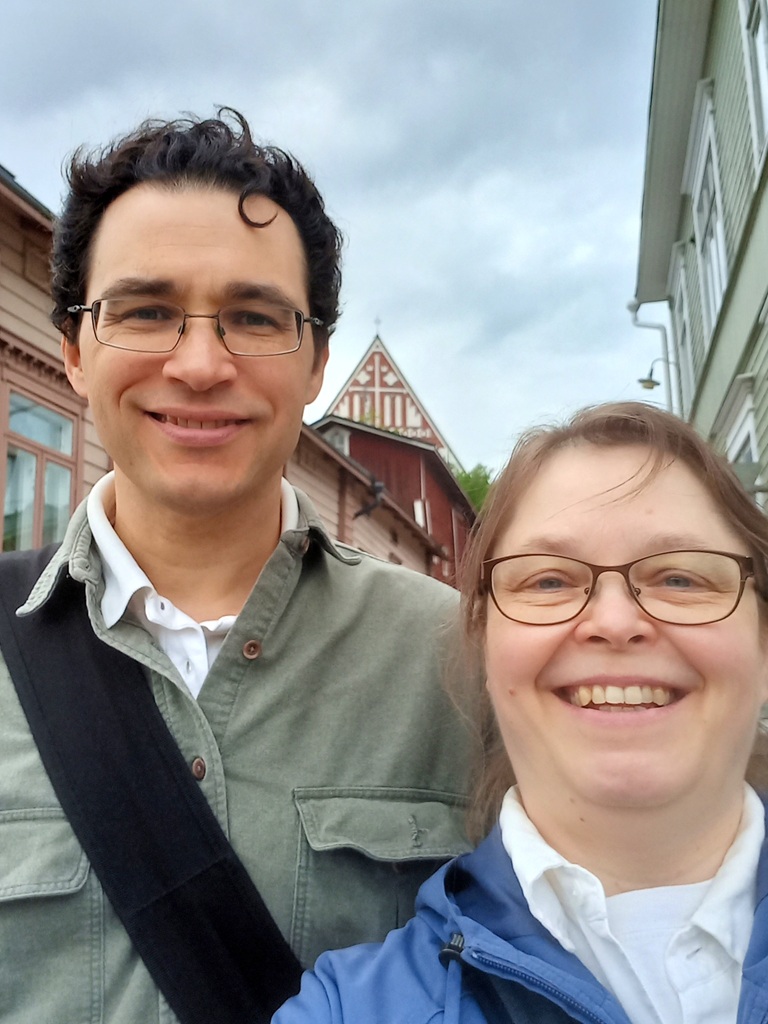
2025 05 Vanha Porvoo yhteiskuva

For a little celebration, we decided to take a short trip to a place we’ve both been interested in visiting for a while: the old town of Porvoo. Porvoo is a small city on the Finnish southern coast a little to the east of Helsinki. It’s like most Finnish cities except for its remarkable old town.

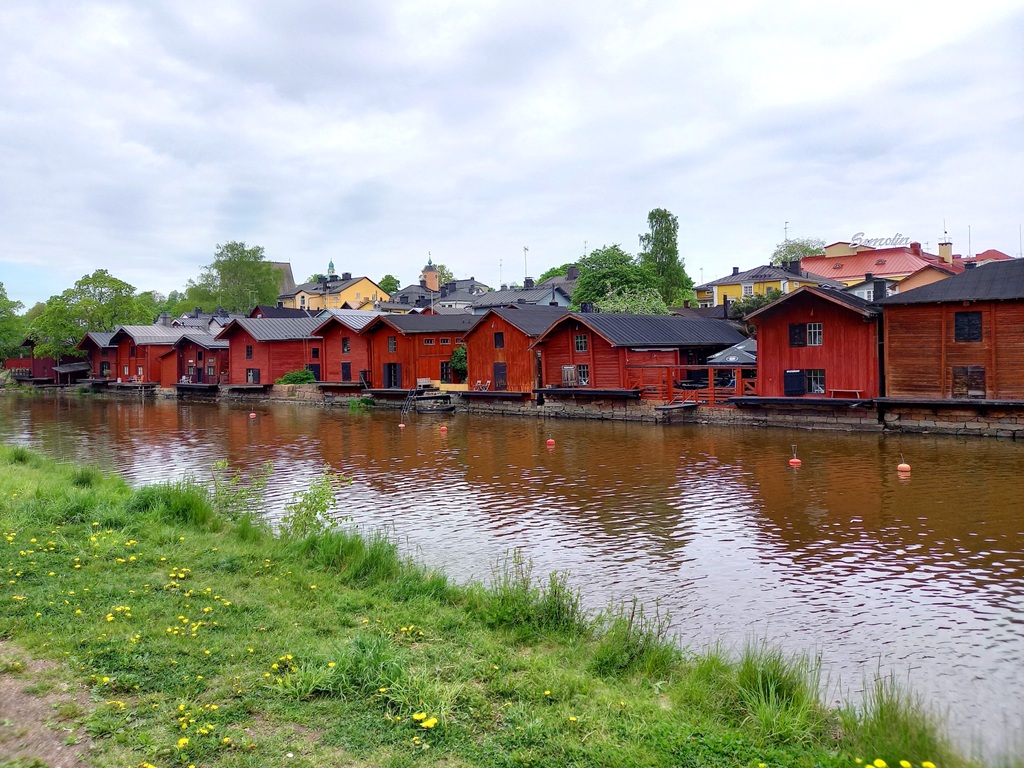
2025 05 Porvoonjoki ja rantamakasiinit

A large portion of the northern half of the city is made up of well-preserved colorful old wooden houses along cobblestone streets, all surrounding a medieval church.

2025 05 Porvoon keskiaikainen kirkko

While many of the house exteriors are legally protected, it’s not a museum or living history exhibit, just a part of town where ordinary folks and families live. Walking around there, though, is a little bit like stepping back in time.

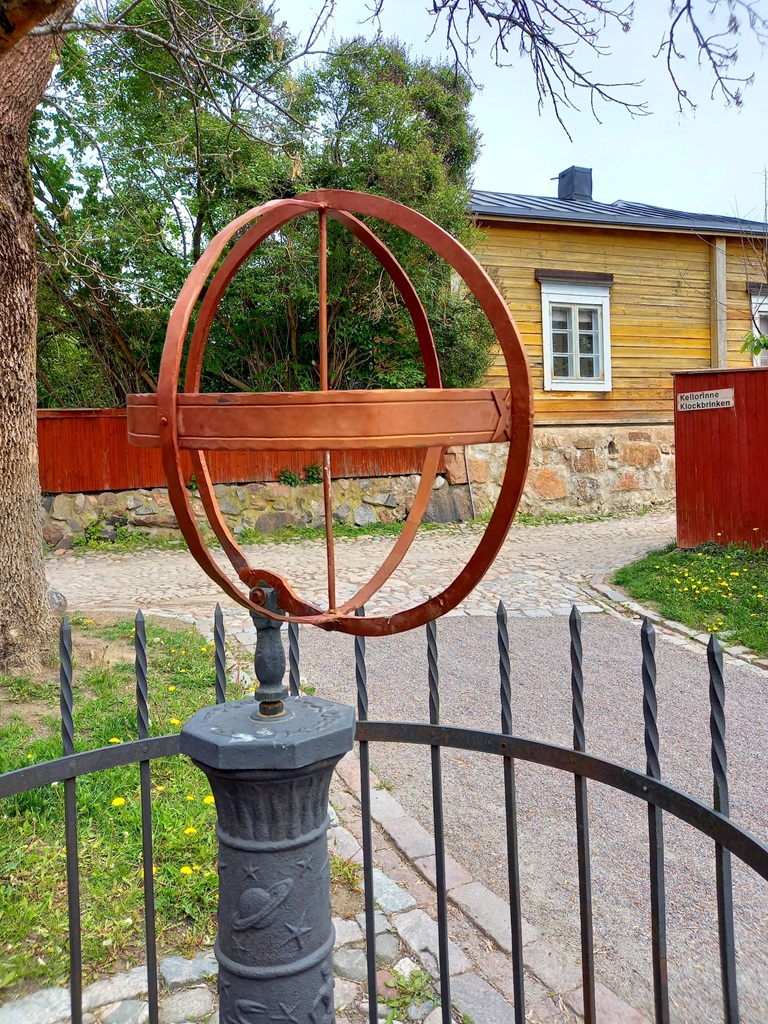
2025 05 Vanha Porvoo Kellokujan aurinkokello

Whatever brought you to Co-Geeking, we hope you’ve enjoyed our work. We look forward to another ten years, and who knows how many more!

Images by Eppu Jensen

The Reimagining of Laocoon

The sculpture of the death Laocoon and his sons is one of the mot famous works of ancient art. Carved from several pieces of marble that were fitted together with metal pins, it represents a dramatic moment from the legends of the Trojan War. When the Greeks carried out their ruse, pretending to withdraw from Troy but leaving behind a giant wooden horse, the Trojans were skeptical. While some Trojans wanted to bring the horse within their walls, the priest Laocoon warned the Trojans not to trust the Greeks. The god Poseidon, who favored the Greeks, sent a serpent from the sea to kill Laocoon and his sons, which convinced the Trojans to reject Laocoon’s advice and bring the horse behind their walls, unwittingly sealing their city’s doom.

This marble statue, depicting that dramatic mythological moment, has a dramatic history of its own. It was found in pieces in the soil of an Italian vineyard in 1506 and quickly gained attention. One of the first people to see it was the artist Michelangelo. Classical scholars noted that the Roman author Pliny had described with admiration a similar statue of Laocoon, and believed that this work was the very one that had impressed Pliny. The fragments were acquired by Pope Julius II for display in the Vatican palace. Several of the major artistic names of the Italian Renaissance worked on restoring the fragments and carving replacements for parts that were missing, among them not only Michelangelo but Raphael and Bramante.

In some ways, the Laocoon was the perfect sculpture for time in which it was discovered. Interest in relics of Greco-Roman art was growing, and the rich and powerful were starting to regard the acquisition and display of antiquities as a useful mark of status. Among those antiquities, large-scale marble sculpture was the most highly prized. The belief that the Laocoon statue was the very same one that Pliny had praised conferred upon it a special aura of authenticity. It was not just any ancient statue, but an ancient statue with a known origin and history, whose quality was vouched for by one of the great names of Roman literature.

At the same time, while the authentic antiquity of the sculpture was crucial to its value as a collector’s prize, it was also particularly suited to contemporary tastes. The fine delineation of the figures’ musculature in a pose of high emotional drama was perfectly adapted to the interests of artists of the Italian Renaissance. Even though it was a product of pagan Rome, the subject and its execution had resonances for a Christian audience. The agony of Laocoon’s body in a moment of divine intervention made a parallel to the agony of Jesus on the cross. The slithering serpent attending on a moment of fateful choice echoed the tale of Adam and Eve. For a Christian pontiff who was also a powerful political figure and a connoisseur of Classical art, it is hard to imagine a more perfect sculpture.

(The sculpture was so perfect for Julius, in fact, that one scholar has suggested that it was not an actual ancient sculpture but a forgery by Michelangelo himself. The evidence for this idea is weak, however, and it has not found wide acceptance among scholars.)

Yet, as perfectly adapted as the Laocoon sculpture was to the time in which it was discovered, times change, and the sculpture has changed with them. Since the Pope’s artists first reassembled the sculpture pieces and created their own replacements for the missing parts, the Laocoon has not remained the same. Over the past five centuries, artists and restorers have repeatedly gone back to the sculpture and changed it, readjusting the positions and postures of the figures, creating new replacements, and treating the surface. The position and postures of the two smaller figures has been changed. The angle of the main figure’s arm has been revised. Traces of paint were cleaned away to make the marble gleaming white. The Laocoon that we can see today in the Vatican Museums is, in important ways, not the same sculpture that came out of the vineyard soil in 1506.

Whenever we look at an artifact from the past, we must bear in mind that what we are seeing is usually not what the object originally looked like. The Laocoon statue is perhaps an extreme case, given how much attention it has garnered since it was first excavated, but we always remake relics of history to better fit what we in the present think the past should look like. Julius and his artists wanted a complete and glorious masterpiece of Classical art, so they made one out of the pieces from the vineyard. Today we want an instructive and historically accurate piece of sculpture, so we have removed many of the replacement pieces carved by the pope’s artists and rearranged the original pieces in ways that we think are more authentic. Yet since long before 1506, no one has seen what the Laocoon sculpture originally looked like, and no one in the future ever will.

Thoughts for writers

Just as Michelangelo and his fellow sculptors reimagined a relic of the past, whenever we look to the past to inspire our writing, we are always creating our own version of it for our own needs. However much we may seek and value historical accuracy, we are telling stories in and for our own times; they will always reflect what we believe and value about ourselves. This is a strength of fiction and fantasy, not a weakness. The important thing is to be thoughtful and purposeful about how we use and reimagine history when we look to it for inspiration and not let our unexamined, unthinking biases shape how we understand it.

Image: Laocoon and his sons, photograph by Wilfredo Rafael Rodriguez Hernandez via Wikimedia (found at Rome, currently Pio Clementino Museum, Vatican; 1st c. BCE-1st c. CE; marble; believed to be by Agesander, Athenodorus, and Polydorus of Rhodes)

A Cat to Keep You Safe at Sea

Cats (or at least most cats) may not like water, but this one might have kept an ancient sailor safe on the waves.

Scaraboid, photograph by The Trustees of the British Museum. Outline illustration and collage by Erik Jensen. (Found Naukratis, currently British Museum; 600-570 BCE; glazed composition)
(CC BY-NC-SA 4.0)

The cat is part of the decoration on the underside of a small talisman found at the site of the ancient city of Naukratis in Egypt. Talismans of this type are called scaraboids because they are similar in shape and size to scarabs, but do not have the traditional scarab markings on their domed top.

The cat is a hieroglyph, one of three on the bottom of the object. Reading from right to left, the feather represents the sound i, the cat represents m (from the Egyptian word for cat, miu), and the sun disc represents n (from the word niut, meaning town or city, which the sun disc sometimes stood for). Put together, these hieroglyphs spell imn, a form of the name of the Egyptian god Amun. Many other scarabs and similar talismans from Naukratis contain forms of the name of Amun.

Amun was an important god in ancient Egypt, at times regarded as the king of the gods. Among his other functions, he was worshiped as a god of air and winds who protected sailors and other travelers on the sea. A talisman of Amun was an appropriate thing for an ancient sailor to carry around.

Naukratis is an interesting place to find a talisman like this. Naukratis was a Greek city founded inside Egypt by permission of the Egyptian kings. It was originally built as a home for Greek mercenaries serving in Egypt, but it quickly became a port for Greek and other foreign merchants who wanted to trade in Egypt. Most of the sailors who came through Naukratis were not Egyptians, yet there seems to have been a thriving trade in Egyptian and Egyptian-themed talismans, many produced in local workshops. It is likely that the intended customer for this scaraboid was not an Egyptian but a visiting Greek.

On one hand, the prominence of the cat on this talisman makes it seem like a bit of tourist kitsch designed to appeal to foreigners. Domestic cats were not yet common in most of the ancient Mediterranean, and Greeks associated them with Egypt. Including a cat in the talisman made it extra Egypt-y for a Greek audience. On the other hand, Naukratis amulets include many different hieroglyphic ways of spelling names of Amun, not all of which use cats or other specifically Egyptian symbols. Even if some pieces were made as tourist souvenirs, there also seems to have been a market for talismans referencing the Egyptian sailors’ god, even in a place where most of the sailors were not Egyptian.

This talisman and others like it are an interesting window into the multicultural world of Naukratis, where Greek sailors hoped for protection from an Egyptian god and cats were good protectors against the dangers of the sea.

The Colors of Ecbatana

It’s an all too well-known trope that the past is drab. When we picture ancient or medieval buildings, we tend to imagine white marble or gray stone. This assumption of colorlessness spills over into fantasy as well. When we imagine the built environments of made-up lands, we tend to see a lot of white and gray there too, but it doesn’t have to be that way.

The ancient Greek historian Herodotus gives a fantastical description of the Median city of Ecbatana, modern Hamadan, Iran, featuring a series of concentric walls topped by brightly colored parapets:

This walled city is built in such a way that each wall is higher than the wall encircling it by only the height of its parapet, partly by the fact that it is built on a hill, but largely by design. All together there are seven circles, with the palace and treasury in the innermost one. The largest wall is about as long as the walls of Athens. The parapet of the first wall is white, the second one black, the third red, the fourth dark blue, and the fifth amber. The first five walls had their parapets painted in these bright colors, but the next was covered in silver and the final one in gold.

– Herodotus, Histories 1.98

(My own translation)

Now, Herodotus probably got this description wrong. It does not match up with the archaeological remains on the ground in Hamadan. Herodotus never saw Ecbatana for himself, but relied on second-hand reports, which likely got garbled in the telling. In fact, Herodotus’ description of Ecbatana as a hill covered by concentric rings of walls fits a bit better as a description of a Mesopotamian ziggurat. A ziggurat is a pyramid-like structure made up of a series of terraces built one on top of another, getting smaller as they go up. Seen from ground level, they might well look like a series of concentric walls ascending a hill.

Ruins of the ziggurat of Choga Zanbil, photocollage by Pentocelo via Wikimedia (Khuzestan Province, Iran; c. 1250 BCE; brick)

Ziggurats had been built in Mesopotamia for thousands of years by Herodotus’ day, primarily to serve as temples. While not many new ziggurats were being built in the time of Herodotus, older ones were being restored and rebuilt, so news of a freshly (re)built massive structure with impressive concentric walls may well have reached Greece. The brightly colored walls Herodotus describes are not too far-fetched, either. Ancient Mesopotamians decorated important buildings with colorful glazed tiles, which still retain some of their impressive coloring even today, as can be seen in the Ishtar Gate from Babylon.

Detail of the Ishtar Gate, with modern reconstruction, photograph by Osama Shukir Muhammed Amin via Wikimedia (Babylon, currently Pergamon Museum, Berlin; 6th c. BCE; glazed tile and brick)

All of these things put together mean that Herodotus invented (albeit unintentionally) a fantasy version of Ecbatana flavored after a Mesopotamian ziggurat with colorful tiled walls. And if Herodotus could do it, there’s no reason the rest of us can’t do the same. Let’s see more fantasy cities with vibrant scarlet walls, turquoise roof tiles, or streets paved with lush green stone!

Christie and Tolkien: When the World Ends but You Keep Going

The literary works of Agatha Christie and J. R. R. Tolkien may not seem to have much in common. One wrote murder mysteries set in genteel English country houses, the other high fantasy in a mythic secondary world. When you look at the themes and ideas of their work, though, interesting parallels appear.

The two authors were close contemporaries; Christie was born in 1890, Tolkien in 1892. They belonged to the generation whose young adulthood was shattered by the First World War. Their experiences were different—Tolkien saw battle firsthand as an officer, Christie its terrible aftereffects as a nurse—but they both reflect the shock of the war in their writing.

One theme that occupies both writers is death. Death was, naturally, a crucial element of Christie’s murder mystery stories. In Tolkien’s legendarium, death and the things people will do out of the fear of it is a running theme. But neither writer’s work is focused on death as a fact; rather, the underlying drive in their work is a search for some way in which death makes sense.

In Christie’s case, this theme is more obvious: she writes about detectives solving crimes. By the time we reach the drawing room summation at the end of the book, we can see clearly how and why the victim or victims died. Order is restored to the world, and reason triumphs over the illogic of death, whether that reason is embodied in a fussy Belgian’s love for methodical neatness or a wise spinster’s deep observation of human nature.

In Tolkien’s work, the drive to make sense of death is subtler. Death often appears pointless in Tolkien. Boromir dies defending Merry and Pippin from Orcs, but after he falls the young Hobbits are captured nonetheless. Denethor dies in despair instead of living to see his city saved. But the larger point of Tolkien’s work is that hopelessness is an illusion. We never know the end of our own story or how profoundly the choices we make will affect the world. In the legendarium as a whole, death is the greatest mystery, but also the greatest hope. The world of Middle Earth had a beginning and will someday end, yet the spirits of mortal beings will not end with the world but transcend it through death.

It is not just the death of individuals that occupied Christie and Tolkien, but also how ways of life come to an end. They both witnessed the end of the world, in a sense. The innocence and hope of the time they grew up in perished on the battlefields of the Great War, but they did not. They kept going and witnessed as the world around them changed.

Tolkien’s The Lord of the Rings is about the ending of an age, the Third Age of Middle Earth to be precise. The story takes place during the last days before the Elves either depart into the magical west or dwindle into creatures of fairy tale and folklore, taking their beauty and wisdom with them. Yet the story also carries hope for what is to come after in the ages of Men—hope without guarantees, as Gandalf puts it. The Elf Legolas and Dwarf Gimli reflect on the promise and weaknesses of humans in the streets of Minas Tirith:

“If Gondor has such men still in these days of fading, great must have been its glory in the days of its rising.”

“And doubtless the good stone-work is the older and was wrought in the first building,” said Gimli. “It is ever so with the things that Men begin: there is a frost in Spring or a blight in Summer, and they fail of their promise.”

“Yet seldom do they fail of their seed,” said Legolas. “And that will lie in the dust and rot to spring up again in times and places unlooked-for. The deeds of Men will outlast us, Gimli.”

– The Lord of the Rings. Book 5, Chapter 9, “The Last Debate”

Christie reflects the changing world in different ways, but also with hope for what the future will bring. Her early works are set in the interwar world of country estates and garden parties that we typically think of when we think of a Christie mystery, but that world was ending. She kept writing through the fifties and sixties as the life and culture of Britain changed around her.

The traces of this change are all over Christie’s writing. One of the ongoing themes in her mysteries is that it is difficult to know who people really are. Many of her plots hinge on people passing themselves off as or being mistaken for someone else. Such impersonations were possible only because the world of country villages and garden parties where everyone knew one another was ending. Miss Marple speaks of this shift in A Murder is Announced:

Fifteen years ago one knew who everybody was. The Bantrys in the big house—and the Hartnells and the Price Ridleys and the Weatherbys … They were people whose fathers and mothers and grandfathers and grandmothers, or whose aunts and uncles, had lived there before them. If somebody new came to live there, they brought letters of introduction, or they’d been in the same regiment or served in the same ship as someone there already.

…

But it’s not like that any more. Every village and small country place is full of people who’ve just come and settled there without any ties to bring them. The big houses have been sold, and the cottages have been converted and changed. And people just come—and all you know about them is what they say of themselves.

– A Murder is Announced. Chapter 10, “Pip and Emma”

At the same time, Christie also saw that the fundamentals of human nature that underlay her stories were not changed by the passing of time. People might live differently, but they still had the same jealousies and aspirations, desires and fears as they ever had. Miss Marple, again, reflects on this fact in The Mirror Crack’d from Side to Side as she explores the new housing development at the edge of her beloved village:

She turned out of Aubrey Close and was presently in Darlington Close. She went slowly and as she went she listened avidly to the snippets of conversation between mothers wheeling prams, to the girls addressing young men, to the sinister-looking Teds (she supposed they were Teds) exchanging dark remarks with each other. Mothers came out on doorsteps calling to their children who, as usual, were busy doing all the things they had been told not to do. Children, Miss Marple reflected gratefully, never changed. And presently she began to smile, and noted down in her mind her usual series of recognitions.

That woman is just like Carry Edwards—and the dark one is just like that Hooper girl—she’ll make a mess of her marriage just like Mary Hooper did. Those boys—the dark one is just like Edward Leeke, a lot of wild talk but no harm in him—a nice boy really—the fair one is Mrs Bedwell’s Josh all over again. Nice boys, both of them. The one like Gregory Bins won’t do very well, I’m afraid. I expect he’s got the same sort of mother…

She turned a corner into Walsingham Close and her spirits rose every moment.

The new world was the same as the old. The houses were different, the streets were called Closes, the clothes were different, the voices were different, but the human beings were the same as they had always been.

– The Mirror Crack’d from Side to Side. Chapter 1

Some days now it feels like we are living through the end of the world we knew, and none of us knows what will come next. In these times, there is comfort in going back to writers who lived through the end of one world and saw that there was hope in the next.

Tolkien, J. R. R. The Lord of the Rings. London: HarperCollins, 1994, p. 855.

Christie, Agatha. A Murder is Announced. London: HarperCollins, 2023, pp. 132-133.

Christie, Agatha. The Mirror Crack’d from Side to Side. London: HarperCollins, 2023, pp. 13-14.

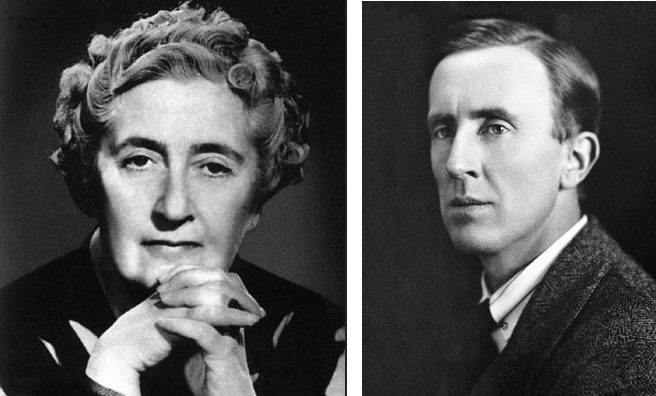
Image: Photo collage of Agatha Christie and J. R. R. Tolkien by Erik Jensen. Photograph of Christie via Wikimedia; photograph of Tolkien via Wikimedia

Post edited to correct formatting errors

A Name for an Amazon

Amazons, the bold warrior women who figure in Greek myths, are imaginary, but the myths about them likely had their origin in Greek experiences with actual fighting women in the cultures around the shores of the Black Sea. Ethnographic and archaeological evidence shows that women who trained with weapons and fought in battle were known in many of the cultures in the region, and the association of mythic Greek Amazons with horses and bows also matches the realities of life on the Black Sea steppes.

Greek literature and art records numerous Amazon names. Most of these names are Greek, and they are descriptive of relevant Amazon traits, such as Hippolyta (“She who sets the horses loose”), Melanippe (“Black horse”) or Antiope (“She who confronts”). These names may have been simply invented by Greek writers in the same way that fantasy authors today concoct suitable names for their characters. There is evidence, however, that some of the Amazon names recorded in Greek art might be actual names from languages spoken around the Black Sea.


Greek vase fragment via the J. Paul Getty Museum (made Athens, currently Getty Museum, Malibu; c. 510 BCE; glazed pottery; painted by Oltos)

This Greek pottery fragment shows Amazons riding into battle against the Greek hero Heracles (who appears accompanied by the god Hermes on the other side of the cup). We can recognize the riders as Amazons from their clothing and the bowcases they carry. Text in Greek letters surrounds them, although it is painted in a dark color that is difficult to see. Most of the text is fragmentary and hard to reconstruct, but one word seems to be a complete name. The text PKPUPES can be read by the head of the leftmost rider, evidently her name.

“Pkpupes,” at first glance, may look like mere gibberish. It certainly isn’t Greek. Many scholars in the past dismissed this and similar texts as nonsense words written by semi-literate vase painters. Maybe “pkupupes” was just an attempt at an onomatopoeic for the pounding of a horse’s hooves. It may, however, be something more significant.

Dense clusters of hard consonants like “pkp” are a common feature of languages spoken today in the Caucasus Mountains east of the Black Sea. “Pkpupes” is, in fact, fairly easy to read as an attempt to render a name in Circassian, a cluster of closely related languages of the northwestern Caucasus, with the letters of ancient Greek, which did not perfectly match up to the sounds of the original language. English doesn’t have all the right letters to easily represent the sounds of Circassian either, but a reconstructed Circassian name that would be rendered in English something like “Pqp’upush” is perfectly intelligible. This name is composed of several elements, the first referring to the body, the next to covering, and the final one connoting worthiness. Altogether, the name would mean “Worthy to wear armor,” a suitable name for a warrior woman.

Greeks had extensive contact with peoples around the Black Sea. Many Greeks migrated to the region, and people from the area also settled in Greece. The painter of this vase signed his name “Oltos,” which is not a typical Greek name, and he may have been an immigrant himself. He and other ancient vase painters may well have known people who spoke foreign languages or had ancestors from the Black Sea region who could recommend appropriately authentic names for Amazon characters. It may even be that some of the obviously Greek Amazon names like Hippolyta or Antiope were not invented by Greeks but are Greek translations of authentic names, in the same way that the names of many indigenous Americans in recent history have been translated into English, like Sitting Bull or Red Cloud.

The Amazons of Greek myth remain mythical, but we have evidence for some history behind that myth, maybe even the names of some real warrior women from the edges of the world known to the Greeks.

Source

Adrienne Mayor, John Colarusso, and David Saunders, “Making Sense of Nonsense Inscriptions Associated with Amazons and Scythians on Athenian Vases,” Hesperia 83, no. 3 (July-September 2014): 447-93.

The Amazing Colors of an Ancient Perfume Bottle

So much of what survives of ancient art has lost the colors it originally held—statues have lost their paint, pigments have faded, textiles have weathered. One of the few materials that holds its color well over time is glass. Just look at this ancient Greek glass perfume bottle and see!

This type of bottle, called an alabastron, was used to store small quantities of valuable liquids like perfumed oil. Like this one, they typically had pointed or rounded bottoms and were kept in wooden or metal stands or hung from loops. The bright colors of this bottle are made from layers of colored glass and gold, bent around one another and blown into shape.

The swirling colors of this bottle almost make me think of 1960s psychedelia. It can be startling to find an ancient object that has kept its color and be reminded that it was created and used in a world that was equally colorful.

Image: Alabastron via Metropolitan Museum of Art (found Greece, currently Metropolitan Museum, New York; 1st c. BCE; glass)

Cults and the Cult of Bacchus

Cults are a staple of modern fantasy. When you need a shadowy organization for your hero to go up against, whether they’re protecting an ancient secret or scheming to bring about the end of days, you can’t go wrong with a cult.

There are plenty of modern examples of secretive organizations that draw in forlorn or gullible people and condition them to submit to the will of charismatic leaders. Such organizations can serve as models for imagining fictional cults, but if you want to write a cult in a fantasy setting, it can be helpful to look at ancient examples. One of the oldest documented examples of a secretive religious organization in conflict with larger society is the ancient Roman cult of Bacchus.

The cult of Bacchus emerged in southern and central Italy in the late third century BCE. It was centered on the worship of the god Bacchus, a version of the Greek Dionysus associated with wine, fertility, and ecstatic release. The Italian Bacchus also borrowed some traits from the Roman god Liber, connected with grapevines, wine, fertility, and freedom. The worship of Dionysus, Bacchus, and Liber was well established as part of the state religion of the Roman republic, which by this time had solidified its control over the whole of the Italian peninsula. The cult of Bacchus was a new religious movement that drew on older traditions but offered its followers new ways of celebrating them.

Followers of this movement practiced their worship in secret, not as part of the state-sanctioned public religion. Only initiated members of the cult were allowed to join in. Unlike traditional Roman religious celebrations, which maintained distinctions between social classes and had separate roles for men and women, initiates of Bacchus included people of all genders and classes who mixed together indiscriminately in their rites. Celebrations were raucous nighttime affairs that featured feasting, drinking, music, and dance.

The Roman elite was scandalized by the popularity of this religious movement. All the surviving sources describing its activity come from this hostile perspective and include lurid suggestions that the Bacchic revelers were practicing magic, engaging in wild sexual frenzies, and scheming at poisonings and other nefarious deeds. Despite these unfavorable sources, there is no reason to think that the cult of Bacchus was actually so outrageous. Seen in the context of the time, we may actually find the cult appearing in a much more favorable light.

To understand the cult of Bacchus, we need to set aside both the hostile attitude of the Roman elite and many of our modern associations with the term cult. While we associate the term today with secretive, manipulative organizations, cult, in its historic use, refers simply to the set of practices that are appropriate to the worship of a particular god or divine entity. All ancient gods received cult from their worshipers, from the official ceremonies for gods of the state to the everyday rituals that attended family and household spirits. Although the cult of Bacchus carried out its rituals in private, there is no indication that the organization was manipulative or coercive, or that members were isolated from the rest of society. In fact, in many ways, the cult offered a positive experience for its members.

Italy in the late third century BCE was recovering from the devastation of the second Punic War. From 218 to 204 BCE, the Carthaginian army led by Hannibal operated largely unchecked in Italy. The effects of war were far-reaching. Many young people from Rome’s Italian subjects were called up to fight in Rome’s legions, some never coming home again. Roman and Carthaginian armies alike ravaged farms up and down the peninsula. In the aftermath of the war, many small farms faced ruin, and a lot of Italian families had little choice but to sell their land to the aristocratic elite at whatever price they could get and move into cities like Rome looking for any work they could find to scrape together a living. Italy in the late third and early second centuries BCE had a vast population of poor people barely getting by, dislocated by war and poverty from their ancestral homes, and resentful of the elite who had come out of the war riding high on plunder and foreign slaves.

The cult of Bacchus offered relief from the pressures of life—if not a hope for a better world, at least a temporary distraction from the troubles of this one. It helped people who had been displaced from deeply rooted ties of family and community find new connections outside the limitations of gender and class. For people who had little joy in their lives and faced a hard daily grind just to eat, the appeal of a celebration full of food, music, and dance was strong. It’s not hard to understand why the cult gained a following in post-war Italy.

It’s also not that hard to see why the Roman aristocracy reacted with such alarm and hostility. The Second Punic War had hit Rome hard. Even though the Romans emerged victorious over Carthage in the end, a generation of potential recruits for Rome’s armies was killed or wounded in the fighting. Rome’s resources were stretched to the limit. What’s more, the war exposed weaknesses in Rome’s hold on Italy. Hannibal’s strategy was to deny Rome resources and fighting power by helping its subjects in Italy rebel. Not all of Italy took Hannibal up on his offer, but enough cities did, especially the Greek cities of southern Italy, to make the Roman elite nervous about their ability to maintain control of the peninsula. Since the cult of Bacchus particularly appealed to the southern Italian Greeks, it doesn’t take much to see why the Roman aristocracy in the years after the war saw disaffected poor Italians gathering together in secret and challenging established social lines as a dangerous thing that needed to be stamped out. The Roman state aggressively suppressed the cult of Bacchus, the first documented example in Western history of a religious movement persecuted by the state.

The cult of Bacchus may not fit the mold of the classic sinister fantasy cult, but understanding the context in which it arose and the forces which drew people to it can help with the worldbuilding for a story in which a cult may not be so benign. Desperate times drive people to find community, relief, and happiness in whatever ways they can. The cult of Bacchus was in reality a benevolent organization that provided much-needed fellowship, but unscrupulous people and organizations can take advantage of the same needs for darker ends.

Image: A scene of Bacchic revelry from a Roman sarcophagus, photograph by Wolfgang Sauber via Wikimedia (currently Anatalya Archaeological Museum; 2nd c. CE; marble)

Barbarian Migrations: The Imaginary and the Real

Previously we considered how large the groups of people who moved around the ancient world actually were and what challenges such large groups faced in migrating from one place to another.

The idea of large, cohesive groups traveling across the map to resettle elsewhere is largely a product of two things: ancient literary conventions and modern historiography. Ancient Mediterranean writers had their own literary habits. Among them was positing large groups of people picking up and resettling elsewhere as a way of explaining cultural relationships (such as, for instance, the legend that the Romans were the descendants of Trojans, or that the Spartans were long-lost kin of the Jews). These stories were not based in any reality but served the literary and political needs of those who told them.

Modern historians of the nineteenth and early twentieth centuries approached ancient history with the assumption that ethnic groups were coherent units with definable traits whose history could be traced across time and space. There was, they believed, a distinct “Gothic” or “Celtic” character that could be identified in literature and art and that marked the movement of whole peoples to replace or subjugate others. These assumptions were grounded in the systems of modern imperialism and the ideals of Romantic nationalist movements, not the realities of ancient history, but they shaped how scholars read ancient literary sources. The idea that there were mass migrations across Europe at any point in antiquity is largely a figment of the modern imagination.

When we revisit the ancient sources and the archaeological evidence, we can identify several different kinds of movement, each of which faced different versions of the problems outlined above and had different ways of dealing with them.

Long-term movement: Many of the “migrations” identified by nineteenth-century scholars are better understood as the result of small groups of people such as families, extended kin groups, or raiding parties taking similar routes over time. Each individual group was small enough to travel without overstraining the resources of the lands they moved through, but many such groups taking the same journey over an extended time period could eventually lead to significant shifts in population and local culture. This kind of movement can be seen for example in the migration of Gaulish warbands into northern Italy in the fifth and fourth centuries BCE and the large-scale shift of populations from northern and western Europe into the southern and eastern Mediterranean in the later centuries of the Roman Empire.

Armies: Other movements did involve large groups of people moving within a short time frame, and are best understood as armies on the march, attended by followers and hangers-on. The frontier peoples of the late Roman period were deeply interconnected with the Roman world. Under their own leaders, they competed for power and wealth in much the same way that Roman armies competed to put their leaders into power. Many of these groups included veterans of the Roman army and had diplomatic relations with the Roman elite. Their movements were directed at political ends, and they drew on the same resources that Roman armies did to manage the logistics of travel. The late Roman Franks and Vandals, for example, functioned essentially as armies with large civilian followings.

Refugees: Other groups of people moved en masse not by choice but because the alternative was worse. Economic and political changes could uproot some people and force them to relocate, whether they were prepared for a journey or not. Those forced to relocate could face extreme hardship, just as modern refugees too often do. We can get an idea of how desperate ancient refugees could be from accounts of peoples crossing into eastern Roman territory in the late fourth century selling their fellow refugees to the Romans as slaves at bargain prices just to feed themselves. Refugees faced the same challenges that traveling armies did, but with none of the same support; these groups probably lost many members along the way to illness, hunger, combat, or enslavement. Refugee groups include the Cimbri and Teutones in the late second century BCE and the Visigoths in the fourth century CE.

Migrating groups in antiquity were mostly small. The idea of barbarian hordes hundred of thousands strong is more fiction than history. Those who did travel in large groups mostly did so either as organized armies drawing on the same logistical resources that other ancient armies did or as refugees driven by desperation who managed the best they could under terrible circumstances.

The idea of massive hordes of barbarians migrating at once across the ancient landscape is a figment of the imagination, but that doesn’t mean that they ancient world was static. People moved, and sometimes they moved in large groups, but any such group faced enormous practical challenges. Some groups were in a position to overcome these challenges; many were not. “Barbarian” peoples did not have any special way of overcoming the practical problems of migration. They solved those problems the same way that other peoples did, in small groups, as armies, or as refugees.

Image: “Battle of Guadalete,” photograph by Christie’s via Wikimedia (1882; oil on panel; by Mariano Barbasán Lagueruela)