That’s a Large-Ass Egg, All Right!

Or: Some History behind Ostrich Riding, Part 2 of 7

Background: I ran into two historical images from California with ostriches used as transportation. That got me wondering about the history of ostrich riding. And that lead me down quite a rabbit hole.

I’ve divided my findings into separate posts (find them with the ostrich riding tag). Warning: serious early history and language nerdery ahead in Serious Academic Voice.

TL;DR – Tracing ostrich riding to a 3rd century BCE tomb find (a statue of Arsinoe II) from Egypt doesn’t hold up. The use of various ostrich products in human material culture dates back thousands of years. A few ancient depictions involve humans handling ostriches; however, extant sources don’t tell us whether ostriches were merely hunted or whether they were also tamed in the ancient world.

Below is the long story.

Continue reading

How Easy It Is to Be Wrong about Early History on the Internet

Or: Some History behind Ostrich Riding, Part 1 of 7

Background: I ran into two historical images from California with ostriches used as transportation. That got me wondering about the history of ostrich riding. And that lead me down quite a rabbit hole.

I’ve divided my findings into separate posts (find them with the ostrich riding tag). Warning: serious early history and language nerdery ahead in Serious Academic Voice.

TL;DR – Tracing ostrich riding to a 3rd century BCE tomb find from Egypt is rubbish, but the concept is, indeed, ancient.

Below is the long story.

Continue reading

The Billion-Dollar Pyramid

150817PyramidWe all know that the pyramids of Egypt were tombs for the pharaohs. (Yes, yes, and landing pads for Goa’uld spaceships; you can put your hands down now.) Thinking about what it took to build them, though, gives us an idea of what else they were.

The construction of the pyramids is a perpetual favorite subject of cranks and crackpots (Lost technologies of Atlantis! Sound waves!). Even among the more reality-bound, there is no end of theories ranging from the mundane (ramps and sledges) to the reasonably plausible (pulleys and levers) to the unlikely but not impossible (poured concrete). No matter what technique we imagine, however, one thing was definitely required: massive amounts of labor.

What most armchair pyramidologists miss about the problem of megalithic construction is that the physics of moving large stones are very simple. Apply enough force to a mass and it will move. Some things can make the application of force easier: ramps, pulleys, rollers, whatever you’ve got, but in the end it’s just a matter of force versus inertia. No matter how you go about building a pyramid, what you need in the end is the same: muscle power and time. With enough muscle power and time you can build pretty much anything, but labor is expensive. The real problem that would-be pyramid builders have to solve isn’t technological, it’s economic. The real question isn’t “How did they build the pyramids?” but “How did they afford the pyramids?”

Continue reading

Labor

150810oxcartThe majority of the stuff that needs to get done in an agrarian society is basic manual labor: primarily farm work, but also things like construction, building and road maintenance, mining, carrying, housework, etc. Any functioning pre-industrial society needs lots of workers to do all that work, but there are many different kinds of workers, some of which are not so familiar to us today. Some of these kinds of workers had it much better than others.

Here’s a list of possibilities, by no means exhaustive, arranged roughly in order from worst to best conditions.

Continue reading

Recommended Reading: Herodotus, “The Tale of the Clever Thief”

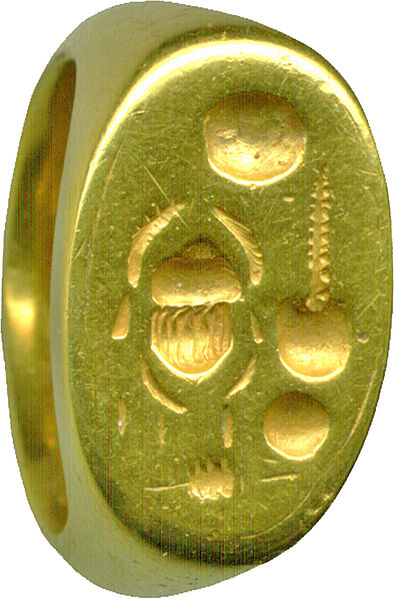
150727ringWe learn to write by reading, and so I’d like to share with you some of the works of classical literature that have inspired me as a writer. There’s no better place to start than with the Greek historian Herodotus. Herodotus’ Histories is my favorite book of all time. I re-read Herodotus like some people re-read Tolkien. “The Tale of the Clever Thief” (that’s my own name for it; Herodotus didn’t give that particular story a name of its own) is one of the most delightful parts of the work.

Herodotus is popularly known as the Father of History. He is also known as the Father of Lies. Both titles are appropriate. Herodotus was the first (surviving) author in the western tradition to write about the past in terms of human actions and motivations, not the deeds of gods and heroes. He was also a storyteller who enjoyed spinning a good tale, even if he didn’t think it was true (and some of the things he did think were true are pretty outrageous).

Continue reading

Living on the Land

A lone river winding through the desert. A pair of wide plains. A fragmented land of islands and mountain valleys. When you’re building a world, the land matters. The land we live in shapes the way our societies work. To see what this means, let’s look at a few examples: ancient Egypt, ancient China, and classical Greece. We’ll be zooming way out and looking at these cultures on a very large scale.

150608Egypt Continue reading