Quotes: That Is a Strange Country

“I would say that [the Russians] are located somewhere near the Baltic Sea. There are old trade routes there, and in our own time it is a territory closed to us. Their installation may be close to the Finnish border. They could disguise their modern station under half a dozen covers; that is a strange country.”

– Andre Norton: The Time Traders

Did Andre Norton just insult Russia? (And yay, Finland was mentioned!)

Norton, Andre. The Time Traders / Galactic Derelicts [omnibus edition]. Riverdale, NY: Baen Books, 2000 [originally published 1958 / 1959].

(This quote comes from my 21 new-to-me SFF authors reading project. Note: A free e-version is available via Baen Books.)

This post has been edited for clarity.

Serving exactly what it sounds like, the Quotes feature excerpts other people’s thoughts.


Q&A: Answer Questions with Book Titles

Quiz time! We pulled questions from a nifty online quiz (the link to which is of course by now lost) that we modified slightly. You’re supposed to answer the questions only by using book titles from your collection. Here goes:

1) Describe Yourself?

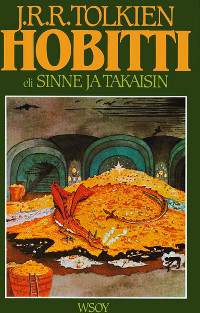
Eppu: Hobitti [The Hobbit in Finnish. Good food, comfy home, good company.]151229Hobitti
Erik: The Hermit of Eyton Forest [I like my woods]

2) What do you feel like right now?

Erik: An Excellent Mystery

Eppu: Bättre och bättre [=better and better; title of a Swedish textbook. ‘Nuff said!]

3) Describe where you live?

Eppu: Quiet: The Power of Introverts in a World That Can’t Stop Talking [‘Cause America can’t seem to wrap its head around silence. In Finland, silence is common and normal. For me, silence = sanctuary.]

Erik: Utopia [I love our house and our little patch of woods.]

4) Where would you go if you could go anywhere?

Erik: The Far Side of the World [New Zealand is on my list right now.]

Eppu: The Anglo-Saxon Chronicles [And come back from the past, too.]

5) Describe you best friend?

Eppu: History of Ancient Rome [This would be the Mister. As the Germans say, Herr Doctor Professor. :)]

Erik: The Age of Bede [My wife the Anglo-Saxonist]

6) Your favorite color?

Erik: The Frogs [The closest I can get to “green.”]

Eppu: The Virgin Blue

7) What’s the weather like right now?

Eppu: Sundiver151229Sundiver

Erik: Cold Days

8) What’s your favorite time of the day?

Erik: White Night

Eppu: Ennen päivänlaskua ei voi [Not Before Sundown in Finnish. This was a tough one; I don’t really have a favorite, nor books with times of the day in the title.]

9) If your life were a tv show, what would it be called?

Eppu: Quiet Influence [Although not sure how many people would find a show on introverts interesting.]

Erik: Antiquity

10) What’s life for you?

Erik: The Historian’s Craft

Eppu: Sense and Sensibility

11) Your current relationship?

Eppu: Arvaa kuinka paljon sinua rakastan [Guess How Much I Love You in Finnish]

Erik: The Truelove
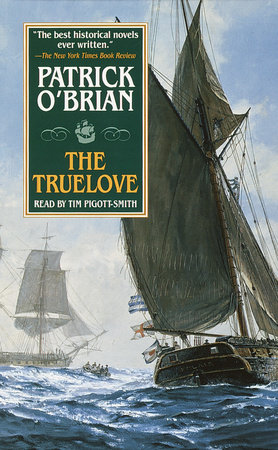
The Truelove12) What gives?

Erik: The Joy of Cooking

Eppu: Cold Days

13) Your future expectations?

Eppu: Home Improvement Guide [Unfortunately. Then again, when it’s done, it’ll be Bättre och bättre again.]

Erik: The Ascent of Man [Or at least the getting up in the morning of man.]

14) You wouldn’t mind…?

Erik: Looking at Greek and Roman Sculpture in Stone

Eppu: Impossible Things [Certain things just aren’t likely to change very fast.]

15) What are you afraid of?

Eppu: Catching Fire [Don’t happen to have any books involving heights.]

Erik: The Fortune of War

16) Your best piece of advice?

Erik: Caveat Emptor151229Caveat

Eppu: Budget Makeovers [Saving money rocks.]

17) If you’d change your name, it would be…

Erik: Henry II

Eppu: Emma [This was a tough one, too. Jane Austen to the rescue!]

18) Thought of the day?

Eppu: Cut the Scraps! [Quilting is fun. :)]

Erik: Hannibal Crosses the Alps [No one thought he could do it, but…]

19) How would you like to die?

Erik: After the Fact [“I’m not afraid to die, I just don’t want to be there when it happens.”]

Eppu: Most Wise and Valiant Ladies

20) Your motto?

Eppu: Simply Scandinavian

Erik: The Barbarians Speak151229Barbarians
21) Your favorite activity?

Erik: Homebrewing

Eppu: Creative Ideas for Organizing Your Home

Images: Hobitti via Wikipedia. Sundiver via Wikipedia. The Truelove via Penguin Random House. Caveat Emptor via Bloomsbury. The Barbarians Speak via Princeton University Press

Q&A is an occasional feature in which we share our responses to quizzes, questions, and quirky ideas for your entertainment.

Leena Krohn on The New Yorker’s Best of 2015

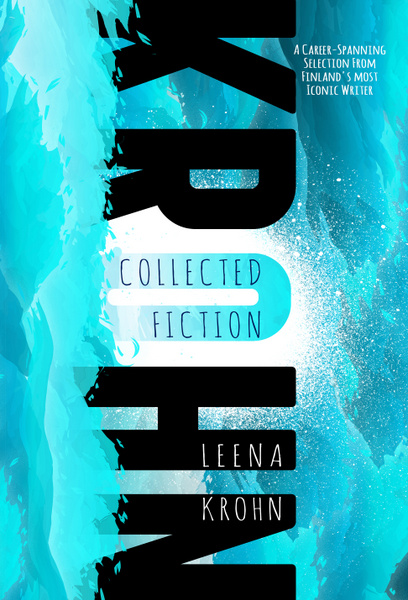
Leena Krohn’s Collected Fiction, an anthology edited by Ann and Jeff VanderMeer, made it onto The New Yorker‘s best-of list!

Cheeky Frawg krohn-cover-largeJoshua Rothman writes of his selection of Krohn for The Books We Loved in 2015 like this:

“I also found myself hypnotized by Leena Krohn, a Finnish writer whose collected stories and novels, rendered into English by many different translators, have just been published as a single volume, ‘Leena Krohn: Collected Fiction.’ Broadly speaking, Krohn is a speculative writer; one of the novels in the collection, for example, consists of thirty letters written from an insect city. (‘It is summer and one can look at the flowers face to face.’) Krohn writes like a fantastical Lydia Davis, in short chapters the length of prose poems. Her characters often have a noirish toughness; one, explaining her approach to philosophy, says that when she asks an existential question, ‘life answers. It is generally a long and thorough answer.’”

Just a week ago, Krohn’s anthology appeared on The A.V. Club‘s Best of 2015 list (along with The Rabbit Back Literature Society by Pasi Ilmari Jääskeläinen). Again, congratulations!

Found via Helsingin Sanomat.

P.S. Try Krohn’s Lucilia Illustris for free, published in December 2015 by Electric Literature.

Image via Cheeky Frawg Books

Star Wars and the Classics, Part II: The Original Trilogy

151216vaseYesterday we looked at how classical literature offers interesting ways of looking at the Star Wars prequel movies. We continue today with the original movies.

Episode IV: A New Hope – Homer, the Odyssey, Books 14-22

Episode IV can be read, from a certain point of view, as an essay in heroism. In particular, we see three different kinds of heroes: the always-was-a-hero, the becoming-a-hero, and the choosing-to-be-a-hero.

Leia is the always-was. She is a hero from the beginning of the movie straight through to the end. We never see her stop being heroic, even when being rescued. She has been part of the rebellion literally since she was born and even the destruction her homeworld doesn’t stop her.

Luke is the becoming. He starts as just a farmboy who dreams of far-off adventure. When he discovers his true heritage he strives to live up to the legacy of his father Anakin the great Jedi. Much is expected of him and he does his best to be the hero that people like Obi-Wan and Leia need him to be.

Han is the choosing-to-be. He’s a smuggler and scoundrel who isn’t in it for the rebellion. He just wants to do a job and get paid. He could have just flown away from Yavin with his hold full of cash and nobody would have been surprised. Instead, he decides to come back and help Luke blow up the Death Star.

The same three kinds of heroes appear in the Odyssey. In Book 14, Odysseus has just made it safely home to Ithaca but is still in disguise, getting the lay of the land and figuring out how to deal with the suitors who have been gorging themselves in his hall. The next few books follow Odysseus as he gathers allies, makes plans, and finally confronts the suitors in the final battle in Book 22.

Odysseus is here the always-was. He is a veteran of the great war at Troy and a cunning warrior. He begins the epic as a hero and never falters. Nothing stops him in his determination to get home and reclaim his place as king. Books 14-22 show him as a steady, crafty commander, biding his time and waiting for the right moment to strike.

Odysseus’ son Telemachus is the becoming. As the epic begins, he is just entering manhood and starting to take his first tentative steps into his father’s old role. For Telemachus, the Odyssey is all about proving that he is a worthy son to a heroic father that he knows only through stories. In this stretch of the epic he finally meets his father and proves that he can live up to his example.

The choosing-to-be hero of the Odyssey is Eumaeus, swineherd to Odysseus’ house and one of the servants who remains loyal to Odysseus, even when his master has been gone for twenty years. The sensible thing for Eumaeus to do would have been to abandon Odysseus and suck up to the suitors, like many of the other servants do, to secure his place in the household when Penelope eventually marries one of them. Instead, he sticks by his old master and helps him take back his home.

Continue reading

Star Wars and the Classics, Part I: The Prequels

151215stormStar Wars takes many of its cues from mythology and classical history. Here’s some recommended reading if you want to see how themes from the classics found their way to a galaxy long ago and far, far away.

Episode I: The Phantom Menace – Homer, the Iliad, Book 1

I can still remember my feeling of anticipation when I first sat in the theatre to watch The Phantom Menace. We’d waited years to get the story of Anakin Skywalker’s fall from grace. We were going back in time to a more civilized age, a golden age of Jedi knights and the sophistication of the galactic republic.

The screen went dark. John Williams’s fanfare blasted from the speakers. The opening text began to scroll up from the bottom. This was everything we had been waiting for!

So what’s this crap about taxation of outlying trade routes? Huh? What is this, Accounting Wars?

The story began. We saw Jedi sitting in a conference room waiting for some cowardly bureaucrats to come and talk turkey. My heart sank in disappointment. (And we hadn’t even gotten to Jar-Jar Binks yet.)

It took many more years and several viewings of Episode I for me to appreciate what George Lucas was doing in this movie. There is a point here and it’s an important one: momentous events don’t start out looking momentous. Terrible things happen because no one is paying close enough attention to stop them when they’re small enough to be managed; only when they roll out of control do people realize what’s happening. Of course the fall of the galactic empire started because of a minor trade dispute and a lonely boy from a desert planet in the middle of nowhere. It could have started in any number of ways, but they all would have seemed just as trivial.

(Mind you, this doesn’t actually make Phantom Menace any better as a movie. It’s still plagued by terrible dialogue, wooden acting, and disturbing racial caricatures. But as a storytelling choice, it’s interesting.)

The classic mythic example of small causes leading to momentous and terrible events is the Trojan War. While pieces of the story are told in many different sources, there’s no single work that covers the entire war. Book 1 of the Iliad, however, puts us in the middle of the action to watch the last act of the war unfold. I’ve written about Book 1 of the Iliad here before, but it’s one of those texts that rewards going back to again and again.

As the Iliad opens, the Trojan war has already been going on for ten years. What we witness here is the conflict between two of the Greek captains, Achilles and Agamemnon. It begins when Agamemnon refuses to ransom a captive woman back to her father. By the end of the book, Achilles has withdrawn his forces from the fighting, which will swing the war in the Trojans’ favor, leading to the near defeat of the Greek forces, the death of Achilles’ friend Patroclus, and Achilles slaying the Trojan prince Hector in madness and grief. The death of Hector robbed the Trojans of their best warrior and sealed the fate of Troy. And it all flows from a dispute over the ransoming of a prisoner from an outlying village.

Continue reading

Two Finnish Authors on The A.V. Club’s Best of 2015

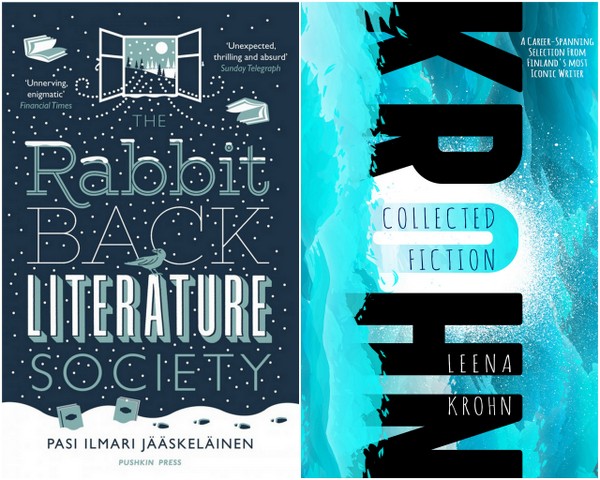
Two Finnish authors made it onto The A.V. Club‘s favorite books of the year. Their Best of 2015 list includes Leena Krohn’s Collected Fiction, a whopper of an anthology (at 800+ pages in hardcover) edited by Ann and Jeff VanderMeer, and The Rabbit Back Literature Society by Pasi Ilmari Jääskeläinen.

Jaaskelainen Krohn Covers

Keeping company to Krohn and Jääskeläinen on the Best of 2015 list “[a]fter a stellar year for the written word” are renowned authors like Ta-Nehisi Coates, Judd Apatow, and Paula Hawkins. Congrats, both!

For a taste of their writing, try Jääskeläinen’s Where the Trains Turn (orig. Missä junat kääntyvät, 2000), published in November 2014 by Tor.com, or Krohn’s Lucilia Illustris, published in December 2015 by Electric Literature.

Found via Helsingin Sanomat.

Images: The Rabbit Back Literature Society via Pushkin Press. Collected Fiction via Cheeky Frawg Books

Quotes: Men Everywhere, Doing Everything

“When we say men, man, manly, manhood, and all the other masculine derivatives, we have in the background of our minds a huge vague crowded picture of the world and all its activities. […] That vast background is full of marching columns of men, of changing lines of men, of long processions of men; of men steering their ships into new seas, exploring unknown mountains, breaking horses, herding cattle, ploughing and sowing and reaping, toiling at the forge and furnace, digging in the mine, building roads and bridges and high cathedrals, managing great businesses, teaching in all the colleges, preaching in all the churches; of men everywhere, doing everything – ‘the world.’

“And when we say women, we think female – the sex.”

– Charlotte Perkins Gilman, Herland

View from a 100 years ago.

Gilman, Charlotte Perkins. Herland. Edited by Kathy Casey. Mineola, NY: Dover, 1998 [originally published 1915], p. 116.

(This quote comes from my 21 new-to-me SFF authors reading project. Note: A free e-version is available on Project Gutenberg.)

This post has been edited for clarity.

Serving exactly what it sounds like, the Quotes feature excerpts other people’s thoughts.

Headcanon: Underground Hydroponics in The Hunger Games World

From time to time, I get sucked into thinking about the pragmatics of fictional worlds. By that I mean all the mundane details of how people lead their everyday lives, starting from the very basic human (or creature) needs like food, clothing, waste management, and social interaction. Not just who takes care of, say, the laundry and when, but where do they go to do it, how do they get there, what kinds of implements are they expected to bring in themselves and what is shared, how long does it take, what physical motions do they go through, is it a solo activity or a joint effort, and the like.

For me as a visual person, often thinking about everyday activities and movement through spaces tumbles into thinking about what exactly do these various spaces look like. It’s a way to add depth and realism into a story – we are physical beings who love tactile experiences and accumulate all sorts of personal possessions, and if a fictional world ignores that, it makes that world fall flat for me. (Hello, Star Trek!)

The Hunger Games is one of the current ones in my mind because of the approaching Mockingjay – Part 2 premiere and because of an article on Colossal I saw about a World War II era bomb shelter in London that has been turned into an underground farm.

Growing Underground Forgotten Heritage Photo Shoot
Growing Underground on Instagram.

The company running the operation, Growing Underground, produces leafy greens like watercress, basil, coriander, and radish in hydroponic beds lit by LED lamps.

Growing Underground Beds Homepage
Growing Underground.

In the The Hunger Games world, the population of District 13 lives in underground bunkers; the above-ground structures were destroyed by the Capitol. In the Mockingjay novel, Collins mentions various spaces like the armory, the laundry, labs, testing ranges, and farms in passing. She describes these spaces mostly just in very generic terms; e.g., the color of the living compartments is white, and we hear of furniture like dressers and conference tables with individual screens, but that’s about the extent of the detail.

Scenes in the movie Mockingjay – Part 1 show the special weapons lab with a shooting range, the hangar, the bunker, and some hospital and apartment rooms, among others, but I don’t think we’ve seen any underground farms of any kind, nor the poultry farm, for example, that was destroyed in the book version of the bombing of 13 by the Capitol.

Mockingjay1 D13 Collage
Clockwise from top: living quarters, cafeteria, and infirmary at District 13. Images via Jabberjays.net.

The Growing Underground photos of their growing beds fit quite well with Collins’s carefully frugal description and the established Hunger Games visual style. So, in my headcanon, even if we haven’t seen them on screen, District 13’s underground hydroponics now look very much like those of Growing Underground.

Out There is an occasional feature highlighting intriguing art, spaces, places, phenomena, flora, and fauna.

Three Mockingjay – Part 2 Trailers

The Mockingjay – Part 2 premier is approaching! I just finished rereading the novel; now it’s time for rewatching. Here are three trailers:

The Hunger Games: Mockingjay Part 2 Official Trailer – “We March Together”

The Hunger Games: Mockingjay Part 2 Official Trailer – “For Prim”

The Hunger Games: Mockingjay Part 2 Official Trailer – “Welcome To The 76th Hunger Games”

Hey, look! We found a thing on the internet! We thought it was cool, and wanted to share it with you.