Quotes: [People Are] Not Isolated or Sensationalized Exceptions

“[…] I wanted to write about people who were seen as freaks, who had been broken out of the Acceptable Mainstream Mold, because […] those are the more interesting characters to show. But I didn’t want to punish them for it.

“And I didn’t want that punishment to be seen as what was valuable about them. […]

“But it wasn’t until the Devil’s West books that I faced head-on what had been simmering […]. I wanted to show those characters as part of the society that created them, not isolated or sensationalized exceptions. More, I wanted to show them as active parts of that society.”

– Author Laura Anne Gilman

Author Laura Anne Gilman talking about how anger (at sensationalizing attitudes and at one novel in particular) has directed her creative work; specifically, to show charcters outside the accepted American norm not as outsiders but insiders.

Gilman, Laura Anne. “The One Book That Piqued My Creative Fury”. Tor.com.

Serving exactly what it sounds like, the Quotes feature excerpts other people’s thoughts.

Tulum, City of Adventure

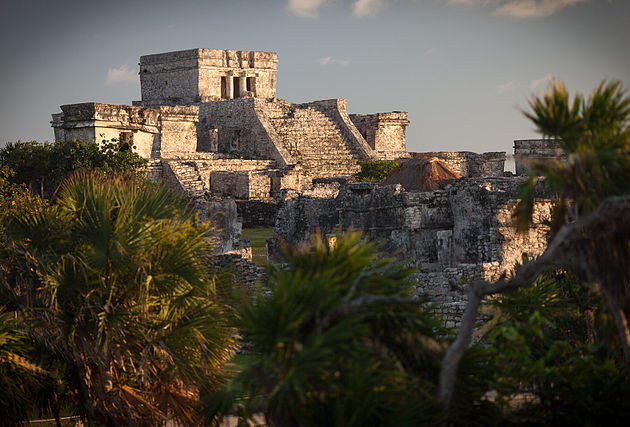
What does a City of Adventure look like? The kind of place where your main characters could stage intrigues in the airy halls of the palace or get down and dirty in the wretched hives of scum and villainy on the outskirts? Where your merry band of player characters could plot their next caper or set up their base while they clear the hinterlands of monsters? Maybe it could look like this.

170130castilloThe city of Tulum is one of the best-preserved ancient Maya cities on the coast of Central America. It served as the principal seaport for nearby inland cities on the Yucatán Peninsula, connecting overland trade routes with seaborne trade in the Carbibbean. The walled city sits right on a cliff overlooking the sea from which beacons may have served as a lighthouse to help guide incoming ships through a gap in the barrier reef. A small sheltered beach between cliffs provided a safe landing. Imagine piloting a trade canoe laden with salt and textiles through a stormy night, trying to keep the beacon fire in sight as the waves crash on the reef all around.

Continue reading

Han Solo: A Smuggler’s Trade – A Fan Film par Excellence

More fan projects from the Star Wars universe! This short, unofficial, non-profit Han Solo fan film really nails the mood and attitude:

Han Solo: A Smuggler’s Trade – A Star Wars Fan Film by Jamie Costa

The story is by Nathaniel Nauert, and the screenplay is by Nauert plus Jared Bell and Keith Allen. Allen also directed the short.

The production did a fantastic job with propping, lighting, sounds, music, and effects. Nice work!

Hey, look! We found a thing on the internet! We thought it was cool, and wanted to share it with you.

How to Helsinki: Concerning Finns

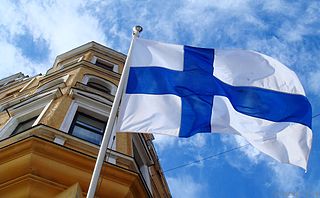
170119lippuWorldcon is in Helsinki this year. As a Finnish-American couple, we are very excited about this! In the coming months, we’d like to offer some practical advice about visiting Finland to our fellow fans who are considering going to the event but haven’t had experience with Finland and Finns before. Maybe we’ll see you there!

Today, we’d like to introduce you to your hosts: the Finns.

Erik here. As an American who’s been married to a Finn for over a decade, I’ve had a lot of time to learn, observe, and make mistakes, so let me offer you the benefit of my personal experience being a foreigner in Finland. Finnish culture can be hard to get a handle on for Americans like me. While some things will feel familiar, especially if you come from small-town New England like me, some of your basic social instincts can also lead to awkward situations. Like any group of people, of course, Finns are all different. There’s nothing I can say that will be true of every Finn you meet, but there are some things worth knowing so that you can be a good guest.

After many years of living between Finland and the US, here’s the best way I can describe Finnish culture: Finland is a small rural village of 5 million people.

Finland used to be a relatively poor, rural country dependent on timber, farming, and fishing. In the past couple of generations, it has become a wealthy, urban, high-tech country, but many Finns have held onto the values and social conventions of their rural ancestors. This is the root of many features of Finnish culture: the village mentality that we are all in this together and we all depend on one another. The rules of Finnish life are grounded in the expectation that you will take into account how your actions affect other people, their time, their personal space, and their responsibilities.

With that in mind, here are some specific dos and don’ts of being a good visitor in Finland:

DO be on time – being late is disrespectful of other people’s time and obligations. Even if it’s just for a casual social event, showing up late in Finland is as rude as not showing up at all in the US.

DO make room for others – when walking on the sidewalk, waiting in line, riding the bus, or anywhere else. Make sure your bag or purse isn’t in anyone’s way, either.

DO line up – and keep the line orderly if you’re waiting for something. Finns in general have a larger bubble of personal space than Americans, so be careful to make sure you’ve found the end of the line.

DO give people space – Finns expect a lot of it and they will give you a lot of it in return. If you’re talking to a Finn and they back away, don’t chase them. They’re probably not trying to get away from you, they’re just resetting comfortable boundaries. (See previous points.)

DO take your shoes off if you visit a private residence – so you don’t track in dirt that your host then has to clean up. Most Finnish homes have places for taking off and putting on shoes right by the front door.

DON’T interrupt – Finnish conversation tends to be slow paced, but people will usually make room for you to speak. Don’t jump in when someone else is talking.

DON’T suggest getting together unless you want to make concrete plans – “We should do lunch some time” is just a casual pleasantry in the US. It’s an expression of general good will with no commitment attached. In Finland it is a commitment to future plans and Finns will expect you to follow through.

DON’T make small talk – if you’re in conversation with a Finn and feel like there’s an awkward silence, don’t try to fill it. For most Finns, silence is not awkward at all, but comfortable. The conversation will start again when someone has something to say.

Another caveat: Finns are also aware of being a small culture in a larger world, especially younger Finns and Finns in the fandom community. In the company of foreigners, they may well make an effort to accommodate a different set of cultural expectations. They will still appreciate you making the same effort for them.

Hopefully this will help those of you heading to Helsinki for the first time. Finland is a wonderful country to visit, especially in the summertime. Being a good guest while you’re there will help you enjoy it to its fullest.

Image: Finnish flag, photograph by Yangtsefly via Wikimedia

In Live and Active Cultures we talk about cultures and cultural differences.
Jyn Erso’s Crystal Necklace DIY-ed

It’s a little over a month since Rogue One came out, and my head’s still firmly in the Star Wars universe. I was therefore delighted to run into this version of Jyn Erso’s crystal necklace:

Jenuine Mom jyn-erso-kyber-crystal-necklace-finis3-768x1225
Jennifer Marx at Jenuine Mom

It’s made by Jennifer Marx at Jenuine Mom – isn’t it great?

I don’t remember there being any gold at the top of Jyn’s crystal, though – an excuse to see Rogue One again, oh boy! 🙂 Nevertheless, this version looks elegant enough to wear every day, not just for cosplay or fan events.

Check out Jennifer’s tutorial for more!

In Making Stuff occasional feature, we share fun arts and crafts done by us and our fellow geeks and nerds.

Quotes: You Have to Let Go of the Old to Begin Something New

“You have to let go of the old to begin something new. But that does not mean it is lost forever.”

– 32nd Mother of the Red Abbey, in Maresi by Maria Turtschaninoff

And the “old” is worth saving – because how else do we learn, transmit our culture, and discuss our values in a world that’s becoming more and more international?

This thought was brought to you by idle musings on various library, archives, and museum collections. Unlike early cultures in our world and peoples of various fantasy worlds, right now we have the luxury of saving unprecedented amounts of our cultures’ material production.

Turtschaninoff, Maria. Maresi. New York, NY: Abrams, 2017, p. 241.

Serving exactly what it sounds like, the Quotes feature excerpts other people’s thoughts.

Being a Spartan

170123spartiateSpartans are renowned as some of the greatest warriors of the ancient Mediterranean world, and with good reason. Sparta had a 3-century streak undefeated on the battlefield (minus the battle of Thermopylae, where they lost only to encirclement by Persia’s overwhelming numbers). They won many of their wars without even a fight because when their opponents saw a wall of Spartan shields coming towards them, they just gave up and ran.

How did they do it? What’s so special about the Spartans?

The exceptional experience of being a Spartan began at birth when a state official judged the newborn baby’s physical health. Only healthy babies were allowed to be raised. Those that were sickly, weak, or had visible birth defects were exposed in the wilderness to die. (Only the children of the kings were exempt from this rule.) At the age of seven, all male Spartans were taken from their parents and put into a state-run education called the agōgē. The agōgē experience was brutal. The boys were trained in hoplite combat while living on meager rations. They slept outside, all year long, with only one cloak. Violence between boys of different age groups was encouraged as a way of toughening them up.

Continue reading

Quotes: Today’s Young People Are Proud to Be Smart and Curious

“What’s remarkable is the way ‘nerd’ is such a badge of honor now. Growing up, I’m sure I wasn’t the only kid who read Spider-Man comics and learned how to do the Vulcan salute, but it wasn’t like it is today. I get the sense that today’s young people are proud to be smart and curious, to design new things, and tackle big problems in unexpected ways. I think America’s a nerdier country than it was when I was a kid—and that’s a good thing!”

– President Barack Obama

Smart and curious people designing new things and tackling big problems is exactly what’s needed at the moment. Proud of my fellow geeks and nerds!

Ransom, Cliff. “President Barack Obama on How to Win the Future: Questions and Answers with Popular Science.” Popular Science

This post has been edited.

Serving exactly what it sounds like, the Quotes feature excerpts other people’s thoughts.

Cold

Keira Knightley performing “how not to dress in the snow,” from King Arthur via IMDb
Keira Knightley as “how not to dress in the snow,” from King Arthur via IMDb

It’s cold outside, at least hereabouts where we are, which always sends my thoughts to the depiction of cold weather and the people who have to cope with it in the media I enjoy. The experience of serious cold weather is one that’s hard to convey to someone who hasn’t lived with it, so perhaps it’s no surprise that while some books, movies, and tv shows get it right, others really don’t.

If you want to get it right in your stories, here are a few things to know about the effects of cold and how to deal with them in pre-modern settings:

Exposed skin is bad. Very bad. Especially skin with lots of blood vessels close to the surface like heads, necks, ears, noses, cheeks, hands, and feet. That’s how you lose heat, and if you lose too much heat, you can start losing body parts, too. If you find yourself out in the cold unexpectedly, the first thing you should do is cover up as much skin as you can.

John Snow realizing he knows nothing about dressing for the cold, from Game of Thrones via IMDb

Layers are good. Layering clothing creates air pockets, which is what keeps heat in. Metal provides poor insulation. Leather and cloth are better. Any cloth will do, but wool is particularly good. Fur is excellent, but if you’re wearing fur for warmth (rather than as a fashion statement), you want the fur on the inside where it can trap air more effectively, not the outside catching snow. For body parts that you can’t cover with clothing, such as your face, a layer of hair or grease will help, but not nearly as much as proper clothing.

Frostbite is VERY bad. Frostbite is not “Ah, it’s a little chilly, I think I’ll stick my hands in my pockets to warm them up.” Frostbite is when ice crystals form inside your body and kill your cells. It is treatable if caught in time, but it’s serious. This is how people lose fingers, toes, even limbs to the cold. Less serious than frostbite is frostnip, when the body pulls blood away from exposed skin. Frostnip is treatable just by warming up, but do not rub! Rubbing frostnipped or frostbitten skin can cause damage to tissues made fragile by the cold.

Dangerous cold doesn’t always feel cold. The experience of frostbite and frostnip doesn’t necessarily feel cold. The affected area may actually feel hot or just numb. This is the result of nerve cells shutting down or dying. In extreme cases, some people suffering hypothermia will start taking off their clothes because they feel overheated, even though they are literally dying of cold. Alcohol increases blood flow to the skin and extremities which makes you feel warmer (and can be useful when you’ve come in out of the cold into warmer surroundings), but can be dangerous when you’re still exposed to cold temperatures.

People are mammals. That means, in addition to some other fun features, we make our own heat. That heat comes from the same place the rest of our energy comes from: food. Cold makes you hungry. Eating keeps you warm.

Cold makes you go. Your body responds to cold by pulling blood away from the extremities into the core. Your kidneys respond to all that blood rushing around by going into overdrive trying to purge excess fluid from your system, leading to a full bladder.

These are all things to remember as you write about characters braving the harsh winter weather. I’ll leave the last word, though, to Magnar of Finn:

Post edited for clarity.

History for Writers is a weekly feature which looks at how history can be a fiction writer’s most useful tool. From worldbuilding to dialogue, history helps you write. Check out the introduction to History for Writers here.