How to Helsinki: Getting around Helsinki

Worldcon is in Helsinki this year. As a Finnish-American couple, we are very excited about this! In the coming months, we’d like to offer some practical advice about visiting Finland to our fellow fans who are considering going to the event but haven’t had experience with Finland and Finns before.

Eppu here. First of all, I should note that I didn’t grow up in Helsinki, so I’ve had to learn the capital region transit system as an outsider. There’s no denying that it’s a big system with many moving parts (see what I did!) and that it can feel overwhelming. However, I find that, overall, information is abundant, the signage excellent, the electronic displays usually accurate, and the services run on time. Navigation or ticketing haven’t been a problem for us. (Note: Unfortunately I can’t competently comment on the success of the accessibility initiatives; I can only say there’s every attempt.)

Edited to add: Please also read Progress Report #5. Worldcon 75 staff have put together a very informational final report with lots of practical tips.
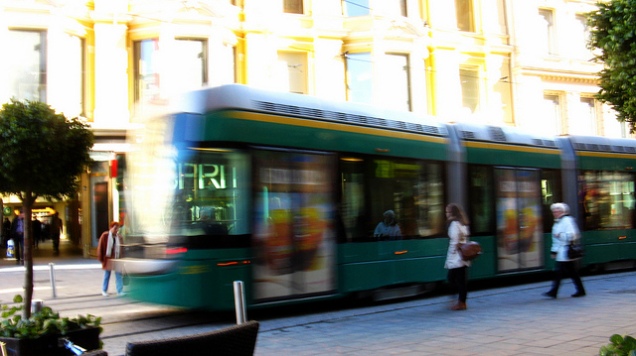
Flickr JElliott Moving in Helsinki

Some general information

The public transit network in the greater Helsinki area consists of local and regional buses, trams, commuter trains, subway (metro), and ferry. The system is managed by Helsinki Region Transport (in Finnish: Helsingin seudun liikenne or HSL; HSL on Wikipedia). Helsinki also provides city bikes for a fee (registration required).

Most lines operate between 5:30 a.m. and 11:30 p.m. or so. Nighttime lines, where they exist, are marked by letter N in the timetables (for example, 415 and 415N), and a higher night fare is charged between 2 a.m. and 4.30 a.m.

The metro sign is a white M in a red square.

Many Finns stay silent in public transit, although in large cities and/or with younger passengers this may not hold true. A Finn might also not ask someone blocking them to move; a wish to pass is often expressed only through body language.


Tickets, please

Always carry a valid ticket. Passengers without a ticket are charged a penalty fare of 80 euros.

There are several different kinds of tickets (single, day, travel card) and ways to get them (bus drivers, tram operators, text message, ticket machines / automats / kiosks).

The ticket machines operate in Finnish, Swedish, or English; payment is by coins, bills, or cards. Below is a how-to video:

Ticket machine. HSL/HRT. Helsinki by Den S

Note that despite what some information pages still say, train conductors no longer sell tickets; passengers need to buy a ticket before boarding.
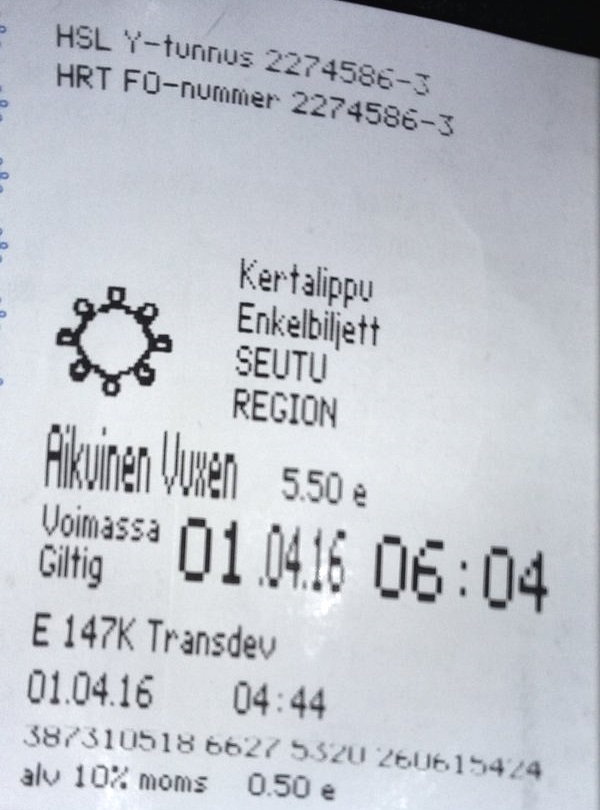
Twitter luckyandangel HSL seutulippu Cropped

Ticket terminology

Paper tickets are Finnish-Swedish bilingual. Note that ticket validity is indicated with 24-hour clock and that dates are written out in day/month/year order.

  • aikuinen (Fin) – adult, grown-up
  • alv (Fin) – value-added tax (VAT)
  • barn (Swe) – child
  • dygnsbiljett (Swe) – day ticket
  • enkelbiljett (Swe) – single ticket
  • giltig (Swe) – valid
  • hyvää matkaa (Fin) – Have a pleasant journey
  • kertalippu (Fin) – single ticket
  • lapsi (Fin) – child
  • moms (Swe) – value-added tax (VAT)
  • region, regionbiljett (Swe) – region, regional ticket
  • seutu, seutulippu (Fin) – region(al), regional ticket
  • trevlig resa (Swe) – Have a pleasant journey
  • voimassa (Fin) – valid
  • vuorokausilippu (Fin) – day ticket
  • vuxen (Swe) – adult, grown-up

The cheapest per-trip option, a travel card, is available from 14 to 366 days—i.e., a minimum of two weeks—so they’re basically the local commuter option.

If planning to make only two trips in one day, a day ticket (valid for 24 hours) is more expensive than two single tickets. Three or more trips justify the cost of a day ticket.

Attending Worldcon 75 members get a free travel pass courtesy of the Helsinki Region Transport. At this writing there’s no more information, but it sounds like a Helsinki internal pass (cf. zones, below). After this post went live, we heard from W75 that it’s a regional pass. Yay!


Zoning out

There are three zones: internal, regional (two zones) and the whole region (three zones). The internal tickets basically cover only one city (Helsinki; Espoo; Kauniainen; Vantaa) or municipality (Kirkkonummi) or transit zone unit (Kerava & Sipoo).
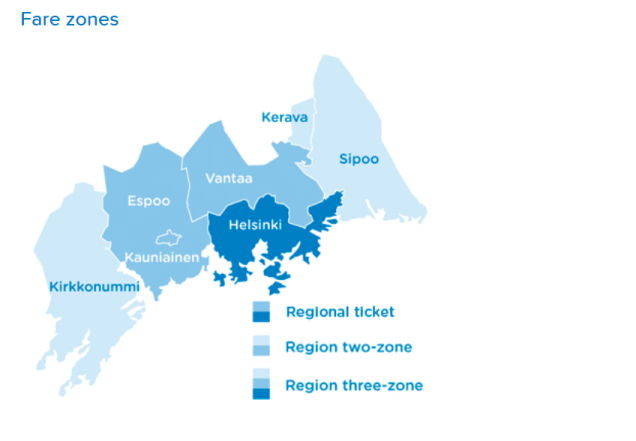
Fare Zones within Greater Helsinki Region Sm

Helsinki central railway station is the biggest transportation hub in the greater Helsinki area. Other hubs include Pasila railway station, Sörnäinen, and Itäkeskus (literally, ‘east center’) in Helsinki, Espoon keskus (Espoo center) and Leppävaara in Espoo, and Myyrmäki and Tikkurila in Vantaa.

Unless your accommodations are in one of the adjoining cities, you should only need internal Helsinki tickets during the con.


Airport transit

At Helsinki-Vantaa airport, there are several local and regional buses in addition to train and taxi services. Trains stop between the two airport terminals and both at Pasila and the main railway station in Helsinki, with several stops in between.

Buses run between Helsinki-Vantaa and the city, ending in the vicinity of the Helsinki central railway station. Lines terminate either on Elielinaukio on the west or Rautatientori (railway station square) on the east side of the station.

For the city center, take either the HSL bus 415 or 615. The newest and fastest connection is the Ring Rail Line (I and P trains). Both the HSL buses and the airport train require a regional ticket (seutulippu). The private Finnair City Buses run between the airport and Elielinaukio.


Finding the spot

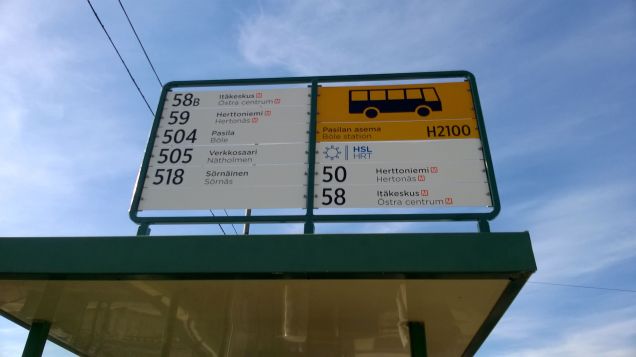
Bus and tram stops have both a unique 4-digit number and a name in both Finnish and Swedish. The stop number includes one or two preceding letters which indicate(s) the city or municipality of the stop (E for Espoo, H for Helsinki, etc.). For example, Pasilan asema / Böle station is H2100 in the photo below.

In practice, only the stop names are relevant, but you can use the stop numbers, too, with the Reittiopas route planner (see below).
HSL pasilan_pysakki

Stops and departure bays display a sign with the route number(s) and destination(s) for the line(s) that use that particular stop. A small metro sign (white M in a red square) indicates that that line feeds to the metro.

Many of the stops also have transit maps and printed schedules. They are good for basic route finding if you know where you’re headed.

Electronic timetable displays at stops and terminals show either real-time or scheduled arrival / departure times for the line(s) serving that stop. Inside vehicles they typically display the route number and the name of the next stop.

You can also check out possible routes and options ahead of time with the Journey Planner (Reittiopas) in Finnish, Swedish, or English. Plug in your destination street address or attraction name and choose your preferred method and route; you can also adjust the amount of walking required or number of transfers in the settings.

Pertinent destination or stop names for Worldcon 75 are Helsinki-Vantaa airport (for which the route finder uses terms lentoasema or Helsinki-Vantaa airport T1-T2 corridor or combinations thereof), Helsinki railway station, Pasila or Pasilan asema (for Pasila railway station), and Messukeskus.

The Google Maps public transit directions also seem ok to me, but I haven’t used them often enough to comment on their reliability.

Note that the old Pasila train station is being demolished and a new one being built during the con. I haven’t personally been there, but on the basis of every newspaper photo I’ve seen it looks like signage and information on where to find connections, platforms, etc., is plentiful.


How to put a stop to it

The metro and commuter trains stop at every station. Enter and exit through any open door.

However, buses and trams only stop when requested. It is customary to enter through the front and exit through the middle or back doors. (People with accessibility issues may use the front door or middle door on low-floor buses both to enter and exit.)

At a bus stop, give a clear sign to the driver by holding your arm out to the side. Keep holding your hand out until the driver signals to show that s/he is going to stop.

Trams typically stop when there are passengers waiting. If the stop is shared by several routes, however, raise a hand to request that your tram stops to pick you up.

To exit at your stop, press the Stop button on the grab bars. (Note: Tape strips like some American buses use, for example, do not exist in Finland.) Do it early enough to give the driver time to stop safely. In fact, it’s not unusual to see people signal for a stop almost as soon as the bus or tram has left the previous stop.


What if I want to talk to someone?

The city of Helsinki tourist guides, the Helsinki Helpers, stand ready to answer questions until the end of August. Find them in their distinctive lime green vests on the inner city streets and cruise harbors. There’s also the Info Container tourist info kiosk on Keskuskatu next to Ateneum Art Museum (link to a map).

At or near Messukeskus, where you’ll be dealing mainly with hospitality workers or fellow fen, you will be in the best of company and are bound to find help, but Helsinki residents in general are used to tourists, too. Do not hesitate to ask passers-by for help if you need it. Many Finns, even if they tend to be reticent or shy of their English skills, are well-informed, eager to help, and give practical advice.


An outsider’s perspective

Erik here. As a foreign visitor, I’ve always found Helsinki quite an easy city to get around. The city center is compact and easily walkable, if that’s your preferred mode of transportation. If not, there are many good public transit options, as Eppu has explained. As with other parts of Finnish culture, there are some local details about getting around that may confuse you or not be obvious if you’re used to American cities. Here are a few things to keep in mind when you visit Helsinki:

  • Public transit has a bad reputation in some parts of the US. This does not apply in Finland. Finnish public transit is clean, modern, efficient, and easy to use. You’ll see everyone from parents with little children to business executives on their way to meetings riding the trains, buses, trams, and subway in Helsinki.
  • Always cross the street at a marked crosswalk and always obey the Walk/Don’t Walk signs. Even if the street is empty, don’t cross against the lights. This isn’t just a matter of courtesy, it’s also for your safety. Finland is a very law-abiding nation and drivers expect pedestrians to follow traffic signals. If a driver has a green light, they may not look out for pedestrians crossing the road in front of them. In Helsinki, unlike in many American cities, the buttons for crosswalk signals actually work.
  • In many places, you’ll find the sidewalk divided into two lanes, one for bicycles and the other for foot traffic. The lanes may be marked with painted symbols (a bicycle or a pair of walking figures), or the sidewalk may be partially paved, partially cobblestone (bicycles on the pavement, walkers on the cobble). Try to stay in the appropriate lane. This is also a matter of both courtesy and safety. There are a lot of bicycles in Helsinki and it’s both rude and dangerous to get in their way.
  • If there isn’t a marked division on the sidewalk, it’s good manners to stay to the right so that other people have room to get by you.
  • Turning right on a red light is not allowed anywhere in Finland, which is useful to know whether you’re driving or just walking around.
  • Few stores in Helsinki have public toilets and those that do may charge a fee. But free public toilets are available around the city. Look for dark green metal sheds on sidewalks and in parks, about the size and shape of a newsstand. These are free, clean, and kept in good condition.
  • As in many other European cities, look for street signs at the corners of buildings, not on free-standing posts.
  • Because Finland is a bilingual country, all road signs and many informational signs are posted in both Finnish and Swedish. Many places and neighborhoods around Helsinki also have names in both languages. Sometimes it’s obvious—it’s not hard even for an English speaker to guess that Eerikinkatu and Eriksgatan are the same street. Others are not so easy to guess. Without a little linguistic knowledge it can be hard to know that Ruoholahti is the same as Gräsviken. The announcements in public transit are also bilingual (occasionally trilingual, with English following Finnish and Swedish).


Online information for getting around in Helsinki

Any additional tips? Do share!

Images: Moving in Helsinki by J.Elliott on Flickr (CC BY-NC-ND 2.0). HSL seutulippu, detail, by luckyandangel on Twitter. Fare zones screencap from HSL “How to Use Public Transport”. Pasilan pysäkki by HSL.

This post has been edited to add resources by Worldcon 75 and correct the type of HSL pass given to W75 members.

In Live and Active Cultures we talk about cultures and cultural differences.

Quotes: When Stories Clashed, One Had to Be Eliminated

“One way or another the story was always about one story moving against another. When stories clashed, one had to be eliminated. That was the story of people. The government moved against the people. The military needed to take over a land or another resource because people only had limited value as a resource. The authorities burned down villages, separated families, forced them into labor or battle or sex. Men, women, children faced elimination so they ran away, ran away, ran away.”

– “The Volunteer” by Maurice Broaddus

This excerpt comes from a speculative short story, but it’s all too realistic. Sadly it seems that the current trend of whitewashing western history is nothing but the latest round of history-shaping through the shaping of people’s stories.

Doctor Who Thin Ice Gif 3of3

Doctor Who: “History is a whitewash.”

(From the Doctor Who episode “Thin Ice,” s. 10, ep. 3, written by Sarah Dollard.)

And when I say current, I mean roughly the last 100-150 years, because we’re presently dealing with not just the attitudes immediately surrounding us, but also with those of the latest two or three generations—history handed down to us by our parents and grandparents.

Nonetheless, pretty much as long as there’s been written history, we have references to various groups (re)framing other peoples‘ stories to legitimize conquest, enslavement, or other kind of dominance, or sometimes as propaganda against current (or past) adversaries.

Broaddus, Maurice. “The Volunteer.” In The Voice of Martyrs. Greenbelt, MD: Rosarium, 2017, p. 107.

Image via Ninon / amanitacaplan on Tumblr

Serving exactly what it sounds like, the Quotes feature excerpts other people’s thoughts.

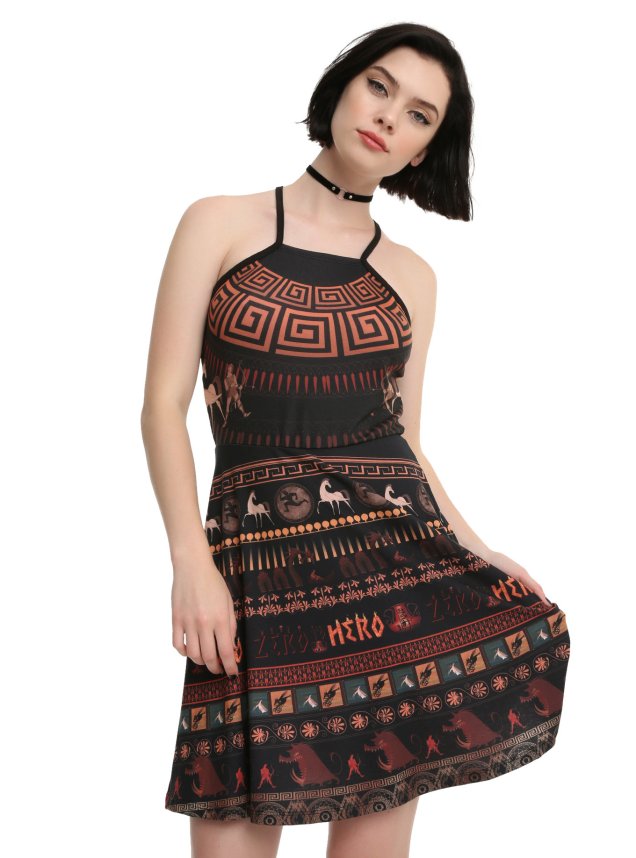
Disney’s Hercules Made into a Dress Mimicking Ancient Greek Pottery

Hercules and Hercules: Hero to Zero, Disney’s animated stories based on the Heracles myth, are now available to wear. Sort of.

HotTopic Hercules Dress1
Disney Hercules Pottery Dress from HotTopic

“You’ve probably heard of Disney’s Hercules… he’s kind of a big deal. This fun pottery montage design dress includes Hercules performing various feats of strength. The pottery banner reads ‘From Zero to Hero’ around the skirt.”

HotTopic Hercules Dress2
Disney Hercules Pottery Dress from HotTopic

I don’t typically care for merchandise based on superheroes or animated characters. This dress is kinda neat, though, as far as the print design goes. The material, however, disappoints: 95% polyester and 5% spandex. Wearing what’s essentially a plastic bag has no appeal to me at all.

Found via Fashionably Geek.

Out There is an occasional feature highlighting intriguing art, spaces, places, phenomena, flora, and fauna.

Know Your Barbarians

The word “barbarian” today conjures a fairly specific image: a large, muscular man or woman wearing leather or furs hefting an enormous weapon. They are ragged and dirty and if they have any kind of organization, it is as a rabble of warriors following whoever happens to be the strongest. This image has its roots in classical Greek and Roman literature, but Greco-Roman ideas about barbarians were broader and more complicated than this.

Greeks and Romans both had complicated relationships with the outside world. The economy of ancient Greece depended on foreign trade, especially with Egypt, but Greece was also on the northwestern frontier of the Persian empire, which often threatened Greek cities or interfered in their internal politics. Rome was an expansionist empire with ambitions of conquering the whole world, but the strength and stability of the empire depended on integrating conquered peoples into Roman culture.

Out of these historical experiences, Greek and Roman writers, artists, and philosophers developed a wide repertoire of narrative models for describing other peoples. These narratives ranged from the nuanced and admiring to the stereotyping and pejorative. “Barbarian” could mean many different things in different times and contexts. Among this repertoire, there were conventional archetypes that authors and artists could draw on and expect that their audience would recognize them.

These archetypes were nebulous conglomerations of tropes and stereotypes, not always consistent and liable to be manipulated, tweaked, and subverted in individual works of art or literature. They could be reduced to caricature or filled out with individual details. They functioned much like modern national and ethnic stereotypes. Imagine the caricature version of a British gentleman, replete with bowler hat and umbrella. We might expect such a character to have certain typical qualities, both positive (unflappable, chivalrous, witty) and negative (stodgy, proud, insensitive) and engage in typical behaviors (sipping tea, playing polo, driving a Jaguar). Of course, stereotypes don’t have to be followed. A Brit in a bowler hat with an umbrella may also turn out to be a tongue-tied chocoholic who raises miniature goats and likes to watch telenovelas, but the author who creates such a character and the audience that encounters them will recognize how the standard tropes have been played with.

Greeks and Romans had two principal archetypes for barbarians. One was based on small, materially poor, less well organized cultures mostly found to the west or north, such as Scythians, Thracians, Gauls, Germans, Iberians, Britons, and Dacians. The other was based on large, wealthy, sophisticated cultures mostly found to the east or south, such as Egyptians, Persians, Phoenicians, Lydians, Carthaginians, and Etruscans.

The northwestern barbarians are the ancestors of the modern “barbarian” image. They were portrayed as violent, ignorant, savage, and lacking in technology and social organization. They had no idea how to behave in a civilized society and were almost like wild animals. They lived in poverty and with barely any kind of government except the ability of the strong to impose their will on others. They could also be shown with good qualities, such as generosity and honesty. The were the original “noble savages,” ignorant of the benefits of civilization but also uncorrupted by its temptations.

The southeastern barbarians were the opposite. They were portrayed as weak, decadent, devious, overwhelmed by luxury and tangled in arcane social hierarchies. They had given in to the corrupting effects of civilization and overindulged in every kind of physical pleasure. They lived like slaves under the rule of despotic tyrants, but they were so accustomed to the comforts of luxury that they lacked the will to resist. They could have positive qualities as well. Their cultures were ancient and sophisticated, rich in accumulated knowledge. We don’t have a good term for the opposite of “noble savages,” but we might call them “depraved sophisticates.”

Central to both of these archetypes is one of the key values of Greco-Roman society: self-control. The southeastern barbarians displayed too little of it, giving in every kind of indulgence and unable to resist the rule of a tyrant. The northwestern barbarians, by contrast, were too willful, unable to subordinate themselves to the structures of law and social order. By creating these archetypes, Greeks and Romans positioned themselves in the middle—sophisticated enough to enjoy the benefits of civilization, but strong enough to resist its corrupting effects.

Both of these archetypes have come down into modern literature. The northwestern barbarian has become the standard modern “barbarian,” but aspects of it can also be seen in modern Western stereotypes of Africans, African Americans, and Native Americans. “Darkest Africa” stories about wild cannibal tribes dumbfounded by modern technology and scientific knowledge play upon the same images of violence, savagery, and technological ignorance that Romans applied to the Gauls and Germans. The southeastern barbarian formed the basis for romanticized Western depictions of the Islamic world, China, and India. “Arabian Nights” fantasies of scandalous harems and treacherous palace politics, ancient secrets and fabulous treasures hidden in the twisting back streets behind markets filled with spices and gems evoke Greek tales about Egypt and Persia.

These archetypes have also found their way into fantasy and science fiction. Tolkien’s Elves reflect some of the more positive southeastern qualities of wisdom and sophistication while his Orcs display the violent, fractious, bestial traits of the northwest. Star Trek‘s Klingons and Romulans represent the tropes of warlike honor and treacherous sophistication. The people of Westeros in A Song of Ice and Fire and Game of Thrones face the rugged, wild, disorderly peoples of the north and the rich, old, devious kingdoms of the east.

Once you know your barbarians, you’ll recognize them everywhere.

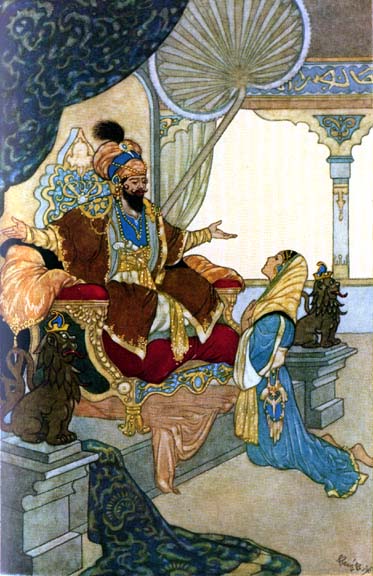
Images: Hyboria, by Yan R. via Flickr. Sultan from the Arabian Nights, by Rene Bull via Wikimedia.

History for Writers is a weekly feature which looks at how history can be a fiction writer’s most useful tool. From worldbuilding to dialogue, history helps you write. Check out the introduction to History for Writers here.

Mistaken Identity: No Female Dwarf Love in Warcraft: The Beginning

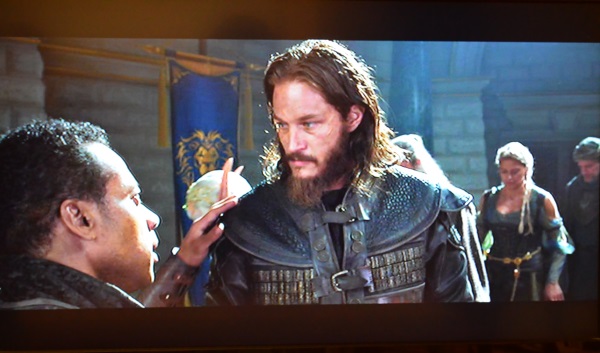
I mentioned that we re-watched Warcraft: The Beginning, the movie based on the MMORPG World of Warcraft. I had forgotten that in a council scene in Stormwind, there’s a short glimpse of a woman who looks like she might be a Dwarf. Here’s a screencap:

Warcraft The Beginning Council Scene Sm

She’s at the right hand of the screen, walking towards Anduin Lothar (the prominent man in the middle). And with a DVD, you can of course stop and check out details you miss at the theater. Who knows, I thought, it might lead to cosplay in real life or a transmog in game!

I was pretty excited, because female Dwarves are my absolute favorite race / gender combo to play in WoW. (I love female Dwarf cosplay and fan art, too!)

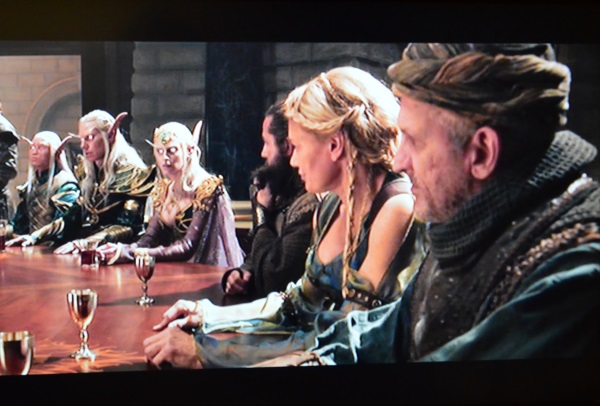
Anyway, the WTB DVD has a few extras including deleted and extended scenes, among them this council scene. The woman in question even has a few lines. Hooray! Here’s a screencap from the extended scene:

Warcraft The Beginning Council Scene Extras Sm

Alas, I was triply disappointed. As it turns out, not only is she unnamed, she’s a human woman, not a Dwarf. Adding injury to insult, they had to go and cut her speech.

While it was great to see additional female faces (because the, shall we say politely, scant amount of women in the movie is frustrating), it’s getting really, really tiresome to witness women’s performances end up on the cutting room floor in favor of another 30 seconds of impersonal, wood-faced clones of tin soldiers whacking at each other en masse.

Here there be opinions!

Rating: Leverage, season 4

We’ve been rewatching and rating Leverage and we’ve gotten up through season 4. (For more on how our rating system works, see here, which also covers season 1 of Leverage.) Here’s what we thought.

Leverage, season 4

  1. “The Long Way Down Job” – 5
  2. “The 10 Li’l Grifters Job” – 3
  3. “The 15 Minutes Job” – 8
  4. “The Van Gogh Job” – 6
  5. “The Hot Potato Job” – 10
  6. “The Carnival Job” – 5.5
  7. “The Grave Danger Job” – 8
  8. “The Boiler Room Job” – 10
  9. “The Cross My Heart Job” – 8.5
  10. “The Queen’s Gambit Job” – 4
  11. “The Experimental Job” – 8
  12. “The Office Job” – 1.5
  13. “The Girls’ Night Out Job” – 8.5
  14. “The Boys’ Night Out Job” – 6
  15. “The Lonely Hearts Job” – 6.5
  16. “The Gold Job” – 7
  17. “The Radio Job” – 4
  18. “The Last Dam Job” – 6

Leverage makes a jump in this season from last season’s average of 5.6 to 6.4. Despite a few poorly-performing episodes dragging down the average, there are a lot of gems this season that show off the skill of the writing team and the versatility of the cast. This season’s episodes continue to experiment with the form, such as “The 10 Li’l Grifters Job,” a Christie-esque murder mystery, the parallel stories of “The Girls’ Night Out Job” and “The Boys’ Night Out Job,” and “The Office Job,” which is just The Office with our heroes blundering around in it. Some of these efforts pay off; others, not so much.

The worst episode of the season is “The Office Job” at just 1.5. Maybe if you’re a fan of The Office you’ll enjoy this, but we’re not, and it just doesn’t work as a Leverage episode. “The 10 Li’l Grifters Job,” “The Queen’s Gambit Job,” and “The Radio Job” don’t work very well as episodes, but they all have their moments. Like last season, season 4 also has another half-hearted attempt at an arc which really isn’t worth the trouble the writers went to in setting it up.

On the other hand, we get two brilliant 10s out of this season: “The Hot Potato Job,” in which the crew rescues a bio-engineered super potato from an evil agri-corp, and “The Boiler Room Job,” in which our heroes have to figure out how to scam a scammer who knows all the scams in the book. Both of these episodes pit the characters against formidably smart adversaries who keep them on their toes. Besides these two, there’s also a good selection of 8s and 8.5s

There’s also an oddity this season: “The Van Gogh Job,” which we rated a 6. The two of us usually give episodes pretty close to the same rating, so when an episode rates a 6, that usually means we both gave it a 3 on our scale of 1 to 5. For this episode, though, we were poles apart: one 5 (because it’s a powerful emotional story that lets the main cast show off their range by playing entirely new characters) and one 1 (because it’s just not a Leverage story and there’s no con to watch unfold).

Any Leverage fans out there want to weigh in? Got a different pick for the best or worst episodes of the season? Let us know in the comments!

Image: Leverage cast via IMDb

In the Seen on Screen occasional feature, we discuss movies and television shows of interest.

Medieval Advice: No One on Their Right Mind Should Sleep Lying on Their Back

Advice books are nothing new. Here’s an example from late Medieval Europe:

“Those who have weak stomachs should sleep face down, for it will aid digestion and will not allow phlegm to accumulate through the increase of natural heat which stiffens the harmful humors. Moreover, it is extremely helpful to sleep at first on the right side, then on the left. No one on their right mind should sleep lying on their back.”

– Bartolomeo Platina, De honesta voluptate et valetudine (c. 1474)

(Translation by Erik Jensen)

Screencap Lancelot-Grail BLib Add MS 10293 f283r

This rather strongly worded hint is found in a Latin-language cookbook De honesta voluptate et valetudine by Bartolomeo Sacci (1421-1481; better known as Platina). Platina’s work was published c. 1474, and is often called the world’s oldest printed cookbook. It’s more than a collection of recipes, however; it also included his reflections on health, healthy habits, and physical activity, for instance.

A scanned version in Latin (with full record) is available through the Rare Book and Special Collections Division of the Library of Congress.

As a side-sleeper, I (very non-seriously!) agree that sleeping on your back can’t be good for you. All of those wicked humors must then be free to wander around your body, you know… 😉

Image: Lancelot-Grail (The Prose Vulgate Cycle), Lancelot sleeping in a pavilion having killed the owner who lies outside, screencap of Add MS 10293, folio 283r via British Library (northern France; early 14th c.; illustration on parchment)

Some things are just too silly not to share!

NYC Subway Library Offers Free Reads This Summer

Subway riders in New York City are in for a treat this summer: e-books, e-shorts, and excerpts from full-length books are available in subway stations for free download.

This six-week Subway Library promotion comes from the cooperation of the New York Public Library, Brooklyn Public Library, and Queens Public Library with the Metropolitan Transit Authority and Transit Wireless.

The e-books and short stories come from the NYPL’s permanent collection, while excerpts have been made available by big-name publishers (including Hachette, HarperCollins, Penguin Random House, Plympton, and Simon & Schuster).

Along with the free reading, there is a social media competition, and a special Library Train will alternate running along the 6th and 8th Avenue lines (E and F trains). The latter has a car decorated to look like the Rose Main Reading Room inside the 42nd Street branch of the NYPL.

Publishers Weekly Subway Library Train Interior

Read more about and browse the free selection at the Subway Library website!

Found via Tor.com and Publishers Weekly.

Image: interior of Subway Library train car by NYPL via Publishers Weekly

Out There is an occasional feature highlighting intriguing art, spaces, places, phenomena, flora, and fauna.

Quotes: Women’s Emotional Lives Do Not Revolve around Men

“It strikes me as unusual and as noteworthy that we should see two such dissimilar films [Moana and Arrival] foreground so strongly connection between women across generations within a family. To acknowledge that women’s emotional lives do not revolve around men, and also acknowledge a strong family component, without reducing the female characters to people who have no emotional lives outside their family concerns.

“These films are also really good speculative fiction. So I recommend them.”

– Liz Bourke

ALL. OF. THIS!

SO. MUCH!

Bourke, Liz. “Sleeps with Monsters: Intergenerational Female Influences in Arrival and Moana.” Tor.com, May 23, 2017.

Serving exactly what it sounds like, the Quotes feature excerpts other people’s thoughts.