Release Date for the Murderbot Series Is Announced

In a press release last week, Apple TV+ announced the release date for their Murderbot adaptation. Yay! (The last I blogged about the series wasn’t even a year ago, so the production is moving right along…! Anyway.)

The first two installments of the 10-episode series will be streamed on Friday, May 16. This double feature will be followed by new episodes every Friday through July 11, 2025.

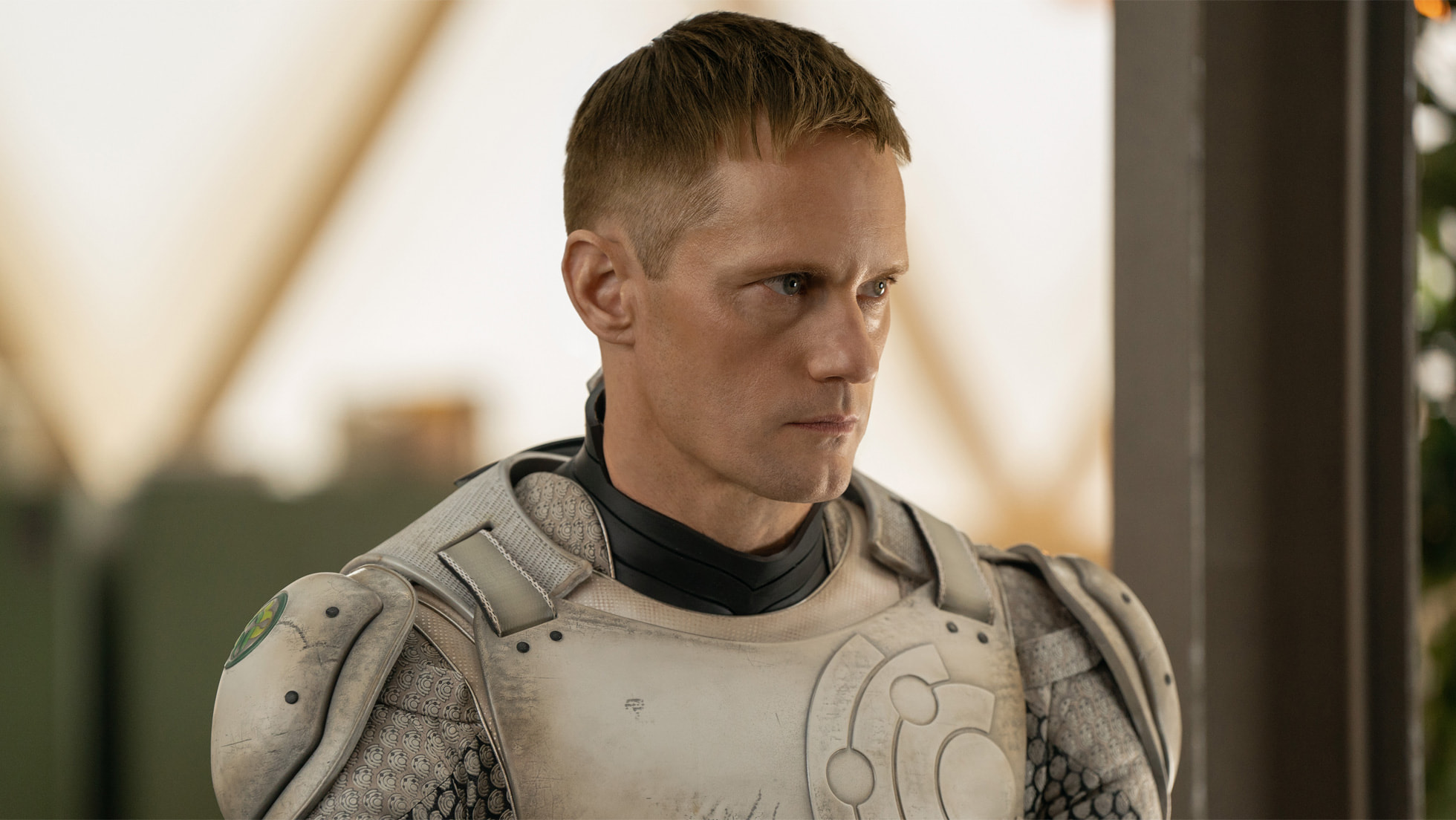
They also released the first two photos of actor and executive producer Alexander Skarsgård as Murderbot, one with helmet on and the other with helmet off.

Apple TV Murderbot Skarsgard2
Apple TV Murderbot Skarsgard1

There really isn’t much detail in these photos; I wish there was a little more. Stylistically they’re not too far off of what I imagined on the basis of the books, except that Murderbot’s armor looks too flimsy. (Maybe they’ve written in a reason for that?)

This February’s press release also describes the series as a comedic thriller, which is interesting in itself. Yes, there are comedic elements, and yes, there is suspense and combat—in fact, I remember being flabbergasted when Murderbot exploded into action literally on page two of All Systems Red. I mean, it wasn’t a surprise that some fighting would be involved, but that quickly? It was an unusual attention-grabbing move to barely introduce your main character, never mind the world, before sweeping your readers into a fray with large hostile life forms with big teeth. Not to mention the trouble at the DeltFall survey site and the threat of EvilSurvey that steadily mounts through the book. Makes me wonder exactly which aspect, the comedy or the thrill, has Apple TV decided to focus on, or if both feature equally, whether they’ll be able to pull off a nice balance.

The IMDB entry for Murderbot reveals another two tiny tidbits: there will be a spaceship named Twodor and a named side character Venenek, neither of which appear in Martha Wells’s original writings. I’m sure IMDB will fill in more info as the release draws nearer.

One thing is sure: this spring will be a great time to re-read Murderbot. Not that there’s ever a bad time. 🙂

Images via Apple TV+

Three Years of War in Ukraine

Today marks three years since the beginning of Russia’s needless and embarrassing three-day special operation war in Ukraine. I very fervently wish I had been wrong about the length of the conflict.

Flickr Oleksandr K IMG_6390

As a Finn, it’s a little bewildering to think that technically our neighboring country is at war, for the fighting is so distant, literally a thousand kilometers away. Or was initially; as the years have gone by, action has been inching closer.

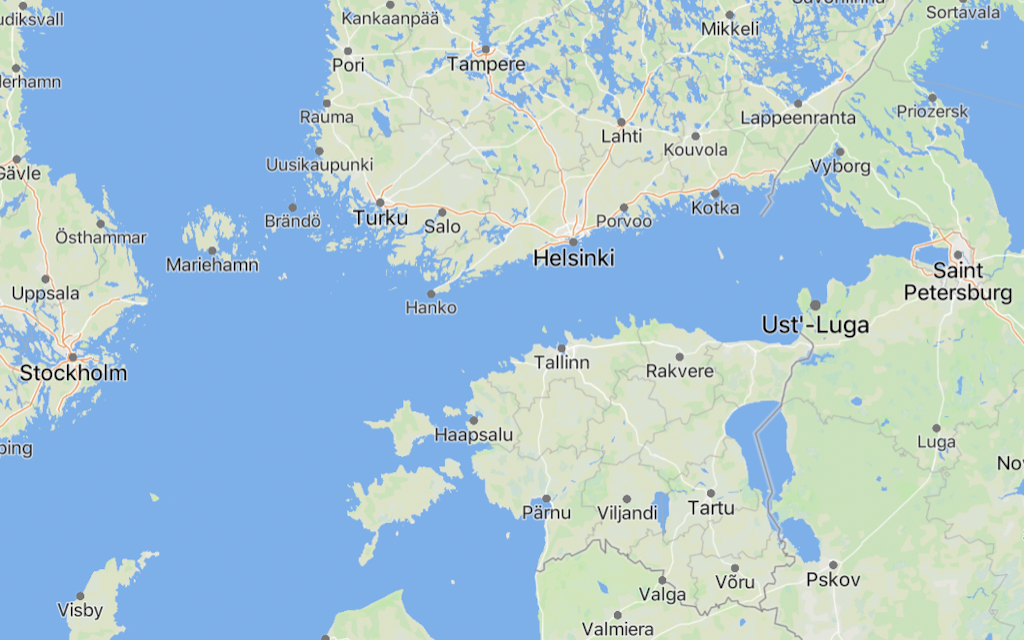
For one, Ukraine has started striking at targets within Russia. The closest target facility to us (so far, I think) is in Ust-Luga on the Gulf of Finland (its seaport handling oil and gas has seen more than one drone hit). That’s some 200 km / 130 miles as the bird flies from Helsinki—not that far away, really.

Mapcarta Baltic Sea w Ust-Luga

For another, there’s increased harassment outside active conflict zones. The biggest change in our neck of the woods came after Finland’s record-fast NATO membership in April 2023. Russian planes have a long history of breaching Finnish airspace from time to time, either as a test or out of boredom, or I don’t even know why. That’s nothing new, and they’ve continued the habit. In addition, now we and our European allies are facing acts like suspected potential sabotage of undersea cables and other forms of attempted hybrid influencing—break-ins at water treatment plants or reservoirs, unidentified drone sightings, hacking of computer systems, instrumentalizing of migrants heading to the EU, incendiary parcels, and GPS jamming, among others.

Reportedly, this type of disruption has been called “cognitive warfare”. The feel I get is that at the national level this sort of pestering is largely seen as an attempt at provocation, an old tactic we have some experience with.

From my point of view, the conflict in Ukraine feels like a proxy war. Their ability to mount an effective defense keeps the rest of us on the perimeter of Russia’s ambitions safe—or if not safe, exactly, at least safer and at least for now. As awful as it is, I kinda want the war to go on longer, because it engages Russia’s forces and focus in one place; when it ends, they will again have the resources to plan “special operations” elsewhere. Continuing conflict gives us time to update our defenses and channel more help to Ukraine.

But at the same time, I definitely do not want the war to continue. It’s dreadful, and it needs to end, with Ukraine’s independence intact. Please and thank you.

Images: Field in Ukraine by Oleksandr K via Flickr (CC BY-SA 2.0). Map of Ust-Luga on the Baltic Sea via Mapcarta.

This post has been edited for clarity.

A Cat to Keep You Safe at Sea

Cats (or at least most cats) may not like water, but this one might have kept an ancient sailor safe on the waves.

Scaraboid, photograph by The Trustees of the British Museum. Outline illustration and collage by Erik Jensen. (Found Naukratis, currently British Museum; 600-570 BCE; glazed composition)
(CC BY-NC-SA 4.0)

The cat is part of the decoration on the underside of a small talisman found at the site of the ancient city of Naukratis in Egypt. Talismans of this type are called scaraboids because they are similar in shape and size to scarabs, but do not have the traditional scarab markings on their domed top.

The cat is a hieroglyph, one of three on the bottom of the object. Reading from right to left, the feather represents the sound i, the cat represents m (from the Egyptian word for cat, miu), and the sun disc represents n (from the word niut, meaning town or city, which the sun disc sometimes stood for). Put together, these hieroglyphs spell imn, a form of the name of the Egyptian god Amun. Many other scarabs and similar talismans from Naukratis contain forms of the name of Amun.

Amun was an important god in ancient Egypt, at times regarded as the king of the gods. Among his other functions, he was worshiped as a god of air and winds who protected sailors and other travelers on the sea. A talisman of Amun was an appropriate thing for an ancient sailor to carry around.

Naukratis is an interesting place to find a talisman like this. Naukratis was a Greek city founded inside Egypt by permission of the Egyptian kings. It was originally built as a home for Greek mercenaries serving in Egypt, but it quickly became a port for Greek and other foreign merchants who wanted to trade in Egypt. Most of the sailors who came through Naukratis were not Egyptians, yet there seems to have been a thriving trade in Egyptian and Egyptian-themed talismans, many produced in local workshops. It is likely that the intended customer for this scaraboid was not an Egyptian but a visiting Greek.

On one hand, the prominence of the cat on this talisman makes it seem like a bit of tourist kitsch designed to appeal to foreigners. Domestic cats were not yet common in most of the ancient Mediterranean, and Greeks associated them with Egypt. Including a cat in the talisman made it extra Egypt-y for a Greek audience. On the other hand, Naukratis amulets include many different hieroglyphic ways of spelling names of Amun, not all of which use cats or other specifically Egyptian symbols. Even if some pieces were made as tourist souvenirs, there also seems to have been a market for talismans referencing the Egyptian sailors’ god, even in a place where most of the sailors were not Egyptian.

This talisman and others like it are an interesting window into the multicultural world of Naukratis, where Greek sailors hoped for protection from an Egyptian god and cats were good protectors against the dangers of the sea.

Everyday Outfits Inspired by Middle Earth

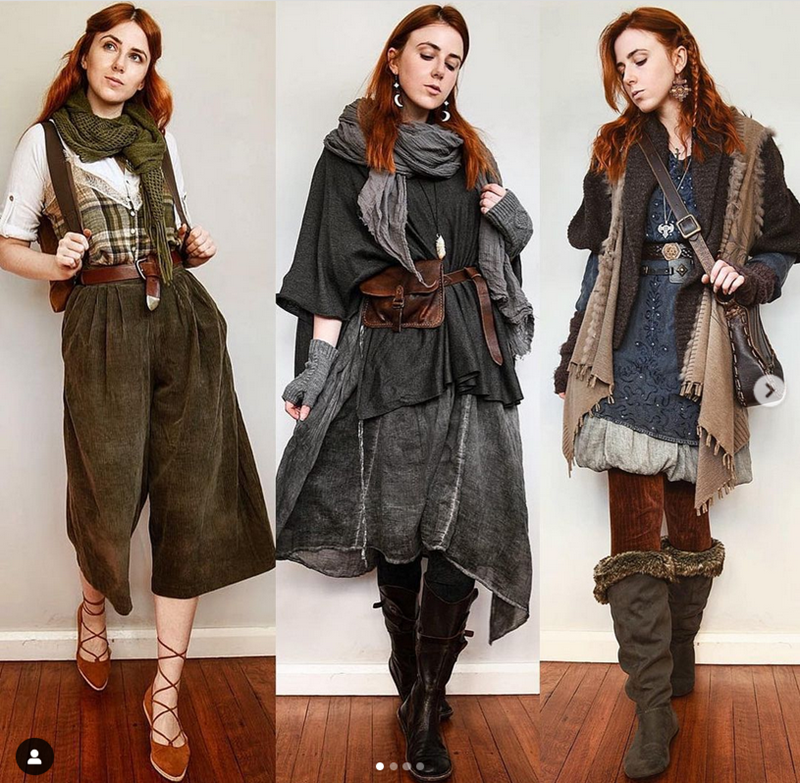
On Instagram, Alice as catinawitchhat styled a series of everyday outfits inspired by Middle-Earth. (She also pulled all the outfits together for a slideshow for those who prefer moving image.)

My favorite of Alice’s four collages is the first. It shows her versions of the Shire, Gandalf, and Erebor:

Instagram catinawitchhat Tolkien-Inspired1

The Lonely Mountain Dwarf ensemble is fantastic: the little touches of fur in her boots and the edges of the vest, the embroidery on the tunic, the warm-looking leggings, the knit armwarmers and chunky cardigan, they all contribute. Add to those the puffy shorts (or skirt?) plus the fairly simple leather accessories with brass-colored metal accents and visible, chunky topstitching. Very nice!

The third mashup is also very neat, with the three principal human cultures of the Lord of the Rings—the rangers, Rohan, and Gondor:

Instagram catinawitchhat Tolkien-Inspired3

Gondor is perfect, so austere and bleak. Her version of the rangers I find too dark for my liking—not a fan of black, even if it has its uses—but the profile I agree with.

Alice reminds the readers that her outfits aren’t cosplays, but her styling the contents of her wardrobe. And why not, if you can do it this well! While at times I don’t have exactly the same readings of the various Middle Earth cultures as she does, I do appreciate the combinations of elements from our mundane world and the suggestions she’s able to create through the careful selection of details. Makes me want to look at my closet with a new eye. 🙂

For more detail, visit the individual outfits in their own posts: The Shire. Gandalf. Erebor. Rivendell. Mirkwood. Lothlorien. The Dúnedain. Rohan. Gondor. Rhûn (Easterlings). Harad (Southrons). Mordor.

Images by Alice on Instagram

Captain America: Brave New World Featurettes

In the past few weeks, Marvel has been actively marketing Captain America: Brave New World—understandably, as the movie opens next week. (Already!) I thought these two featurettes below were worth linking to. (Note that a spoiler warning is in effect!)

Captain America: Brave New World | Get Tickets Now by Marvel Entertainment on YouTube

Captain America: Brave New World | First Look by Marvel Entertainment on YouTube

We get a few more glimpses of President Ross’s Red Hulk, more walk talk—in fact, SO much war talk—and perhaps a few second’s worth more of Sam Wilson.

More tantalizingly, however, a fleeting hint that appears at the very end of the older of these clips (the one saying Get Tickets Now—cue to the 1:20 mark) seems to be saying that Joaquin Torres from the MCU series The Falcon and the Winter Soldier (played by Danny Ramirez) will get his own wingsuit. And, indeed, the IMDB cast listing confirms it: he’ll become the next Falcon. That should be interesting, since we’ve only ever seen Sam’s take on how to make use of the wings.

BNW releases on February 14, 2025 in the U.S.

A Radiant Paladin Transmog

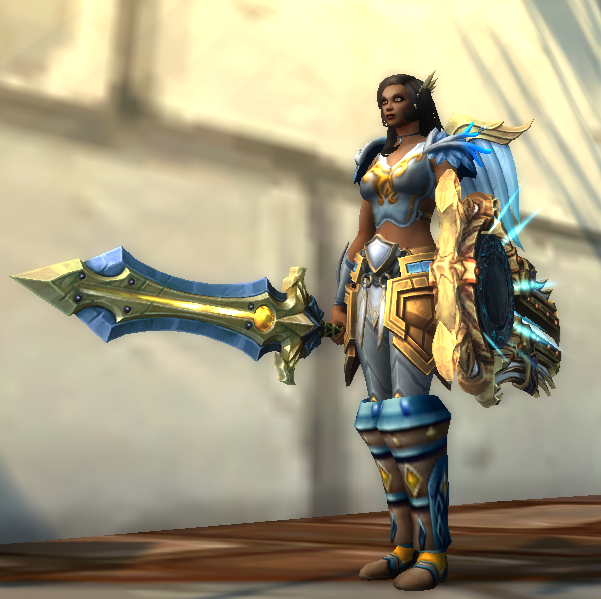
My human paladin is sporting a particularly radiant transmog these days. It uses several pieces from the Shadowlands covenants mixed with some old armor that matches the blue and gold color scheme, with the Legion artifact for a weapon.

All put together, it makes a satisfying look for righteously smiting evil.

Here’s a link to the items in the set.

Images: World of Warcraft screencaps

Visual Inspiration: Living Root Bridges

Living root bridges are an ingenious type of suspension bridge shaped from plant roots. They are common in the southern part of the Indian state of Meghalaya (in the northeast of the country), home for some of the wettest locations on Earth.

Flickr Roman Korzh Double Decker

The Khasi and Jaintia communities who inhabit the region needed a low-cost way to cross the valleys and gorges in the rainforest during monsoon season. Living root bridges are sturdy and easy to build—albeit time-consuming—and apparently they withstand flash flooding and storm surges quite well.

Flickr Ashwin Kumar Double Decker Living Root Bridge

The building process is described by Zinara Rathnayake for BBC Future as follows:

“Building these bridges takes decades of work. It begins with planting a sapling of Ficus elastica – a tree that grows abundantly in the subtropical terrain of Meghalaya – in a good crossing place along the riverbank. First the trees develop large buttressing roots and then, after about a decade, the maturing trees sprout secondary aerial roots from further up. These aerial roots have a degree of elasticity, and tend to join and grow together to form stable structures.

“In a method perfected over centuries, the Khasi bridge builders weave aerial roots onto a bamboo or another wooden scaffolding, wheedle them across the river and finally implant them on the opposite bank. Over time, the roots shorten, thicken and produce offshoots called daughter roots, which are also trained over the river. The builders intertwine these roots with one another or with branches and trunks of the same or another fig tree. They merge by a process called anastomosis – where branching systems like leaf vessels, tendrils and aerial roots naturally fuse together – and weave into a dense frame-like structure. Sometimes, the Khasi builders use stones to cover the gaps in root structures. This network of roots matures over time to bear loads; some bridges can hold up to 50 people at once.”

Flickr Roman Korzh Living Root Bridge

Despite not having the capacity of bridges built entirely from man-made materials, the capabilities of living root bridges are nothing to sneeze at in the kinds of difficult terrains they’re used for. For example, the longest living root bridge is the Rangthylliang bridge at 50+ meters long. That kind of length makes for plenty of potential for similar live-plant-based bridges in speculative gaming campaigns or stories, from ad hoc methods of river crossing for an army or a group of refugees (with the help of plant-growth spells) to permanent structures for local communities.

Living bridges can also last for many hundreds of years in ideal conditions. Even if the oldest currently existing bridges were “merely” from the 1800s, it’s clear that that kind of longevity wouldn’t be possible without community building and traditions passed on and cherished. I.e., the structures solve a concrete problem in a way that both suits and takes advantage of local conditions. We humans tend to be smart like that. 🙂

Images: Double decker by roman korzh via Flickr (CC BY-NC-ND 2.0). Second double decker by Ashwin Kumar via Flickr (CC BY-SA 2.0). Closeup of stone walkway by roman korzh via Flickr (CC BY-NC-ND 2.0).

The Colors of Ecbatana

It’s an all too well-known trope that the past is drab. When we picture ancient or medieval buildings, we tend to imagine white marble or gray stone. This assumption of colorlessness spills over into fantasy as well. When we imagine the built environments of made-up lands, we tend to see a lot of white and gray there too, but it doesn’t have to be that way.

The ancient Greek historian Herodotus gives a fantastical description of the Median city of Ecbatana, modern Hamadan, Iran, featuring a series of concentric walls topped by brightly colored parapets:

This walled city is built in such a way that each wall is higher than the wall encircling it by only the height of its parapet, partly by the fact that it is built on a hill, but largely by design. All together there are seven circles, with the palace and treasury in the innermost one. The largest wall is about as long as the walls of Athens. The parapet of the first wall is white, the second one black, the third red, the fourth dark blue, and the fifth amber. The first five walls had their parapets painted in these bright colors, but the next was covered in silver and the final one in gold.

– Herodotus, Histories 1.98

(My own translation)

Now, Herodotus probably got this description wrong. It does not match up with the archaeological remains on the ground in Hamadan. Herodotus never saw Ecbatana for himself, but relied on second-hand reports, which likely got garbled in the telling. In fact, Herodotus’ description of Ecbatana as a hill covered by concentric rings of walls fits a bit better as a description of a Mesopotamian ziggurat. A ziggurat is a pyramid-like structure made up of a series of terraces built one on top of another, getting smaller as they go up. Seen from ground level, they might well look like a series of concentric walls ascending a hill.

Ruins of the ziggurat of Choga Zanbil, photocollage by Pentocelo via Wikimedia (Khuzestan Province, Iran; c. 1250 BCE; brick)

Ziggurats had been built in Mesopotamia for thousands of years by Herodotus’ day, primarily to serve as temples. While not many new ziggurats were being built in the time of Herodotus, older ones were being restored and rebuilt, so news of a freshly (re)built massive structure with impressive concentric walls may well have reached Greece. The brightly colored walls Herodotus describes are not too far-fetched, either. Ancient Mesopotamians decorated important buildings with colorful glazed tiles, which still retain some of their impressive coloring even today, as can be seen in the Ishtar Gate from Babylon.

Detail of the Ishtar Gate, with modern reconstruction, photograph by Osama Shukir Muhammed Amin via Wikimedia (Babylon, currently Pergamon Museum, Berlin; 6th c. BCE; glazed tile and brick)

All of these things put together mean that Herodotus invented (albeit unintentionally) a fantasy version of Ecbatana flavored after a Mesopotamian ziggurat with colorful tiled walls. And if Herodotus could do it, there’s no reason the rest of us can’t do the same. Let’s see more fantasy cities with vibrant scarlet walls, turquoise roof tiles, or streets paved with lush green stone!

Atypical Illustrations of Elves

We’ve probably all seen endless examples of stereotypical fantasy Elves: those slim, tall, tranquil, ethereal, Art Nouveau-esque figures that glide effortlessly through a major convocation or battle field carnage alike. The type that for example various Weta artists immortalized for Peter Jackson’s Lord of the Rings and Hobbit trilogies.

I’ve been hankering for something slightly different for a while. (At least in depictions of taller Elves; ElfQuest Elves and other Elves smaller in stature already start with some variety.) Here’s what I’ve come across.

Some illustrators make their Elves with non-stereotypical weaponry or gear. Pavel Hristov’s Steppe Elf carries a whopper of an axe and chews on a stalk of grain. There are also tassels hanging from the piece of cloth on his waist; those don’t seem to go with the Elf stereotype.

ArtStation Pavel Hristov Steppe Elf
Steppe Elf by Pavel Hristov

What neat details!

This Elven marksman explorer by L3monJuic3 has more typical weaponry—bow and arrow—but unlike her, stereotypical Elves are rarely seen carrying backpacks loaded with mundane items like shovels and cauldrons. Elves do typically eat and presumably have other bodily needs, right, even in the more highfalutin high fantasy worlds?

DeviantArt L3monJuic3 Elven Marksman Explorer
Elven Marksman Explorer by L3monJuic3

The Elf war captain Kürbu by Dauntless1942 not only has an atypical name but also atypical armor and polearm:

Reddit Dauntless1942 Elf War Captain
Elf War Captain by Dauntless1942

The helmet somewhat reminds me of Bronze Age Celtic work, but could also nod towards ancient Eurasian steppe cultures.

Other illustrators have tweaked the professions their Elves take up. BootstheBishop drew an artificer—who’s a Sea Elf

Reddit BootstheBishop Sea Elf Artificer
Sea Elf Artificer by BootstheBishop

…and Rina Smorodina created a wandering Elf mage with an owl familiar:

ArtStation Rina Smorodina Wandering Elf Mage
Wandering Elf Mage by Rina Smorodina

I cannot think off the top of my head any tinkerer nor wanderer type Elves (except for Drizzt Do’Urden in Forgotten Realms), but I don’t consider myself terribly well-read as far as fantasy goes. Anyway, for me these alternative takes were delightful.

Closest to my heart, however, are illustrations of Elves in non-stereotypical environments, especially among birches, in addition to ones showing different body shapes and happy demeanors.

I love all kinds of birches, but they don’t tend to feature in art much, never mind in SFFnal art. I know of two exceptions of the latter: a trailer for season 1 of Andor and a since-scrapped computer game in development. Now I have two to add.

This birchwood Elf by Andrius Matijosius may be a little scruffy-looking, but I love how his cape mimicks birch bark and arrows resemble leaf-topped trunks.

ArtStation Birchwood Elf
Birchwood Elf by Andrius Matijosius

He seems also to be wearing some kind of long knitted robe underneath the cape, which strikes me as sensible in cool fall weather.

Pinterest The Gate of Forest Elf Castle
The Gate of Forest Elf Castle by ZAHD&ART

The Gate of Forest Elf Castle by ZAHD&ART also features fall colors. I love this birch-lined alley. A forest of birches with their white trunks lined up always looks so striking.

(Next, though, artists, how about depicting birch woods in the summer? Please and thank you!)

Moving to physical characteristics. Un Lee’s illustration of an Elf company is marvellous! Lee wanted to create a varied group much like the Dwarves in the Hobbit but with Elves instead.

ArtStation Un Lee Elf Company
Elf Company by Un Lee

They are absolutely fantastic! No unrealistic and boring copy-paste Elves here; each individual is exactly that, an individual.

Reddit eccentric_bee Ancient Elf
Ancient Elf by eccentric_bee

Besides uniform body shapes, stereotypical Elves come in a fairly narrow range of moods. This portrait of an ancient Elf by eccentric_bee is serene on the surface, yes, but it looks to me that there’s joy underneath that’s often missing in depictions of Elves. Love it!

Universal Pictures and Christopher Nolan to Adapt The Odyssey

It’s been ten years since a Lionsgate screen adaptation of The Odyssey by Homer was announced. Sadly, that project didn’t get off the ground.

Now there are news of a Christopher Nolan adaptation. Nolan is to write, produce, and direct a “mythic action epic”, with backing from Universal Pictures.

Unlike the ill-fated Lionsgate project, this time more than one actor were reportedly already attached by the time the adaptation was announced. (At this writing: Zendaya, Tom Holland, Anne Hathaway, Robert Pattinson, Matt Damon, Charlize Theron, and Lupita N’yongo—gosh!) On the basis of the big-name initial cast, it sounds likely that this time there will actually be a movie.

Flickr Gary Todd Hellenic War Museum Penteconter Sm

Also, judging by the current publicity poster, there will be some ship action (maybe even ship-vs-monster action!) and in IMAX, no less. Writing in Nolan’s movies is either a hit or miss for me, but at least there’s usually been something interesting to see, so the sailing scenes might look truly magnificent. On the other hand, action sequence special effects in recent block busters have sometimes been—shall we kindly say—too implausible (and sometimes just badly made) for my enjoyment. I’m hoping that the effects teams, Nolan, other producers, and the studio can strike a sensible balance.

At this writing, the release day is set to July 17, 2026.

Image: a Greek penteconter ship by Gary Todd via Flickr (CC0 1.0 Universal), edited by Eppu Jensen