Rating: Babylon 5, Season 4

It’s an action-packed, emotional roller coaster of a season for Babylon 5. The previous three seasons of development and growth come to a head in some unexpected ways. Here’s how we rated this season’s episodes:

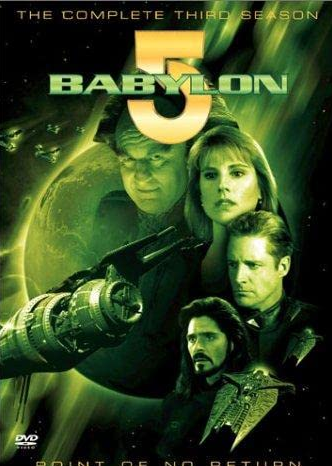
Babylon 5 season 4 DVD cover
  1. “The Hour of the Wolf” – 6
  2. “Whatever Happened to Mr. Garibaldi” – 3.5
  3. “The Summoning” – 6.5
  4. “Falling Towards Apotheosis” – 5
  5. “The Long Night” – 7
  6. “Into the Fire” – 9.5
  7. “Epiphanies” – 4
  8. “The Illusion of Truth” – 2.5
  9. “Atonement” – 3
  10. “Racing Mars” – 3.5
  11. “Lines of Communication” – 4
  12. “Conflicts of Interest” – 2.5
  13. “Rumors, Bargains, and Lies” – 5.5
  14. “Moments of Transition” – 3.5
  15. “No Surrender, No Retreat” – 6
  16. “The Exercise of Vital Powers” – 1.5
  17. “The Face of the Enemy” – 1.5
  18. “Intersections in Real Time” – 0
  19. “Between the Darkness and the Light” – 7.5
  20. “Endgame” – 6.5
  21. “Rising Star” – 6
  22. “The Deconstruction of Falling Stars” – 4

Various shenanigans with the networks broadcasting Babylon 5 led to the originally planned seasons 4 and 5 being squished down into a single season, and the results are visible. In some ways, the results were good, as the pace of the action noticeably picks up and gives an urgency to important episodes dealing with the Vorlon-Shadow war and the Earth civil war. In other ways, the effects were less positive, though, as the story often feels cramped and rushed. In the end, we have an average rating for this season of 4.5, down from season 3 but on par with season 2.

Given how much story had to be condensed into this season, it is particularly jarring when the season pauses for a number of self-contained (and sometimes self-indulgent) episodes such as “The Illusion of Truth,” a demonstration of how propaganda works, “Intersections in Real Time,” in which Sheridan is tortured, and “The Deconstruction of Falling Stars,” a meditation on how history is transformed into legend. None of these episodes scored very well with us. “Intersections in Real Time” is our lowest rated episode of the season, at a complete 0, for being both unpleasant to watch and unnecessary to the larger story. The season also spends an inordinate amount of time watching Garibaldi make bad life choices, which we could also do without.

But when this season works it really works. At the top of the ratings we have “Into the Fire,” at 9.5, which pays off years of development as the younger races of the galaxy stand up to the ancient Vorlons and Shadows and tell them to get the hell out. This episode fully delivers on the promise of the series, being both exciting and thoughtful, and deftly transforming our entire perspective on the two mysterious races at the heart of the series’ central story. The last few episodes of the season proper, “Between the Darkness and the Light” (7.5), “Endgame” (6.5), and “Rising Star” (6), are less spectacular, but they bring the long-simmering Earth storyline to a satisfying close.

A lot of what makes Babylon 5 great is on screen in season 4. It may not be exactly what was planned at the outset, but it lives up to the promise of the earlier seasons.

Season 1

Season 2

Season 3

Image: Babylon 5 Season 4 DVD cover via IMDb

In the Seen on Screen occasional feature, we discuss movies and television shows of interest.

Mashup of Themes from Avengers and The Lord of the Rings

Perfection can be improved on occasion. Bearing witness is this inventive mashup of various themes from The Lord of the Rings by Howard Shore and the Marvel Cinematic Universe’s Avengers by Alan Silvestri:

The Lord of The Rings X Avengers EPIC ORCHESTRAL MASHUP by Samuel Kim Music on YouTube

The mashup was arranged and orchestrated by Samuel Kim. I don’t have enough formal musical education to tell you why it works—both movie scores certainly are epic enough—I just know it does. 🙂 Kudos!

An occasional feature on music and sound-related notions.

A Drink with Star Trek Characters

Red Headed Trekkie posed a question on Twitter:

I thought of a quick, throw-away answer and moved on. For some reason, however, the question didn’t leave me alone, so we’re bringing it back to discuss here.

Eppu: It would depend a lot on my mood and energy levels. Hm. In the end, I think for me it may be easier to weed out some of the more difficult choices first.

Even though she seems fun, not Dax; I don’t have the stamina to keep up with her. As much as I admire Kira’s frankness and relentlessness, a drink with her might be too strained if we don’t hit it off. Janeway seems too active and tireless for me to sit back with.

Erik: Agreed. There are some iconic Star Trek characters and drinks that come to mind right away: Janeway and coffee, Picard and tea (Early Gray, hot), anybody from Deep Space Nine and raktajino. I don’t think any of those would work for me, though. I hate coffee and don’t care for Earl Gray, and whatever is in a raktajino would probably not be good for me.

Eppu: It would be nice to have a cup of tea with Captain Picard, but I’m not sure of how informal the conversation would be. He seems such a consummate commander and politician, and I’d like a tea break to be more personal, relaxing, and homey than I imagine possible with him. Ditto for Worf and prune juice.

Erik: For good company, I might enjoy sharing a glass of whiskey with Dr. McCoy. That man probably has some interesting stories to tell. He could probably also drink me under the table, though, so maybe not. I could have a root beer with Rom, since I love root beer and Rom is a sweetheart, he’d probably be too nervous to enjoy it, and that wouldn’t be a nice thing to do to him.

Eppu: Garak would be an in-te-res-ting drinks partner—never mind your beverage choice!—but I suspect I’d feel too dumb half the time and would question the whole conversation the other half.

Erik: I suppose it isn’t really a fair answer to say a glass of wine with Kai Winn, with iocaine powder in it!

Eppu: In the end, I think it’s a tie between Chakotay and Guinan. Both are curious and considerate, have excellent listening skills but are not withdrawn, and show a combination of both humor and tact, so they seem excellent partners for unwinding with. And since it’s fall, I’d pick a sweet, alcoholic, toffee-flavored cider, preferably a low-alcohol version. (Note to Europeans: In North America, cider refers to freshly-pressed apple juice, which I only learnt after living there.)

Erik: I like both those options, but I guess I would settle on cocoa with Kira. One of the things I love about the character is that, as tough as she is and as much awful stuff as she’s seen in her life, she still has warmth and an appreciation for simple pleasures. I think she’d enjoy cocoa, and I’d enjoy getting to talk with her about everything and nothing.

Memory Alpha Guinan Chakotay Mashup

What about you? Any clear favorites one way or another? (Bonus points for type of drink!)

Images: Guinan via Memory Alpha. Chakotay via Memory Alpha. Kira via Memory Alpha

Q&A is an occasional feature in which we share our responses to quizzes, questions, and quirky ideas for your entertainment.

Bringing Color Back to Ancient Statues with Light

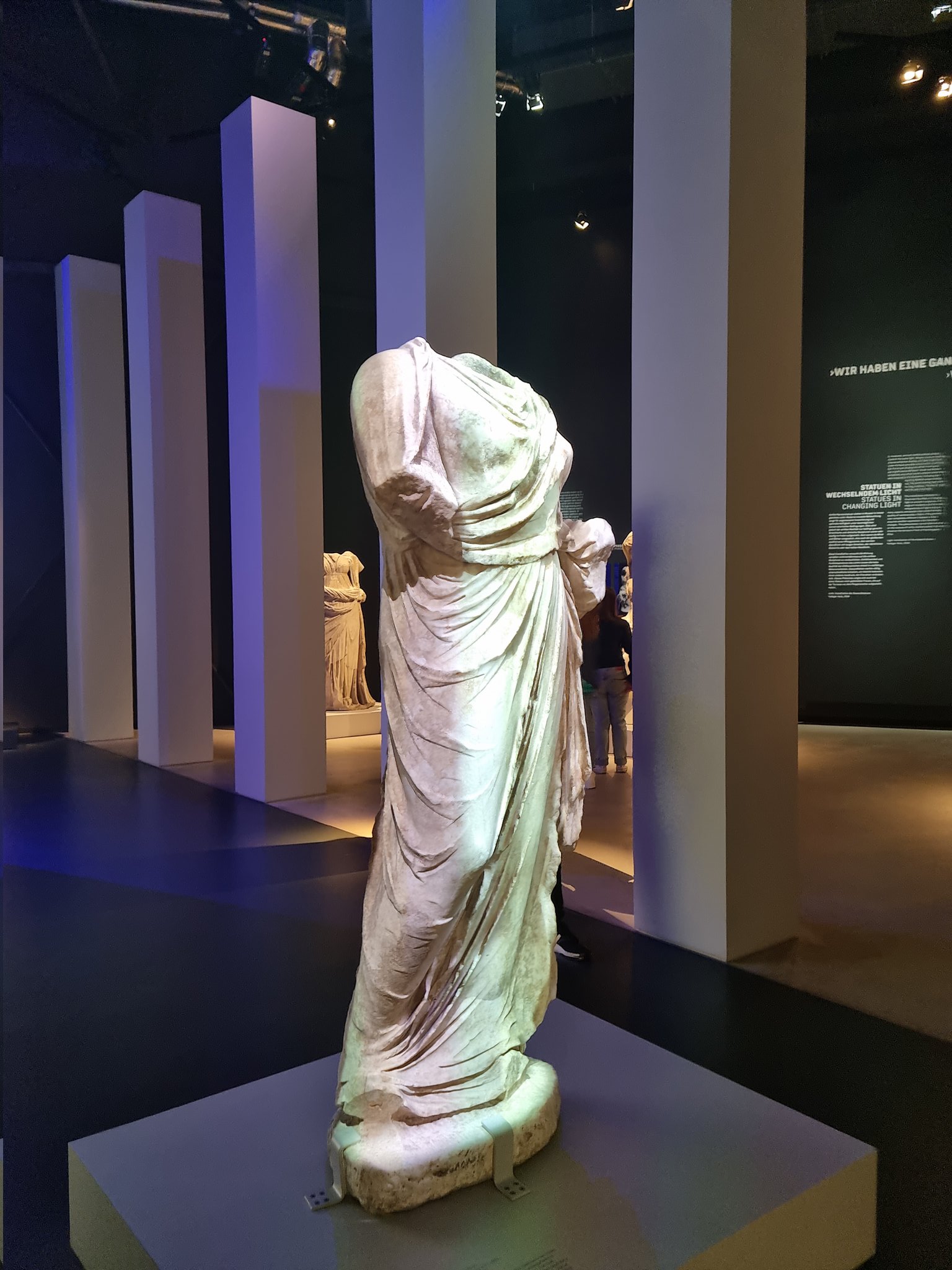
Here are a few interesting pictures from the Pergamon Panorama in Berlin where colored lights are used to show a few different variations on what marble ancient statues might have looked like in their original colors. A very neat idea and some great photography from Twitterer @BelovedOfOizys!

An ancient Greek marble statue of a draped woman
An ancient Greek marble statue of a draped woman with blue light showing on the clothing
An ancient Greek marble statue of a draped woman with magenta light showing on the clothing

Images: Statuary from Pergamon with colored lights, photographs by @BelovedOfOizys via Twitter

Out There is an occasional feature highlighting intriguing art, spaces, places, phenomena, flora, and fauna.

Worldbuilding in a Sentence

This fall I am finally teaching a course I have long dreamt of: History for Fantasy Writers. The course is built around the same ideas that I often blog about here, that studying history is a good way of exploring the possibilities of human societies and is our best resource when we want to imagine a world that is not like the one we live in.

As an early exercise to examine this idea, I asked my students to consider the following sentence: “The knight in shining armor rode his trusty steed toward the queen’s castle.” What can we tell about the world of this story just from this one sentence? They came up with some good answers:

  • The existence of knights and queens implies a stratified social structure. If we’re hearing about the people at the top, there must also be a lot of people at the bottom.
  • For instance, the knight must have dozens of people supporting them: someone to take care of the horse, someone to polish the shining armor, lots of people working the farms so they all have something to eat. The same and much more goes for the queen. Someone had to build that castle and keep it running. The lifestyle of a queen involves both politics and pageantry, for which she needs advisers and staff. All those people have to be clothed and fed.
  • Castles and knights in armor only make sense with certain kinds of warfare. In particular, this world must not have effective gunpowder weapons, which made both castles and mounted knights obsolete in our history.
  • If the queen lives in a castle, that means there must be a lot of fighting in this world. A castle is designed for defense, and it’s not a particularly convenient kind of place to live in peacetime. A queen wouldn’t be likely to live in one if she didn’t need to defend herself on a regular basis.
  • The fact that it’s the queen’s castle means that at least in some cases women in this world can wield power.
  • Castles and armor tell us something about the level of their technology. Building a castle takes a lot of quarrying, cutting, transport, and fitting of stones; armor requires mining and smelting ore to create metal, then working that metal into some complex shapes to make effective armor.

Of course, any of these observations could be undone in fiction. Maybe in this world horses magically take care of themselves. Maybe everyone is a knight or a queen and they’re all equal. Maybe the castle is carved out of a mountain of crystal, and the armor is made of enchanted tree bark. You can do that sort of thing in fantasy if you want to, but that’s where history helps you understand the “rules” so that you can break them in a way that is thoughtful and interesting.

I’m impressed by my students’ work so far and looking forward to more conversations like this one.

History for Writers looks at how history can be a fiction writer’s most useful tool. From worldbuilding to dialogue, history helps you write.

Quotes: Even Just One New Language Infects You with a Radically Different Way of Thinking

The embodiment of the Enemy in The City We Became by N.K. Jemisin, the Woman in White, says of the catalytic effect of human cities:

“You eat each other’s cuisines and learn new techniques, new spice combinations, trade for new ingredients; you grow stronger. You wear each other’s fashions and learn new patterns to apply to your lives, and because of it you grow stronger. Even just one new language infects you with a radically different way of thinking! Why, in just a few thousand years you’ve gone from being unable to count to understanding the quantum universe—and you’d have made it there faster if you didn’t keep destroying each other’s cultures and having to start over from scratch.” [original emphasis]

To me, one of the most fascinating features of my native Finnish is that the negator ei (‘no’) can be conjugated in personal forms, as if it were a verb: en, et, ei, emme, ette, eivät. For example, a one-word answer “En” to a question (e.g. “Would you like some tea?”) translates as ‘[I do] No[t]’, while “Emme” means ‘[We do] No[t]’, etc. And this is just one little, tiny detail of the amazing linguistic variety that exists on Earth. There are times I wish I had studided linguistics even further.

Anyway.

Obviously for the Enemy us petty humans had better stay petty and not learn anything new ever. She’s not wrong, though: we’ve come a long way, and human ingenuity can be astounding. Unfortunately, so can the human cruelty. If only we could stop the needless hate and reach for more amazing heights…

Jemisin, N.K. The City We Became. New York: Orbit, 2020, p. 342.

Serving exactly what it sounds like, the Quotes feature excerpts other people’s thoughts.

Hand- and Footprints in Tibet Potentially the Earliest Prehistoric Art Found

Potentially the earliest stone age art consists of hand- and footprints on stone, and was found in investigations between 2018 and 2020.

From the September 2021 Science Bulletin abstract covering the find:

“At Quesang on the Tibetan Plateau we report a series of hand and foot impressions that appear to have been intentionally placed on the surface of a unit of soft travertine. The travertine was deposited by water from a hot spring which is now inactive and as the travertine lithified it preserved the traces. On the basis of the sizes of the hand and foot traces we suggest that two track-makers were involved and were likely children. We interpret this event as a deliberate artistic act that created a work of parietal art. The travertine unit on which the traces were imprinted dates to between ∼169 and 226 ka BP.”

Below is a contour map from the article, showing the prints on the rock surface:

Science Bulletin Sept 2021 Zhang et al Earliest Parietal Art Contour

Fascinating. I’m sure there are still many open questions, like intentionality (if such a thing is even possible for prints left hundreds of thousands of years ago) and the identity of the creator(s). (The discovery team posits they may have been children, potentially at play.)

It’s just… Do these prints remind anyone else of of how Gollum moves?

Found via Colossal.

Image via Zhang, David D., et al. “Earliest parietal art: Hominin hand and foot traces from the middle Pleistocene of Tibet.” Science Bulletin September 10, 2021

A Babylon 5 Reboot Is in Active Development

‘Tis official: a Babylon 5 reboot is in the works.

The Catholic Geeks babylon52

(Please read the thread for more of Straczynski’s thoughts on the announcement. Looks like at this writing many articles available online largely just rephrase his tweets.)

Without wading too deep into all of the speculation, I did glean this tidbit about the timing of the new B5:

Pretty exciting, wouldn’t you say? Of course, in the end the fan reaction—including mine—will depend on the technical quality of the final product, our personal preferences, which aspects were chanced and which retained, and whether the cast will be able to carry the stories. I’m certainly looking forward to more news on the project, and fervently wish that the casting will be successful (and quality-wise more even).

Image via The Catholic Geeks

Deconstructing the Star Wars Sequels: The Rise of Skywalker

The first two movies in the Star Wars sequel trilogy had their problems: The Force Awakens was driven too much by nostalgia for A New Hope, and The Last Jedi was too dependent on an intellectual conceit. The Rise of Skywalker has a different and rather unusual problem: it is two movies crammed into one.

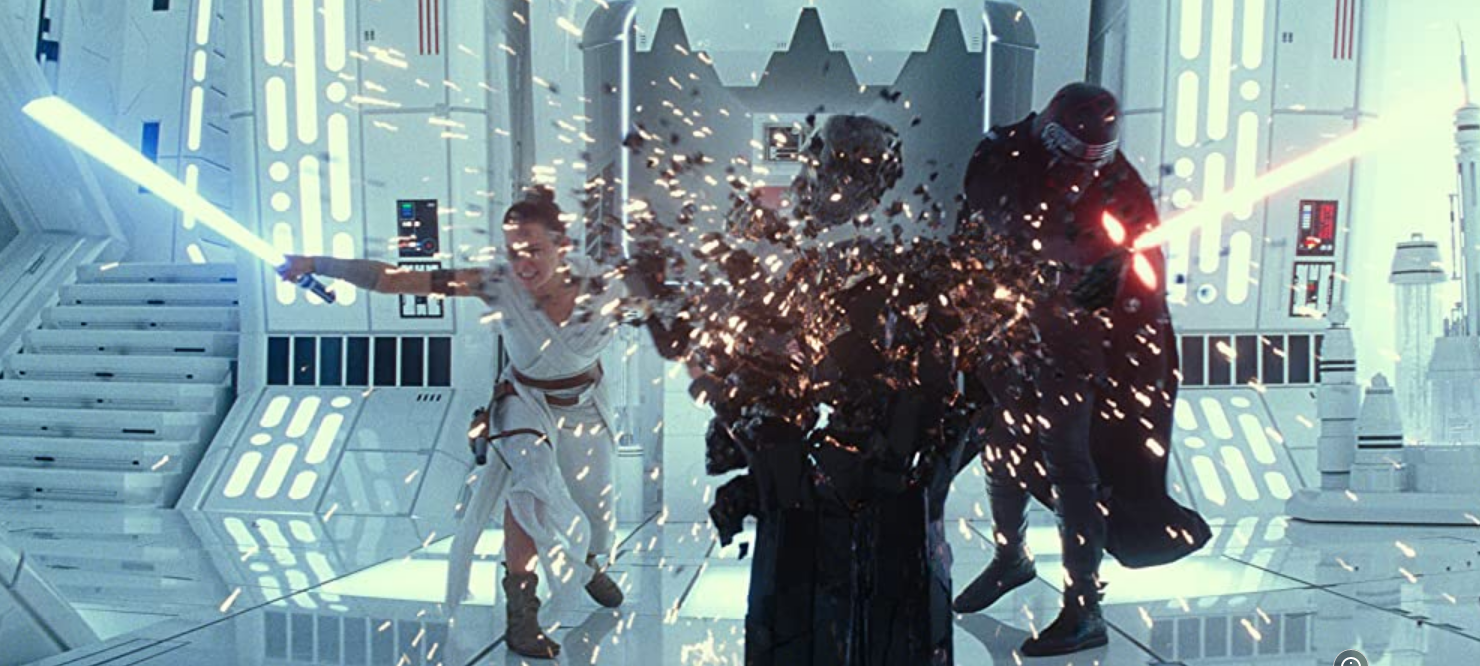
Rey and Kylo Ren smash stuff as they duel, screenshot from Star Wars 9: The Rise of Skywalker

By all public accounts, the new Star Wars trilogy was not planned with an overarching plot. The intent was that each director would put their own stamp on each movie. The effects of that choice are visible all over The Last Jedi, which moves about as far away from The Force Awakens as it can without technically breaking continuity. The reaction from fans was strong, as most of us probably remember. Some of that reaction was beyond the pale, up to and including online harassment of some stars (notably those who were not white men). For a good year and a half, it was just about impossible to have a conversation about the movie online without things devolving into a scorched-earth flame war. Disney seems to have been shaken enough by the reaction to turn back to J. J. Abrams for an encore of The Force Awakens to close out the trilogy. The Rise of Skywalker slams the door hard on everything The Last Jedi was trying to do and doesn’t look back.

This about-face is visible all over The Rise of Skywalker. New characters like Rose and D’Acy are demoted to background extras; Rey’s parents are retroactively promoted from mere junk traders to scions of Palpatine; Poe and Finn get to be heroic and do things that actually matter to the plot. The Rise of Skywalker rejects The Last Jedi so thoroughly that it attempts to fit an alternative second movie into its first half. Although we’ve been told that there was no overarching plan for the sequel trilogy, it sure seems like Abrams and company at least had ideas sketched out for two more installments after The Force Awakens. When called on to helm the third movie, Abrams tried to fit all of those ideas into one.

The first half of The Rise of Skywalker has traces of what could have been the second movie of the trilogy. While there isn’t a simple breaking point where a theoretical Episode 8 ends and Episode 9 begins, the action on Kijimi makes a suitable climax at around the halfway point. We reconnect with Lando Calrissian in the first half and with Endor in the second. Ending the movie somewhere around Kijimi would leave Chewbacca in the First Order’s hands, C-3PO out of commission, and Rey confronting the reality of her parentage, a cliffhanger ending for the middle movie of the trilogy and an echo of the ending of The Empire Strikes Back.

Seeing the movie as two films packed into one helps make sense of some of its odder features. For one thing, The Rise of Skywalker is overstuffed with plot. Compared with either of the movies that came before it there are more new locations, more new characters, and a less direct narrative line. The plot even overspills the edges of the movie, with crucial set-up squished into a rushed beginning and the suggestion of further adventures packed into the ending. There is also a curious amount of doubling in the movie that makes sense if it was originally conceived as two. Our heroes set out in search of two different devices that lead to destinations: first a Sith dagger, then a Sith wayfinder. There are two planets with women who connect to our heroes’ past and offer potential love interests for their future: Zorii on Kijimi who has a history with Poe, and Jannah on the Endor moon who is a rebel stormtrooper like Finn.

As it stands now, the movie undermines its own script. Rey and the audience alike hardly have a chance to react to Kylo Ren’s revelations about her ancestry because the movie has to rush on with the rest of the story. The discovery that Plapatine’s brand new fleet has planet-destroying capabilities is similarly underwhelming with so much else for the movie to do. C-3PO’s self-sacrifice to translate the Sith blade is played as an emotional farewell, but then almost immediately undercut when R2-D2 reloads his memories; if we had waited two years between movies to get our old droid friend back, the moment would have had the emotional weight it seemed written for.

The middle entry in the sequel trilogy, The Last Jedi, for all its flaws, introduced the most interesting and challenging new ideas Star Wars has seen in decades. Even if all The Rise of Skywalker did was reject those ideas, it would still be a disappointment of a movie. In trying to not only turn away from The Last Jedi but retroactively create its own Episode 8, the movie ends up being not only lifeless but messy and overstuffed.

It is a shame that none of the new trilogy lived up to the hopes of fans. Every film has its good points and enjoyable moments, and I am at least mildly fond of them all, despite their problems. It is interesting to observe, though, that each of the new trilogy’s movies has an entirely different problem with its structure.

Image: Rey and Kylo smashing stuff via IMDb

In the Seen on Screen occasional feature, we discuss movies and television shows of interest.

Rating: Babylon 5, Season 3

The action revs up in season 3 of Babylon 5, bringing both new characters and higher stakes. Here’s how we rated this season’s episodes:

Babylon 5 season 3 cover
  1. “Matters of Honor” – 5.5
  2. “Convictions” – 2.5
  3. “A Day in the Strife” – 4
  4. “Passing through Gethsemane” – 5.5
  5. “Voices of Authority” – 4
  6. “Dust to Dust” – 5.5
  7. “Exogenesis” – 2
  8. “Messages from Earth” – 5.5
  9. “Point of No Return” – 8
  10. “Severed Dreams” – 8
  11. “Ceremonies of Light and Dark” – 4.5
  12. “Sic Transit Vir” – 6
  13. “A Late Delivery from Avalon” – 3
  14. “Ship of Tears” – 4
  15. “Interludes and Examinations” – 6
  16. “War Without End, Part 1” – 7.5
  17. “War Without End, Part 2” – 8
  18. “Walkabout” – 4.5
  19. “Grey 17 is Missing” – 4.5
  20. “And the Rock Cried Out, No Hiding Place” – 6.5
  21. “Shadow Dancing” – 5.5
  22. “Z’Ha’Dum” – 8

There’s a step up in the ratings this season, with the average hitting 5.4 after the previous season’s 4.5. Most episodes are comfortably in the 4-6 range of “okay, but not great,” with only a few lower and several standing out higher.

This season sees a couple of changes to the cast. The Minbari-trained human ranger Marcus Cole joins the station, bringing a distinctive wry quirkiness. At times the witty, roguish, smooth character veers perilously close to being a Mary Sue, but the warmth and charm of Jason Carter’s performance is usually enough to save him from tipping over the edge. In addition, the telepath Lyta Alexander returns in a shake-up of the cast (the previous seasons’ telepath, Talia Winters, was reportedly a casualty of contract negotiations with the actor). Lyta’s return is welcome, and Patricia Tallman plays the ambiguity of the character—a human serving the mysterious Vorlons—well enough.

Along with the changes to the cast we get some significant forward motion in the larger story this season. The war with the Shadows heats up at the same time that the Earth government goes full-bore fascist. Our heroes on the Babylon 5 station are caught in the middle of both developments and have to move fast in response. Meanwhile, the Centauri invasion of Narn enters a dangerous new phase.

Our lowest-rated episode of this season is a side-story without much connection to the larger arcs. In “Exogenesis,” a 2, Marcus and Dr. Franklin investigate strange goings-on among the station’s homeless. The episode does offer Marcus and Stephen a chance to bond, but beyond that there’s not much substance to the story. It feels more like a first-season episode, a self-contained story building the background of the setting but not connected to much else.

For the best episode of this season, though, we are spoiled for choice. Four episodes get an 8 from us, with a fifth one close behind at 7.5. First there’s “Point of No Return” and “Severed Dreams,” not properly speaking a two-parter, but two episodes in a row that both see the Babylon 5 crew have to deal with the consequences of Earthgov’s violent power grabs, culminating in a watershed moment when Babylon 5 declares itself independent. The next is a proper two-parter: “War Without End,” Parts 1 and 2, a clever revisiting of the first season’s time travel story “Babylon Squared” in which we see the reappearance of the Babylon 4 station from a new perspective, and Captain Sinclair gets his send-off. Finally there’s the last episode “Z’Ha’Dum,” in which Captain Sheridan sets off to the homeworld of the Shadows to discover what drives them.

Season 3 effectively builds on what seasons 1 and 2 accomplished, and it sets the stage for the dramatic events coming in season 4. Overall, quite a strong season and worth a rewatch.

Image: Babylon 5 season 3 cover via IMDb

In the Seen on Screen occasional feature, we discuss movies and television shows of interest.