I posted about dark academia about a year ago when I learned of the phenomenon. Time for a sibling post of sorts: since then, I’ve discovered the style light academia.
Apparently, the term was coined on Tumblr already in 2019. (Man, I must’ve been hanging around the wrong side of Tumblr not to have heard about it then!) Also, apparently cottagecore can overlap with light academia, as can a romanticized view of coffee shops as places for people-watching and studying.
Sounds like neutrals, earthy colors, white, gold, and pastels are especially favored. One article lists movies and shows with light academia aesthetics, including classics like Little Women, but also newer productions like Bridgerton, the 2005 version of Pride & Prejudice or the 2022 Netflix adaptation of Persuasion. There are, of course, playlists and recommended activities or crafts. Some people even sell light academia mystery boxes on online platforms! I’ve found out that there are also other, established flavors I hadn’t heard of before: green academia and chaotic academia.
(Good grief, I feel officially old! At least there doesn’t seem to be any academia cores.)
While I love reading, knowledge, and learning, I confess I’m a little perplexed by this dissecting of various aspects of campus / university life into separate aesthetics. (Not to even mention the fact that Finnish universities by and large look quite different from these Anglo-American-style ones.) But I guess that’s what we humans do—we create endless groupings out of the same elements.
In honor of the movie Deadpool & Wolverine coming out next week, here’s a lovely tidbit concerning an earlier Wolverine movie. Sir Patrick Stewart apparently had the following to say on seeing Logan for the first time with an audience at the Berlin Film Festival in 2017:
“It was Hugh [Jackman] and [director] James Mangold and myself, and when it got to the last 10 minutes of the movie, it was emotional and intense, and I could feel myself getting choked up. Then I looked over at Hugh and he was wiping his eyes, and I thought if Wolverine can weep at a movie, Charles Xavier can do the same thing. Then Hugh reached over and grabbed my hand and we held hands for the rest of the movie.”
-Sir Patrick Stewart
HUGE props for Hugh Jackman and Sir Patrick—it’s not always easy being a man and showing emotion in the Anglo-American world, never mind when you’re supposedly this tragic tougher-than-nails superhero. (Sorry, sorry, bad pun very much intended!)
(I do appreciate Sir Patrick so much—he’s such a humane and decent man, not to mention a superb actor!)
Lang, Brent. “Patrick Stewart on ‘Logan,’ Harvey Weinstein and Returning to ‘Star Trek’.” Variety, December 05, 2017.
Not even a week after Erik spotted an incoming link from a fanfic published at Archive of Our Own, we started seeing increased traffic to another post on our blog, and we couldn’t figure out why. (Good grief—when it rains, it pours!)
Thanks for the link! It’s nice to be appreciated, especially since our blogging tends to follow whims which, I’m sure, appear very opaque to outsiders. 🙂 The reddit discussion had some interesting points, so it was definitely worthwhile to poke my head in.
(What baffles me, though, is how some redditors seem to have mistaken this blog for a news site. Perhaps I’m merely getting too old to think there are enough cues in the metadata and site sections to easily discount that idea…? I am, however, experienced enough to know most people won’t read our About page where it is spelled out that this here is a hobby blog, goshdarnit! *grumble grumble*)
In one of the Dungeons & Dragons games I DM for, there is a player who is very into the idea of gathering herbs and brewing magic potions. The base game as written doesn’t have much in the way of rules for alchemy, so we’ve just been winging it for the better part of a year. That worked, but it wasn’t as satisfying as either of us would like, so I finally sat down and brewed up a set of rules for herb-gathering and alchemy. Here’s what we’re playing with now. Feel free to use this or adapt it, if it seems like it might be a fun addition to your own games.
Alchemy
An alchemical system for Dungeons & Dragons, 5th edition.
Harvesting herbs
To collect herbs, you must be in an environment where wild plants grow. The DM will determine whether there is anything available for you to gather. Specific environments may give you advantage or disadvantage to your roll, at the DM’s discretion. Gathering herbs takes an hour.
Roll a Nature check to see whether you successfully collect herbs and how much. If you have an Herbalism kit and the proficiency to use it, you may add your proficiency bonus to the roll
Once you have harvested an area, whether you successfully gathered herbs there or not, the plants need a month to regrow before you can harvest the same area again (unless they are affected by magic that causes plant growth).
Nature check
Herbs collected
Less than 11
None
11 – 15
1 batch
16 – 20
2 batches
21 – 25
3 batches
26 or more
4 batches
For each batch of herbs you collect, roll 1d6 to determine what type of herbs you find. (You can also choose to target a specific kind of herbs when you harvest. If you do, you make your harvesting roll at disadvantage, but all herbs you collect are of the kind you want.) Keep track of how many batches of herbs you have of each type.
1d6 roll
Herb type
1
bark
2
berries
3
fungi
4
leaves
5
roots
6
seeds
Making potions
To make potions, you must have enough herbs of the right types (1 batch of each type listed on the table below, unless the chart calls for more). Some potions require special ingredients, to be determined by the DM. Each brewing attempt consumes the given amount of herbs and takes one hour.
Roll an Arcana check to attempt to make each potion. If you have proficiency with Alchemist’s supplies, you may add your proficiency bonus to the roll. If you do not have alchemical equipment, you have disadvantage on the check. Whether the check succeeds or fails, the herbs are consumed. The DC for the check depends on the rarity of the potion you are trying to make:
Potion rarity
Arcana DC
Common
10
Uncommon
15
Rare
20
Very rare
25
Legendary
30
If you succeed on your Arcana check by 4 or less, you make 1 potion of the chosen type.
If you succeed on your Arcana check by 5 to 9, you make 1d4 potions of the chosen type.
If you succeed on your Arcana check by 10 or more, you make 1d6 potions of the chosen type.
(A DM might also allow a Medicine check in place of an Arcana check, or let proficiency with a Poisoner’s kit apply to the roll, depending on what kind of potions the character is brewing.)
Potion
Rarity
Herbs required
Antitoxin
Common
Bark, berries, seeds
Oil of Etherealness
Rare
Bark, leaves x3, roots
Oil of Sharpness
Very rare
Fungi x4, leaves x2, roots x2
Oil of Slipperiness
Uncommon
Bark, leaves, roots, seeds
Philter of Love
Uncommon
Berries, fungi, leaves, roots
Potion of Animal Friendship
Uncommon
Berries, leaves, roots, seeds
Potion of Clairvoyance
Rare
Fungi, leaves x2, roots x2
Potion of Climbing
Common
Bark, leaves, roots
Potion of Diminution
Rare
Fungi, leaves x3, roots
Potion of Flying
Very rare
Bark x2, leaves x4, roots x2
Potion of Gaseous Form
Rare
Bark, leaves 2x, roots, seeds
Potion of Giant Strength (Hill)
Uncommon
Bark, leaves 2x, roots
Potion of Giant Strength (Stone/Frost)
Rare
Bark 2x, leaves 2x, roots
Potion of Giant Strength (Fire)
Rare
Bark 2x, leaves 2x, roots
Potion of Giant Strength (Cloud)
Very rare
Bark 3x, leaves 3x, roots
Potion of Giant Strength (Storm)
Legendary
Bark 4x, leaves 4x, roots, special
Potion of Growth
Uncommon
Bark, leaves 2x, seeds
Potion of Healing
Common
Berries, leaves, seeds
Potion of Greater Healing
Uncommon
Berries 2x, leaves, seeds
Potion of Superior Healing
Rare
Berries 2x, leaves, seeds 2x
Potion of Supreme Healing
Very rare
Berries 3x, leaves 2x, seeds 2x
Potion of Heroism
Rare
Bark, berries, leaves, roots, seeds
Potion of Invisibility
Very rare
Leaves 3x, roots 2x, seeds
Potion of Invulnerability
Rare
Bark 2x, leaves, roots, seeds
Potion of Mind Reading
Rare
Fungi, leaves, roots 2x, seeds
Potion of Poison
Uncommon
Fungi 2x, roots, seeds
Potion of Resistance
Uncommon
Bark, berries, roots, seeds
Potion of Speed
Very rare
Fungi 2x, leaves 2x, roots 2x
Potion of Water Breathing
Uncommon
Bark, berries, leaves, roots
Restorative Ointment
Uncommon
Bark, berries, seeds 2x
Sovereign Glue
Legendary
Bark 2x, fungi, leaves 2x, roots 4x, special
Universal Solvent
Legendary
Berries, fungi 3x, leaves, seeds 2x, roots 2x, special
The table above includes only items listed in the Systems Reference Document released by Wizards of the Coast under Creative Commons. If you want to expand this table to include other potions and items, you can apply the following principles:
Determine how many ingredients the potion requires. The number of ingredients depends on the rarity of the potion.
Rarity
Ingredients
Common
3
Uncommon
4
Rare
5
Very rare
6 – 7
Legendary
9 plus a special ingredient
Determine which ingredients are needed. The table below gives some general suggestions, but feel free to choose whichever ones feel right for the potion in question.
Ingredient
Function
bark
protection, endurance
berries
healing, strength
fungi
harm, power
leaves
transformation, deception
roots
creation, discovery
seeds
restoration, growth
Post edited with new images
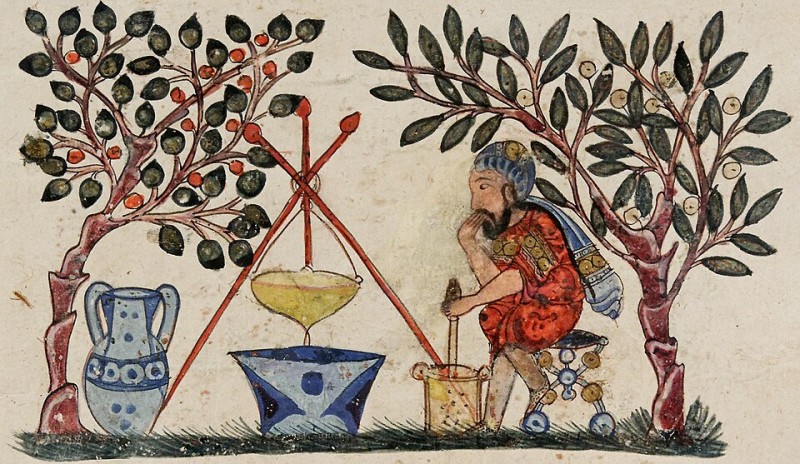
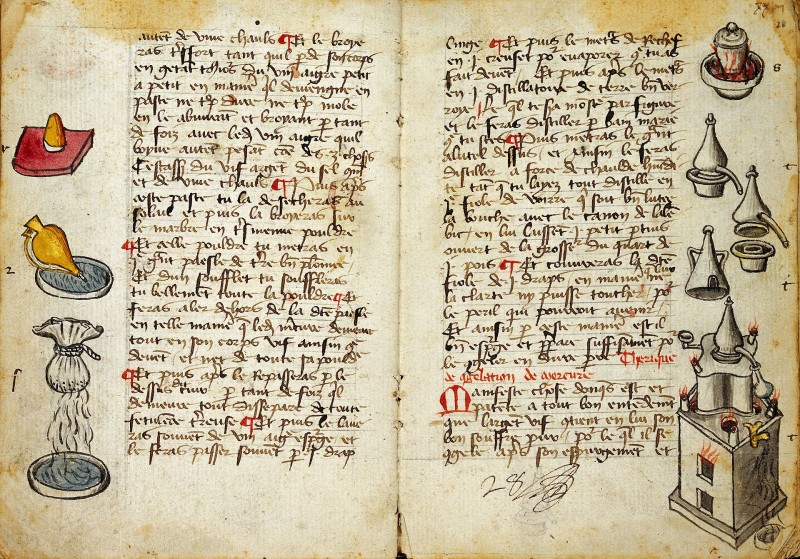
Images: Physician preparing an elixir from Dioscorodes De Materia Medicavia Wikimedia (from northern Iraq, currently Metropolitan Museum of Art, New York; 1224; ink and gold on paper); illustrations of alchemical processes from Ymage de Vievia Wikimedia (currently Wellcome Museum, London; late 15th c.; illuminated manuscript); potions by Thomasdw22 via Wikimedia
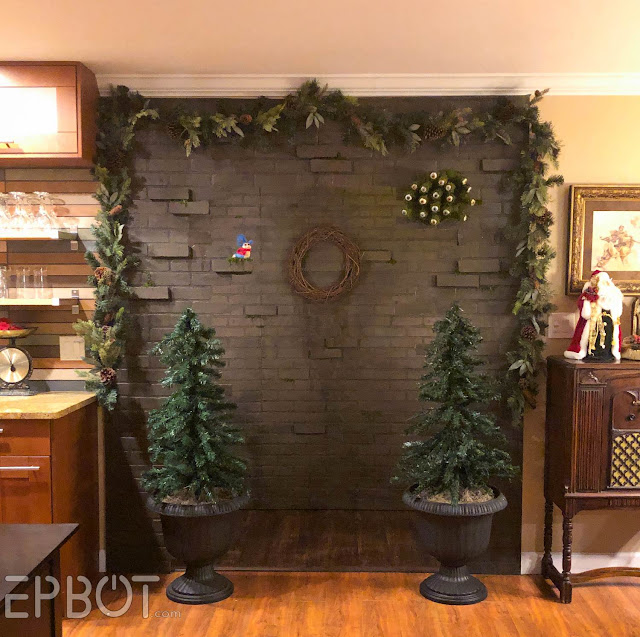
This is so epic and ingenious! Jen and John at Epbot built in their home a DIY version of the illusionary labyrinth wall from the movie Labyrinth for a theme party. You remember, the one with the worm? “Come inside, meet the missus!”
Here are a couple of behind-the-scenes photos:
As you can see, they built a small temporary wall to make a small hallway to step into. The opening between the rooms was partially covered with faux brick panels. Careful painting and lighting complete the illusion. (They even added the worm! Squee!)
We just discovered that our recipes for the Riders of Rohan were referenced in a piece of Middle Earth fanfiction over on Archive of Our Own. The story is called “she had a spirit and courage at least the match of yours” by shOokspeared, and it’s a lovely little slice-of-life tale following Éowyn on a visit to the Shire in the days of peace after the War of the Ring. In a letter home to her husband Faramir, Éowyn mentions enjoying the familiar tastes of braised beef and saffron and cream pancakes for lunch with her Hobbit friends one day.
We’re astonished and delighted to see that our work is still interesting and useful to others!
Complaining about “kids these days” with strangely-spelled names is a well that never runs dry. It’s also an older habit than many who indulge in it would think. Here’s a bit from a 1930 P. G. Wodehouse story where Bertie Wooster’s Aunt Dahlia chides him for falling in love with a young lady with an eccentrically-spelled name.
‘Yes, Aunt Dahlia,’ I said, ‘you have guessed my secret. I do indeed love.’
‘Who is she?’
‘A Miss Pendlebury. Christian name, Gwladys. She spells it with a “w”.’
‘With a “g”, you mean.’
‘With a “w” and a “g”.’
‘Not Gwladys?’
‘That’s it.’
The relative uttered a yowl.
‘You sit there and tell me you haven’t enough sense to steer clear of a girl who calls herself Gwladys? Listen Bertie,’ said Aunt Dahlia earnestly, ‘I’m an older woman than you are – well, you know what I mean – and I can tell you a thing or two. And one of them is that no good can come of association with anything labelled Gwladys or Ysobel or Ethyl or Mabelle or Kathryn. But particularly Gwladys.’
P. G. Wodehouse, “The Spot of Art”
The next time someone gets in a snit about Kaytlynn, Jaxson, or Alexzandre, you can let them know they’re part of a tradition at least a century old.
Wodehouse, P. G. “The Spot of Art.” Very Good, Jeeves. First published 1930. Reprinted in The Jeeves Omnibus. Vol. 3. London: Hutchinson, 1991, p. 460.
Serving exactly what it sounds like, the Quotes feature excerpts other people’s thoughts.
According to Reuters, Chinese drone maker E Hang Holdings has started selling an eVTOL taxi on Taobao, a Chinese online shopping platform. EHang was certified for traffic by China’s aviation authority in October 2023.
The model, EH216-S, is an unmanned vehicle with 16 rotors and capacity for two passengers. Its maximum speed is 130 kilometres per hour and range 30 kilometres. It retails for about €300,000 (depending on exchange rates).
At first glance, around 300,000 euros sounds quite steep. Then again, in the U.S. market at least, pickup trucks can go for almost $100,000. That’s not even mentioning exotic cars, sports cars, and other specialized vehicles.
The bottleneck at the moment surely is the combo of safety regulations and pragmatics (the lack of infra). It seems that charging points for electric vechicles are being built so slowly, I cannot imagine what it would take to try and fit the maintenance facilities and parking spaces for flying cars, let alone flying electric cars, into our cities in a larger scale. Plus, what it would take to figure out how, in practice, they would fit into existing traffic patterns. It looks, though, that we might have to resolve those questions sooner than I thought.
Midsummer will be upon us at the end of this week (or midwinter, depending on your hemisphere). In Finland, this is one of the most important holidays of the year, and we’ll be taking time out to relax and enjoy the long, light days. Whatever your midsummer plans may be, we wish you all a very happy one, whether you’re out reconnecting with nature, staying home to read a good book, or just going about your business as usual.
Everything looks like an exact match: the layers, the embellishments, the shading, the shapes—down to the stupid-awkward blocky shape of the World of Warcraft cloaks. It’s almost uncanny!







 Co-Geeking
.jpg)


