A lone river winding through the desert. A pair of wide plains. A fragmented land of islands and mountain valleys. When you’re building a world, the land matters. The land we live in shapes the way our societies work. To see what this means, let’s look at a few examples: ancient Egypt, ancient China, and classical Greece. We’ll be zooming way out and looking at these cultures on a very large scale.

Batshelf
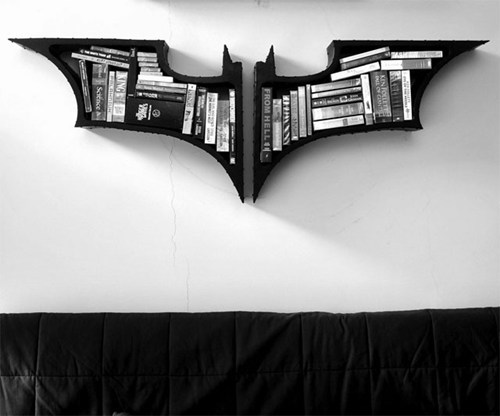
A batshelf fit for all your batbooks. Was on Etsy. Sadly, no longer available. *Sigh* The good ones never last.

Hey, look! We found a thing on the internet! We thought it was cool, and wanted to share it with you.
History for Writers: Introduction
 Writers of fiction and writers of history have long had a kinship with each other.
It is a telling fact that Herodotus, founding father of western historiography, saw himself as carrying on the work of Homer, the great epic poet. Herodotus himself has often been accused of being better at spinning a yarn than at getting his facts right, and Homer tells us quite a lot about the real warlords and merchants of his day through his stories of epic battles and heroic wanderings. Fiction and history have always sat at the same table. As a professional historian and an amateur writer, I’ve spent plenty of time thinking about how the two go together.
Writing fiction means imagining people and worlds that do not exist. That, in its essence, is also what the study of history is about. Now, historians must keep our imaginations grounded in testable evidence and rational argument, but all those facts add up to nothing without imagination. We will never shadow the emperor’s agents as they crept the back streets of Rome sniffing out agitators, or break bread with a gang of workers in the shadow of a half-built pyramid and listen in to their work-camp gossip, or watch over Confucius’ shoulder as one petty, corrupt, minor official after another slowly drove him to consider whether there could be a better way to live. Those people and the times they lived in are gone, and if we are to make any sense of the evidence they left behind we must try to imagine the worlds in which they lived.
Forest Photos Made Otherworldly
I just ran into a collection of photos of woods and other natural areas by photographer Ellie Davies. I thought many of the forest photos in particular looked magical or fairylike. Take a look:
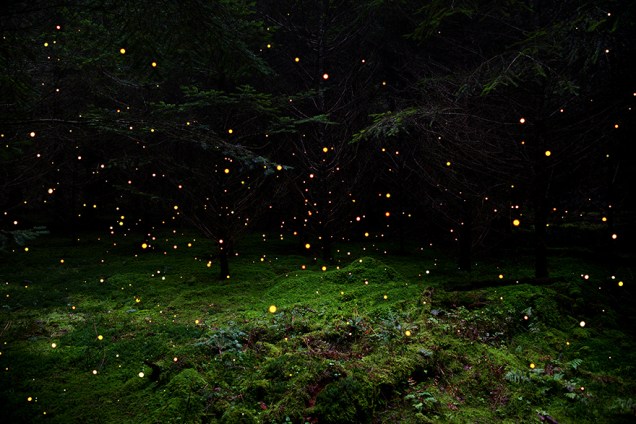
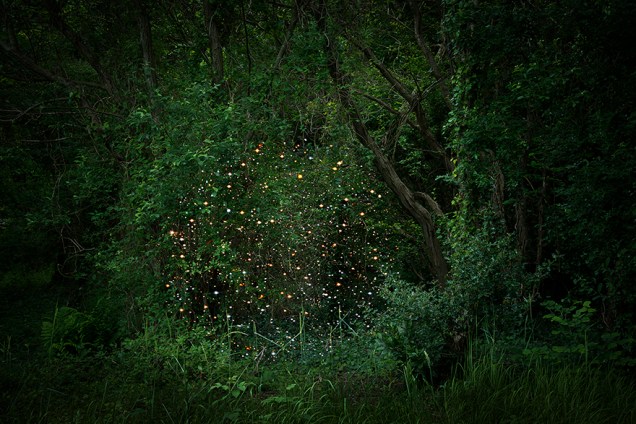
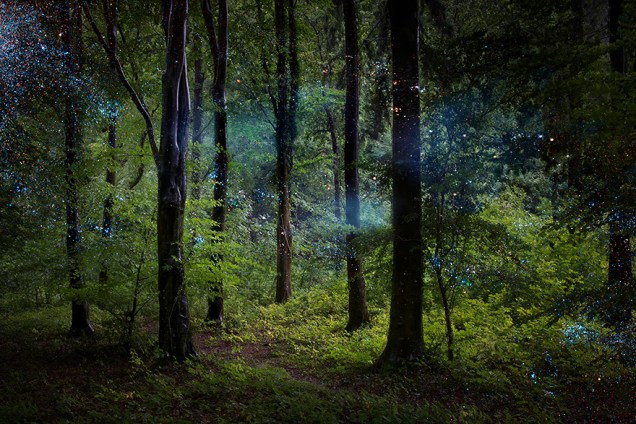
The photos above come from her series Stars from 2014-2015. I couldn’t figure out how Davies made them. Turns out that they are composites of forest photos and Hubble images of the Milky Way, Omega Centauri, the Norma Galaxy, and embryonic stars in the Nebula NGC 346, provided by Space Telescope Science Institute (STScI) and NASA. Very neat!
Some of Davies’s past projects incorporate photoshopped elements, small-scale construction, or objects into the landscapes she photographs.


Despite the man-made additions, the photos stay in an apparitional realm, playing with the otherwordly. And it’s intentional. In her artist’s statement, Davies writes:
“UK forests have been shaped by human processes over thousands of years and include ancient woodlands, timber forestry, wildlife reserves and protected Areas of Outstanding Natural [Beauty]. As such, the forest represents the confluence of nature, culture, and human activity. Forests are potent symbols in folklore, fairy tale and myth, places of enchantment and magic as well as of danger and mystery. In more recent history they have come to be associated with psychological states relating to the unconscious.
“Against this backdrop [my work] explores the ways in which identity is formed by the landscapes we live and grow up in. Making a variety of temporary and non-invasive interventions in the forest, my work places the viewer in the gap between reality and fantasy, creating spaces which encourage the viewer to re-evaluate the way in which their own relationship with the landscape is formed, the extent to which it is a product of cultural heritage or personal experience, and how this has been instrumental in their own identity.”
Found via Colossal.
Out There is an occasional feature highlighting intriguing art, spaces, places, phenomena, flora, and fauna.
John Williams is the Man
Star Wars a capella tribute medley via Corey Vidal
The classics never go out of style.
Seeing trailers in the theatre for Jurassic World and Star Wars: Episode 7 has me humming John Williams themes, so here’s some of the best to enjoy.
Hey, look! We found a thing on the internet! We thought it was cool, and wanted to share it with you.
Why Co-Geeking?
We’re Eppu and Erik Jensen, your hosts at Co-Geeking. Welcome.
It all started with a t-shirt.
Many years ago, in a small Irish pub, the two of us struck up a conversation over a t-shirt decorated with Viking-age art. For some reason, the topic of role-playing games came up and we found out that we’re both gamers. We knew then that we had so much more to talk about and we discovered a lot of shared interests: history, language, fantasy and sci-fi, games, and more. We’ve been together, and geeking together, ever since.
There’s nothing like living with someone who will hum along when you start singing “Far over the Misty Mountains Cold” or who knows exactly what you mean when you say: “Ugh, Neelix is the Jar-Jar Binks of Star Trek.” Being a geek is so much more fun when you have someone to geek with you: a co-geek, if you will.
This blog is a joint project all about those things that we share a passion for. We’re here to talk about things like history, design, art, stories, characters, language, and why they all matter to us.
 Co-Geeking