The “Sheer Dumb Luck” Table

150910rpg

Sometimes the tools you use the most are the simplest ones. This is one of the simplest things in my arsenal when I run a role-playing game, but I use it all the time.

Your players will often ask you questions that you didn’t think of ahead of time. Is the guard wearing gloves? Are there any pine cones lying around? Does this planet have any beryllium deposits near the surface?

Of course, if it matters to the adventure whether or not the guard is wearing gloves, then you have your answer and you go with it, but often either yes or no will do, you just have to pick one. It can be exhausting to always be having to decide, so you can just flip a coin, but not everything in the world is a fifty-fifty chance. If you’ve already established that it’s a cold night, the chances that the guard is wearing gloves are pretty high.

That’s where the table comes in, which, in honor of my favorite Harry Potter character, I have dubbed: The “Sheer Dumb Luck” table.

150922luck

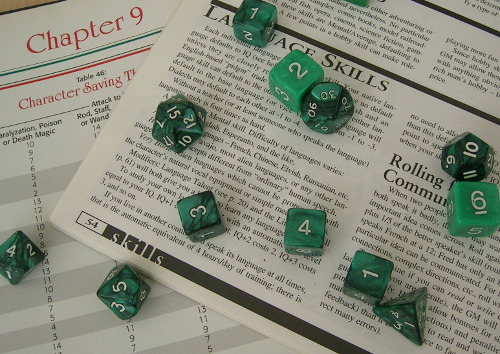
Simply pick the descriptor on the list that sounds right for whatever your players asked and roll 3d6. Is the guard wearing gloves? Very likely. Are there any pine cones? Somewhat likely. Any beryllium? Virtually impossible. If you roll equal to or under the number given, the answer is yes. If higher, no.

  • 4–Virtually impossible
  • 6–Very unlikely
  • 8–Unlikely
  • 10–Fifty/fifty
  • 11–Somewhat likely
  • 12–Likely
  • 14–Very likely
  • 15–Virtually certain

And the best thing about this table: sometimes, once you’ve rolled, you realize that the opposite answer is actually better. One way or another, you’ve answered the question and the adventure can keep rolling.

Like everything, it’s a tool, not a rule. Not everyone likes to leave as much up to chance in an adventure as I do. Use it if it helps, ignore it if it doesn’t.

Images: Books and dice by Erik Jensen; “Five points…” via rosereturns.tumblr.com

Of Dice and Dragons is an occasional feature about games and gaming.
Some Mockingjay – Part 2 Prep

Almost time!

TheWrap Mockingjay Pt2 Poster

A roundup of random Hunger Games stuff (but no reviews, so no spoilers) to prepare for the Mockingjay – Part 2 premier:

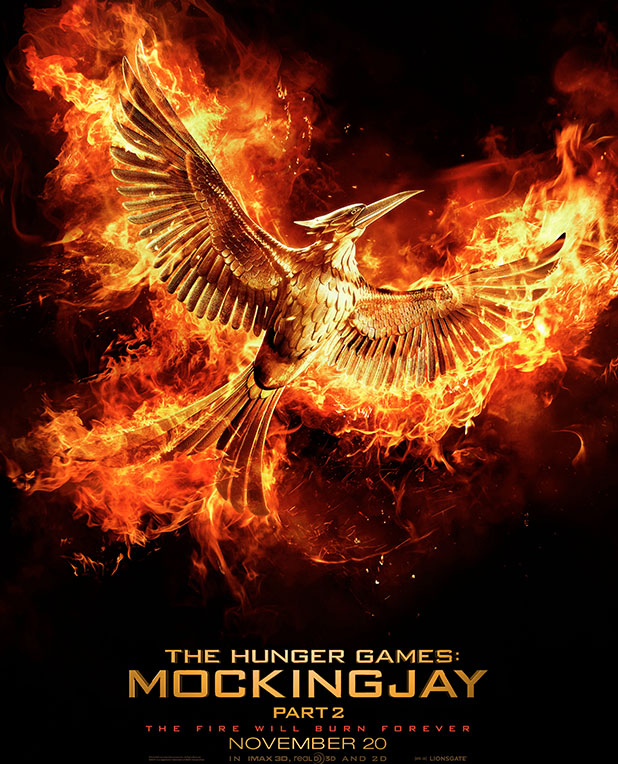
Image: Mockingjay – Part 2 poster via The Wrap

Hey, look! We found a thing on the internet! We thought it was cool, and wanted to share it with you.

Travel: Some Basics

151116caravanWhether it’s carrying the One Ring to Mount Doom or sailing the Azure Sea, travel is an important part of a lot of fantasy stories and games. For those of us more accustomed to traveling by car, train, bus, and plane than by foot, horse, oxcart, or galleon, this poses a lot of practical problems. How far can your characters travel in a day? How long will it take them to get from point A to point B? And what do they need in order to make the journey successfully?

This is the introduction to a History for Writers series that looks at the evidence of history to help provide practical answers to your questions about travel in the pre-modern world. We’ll look at a few basic issues today. In future installments we’ll examine specific modes of travel, terrains, and problems.

Note that what we’re discussing here is based on real-world history, so it applies only to the extent that your world resembles historical conditions. If your characters travel by foot, horse, and sail, much of the information here will be directly applicable. If they have teleportation and magic carpets, adjust accordingly.

Here are a few basic issues that apply to just about any kind of travel in a pre-industrial world:

Continue reading →

The Phantom Mousse

To accompany the first of our Star Wars rewatches, I made a dark chocolate mousse. As rich as Queen Amidala’s wardrobe and as dark as Senator Palpatine’s heart, this mousse kept us happy through the podrace and droid battles.

The Phantom Mousse

Ingredients

  • 7 oz dark chocolate
  • 2 tablespoons butter
  • 4 tablespoons dark rum
  • 3 eggs

Melt the chocolate, butter, and rum together in a double boiler over barely simmering water

Separate the eggs

Remove the melted chocolate from the heat and whisk in the egg yolks

Beat the egg whites until they form soft peaks

Whisk the egg whites into the chocolate mixture

Spoon into dishes and chill for an hour


Image by Eppu Jensen

Geeks eat, too! Second Breakfast is an occasional feature in which we talk about food with geeky connections and maybe make some of our own. Yum!

Our Star Wars Rewatch Project: Episode I

Our Star Wars rewatch project begins a long time ago in a galaxy far, far away with Episode I: The Phantom Menace.

1. Best fight

151112JediEppu: Darth Maul vs. Qui-Gon and Obi-Wan on Naboo, hands down. This is how the Jedi fight, not the staid fop-fop-tap of Episode IV!

Erik: Agreed. Whatever else you may say about Phantom Menace, we finally got to see Jedi in their prime fighting a worthy adversary.

2. Best line

Erik: “Her Highness commands you to take her handmaiden with you.” Captain Panaka to Qui-Gon setting out on Tatooine. Less for the line itself than for how Hugh Quarshie delivers it. You can tell that he thinks this is a really, really bad idea, but he’s doing his job of helping the queen do what she wants to do.

Eppu: “What, you think you’re some sort of Jedi, waving your hand around like that?” Watto to Qui-Gon. Delivered in Watto’s bone-dry style, too, it’s hilarious.

3. Best minor character

Pomegranate Seeds Kitster

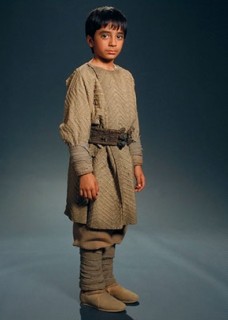
Eppu: Kitster, one of Anakin’s friends on Tatooine. Very sympathetic young man.

Erik: TC-14, the protocol droid on the trade federation ship. Like C-3P0, more personality than you would expect a droid to have.

4. Best reveal

Erik: When the hangar doors on Naboo open on Darth Maul.

Eppu: The droid army unpacked from the bowels of the transportation drones, unfolding into their full size. I still remember seeing it for the first time.

5. Best save

Eppu: During Queen Amidala’s attack on the palace, Captain Panaka shoots out a window, the group steps out to the ledge, and uses their fancy handguns-cum-harpoon-and-line-shooters to skip to the next floor.

Erik: When Watto tries to back out of a bet, Qui-Gon casually suggests taking the matter up with the Hutts. That’s enough to convince Watto to pay up.

6. Best visual

151112TheedErik: Theed, the capital city on Naboo. Gorgeous landscape and architectural detail.

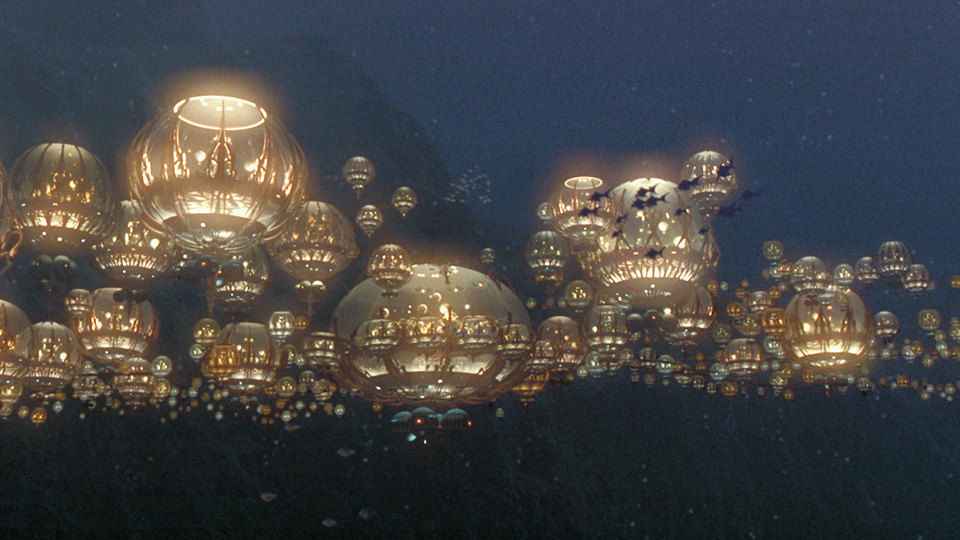
Star Wars Otoh GungaEppu: The approach to the underwater Gungan city. One of my favorite scenic scenes in the Star Wars universe.

Extra question: Best misdirect

Eppu: Palpatine’s plotting, all of it. Plotwise it’s a step up from the original trilogy, just like the Jedi fights are.

Erik: The opening crawl about conflict over the taxation of outlying trade routes. One of the themes of the prequel trilogy is how momentous events can have tiny beginnings. The taxation of trade routes sounds like the most boring subject for a movie ever, but it leads to the fall of the galactic republic.

Your turn – what’s your Best list for Episode I?

Images: Lightsaber fight via Giphy; Kitster: via fialleril on Pomegranate Seeds; Theed: wookiepedia;  Gungan city: StarWars.com.

In the Seen on Screen occasional feature, we discuss movies and television shows of interest.


Our Star Wars Rewatch Project: Introduction

To prepare for Star Wars: Episode VII – The Force Awakens, we’re Doing a Project. We’ll see all six Star Wars movies in order, roughly one a week, and for each movie, we’ll give our opinion on the following:

  1. Best fight
  2. Best line
  3. Best minor character
  4. Best reveal
  5. Best save
  6. Best visual

For extra fun, Erik decided to make a dessert to go with each movie. We’ll share photos of those, too. Follow the posts with the SW rewatch tag.

And please join us – leave a link for your own posts, or comment with your own Best list!

In the Seen on Screen occasional feature, we discuss movies and television shows of interest.

Headcanon: Underground Hydroponics in The Hunger Games World

From time to time, I get sucked into thinking about the pragmatics of fictional worlds. By that I mean all the mundane details of how people lead their everyday lives, starting from the very basic human (or creature) needs like food, clothing, waste management, and social interaction. Not just who takes care of, say, the laundry and when, but where do they go to do it, how do they get there, what kinds of implements are they expected to bring in themselves and what is shared, how long does it take, what physical motions do they go through, is it a solo activity or a joint effort, and the like.

For me as a visual person, often thinking about everyday activities and movement through spaces tumbles into thinking about what exactly do these various spaces look like. It’s a way to add depth and realism into a story – we are physical beings who love tactile experiences and accumulate all sorts of personal possessions, and if a fictional world ignores that, it makes that world fall flat for me. (Hello, Star Trek!)

The Hunger Games is one of the current ones in my mind because of the approaching Mockingjay – Part 2 premiere and because of an article on Colossal I saw about a World War II era bomb shelter in London that has been turned into an underground farm.

Growing Underground Forgotten Heritage Photo Shoot
Growing Underground on Instagram.

The company running the operation, Growing Underground, produces leafy greens like watercress, basil, coriander, and radish in hydroponic beds lit by LED lamps.

Growing Underground Beds Homepage
Growing Underground.

In the The Hunger Games world, the population of District 13 lives in underground bunkers; the above-ground structures were destroyed by the Capitol. In the Mockingjay novel, Collins mentions various spaces like the armory, the laundry, labs, testing ranges, and farms in passing. She describes these spaces mostly just in very generic terms; e.g., the color of the living compartments is white, and we hear of furniture like dressers and conference tables with individual screens, but that’s about the extent of the detail.

Scenes in the movie Mockingjay – Part 1 show the special weapons lab with a shooting range, the hangar, the bunker, and some hospital and apartment rooms, among others, but I don’t think we’ve seen any underground farms of any kind, nor the poultry farm, for example, that was destroyed in the book version of the bombing of 13 by the Capitol.

Mockingjay1 D13 Collage
Clockwise from top: living quarters, cafeteria, and infirmary at District 13. Images via Jabberjays.net.

The Growing Underground photos of their growing beds fit quite well with Collins’s carefully frugal description and the established Hunger Games visual style. So, in my headcanon, even if we haven’t seen them on screen, District 13’s underground hydroponics now look very much like those of Growing Underground.

Out There is an occasional feature highlighting intriguing art, spaces, places, phenomena, flora, and fauna.

Three Mockingjay – Part 2 Trailers

The Mockingjay – Part 2 premier is approaching! I just finished rereading the novel; now it’s time for rewatching. Here are three trailers:

The Hunger Games: Mockingjay Part 2 Official Trailer – “We March Together”

The Hunger Games: Mockingjay Part 2 Official Trailer – “For Prim”

The Hunger Games: Mockingjay Part 2 Official Trailer – “Welcome To The 76th Hunger Games”

Hey, look! We found a thing on the internet! We thought it was cool, and wanted to share it with you.

Dynastic Race Theory and Why Revision Is Essential

151109steleThe words revision and revisionism, when it comes to history, have a bad smell. They are lobbed as insults against people who propose new ways of understanding things that already have a conventional explanation. “We had it right the first time, stop monkeying with it” is the implied retort. Revision, however, is essential to the study of history. No matter how well we think we understand something, our grasp of history is always partial and conditional. New evidence, new ideas, and new questions applied to the known sources frequently yield new results and we often discover that our conventional explanations, while not wrong, are incomplete. And sometimes they are just wrong.

Here’s an example. As the European study of ancient Egyptian history developed in the 1800s, European colonialism was also spreading across Africa. For scholars who supported the imperialist agenda, or at least accepted its intellectual framework (and there were those who didn’t, but they were a minority), ancient Egypt presented a problem. Imperialist thinking declared that Africans were incapable of reaching a high level of culture without the help of superior white men, and therefore European colonization of Africa was not just a profitable venture but a moral imperative. Yet there could be no denying that ancient Egypt had been a high culture. How could both things be true?

Continue reading →