Content note: icky female bodily fluids are depicted (faked, obviously, but nevertheless) and discussed. Beware, hereinafter there be cooties!
The short is both written and directed by Julia Aks and Steve Pinder. Furthermore, Aks stars as Miss Estrogenia ‘Essy’ Talbot. According to IMDB, the farce is introduced thus:
“England, 1813. In the middle of a long-awaited marriage proposal, Miss Estrogenia Talbot gets her period. Her suitor, Mr. Dickley, mistakes the blood for an injury, and it soon becomes clear that his expensive education has missed a spot.”
Don’t let the film’s short duration fool you: Jane Austen’s Period Drama has very impressive sets and props plus acting and filming, but it’s the writing that takes the cake. (Chocolate cake, obviously, considering the topic.)
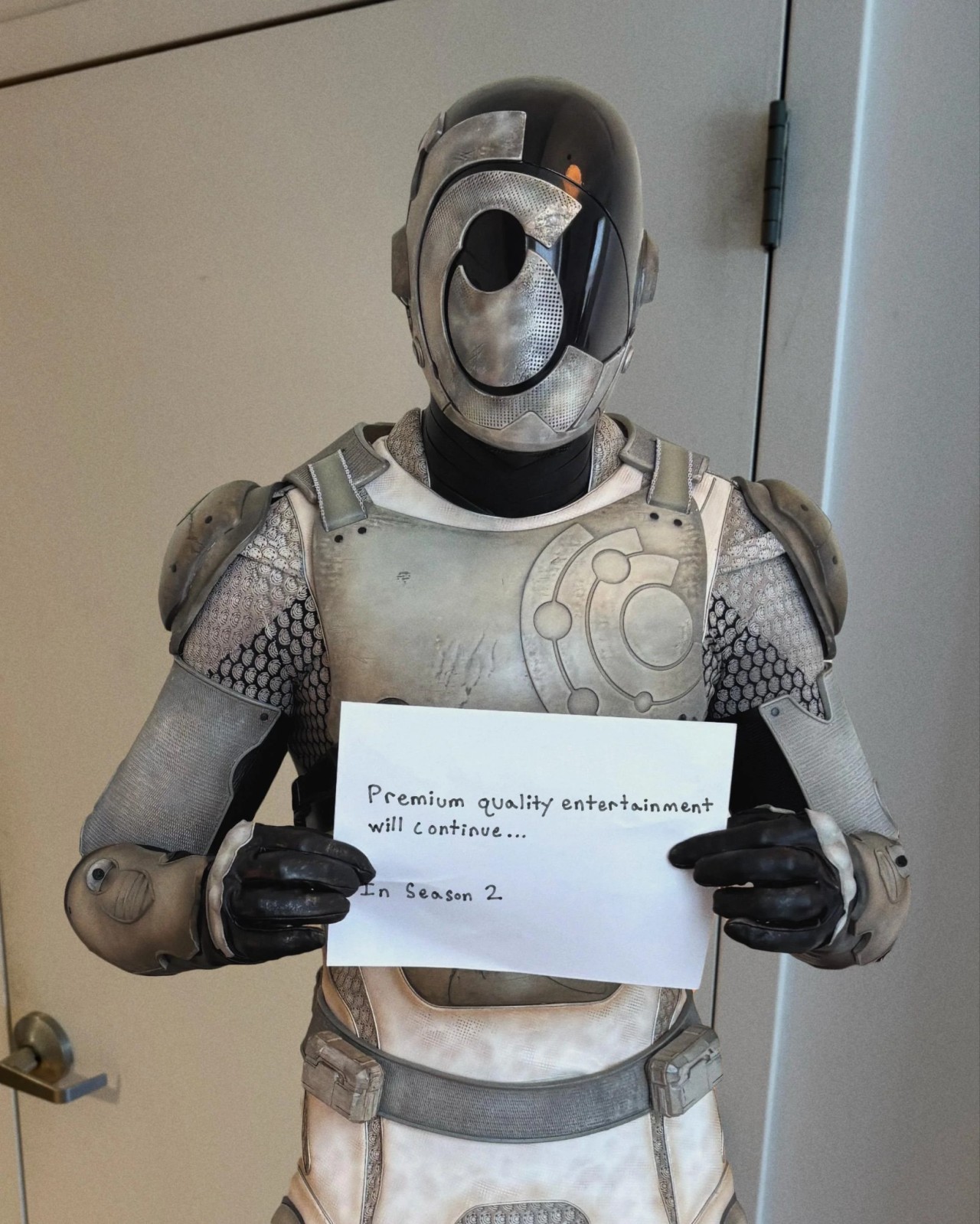
So, the first season of Murderbot tv adaptation ended. I have thoughts and feelings! But: more importantly, the announcement was already made via multiple channels that the series has been renewed for season two!
Yaaaaay!
I will want to binge the whole series through one more time at least and ruminate on some of the changes before I can say anything sensible.
We all know that the representation of people of different genders and races is imbalanced in popular media, but sometimes putting it into visual form can help make the imbalance clear. Here’s a chart of the Phase 4 movies of Marvel’s Cinematic Universe (Black Widow, Shang Chi and the Legend of the Ten Rings, Eternals, Spider-Man: No Way Home, Doctor Strange in the Multiverse of Madness, Thor: Love and Thunder, Black Panther: Wakanda Forever)
Characters included
(Characters are listed in the first movie in which they qualify for inclusion under the rules given below. Multiple versions of the same character played by the same actor are not counted separately.)
Black Widow: Natasha Romanof / Black Widow, Melina, Yelena Bolova, Alexei / Red Guardian, Antonia Dreykov / Taskmaster, Dreykov
Shang-Chi and the Legend of the Ten Rings: Xu Wenwu, Ying Li, Xu Shang-Chi, Katy, Razor Fist, Xu Xialing, Trevor Slattery, Ying Nan
Spider-Man: No Way Home: Peter Parker / Spider-Man 1, MJ Watson, J. Jonah Jameson, May Parker, “Happy” Hogan, Ned Leeds, “Flash” Thompson, Stephen Strange, Otto Octavius / Doctor Octopus, Norman Osborne / Green Goblin, Flint Marko / Sandman, Curtis Connors / Lizard, Max Dillon / Electro, Peter Parker / Spider-Man 2, Peter Parker / Spider-Man 3
Doctor Strange in the Multiverse of Madness: America Chavez, Christine Palmer, Wanda Maximoff / Scarlet Witch
Thor: Love and Thunder: Gorr, Thor, Jane Foster / Thor, Valkyrie, Axl, Zeus
Black Panther: Wakanda Forever: Shuri, Namor, Namora, Attuma, Ramonda, Okoye, Nakia, M-Baku, Everett Ross, Valentina Allegra de Fontaine, Riri Williams / Ironheart
Rules
In the interests of clarity, here’s the rules I’m following for who to include and where to place them:
I only count characters portrayed by an actor who appears in person on screen in more or less recognizable form (i.e. performances that are entirely CG, prosthetic, puppet, or voice do not count).
The judgment of which characters are significant enough to include is unavoidably subjective, but I generally include characters who have on-screen dialogue, who appear in more than one scene, and who are named on-screen (including nicknames, code names, etc.)
For human characters that can be reasonably clearly identified, I use the race and gender of the character.
For non-human characters or characters whose identity cannot be clearly determined, I use the race and gender of the actor.
I use four simplified categories for race and two for gender. Because human variety is much more complicated and diverse than this, there will inevitably be examples that don’t fit. I put such cases where they seem least inappropriate, or, if no existing option is adequate, give them their own separate categories.
“White” and “Black” are as conventionally defined in modern Western society. “Asian” means East, Central, or South Asian. “Indigenous” encompasses indigenous peoples of the Americas, Oceania, Australia, and other indigenous peoples from around the world.
There are many ethnic and gender categories that are relevant to questions of representation that are not covered here. There are also other kinds of diversity that are equally important for representation that are not covered here. A schematic view like this can never be perfect, but it is a place to start.
Corrections and suggestions welcome.
Image: Diagram by Erik Jensen
In Seen on Screen, we discuss movies and television shows of interest.
In no particular order. Spoiler warnings in effect.
Erik’s random thoughts:
The beginning and ending of this movie felt rushed. The beginning had to get the audience caught up on a bunch of streaming shows that not everyone has seen. The ending felt like it ran out of time to properly wrap up both story elements and emotional beats. As ridiculous and entertaining as the musical number on Aladna was, maybe a minute or two of that runtime could have been better spent on other parts of the movie.
Even though we have watched most of the relevant streaming shows (we’ve seen WandaVision and Ms. Marvel; we gave up on Secret Invasion after they fridged their third woman in as many episodes), I still felt as though I was missing out on some backstory. It’s like there’s half a movie we all missed somewhere along the way.
Iman Vellani is fantastic as Kamala Khan / Ms. Marvel, and she plays brilliantly off both Brie Larson and Teyonah Parris. Carol Danvers may be drivingf this movie’s story, but Kamala is its big, goofy, awkwardly earnest teenaged heart.
I think I counted two white men with speaking roles—three at a stretch if you include the stinger (and not getting into complicated questions about South Asian identities). At the same time, the movie doesn’t make any kind of issue about gender or race; people are just people. We’ve come a long way from the blazing white maleness of Iron Man, even from movies like Black Panther and Captain Marvel which showcased the diversity of their representation and made it a feature of the movie. The Marvel Cinematic Universe is better for reaching a place where a movie full of people who aren’t white men is unremarkable.
With Guardians of the Galaxy, Thor: Ragnarok, and now The Marvels, the MCU is fully committing to the idea that space is big, colorful, weird, and often kind of silly, and I love it.
It was great to see the heroes find their strength not by force of will or emotional epiphany but with practice, and especially by practicing together.
Having flerken kittens tentacle-eat people as an evacuation strategy was already pretty funny, but setting it to a song from Cats was comedy genius.
Eppu’s random thoughts:
It’s too bad that I’ve never read any Carol Danvers stories. It seems there’s a lot of potential in the character—or a lot of comic book storylines that could’ve been tapped—but for some reason she hasn’t gotten another movie for herself; hardly any time at all, in fact, even in the movies that she has been in.
Like MCU’s Peter Parker (Tom Holland), the new Ms. Marvel Kamala Khan (Iman Vellani) actually feels like a teenager. Good job writing and acting that aspect. (So good, in fact, that we almost gave up on Ms. Marvel the series.) Also Khan’s mother Muneeba (Zenobia Shroff) is a treasure!
It’s DELIGHTFUL that we had a proper training montage! I was so satisfied to see how exactly the Marvels figured out how to take advantage of their inadvertent swapping-places-snafu, even to the extent of tagging in and out while juggling.
I guess it’s an indication of how few women I’m used to seeing in the MCU that I kept being astonished at how many female characters we got not only to see but to hear. (“She got lines! And she got lines, too!”)
Teyonah Parris as Monica Rambeau felt the most one-dimensional of the three protagonists. Apart from still suffering from Auntie Carol abandoning her in her childhood, what did she have going on in her life? Not much, as I recall. (Well, work, but don’t they all have that.)
In the MCU, there’s a distinct testosterone-and-big-guns strain (e.g., the Avengers and Iron Man movies), another that’s kookier but mostly sticks with humans (Ant-Man, Doctor Strange), and a third that’s waaaay out there (Guardians of the Galaxy, Thor: Ragnarok). I used to think there’s room for all kinds of takes, from serious to silly, but at least in The Marvels the different veins seem almost to quarrel. The result is a mix where the various styles pull in different directions and don’t quite cohere. I would’ve wanted to see a higher quality, more polished movie. Perhaps the writers are still recuperating from the cumulative effects of the pandemic and the Hollywood writer’s strike. (I know I haven’t bounced back all the way yet, and I didn’t even have to strike.)
Star Wars Day is coming soon (May the Fourth be with you!), so I’ve been thinking about how I got into that universe. My route in was a bit odd.
I’m a little bit too young to have been caught up by the original movies. I wasn’t even born yet for the first one. I vaguely remember when TheEmpire Strikes Back was a thing. Return of the Jedi is the first movie trailer I can actually remember seeing on tv. Even if I had been old enough to go to the movies, though, I wouldn’t have gone to see Star Wars then. It just wasn’t a thing I was interested in.
That doesn’t mean I wasn’t aware of Star Wars. Star Wars merchandise was all over my childhood. Friends had Star Wars lunchboxes and t-shirts. I saw the posters and the toys. Before I was reading on my own, I could recognize Darth Vader and Yoda. Some of the neighborhood kids staged a recreation of a scene from Return of the Jedi. (As the youngest of the group, I was cast as an Ewok. I had no idea what that meant, but all it required me to to was run around and scream unintelligibly, which was about the limit of my acting ability at that age.)
When I did discover science fiction, it wasn’t Star Wars but old reruns of the original Star Trek that lit up my young brain. I was completely hooked on Star Trek and, with the stubborn, stupid loyalty of the very young, decided that there was only room in my life for one Star franchise. For years I scoffed at the Star Wars memorabilia around me and snootily dismissed anyone else’s interest in the movies.
I was nearly in junior high before I finally decided to give Star Wars a try. Oddly enough, though, my first experience of Star Wars was not with the movies themselves. In my school library I found a set of picture books that told the story of the original trilogy movies (the only movies there were at the time) illustrated with stills from the films. My memory of the books is hazy, but at a best guess they were The Star Wars Storybook, The Empire Strikes Back Storybook, and the Return of the Jedi Storybook. I decided to give them a shot.
To my surprise, I enjoyed them, enough to hop on my bike, ride over to the local video rental shop, and check out the movies themselves. It was a weird experience. In a sense, I felt like I had always known these stories. I certainly couldn’t remember a time when I hadn’t known that there were heroes named Luke and Leia who fought a villain in a black helmet while accompanied by a couple of shiny droids. Reading the books filled in the details of a story that already felt familiar. By the time I actually saw Star Wars on screen, I knew who the characters were and what was going to happen. Watching those movies for the first time already felt like revisiting old friends.
Weirdly, one thing that wasn’t spoiled for me until I read the books was the Skywalker family tree. I can still remember the shock of finding out that Darth Vader was Luke’s father and then that Leia was his sister. That may be hard to believe in today’s world of fan sites and social media, but I made it through more than a decade of knowing who those characters were without knowing how they were related. Somehow, in all the years of my childhood, I never heard any of my friends who were into Star Wars put on a deep voice and say “Luke, I am you father.”
Star Wars has a special place in modern pop culture because it is special. It is one of the few stories we all know, even if we’ve never seen it. Whether you love it or not, and however you may feel about the prequel and sequel trilogies or any of the vast outpouring of other media in the Star Wars universe, it’s a story that we all have our own stories about.
In Seen on Screen, we discuss movies and television shows of interest.
The other day, fueled by our discussion on what to watch after dinner, I started musing about a certain mood of mine and what connects the works I gravitate towards when in that mood. I landed on the term competence porn without realizing it is an existing term. (There’s even a Wikipedia article on competence porn.)
In alphabetical order, here is my short viewing list:
Charlie’s Angels (2019)
Elementary
Leverage
Ocean’s Eight
Rogue One
Wonder Woman
And a back-up list with works that fulfill some criteria, fail others, but that I nevertheless often like to watch when in that mood of mine:
Black Widow
Captain Marvel
Miss Marple (the series with Joan Hickson)
Murdoch Mysteries
Star Wars VII-IX (specifically Rey’s storyline)
There seems to be surprisingly much variance in the use of the term competence porn, so rather than dissect the alternatives, here is what I mean by it:
Typically has multiple competent, intelligent characters of different skills or areas of expertise working together, often towards a fairly big goal.
Involves complex problem-solving. Can but need not include a heist.
There’s a somewhat nebulous aspect I haven’t yet been able to quite define for myself. For example, on the surface, the action flick Gunpowder Milkshake fills the above requirements—it has multiple competent and intelligent characters, lots of problem-solving, women being awesome, and learning to work together, and yet I cannot count it as competence porn for my purposes. I guess it’s an aspect of fun? Or a lack of despair / despondency / dejection / melancholy / gloom?
Anyway, I’ll talk a little about why I’ve placed each of the works above onto my viewing list.
1. Charlie’s Angels
I find the protagonist Elena (played by Naomi Scott) very irritating; on the other hand, Jane and Sabina (Ella Balinska’s and Kristen Stewart’s characters) plus Boz and Bosley (Elizabeth Banks and Djimon Hounsou) are great. Stewart has a bad rep, I guess, and I guess primarily from the Twilight movies (the only things I have seen her in), but on the basis of her performance here I’d suggest she does have skills but was just badly directed in that series. Anyway, it’s a learning to work together story, which I like a lot, and all the women down to the side characters are awesome.
2. Elementary (2012-2019)
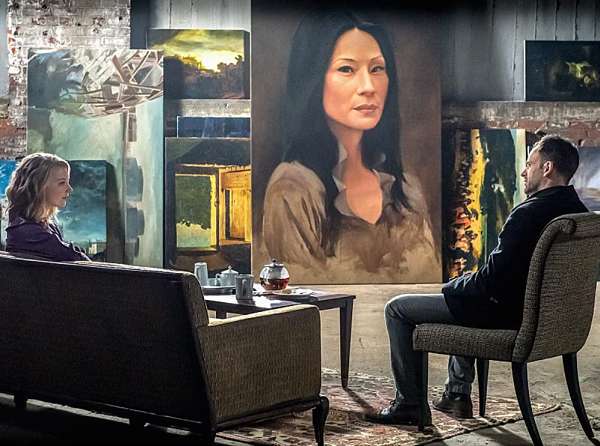
A modernized version of Sherlock Holmes set loose in New York City with a gender-flipper Watson. Both Jonny Lee Miller and Lucy Liu are fantastic as the detective duo, and the smart NYPD cast, Captain Gregson and Detective Bell (played by Aidan Quinn and Jon Michael Hill), also contribute their fair share. The Ms. Hudson and Moriarty versions were also interesting, but all in all there are too few women. (Still half of the population, hello?) Nevertheless, the astounding cases, quality acting, and scenes of real NYC in all its glitter and grime continue to keep my interest despite some less successful story lines.
3. Leverage (2008-2012)
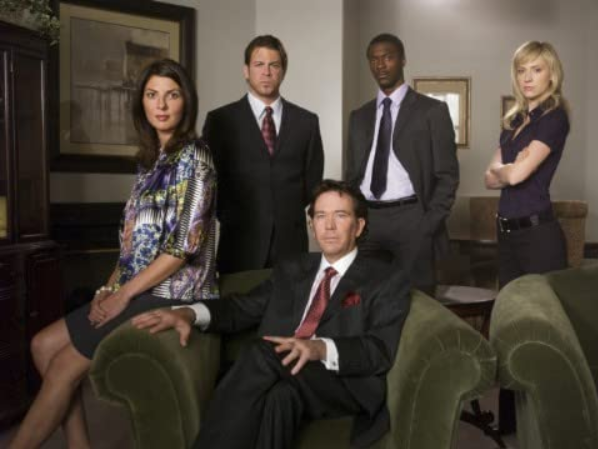
Yes, yes, yes—ticks all the boxes despite some unevenness in the writing. If only it didn’t have Nate nor the actor, Timothy Hutton; I’m so fed up with wallow-y man pain (and, whoo boy, does he wallow) with or without alcohol, but it’s infinitely worse with.
The three youngsters should’ve had a series of their own; THAT would’ve been great, and I would throw money at it!
4. Ocean’s Eight
Yes, yes, YES! (Despite Sandra Bullock, Anne Hathaway, and Helena Bonham Carter, who all are far from favorites of mine.) Cate Blanchett, Mindy Kaling, and Rihanna were fabulous. The heist is simply staggering, and it helps it’s also a learning to work together story in part.
5. Rogue One
Although in the beginning we only see a glimpse of Jyn Erso’s childhood and we hear little of how she lived afterwards, it’s clear that she can handle herself, backwards and blindfolded if needs be. I enjoy seeing just how the Rogue One group slowly comes together to run their desperate mission. It needs more women, though.
Rogue One is clearly the least fun of my six competence porn stories, which makes it really hard to put into words why it’s on my list. I just know that it is.
6. Wonder Woman
There are some plotholes and/or weaknesses I’d rather do without, but the learning to work together aspect of the story nevertheless makes the movie work for me. And—need I say it?—SO many awesome women. I could spend more time seeing Amazon action on Themyscira!
Do you have a competence porn viewing or reading list? If so, I’d like to hear yours.
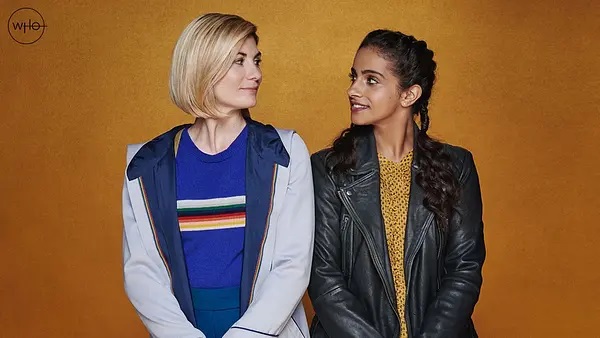
This fall we’ve worked on catching up on Doctor Who, including some reading. Apparently, the romantic signals between Yaz and the Doctor essentially came from the actors, Mandip Gill and Jodie Whittaker, after they saw some fan speculation in social media.
Intriguing! I have often wondered how much say actors typically have over their characters, but I guess there isn’t a typical situation. At least on the basis of movie and series documentaries, it really seems to be up to each individual showrunner / writer / director how much creative control they’re willing to hand over to anyone else.
As I don’t read fan fic of any kind, this development was surprising to me. It was played nicely, though—subtle, not a hammer to the head (like some other stories I could point to).
Anyway; delighted to finally have a female Doctor! I’m looking forward to what writer Russel T. Davies and actor Ncuti Gatwa have in store for the fifteenth Doctor.
Thoughts in no particular order but grouped thematically. Spoiler warnings in effect!
Characters
Erik’s thoughts:
Angela Basset as Queen Ramonda gives a devastatingly powerful performance. She conveys so much grief, love, and determination with very spare acting choices. She commands the scene every time she is on screen.
One of the things I have always appreciated about the world of Black Panther is how much room it makes for characters to listen, learn, and grow. We saw it with T’Challa and Nakia in the first movie; here Shuri and M’Baku show it best.
Another wonderful thing about Black Panther has been how much room the movies make for women to have stories that aren’t about relationships—romantic or familial—with men. T’Challa’s death naturally hangs heavily over Wakanda Forever, but the movie also balances that with incredibly important relationships among women.
Eppu’s thoughts:
Tenoch Huerta was great as an all-powerful, unhinged Namor. He rotated through cracked, creepy, companionable, and perhaps even a little lonely. (After all, we didn’t see him connect with anyone else other than Shuri.) The way he tried to physically intimidate Ramonda by leaning way, way, WAY too close during their beach conversation still gives me the chills.
LOVED the amount of women again: women with real agency, and lives and goals of their own. Like real people, imagine that! (Well, perhaps not Director de Fontaine—she smells like a future baddie, and a hammy one at that like Rumlow / Crossbones was—but to be fair we didn’t see much of her yet.)
I knew to expect tributes to Chadwick Boseman, but wouldn’t have guessed how much there was. And the opening credit where the letters spelling Marvel Studios were all filled with images of T’Challa—that was perfect. The usual Marvel theme would’ve sounded garish, too. RIP.
Story
Eppu’s thoughts:
I found that the pacing worked for me; I didn’t feel bored nor overwhelmed. It was really nice that the characters were given time to process, to just sit for a bit instead of rushing headlong at a breakneck speed. (I’ve long loathed the old rule of there-must-be-an-action-scene-every-7-minutes or whatever; that means you don’t have a story strong enough to hold the audience’s attention.)
It was really nice that Ramonda and Shuri had a moment when they left their high tech behind and just sat in the bush at a campfire, talking. It felt true—we Finns certainly detach from the city life and go enjoy nature from time to time.
Erik’s thoughts:
The movie felt like it was pulled in too may different directions. It was strongest when it stayed focused on Shuri and her relationships with her mother and the memory of her brother. Riri Williams was fun, but felt like a distraction from Shuri’s story and didn’t have enough time or focus to develop on her own. Nakia’s story was underdeveloped. Everett Ross and Director De Fontaine felt like they had wandered onto the wrong set while filming something else.
There is a beautiful echoing of T’Challa’s story in Civil War. Like T’Challa before her, Shuri’s early days as Black Panther are driven by grief and anger as she turns outward the rage and self-hatred that she feels for failing to save the life of someone she loved. T’Challa ultimately learned that revenge is self-destructive by watching Tony Stark and Steve Rogers fight. Shuri arrives at the same point after seeing the spirit of Killmonger, fighting Namor, and hearing her mother’s voice one last time.
Visuals
Erik’s thoughts:
Talokan is beautifully designed. It doesn’t look like a surface city built underwater but like a place built by and for people who live and think in three dimensions.
I love getting to go back to Wakanda and see more of the visual design. From clothing to technology to architecture, there is so much to see, so many layers and textures.
Eppu’s thoughts:
Superhero movies have a tendency for really flashy environments, so I was surprised how, well, watery they made the Talokan design. It felt more realistic (like The Abyss) instead of ostentatious (like Aquaman).
I loved seeing so much of Mesoamerican designs and colors! Granted, it’s not my strong suit, but it looked authentic enough.
Concepts
Eppu’s thoughts:
Shuri’s bucking against the traditions felt completely in character, and her coming round didn’t feel rushed. (For once—in my experience, mainstream movies and tv series have a tendency to rush the reversal, while artsy movies wallow in it.)
It was fantastic to have so many languages on screen! I don’t care that I don’t know them all—although it is very neat when I do, don’t get me wrong—because the main thing is it’s showing an international world, not just telling us the characters live in one. (Captain America: The First Avenger, I’m looking at you and the horrible fake German accent you gave poor Hugo Weaving and Toby Jones to do.)
The ship battle at the end was a disappointment, given how awesomely it started (the Dora Milaje jumping over the side supported by Jabari). You could argue that the sloppy Wakandan preparation is due to not having had fair fights in a long time, but Shuri at least used to care about the lives of her fellow citizens. It’s like she dragged people off to a suicide mission. Then, when the Wakandans decided to leave, no-one though to look down the sides of the Sea Leopard, or to safeguard their sonic weapon pointing underwater? Smacks of more arrogance.
Erik’s thoughts:
There is a long history in pseudoarchaeology circles of using the idea of a lost civilization as a way of denying the creativity of indigenous peoples. In particular, claims that Mesoamerican cultures were founded or taught by visitors from Atlantis are part of a narrative that feeds into white supremacism. I was worried about what we would see in this movie, but I’m happy that they turned that narrative around: Talokan was not a lost civilization from which the Maya drew their culture but a new civilization created by Mayan people themselves in response to the horror of colonization. I’m also glad that the name “Atlantis” was never even mentioned.
I wish we had gotten a standalone Talokan movie before this one. If this movie didn’t have to do the work of introducing us to Talokan and Namor, it would have had more time to develop its other elements and characters.
We’ve been rewatching some older Marvel movies lately. It’s interesting to see how the end credits scene has evolved from an Easter egg to a marketing ploy for upcoming movies to a chance for comic relief to an integral part of the storytelling.
Nitpicks
Erik’s thoughts:
Talokan was really dark. Realistic for a deep underwater city, but frustrating in a visual medium.
Ms. CIA bugged Shuri’s kimoyo beads? Really? Where did she get the technology to do that?
Why did we never see the Wakandans trying to rip off the Talokanis’ water breathing masks when fighting in air? That seems like such an obvious vulnerability to attack, especially when they’ve already talked about trying to dry out Namor.
Eppu’s thoughts:
Just the one stinger? Come on!
It seriously rubs me the wrong way how many people mispronounced Namor’s name. Even Shuri did it right after he told her the name’s origins and she had the chance to hear it. Nay, it’s not NAY-more. Na-MOR. (You don’t even have to speak Spanish to get it right; compare to the first vowel and stress in a-LIVE.)
Everett Ross and the CIA infighting felt disconnected, yes, but I did appreciate knowing what’s happened to him. Clearly Marvel is laying the groundwork for something here. (Reminds me of that random stinger with one of Zeus’ sons being given a mission of some kind at the end of Thor: Love and Thunder.)
We recently rewatched the Star Wars movies. We decided to individually rank the movies from favorite to least favorite, then compare notes. First, our brief thoughts on each movie individually.
Star Wars: Episode I – The Phantom Menace
Erik: Visually beautiful, but the plot drags and the dialogue is ludicrous. Like the other prequel movies, it at least has a clear narrative purpose that operates on two levels: the corruption of Anakin Skywalker and the fall of the Republic.
Eppu: Too messy all round; a travesty of writing not helped by (some of) the acting.
Star Wars: Episode II – Attack of the Clones
Eppu: Least bad of the prequels; only Ewan McGregor and Natalie Portman save the movie.
Erik: Despite its weaknesses (especially in the Anakin/Padme storyline), this film comes the closest to the series’ classic pulp sci-fi inspirations.
Star Wars: Episode III – The Revenge of the Sith
Erik: More weak plot and ridiculous dialogue, but there is an atmosphere to this film that sustains it, a palpable sense of an age of beauty and light coming to an end.
Eppu: An intelligent woman—and playing the Smurfette part to boot—is reduced to a walking womb. Yuck.
Rogue One: A Star Wars Story
Eppu: The learning-to-work-together aspect and found family vibes with a heaping of nostalgia offset the grimdark.
Erik: A love letter to the original trilogy, filled with great characters.
Solo: A Star Wars Story
Erik: An unnecessary, self-indulgent piece of fanfiction with neither the spirit of the original trilogy nor the narrative purpose of the prequels.
Eppu: It’s just weak all round, and Alden Ehrenreich certainly can’t pull off the role of young Han. (Well, except for propping, sets, and CGI, which at least are very professionally done if not always terribly imaginative.)
Star Wars: Episode IV – A New Hope
Eppu: Can’t beat a classic: well edited, scored, acted, with decent if at times very concise writing. Feels a little sparse or basic compared to today’s movie plots, which isn’t necessarily a bad thing.
Erik: There is beauty in how spare the writing and worldbuilding are, giving us just enough that our imaginations can fill in the rest.
Star Wars: Episode V – The Empire Strikes Back
Erik: Some great action sequences and character development, but it doesn’t feel like they all belong in the same movie.
Eppu: Darker and more desperate, again well constructed. Nostalgia helps here, too.
Star Wars: Episode VI – The Return of the Jedi
Eppu: Loved it as a kid, but the present me sees the ridiculousness of Ewoks fighting stormtroopers.
Erik: I love seeing Luke’s growth as a Jedi, both in skills and self-awareness, and I like Ewoks versus stormtroopers.
Star Wars: Episode VII – The Force Awakens
Erik: While the movie is overly focused on being as Star Wars-y as possible, the new characters are all clearly defined and well acted.
Eppu: Tries to hit all of the same spots as the original trilogy, but ends up trying too much.
Star Wars: Episode VIII – The Last Jedi
Eppu: Despite its confusion on what the movie wants to be, General Leia and Vice Admiral Holdo kick ass. The entertaining side plot with Rose is also a plus.
Erik: So much wasted potential. This could have been the best movie in the entire series, but it is too obsessed with its concepts to actually tell a story with them.
Star Wars: Episode IX – The Rise of Skywalker
Erik: An overstuffed mess of contrived events, plot gimmicks, and fanservice for the worst parts of the Internet.
Eppu: I like best the Rey plus Kylo Ren conflict-turns-into-understanding arc. Palpatine and his cronies are comically, hilariously dark and corny, which almost makes me snort my way through those parts.
Here’s our individual rankings.
Erik’s
Eppu’s
1
Star Wars: Episode VI – Return of the Jedi
Rogue One: A Star Wars Story
2
Rogue One: A Star Wars Story
Star Wars: Episode IV – A New Hope
3
Star Wars: Episode IV – A New Hope
Star Wars: Episode V – The Empire Strikes Back
4
Star Wars: Episode VII – The Force Awakens
Star Wars: Episode VI – Return of the Jedi
5
Star Wars: Episode V – The Empire Strikes Back
Star Wars: Episode VII – The Force Awakens
6
Star Wars: Episode II – Attack of the Clones
Star Wars: Episode VIII – The Last Jedi
7
Star Wars: Episode VIII – The Last Jedi
Star Wars: Episode IX – The Rise of Skywalker
8
Star Wars: Episode III – Revenge of the Sith
Star Wars: Episode II – Attack of the Clones
9
Star Wars: Episode I – The Phantom Menace
Star Wars: Episode I – The Phantom Menace
10
Star Wars: Episode IX – The Rise of Skywalker
Star Wars: Episode III – Revenge of the Sith
11
Solo: A Star Wars Story
Solo: A Star Wars Story
Erik’s comments:
I put Return of the Jedi first for a couple of reasons. First, I love the opening act with the rescue of Han from Jabba’s palace. It’s so well structured, gradually reintroducing us to all the heroes and showing us Luke’s growth as a Jedi. Second, I’m a sucker for any fight in which low-tech beats high-tech, and the Endor battle is one of my favorites.
I like The Force Awakens more than The Empire Strikes Back. I’ve never really been a fan of Empire, although I know it’s widely considered the best movie of the original trilogy. I won’t argue about the strengths of Empire or the weaknesses of Force, but I just enjoy watching Rey discover her Jedi powers and Finn find his footing in the Resistance more than I enjoy watching Luke run around a swamp and Han try to kickstart the Falcon.
I didn’t think there could be a Star Wars movie worse than The Phantom Menace, but then came Solo and The Rise of Skywalker. Phantom at least has beautiful sets and costumes, an action hero queen, and a fantastic lightsaber fight. Rise is a jumbled and unnecessary mess, and Solo is just answering questions that didn’t need answers.
Eppu’s comments:
Overall, I found the nods towards the original trilogy in Rogue One an absolute delight the very first time we watched the movie, and I’ve continued to enjoy them a lot despite the fact that many of them are basically direct copies of dialogue or shots. For me, it’s very close to a perfect combination of homage plus original material. Director Krennic is the only acting job that comes close to unbearable ham (but that may have been how Ben Mendelsohn was directed, as he’s great in other productions).
The strength of Empire for me is the exploration of Luke’s, Leia’s, and Han’s characters when they each hit a rough patch, which is why I ranked it higher than Return. Also Lando turns out to have more depth right from the bat than, say, Count Dooku.
Sadly, the sequels are almost as bad a mess storywise as the prequels, but fortunately they picked more talented core actors and did *not* write in an inept, ham-fisted Asian caricature. (Then again, I gather that the production of the sequels was exceptionally convoluted and involved lots of back-end drama.) Cinematographically, though, the sequels are light years ahead of any of the others, I think.
In hindsight, maybe I should’ve bumped Clones a step down and Phantom a step up—Anakin behaves so fecking creepily towards Padme it’s upsetting to watch. At least in Phantom he behaves more maturely, as odd as it is to say about a little kid, and, like Erik said, there’s pretties to see.
There’s a marked difference in quality between the original and prequel trilogies. I’ve often wondered why that is. (Not having really cared to look for an answer online, though, I can only speculate.) I do have a vague impression of having read somewhere that one reason for the success of the original trilogy was that the editing team—if I remember right, especially Marcia Lucas—wove the storylines into a cohesive, tight, smoothly moving arc. In the prequels, the core of the story largely gets lost among the bling. In a way, it feels like once Lucas effectively was the boss, it was to the detriment of the story.
Granted, we finally got the fight scenes worthy of the jedi; that, plus improved effects (including makeup and costuming), are what the prequels did absolutely right. In the end, however, they visuals are not enough in themselves to pull the prequels up from the bottom.
From the point of view of current viewer (i.e., setting aside any past significance from a technological point of view), action scenes and special effects have improved so much in the past few decades that the prequels cannot offer anything memorable. It’s the strength of the story, the characters, and the acting that a movie must stand on now. In that sense, the prequels have very little to offer me. Moreover, it’s actually rather impressive that we both ranked Solo as the absolutely last one, below the prequels—a mark of a true washout. I’m only sad that the tanking of Solo means my fellow Finn Joonas Suotamo likely won’t get hired for more Chewbacca roles.
There’s so much you could say about all of the movies. At times ranking really wasn’t very straightforward. (How do you properly gauge the messiness of the prequels, for instance. I’m sure if you were to ask me two years from now, I’d list some of the movies differently.)
We know other people have different opinions from ours; we’d like to hear yours!
Image by Eppu Jensen
In the Seen on Screen occasional feature, we discuss movies and television shows of interest.
We recently rewatched the series Buffy the Vampire Slayer. It’s been a fair few years since we last saw it, which is long enough to forget a lot of details, so there was pleasure in rediscovering some of what made the show so good. A few random thoughts inspired by our rewatch.
To begin with, we can’t avoid the fact that Joss Whedon has now been exposed as an entitled sex pest who created a hostile and unsafe working environment on his shows. This knowledge casts a pall over our enjoyment of the show and gives an ugly tint to some of the character interactions. Xander’s puerile lusting after Buffy or Buffy’s teen crush on a two-century-old vampire are harder to stomach knowing what Whedon was up to behind the scenes. It’s not impossible to enjoy the show now, but we have more than the usual amount of disbelief to suspend.
There are other things that require a little indulgence as well. The series is twenty years old, and it shows. The special effects don’t hold up particularly well, the stunts are a bit obvious, and the pop culture references have not all aged gracefully. Still, that’s par for the course when going back to something older, and we can’t hold it against the show.
Other things date the series, too. It is a clear product of third-wave feminism, with its insistence that girly girls can be strong and don’t need boyish boys to protect them, but the series still can’t fathom the idea that girls don’t need to be girly or boys boyish at all. The overwhelming whiteness of the cast is also hard to ignore—it takes seven seasons before we get a person of color as even a side member of the cast. The show was notable at the time for showing a happy, loving queer relationship; it is notable now for crushing that relationship for the sake of drama.
Those things being said, though, Buffy is much better than I remember. The early seasons hold up quite well. The characters are well developed, the dialogue snaps, and the jokes mostly land. The central conceit of taking the challenges and frustrations of young adulthood and turning them into literal demons is just as much fun to watch now as it was then. The idea of a young woman who needs no saving but can kick monster butt all on her own is not as revolutionary now as when the series first aired, but it’s still satisfying to see a woman whose heroism is not the product of overcoming weakness but of embracing strength.
I find it hard to remember how good the first few seasons are because my memory of the show is tainted by the failings of the last few seasons. The show lost something when it turned away from the monster-of-the-week-as-coming-of-age-metaphor formula in season five and went hard into dramatic arc territory with the mystery of Dawn, Glory, and Ben. Season six has its good and bad points: the good point is the musical episode “Once More With Feeling;” the bad points are everything else. The early episodes of season seven recover some of the magic of the early series by focusing on the friendships of the main cast, but those are soon sacrificed to the First Evil arc that drags on for most of the season.
Many fans have their own personal cutoff points where they choose to mentally end the series. The end of season three is a popular one and makes sense; there is great satisfaction in watching the senior class of Sunnydale High School pull together to slay a powerful demon, and the end of high school makes a natural end point for the show. The end of season five is also a popular contender, with Buffy sacrificing herself to save her sister and the world. For myself, I choose the end of season four. The season has its weaknesses, but I enjoy the early episodes that take the monster-of-the-week approach to adjusting to college life. The ending that sees Buffy and the Scoobies tap into the primal power of the slayer brings a nice conclusion to the themes of friendship, courage in the face of life’s horrors, and Buffy’s ambivalence about her calling that animated the early seasons. In fact, I now wish that the geek trio of season six had been the villains of season four instead of Adam and the Initiative. The trio’s overt goofiness was always an odd fit in the bleak season six, and their refusal to grow up could have made for an interesting counterpoint to Buffy and the gang’s rocky but earnest transition into adulthood. Ah well—these are such things as fanfic is made of.
When we were packing up our house for our big transatlantic move last year, I was considering getting rid of our Buffy DVDs. Now I’m glad we didn’t. It was a pleasure to rediscover the joys of the early seasons, despite all the show’s other problems.






 Co-Geeking
You must be logged in to post a comment.