Dr. Watson comments on the afternoon’s mail to his flatmate, Sherlock Holmes:
“Here is a very fashionable epistle,” I remarked as he entered. “Your morning letters, if I remember right, were from a fish-monger and a tide-waiter.”
“Yes, my correspondence has certainly the charm of variety,” he answered, smiling, “and the humbler are usually the more interesting. This looks like one of those unwelcome social summonses which call upon a man either to be bored or to lie.”
As a fellow introvert, I share Holmes’s annoyance with unwelcome social summonses. I have more than once been bored at a social occasion I was expected to attend, and I have been known to lie to get out of events I don’t want to go to.
(For the curious: a fish-monger sells fish, and a tide-waiter was a customs official who historically went aboard ships to oversee the collection of import duties and check for contraband.)
Doyle, Arthur Conan. “The Adventure of the Noble Bachelor.” Sherlock Holmes: The Complete Novels and Stories. Vol. 1. New York: Bantam Books, 1986, 388-89.
Serving exactly what it sounds like, the Quotes feature excerpts other people’s thoughts.
The Roman writer Vitruvius had some opinions about public art, expressed here in a critique of the city of Alabanda in western Anatolia, modern-day Turkey:
The people of Alabanda are sharp enough when it comes to affairs of state, but they have been found foolish for their mistakes in lesser matters, since the statues in their gymnasium are all arguing lawsuits, but the ones in their forum are holding the discus, running, or playing ball.
Vitruvius, On Architecture 7.5.6
(My own translation)
Vitruvius’ gripe about the statues in Alabanda may seem odd at first. Why is it foolish to have statues of people playing ball in the forum? Why shouldn’t there be statues of people pleading cases in the gymnasium? Vitruvius’ point is that the statues the Alabandans chose for their important public spaces didn’t match the functions of those spaces.
The gymnasium was a place for the men of the city to socialize and spend their leisure time, but above all to exercise and improve their bodies. The forum was a public space that served many functions, but importantly among them it served as a courtroom for trying legal cases. Vitruvius was clearly of the opinion that art in public spaces should mirror the functions of those spaces: statues of lawyers belong in the forum, and statues of people playing sports go in the gymnasium. In his opinion, the Alabandans made the foolish mistake of setting up the right statues in the wrong places.
Vitruvius’ text is a useful indicator that people in antiquity thought about the visual culture around them and had opinions about the appropriateness of particular subjects, themes, or styles for particular spaces. You couldn’t just slap any old statue anywhere you liked; there were rules to be followed, and the Alabandans had failed to follow them.
At the same time, Vitruvius’ remark is also useful evidence that not everyone shared the same opinions. Vitruvius may not have appreciated the Alabandans’ choices for public statuary, but the Alabandans clearly saw no problem with them. Maybe they thought that lawyers arguing in court should be inspired by the vigor of athletes or that people exercising in the gymnasium should be reminded to also improve their minds like the great orators of the past. We don’t know for sure, but it’s good to be reminded not only that people in the past had opinions about the world they lived in, but that those opinions could and did differ. What one person considered an artistic mistake was for someone else a sensible decorating plan.
When we read ancient sources, it is important to remember that they represent one person’s perspective, not necessarily a universal ideal.
Serving exactly what it sounds like, the Quotes feature excerpts other people’s thoughts.
For fiction to work, it has to balance a certain amount of realism with the fictional. A shared experience between the writer and reader is needed to make sense of the invented. Too much of the latter, and the text becomes gibberish; too much of the mundane, and the spark goes out.
Most published writers manage it well, but now and then you find a detail that practically smacks you in the face with suspension of disbelief, but not necessarily through any fault of the author.
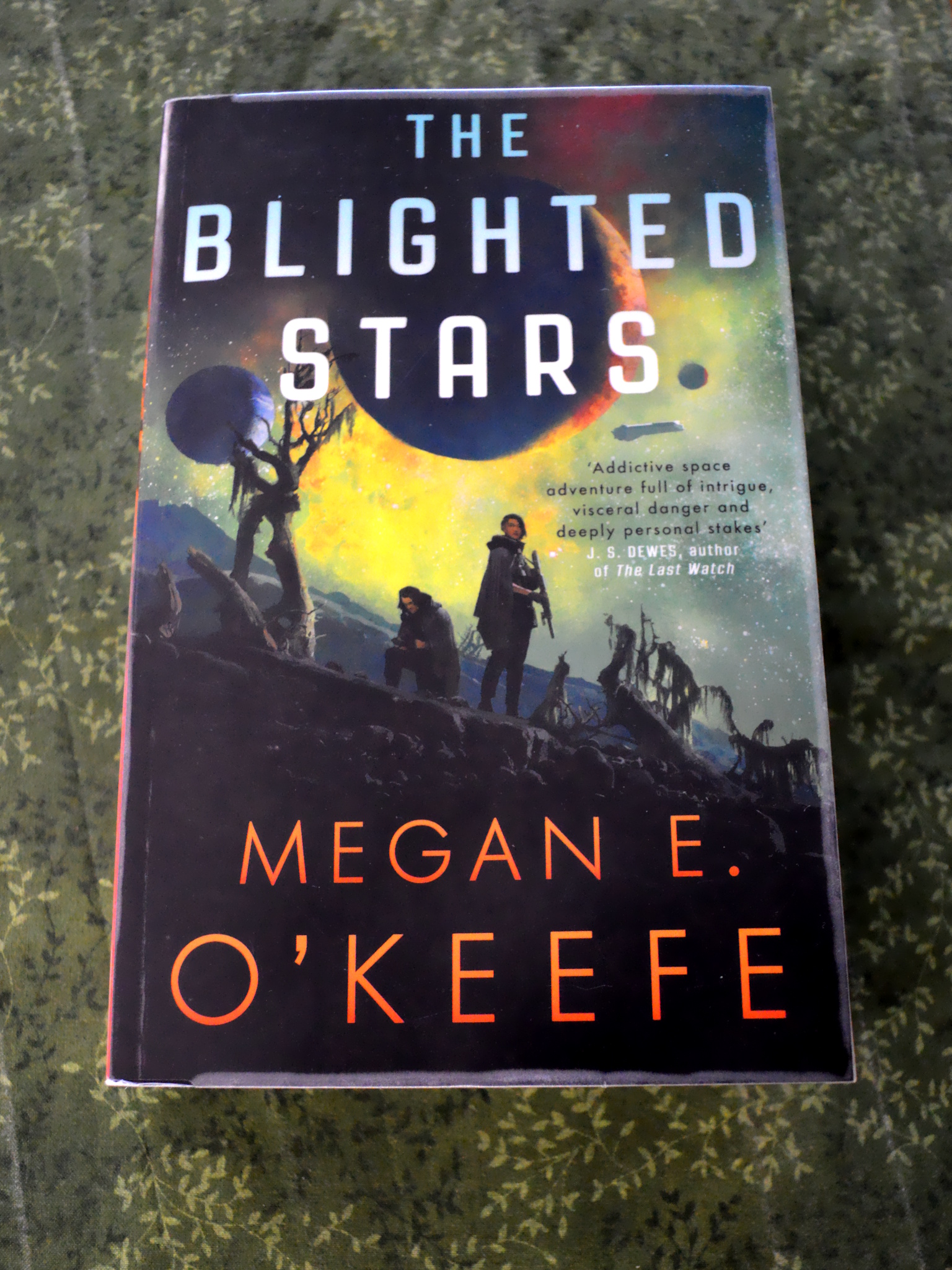
Take this section of a sci-fi novel, for instance:
“Everyone remembered firsts. Your first love, first kiss, the birth of your first child, or the sight of your first snowfall. A life was built on the back of firsts. Shining moments, pins in the timeline, holding who you were together.”
–Acaelus Mercator in The Blighted Stars by Megan E. O’Keefe
I have to confess that the first snowfall had me laughing out loud, and long and heartily, too! Not because it’s an unreasonable first to remember per se. (I gather there are a lot of people for whom it was indeed a remarkable moment to witness!) I laughed because this is a case of inadvertent but nevertheless a complete and a total case of nooope.
My first snow would be extremely unlikely for me to remember, having grown up two hours south of the Arctic Circle. As unusual as remembering your first rain for the Irish, maybe, or your first mountain for someone who grew up in the Rockies.
Sometimes, despite your best efforts, your audience just completely bounces off your writing. And that’s fine, because at best it’s how we discover the remarkable in our everyday.
O’Keefe, Megan E. The Blighted Stars. London: Orbit, 2023, p. 180.
Image by Eppu Jensen
Serving exactly what it sounds like, the Quotes feature excerpts other people’s thoughts.
“For me, one of the biggest draws of the Internet has always been how I can be alone and yet find connection with other people. I am an introvert. I can fake extroversion, but it is exhausting. I prefer quiet, even when I am happily around other people. I spend an inordinate amount of time in my head. Online, I can be in my head and with interesting people. I can be alone but feel less lonely.”
A fantastic explanation—which, of course, means that it lines up with my experience of the world, heh heh. 🙂
I’m sure if you’re reading this you know that in general introverts do not hate people—that would be misanthropy—nor do they fear social encounters—that’s shyness. (Well, of course they can, but it’s not baked into every introvert.) It seems there’s now more understanding in general that introversion is about social energy, and that introverts recharge by being alone.
I’ve come to realize that alone time is just a part of how my introversion manifests itself. I feel enormously better, for example, if my home is in a corner instead of the middle. Text-based communication is better than voice. Listening before leaping is a better strategy at meetings or gatherings. And sometimes, when I want to be around people but don’t have the energy to actually engage, it’s enough to hang out in a library or a less-busy corner of a mall, or go out to eat, or spend time browsing in a brick-and-mortar store.
Life is so much easier when you know what makes yourself tick. 🙂
Every now and then you read snippets where an overused truism is poked and prodded in a way that nudges something loose.
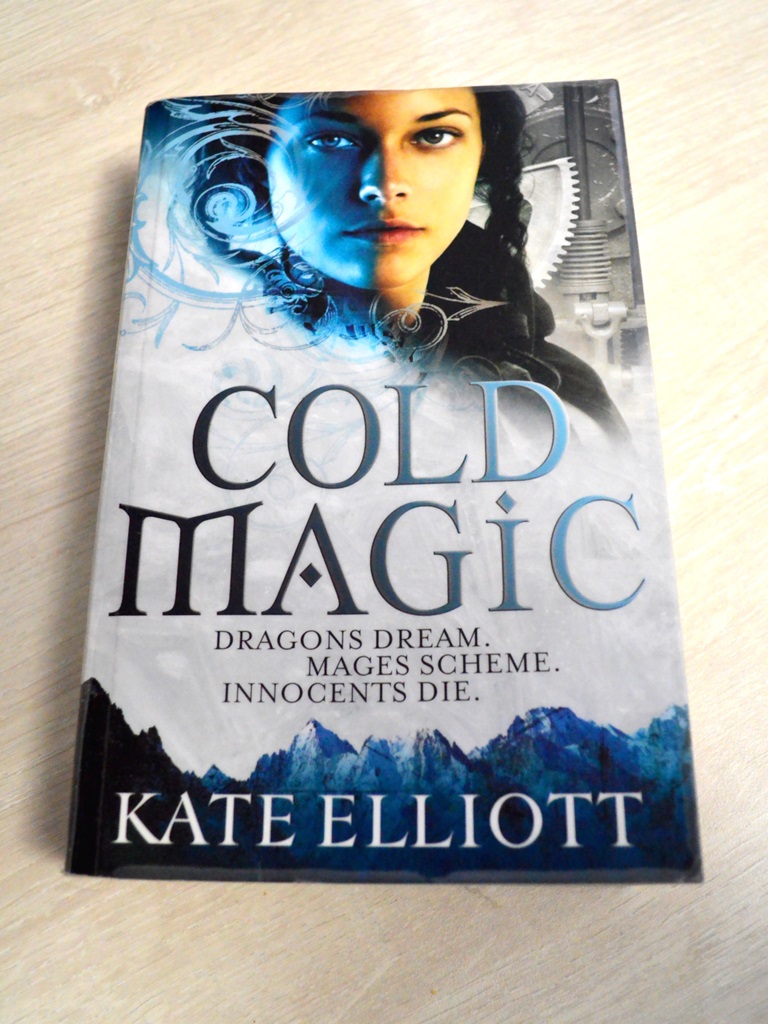
“His features, his gestures, his long black braid: All these had become as familiar to me as if I had known them my entire life long, yet I had first encountered him only a few days ago. I did not understand it. Was this what kinship meant? A sense, deep in your bones, that the person next to you is part of you? Inextricable from what you are? That you could not be who you are without their existence as part of the architecture of your very self?
“We are none of us one thing alone and unchanging. We are not static, or at rest. Just as a city or a prince’s court or a lineage is many people in one, so is a person many people within one, always unfinished and always like a river’s current flowing onward ever changing toward the ocean that is greater than all things combined. You cannot step into the same river twice.”
– Catherine in Cold Magic by Kate Elliott
I remember being kinda stunned one time, years ago now, when talking to a coworker and she said she never re-reads books. I find that unfathomable, to be honest. It’s a bit like never eating the same food twice.
Strictly speaking, of course, the two examples are different, since repeatedly cooking the same dishes makes the kind of pragmatic sense that re-reading does not and cannot offer. But if you eat your favorite foods more than once, why wouldn’t you read your favorite books more than once? It’s so exhilarating to gain a deeper or a wider understanding of a work or phenomenon you think you thoroughly know already, because you have changed.
Elliott, Kate. Cold Magic. London: Orbit, 2010, p. 384-385.
Image by Eppu Jensen
Serving exactly what it sounds like, the Quotes feature excerpts other people’s thoughts.
Do not be too sad, Sam. You cannot always be torn in two. You will have to be one and whole, for many years. You have so much to enjoy and to be, and to do.
– Frodo, in The Return of the King
I recently reread The Lord of the Rings for the first time in over a decade. It is also the first time I’ve read the book since we moved from the US to Finland. This line, from Frodo to Sam before his departure from the Grey Havens at the end of the novel, was always a beautiful line, but it hit me harder now.
Eppu and I have always lived a life torn in two. Coming from two different countries on different continents, we always knew that to be together, one of us would have to be far away from the people, places, and things we have grown up with and loved. For many years, she was the one who was far from home, as we lived in the US for my studies and work. Since we moved to Finland a few years ago, now I am the one whose familiar places and people are far away.
You might think that the romance between the human Aragorn and the Elf Arwen would speak to me the most, but their love story plays out on the scope of high mythology, beautiful but too remote to relate to. The simple words of a Hobbit, wishing healing and hope to a beloved friend, struck my heart.
We cannot always be torn in two. Love makes us one and whole.
Tolkien, J. R. R. The Lord of the Rings. Harper Collins edition, 1994, p. 1006.
Serving exactly what it sounds like, the Quotes feature excerpts other people’s thoughts.
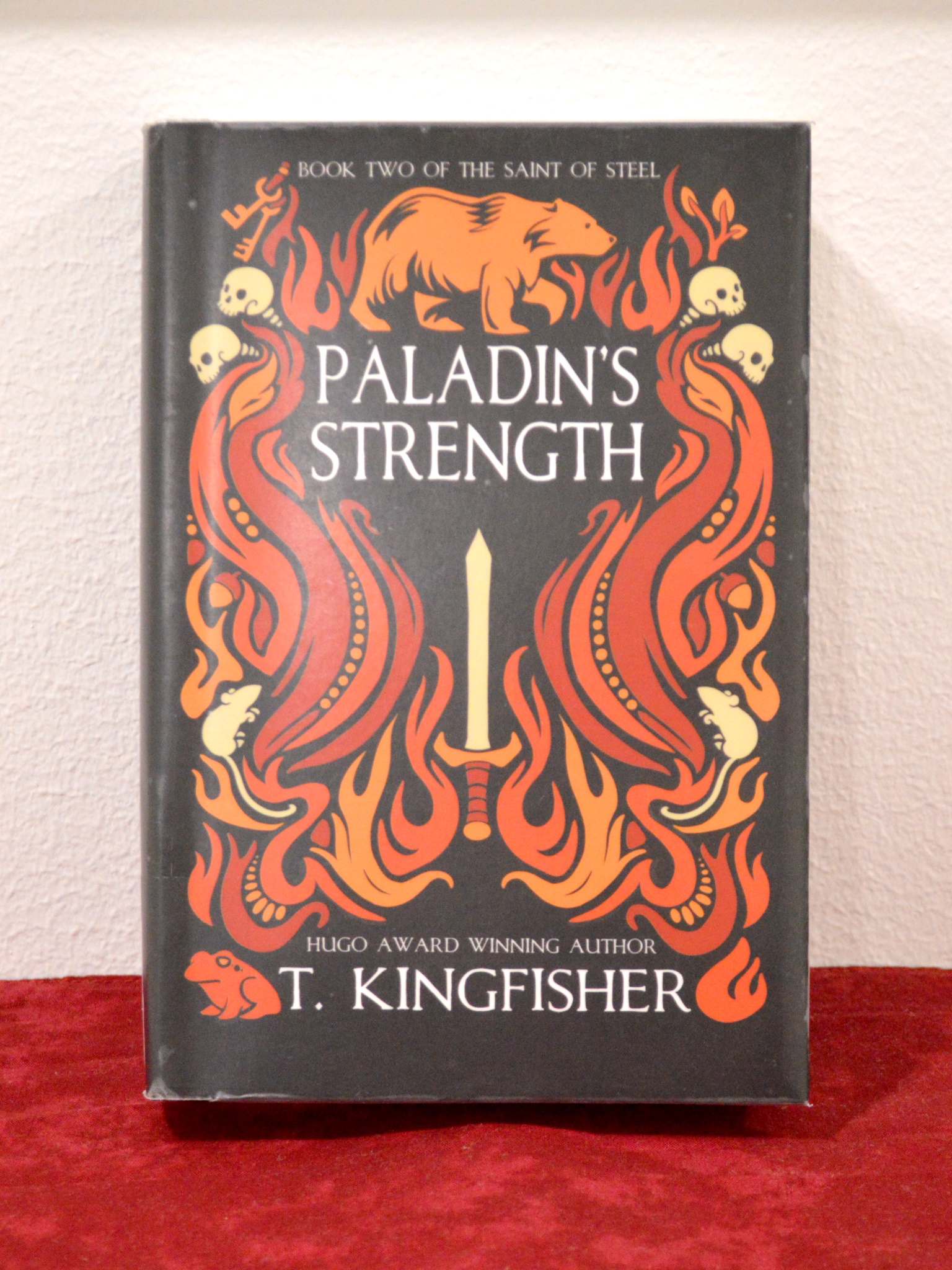
“You learned better and you got on with things. You learned that you were what you were, and tried to be the best version of that person, because you were never going to be anybody else. And you stopped envying other people because everyone had problems you didn’t know about.”
–Sister Clara in Paladin’s Strength by T. Kingfisher
I can’t think when I’ve last felt envious of another person. I’m sure it has happened, and relatively recently, too; I just can’t remember it. Which means—I hope, at least!—it can’t have been a very strong emotion or moment, which is a good thing.
In any case, more of the best version of myself for the coming year would also be great, not just for me but for the people around.
Kingfisher, T. Paladin’s Strength. Dallas: Argyll Productions, 2021, p. 200.
Image by Eppu Jensen
Serving exactly what it sounds like, the Quotes feature excerpts other people’s thoughts.
“The companies that make AI—which is, to establish our terms right at the outset, large language models that generate text or images in response to natural language queries—have a problem. Their product is dubiously legal, prohibitively expensive […], and it objectively does not work. All of these problems are essentially intractable. […]
“That non-technology industries are falling for this spin [that AI is inevitable] is perhaps unsurprising […] What’s more interesting is that other Silicon Valley companies are doing the same, even though, again, the result is almost always to make their product worse. Google has essentially broken its key product, and Microsoft is threatening to spy on all its users and steal their data, all because a bunch of CEOs have been incepted into the idea that this technology is the future and they cannot afford to be left behind.”
Nussbaum is packing quite a bit into a relatively short post. With regard to the claim that Google’s search engine is broken, she refers to an article in The Verge by Elizabeth Lopatto. Lopatto in turn provides some examples that are truly hair-raising: apart from unusable—or plain wrong—data, Google has offered potentially life-threatening answers to user queries.
Personally, for at least a decade if not longer, I haven’t used Google unless I can’t get anything sensible out of other engines, so I’m not the best person to comment on Google specifically. However, I have noticed that pretty much every search engine I’ve tried has gotten worse.
(Please note that my opinion below is based on my experience as an information professional, and on the experiences of my friends and acquaintaces as well; I don’t want to repeat “in my experience“ in every other sentence. Please also note that your experience may differ, and that I am aware of this possibility. And, finally, please note that this is an opinion post, so I will be selective with my point of view and using hyperbole.)
For one large problem, ads are rife among search results. It used to be possible to see a page of results with a couple of ads. Now it’s almost a page of ads with a couple of results sprinkled in for appearance’s sake. I understand the necessity of procuring funding. What I do not understand is destroying customer trust by no longer providing the service you claim to provide.
For another, advanced search is disappearing. (Here Google does seem to work slightly better than its competition, at least in some contexts, at least some of the time.) One example of a basic operation that’s stopped being reliable is excluding a word from your query by typing a minus in front of it; the term almost always if not always shows up in your results anyway. Another example is specifying a phrase by surrounding it with quotation marks. For example, at times I want to check a new-to-me multi-word term, or try to find a phrase I only hazily remember. But that only works if the search works. Even if it does work, an engine might offer other phrases containing your search terms, just in a different order. Obviously that isn’t helpful. A recent example is “price cliff”, for which Google offered the Instagram profile of one “Cliff Price” among the top results. Categorically not what I was looking for!
The results might also be interspersed not just by ads but other irrelevant blocks (“People also ask” or “Related Searches” or such). Granted, related searches do have their use; there are times when it is helpful to see adjacent topics or terminology. They definitely shouldn’t take space from the most relevant results, though, and the suggestions must actually be, you know, related to be relevant.
Further, search engines have stopped displaying the number of results for a query. (Remember when that was a thing?) These days it’s anyone’s guess whether you’re being served with a butt-load or a crap-ton of increasingly poor results.
Finally, at worst your search engine of choice will serve pop-ups in the margins (“See all!” “More from source!”) or push their “mobile experience”. *sigh*
These days, the search engine “experience” (WTH is that even supposed to be?!?) is like going to a restaurant and ordering pasta, but being served paste instead: not at all what was expected, entirely wasteful, and potentially harmful—and if you were to claim that the deliverable is “close” to the request, it is just insulting.
If this is what “smart” business people believe counts as quality output these days, I wouldn’t trust them to think their way out of a pillow case. (Yes, a pillow case, since the poor airbrains would probably hurt themselves with something as sharp as a paper bag.)
According to BBC, a Google spokesperson has defended AI-created overviews saying that “[t]he vast majority […] provide high quality information, with links to dig deeper on the web”. Speaking of vast majorities, most people are just not interested in digging and absolutely will not dig deeper; they want a clear-cut answer and they want it quickly. That means improving the quality of results, and neither the recent, pre-AI iterations nor the curret AI-“improved” engines deliver that.
I can’t think what the heck is up with the encrapification of search engines. Or why does it seem absolutely necessary to keep tweaking a good product what feels like every few months until it’s unrecognizeable.
Is it sunk cost fallacy? A form of mass hysteria spreading from Silicon Valley? Is maintaining a steady level of good service so moth-eaten a concept that it can’t attract resources anymore beyond the barest minimum? Are developers (or developers’ bosses) really that unable to comprehend that a change does not automatically mean an improvement? Is the only thing that matters the ceaseless chase after new features, regardless of whether they will shape up your service or shatter it?
It’s so frustrating, in any case. We, here, are nerds and do at times dig very deep. Sadly, these days search engines often hinder research instead of helping. Lately I’ve noticed that I’m turning more to bookmarks saved in my browser, or pick a specific site I’ve vetted earlier. It’s obviously not a foolproof answer, either, because I need to remember which entity has or might have the information I’m after in order to go and search their pages.
I’m quite ready to live in the most boring of times, with reliable basic services, please and thank you.
There’s an old law of probability often phrased that if an infinite number of monkeys sat at an infinite number of typewriters pressing random keys for an infinite amount of time, they would at some point type out Shakespeare’s Hamlet. The point is that, given a large enough scope of opportunity, things that are very unlikely but not impossible can and do happen.
One of the earliest known expressions of this idea comes from the Roman statesman and philosopher Cicero, although Cicero takes the negative view. He poses the idea as a thought experiment to reject materialist philosophies, like Epicureanism, which held that the world was not created by the gods but was the product of random collisions of matter:
How can anyone look on these things yet convince themselves that certain solid and discrete bodies are carried by force and gravity, and the beautiful and exquisite world is made by the fortuitous arrangement of these bodies? If someone thinks this is possible, I don’t see why they shouldn’t also think that innumerable shapes of the twenty-one letters, made out of gold or whatever material, could be tossed down on the ground so that one could read the words of Ennius’ Annals in them. For myself, I doubt that chance could make a single verse out of them.
Cicero, On the Nature of the Gods 2.93
(My translation)
As unlikely as it is that just tossing letters down on the ground once will yield any comprehensible lines from Ennius’ early Roman historical epic, the infinite monkey theory tells us that if we threw an infinite number of letters an infinite number of times, some verses of Ennius would eventually emerge, not to mention lines from Cicero himself, or any other text that could be written in the Latin alphabet.
One might say that Cicero’s mistake was an insufficiency of monkeys.
Serving exactly what it sounds like, the Quotes feature excerpts other people’s thoughts.
“I’m talking that massive, never-ending Discord chat with your bestie? The one that makes you giggle through the day? It’s not a ‘waste of time,’ it’s what time was made for“
– atlinmerrick on Tumblr
Hear, hear!
As much as it might frighten us some days, change is permanent and the only absolutely realiable thing in life. (Apart from the sheer impossibility of taking anything with you when it’s time to go.) Why not find happiness while you can? Why not allow yourself to feel the joy you feel? Lots of adults would be happier, I think, if they allowed more of the delight they used to feel in their childhood to remain in their lives. (Mostly talking to my Protestant forebears here…!)




 Co-Geeking
You must be logged in to post a comment.