The other day I was browsing a random blog. Seeing a post title “101 Things to Do When Bored at Home” or something to that effect, I turned to Erik and said: “I don’t understand the concept.”
I truly don’t, not for my part!
We’re both introverts who love our home. Home is where our books are. Where we can watch tv in comfort. Play games. Craft, sew, write. Go nap or lie down with a blanket to think about things. Heck, even clean or mend things—it’s something to do, and we do enjoy a well-functioning home (even if cleaning and mending aren’t favorite pastimes themselves).
I literally can’t remember the last time I’ve been bored at home.
I can—and do—give my brain rest breaks. Idling is important to creativity, which is important to all of life, if you ask me. But boredom…? Nope. It just doesn’t happen, there’s so much to do.
I’m actually looking forward to the time when I’m old enough to need less sleep—more time to enjoy being conscious! 🙂
The 2025 Ropecon—the largest non-commercial RPG convention in Europe organised entirely by volunteers—is over. Thank you, everybody! I’m exhausted and happy. (And sick; con crud got me this year. Bleah.) I do need to get one thing off my chest, however.
I’m going to make an exception and write in Finnish this time, because I’m responding to a post about inclusion at the con by Merli Juustila, the chair for Ropecon ry., the entity running the con, published this June before the Helsinki Pride parade. (FYI: Juustila’s post is Finnish only.)
TL;DR for those who do not want to attempt Finnish: apparently every year for many years now, the organizers get complaints about rainbows at Ropecon and why that should be; it’s a gaming event, after all, or so says the feedback.
My response: Obviously, it’s because it’s a part of people’s identity and part of their lives. By the same logic, you might as well complain about historical dances, cosplay, card games, kids in strollers, or black clothes being visible all over the place during Ropecon.
One of the most prominent topics currently is artificial intelligence. Of course everyone knows—or should know—it’s not real intelligence as we generally understand it. The term seems to have some real staying power, though.
Regardless of what one wants to call the current iterations, machine learning or algorithm-based systems appear to be here to stay. People are starting to figure out what they could be used for in everyday life, not just at the office or lab.
One popular sentiment among creatives goes along the lines of: I want AI to do the dishes for me so I can create, I don’t want AI to create for me so I can do the dishes. I hear you, fellow creatives, and agree! This post talks about what I’d want those systems to do for me. (Eventually. We still must solve several issues, e.g. how to program them without egregious copyright breaches, to mention just one.)
(Please also note: I do realize that computing takes a lot of energy and materials, and that energy production and extraction of minerals aren’t unproblematic processes. Also, the ethics of the current generative models need serious attention; I’m still fuming over Meta’s massive book pirating as revealed by The Atlantic. The point of my post is not to dwell on the problems, however. This is basically just a random, long-winded wish list.)
TL;DR: My preferences boil to complex tasks, specificity instead of generic sludge, and effective analysis of massive amounts of data.
Below is a non-comprehensive list of some specific tasks I want done better, whether by “AI” or not, in no particular order.
“The companies that make AI—which is, to establish our terms right at the outset, large language models that generate text or images in response to natural language queries—have a problem. Their product is dubiously legal, prohibitively expensive […], and it objectively does not work. All of these problems are essentially intractable. […]
“That non-technology industries are falling for this spin [that AI is inevitable] is perhaps unsurprising […] What’s more interesting is that other Silicon Valley companies are doing the same, even though, again, the result is almost always to make their product worse. Google has essentially broken its key product, and Microsoft is threatening to spy on all its users and steal their data, all because a bunch of CEOs have been incepted into the idea that this technology is the future and they cannot afford to be left behind.”
Nussbaum is packing quite a bit into a relatively short post. With regard to the claim that Google’s search engine is broken, she refers to an article in The Verge by Elizabeth Lopatto. Lopatto in turn provides some examples that are truly hair-raising: apart from unusable—or plain wrong—data, Google has offered potentially life-threatening answers to user queries.
Personally, for at least a decade if not longer, I haven’t used Google unless I can’t get anything sensible out of other engines, so I’m not the best person to comment on Google specifically. However, I have noticed that pretty much every search engine I’ve tried has gotten worse.
(Please note that my opinion below is based on my experience as an information professional, and on the experiences of my friends and acquaintaces as well; I don’t want to repeat “in my experience“ in every other sentence. Please also note that your experience may differ, and that I am aware of this possibility. And, finally, please note that this is an opinion post, so I will be selective with my point of view and using hyperbole.)
For one large problem, ads are rife among search results. It used to be possible to see a page of results with a couple of ads. Now it’s almost a page of ads with a couple of results sprinkled in for appearance’s sake. I understand the necessity of procuring funding. What I do not understand is destroying customer trust by no longer providing the service you claim to provide.
For another, advanced search is disappearing. (Here Google does seem to work slightly better than its competition, at least in some contexts, at least some of the time.) One example of a basic operation that’s stopped being reliable is excluding a word from your query by typing a minus in front of it; the term almost always if not always shows up in your results anyway. Another example is specifying a phrase by surrounding it with quotation marks. For example, at times I want to check a new-to-me multi-word term, or try to find a phrase I only hazily remember. But that only works if the search works. Even if it does work, an engine might offer other phrases containing your search terms, just in a different order. Obviously that isn’t helpful. A recent example is “price cliff”, for which Google offered the Instagram profile of one “Cliff Price” among the top results. Categorically not what I was looking for!
The results might also be interspersed not just by ads but other irrelevant blocks (“People also ask” or “Related Searches” or such). Granted, related searches do have their use; there are times when it is helpful to see adjacent topics or terminology. They definitely shouldn’t take space from the most relevant results, though, and the suggestions must actually be, you know, related to be relevant.
Further, search engines have stopped displaying the number of results for a query. (Remember when that was a thing?) These days it’s anyone’s guess whether you’re being served with a butt-load or a crap-ton of increasingly poor results.
Finally, at worst your search engine of choice will serve pop-ups in the margins (“See all!” “More from source!”) or push their “mobile experience”. *sigh*
These days, the search engine “experience” (WTH is that even supposed to be?!?) is like going to a restaurant and ordering pasta, but being served paste instead: not at all what was expected, entirely wasteful, and potentially harmful—and if you were to claim that the deliverable is “close” to the request, it is just insulting.
If this is what “smart” business people believe counts as quality output these days, I wouldn’t trust them to think their way out of a pillow case. (Yes, a pillow case, since the poor airbrains would probably hurt themselves with something as sharp as a paper bag.)
According to BBC, a Google spokesperson has defended AI-created overviews saying that “[t]he vast majority […] provide high quality information, with links to dig deeper on the web”. Speaking of vast majorities, most people are just not interested in digging and absolutely will not dig deeper; they want a clear-cut answer and they want it quickly. That means improving the quality of results, and neither the recent, pre-AI iterations nor the curret AI-“improved” engines deliver that.
I can’t think what the heck is up with the encrapification of search engines. Or why does it seem absolutely necessary to keep tweaking a good product what feels like every few months until it’s unrecognizeable.
Is it sunk cost fallacy? A form of mass hysteria spreading from Silicon Valley? Is maintaining a steady level of good service so moth-eaten a concept that it can’t attract resources anymore beyond the barest minimum? Are developers (or developers’ bosses) really that unable to comprehend that a change does not automatically mean an improvement? Is the only thing that matters the ceaseless chase after new features, regardless of whether they will shape up your service or shatter it?
It’s so frustrating, in any case. We, here, are nerds and do at times dig very deep. Sadly, these days search engines often hinder research instead of helping. Lately I’ve noticed that I’m turning more to bookmarks saved in my browser, or pick a specific site I’ve vetted earlier. It’s obviously not a foolproof answer, either, because I need to remember which entity has or might have the information I’m after in order to go and search their pages.
I’m quite ready to live in the most boring of times, with reliable basic services, please and thank you.
Not even a week after Erik spotted an incoming link from a fanfic published at Archive of Our Own, we started seeing increased traffic to another post on our blog, and we couldn’t figure out why. (Good grief—when it rains, it pours!)
Thanks for the link! It’s nice to be appreciated, especially since our blogging tends to follow whims which, I’m sure, appear very opaque to outsiders. 🙂 The reddit discussion had some interesting points, so it was definitely worthwhile to poke my head in.
(What baffles me, though, is how some redditors seem to have mistaken this blog for a news site. Perhaps I’m merely getting too old to think there are enough cues in the metadata and site sections to easily discount that idea…? I am, however, experienced enough to know most people won’t read our About page where it is spelled out that this here is a hobby blog, goshdarnit! *grumble grumble*)
Russia’s unprovoked attack is not okay. The Russian president’s mumbo jumbo about annexation of historical areas is exactly that. Neither the Russian Empire nor Soviet Union exist anymore. If we go down that path, we might as well cry out for the restoration of the Roman Empire, other empires, or basically any polities for “historical” “reasons”.
As a Finn, I am not intellectually okay with this.
Nor do I feel okay.
My age group has grown up in peace, but we have grandparents who lived through our two modern wars with Russia, and you can bet your pants some of our parents carry some inherited wounds. I have a friend, in fact, who grew up in the east near the Russian border. People there had a habit of saying “When the Russians come, [blah blah blah]”. Not if—when.
We remember.
I bet the same conversation is happening all over Eastern and Central Europe now as we are having here jn Debrecen, Hungary at Saturday dinner. The older people are talking about what it was like under Russian occupation. Everyone remembers.
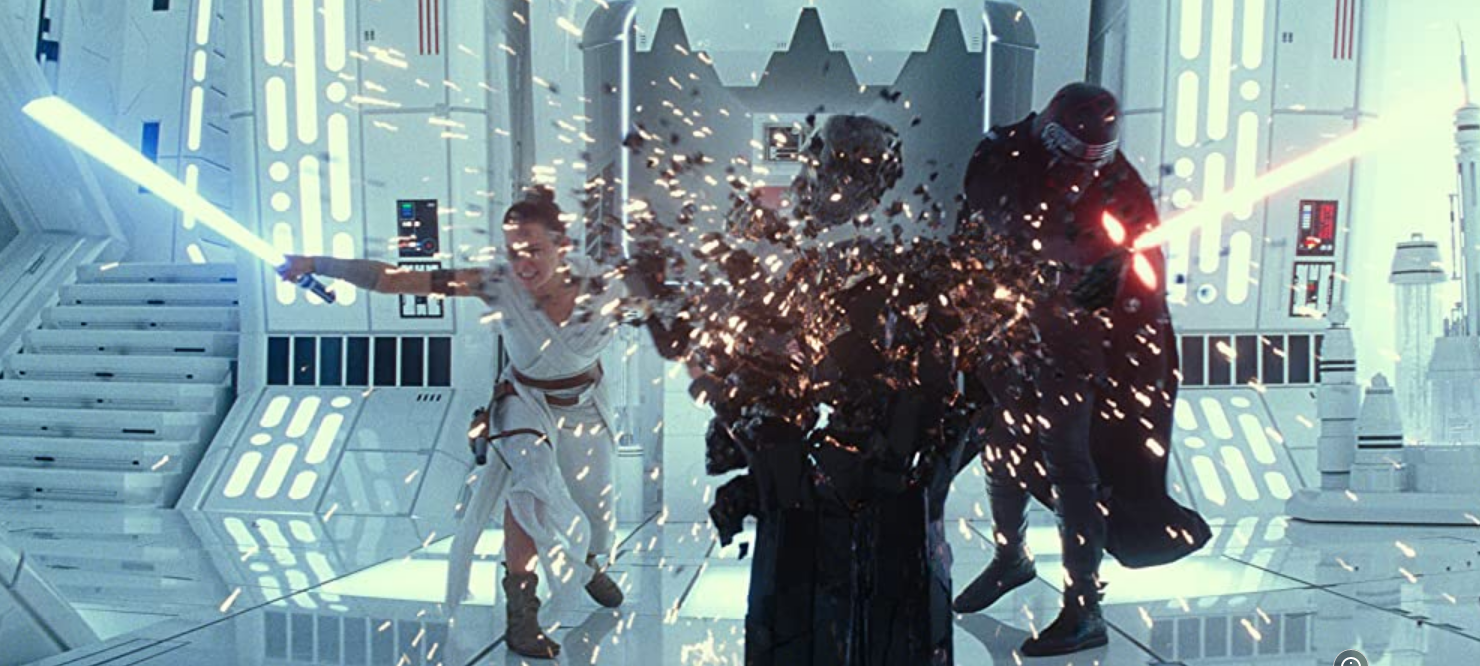
By all public accounts, the new Star Wars trilogy was not planned with an overarching plot. The intent was that each director would put their own stamp on each movie. The effects of that choice are visible all over The Last Jedi, which moves about as far away from The Force Awakens as it can without technically breaking continuity. The reaction from fans was strong, as most of us probably remember. Some of that reaction was beyond the pale, up to and including online harassment of some stars (notably those who were not white men). For a good year and a half, it was just about impossible to have a conversation about the movie online without things devolving into a scorched-earth flame war. Disney seems to have been shaken enough by the reaction to turn back to J. J. Abrams for an encore of The Force Awakens to close out the trilogy. The Rise of Skywalker slams the door hard on everything The Last Jedi was trying to do and doesn’t look back.
This about-face is visible all over The Rise of Skywalker. New characters like Rose and D’Acy are demoted to background extras; Rey’s parents are retroactively promoted from mere junk traders to scions of Palpatine; Poe and Finn get to be heroic and do things that actually matter to the plot. The Rise of Skywalker rejects The Last Jedi so thoroughly that it attempts to fit an alternative second movie into its first half. Although we’ve been told that there was no overarching plan for the sequel trilogy, it sure seems like Abrams and company at least had ideas sketched out for two more installments after The Force Awakens. When called on to helm the third movie, Abrams tried to fit all of those ideas into one.
The first half of The Rise of Skywalker has traces of what could have been the second movie of the trilogy. While there isn’t a simple breaking point where a theoretical Episode 8 ends and Episode 9 begins, the action on Kijimi makes a suitable climax at around the halfway point. We reconnect with Lando Calrissian in the first half and with Endor in the second. Ending the movie somewhere around Kijimi would leave Chewbacca in the First Order’s hands, C-3PO out of commission, and Rey confronting the reality of her parentage, a cliffhanger ending for the middle movie of the trilogy and an echo of the ending of The Empire Strikes Back.
Seeing the movie as two films packed into one helps make sense of some of its odder features. For one thing, The Rise of Skywalker is overstuffed with plot. Compared with either of the movies that came before it there are more new locations, more new characters, and a less direct narrative line. The plot even overspills the edges of the movie, with crucial set-up squished into a rushed beginning and the suggestion of further adventures packed into the ending. There is also a curious amount of doubling in the movie that makes sense if it was originally conceived as two. Our heroes set out in search of two different devices that lead to destinations: first a Sith dagger, then a Sith wayfinder. There are two planets with women who connect to our heroes’ past and offer potential love interests for their future: Zorii on Kijimi who has a history with Poe, and Jannah on the Endor moon who is a rebel stormtrooper like Finn.
As it stands now, the movie undermines its own script. Rey and the audience alike hardly have a chance to react to Kylo Ren’s revelations about her ancestry because the movie has to rush on with the rest of the story. The discovery that Plapatine’s brand new fleet has planet-destroying capabilities is similarly underwhelming with so much else for the movie to do. C-3PO’s self-sacrifice to translate the Sith blade is played as an emotional farewell, but then almost immediately undercut when R2-D2 reloads his memories; if we had waited two years between movies to get our old droid friend back, the moment would have had the emotional weight it seemed written for.
The middle entry in the sequel trilogy, The Last Jedi, for all its flaws, introduced the most interesting and challenging new ideas Star Wars has seen in decades. Even if all The Rise of Skywalker did was reject those ideas, it would still be a disappointment of a movie. In trying to not only turn away from The Last Jedi but retroactively create its own Episode 8, the movie ends up being not only lifeless but messy and overstuffed.
It is a shame that none of the new trilogy lived up to the hopes of fans. Every film has its good points and enjoyable moments, and I am at least mildly fond of them all, despite their problems. It is interesting to observe, though, that each of the new trilogy’s movies has an entirely different problem with its structure.
A couple of weeks ago I wrote about the storytelling structure in The Force Awakens and how it mimics the narrative shape of A New Hope without the character growth to support it. Today we look at The Last Jedi, the second and most challenging of the new trilogy movies. Where The Force Awakens was too committed to reenacting a familiar story to offer any new ideas, The Last Jedi is too much in love with its ideas to build a story around them.
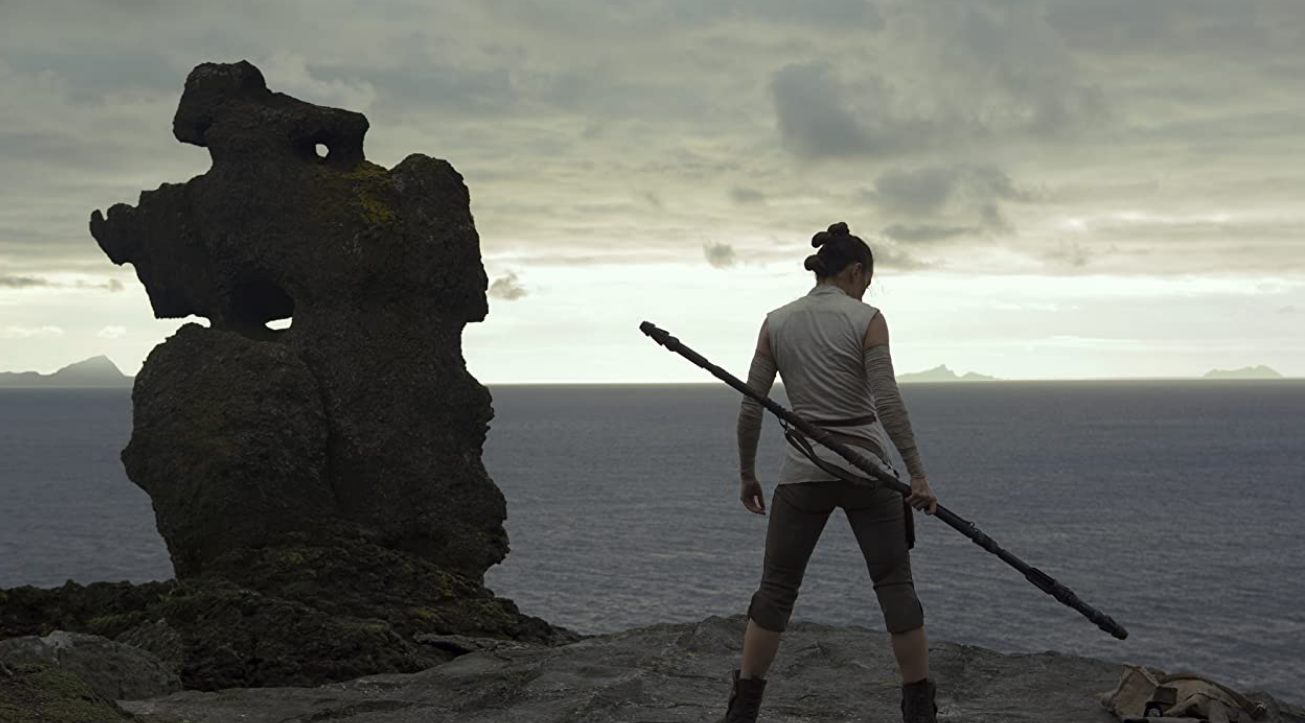
The Last Jedi does not run on nostalgia like The Force Awakens. It toys with some echoes of The Empire Strikes Back—the rebels are on the run chased by Imperial forces while the novice Jedi goes off to train with an old master, learning something about their parents along the way—but these echoes do not drive the plot the same way A New Hope did for The Force Awakens. The story of The Last Jedi is instead driven by Rian Johnson’s desire to challenge every trope and convention of the space opera that he can.
The movie does a good job posing the questions. What if the hot-shot pilot who doesn’t play by the rules is actually making things worse with his antics? What if the old master is broken by guilt and remorse and doesn’t want to train the chosen one? What if the chosen one isn’t actually all that chosen? What if the previous movie’s shadowy overhanging villain is actually a chump who gets himself bisected mid-monologue? What if the rebels and the Empire both buy their weapons from the same scummy arms dealers? What if the heroes send out a desperate last call for help in their hour of need and no one comes? The what-ifs go on and on, each of them a worthy hook to hang plot on, but none ever taking up any weight. The movie asks plenty of questions, but never gets around to the answers.
Instead of actual development for the plot and characters, we get empty gestures at development. We are clearly meant to think that Poe has Learned a Lesson by the end of the movie when Leia tells the others to follow him, but just what that lesson was and how he learned it are a mystery. Similarly, Finn’s retort to Phasma, calling himself “Rebel scum,” is framed as if it ought to mark a turning point for the character, but the rest of the movie doesn’t do the work of showing us that his relationship to the Rebellion/Resistance matters. Rey comes the nearest to having a character arc. After spending most of the movie looking to others to guide her on what being a Jedi means, she strikes out on her own and uses the Force to move rocks and save her friends. It’s the closest the movie comes to a payoff, but it barely adds anything to her development in The Force Awakens, and it’s not much to show for having Rey stuck between grumpy uncle Luke and creepy stalker Kylo for most of the movie. The structure of a narrative arc is built into the film, but the story isn’t there to fill it.
The time and narrative energy that could have been put into building the story and challenging the characters is instead spent on gambit after gambit that doesn’t pay off. Luke’s lessons teach Rey nothing. Finn and Rose’s side quest to the casino planet is pointless and deflates much of the tension built by the First Order’s pursuit of the fleeing rebels. Poe’s mutiny gets undone with a kicked-over steam vent and a blaster. The movie invests more energy into critiquing the socio-economics of a galaxy far far away than in giving our heroes anything meaningful to do.
Perhaps the most frustrating thing about this movie is how it dangles the possibility of meaningful development in front of us only to do nothing with it. Characters like Vice Admiral Holdo and Commander D’Acy are vast untapped wells of awesomeness reduced to Teaching a Man a Lesson. The number of times that important moments in the movie correspond to women with outstretched hands—from Rey lifting rocks and Leia pulling herself back out of space to Rose patting a giant horse-puppy and Holdo jumping into hyperdrive—makes it seems as though the gesture ought to mean something, it just doesn’t. Johnson’s other movies, notably his following creation, Knives Out, show that he is quite capable of handling complex story structures (something I’m not confident I can say about J. J. Abrams). In this case, though, it feels as though the director got so focused on making his movie about failure that he ended up failing to make a movie.
None of this is to say that there aren’t good things in The Last Jedi. It has some of the sequel trilogy’s sharpest dialogue and most striking visuals, from Poe’s jabs at Hux at the beginning to the red scars of battle streaming across the stark white ground of the salt planet at the end. It introduces what may in fact be the most daring idea in the new Star Wars universe: that a Jedi can come from anywhere (at least until the next movie took a big step back.) But these things arrive within a movie that is so committed to the task of deconstructing Star Wars that it deconstructs it right down to the ground and leaves nothing behind.
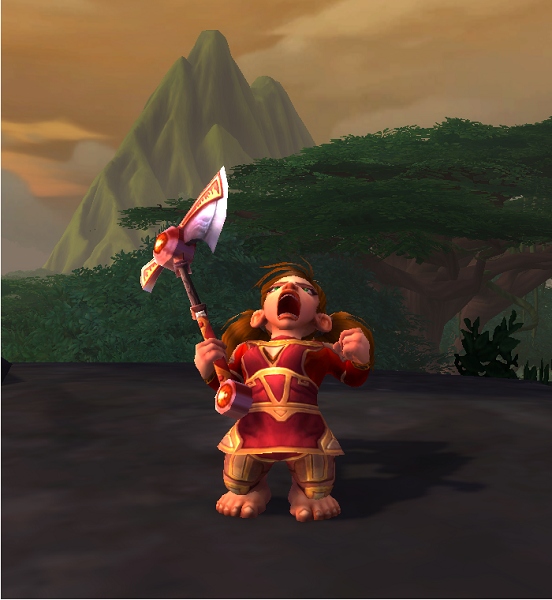
Our home is finally starting to function and look like a home (instead of a storage area for n+1 boxes) after our transatlantic move. We’ve been even able to play World of Warcraft a little in the midst of cleaning and organizing and bureaucracy and starting work again.
That got us reminiscing about the various expansions, specifically their new features we liked or loved at the time that have since become—begging your pardon for the pun—quite vanilla.
Below are some of my favorite changes, listed in expansion order.
(FYI: I just couldn’t remember and failed to find online the exact timing for some features, so I’ve given my best guess. If you know, please let me know in the comments!)
The Burning Crusade
-Ahh, the amazing, breathtaking sky over Hellfire Peninsula!
-Multiple flight points per zone—what is this awesome magic?
-Expanding the availability of paladins (one of my favorite classes).
Wrath of the Lich King
-In Northrend the environmental design definitely progressed from lumps of mashed potato. (Overall, though, they really didn’t know what to do with the icy zones, Icecrown and Storm Peaks.)
-Improved music, especially the Grizzly Hills intro music. That’s still one of my all-time favorite WoW themes.
Cataclysm
-Changes to Orgrimmar and Stormwind. It took me time to get used to, but I wouldn’t go back.
-Flying in old world zones.
-Phasing, but only when it doesn’t mess up the rest of the gameplay.
Mists of Pandaria
-Pandaria is where the environment design turns truly good. By this I mean natural-looking shapes in the landscapes, undergrowth with variety (including height), mountains that look like actual mountains, etc. To be sure, Cataclysm tried very hard as well, but graphics just got so much better by MoP that it was more feasible to do better. (Trees still look clunky, though.)
-Area-of-effect looting. The shift-click looting did help, but, man, I NEVER want to go back to picking. Each. Individual. Loot. Item. One. At. A. Time—AOE loot helps so much.
-11th character slot per realm. Obviously it’s changed again since, but at the time it was big.
Warlords of Draenor
-The toons’ new and improved looks. I didn’t like losing some of my favorite female Dwarf faces, but overall the change was good.
-The little gold coin marker for vendor trash in your bags. Hated it first, grew to love it.
-No fighting over gathering nodes anymore, since more than one player can get the same one. (If it was WoD? Or was it Legion?)
Legion
-The new transmogging system that automatically saves all applicable reward looks into your wardrobe. Oh, and being able to hide certain gear slots in your mog.
We’ve all had a few years to mull over the Star Wars sequel trilogy, and opinions are mixed. Some people love them and some hate them, but most of us seem to be in the middle, enjoying some things about the movies while feeling an overall dissatisfaction. It is, of course, true that any franchise so deeply loved as Star Wars was going to have a hard time living up to fans’ hopes with its long-awaited return. Not to mention Star Wars fans can be a particularly unpleasable lot. Still, I think a significant part of what made Episodes 7-9 feel lackluster comes from how they handle the structure of their storytelling. In this and a couple future posts, I want to dig into what that means.
The most obvious thing about the narrative structure of The Force Awakens is that it hews very close to the story of A New Hope. We start with a lost droid carrying vital information running into a potential Jedi on a backwater desert planet and end with x-wing fighters blow a giant planet-killing ship out of the sky. In between we get everything from a cantina with its own funky jazz band to rebels sneaking around the corridors of an imperial supership to rescue a captured young woman. Your cruisers can’t repel nostalgia of that magnitude.
There’s a good reason why this story doesn’t work as well as A New Hope. When he first sat down to plan out the Star Wars story, George Lucas played to his strengths, and storytelling is not one of them. For all that we think of Lucas now as the creator of one of the great stories of our time, he has always been a filmmaker first. The story of A New Hope is not particularly original, nor is it trying to be. It knowingly walks the steps of Joseph Campbell’s hero’s journey. The hero’s journey concept is a controversial one, its substance disputed by folklorists and its application embraced by some writers but rejected by others. But rather than delve into Campbell, I want to look at something related but simpler: the three act structure.
The three act structure is a fundamental storytelling tool that can be found in everything from fairy tales to Hollywood blockbusters. There are lots of different ways of explaining it and, just like the hero’s journey, different people have different interpretations of it, from the very basic to the immensely complex, but here’s a simple version of how it goes.
Act 1: We meet the main character and learn enough about the world they live in to care about them. The main character is faced with a problem that they must solve or there will be consequences.
Act 2: The character attempts to solve the problem but fails. Their attempt fails because they did it in a way that did not require them to change. There may be consequences for their failure, or the potential consequences of failing to solve the larger problem may grow greater.
Act 3: The character accepts that they must change, and with that change they are now able to solve the problem.
Not every story follows this pattern, to be sure, but it underlies a lot of familiar narratives. To take a well-known example, Homer’s Odyssey works along these lines. Act 1: We meet Odysseus and learn about his struggle to get home. We learn about the greedy suitors feasting all day on his meat and wine and see them scheme to kill Telemachus, force Penelope to marry one of them, and finally get their hands on Odysseus’ wealth if he does not get home. Act 2: Odysseus tries to get home, but he runs into obstacles. The worst of his problems comes from the fact that he cannot bear to slip away from the cyclops by calling himself “No one.” Instead, his pride drives him to turn around and shout out his real name, which allows the cyclops to call down Poseidon’s curse on him. It costs Odysseus his crew and ten years of wandering. Act 3: Odysseus finally gets home to Ithaca and accepts that he must disguise himself as a beggar and not give away his identity until he is ready to kill all the suitors and reclaim his home and family.
A New Hope is a textbook example of the three act structure. In Act 1 we meet Luke Skywalker and learn of the importance of bringing R2-D2 and the Death Star technical readouts to the rebels before the Empire can destroy more planets with their new weapon. In At 2, Luke attempts to solve the problem by rescuing Leia and getting the droid back to her, but without letting go of the idea that he’s just a farm boy from the sticks. It costs him his mentor and his last connection to Tatooine as Obi-Wan Kenobi sacrifices himself to let the Millennium Falcon escape the Death Star. In Act 3, the Death Star threatens the rebel base on Yavin, and Luke finally accepts that he must become more than he was and trust the Force in order to defeat the Empire.
The three act structure works best with a single character at its center so we can watch how they grow and change when faced with a challenge. (It can work with an ensemble, too, though. Take Avengers: In Act 1, we see the problem—Loki steals the cube—and meet the heroes: Iron Man, Captain America, etc. In Act 2, the heroes try to deal with Loki by each doing what they do best; it doesn’t work, Loki gets away, and Coulson dies. In Act 3, the heroes get past their differences, come together as a team, and stop Loki’s fiendish plan.) A New Hope is centered on Luke. Other characters have important moments and experience some growth—especially Han, who chooses to come back and help fight the Death Star rather than fly away with his money—but Luke’s growth into a Jedi is the core of the story.
For all that The Force Awakens does its best to follow along with A New Hope‘s story, it doesn’t have the same focus. Knowing that the Luke-Han-Leia trio was such an important part of the original trilogy, The Force Awakens spends a lot of time setting up Rey, Finn, and Poe as their new counterparts. To the extent that any character’s story provides the narrative line running through The Force Awakens, it is Finn, the mutinous stormtrooper. Finn works well as an audience surrogate character to introduce new and old fans alike to the world of the new trilogy—everything is as new to us as it is to him—but his story does not follow the three act structure. He makes his big choice at the beginning of the film, putting down his blaster and breaking Poe out of the First Order’s lock-up. In the end he chooses to go back to the world he escaped from to rescue Rey, but that is by far the least momentous change his character undergoes. Poe, for his part, is a hot-shot pilot at the start of the movie and still a hot-shot pilot at the end; he has plenty of good moments as a character, but this movie is not about what happens to him.
Rey’s story is the one that tracks most closely with Luke’s (orphan kid from a desert planet meets runaway rebel droid and discovers their Jedi powers), but the movie is not structured around Rey’s journey the same way A New Hope was structured around Luke’s. Rey starts out by running away and looking to others to solve her problem with BB-8, and in the end she comes into her own as a budding Jedi. She has a beautiful moment overcoming her fear and trusting the Force to let her mind-trick her way out of First Order holding, but the story of the movie is not her story. Rey’s growth and her confrontation with Kylo Ren are things that happen in parallel with the larger plot; they are not key to it the way Luke’s story was.
There are plenty of weaknesses in The Force Awakens, from an over-reliance on nostalgia to underbaked worldbuilding, but one of its fundamental problems is that it is so focused on rewriting A New Hope it loses sight of what A New Hope was itself rewriting. What we get in The Force Awakens is a copy of a copy, with all the flaws that come with it.
In the Seen on Screen occasional feature, we discuss movies and television shows of interest.
You must be logged in to post a comment.